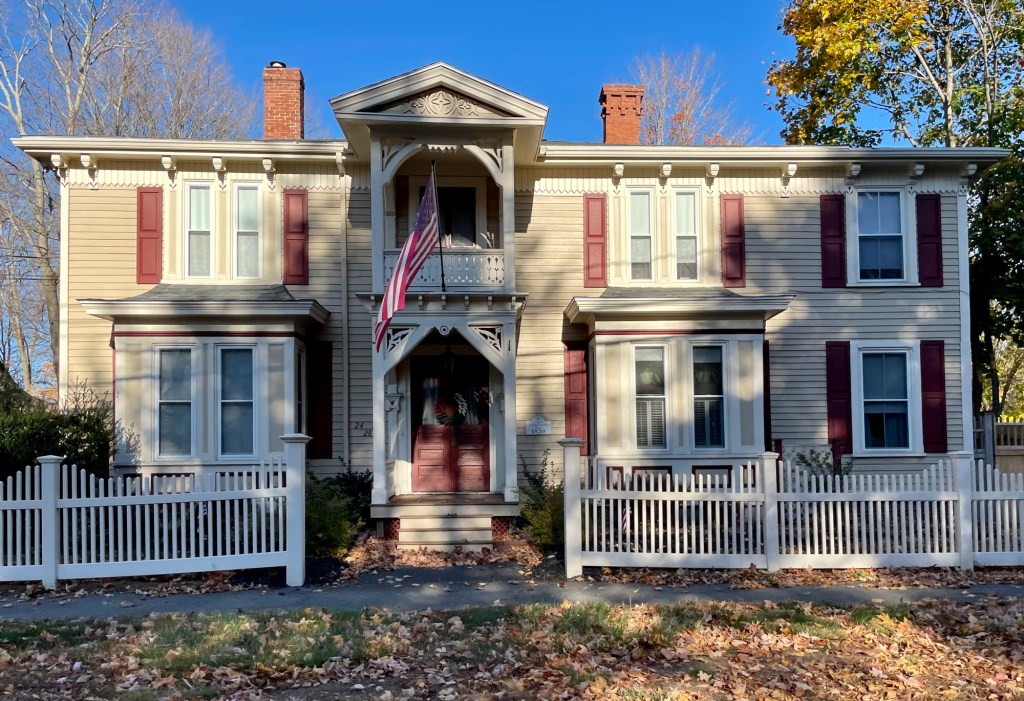
Spofford-Root House // c.1830

The Spofford Family was one of the earliest to settle in present-day Georgetown, with the earliest enclave of homes built along Andover Road in the western part of town. A few generations later, subsequent family members would built in the town center, taking advantage of the growing commercial and business community. This Federal period home (with later alterations) was built around 1830 for Greenleaf Spofford (1801-1887) the same year as his marriage to Emily Willmarth. The couple would move out of town and sold the home to Dr. Richmond Barbour Root (1846-1930),  the second of a highly respected, three generation family to practice medicine in Georgetown. The overlay of machine-sawn Stick Style decorative porch, bracketed cornice and bay windows were likely added by Root sometime after the Civil War. Unlike most owners of Federal and Greek Revival-style dwellings, Dr. Root may have held a valid professional interest in appearing as up-to-date as possible with a “modernized” home that also served as the site of his office and consulting rooms.
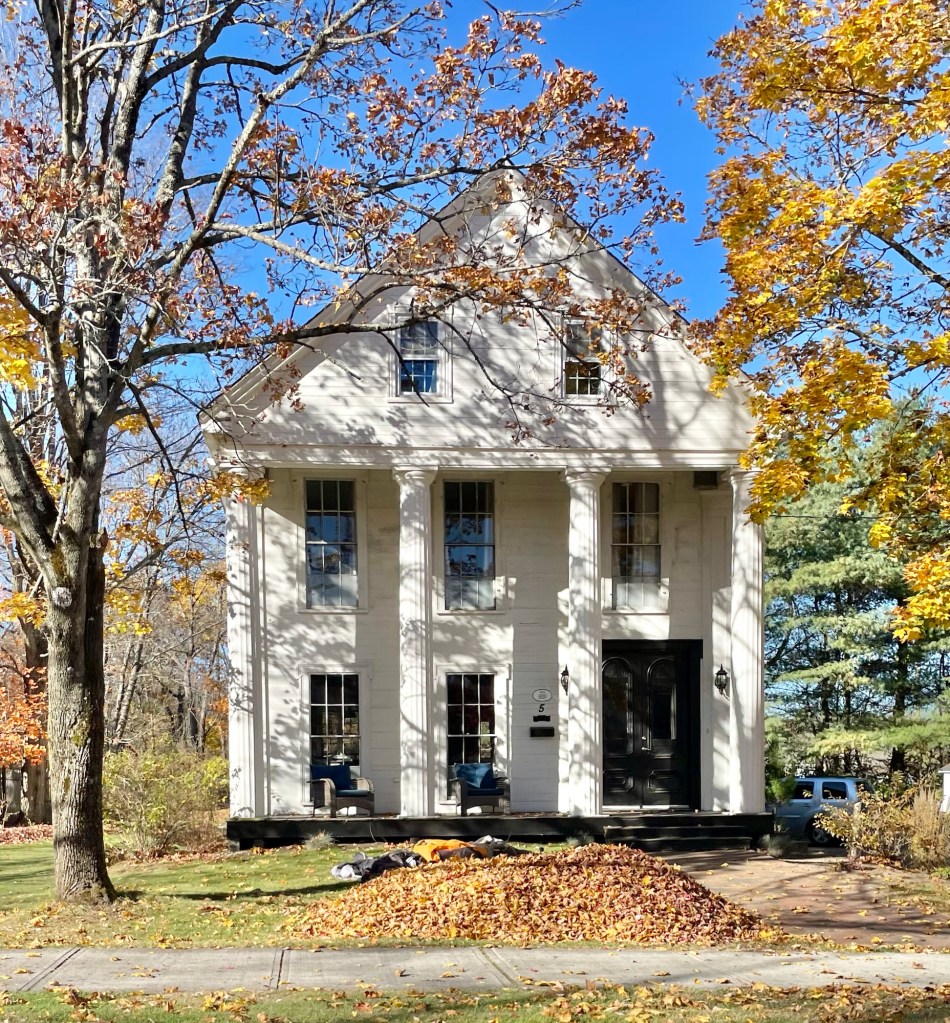
Adams Hall // c.1828

According to local histories, this significant Greek Revival style property on Elm Street in Georgetown, Massachusetts, was owned by Josiah Adams (1757-1852), a farmer, a Revolutionary War veteran, and a fourth-generation descendant of the immigrant Robert Adams, who arrived here from Devonshire, England by about 1629. In March 1849, the town’s Congregational Society purchased Adams Hall for eight hundred dollars to house the church vestry, which remained in the building for forty-one months until a new building was built for that purpose next door. Later, Adams Hall was owned by Moses Tenney (1808-1903), operator of a prosperous saw mill in Georgetown, and served at one time in the state senate. The structure retains its significant temple-front with four, two-story Doric columns supporting the portico. Also special on this residence is the use of flush-board siding and the oversized first floor windows.

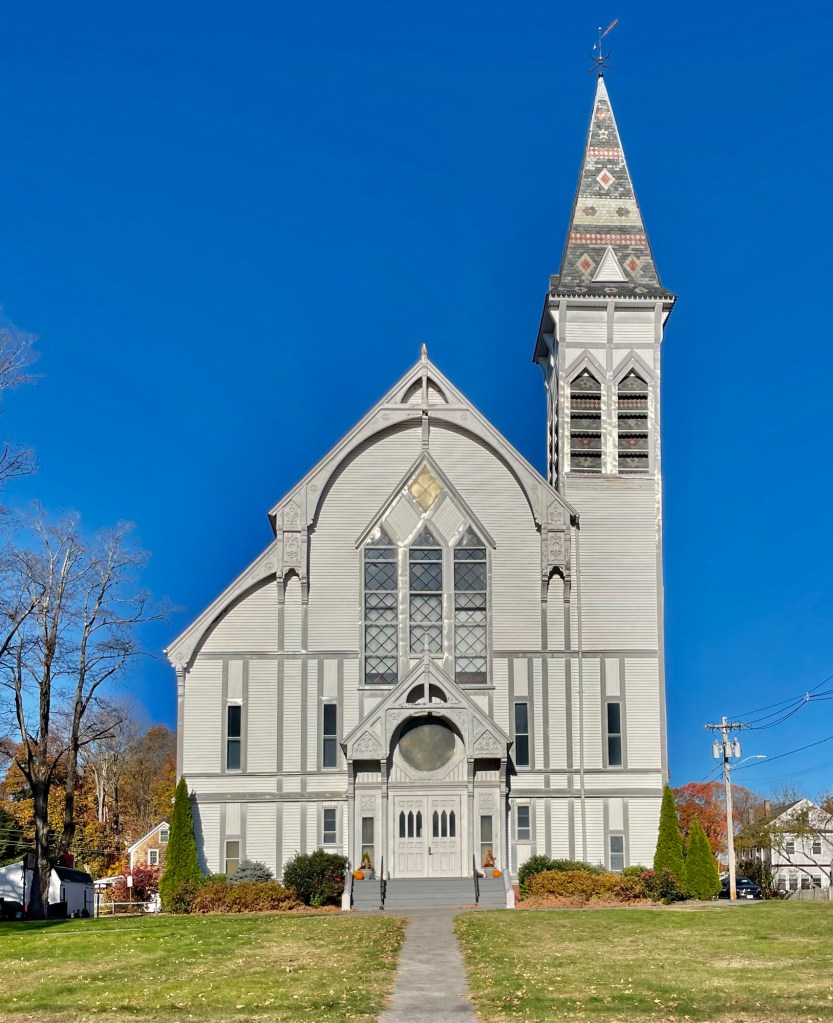
First Congregational Church of Georgetown // 1874

The First Congregational Church of Georgetown, Massachusetts, is significant both architecturally as a Victorian Gothic/Stick style church designed by a prominent architectural firm, and historically as an important gathering place for the town’s members for 150 years. The congregation however is much older than 1874, as when Georgetown was then a part of Rowley, Massachusetts, members here in 1731 petitioned to create their own parish in Rowley to travel a shorter distance to services. The church, then known as the Second Church of Christ in Rowley, was organized in 1732 with services held in a rustic Meeting House. A second meetinghouse was built in 1769, which was both outgrown and in much need of repairs by the time the congregation decided to build a new building on a new site in the new commercial center of town. The congregation hired the esteemed firm of Peabody & Stearns to design the church which today, is the most high-style and architecturally grand building in the suburban town.

Moody-Hall House // 1830

Transitional Federal/Greek Revival style houses are among my favorite. You can see the emergence of Classical architecture blending with American architecture with features of both styles, which work well together. This example can be found on Elm Street in Georgetown, Massachusetts. The dwelling appears to have been built for Dr. George Moody, one of four physicians in Georgetown in 1840, who began his practice in town in 1830. In his first years there, he oversaw patients during Typhus and Dysentery outbreaks and was credited with having determined that a high sulphur content in the local water supply accounted for the increased cases. Dr. Moody died in 1866, and his widow continued to live in the house until her death in 1880, after which it was sold to Mrs. Charlotte Sawyer Hall, the widow of local shoemaker Seth Hall.

Eleazar Spofford House // 1765

One of the many pre-Revolutionary homes in Georgetown, Massachusetts, the Spofford House is located on Andover Road, an important route which was occupied by many residences of the Spofford Family. In 1667,  John Spofford and his family became the first permanent (European) residents in what would become Georgetown. Generations later his ancestor, Eleazar Spofford (1739-1828) would build this home in 1765 to be occupied by his new wife married that year, Mary Flint, and their new family. The Georgian farmhouse has been significantly altered since its original date of construction, but retains its general form and character even with later 19th and 20th century additions, porches, and windows. The Spofford’s had six children in this home and would later move to Jaffrey, New Hampshire after the Revolution, but returned and settled in nearby Groveland. Later generations of the Spofford’s would live-in and modify the home until it finally sold out of the family in the 20th century.

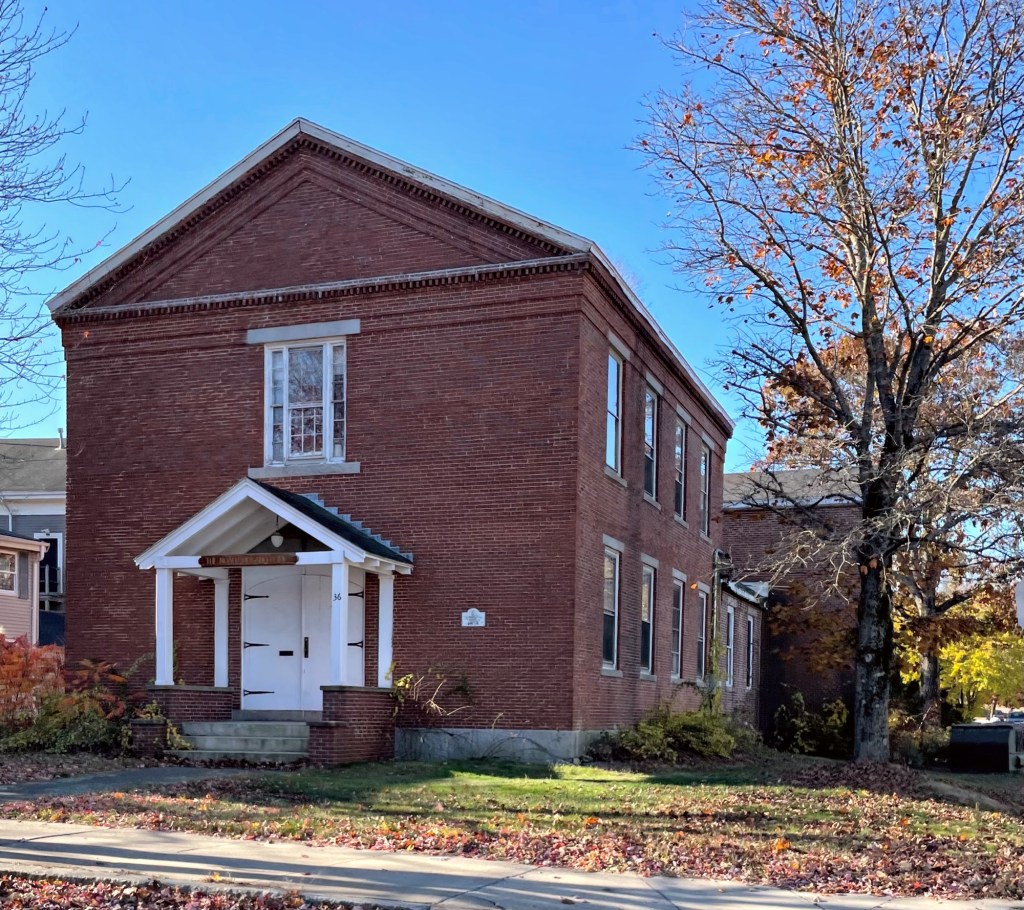
Georgetown Brick Schoolhouse No. 4 // 1854

Constructed in 1854 for intermediate and high school classes at a time when one-room schoolhouses were still the rule in Georgetown, this well-preserved brick building is a reminder as to how far education and schooling has come. As nearby one-room schools consolidated and after the new Central School Building (now Georgetown Town Hall) was built in 1905, this Greek Revival school building was converted to town offices. The town was still fairly small, so the offices only occupied the ground floor, and the town rented the upper floor to the All Saints Episcopal Church, who purchased the building in 1917 and occupied it for nearly 50 years. They likely added the Craftsman style entry porch. The church was deconsecrated in 1966, and the building sold in 1970 to the Noack Organ Manufacturing Company, who added an assembly room at the rear.

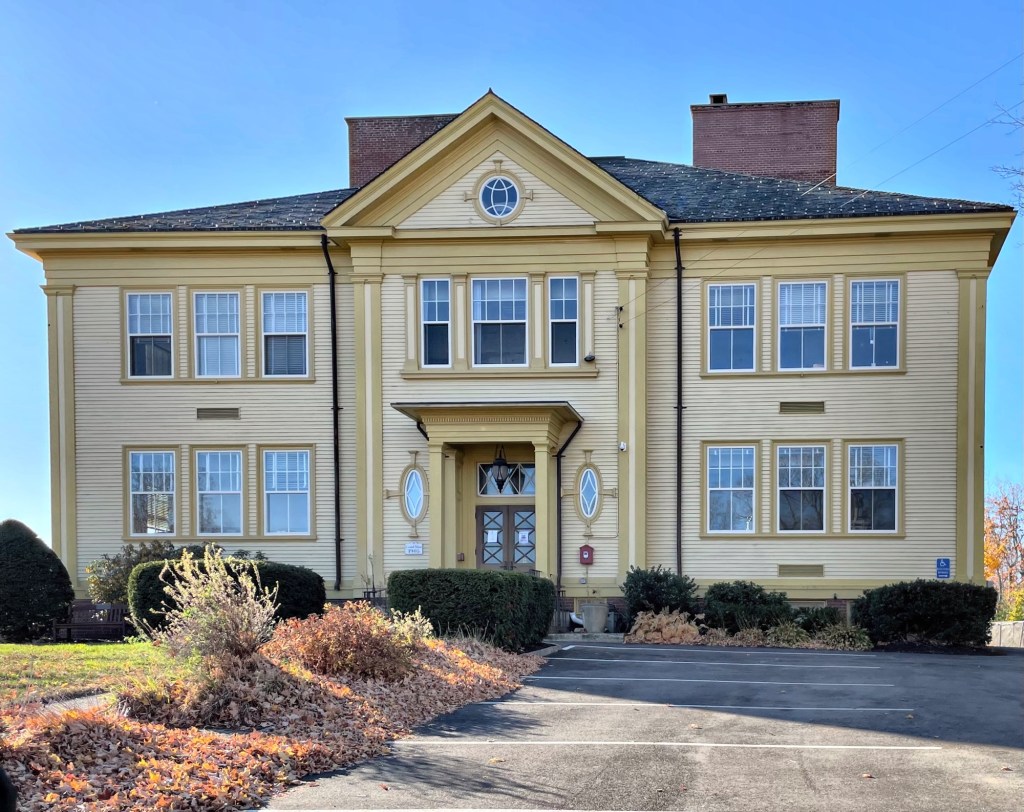
Georgetown Town Hall // 1905

Welcome to Georgetown! The Georgetown Central School, now known as the Memorial Town Hall, stands near the historic commercial center of Georgetown, Massachusetts, a rural community in Essex County located about 28 miles north of Boston. The two story wood-frame building was built in 1905 to a design by the Boston architectural firm of Cooper and Bailey, and located at the site of an earlier one-room schoolhouse built in the 18th century. It was Georgetown’s first multi-room school building, and was built after the town’s first high school/town hall burned down in 1898. The Colonial Revival style school building was eventually outgrown and was no longer needed as an educational facility. It was converted to municipal offices in 1974, a use that has remained ever since. The town has taken pride in this building, restoring much of the exterior details and slate roof.

The Billingsgate Cottage // 1892

In 1892, this large summer “cottage” was built in the Land’s End section on the coast of Rockport, Massachusetts. The large summer residence was built for the Thatcher sisters of Roxbury and was named “The Billingsgate” after their mother’s maiden name, Billings. Caroline Billings Thatcher would summer here with upwards of her four other sisters, Lillian, Margaret, Mary, and Elizabeth, to escape from the city. The large summer cottage features a rubblestone first floor with stone columns supporting the shingled floor above. A large gambrel roof and dormers punctuate the façade and showcase the simplicity and elegance of the Shingle style.

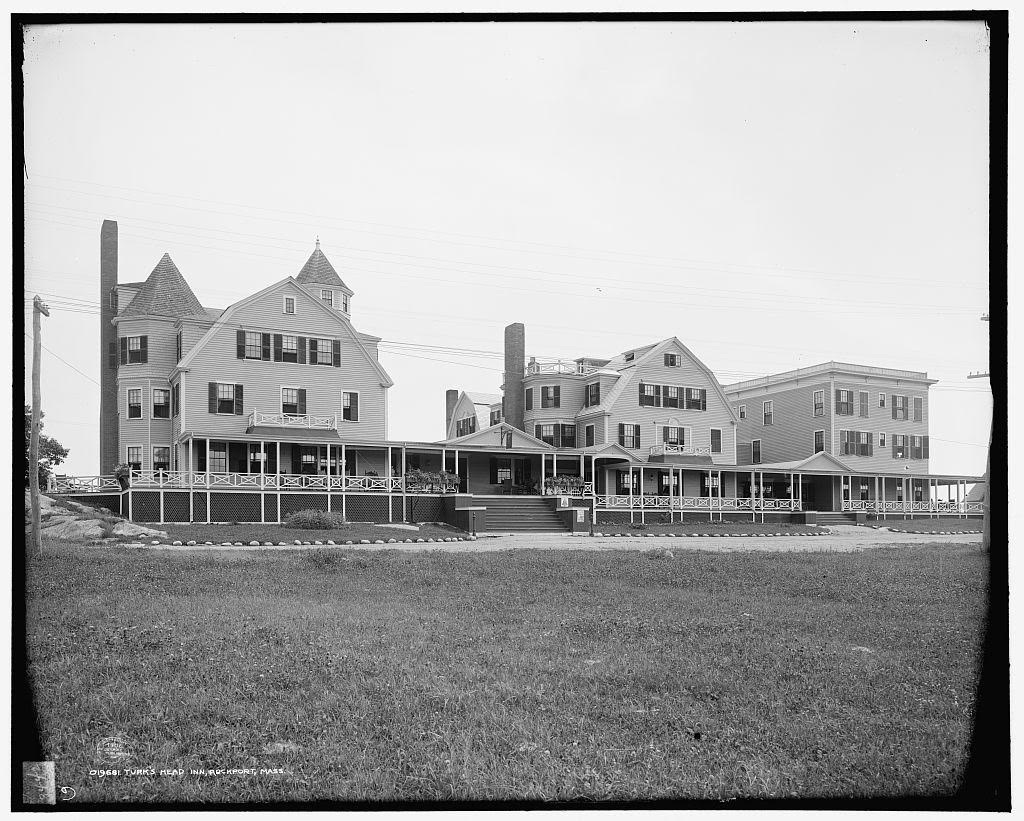
Turk’s Head Inn // 1890-1970

The Turk’s Head Inn was once Rockport’s grandest getaway. For those uninterested in building their own summer cottage to spend the along the coast of Massachusetts, luxury summer resorts provided summer rentals for those escaping the hot and polluted cities in favor of cool ocean breezes. Once situated in the  Land’s End section of Rockport, the Turk’s Head Inn, had sweeping views of the coast and islands in the distance. The initial portion was built from 1889 to 1890 by builder J. M. Wetherill of Rockport based on plans by architect H. M. Stephenson of Boston. It was expanded and became this rambling, E-shaped Colonial Revival structure with a seaboard frontage of two hundred feet and wraparound verandas over three hundred feet in length. Over the years, the Turk’s Head Inn suffered a number of fires, and its central and southeast wings were rebuilt, the latter in 1905 by then owner C.B. Martin. With a peak capacity of 200, the hotel, uncharacteristic of the regional hospitality industry, remained in operation for eighty years before it was closed down, partially destroyed by fire, and the remains removed in 1970.

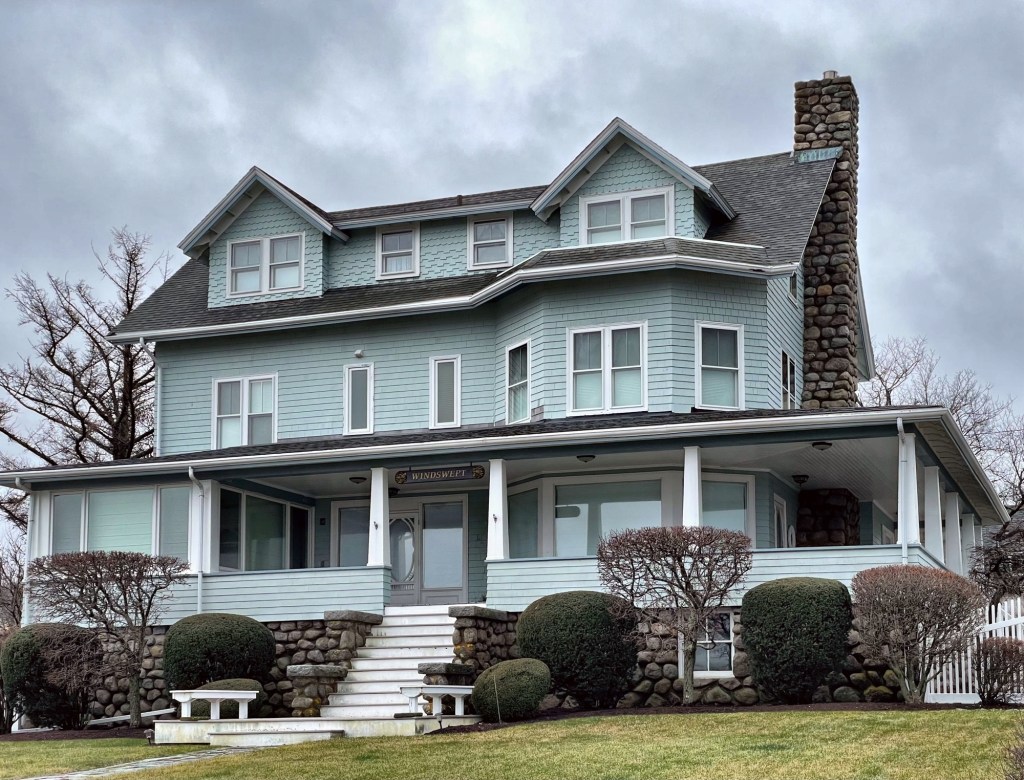
Windswept Cottage // 1909

The coastal towns of Gloucester, Manchester, and Beverly on the North Shore of Massachusetts often are known for their historic summer “cottages” but great examples can be found right here in Rockport! This is “Windswept”, the W. W. Blunt cottage, located in the Headlands section of town, just south of the harbor. Walton W. Blunt worked as the Treasurer and General Manager of the Boston Journal newspaper and resided in Boston, later purchasing multiple adjoining house lots in Rockport for a summer residence. The two-and-a-half story house was designed by a Rutherford Smith, who sought to utilize fieldstone found nearby for the foundation and chimneys and shingle siding above. Detailed descriptions of the new house were featured in a local newspaper in 1909 and mentioned tennis courts on the grounds, an apartment for servants, and a billiard room in the third floor. It is not clear when the house got its name, “Windswept”, but the name is just too fitting!