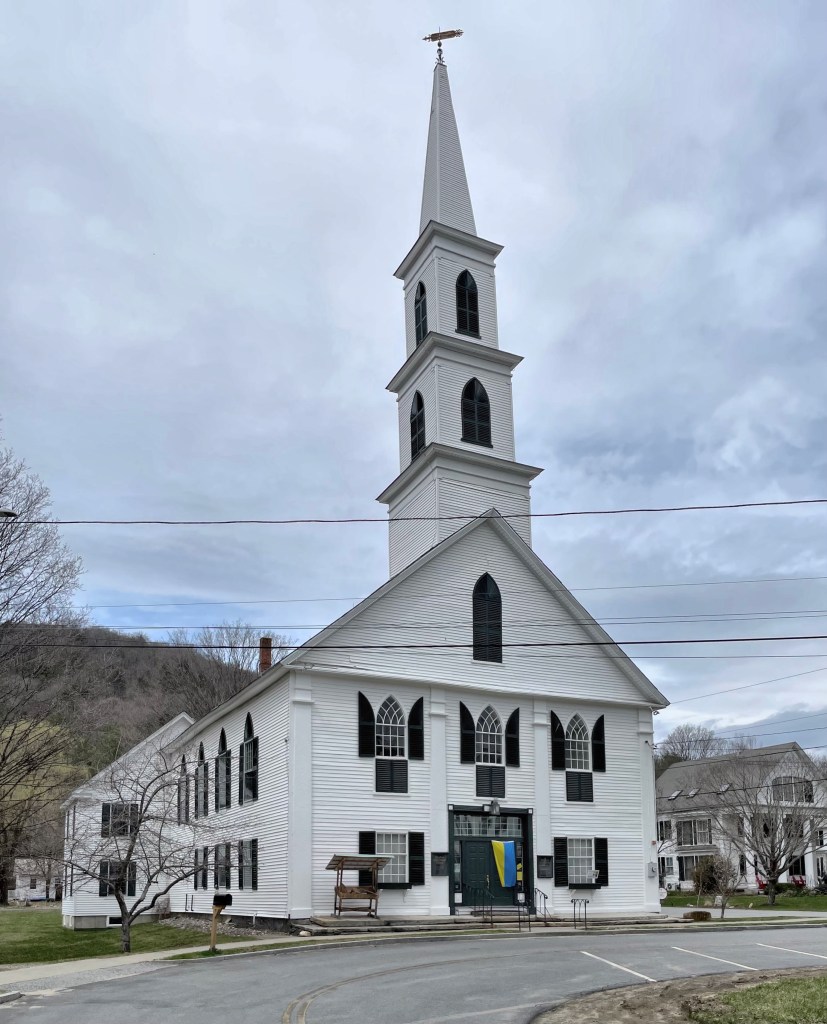
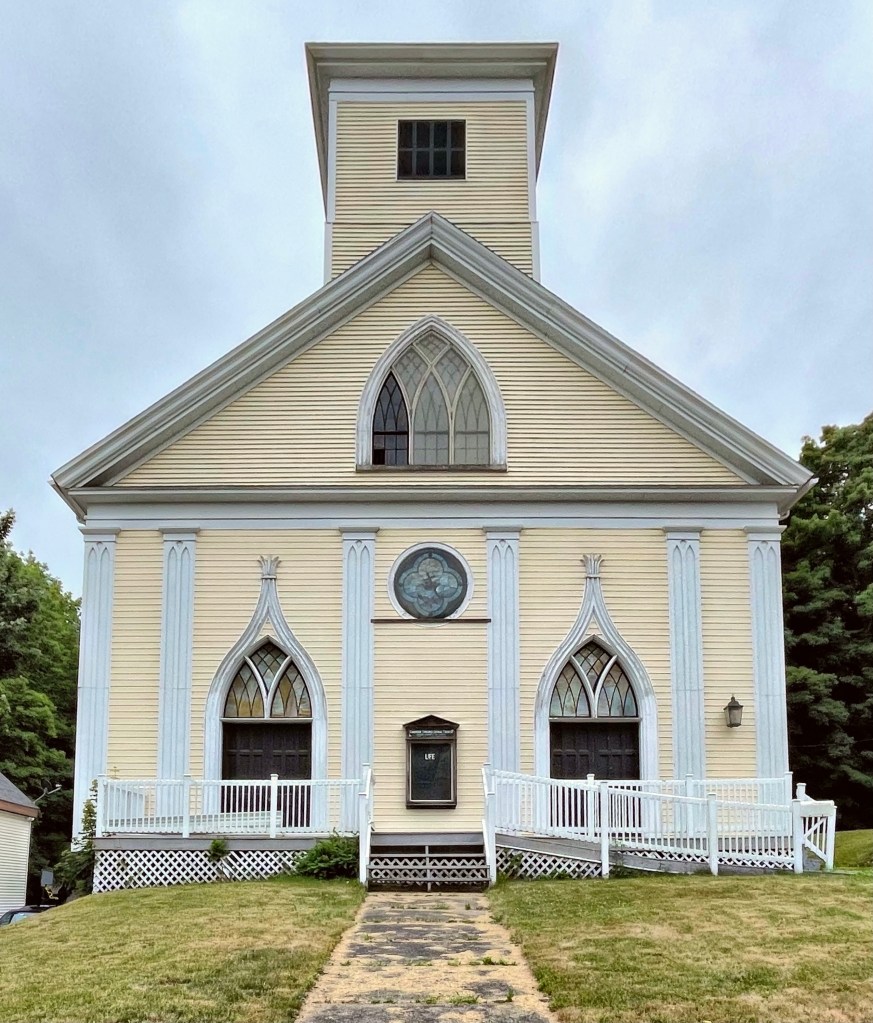
First Congregational Church, Norway // 1840

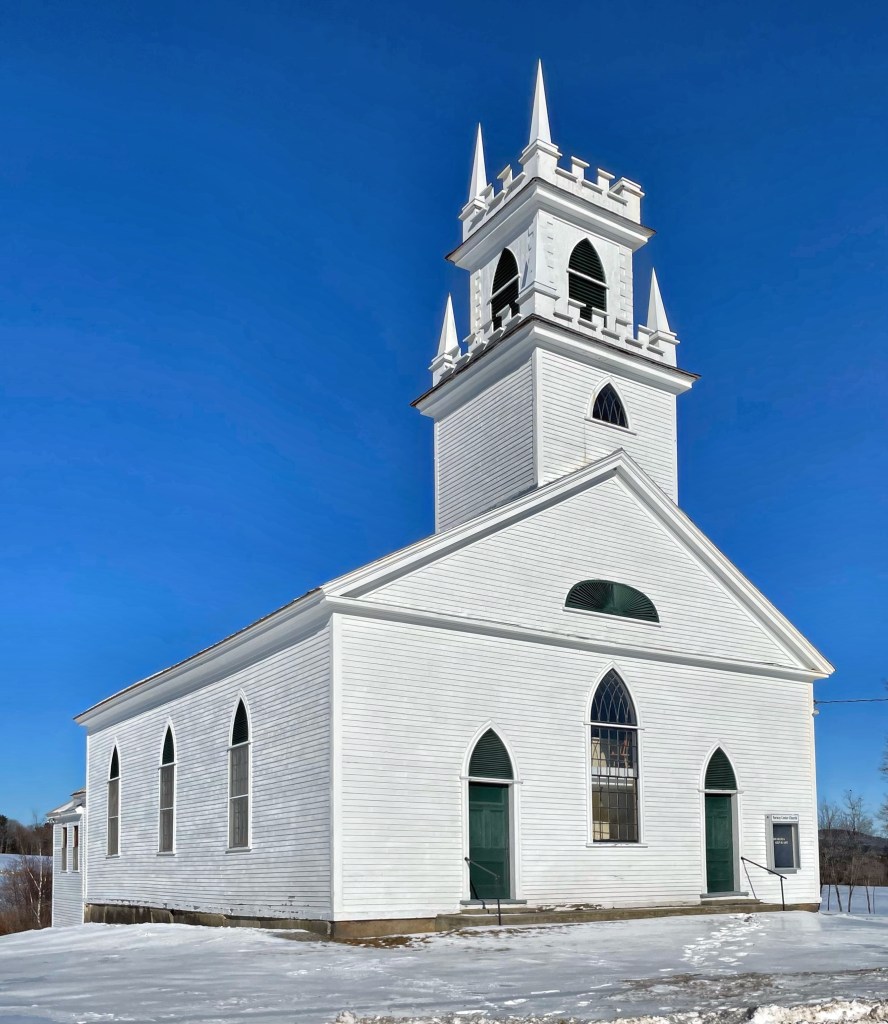
This beautiful, bucolic church in Norway Center was built in 1840 to replace an earlier meeting built in 1808-09 on the site. The present building is Gothic Revival in style with louvered panels making the windows appear lancet in shape and the amazing lancet window centered on the facade. The two-tiered tower is ornamented with crenellation and a wooden spire at each corner (besides one missing). The church features a louvered fan and strong pediment, which are nods to other prominent styles of the early-mid 19th century, Federal and Greek Revival respectively. This church quickly saw membership drop as Norway Village became the population center of town, with Norway Center becoming more agricultural and rural.

Calvert-Marin House // c.1845

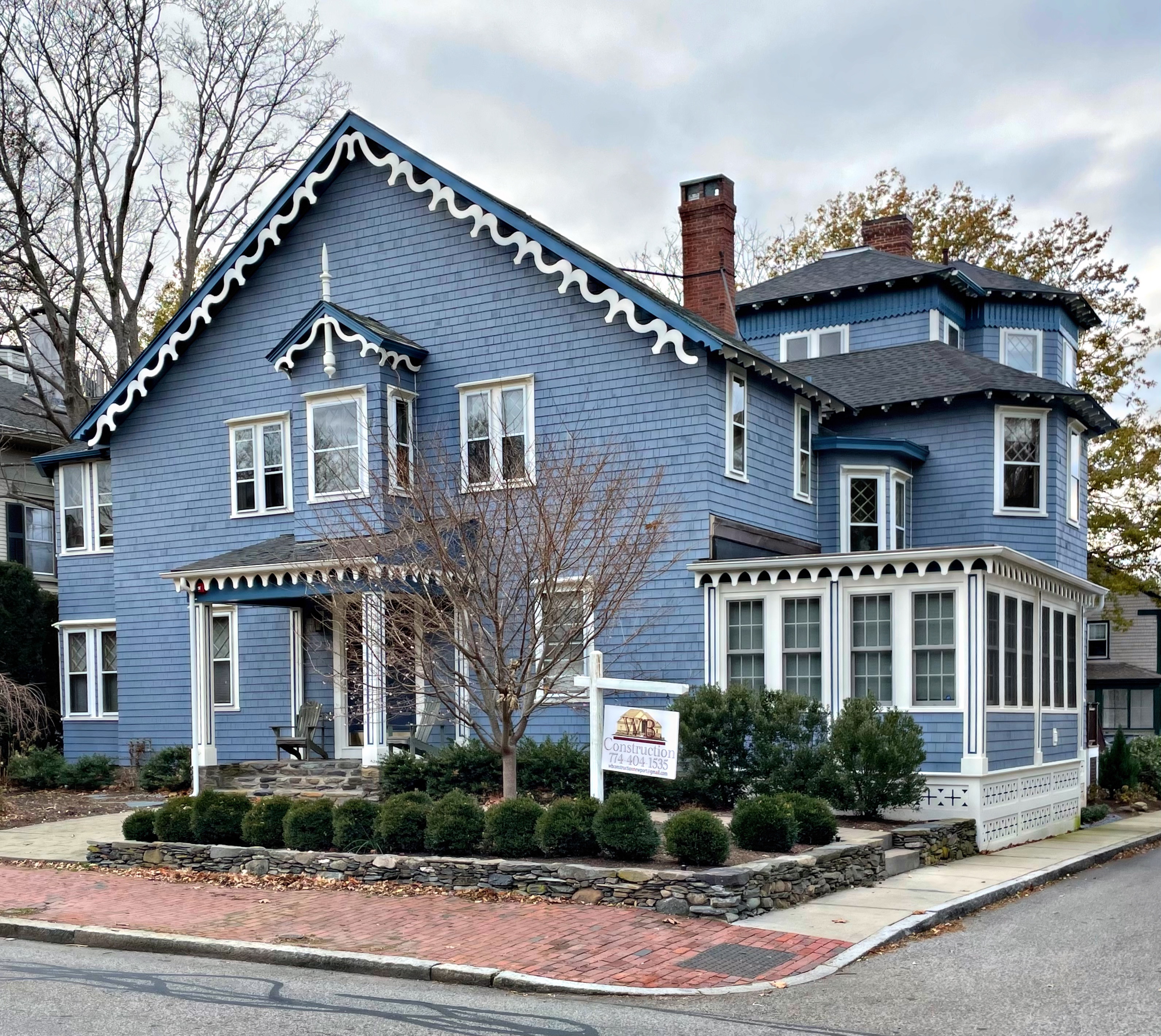
In 1843, George Henry Calvert (1803-1889) and his wife Elizabeth Steuart moved to Newport, Rhode Island from Maryland, not long after built or purchased this home. George was the son of George Sr. a plantation and slave-owner in late eighteenth- and early nineteenth-century Maryland. His plantation house, Riversdale plantation, also known as the Calvert Mansion, built between 1801 and 1807, was designated a National Historic Landmark in 1997. From his wealthy upbringing by unsavory means, George was able to attend Harvard and spent time travelling to Europe. There, he met poets Goethe and William Wordsworth. He lived in Baltimore and served as editor for the Baltimore American, the largest local paper in the city. He worked on poetry and eventually moved to Newport, RI, possibly seasonally. This home was built in the Gothic Revival style for Calvert and his family. Years later, he was elected Mayor of Newport. Calvert hired Fannie Jackson Coppin as a servant for the household. Coppin was born a enslaved in Washington D.C., but gained her freedom when her aunt was able to purchase her at the age of twelve. She went on to become an advocate and leader in Black education. Historic maps show two properties owned by the Calvert’s. A nearby building, presently 38 Kay Street was possibly built as a barn or stable for the Calverts. This home was purchased in the 1880s by Captain Mathias Candelaris Marin, a sea captain who fought in the Mexican and American Civil wars. Marin likely modernized the Gothic House, adding the shingle siding and large Queen Anne additions to the rear. The Marin Street at the side of the house is named after him.

John Bush House // c.1845

Here is another of my favorite non-Gilded Age houses in Newport, the John Bush House on Mann Street! John T. Bush (1817-1881) was listed in directories as a “wool-puller” which clearly was a lucrative job, as he could afford to build this high-style Gothic Revival home. This house is heavily influenced by the publications of Andrew Jackson Downing first published in 1842, so the house is probably built within a couple years of that date. Hallmark features of the Gothic Revival style include: lancet windows, bargeboards, windows with drip molds, and steeply pitched roofs; this house has all of the above!

Church of the Holy Redeemer // 1907

Built to replace the former St. Sylvia’s Catholic Church (1881-1909), the Church of the Holy Redeemer in Bar Harbor stands as one of the more imposing religious buildings in town. The new church was envisioned by Rev. James O’Brien, who wanted a larger church structure closer to downtown Bar Harbor than the current St. Sylvia’s. The Neo-Gothic stone church was designed by Bangor architect Victor Hodgins, and was constructed from granite blocks quarried from Washington County, Maine. Inside, massive trusses from felled cyprus trees nearby support the roof and stone walls. Gorgeous stained glass windows line the walls which flood the interior with color.

Rochester Congregational Church // 1837

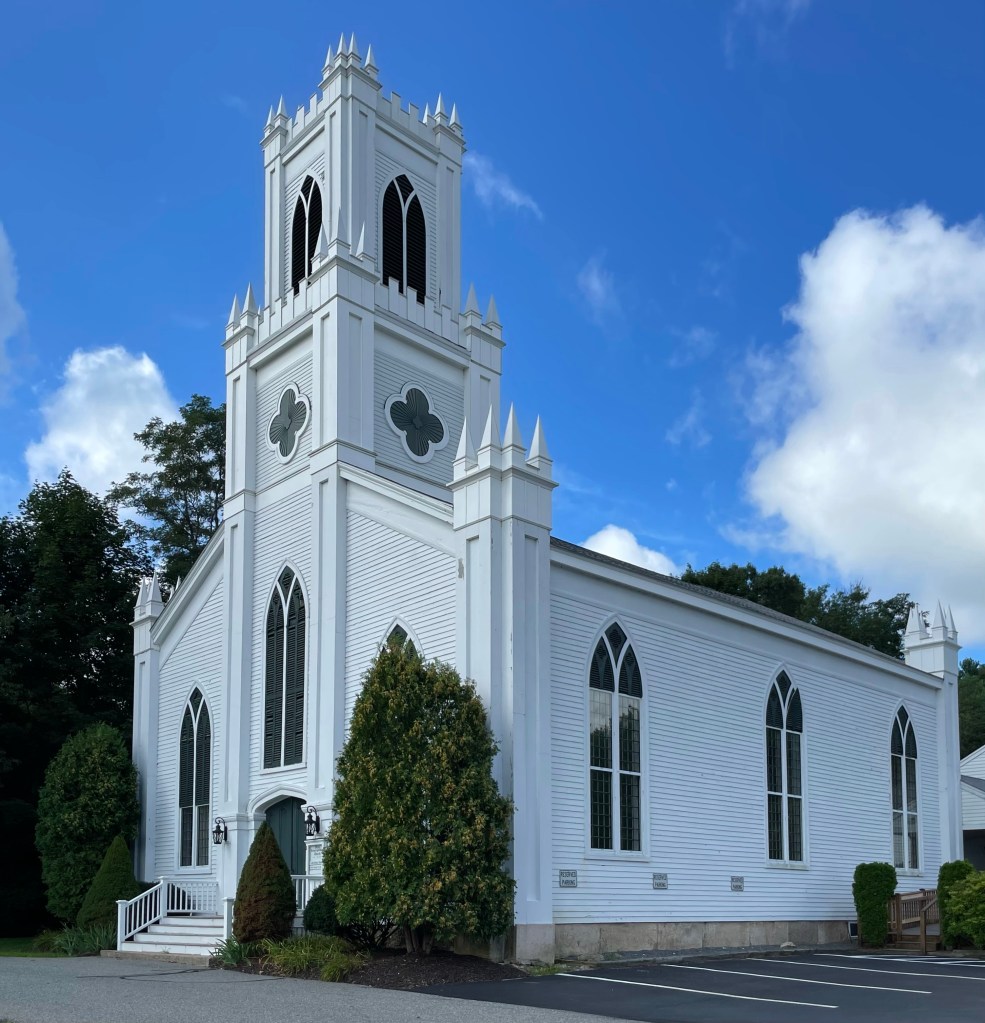
Rochester’s First Congregational Church is the oldest extant building still standing on the Town Green in Rochester Center and is the fourth house of worship to occupy the site. Constructed in 1837 to the designs of architect, Solomon K. Eaton, the beautiful Gothic Revival church building is among the most beautiful in the state. Eaton was well-known for his ecclesiastical structures, but also designed other prominent civic buildings in Southeastern Massachusetts. A fun fact about Eaton is that at age 55, he volunteered for the Union Army during the Civil War and his unit saw action in North Carolina, he returned home after the war and lived out his final days. The church stands out to me for the quatrefoil windows on the bell tower, the pointed finials and comer posts, and large lancet windows. Swoon!

Gardiner Universalist Church // 1843

This stunning Gothic Revival church was built in 1843, on the site of the blockhouse, erected 80 years prior for the settlers of the area from native attack. In the 17th and 18th centuries, many rural parts of New England had blockhouses erected to allow the settlers a defensive fort from attack. The blockhouses were often garrisoned wooden structures with small windows on all sides to allow for gunfire to attackers below. The structure would protect those inside from arrows and melee weapons. This building however, was constructed later for the Universalists, who believed in “universal salvation,” who had been meeting since 1821 in a schoolhouse beside the town common. The church, in its original state with its steeple and clock, was an extremely sophisticated example in wood of the Gothic Revival style with its pinnacles, lancet windows and pilasters. Sadly, the steeple and clock were removed in the early 1920’s for safety reasons as the structure could not support it without significant engineering. The church and congregation changed to the United Church of Christ-Congregational denomination in 1964. After that, the building was occupied by a brewery (believe it or not), before being reverted back to a church by the current congregation.

David Forrest House // c.1857

This home in Schenectady’s Stockade Historic District appears to have been built in the mid-19th century, and is an excellent example of a modestly sized Gothic Revival cottage. The house was occupied around 1860 by David P. Forrest, who served one term as Mayor of Schenectady in 1859, later becoming an Inspector of State Prisons from 1860 to 1862. The amazing Gothic bargeboard and other trimmings have remained and add so much intrigue to the home’s design. And that lancet window in the gable end! Swoon.

St. Paul’s Episcopal Church // 1937

Historically significant as the third home of the St. Paul’s Episcopal Church in Brookfield, Connecticut, this building is also architecturally important as an exceptional Gothic Revival place of worship. The second church of St. Paul’s burned on Valentine’s Day 1936, and the church soon after sought to rebuilt, but with fireproof construction. Members of the church were said to have gathered stones from stone walls nearby, as the town developed, with farmland making way for suburban housing. Bridgeport architect Frederick H. Beckwith furnished plans for the Gothic Revival edifice, which apparently took inspiration from a church in Dorset, England.

St. Mary’s Catholic Church // 1911

This 2-story Neo-Gothic Revival church constructed of buff brick and limestone, is dominated by an off-center, 4-level tower and showcases how even smaller towns in New England have some of the finest 20th century churches. In 1849 St. Mary’s parish, in nearby Warren, Rhode Island, was founded to serve residents there as well as Irish and French Canadian immigrants in Bristol, which began arriving en masse. Just years later, in 1855, the first St. Mary’s Church in Bristol, was constructed as a plain wooden structure, and operated as a mission of the Warren church. In 1874 the Bristol church became an independent parish and saw large increases to membership with more Irish families settling here. Over the next decades, the space became more cramped and a building campaign was started to get a new place of worship. The present St. Mary’s Catholic Church was built in 1911, from plans by the Providence-based architectural firm of Murphy, Hindle & Wright, who together (and separately) designed many ecclesiastical buildings, in Rhode Island and Massachusetts. The interior is even more stunning than the exterior detailing, and remains very well-preserved.

Mount Vernon Congregational Church // 1892 & 1984

The Mount Vernon Congregation Church was founded in 1842 and originally was located in Ashburton Place on Beacon Hill (which I featured previously). As its members moved to the Back Bay, the congregation decided to build a new church in the western portion of the neighborhood. They hired architect C. Howard Walker to design the new church building, with stained glass windows by John LaFarge and Louis Comfort Tiffany added as memorials to several members of the congregation over subsequent years. As originally designed, the church had a 45-foot high steeple on top of its 85-foot square tower, but over the years it became structurally unsound, and it was removed just before the Hurricane of 1938, which toppled many steeples all over the region. In 1970, the church merged with the Old South Church in the Back Bay. In 1977, developers proposed to remodel the church building into retail and office space. The proposal was approved by the Boston Redevelopment Authority in January of 1978. Before work could commence, a fire destroyed much of the church building leaving a shell of Roxbury Puddingstone walls and the tower, the developer pulled its funding and the building’s future was uncertain. One year later, architect Graham Gund purchased the building. Gund was familiar with adaptive reuse projects, like his restoration of the Middlesex County Courthouse in Cambridge for his own office in Cambridge in the 1970s. Gund redesigned the building into 43 condominium units called Church Court. What are your thoughts on the architecture?