Jabez Sargeant Jr. House // 1797

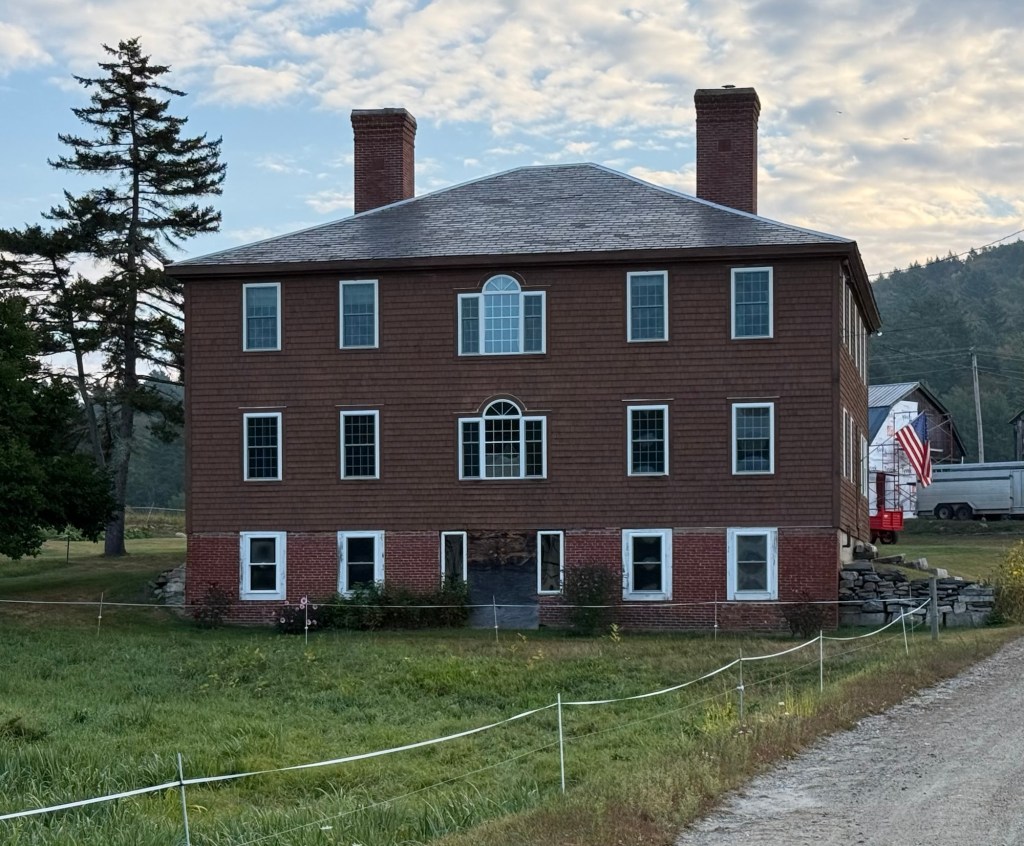
Deacon Jabez Sargeant (1720-1788) was born in Malden, Massachusetts, and later moved to the newly established town of Chester, Vermont in 1763. He is thought to have been the first settler of European ancestry in the town. Upon the outbreak of the Revolution, he served in Captain Little’s Company in 1778, returning home to Chester after. His son, Jabez Sargeant Jr. built this stately three-story late-Georgian residence in 1797 as a tavern along the Green Mountain Turnpike, a highway connecting Boston and Montreal. The dwelling originally fronted directly on the road, but was moved back sometime in the 19th or 20th centuries. The building boasted a large ballroom on the second floor, likely for community and fraternal organizations, and a tavern in the brick first floor. It is likely that Jabez and his family lived on the third floor. Outside, the property contained a large apple orchard and cider house, providing drinks to weary travellers. Although the tavern is built to a large size, it lacks many of the high-style features often found in large Georgian houses, telling for its time of construction in a sparsely developed area without seasoned builders.

Stone Village Schoolhouse // 1835

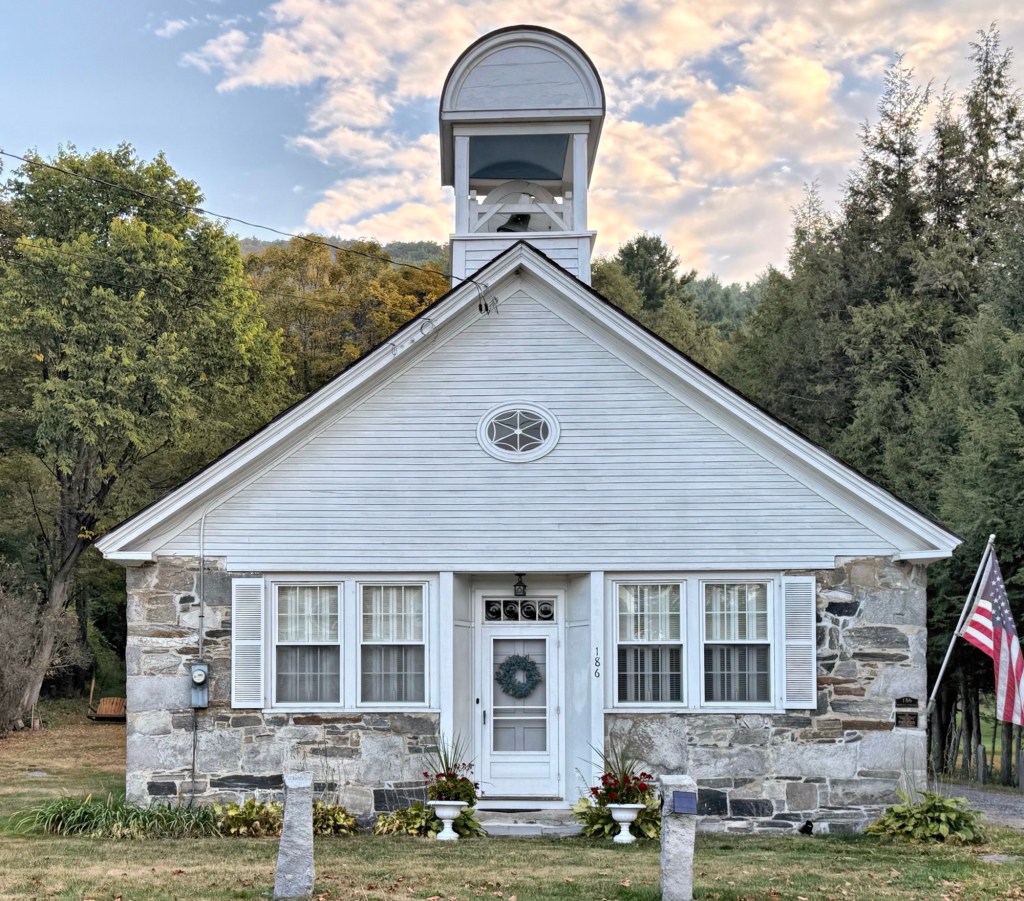
Across the street from the Gideon Lee House in the Stone Village of Chester, Vermont, this historic schoolhouse is one of the oldest in the state and one of the few extant schoolhouses built in stone in New England. The Stone Village Schoolhouse is a rare example of a snecked ashlar building, where the construction method is said to have been brought to the area by masons from Scotland and Ireland which is known there as ‘Celtic Bond’. Oral tradition state that Scottish masons from Canada introduced the technique to local masons while erecting a mill in nearby Cavendish in 1832. Local Chester resident, Dr. Ptolemy Edson became such a fan of the building that in 1834, he had his home, the first stone building in Chester, built in this method. He then would influence the rest of the North Village of Chester, where many of his neighbors, as well as the church and schoolhouse, built their structures in snecked ashlar. Completed in 1835, the schoolhouse is a single-story rectangular plan building with the end gables forming a high pitched roof with a bell cupola over the facade’s gable. The snecked ashlar siding appears only on the first floor with traditional wood clapboard siding in the gable above. Built as School No. 3 for Chester, the building converted to residential use in the 20th century, but still maintains its important materiality and the iconic school bell, allowing passersby to understand its original purpose.

Chester Academy – Chester Historical Society // 1884

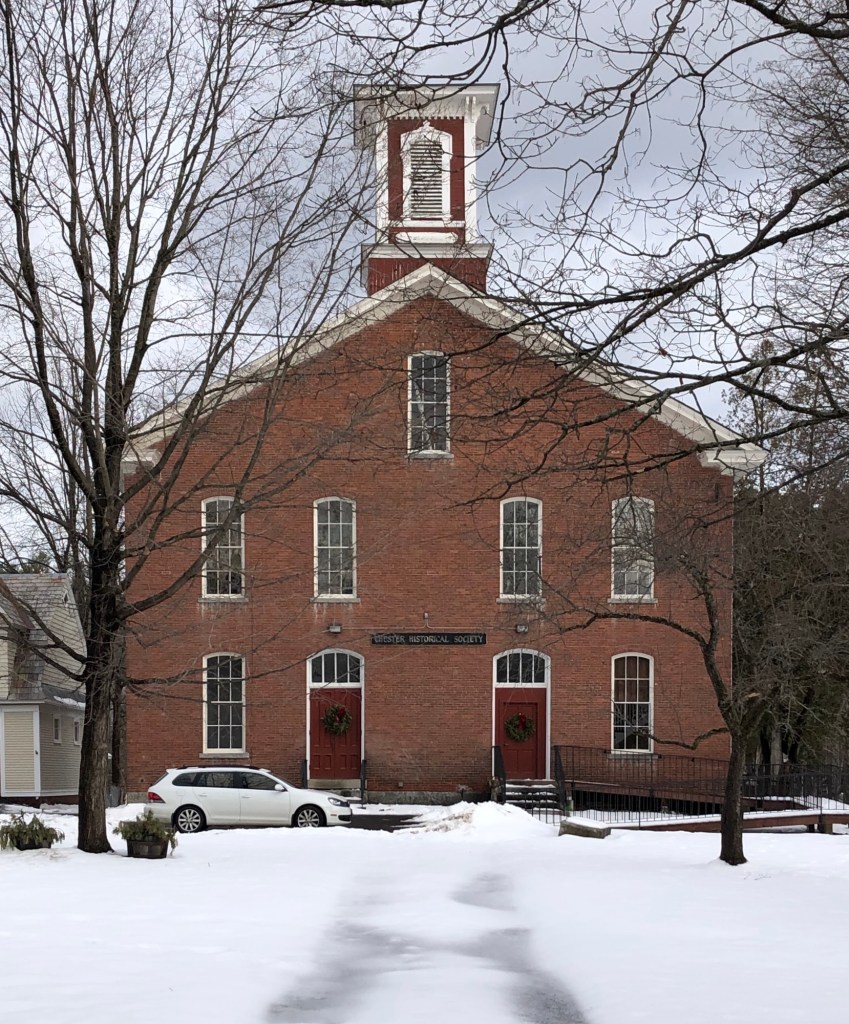
The town of Chester, Vermont, is one of the best small towns in the state for architecture lovers! Don’t believe me? I will prove it in this upcoming series. Located in Chester Village, the town’s center, this handsome brick building set off the main street, was built in 1884 as the town’s high school, replacing an 1814 private academy formerly on the site. The private academy closed in 1881, and the building was sold to the town, who by 1884, demolished the original structure and erected the current Italianate style building. The building served as the town high school until 1911, when a new high school was constructed nearby. The elementary and junior high school operated from here until the 1950s, when a modern school was constructed in town. Since 1950, the former academy building has been used by the Chester Art Guild, and currently is leased from the Town by the Chester Historical Society. The structure retains its architectural character down to the segmental arched windows and cupola.

Simonsville Union Meetinghouse // 1848

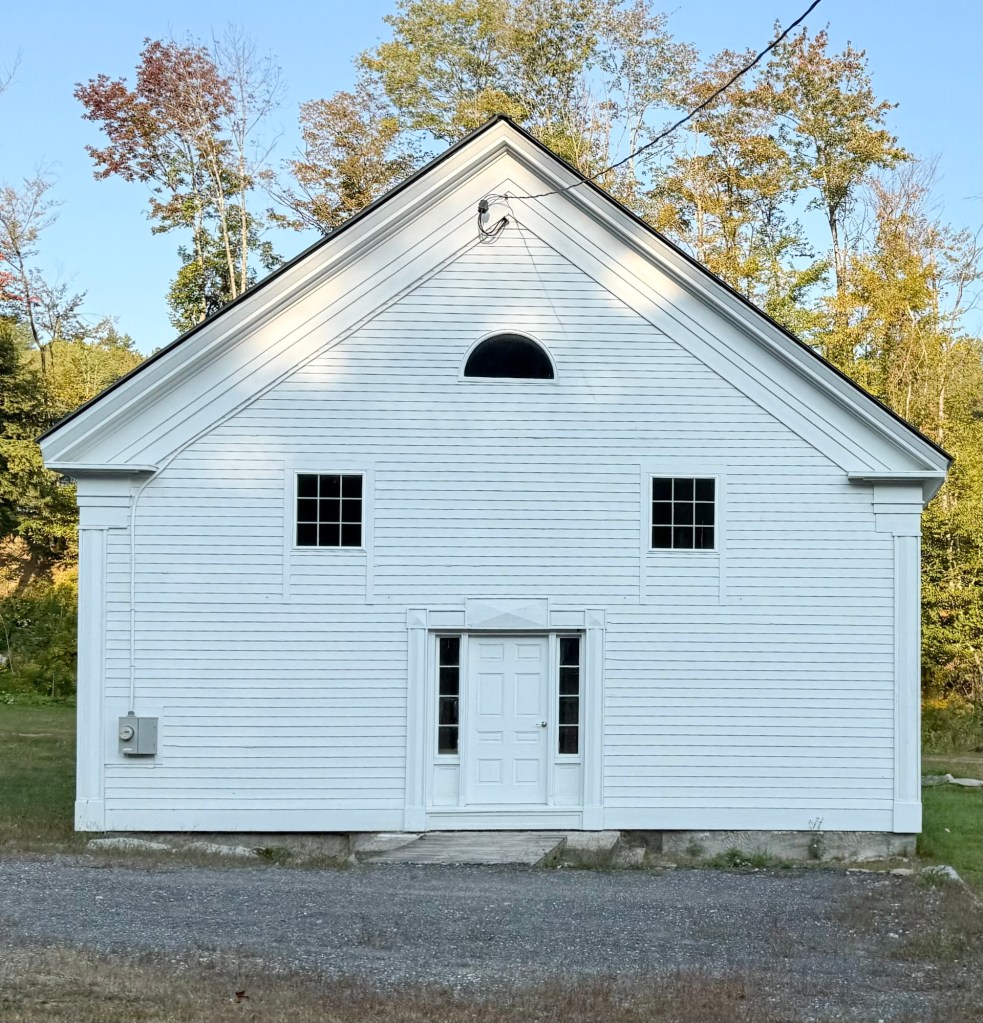
A once excellent example of a Gothicized, vernacular Greek Revival church in Vermont, the former Simonsville Meetinghouse in Andover, Vermont, has since been renovated into a private residence, removing almost all of the original fabric. Long ago in the Simonsville area of Andover, the residents desired to have a meeting house. There was a Baptist church in the village of Peaseville, but not all the Simonsville residents were Baptists, in fact, there were several religious denominations being followed. None of the religious groups had enough followers in Simonsville to be able to afford a minister and a church building, so they got together and combined their efforts and finances to erect a union meetinghouse that they would share. In April of 1847, the Simonsville Union Meetinghouse Society was formed and later that year, construction began, with the building completed in the spring of 1848. By the late 20th century, membership and use of the building dwindled, causing deferred maintenance and threatening the future of the church. The trustees of the church sold the building, and the church has since been renovated for private home. Sadly, the gothic belfry and historic window fenestration were altered in the renovation, but the entry and basic form remain.

Leland Homestead // 1843

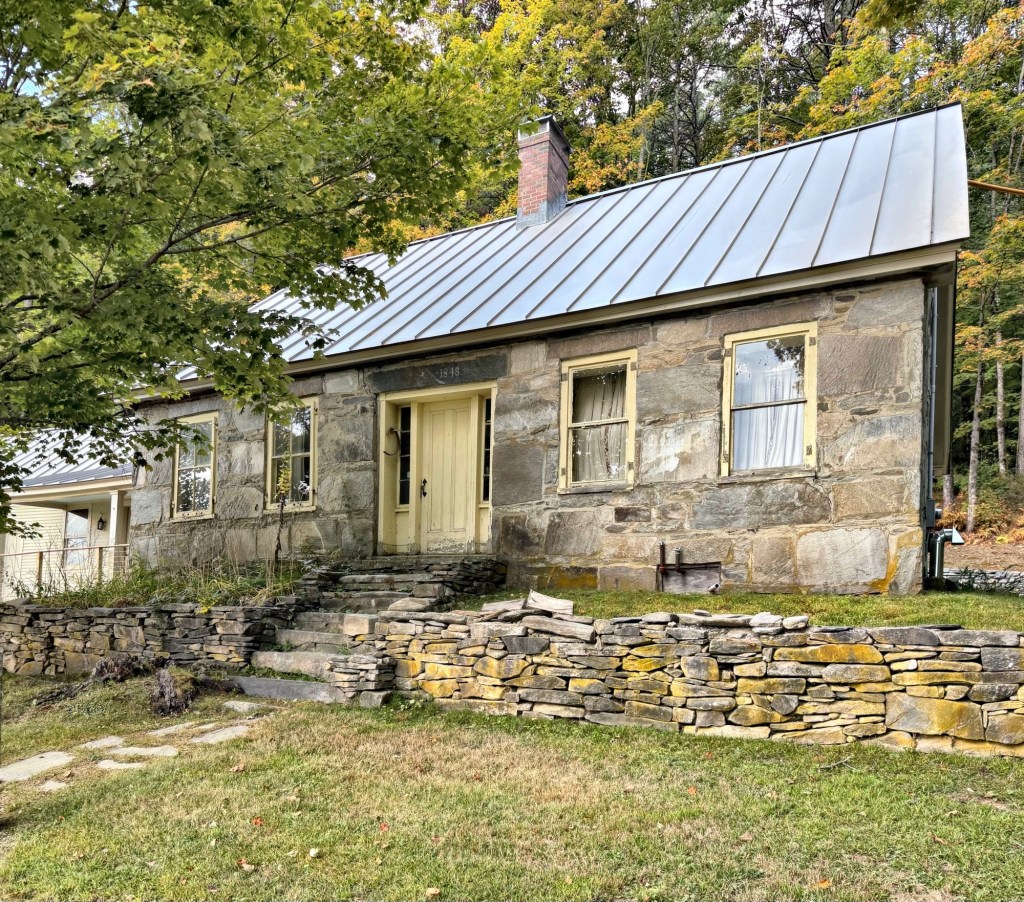
The small, rural Town of Baltimore, Vermont, was originally a part of Cavendish but due to the geography and a mountain separating the village from the main town, residents here voted in 1793 to set off as its own town. The nomenclature of the town name, Baltimore is not clear, as the city in Maryland was named for George Calvert, first Baron Baltimore, who was granted that colony in 1632, but there is no evident connection between the two communities. The word Baltimore itself is Celtic for “large town”; appropriate for Calvert’s colony, perhaps, but hardly for this Vermont town, which is one of the smallest in the state in terms of population or square miles. The town has always been a community without a distinctive village center and has long been primarily farmland, with properties bounded by stone walls and forests. This stone house on Harris Road in Baltimore was built in 1843 by Joshua Leland and his wife, Betsy Boynton. A history of the town speaks of the house, “It was one of the most attractive houses ever built in Baltimore, a well-built front hall and stairway, four fair-sized pleasant rooms downstairs, three well-arranged chambers and a convenient back stairway, all well-finished”. The home, with its date of construction over the front door, remains one of the most historic and well-preserved buildings in the town of just over 200 residents.

Derby Line National Bank // 1874

Another of the more stately institutional buildings in the small village of Derby Line, Vermont, the Derby Line National Bank stands out as an uncommon brick structure on the town’s Main Street. The bank was founded in 1851, as the People’s Bank in Derby Line and in 1865, it converted to a national charter and became National Bank of Derby Line. The bank provided citizens access to credit and as a result several small-scale manufacturing businesses were started in town. This brick banking structure was built in 1874 in the Italianate style with round arched windows, bracketed eaves, and granite block quoins at the corners. The bank was absorbed into the Community National Bank, who occupy the building to this day.

Charles C. Warren House // c.1880

Located just steps from the former State Hospital of Vermont in Waterbury, the Charles C. Warren House on Main Street stands as an important Victorian-era residence in the town. The late Italianate style residence features a detached carriage house at the rear which was later converted to a auto garage and most recently to office space. Mr. Warren was a businessman in town who owned a tannery and creamery. He built a water system in the town in 1879, making a substantial amount of money in the process. Mr. Warren was a serious auto enthusiast who in addition to purchasing the first automobile in Vermont (a 1899 Haynes Apperson), he held Vermont registrations #1 and #2. He had his carriage house converted to an auto garage equipped with a turntable that obviated forever the tedium of backing down the driveway. The building is now home to a law office.

Oliver Tarbell House // c.1830

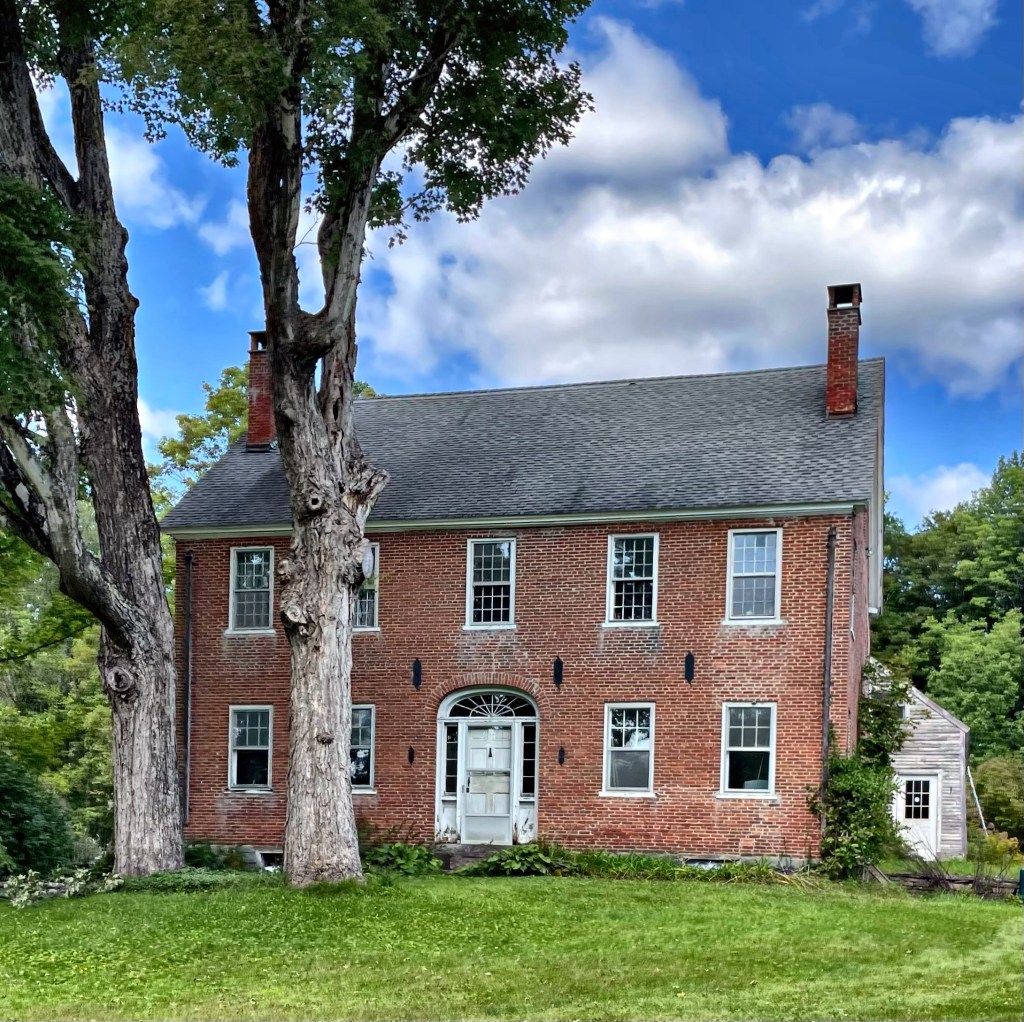
Oliver Tarbell and his wife Sandy erected this stunning brick Federal farmhouse in Cavendish around 1830 for their ever-growing family. The couple had thirteen children who survived infancy, so even this large home was likely stuffed to the gills and hectic! Oliver appears to have built the home, incorporating his ancestral home onto the rear of this brick house, as a rear ell. The house recently sold in 2022, so of course I had to gawk at the amazing interior photos