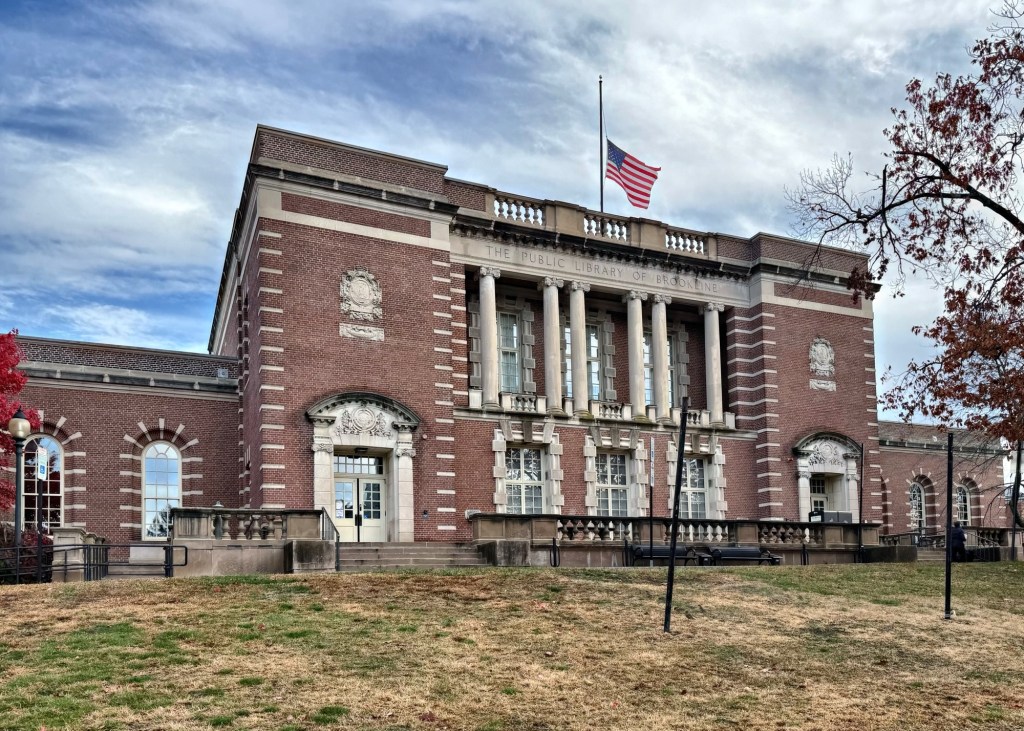
Brookline Public Library // 1910

The Brookline Public Library in Brookline Village opened in 1910 and was designed by R. Clipston Sturgis, one of the great 20th century architects in the Boston area. Taking his cue from the south facade of the Queen’s House at Greenwich, England, Sturgis designed a modest expression of Palladianism in red brick and limestone. The building is the second library on the site, replacing an 1869 mansard roofed building that was outgrown and demolished for this building. The Brookline Library was expanded in 1974 by Integrated Design Services Group and renovated again by Perry, Dean & Rogers.

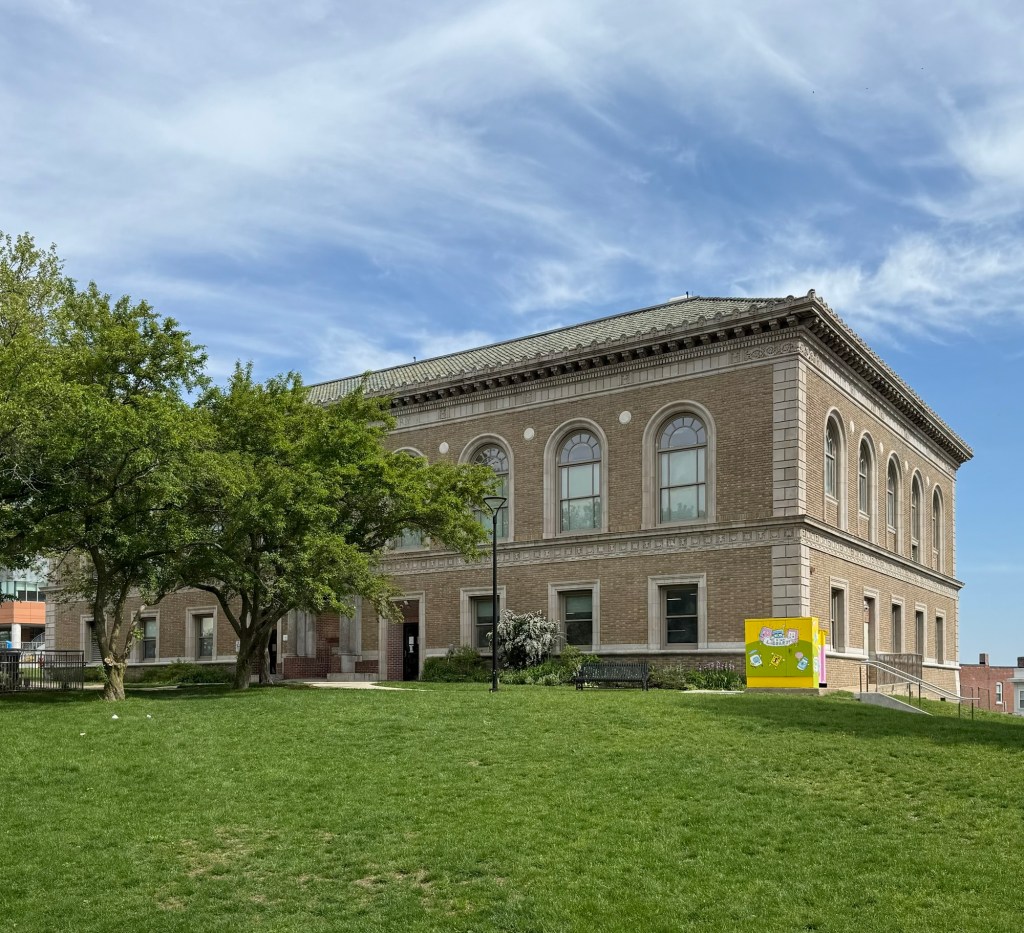
Somerville Central Library // 1914

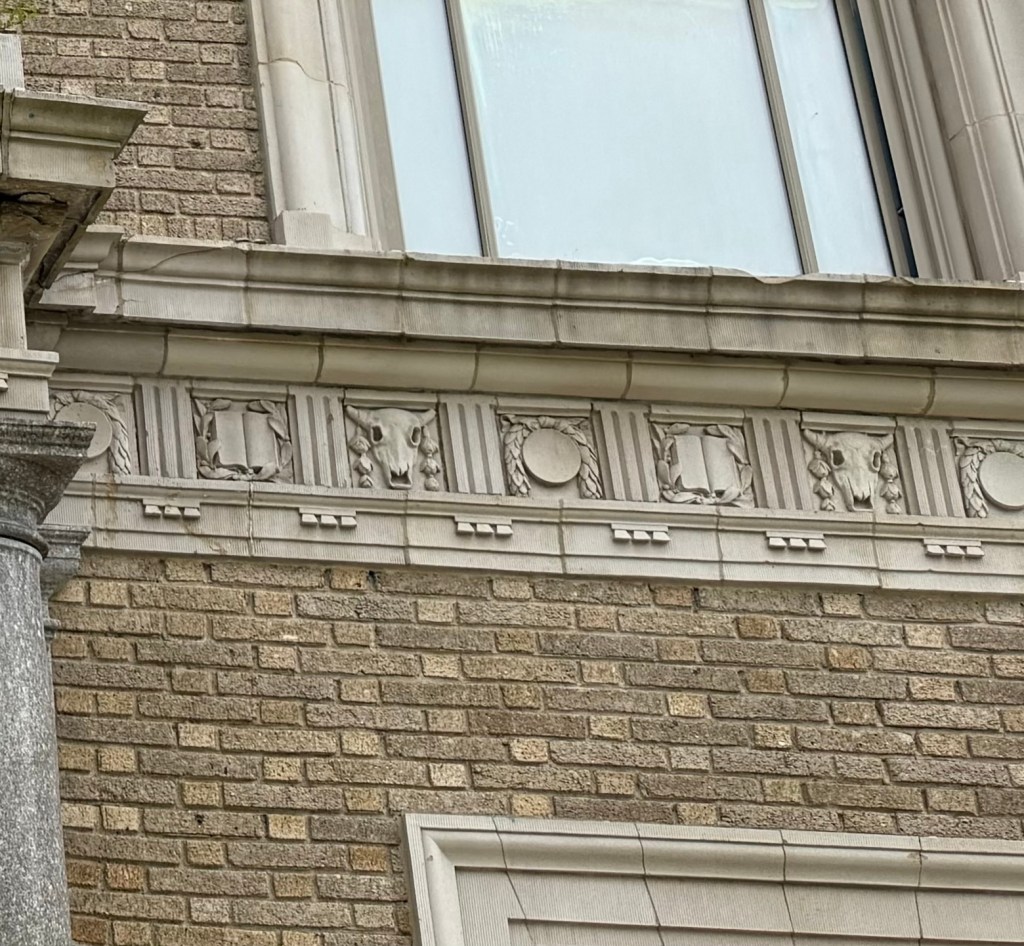
The Central Library of Somerville, Massachusetts, is a landmark example of the Renaissance Revival architectural style for civic purposes and showcases the prosperity and growth of the city in the early 20th century. The building was the second library constructed on Central Hill,  with the city’s first library built on west side of Central Hill, near City Hill, and was designed by local architect George F. Loring in the Romanesque style. By the early 20th century, the old library was becoming outgrown and planning began for a new, larger library. A site at the eastern edge of Central Hill Park was selected, and following a $123,000 gift from the Andrew Carnegie foundation for funding a new library, the new library became a reality. Architect Edward L. Tilton, was hired to furnish designs for the building. Tilton was likely selected as his experience with modern libraries was a highlight in his works. The two-story Italian Renaissance Revival style building is built of blonde brick with limestone and terra cotta trim. The building is capped by a shallow hipped roof of green tiles. A character-defining feature of the building is the large, second-story round arched windows along with the string course between floors, decorated by alternating wreath, book, and animal skull medallions. 

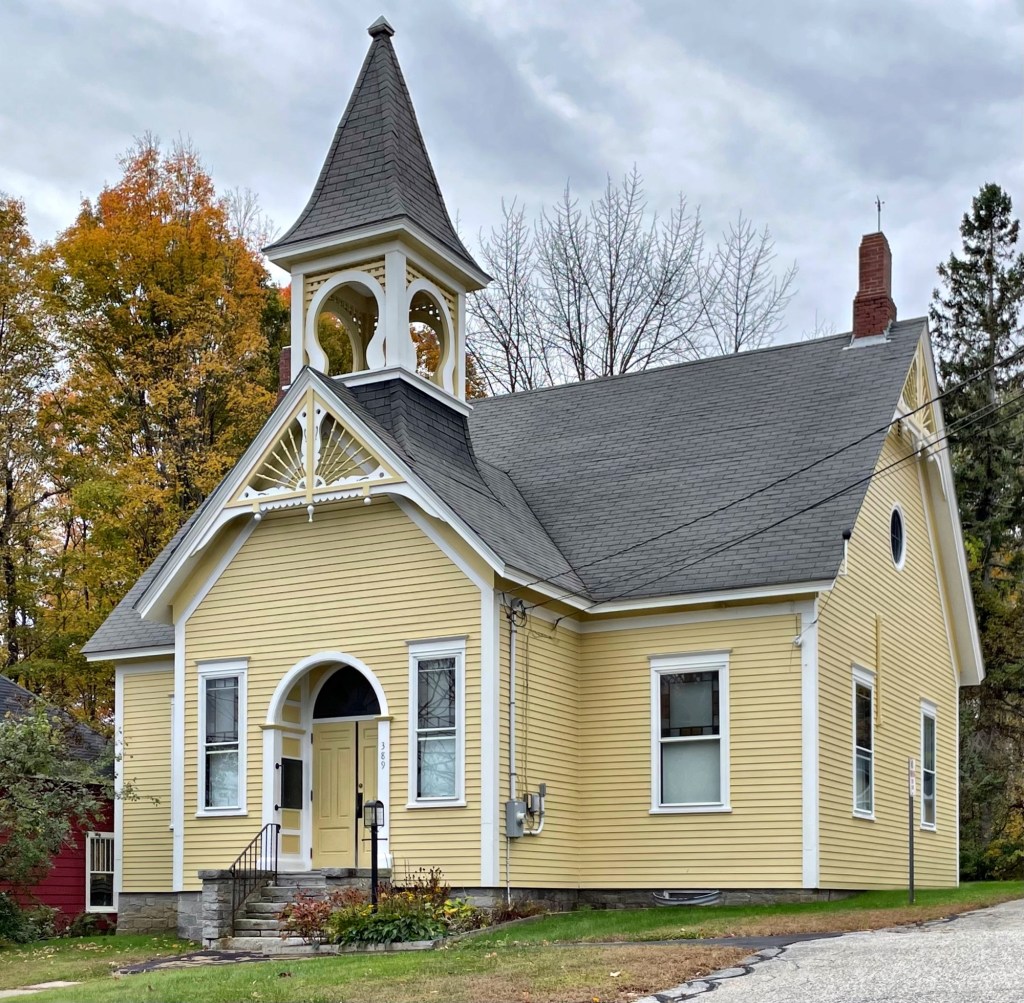
Old New Gloucester Public Library – New Gloucester Meetinghouse // 1895

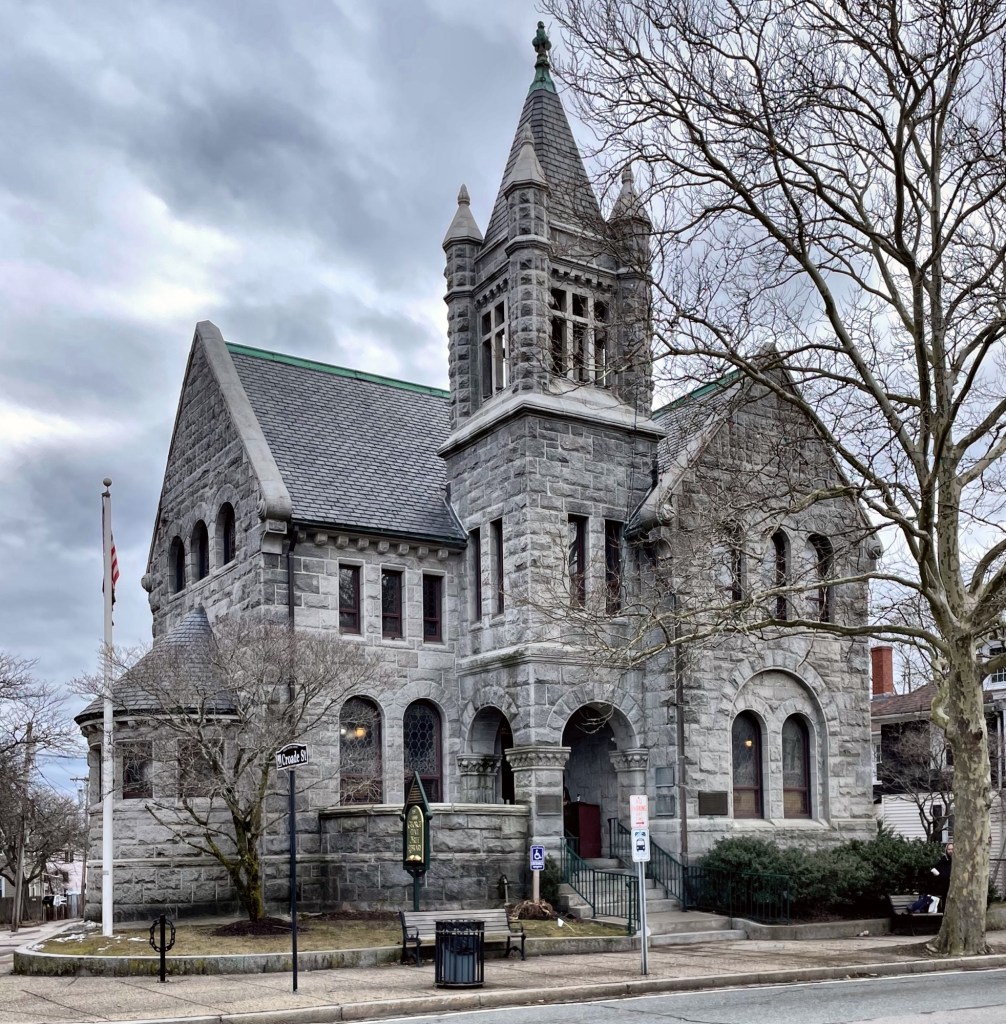
The original New Gloucester Public Library is located in the central village of New Gloucester, Maine, and is one of the finest architectural buildings in the town. The library was established in 1888 when voters passed a resolution to establish a public town library as before this, a private, social library existed here. A committee was chosen to purchase books and make decisions for expenditures and staff. The library was originally located in the town hall building, and was supported by an annual poll tax of 50 cents. The first librarian was Helen A. Moseley, with a salary of $50 a year, she remained the town’s librarian until 1920. By 1895, the library had grown to more than 2,100 volumes and it was decided a new, purpose-built library was needed. That next year, a lot was purchased and this Victorian style building was constructed adjacent to the Town Hall. The wood-frame building has a decorative central section with recessed, arched entry and gable with decorative Stick style ornament. Additionally, a tower protrudes from the roof, giving the building additional whimsy. The library was eventually outgrown and relocated in the former High School, two buildings down the street. The old library has ever-since been the town’s meetinghouse.

Chesterwood // 1901

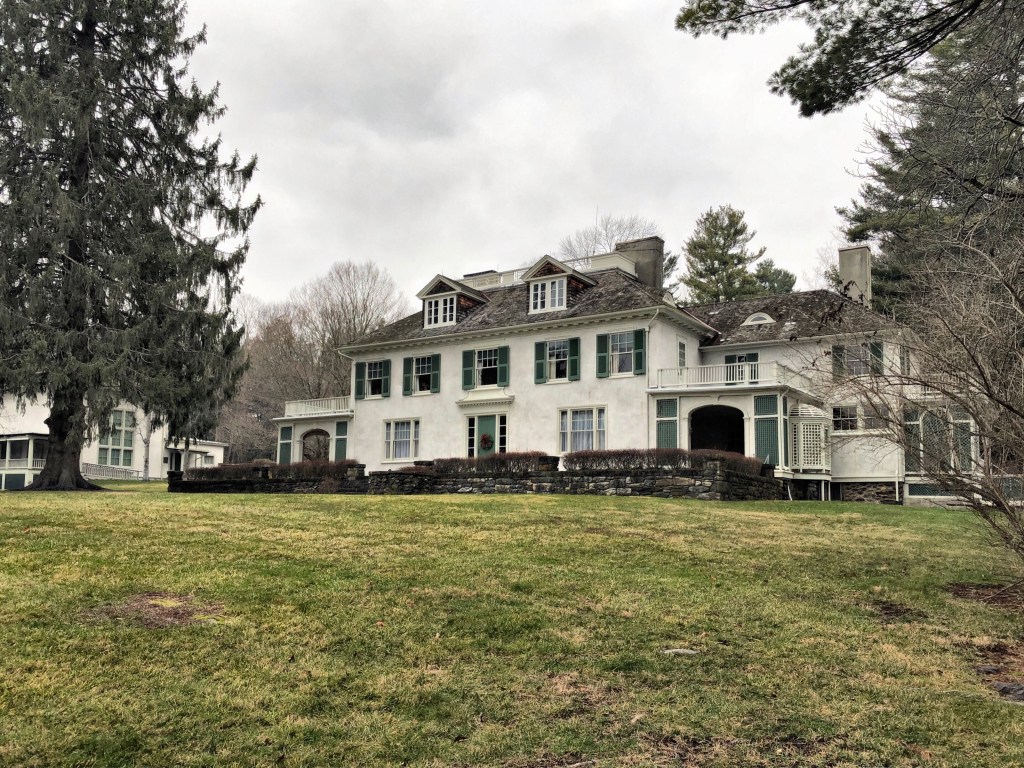
Chesterwood is the former summer home, studio and gardens of American sculptor Daniel Chester French (1850–1931), who is best known for creating two of our nation’s most powerful symbols: the Minute Man (1871–75) at the Old North Bridge in Concord, Massachusetts, John Harvard in Harvard Yard, and Abraham Lincoln (1911–22) for the Lincoln Memorial in Washington, D.C. Daniel Chester French was one of the most successful artists of the late 19th and early 20th centuries, producing more than 100 works of public sculpture. In the fall of 1895, he and his wife drove by horse and buggy and discovered the resort town of Stockbridge. They returned the next summer and purchased the Marshall Warner farm from the family who had purchased the land from Mohican Native Americans. The French family and two maids moved into the white clapboard farmhouse the next summer. To ensure that his summer would be productive as well as restful, he improvised a studio in the barn. He asked his friend and colleague, architect Henry Bacon, to design a studio for him (Bacon would later work with French on the Lincoln Memorial). Soon, in spite of renovation, the original farmhouse was deemed inadequate and French commissioned Bacon to design a residence, completed in 1901. The family owned the home for decades, even after Daniel Chester French’s death. Much of the credit for Chesterwood’s preservation and metamorphosis from summer retreat to public site belongs to Margaret French Cresson (1889–1973), the sculptor’s daughter. After her parents’ death, she maintained the property and began to use it year-round, assembled the work of her father, and established the estate as a historic site of the National Trust for Historic Preservation.

Staples-Crafts Farm // 1750

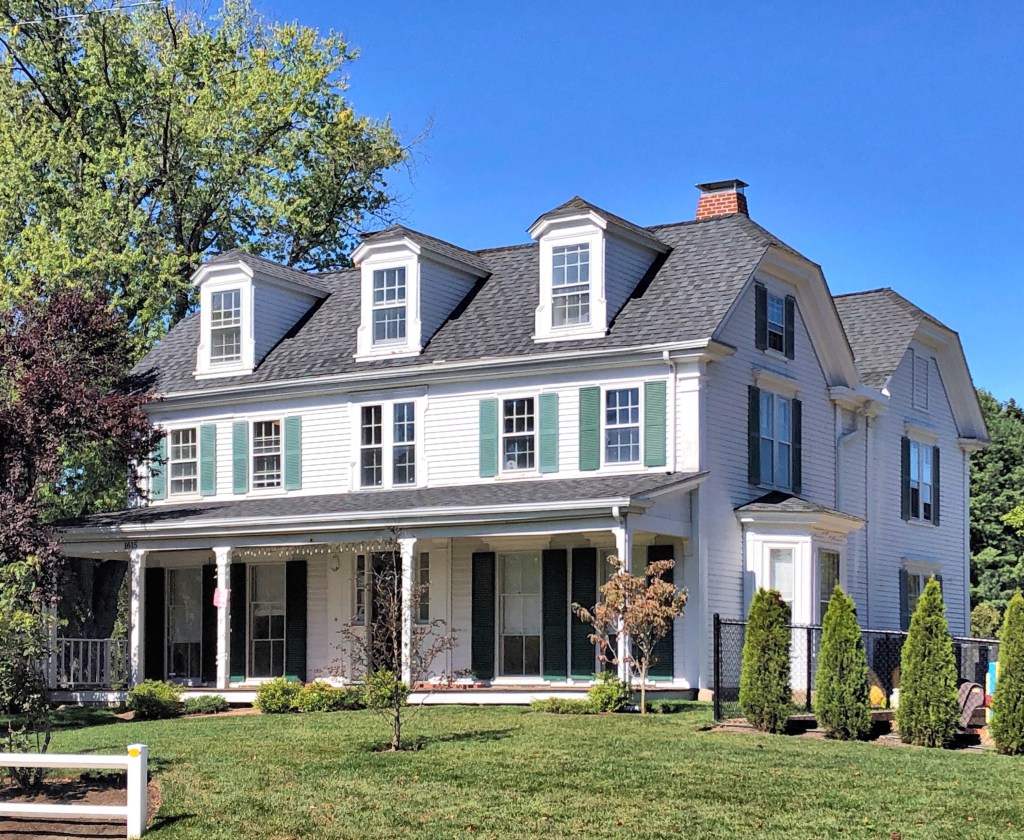
In 1688, John Staples, settled in the untouched landscape seven miles west of Boston, now known as Waban Village in the town of Newton. John was a weaver by trade but he ended up as the first public school teacher, the town clerk, a policeman, and an alderman. John married and lived in a modest farmhouse for decades here, witnessing the birth of a new nation nearby. The couple had no children of their own but raised some of Mary’s relatives including Moses Crafts, who would eventually take over the home. Craft rebuilt the house on the original foundation around 1750, constructing a colonial farmhouse two and a half stories high with five windows and two rooms across, one room wide.

Joseph Crafts died in 1821 at the age of 85, leaving no will and considerable
debts owed. The Judge of Probate ordered the property to be auctioned, and
Joseph’s son, Moses Crafts II, made the winning bid of $5.50 for the house,
barn, and a large tract of land! In 1824, Moses Craft II sold the property to his cousin William Wiswall, who gave the house a Federal period remodeling.

By the late 19th century, the home and ample farm land were acquired by William Strong and his wife Mary. William, President of the Massachusetts Horticultural Society, used the property for some time as a nursery, with apple orchards and rose gardens. After his petitioning for a train station in Waban, he parceled up the farmland into large house lots for sale, seeing the neighborhood shifting to a suburban village. He soon after built the Strong Block, the first commercial building here.

East Chop Light // 1878

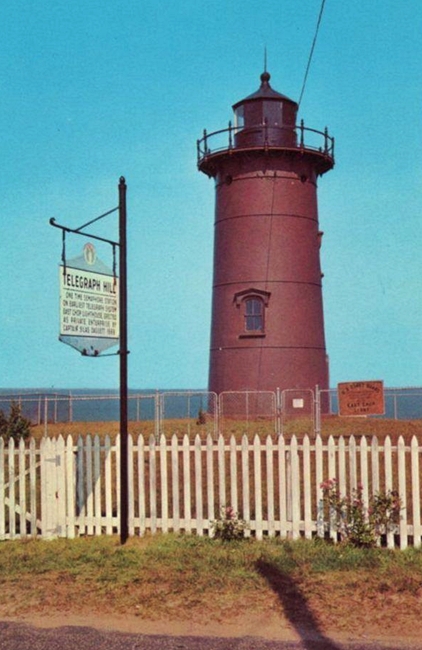
Is anything more “New England” than a historic lighthouse? Whenever I think of symbols of New England, lighthouses, Saltbox colonial homes, and lobster comes to mind. Located just north of Oak Bluffs, the East Chop Light was built to guide the hundreds of ferries every summer, picking up and dropping off passengers to the island. One of the many definitions of “chop” is the entranceway into a body of water. Knowing this, it seems natural that the two lighthouses flanking the entrance to the harbor at Vineyard Haven on the north shore of Martha’s Vineyard are respectively known as East Chop Lighthouse and West Chop Lighthouse. In 1878, a one-and-a-half-story dwelling and a cast-iron tower were under construction at the station. The forty-foot-tall, conical tower was similar in style to several other New England lighthouses constructed during the late 1800s. The lighthouse was painted white at first, but in the 1880s it received a coat of reddish-brown paint and became popularly known as the “Chocolate Lighthouse.” In 1988, it was returned back to white, as the dark color was causing excessive heat and condensation in the tower. East Chop Lighthouse remains an active aid to navigation, although the Fresnel lens was replaced by a modern beacon in 1984. The land surrounding the tower was sold to the town of Oak Bluffs in 1957 for use as a park.

Eastham Windmill // 1793

Built in 1793, the Eastham Windmill on the old Town Green is the oldest workable gristmill on Cape Cod. Typical of Cape Cod, Eastham’s windmill is an octagonal , “hat and smock” or Flemish design in which the revolving top or hat can be rotated to direct the sails into the wind. Local historians contend that Thomas Paine, a noted early millwright and resident of Eastham, most likely built the Eastham Windmill in the late eighteenth century. Some sources state that the windmill was likely built in Plymouth and later moved to Truro and eventually to Eastham in 1793. In 1895, the women of the Village Improvement Society raised money to purchase the windmill and two adjoining properties from private ownership for $ 113.50. Around the turn of the twentieth century, the windmill became a local tourist attraction and the subject of postcards and souvenirs. The windmill is now the main attraction of the annual Eastham Windmill Weekend.