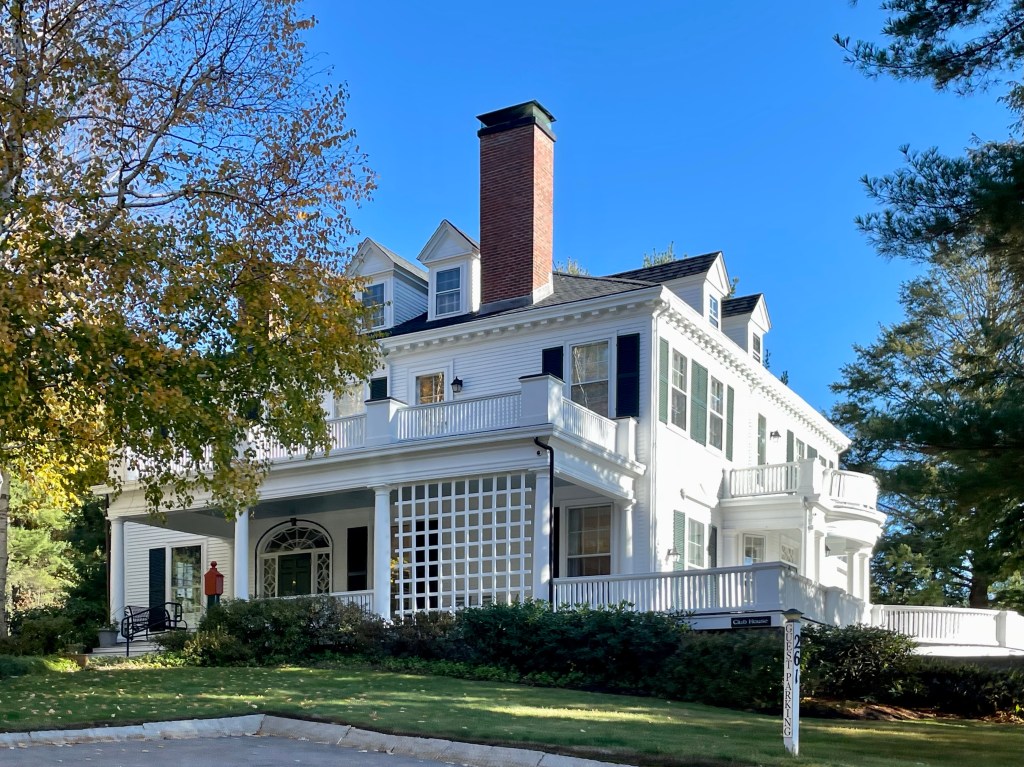
Eliza Starbuck Barney House // 1873

Another of the less common Victorian-era houses on Nantucket is this beauty located right on Main Street, named after its first owner. Eliza Starbuck was the third child of Joseph Starbuck and Sally Gardner, a Nantucket family that had become wealthy in the whale oil industry. At 18, Eliza married Nathaniel Barney and despite their wealth, the couple shared a home with Eliza’s sister, Eunice, and her husband William Hadwen. The husbands became business partners, opening a whale oil refinery on the site of the current Nantucket Whaling Museum. This house was built around 1873 for Eliza Starbuck Barney after the death of her husband. Mrs. Barney is best known as an abolitionist, a temperance and women’s suffrage advocate, and a local genealogist. The home is a fine example of Italianate-style architecture. Note the round-arch or Roman windows and bracketed cornice typical of the style.

Gorham Hussey House // c.1820

This Colonialized Federal period house sits just down Vestal Street from the Maria Mitchell Association campus on the ever-charming island of Nantucket. The home was built around 1820 for Gorham Hussey (1797-1879), who would have been around 23 at the time. He married Lydia Macy in 1820 and the couple had twin daughters that same year, likely right after this house was completed (talk about a busy year)! The home was later owned by photographer John W. McCalley, who photographed this and other houses in the area. The home retains a high-style Colonial Revival fanlight over the door, likely added in the first three decades of the 20th century as colonial homes were romanticized.

Robb-Kagan House // 1939

Colonial-inspired homes on Nantucket never will go away, and that is because the entire island is a local historic district! New construction, demolitions, and alterations to existing structures all need to be reviewed and approved on Nantucket, no easy task! This home was built in the inter-war period (before the historic district), when New Englanders still harkened back to the classics, Colonial homes. The house was built in 1939 for Annie Robb, and it was later purchased by artist couple Vladimir Kagan and Erica Wilson. Vladimir had a really interesting life. A cabinetmaker’s son, Mr. Kagan came to the United States at 11 after fleeing Nazi Germany with his family. He trained at his father’s New York workshop and by the 1940s was producing his own designs. One of his first orders was a set of tables and chairs for a delegate lounge at the fledgling United Nations! Meanwhile, across the English Channel, a young woman named Erica Wilson came into the world in 1928 in the town of Tidworth, England. Her father was in the military and the family moved to Bermuda soon after Erica’s birth. A drawing prodigy, Wilson “translated her drawing techniques into needlework,” Illya said. Needlework became her artistic focus and she graduated from the Royal School of Needlework in London. The duo lived in this home as a summer respite, where they could hone their artistry and skills. Their son, Ilya Kagan (also an artist, of course) also stayed in the home and still resides on the island. Love it!

Ellen Banning Ayer Country Estate – “Ledgebrook” // c.1905

Ellen Banning Ayer (1853-1918) of Minnesota married Frederick Ayer in 1884 and her life completely changed. Frederick Ayer was one of the richest men in New England and he was involved in the patent medicine business, but is better known for his work in the textile industry. After buying the Tremont and Suffolk mills in Lowell, Massachusetts, he bought up many textile operations in nearby Lawrence, combining them in 1899 into the American Woolen Company, of which he was the first president. The couple had at least three houses in Lowell, Boston, Pride’s Crossing and had three children (one of whom Beatrice, later married the famed general George Patton). As the Ayer Mansion on Commonwealth Avenue was being built, the family was looking for a country house near the city. One year, Frederick asked Ellen what she wanted for a gift and she said “roses”. Frederick purchased an old farmhouse on Nahanton Street in Newton and had greenhouses and a stable built immediately, followed by a Colonial Revival country house for his wife Ellen. The mansion held lavish parties for the Ayers, who loved to entertain and it was passed down to their eldest daughter Katharine Ayer Merrill. The property was purchased in the 1920s by Clive and Mona Lacy for decades until it sold in the 1980s. The large site was eyed for redevelopment. The architectural firm of Dimella Shaffer was hired, and they restored the Ayer House, and designed forty residential units on the site, all tucked into the woods gently peering out here and there. The old Ayer House remains as the clubhouse of the Ledgebrook Condominiums Association.

Quabbin Lookout Tower // 1940

After the Quabbin Reservoir was filled (more on the history in my last post), the cleared land and body of water, with its over 181 miles of coastline, was seen as not only an engineering marvel, but a place of natural beauty and splendor. Upon a rise in the land and the edge of the reservoir, they saw a perfect location to build a tower that could serve many purposes. The Metropolitan District Water Supply Commission hired the firm of Densmore, LeClear & Robbins to design a tower that would serve as a radio tower, fire station and observation tower to view the reservoir. The structure, while designed in the Arts and Crafts mode, is of modern construction and is comprised of two main parts. The lower portion, is constructed of stone and concrete, with metal casement windows, granite lintels and sills and bronze doors. This section was used for radio equipment. The interior has glazed tile walls and cement floors. The six-story tower has five floors of metal and concrete stairs. At the top is a two-level, glass enclosed observation tower.

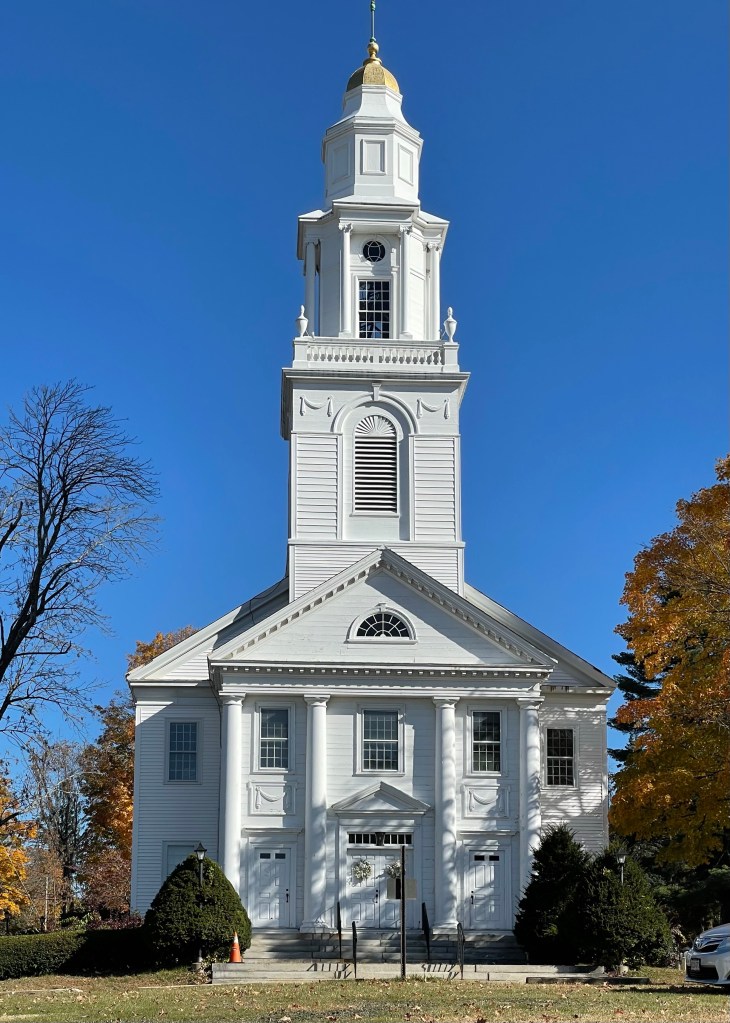
United Church of Ware // 1926

The East Congregational Church in Ware was established in 1826, spurred by the industrial growth and subsequent immigrant population boom in the village of Ware, Massachusetts. The Ware Manufacturing Company, a major player in town, contributed $3,000 to towards the construction of a new congregational church in the village, which was matched by residents. The original church was built in 1826, following plans prepared by Isaac Damon, a noted church architect from Northampton, in the Federal style, popular at the time. In 1925, just a year before its centennial, the church burned to the ground. Plans to rebuild the church formulated immediately. Due to changes to the neighborhood since 1826 (notably the construction of tenement housing adjacent to the church), the decision was made to locate the new church setback from the street. Plans were drawn by Frohman, Robb and Little of Boston for the new building, which was to be Federal Revival, a nod to the former church building. The grounds in front were landscaped by the prominent landscape architect Arthur A. Shurtleff. After WWII, population decline and dwindling membership of some churches in town required a few congregations to consolidate, creating a union or united church here. The United Church of Ware came into being in 1969 when the East Congregational Church, United Church of Christ and the Ware Methodist Church, United Methodist Church joined together and became one federated church with ties to two denominations.

East Congregational Society Chapel // 1881

I love exploring old industrial towns. In Ware, Massachusetts, the urban decay of some buildings provides opportunity and potential, but also so much negative thoughts for long-time residents as it reminds some of the town’s once thriving past. Just off Ware’s Main Street, I spotted this former chapel and had to learn more. This structure was built in 1881 as the second East Congregational Church chapel. The congregation was largely made up of immigrant laborers who worked in the town’s mills. This chapel replaced a Greek Revival building erected in 1857 on Water (Pulaski) Street that was later remodeled by the town into a fire station. That building was destroyed during the Hurricane of 1938. This Victorian Gothic chapel was designed by architect Eugene C. Gardner of Springfield, who was very busy in central/western Massachusetts. The chapel long was used by church members for spillover events and social gatherings. Later, the building became the office of the Ware River News.

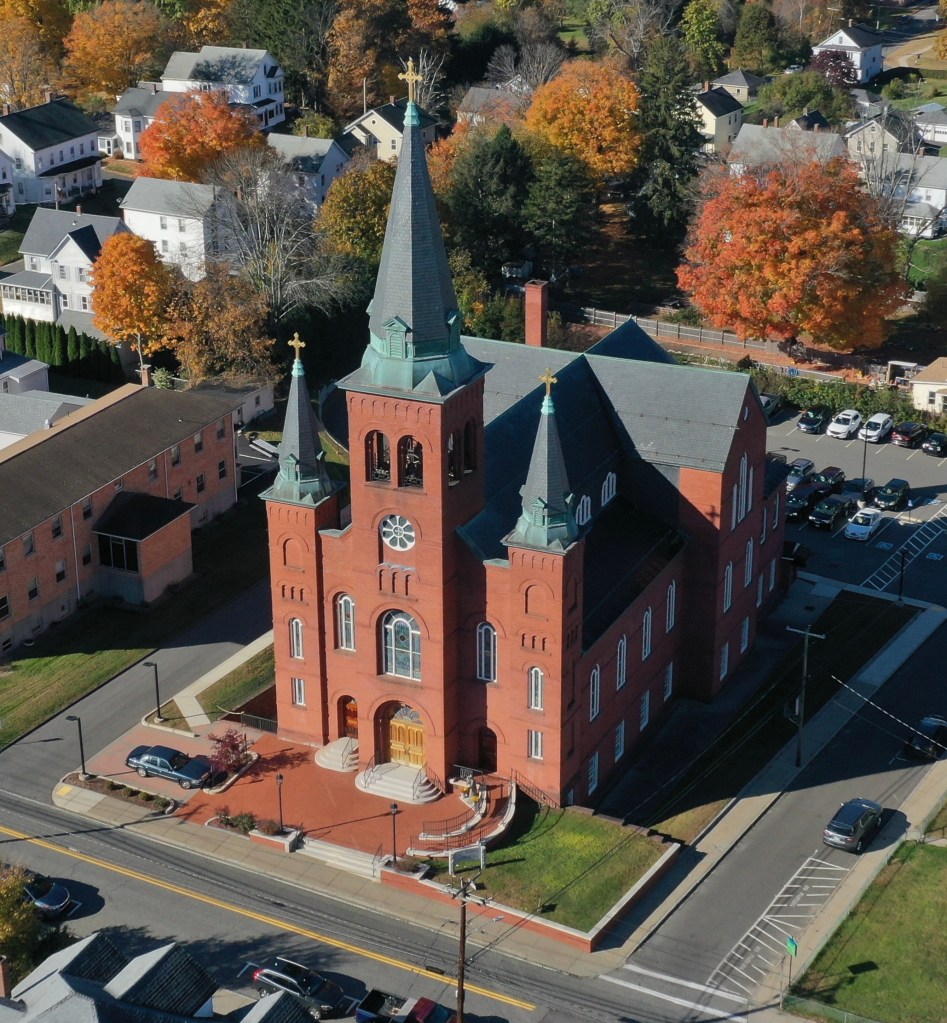
St. Mary’s Catholic Church, Ware // 1906

As the industrial town of Ware developed into a manufacturing powerhouse in Central Massachusetts, European immigrants moved to the town for work in the textile mills. Polish workers were a large proportion of this workforce in Ware, and they sought a place of worship, establishing St. Mary’s. Polish residents initially worshiped in the basement of a church in town until 1906 when a lot was acquired just south of the mills. The Archdiocese seemingly noted the desire for a church and possibly bankrolled some of the building and design costs for the new congregation. The late Romanesque Revival church building is stunning inside and out, and I would love to learn the architect for the building. Does anyone know?

Otis Company Mill #1 // 1845

This five-story granite mill building was one of the major catalysts for the 19th century population surge in Ware, Massachusetts. As New England’s fledgling textile industry of the era played a vanguard role in transforming the U.S. into an industrial nation, the significance of this type of mill can hardly be understated. The Otis Mill #1 in Ware is one of the last remaining granite textile mills of this early period in central/western Massachusetts. The mill was built in 1845 for the Otis Company, which initially manufactured woven cotton fabric, but later branched out into stockings, woolen shirts and drawers underwear. The company was Ware’s largest employer for about 100 years! The company prospered thru WWI employing over 2,500 people. During the 1920’s the business began a decline due to the southern state’s mills and lack of modernization. In the mid 30’s the Otis Co sold its property to the citizens of Ware, which they formed Ware Industries, Inc to continue the major employer in the town. Due to this Ware came to be known nation-wide as “The Town That Can’t Be Licked.” The mill is now home to local small businesses as a sort of incubator, providing jobs to local residents!

Manley-Lefevre House // c.1820

The last (but certainly not least) building in Dorset, Vermont I’ll be featuring is the Manley-Lefevre House aka. Marble House! This stunning Federal period home was built around 1820 by Martin Manley (1783-1856) on land originally owned by his father George. The house is constructed of ashlar marble that was quarried with hand tools from the lower quarry located approximately 200′ behind the site of the house with dressed marble finished in town and brought back for installation at the lintels, sills, and door surround. In 1907, Edwin Lefevre, Sr. (1871-1943) traveled by train from Bronxville, New York to Dorset at the suggestion of the artist Lorenzo Hatch, with the intention of locating a summer residence for his family. They purchased this home, which became known as “The Old Stone House” and hired Eugene J. Lang, a New York architect, to remodel the house, design a kitchen wing and remodel the barn into a garage (1909). While in Italy, Lefevre fell in love with the formal gardens there, and wanted something like this for his country estate. Upon his return, he retained garden designer Charles Downing Lay to design the gardens that surround the house. The country estate is now home to The Marble House Project, a multi-disciplinary artist residency program.