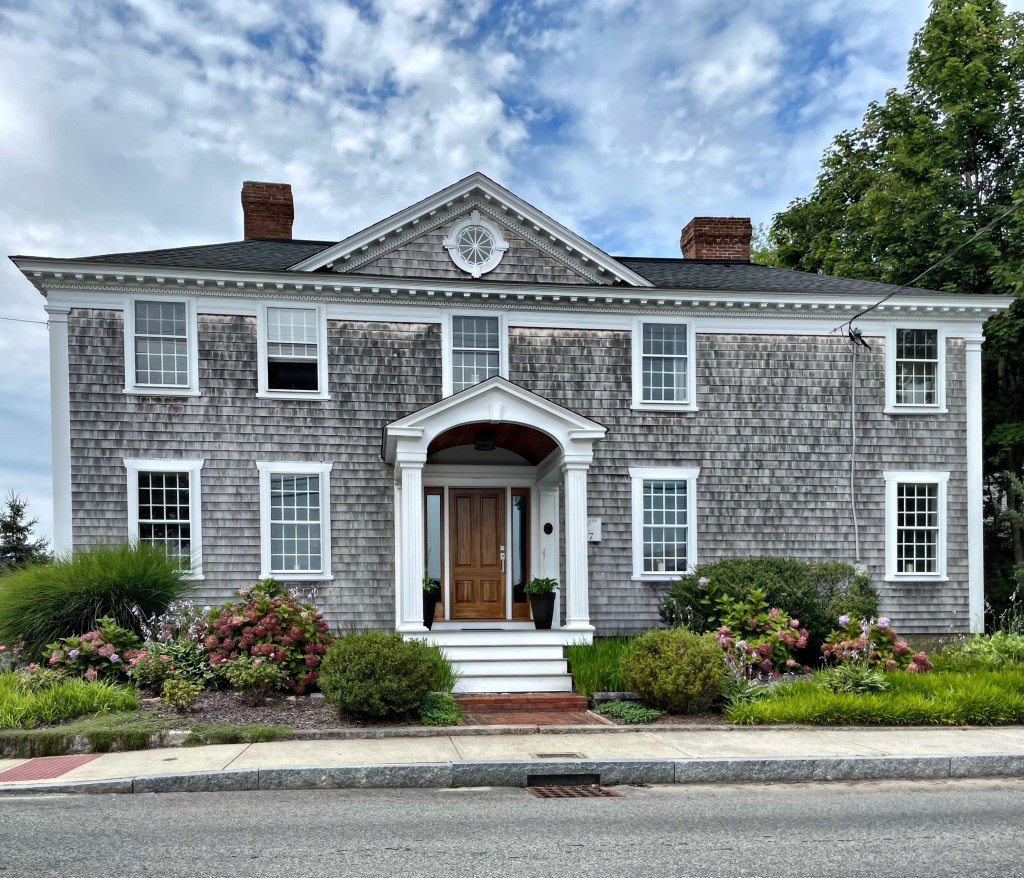
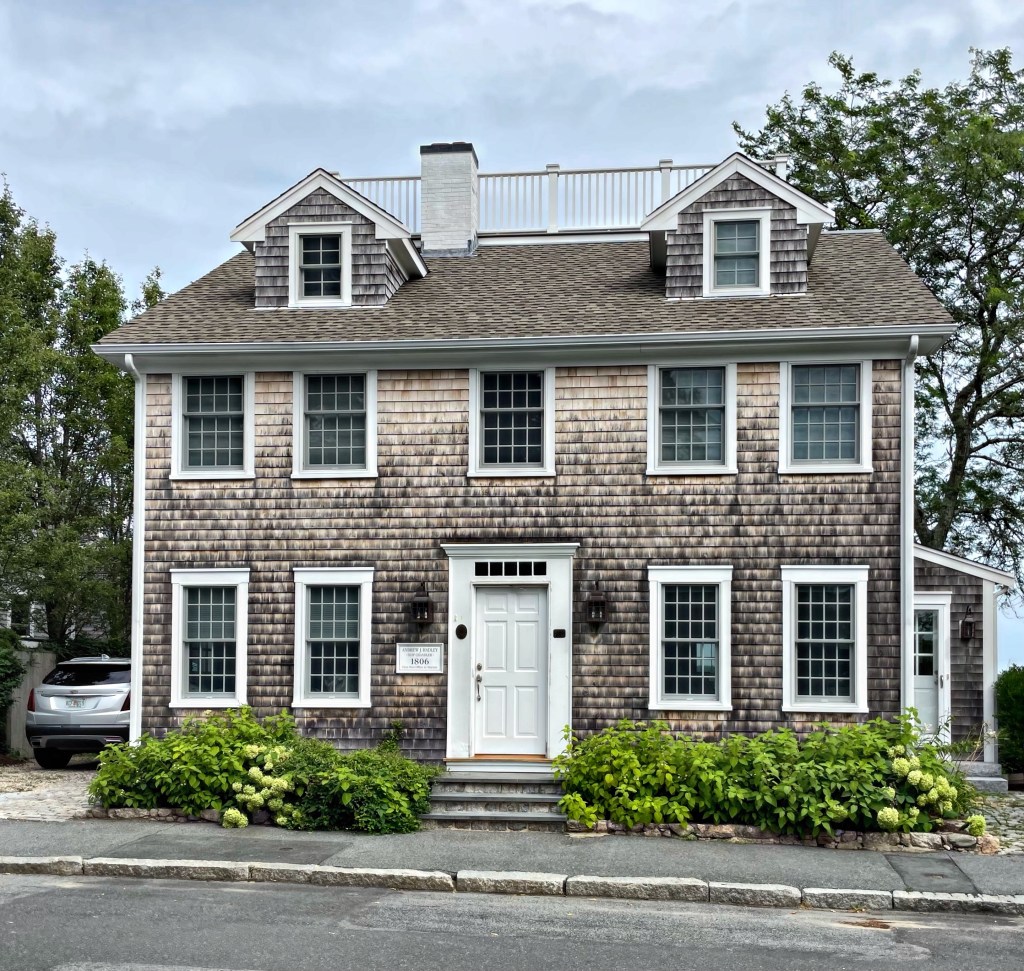
Newhall-Lane House // 1809

The Newhall-Lane House (could be the home of many wives) was built in 1809 by Pliny Newhall, a bricklayer. He purchased the land here at a prominent crossroads in Lancaster in 1808 from his employer who owned a brickyard across the street. At a previous home in town, Newhall’s wife Patty died giving birth to their son, at just 23 years old. Their son also died during childbirth. He remarried and had a full family to grow into the couple’s new house. They relocated to Lincoln and the home was sold to Captain Anthony Lane, who was the son of Deacon Jonas Lane, an important figure in Lancaster town history. Jonas had four wives, outliving three of them. Captain Lane himself, was married twice while living in this house; he had no children from either marriage. Although he was a talented craftsman and cabinetmaker, Captain Lane listed his occupation as farmer. The house is significant architecturally, as a fine example of Federal style architecture in Lancaster . Its sophisticated design is reflected in the graceful entrance. One of the unique features of the house is the pedimented gable of the facade which in combination with the narrow plan of the house, creates a delightful massing in this distinctive combination of Greek Revival and Federal styles.
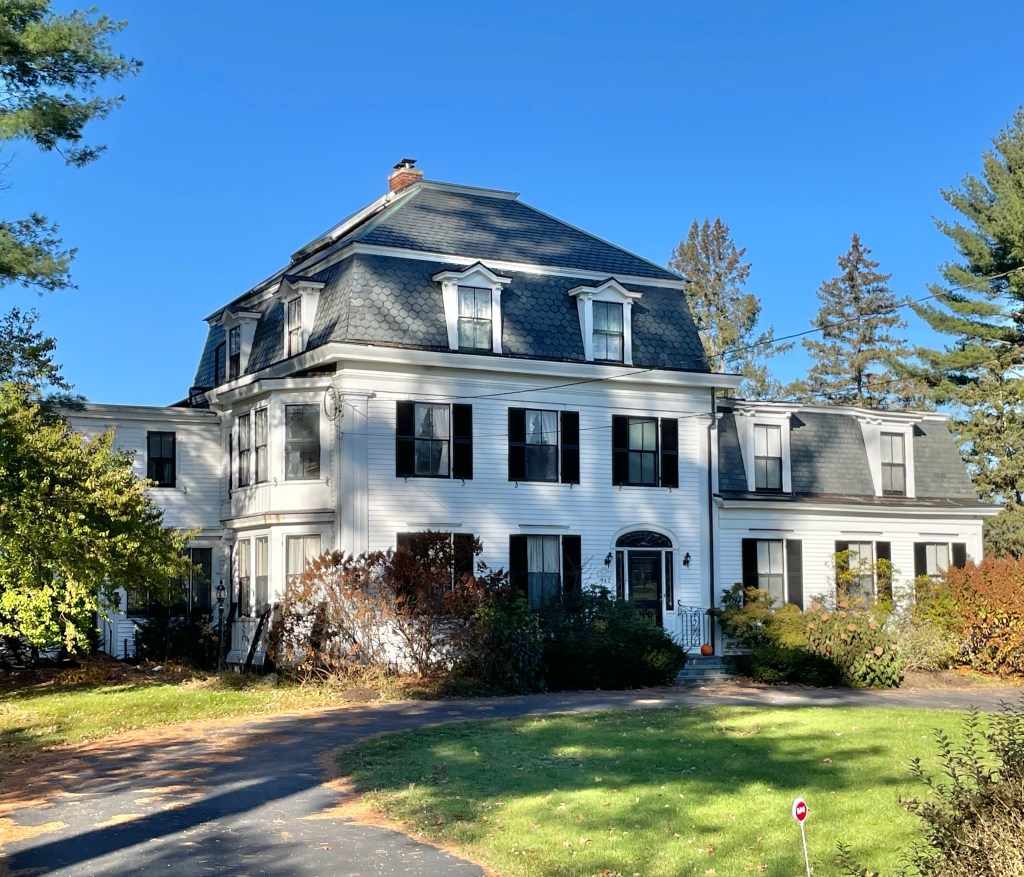
Carter-Hussey-Whitney House // 1827

Architecture and history is often layered, so it’s always a treat to find a building that showcases different eras in design. This cute house on Main Street in Lancaster was built in 1827 for a James Carter. The home was a side-hall two-story gable end house, with a Federal style fanlight over the front door (which remains). By 1847, the property was sold to Captain Francis Hussey, a sea-captain from Nantucket who seemingly wanted to get away from the sea, settling in central Massachusetts. He is likely the one who added the corner pilasters, giving the home an update in the Greek Revival style, which is very common on his native Nantucket. Hussey died in 1863 and the home went through the hands of a couple owners until Anna Henshaw Whitney purchased the property in 1887. Ms. Whitney was born in Cambridge, and after attending private schools, she moved to Lancaster in the 1860s as an assistant at Lancaster Academy, teaching there until her retirement in 1889 at 45 years old. It was Anna Whitney who constructed additions to the home, and the beautiful mansard roof which we see today. In her retirement, Anna farmed the massive property and opened one of the finest kennels for Saint Bernard dogs in the world. From this, she became the first woman judge with the Westminster Kennel Club.

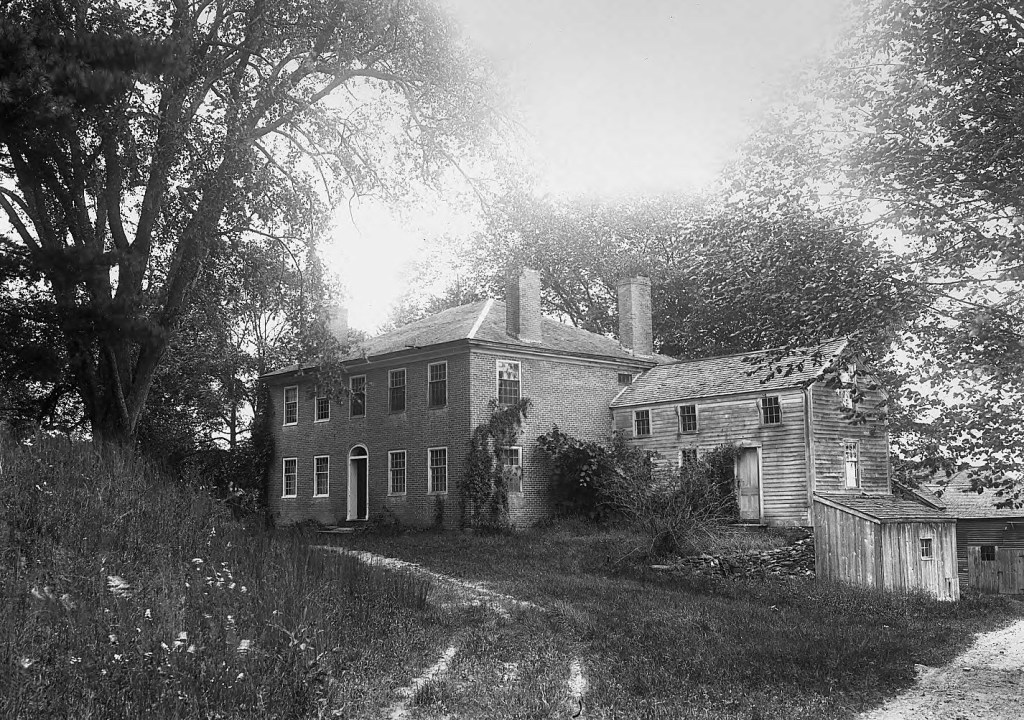
Burbank Homestead // c.1800

Do you like McDonalds french fries? If you do, you can thank Luther Burbank, who was born in this house!

Image courtesy of Lancaster Historical Society

This Federal style home formerly in Lancaster, MA, was built around 1800 by housewright Simon Willard. The brick farmhouse saw generations of the Burbank Family live, marry, and die here. In 1849, Luther Burbank was born in an upstairs bedroom, as the 13th of 15 children of Samuel Walton Burbank and his three wives (not at the same time). Growing up on the farm, Luther enjoyed the plants in his mother’s large garden. When his father died when he was 18 years old, Burbank used his inheritance to buy a 17-acre plot of land in nearby Lunenburg. There, he developed the Burbank potato. He soon after sold the rights to the Burbank potato for $150 and moved to California, where he spend the remainder of his life. Today, the Russet Burbank potato is the most widely cultivated potato in the United States. The potato is popular because it doesn’t expire as easily as other types of potatoes, and it is the most commonly used potato for McDonalds iconic fries. In his life, Burbank created hundreds of new varieties of fruits (plum, pear, prune, peach, blackberry, raspberry); potato, tomato; ornamental flowers and other plants. He did more than I could possibly list, I highly suggest reading about him online. He was even so inspiring that Frida Kahlo painted Burbank as a tree/human hybrid, sprouting out of his corpse underground (seriously). In the 1930s, Henry Ford came to Lancaster and negotiated with the Dexter family, who then owned the house, to move the wood-frame ell to his museum in Dearborn, Michigan, where it remains to this day. The brick house was demolished by the Federal Government when the nearby U.S. Army Base at Fort Devens was expanded in the site.

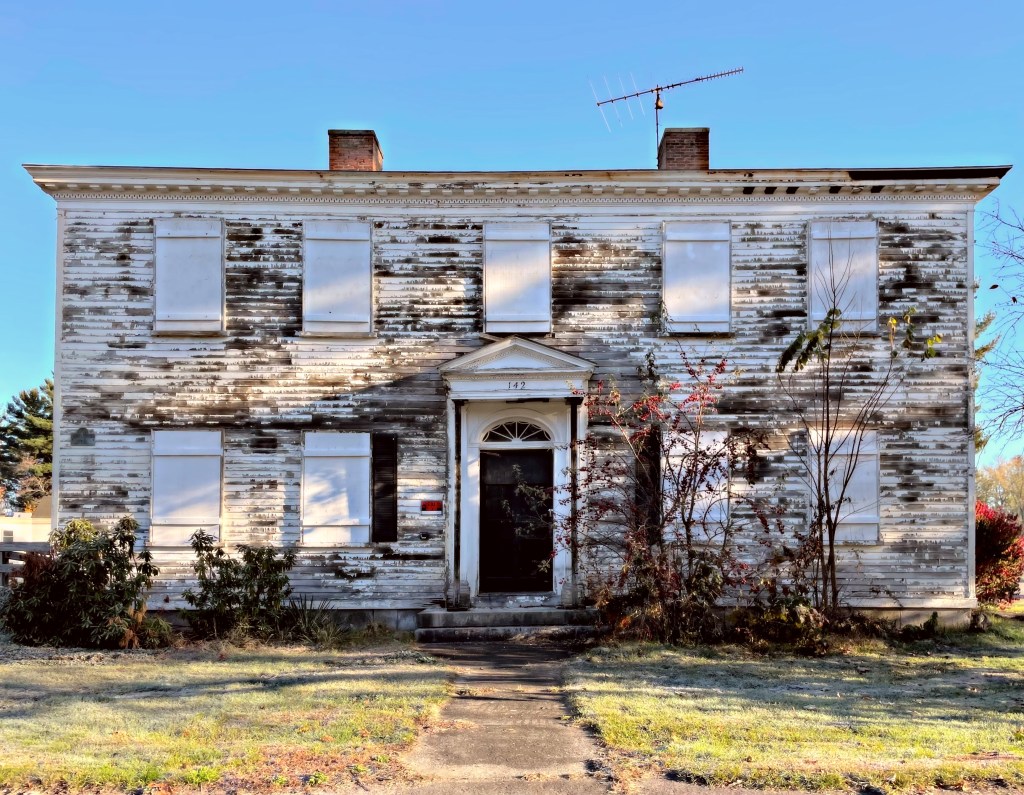
Safford House // 1799

Located in Lancaster, Massachusetts, the Thomas Safford House has stood for over 220 years, but is slowly decaying. Built in 1799 for Thomas Safford, a baker, the house is an excellent example of a Federal-style homestead that appears much like it did when built (besides the neglect). After two subsequent owners, the property was purchased in 1890 by Pauline Revere Thayer, a direct descendant of Founding Father, Paul Revere. Pauline added a large wrap-around porch and balcony to the house, which served as a vacation home for working girls from Boston. She appropriately named the house “Goodrest” where the girls could enjoy their summers, without working in poor conditions. After she died in 1934, the property was acquired by the Commonwealth of Massachusetts as the residence for the head of the Lancaster Industrial School for Girls. The Lancaster Industrial School for Girls was a reform school and the country’s first state reform school for girls, opening in 1856. This school paved the way of social reform, moving away from child imprisonment for “delinquents” towards a correctional paradigm. This was in part achieved because of the observed benefits of environmental change in children, as well as the importance of education. The bucolic, open-air setting was believed to be beneficial for childhood development, compared to a prison setting common before-hand. In 1935, the Safford House was restored to the original appearance, and the porches removed. The State of Massachusetts owns this house and the rest of the severely deteriorating buildings on the campus. It is a shame to see such significant buildings intentionally left to rot.

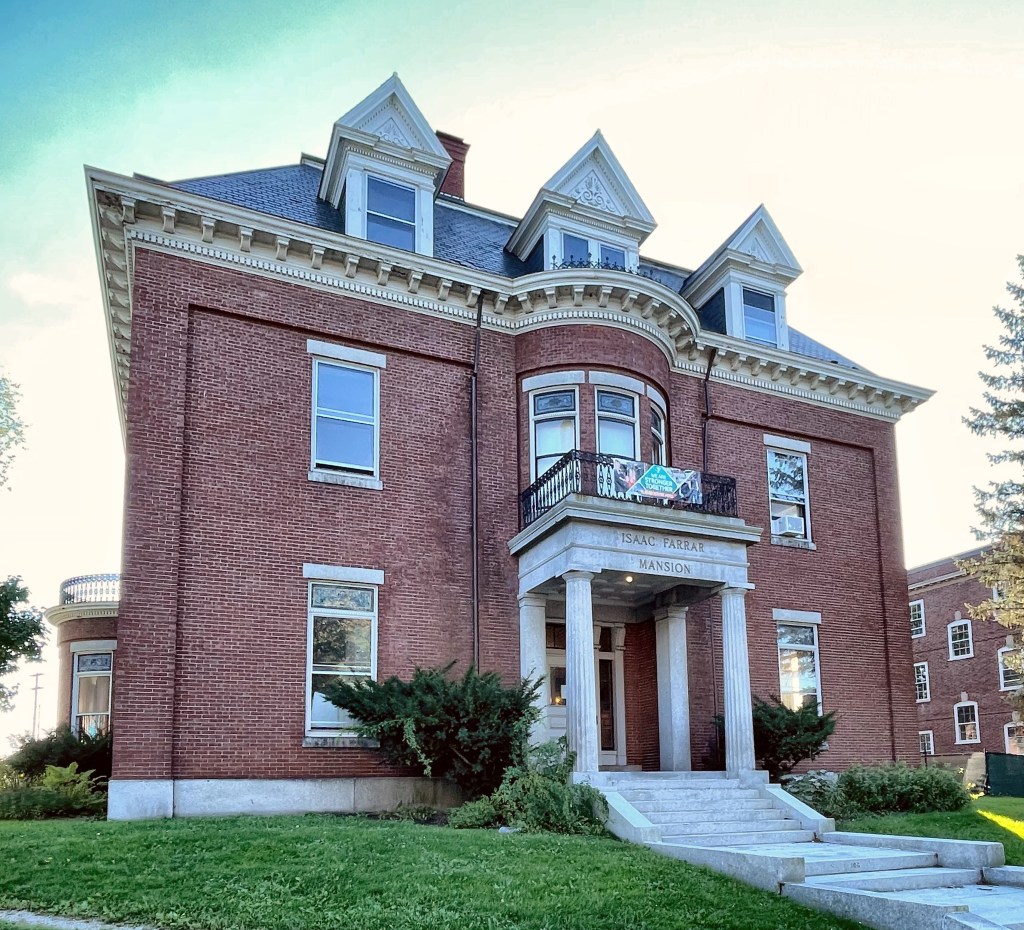
Isaac Farrar Mansion // 1836

The Isaac Farrar Mansion in Bangor, Maine not only looks gorgeous, it is significant as the one of the first known works of architect, Richard Upjohn. It is important because it shows that English-born Upjohn, who is best-known for launching the popularity of the Gothic Revival style in the United States, began his career by building in the Greek Revival style, the traditional style of the time. This mansion was designed for Isaac Farrar, a lumberman and merchant, and later, President of the Maritime Bank of Bangor. Charles B. Sanford, who lived in the house from 1865-1878, was proprietor of the Sanford Steamship Lines. The home had a few more subsequent owners until 1911, when it was acquired by the University of Maine Law School, which used it as a residency until 1929. It was soon after purchased the Bangor Symphony Orchestra, who renamed it “Symphony House”, and operated the Northern Conservatory of Music on the premises, also hosting the music branch of the Bangor Public Library. In 1972 the school closed, and the symphony sold the building the following year to the local YMCA, which now uses it as an exhibit and reception space. While some aspects of the house look to be from the early 20th century, it retains much of the Greek Revival design by Upjohn. Talk about a full history!

Joseph Low Mansion // 1857

The neighbor to the iconic Thomas Hill Standpipe (last post), this pre-Civil War Italianate mansion predates the water tower and has long been one of the most grand homes in Bangor, Maine. The house was constructed in 1857 for Joseph W. Low, a businessman and trustee of the Bangor Savings Bank. The house he had built is one of eastern Maine’s outstanding Italianate residences, designed by Boston architect Harvey Graves, who was born in Maine. Soon after the Civil War, Graves moved west to California, likely seeking additional wealth from the spurned from the success of the Gold Rush. He appears to have lived out the remainder of his life out west, giving his family in Maine this home. The house exhibits flushboard siding with scored wood to resemble ashlar masonry, gorgeous window hoods and mouldings, and a large belvedere at the roof, which would have provided sweeping views of the Maine frontier when built, atop one of the highest hills in Bangor.

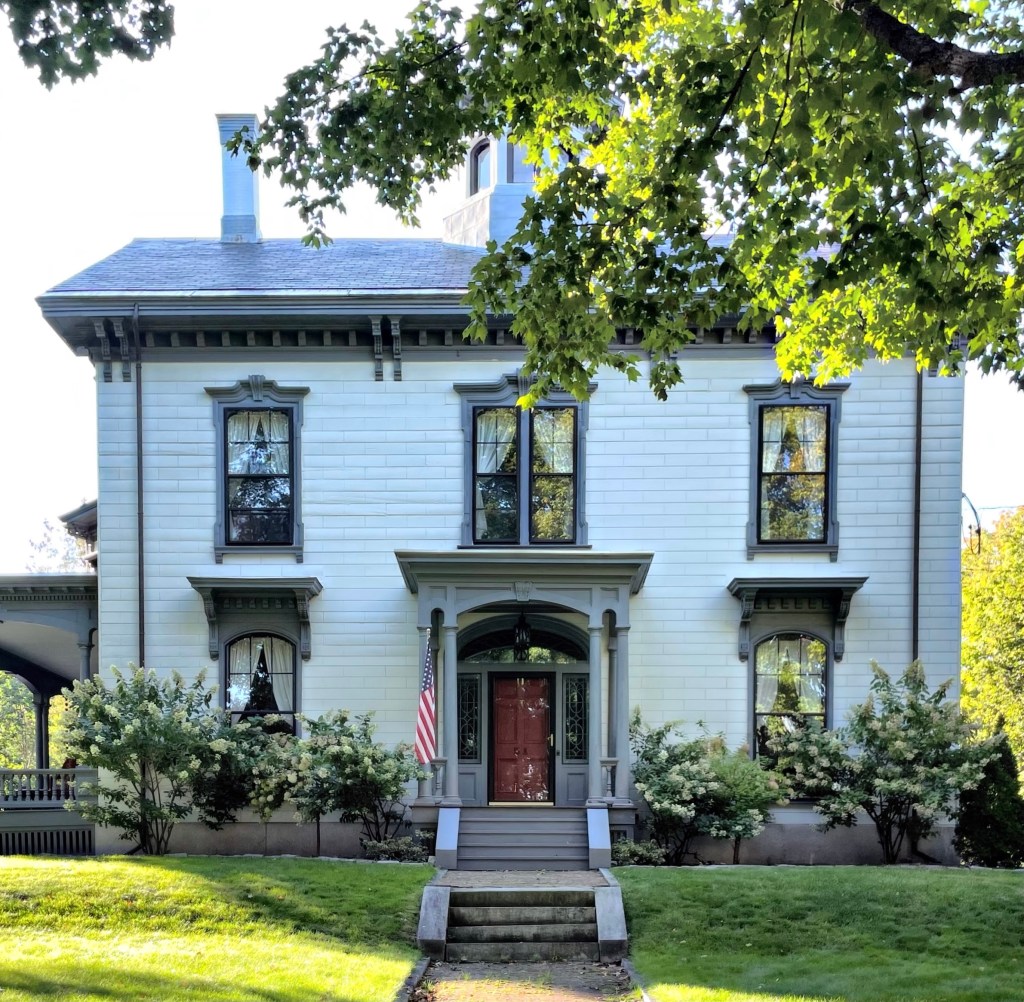
Joseph C. White House // 1866

Located a short walk from the Stephen King House in Bangor, this stunning Second Empire style house shines just as bright! This house was built in 1866 for Joseph C. White, a dry goods merchant in town. Just years after it was completed, he sold the mansion, possibly due to upkeep. The two-story mansard-roof house is clad in wood siding, scored to resemble stone rustication, a method to make the home appear more expensive. The corner entrance with later enclosed second-floor porch, massive brackets, and scrolled dormers add a lot of Victorian flair to the home. Would you move in here?

Israel Moore Snecked Ashlar House // c.1846

Located on Main Street in Chester, Vermont, you can find this perfect little Snecked Ashlar home. The building technique is very local and can be found in just a handful of towns in central Vermont. Scottish-born masons from Canada introduced the technique to local masons while erecting a mill in nearby Cavendish in 1832, and within a few years, the first stone structure in North Chester village was built by local masons. Soon after, the local school, church and other homes were all constructed the same way. This home outside the Stone Village district was built later than almost all other examples in town. It features Federal and Greek Revival detailing with a central fluted fan at the door and large gable-front roof.

Have you heard of Snecked Ashlar before?

Ward Parker Delano House // 1797

During the 1790s and early 1800s, the rise of the coastal schooner trade and whaling ushered in a long period of prosperity for coastal towns in New England, which continued unabated until the Civil War. The War of 1812 provided many Marion sailors and sea captains with the chance to experience life at sea with privateers papers issued by the United States government, these captains went to sea in their schooners to hunt down British ships, plundering them like pirates. One of these captains was Ward Parker Delano, who built this house in 1797 overlooking Sippican Harbor. Under subsequent owners in the Delano family, the home was modified on numerous occasions in styles popular at the time until the early 20th century when it was Colonialized, which added the portico, gable, and dentils.

Hadley’s Chandlery // 1806

At the corner of Main and Water streets in Marion’s Wharf Village, this beautiful building has long ties to the town’s rich maritime history. The building was constructed by A.J. Hadley in 1806 as a ship chandlery, a shop selling all the goods necessary for sailors and fishermen who were docked just steps away. While Hadley’s store occupied the right half of the first story, the western (left) segment housed the first Post Office in the village, leaving Hadley and his family on the second floor. There is something so special about fishing villages in New England, while the populations of these towns are very different than they once were, the buildings and history still convey martime history and the way of life here over 200 years ago.