Warren Industrial Trust Company // 1906

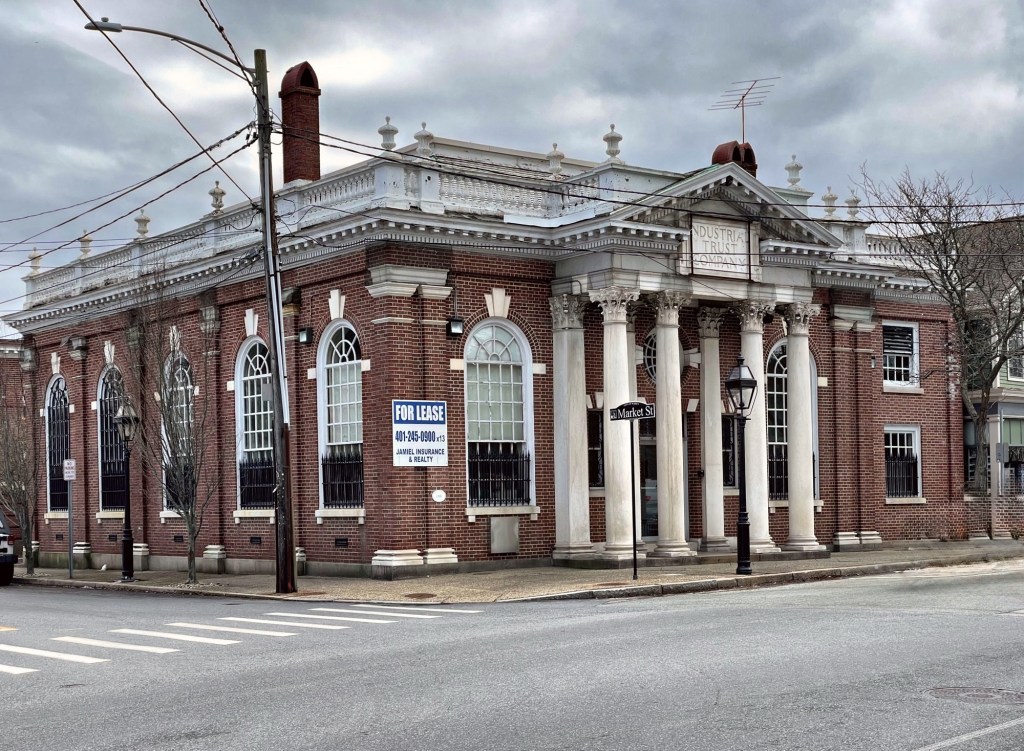
This monumental Georgian Revival bank building on Main Street in Warren, Rhode Island, and is one of the finest buildings of the style in the entire state. The Warren Industrial Trust in 1906 hired Edmund R. Willson of the Providence architectural firm of Stone, Carpenter & Willson to design the bank for the town after it had absorbed the town’s multiple banks, under one roof. It would be one of his final commissions before his death. On the facade, four Corinthian columns support a dentilled pediment over the entrance with the red brick walls enlivened with arched windows, oversized keystones, and pilasters with contrasting capitals and bases. The building shows that Colonial Revival architecture, while often seen as a refined, classical style, can be festive and ornate.

Warren Baptist Church // 1844

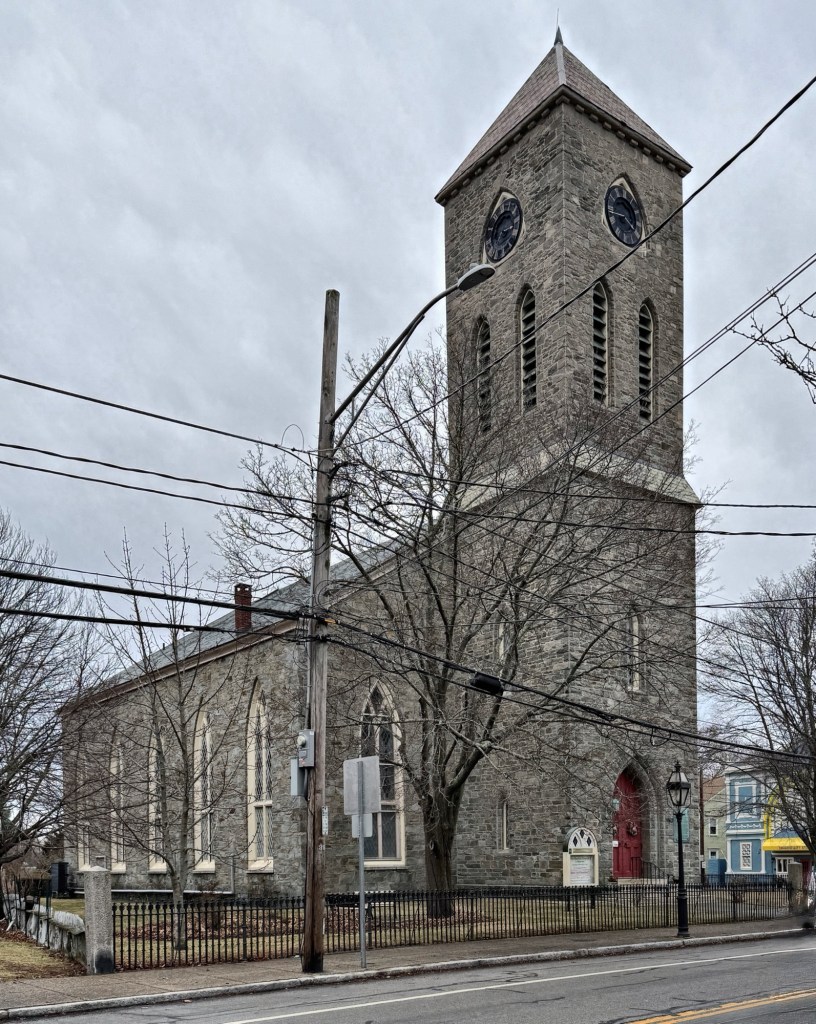
The Warren Baptist Church on Main Street in Warren, Rhode Island, is a landmark example of an ecclesiastical building in the Gothic Revival style completed in stone. Like many communities in Rhode Island, Baptists in Warren, were the first and largest denomination in the community, dating back to the 18th century. The congregation’s first purpose-built church was constructed in 1764 and was burned by the British in 1778 as they left Warren. Its replacement (1784) was demolished for the present building sixty years later. Interestingly, this site is significant additionally as the site of the founding of Brown University. as when Reverend James Manning was called in 1764 to take over the congregation and its new church building, he did so with the proviso that he could open a school for the training of Baptist ministers because all existing colonial colleges at the time provided for training only in the Congregational and Episcopal ministries. The school was located behind the present location of the church and it spent its first four years here in Warren, holding its first commencement in that church until the new school (and Reverend Manning as president) were lured to Providence, where Brown University has remained ever since. The present Warren Baptist Church was built in 1844 and was designed by famed Rhode Island architect, Russell Warren, who is best-known for his work in the Federal and Greek Revival styles, but here shows his expertise and skill in the Gothic mode. The building is notable for its lancet-arched windows and belfry with narrow lancet arched louvered windows set below the clock faces set in triangular trefoil tracery. The congregation also maintains Tiffany windows donated by members of the church.

Warren Town Hall // 1890

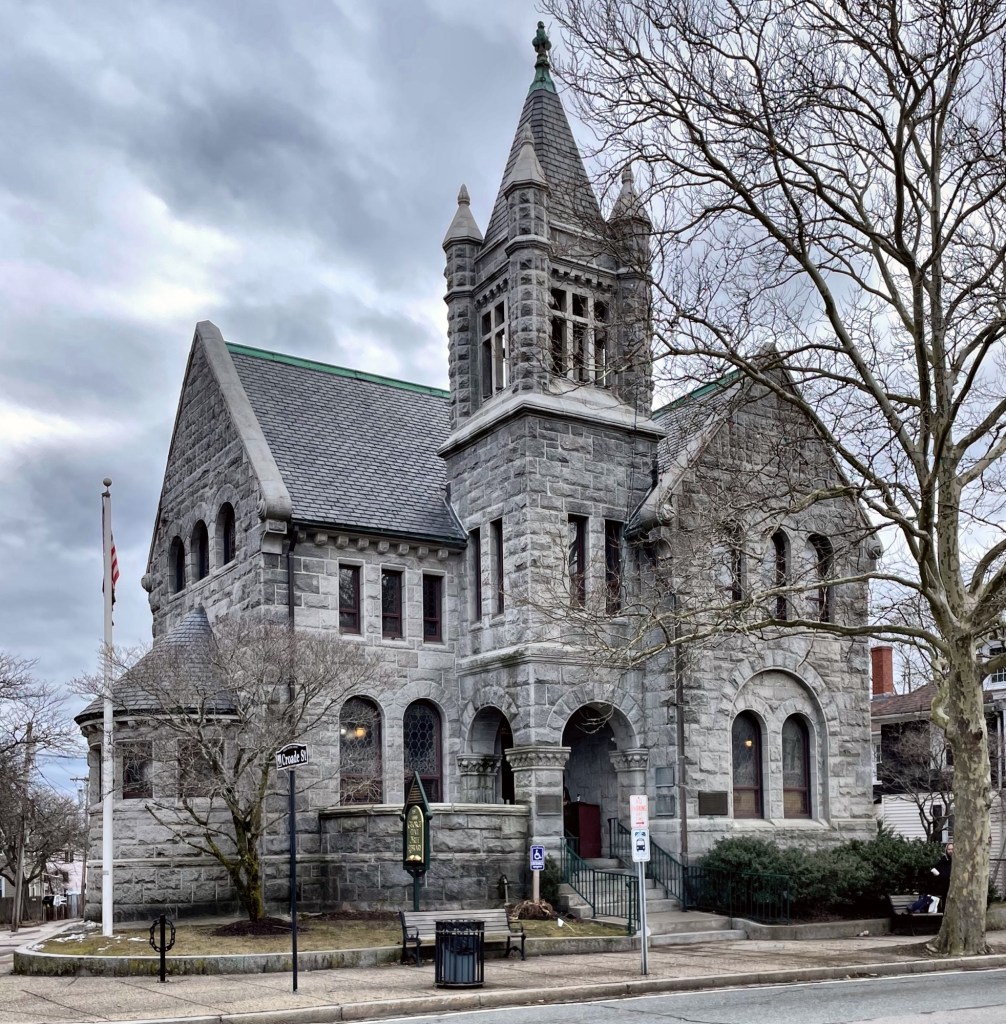
Warren, Rhode Island, is one of the lesser-visited coastal communities of the state, but retains one of the best waterfront historic districts in all of New England. With a small population of just over 11,000 residents, the downtown is extremely walkable with a tight network of streets, lined with stellar buildings and homes of nearly every architectural style and period, and are largely preserved showcasing what New England communities were like in centuries past. On bustling Main Street, the Warren Town Hall was designed by the Providence-based firm of William R. Walker & Son, architects, and constructed between 1891-1894. Designed in the Romanesque Revival style, the two-story building with five-story central tower also features Classical detailing like the terra cotta swags and brick pilasters. Before the 1938 Hurricane, the tower was even higher, incorporating an open stage topped by a parapet and a clock face on each of the segments of its still extant dome, which now has a slightly reconfigured mini-cupola topping. Additional detailing includes a terra cotta bust of the sachem/leader Massasoit with leafage, above a fluttering ribbon inscribed “Sowams,” the Wampanoag settlement that preceded Warren. The Warren Town Hall remains well preserved by the local government and a visual landmark on the town’s Main Street.

Leet Store // 1909

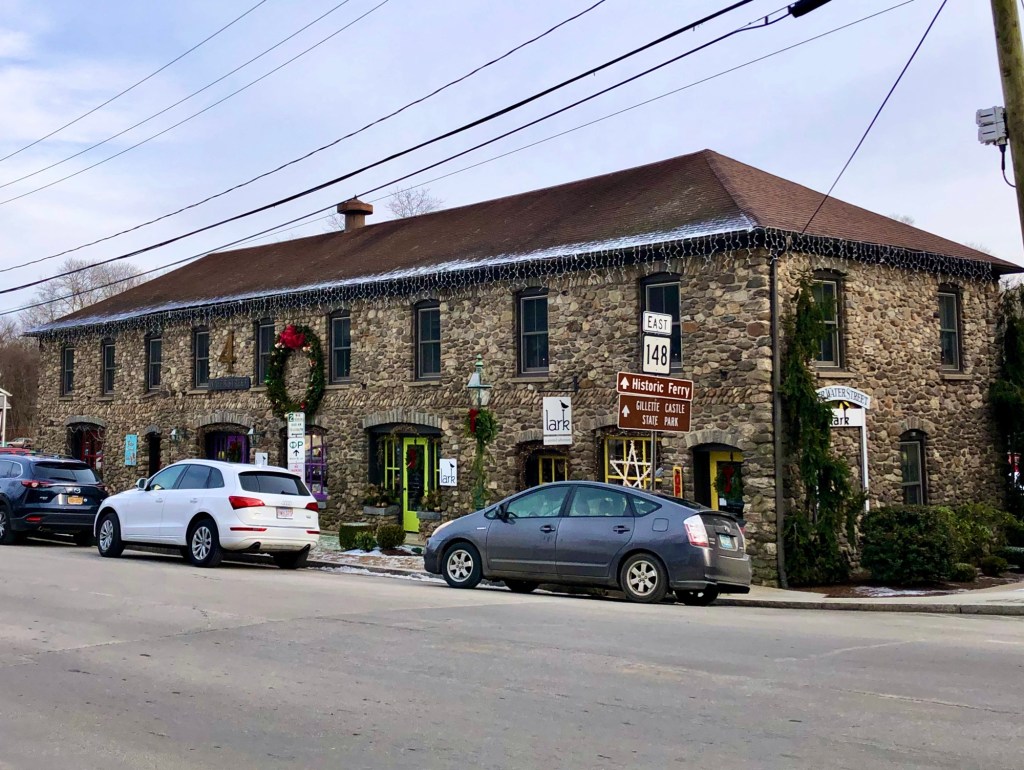
The handsome rubblestone commercial block at the corner of Main and Water streets in Chester, Connecticut, was built in 1909 by Italian stone masons for Joseph H. Leet and contained a grain and feed store, with other spaces in the building rented out. Decades later, the old Leet Store became a auto repair shop and the upstairs space was used as a meeting hall and theater for the community. The building was restored in 1979 and expanded at the rear with a two-story wood-frame addition for additional commercial space.

Old Stone Store, Chester // 1809

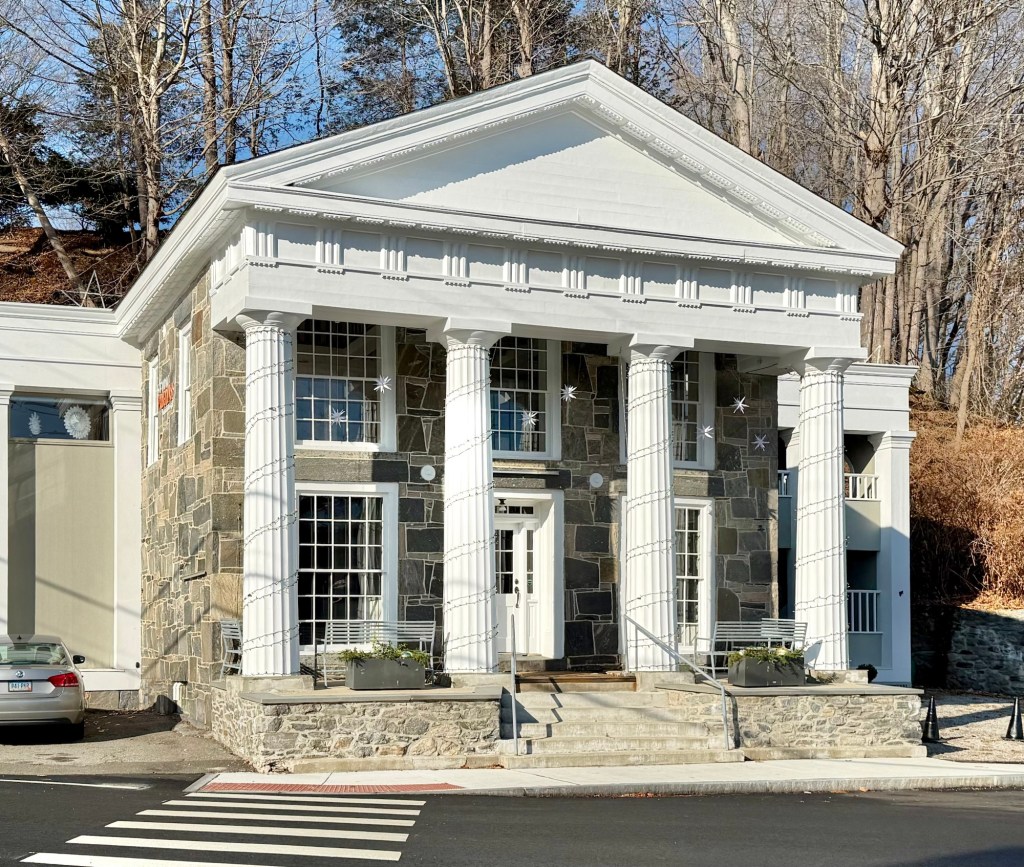
Colloquially known as the “Stone Store,” this handsome stone structure in Chester Village, Connecticut, was built by William Buck in 1809, a merchant involved in the West Indies trade. The stone for the building is believed to have come from the Chester quarry in town and was likely more vernacular without the columned portico. The four-columned Doric portico was likely added in the 1830s or 1840s as the Greek Revival style surged in popularity. The two side wings were added in the 20th century. The Old Stone Store has held various uses from a store, tavern, post office and liquor store, while the upper floor has served as a private school, the town’s library and an apartment. The Old Stone Store today acts as the western terminus of the town’s Main Street commercial district.

Chester House Hotel // c.1840

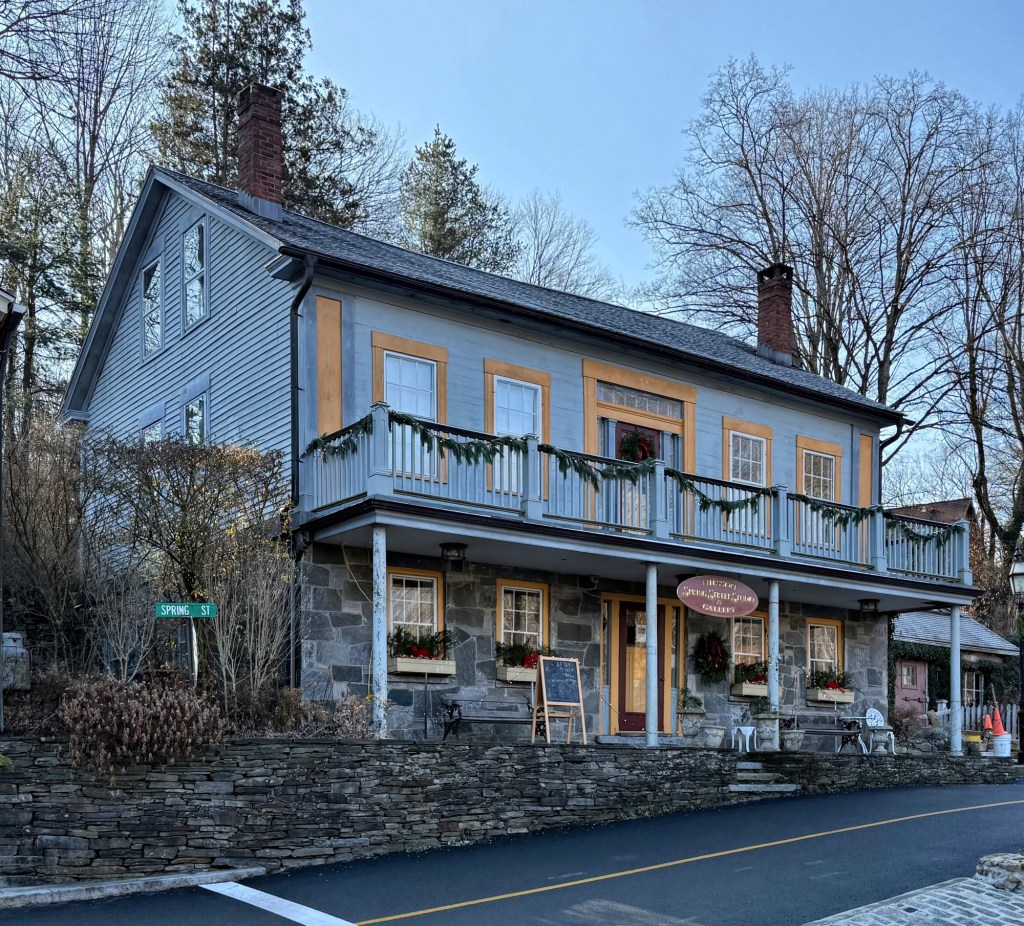
This altered building in the center of Chester Connecticut’s village Main Street, has historically been known as the Chester House, a hotel and tavern to provide lodging and drinks to travelers passing through the area in the mid-late 19th century. The structure, built atop a raised stone foundation, was constructed in the Greek Revival style around 1840, and long had a sheltered two-story portico supported by four monumental columns under a gabled roof which resembled a pediment. In 1903, a fire destroyed the upper floor and the roof was removed, creating a flat roof design. Later in the 20th century, a shallow side gable roof replaced the flat roof and the columns on the facade were also removed, giving the building the appearance we see today. The hotel closed, but the historic structure remains an anchor to the town’s vibrant commercial center, and houses a local business.

Chester Flatiron Building // 1913

At the junction of West Main and Main Streets in Chester Village, Connecticut, this unique flatiron commercial building stands overlooking the Pattaconk Brook that cuts through the center of town. In 1913, this two-story block was built with ground floor retail and a second floor residence for owner, Elmer Pierce, who ran his pharmacy downstairs. By 1920, the building was owned by Jacob Feinstein, who raised his family on the second floor and had his clothing business, “Feinsteins” in the store below. Later, the retail space was occupied by Child Design, a wooden toy store, and after that, a lighting fixture store. Historic main street buildings are often incubators for small and local businesses, keep the chain stores near the highways!

Rhodes Building // 1905

The Rhodes Building in Brookline Village is an exuberant example of a Colonial Revival style commercial block in an playfully eccentric way. Built in 1905, the block feels almost Post-Modern in style, which highlights ironic elements through the use of historical references, like here with the oversized swan’s neck pediment. The structure was designed by architect, William C. Collett, and was rented to Edgar and Leonard Rhodes, dealers in groceries and provisions and housed the Rhodes Brothers grocery store.

Goodspeed Livery Stable // c.1870

This somewhat unassuming brick building at 316-320 Washington Street in Brookline Village, which now houses offices and a Chinese barbecue restaurant, was for many years the home of a livery stable. Livery stables were facilities where horse owners would pay a weekly or monthly fee to keep their horses and sometimes carriages, with 24/7 staff who take care of and feed the horses. Liveries were essentially the 19th century equivalent of parking garages today, just with more hay and manure. This building was long-owned by Monroe Goodspeed (1842-1921) who originally found work with an express company, delivering packages by horse-drawn wagon. By 1874 Goodspeed was operating this stable, first in partnership with Grafton Stone, and later as sole proprietor. The building was originally a two-story wooden structure but was expanded by the 1880s and built of brick, to fireproof the building. Munroe Goodspeed was succeeded in the business by his son Carl, and remained in operation until the early 1930s. After this, the vehicular door was cut into the first floor for garage use and the upper floor was boxed off from the original gabled design. Two of the original wagon entrances remain on the facade and are now the entrances to the restaurant and to offices in the upper floors. 

Derby Gas and Electric Company Offices // 1931

The former Derby Gas and Electric Company offices are located on Elizabeth Street in Derby, Connecticut, and stand as one of the great Art Deco buildings in New England. Built in 1931, the four-story office building features a limestone facade with bronze storefronts and light fixtures which were illuminated from the company’s plant nearby. In the 1950s the company was acquired by the United Illuminating Company.