Hampden County Training School // 1916

In most Massachusetts cities and towns, habitual truants (children who stayed away from school) and juvenile delinquents had normally been committed to local almshouses and prisons. By 1873, state law updated policies to “humanize” the children and guide them on a better path. Habitual truants (age seven to fourteen), habitual absentees (age seven to sixteen), and habitual school offenders could be committed to a county truant school for a term of up to two years. At least one of these types of schools were found in each of Massachusetts’ counties, which seemed to get more crowded every passing decade. In the early 20th century, the outlook on shaping children’s growth changed and to reflect this, the truancy schools were renamed “Training Schools”.

The former Hampden County Truancy School in Springfield was outgrown and outdated. The county petitioned the state for a new school on open land, and a site was acquired in nearby Agawam. The choice of location was intended to provide a rural farm environment and to avoid the temptations of the city. The isolated location, surrounded by farmland, ensured that students could not easily walk away from the school to rejoin their friends and families. Despite the remote location, the Hampden County Commissioners report of 1918 noted that 36 boys still ran away from the training school a total of 69 times and that 5 were still at large at the end of the year.

Starting in the 1940s, the County Training Schools were seen as a waste of taxpayer money and many staff at these institutions were under-educated themselves to deal with emotional or social issues that some of the children exhibited. Many county schools were closed, with the Hampden County Training School closing in 1972.

The school building and grounds sat vacant for over a decade until funding was released to renovate the building for use as a police academy training center in 1984. The exterior of the building remained relatively unchanged during this time, and many of the original classroom spaces were left as found. The building served in this capacity for over twenty years until it was closed in 2005. In 2017, Soldier On, a private nonprofit organization that provides housing and supportive services for military veterans, rehabilitated the former school and now provides 51 permanent housing units here. The property was listed on the National Register of Historic Places (a report where much of this information came from) and was rehabilitated using Federal Tax Credits.

The Classical Revival-style Hampden County Training School was designed by the prolific Holyoke-based architect George Perkins Bissell Alderman. Alderman was well known throughout western Massachusetts and Connecticut for his monumental, classically derived designs for residences, schools, commercial blocks, civic buildings, and churches.

Agawam Center School // 1939

Located in Agawam Center this interesting architectural example of a late-Tudor Revival school building really caught my eye. The building replaced a 1870s town hall and two-room schoolhouse which were both outgrown as Agawam’s population increased due to the proximity of nearby Springfield. The architect was Paul B. Johnson, who was based out of West Springfield and ran a small architectural office there. He attended Cornell and MIT for architectural training and worked primarily around Springfield. The school building is constructed of a deep red brick, laid in varied relief for a rough faced surface and a cast stone Tudor arch around the main entrance for contrast. The school was later renamed after Benjamin Phelps, the first superintendent of schools in Agawam.

Lebowich Tenement House // 1895

One of the most photographed buildings in North End is arguably this tenement block, built in 1895 at the corner of Prince and Salem Streets. As the North End continued to redevelop into a diverse immigrant community, tenement houses were constructed by those with the means, providing housing at low cost to those who arrived to Boston in the late 19th and early 20th centuries. Max and Etta “Ethel” Lebowich, Russian Jews, immigrated to Boston, settling in the Jewish quarter of the North End and opened up a dry goods store at the corner. The business did well, and the couple redeveloped their land and hired Swedish-born architect Charles A. Halstrom, to design the prominent apartment house. The Renaissance Revival building features massive pressed metal oriels and brick and stone construction. I am unsure if the oriels are truly copper, which would have been fairly expensive for a tenement building, or if they are pressed tin. Any insight would be much appreciated.

Church Street Tenements // 1872

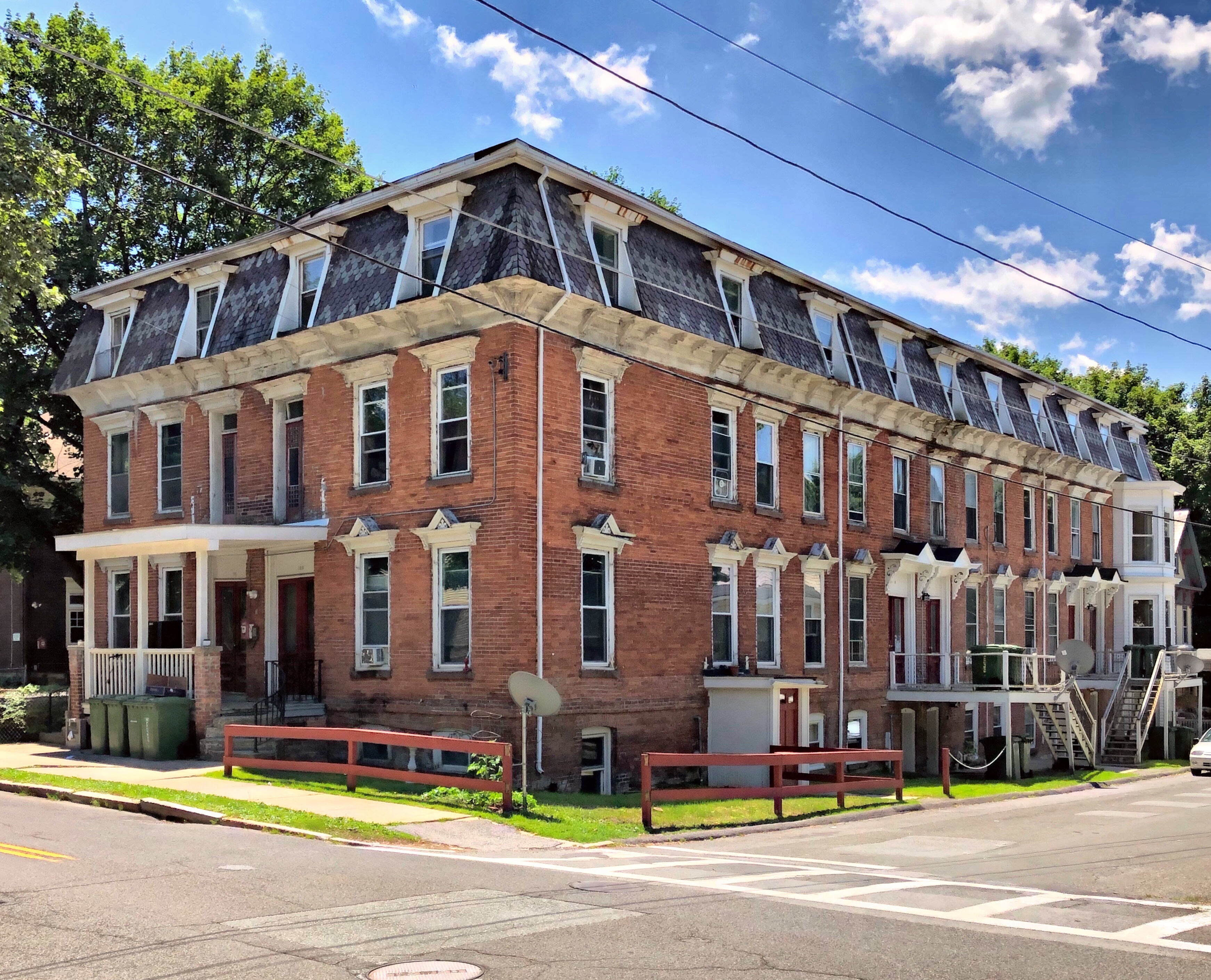
Industrial cities and towns all over New England drew in thousands of European immigrants looking for work. Due to the massive influx of workers and families, many towns and companies constructed tenement housing and other worker’s housing to provide living spaces close to factories and mills. This six-unit tenement house was built in 1872 and is a high-style Second Empire example of worker’s housing in North Adams. The use of brick, mansard roof, and window hoods was likely a concerted choice by the developers as they were located on a street lined by mill owners houses and the who’s who of North Adams.

Gallup House // 1894

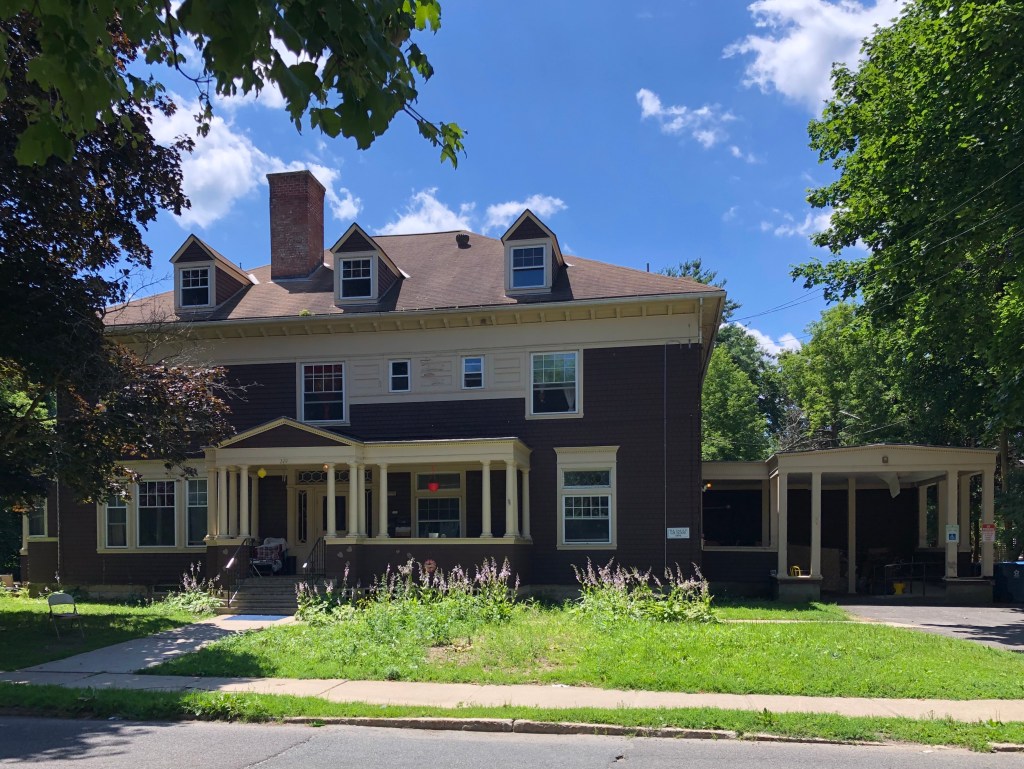
William A. Gallup was born October 28, 1851, in North Adams. He worked primarily for the Arnold Print Works beginning in 1870 before becoming a charter member, elected clerk, and director of the company. He went on to work for and own a few more mills in North Adams by the end of the 19th century. Gallup hired H. Neill Wilson, a Western MA based architect to design a mansion for his family on Church Street, near his father in-law and business partners (A.C. Houghton) house.

Hoosac Savings Bank // 1893

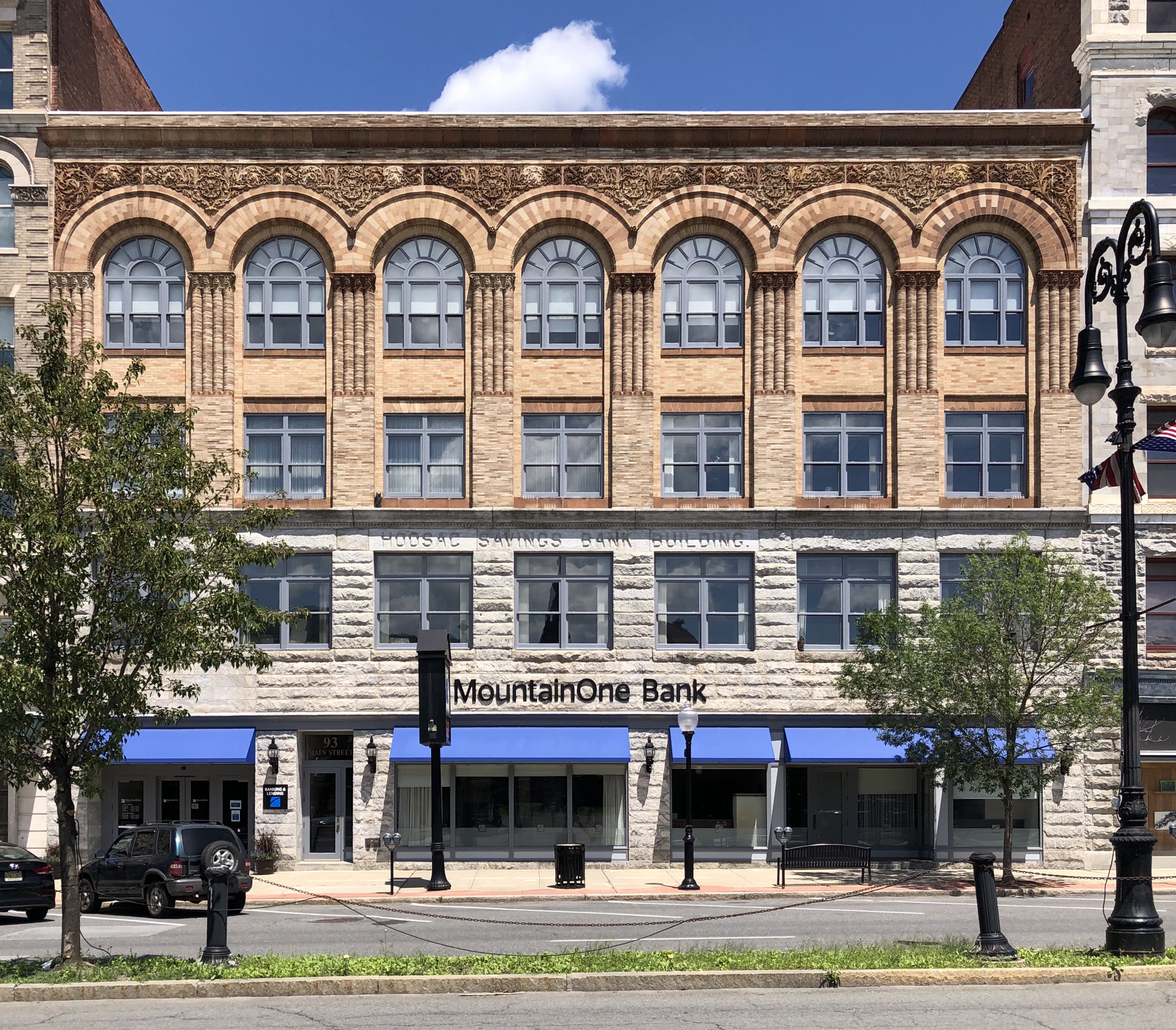
Located in Downtown North Adams, this beautiful Romanesque Revival commercial block is one of the better designed buildings in the region. Designed by architect H. Neill Wilson of Pittsfield, the Romanesque headquarters with fine terra cotta decorations cost $60,000 to build. When built in 1893, the stone over the storefronts were carved to display the bank’s name. The two venerable institutions merged into the North Adams Hoosac Savings Bank in 1962. In 2013, the bank merged with MountainOne Bank.

John Coffin House // 1703

This historic Georgian mansion was built in 1703 for John Coffin (1647-1711) who moved to Edgartown by the way of Nantucket and Haverhill, Massachusetts looking for new work. John Coffin opened a blacksmithy
on the waterfront in Edgartown and immediately prospered, building this home after his success. Legend says the home was actually right on the street before the street was widened and after, the front steps and home’s location obscured the view of other buildings on the street. The home was moved back on the lot in its bucolic setting now amongst the hustle and bustle of downtown Edgartown. The home was threatened with demolition almost all of the 20th century due to the commercial nature of its location. Thankfully, it was acquired by the Vineyard Trust in 1946, who preserve it to this day with small businesses located inside.

Baylies-Pease House // c.1845

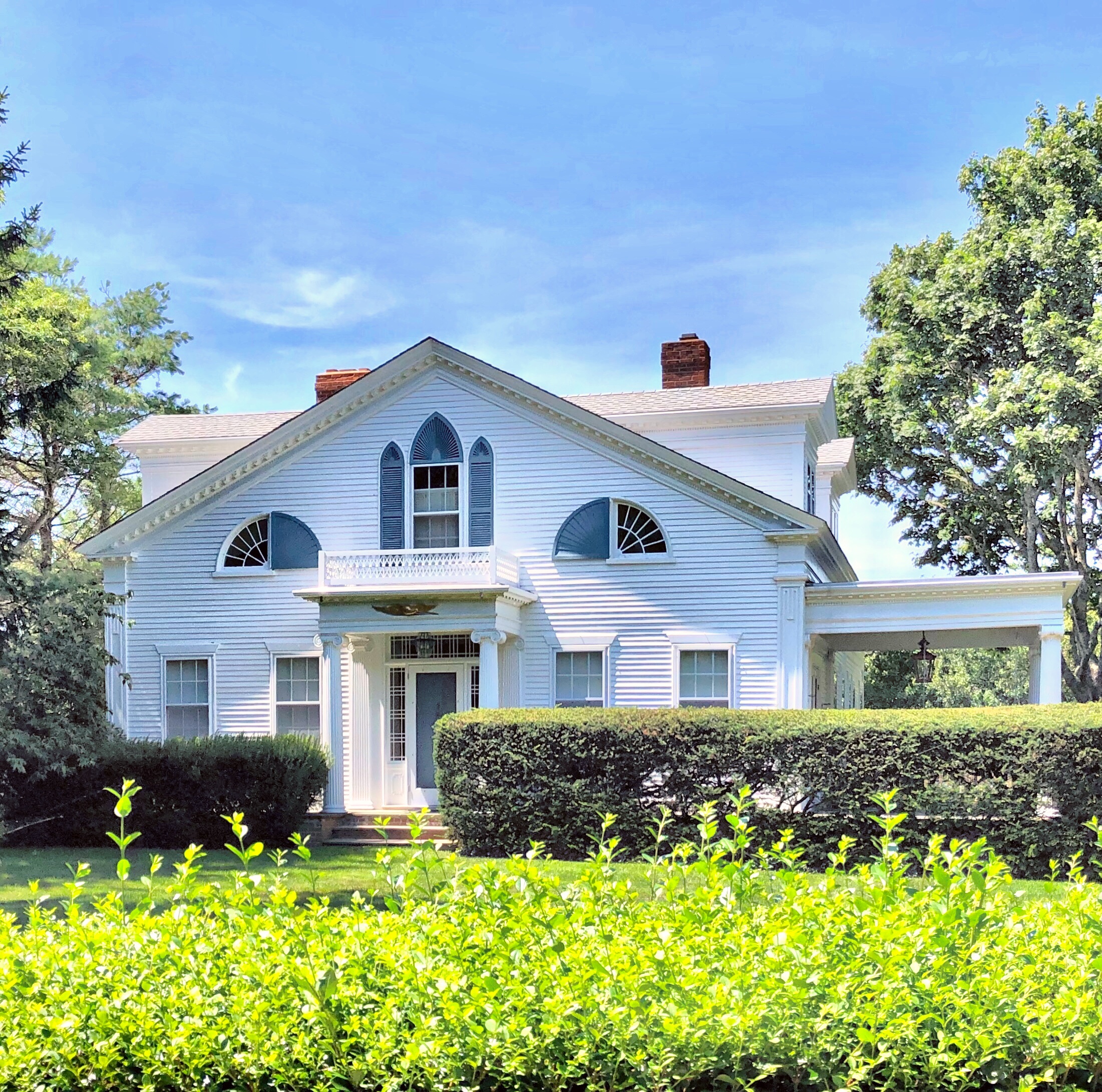
This stunning house on Starbuck Neck in Edgartown was originally built on Main Street by Frederick Baylies Jr., as his own residence. Baylies was the architect of the town’s original Methodist church, the Old Whaling Church, and a couple other extant churches in town in the early 19th century. The home was sold to William Cooke Pease, a shipbuilder and merchant. In 1839, he joined the United States Revenue Cutter Service, an armed customs enforcement service, and he quickly rose in rank, spanning the transition from sail to steam. Capt. Pease designed and built new Cutter ships for the Great Lakes and refitted many aging vessels on the West Coast. Today, he is regarded as a founder of the modern Coast Guard, which in 1915, was created by the consolidation by an act of Congress of the U.S. Revenue Cutter Service the United States Life-Saving Service to form the United States Coast Guard as we know it today.

Frank A. Ferris House // 1890

Located north of downtown Oak Bluffs, this oceanfront summer estate exemplifies the grandeur of Martha’s Vineyard at the end of the 18th century. This home was built in 1890 for Frank A. Ferris, a Manhattan meat dealer who processed and shipped his product to wealthy customers, markets, luxury hotels and restaurants all over the east coast. His processing plant on Mott Street in Manhattan remains an excellent example of Romanesque Revival architecture in the city. He lived at 5 Russell Terrace in Montclair, NJ, and in summers, stayed in this waterfront mansion overlooking the Atlantic. His summer home is a great blending of the Queen Anne and Shingle styles, both very common at the time.