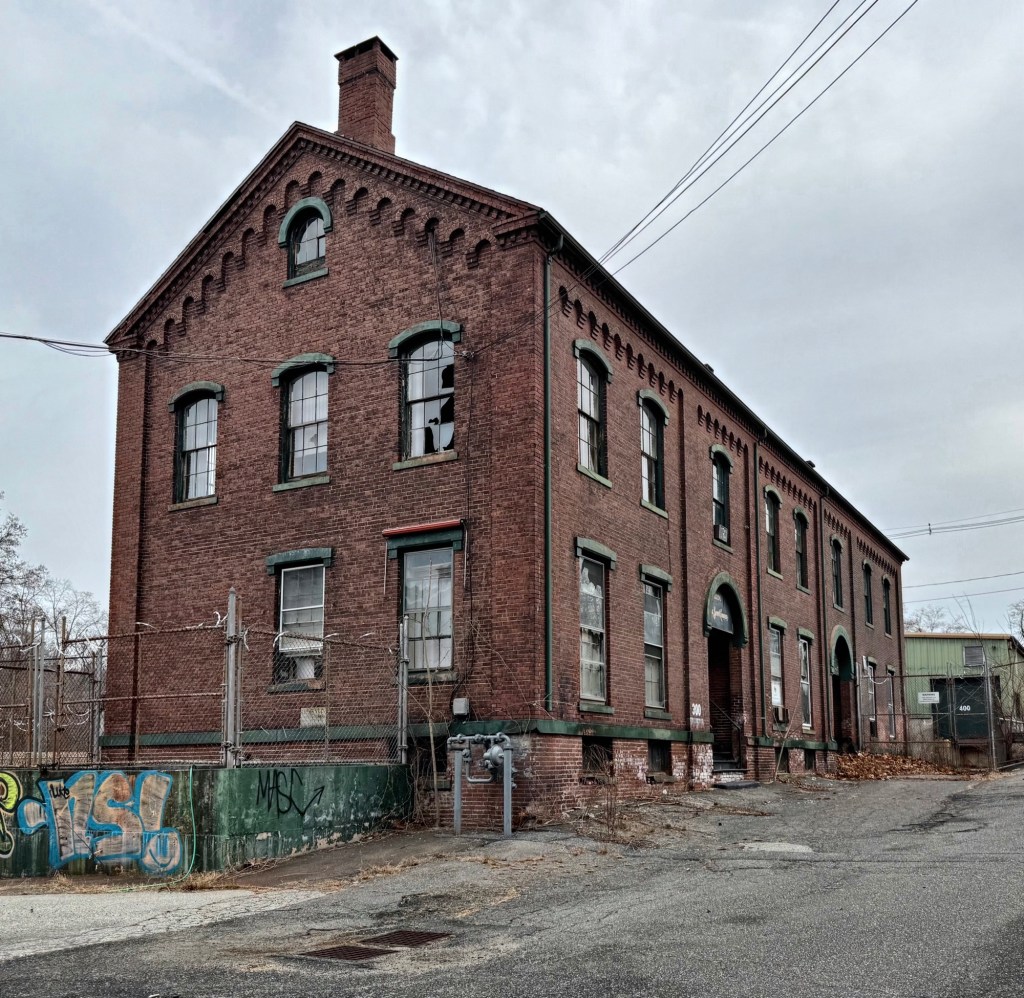
Ames Sword Company Offices // c.1865

Adjacent to the main Ames Manufacturing Company mills in Chicopee, Massachusetts, this handsome brick structure has ties to industry and the economic growth of the city in the 19th and early 20th centuries. Tucked away on Grape Street, at the edge of the Chicopee River, this building was built following the American Civil War as the offices of the Gaylord Manufacturing Company, a later subsidiary of the Ames Manufacturing Company. The company was run by Emerson Gaylord, a manufacturer, who produced leather belting and swords for the military just before and during the War. After the Civil War, the Gaylord company manufactured cabinet locks and society swords. In 1881, the adjacent Ames Manufacturing Company consolidated its own sword department with the Gaylord Manufacturing Company, forming the Ames Sword Company. The company would close in the 1930s, and today, this handsome brick building with corbelled cornice and segmental arches, sits vacant, awaiting preservation and a new life.
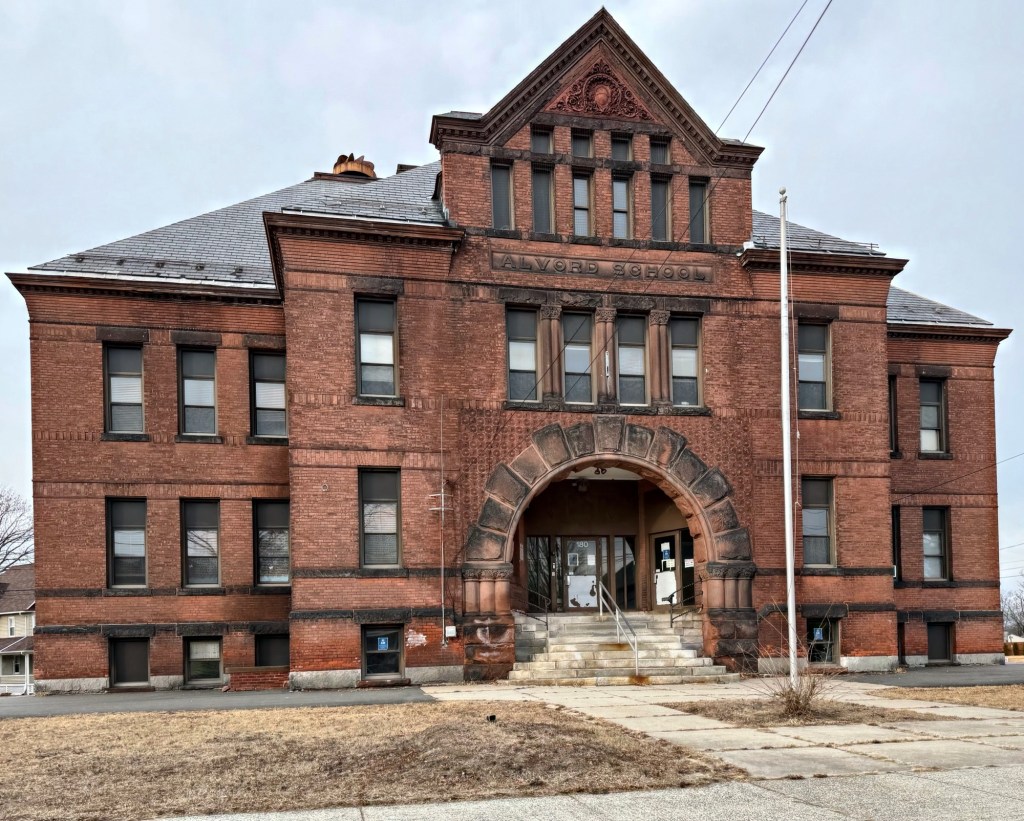
Alvord School // 1894

When the old Broadway school in Chicopee Falls became neighbors with the Overman Wheel Company, an early bicycle manufacturing company, there was so much noise and distraction that the Chicopee School Committee voted to sell the school and build a new school building down the street. A triangular lot on Broadway was purchased and Springfield architect, Francis R. Richmond, was chosen to design the new building in 1894. The school was dedicated to Dr. Samuel Alvord, a Chicopee Falls resident who was first principal of the local high school and local doctor that died in 1892. The Alvord School is a great example of a Richardsonian Romanesque school building of brick and brownstone, with recessed entry within a Syrian arch and decorative terracotta tiles. The school would close in the second half of the 20th century, and today is known as the Helen A. O’Connell Administration Building, a municipal office building.

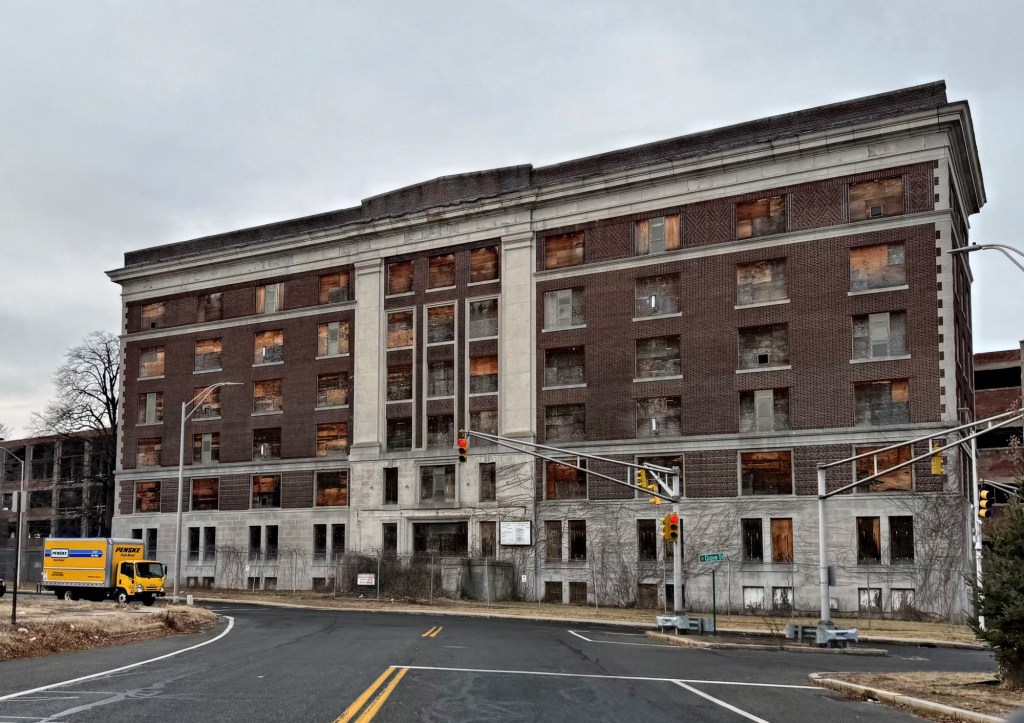
Fisk Rubber Company Offices // c.1916

The Fisk Rubber Company was founded in Chicopee, Massachusetts, in 1898 by Noyes Wilson Fisk, who purchased the Spaulding and Pepper Company in 1895 and renamed it to the Fisk Rubber Company. The company originally produced bicycle tires and other rubber items, later branching out with automobile tires in 1899 which proved to be an impressive success. The company’s “Fisk Tires” became a household name, especially popular among early automobile owners for their durability and performance. At its peak, the company employed thousands of workers, contributing significantly to the local economy of Chicopee, as well as other branch factories in in New Bedford, Massachusetts, Jewett City, Connecticut and Pawtucket, Rhode Island. The firm grew rapidly, and an entire complex was built here in Chicopee, centered around this building, constructed around 1916 as the Administrative Offices for the company. Architect George B. Allen designed the building in the Classical Revival style. During the Great Depression, Fisk Rubber was crippled by competition and eventually was acquired by United States Rubber (later Uniroyal) in 1940. Uniroyal, Inc. closed their Chicopee plant in 1980, and the complex sat largely unused for decades, with a majority of buildings demolished in recent years. Hopefully this lovely building, instrumental to the growth of Chicopee and America as we know it, will be preserved for generations to come.

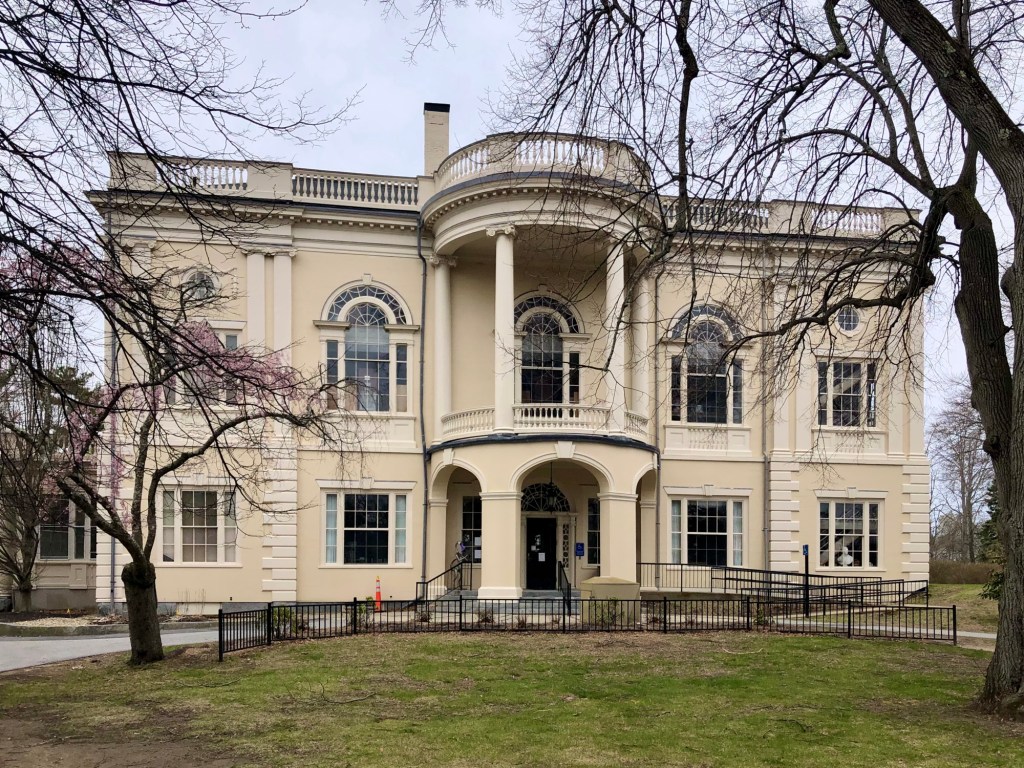
Former Chicopee Public Library // 1911

Tucked to the side of the towering City Hall building on Market Square in Chicopee, Massachusetts, this long-vacant former public library is undergoing a major renovation to convert the building to a business incubator and community hub. The library was built in 1911 and was designed by the Springfield architectural firm of Kirkham & Parlett and is a great example of a Classical Revival style civic building with its strict symmetry, Ionic columned and pedimented entrance, and corner quoins. The original town library was organized as early as 1846 under the name “Cabot Institute” a subscription-based library. In 1853, the Cabot Institute donated its collection of nine hundred books to form a public library. The town voted that year to support a public library from tax dollars, making the Chicopee Public Library the first library funded by public funds in Western Massachusetts. The library was located in the City Hall building when it was completed in 1871, and was later moved out of the building to make space for the Board of Aldermen offices. In 1907, Mrs. Sarah Cooley Spaulding bequeathed $20,000 in her will towards a new library building as a memorial to her late husband, Justin Spaulding, and in May 1913, the Chicopee Library opened its first building built solely for the purpose of being a library. The library was expanded in the latter half of the 20th century and ultimately outgrew its space, with the City building a new library in 2004 on Front Street. This library closed at that time and had sat vacant until plans were unveiled to re-imagine this significant building as a community hub. I love to see old buildings repurposed rather than demolished!

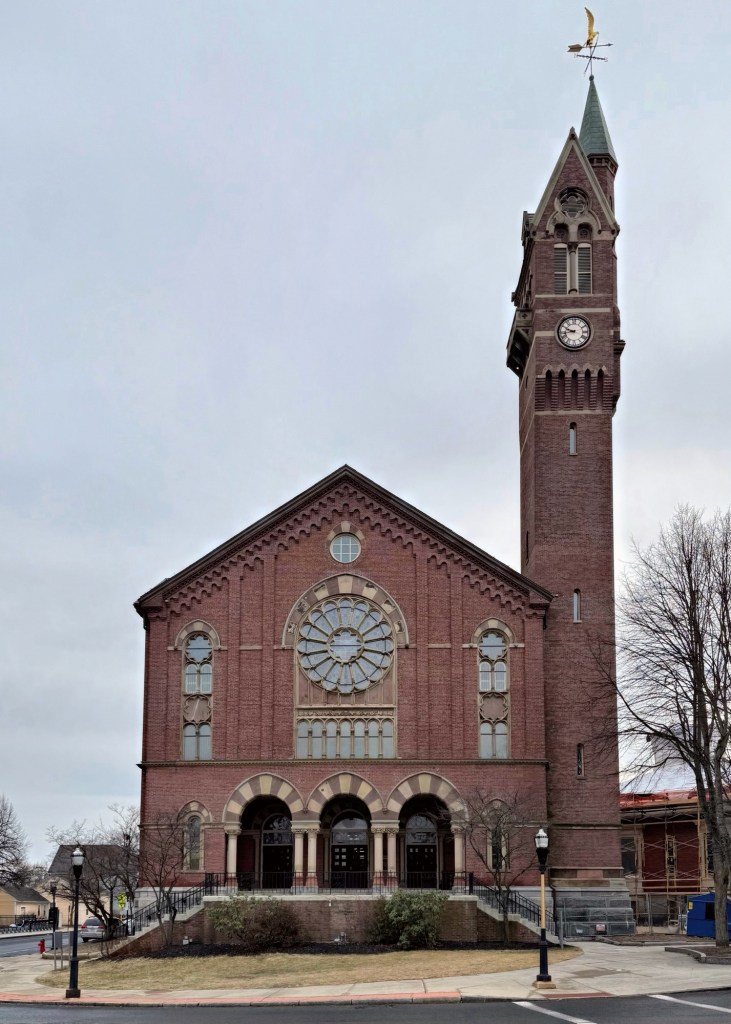
Chicopee City Hall // 1871

Chicopee, Massachusetts, was first settled in the early 17th century and incorporated as a town in 1848. Originally part of Springfield, Chicopee grew rapidly in the 19th century, fueled by industrialization and following immigrants arriving to the city to work in factories there. Many of these ethnic groups established cultural centers and built churches, creating the diverse and architecturally unique city we see today. Sadly, like many other 19th century industrial cities, many of the factories closed or relocated in the mid-late 20th century. While the loss of industry harmed the local economy, Chicopee is poised for growth and rebirth as the second largest city in Western Massachusetts, and anchored by its great architecture. The Chicopee City Hall, built in 1871, is one of the region’s finest buildings and one of a handful built in the Romanesque Revival style. The present building was constructed on land the City purchased in 1869 from the Ames Manufacturing Company, a major employer in town with mill buildings nearby along the river. Architect, Charles E. Parker of Boston, was hired to design the new building which is said to have been loosely modelled after the Palazzo Vecchio, the historic town hall of Florence, Italy. The City of Chicopee have been great stewards to their historic City Hall, undergoing numerous restoration projects in the past decades.

Peabody Institute Library of Danvers // 1892

In 1856, George Peabody, an American banker and philanthropist, donated funds for a library for Danvers, Massachusetts. The original library was housed in the Town Hall until land was acquired on land that is today known as Peabody Park. In 1866, Peabody deeded the town additional funds for a purpose-built library building, similar to that of Peabody, Massachusetts (which separated from Danvers in 1855). A Gothic style library was built on this site from plans by architect Gridley J. F. Bryant with the purpose “for the promotion of knowledge and morality in the Town of Danvers.” On July 2, 1890, a massive fire destroyed the Danvers library, but many of the collections and volumes were saved by townspeople. Through insurance funds and additional money by trustees, it was decided to rebuild the library on the same site, retaining the architectural firm of Little & Browne, (whose chief draftsman, Lester S. Couch, was a Danvers resident) to design the new building. The present Georgian/Classical Revival structure was completed in 1892 and is one of the finest library buildings in New England.  

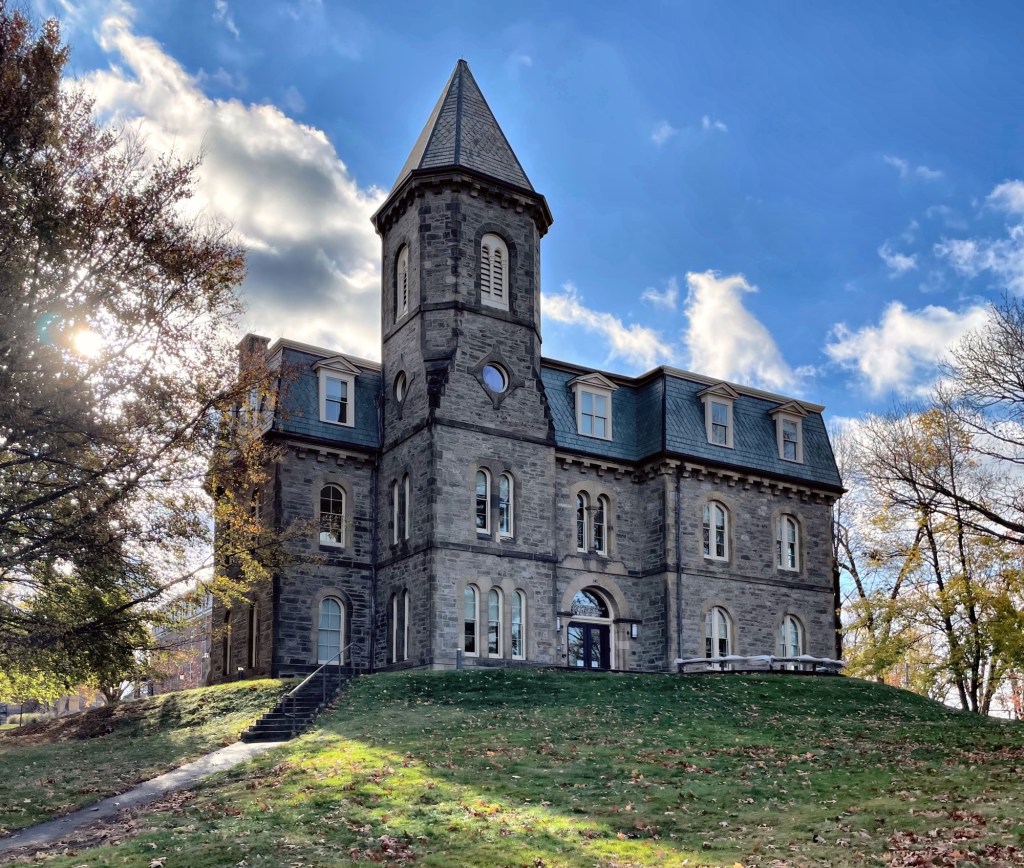
Colby Hall – Andover Newton Theological School // 1866

Colby Hall sits perched atop a hill overlooking Newton Centre, Newton, and is located in the Andover Newton Theological School campus. The building was constructed in 1886 for the Newton Theological Institution, which was founded on this site in 1825, and used for the a Baptist seminary, educating young students in theology. By the 1860s, the school had outgrown its space and following a donation from benefactor,  Gardner Colby (1810–1879), who was treasurer of the school (and was also the benefactor and namesake of Colby College in Maine) plans were drawn up for the new lecture spaces and chapel building. The unique building was designed by Alexander Rice Esty, a prominent architect at the time, and it blends Second Empire and Romanesque Revival styles under one roof. The three-story structure is of a light buff, rough cut stone with sandstone trim and features an imposing four-story tower at the eastern end. In November 2015, the school announced that it would sell its campus and become part of Yale Divinity School in New Haven, Connecticut. The Newton campus was purchased by the Windsor Park School with Colby Hall now occupied by the Boston Psychoanalytic Society & Institute.

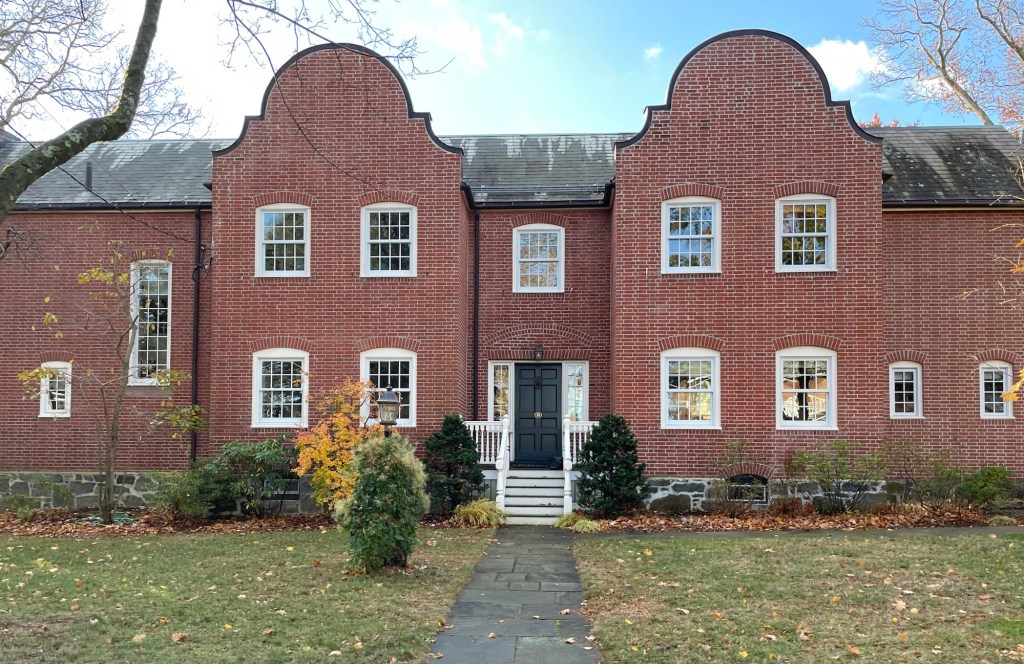
Chester-Rowley House // 1897

This unique brick house is located on Devon Road in Newton Centre, and was built in 1897 for Arthur Herbert Chester and Elizabeth S. (Rich) ChesterArthur H. Chester (1868-1898) worked in real estate, largely in the office of J. Montgomery Sears. He acquired a large house lot in Newton Centre, and had this unique Jacobean Revival residence built for his young family. Sadly, within a year of its completion, Arthur died of Malarial Fever at the age of just 30 years old in 1898. Elizabeth, his widow, would retain the house for a decade longer before it sold to Henry Esmond Rowley and his wife, Josephine. While it looks like a brick house, this residence is actually wood-frame with a brick veneer, a cost-saving measure to still give a stately appearance. The house is notable for its twin rounded gable parapets at the façade and lack of ornate trimmings. The house was covered in white paint for years, but the owners recently removed all the paint from the brick.

Georgetown Engine House No.5 // c.1860

Following a devastating fire in Georgetown in 1874, local residents of the town petitioned at a town meeting to purchase a fire engine and a lot to erect a new engine house to prevent such a loss again. Within a year, voters approved not only the construction of a new engine house on Middle Street, near the commercial center of town, but also to move this charming single-engine firehouse at to a site to “the south part the town”. This structure was deemed inadequate for the dense commercial village and instead of demolishing it, town voters decided it could be relocated to another area and put to use. A volunteer company was formed for the new engine house and the small structure remained as a firehouse until the early 20th century when modern fire apparatus would no longer fit in the building. The building was sold by the town and has remained in private ownership since the 1920s, and its use is unknown to me, but the owners are doing a great job maintaining this significant structure.

Spofford-Root House // c.1830

The Spofford Family was one of the earliest to settle in present-day Georgetown, with the earliest enclave of homes built along Andover Road in the western part of town. A few generations later, subsequent family members would built in the town center, taking advantage of the growing commercial and business community. This Federal period home (with later alterations) was built around 1830 for Greenleaf Spofford (1801-1887) the same year as his marriage to Emily Willmarth. The couple would move out of town and sold the home to Dr. Richmond Barbour Root (1846-1930),  the second of a highly respected, three generation family to practice medicine in Georgetown. The overlay of machine-sawn Stick Style decorative porch, bracketed cornice and bay windows were likely added by Root sometime after the Civil War. Unlike most owners of Federal and Greek Revival-style dwellings, Dr. Root may have held a valid professional interest in appearing as up-to-date as possible with a “modernized” home that also served as the site of his office and consulting rooms.