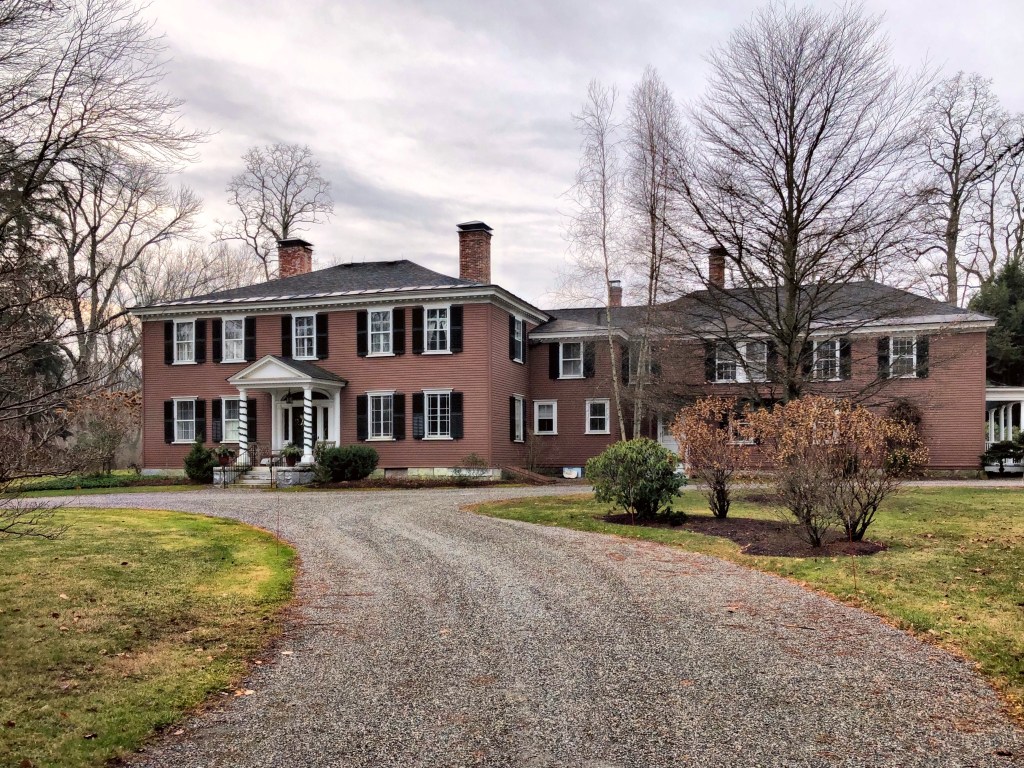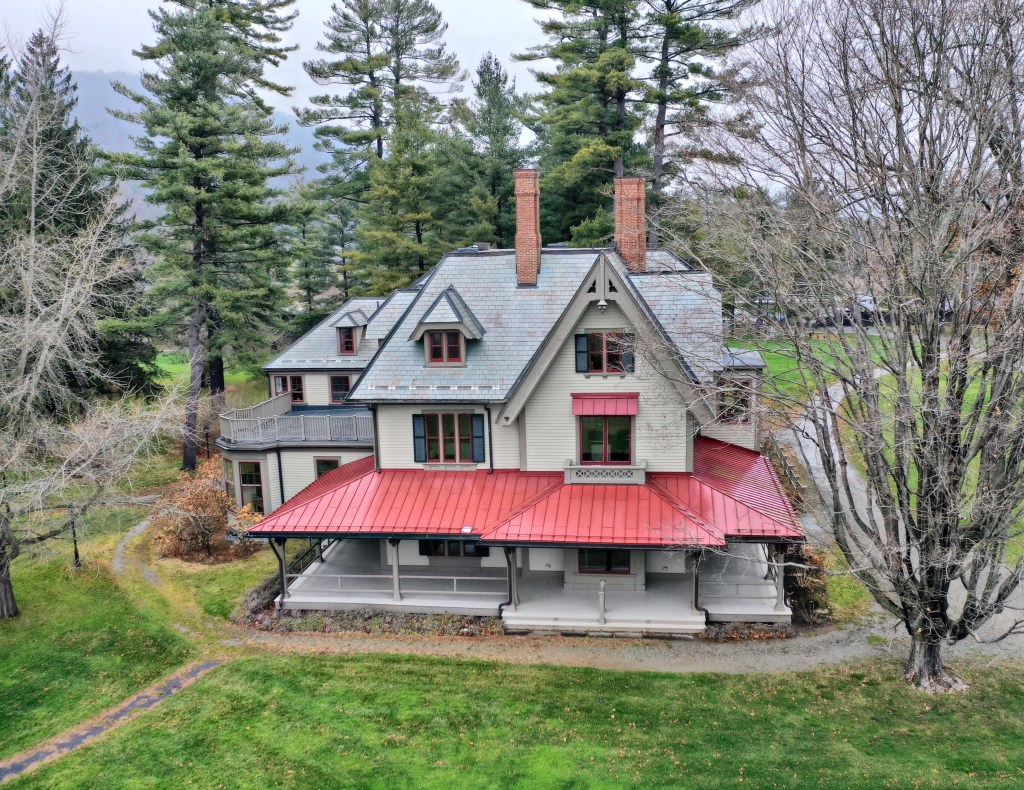
Tanglewood // c.1865

The 200-acre campus of Tanglewood, where the Boston Symphony Orchestra spends its summer months, spreads the grounds of two historic summer cottages in the charming town of Stockbridge, MA. One of the summer “cottages” Tanglewood, where the music center gets its name, was constructed around 1865 for Caroline Sturgis Tappan, husband William Aspinwall Tappan and their two daughters, Ellen Sturgis Tappan and Mary Aspinwall Tappan. Mary, with her niece Rosamund Hepburn, donated the family summer home, Tanglewood in 1937 to Serge Koussevitzky, a Russian-born conductor, composer and music director of the Boston Symphony Orchestra from 1924 to 1949. The campus has since grown astronomically as it hosts musicians and tourists from all over the region and globally to experience the arts in the charming town in the Berkshires. The Tanglewood house retains much of its historic architecture and siting, overlooking the Stockbridge Bowl (lake).
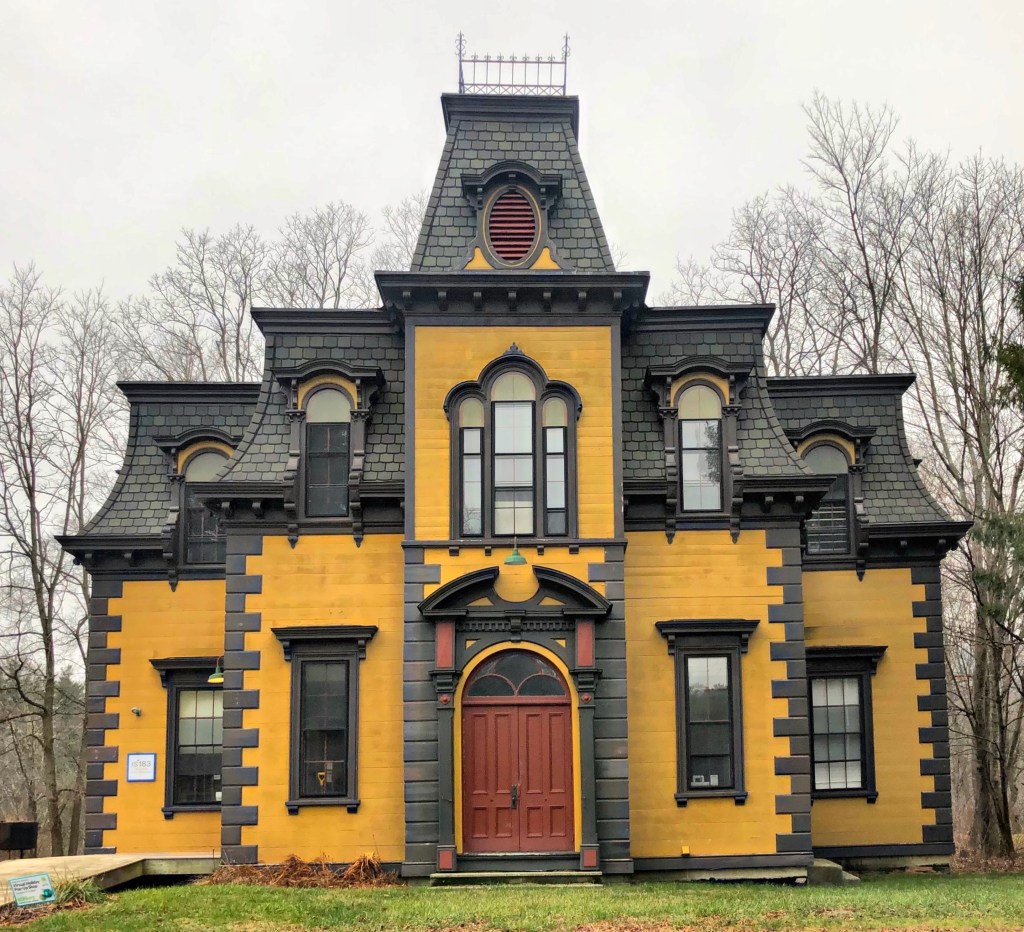
Citizen’s Hall // 1870

Citizens Hall, which was built in 1870 in a small village within Stockbridge, MA, is a small-scale version of the civic buildings constructed in the Second Empire in American towns and cities following the Civil War. The building is the architectural epicenter of Curtisville (now sometimes referred to as Interlaken), a small community within the Town of Stockbridge, which grew up around twelve mills. The mills are gone but several significant structures remain, also retaining their rural character. Citizens Hall was designed by Charles T. Rathbun, and inside, the two rooms on the first floor housed the public school and the second floor was the community assembly hall. The building was threatened with deferred maintenance in the mid-20th century and its future was uncertain until 1975 when a local group worked with the State Historic Preservation Office and acquired a grant to make needed repairs on the building. Today, the structure is maintained and houses the Art School of Berkshire (now known as Interlaken School of Art). Look at that historically appropriate paint scheme!

St. Paul’s Church, Stockbridge // 1884

Located on the idyllic Main Street in Stockbridge, MA in the Berkshires, this stone church marks the emergence of the once sleepy town into a summer retreat for wealthy citizens, escaping the cities in the late 19th century. This building is Charles Follen McKim’s first church design, a building reflecting his early training in the office of H. H. Richardson with the use of Romanesque detailing, though with a hint of Norman design. St. Paul’s Church is constructed of gray Berkshire granite with stained glass windows by John La Farge. The church replaced an older wooden church building designed by Richard Upjohn in the Gothic Revival style. The church was almost entirely funded by Charles Butler, a New York lawyer who wanted to honor his late wife Susan Ridley Sedgwick Butler, a descendant of Theodore Sedgwick, whose home I featured not long ago.

Sedgwick House // 1785

Built in 1785, the Sedgwick House on Main Street in Stockbridge, MA, is the oldest of several Federal mansions built in town after the Revolution. Theodore Sedgwick (1746-1813), one of the early lawyers of Berkshire County, moved to Stockbridge in 1785 and built this house. From 1796 to 1799 he was a Senator in the federal government, and declined a position of Secretary of the Treasury offered by George Washington. Before this, when a House Representative, he was nominated the fourth Speaker of the House. An ardent Federalist, Theodore retired from the national arena upon Thomas Jefferson’s election. Sedgwick was also a member of an early abolitionist society organized in Pennsylvania in 1775 and played a key role in abolishing slavery in Massachusetts by his win in the case of Bett v. Ashley. In this case, Sedgwick served as attorney of Mum Bet (also known as Elizabeth Freeman) an enslaved woman in nearby Sheffield and argued that slavery was inconsistent with the 1780 Massachusetts State Constitution, and won. Bet became the first enslaved African American to file and win a freedom suit in Massachusetts, effectively abolishing slavery in the state. She was later buried in the Sedgwick Family burial plot in Stockbridge. The home was later owned and occupied by Catharine Maria Sedgwick, Theodore’s daughter, who became one of nineteenth-century America’s most prolific women writers. She published six novels, two biographies, eight works for children, novellas, over 100 pieces of short prose and other works.

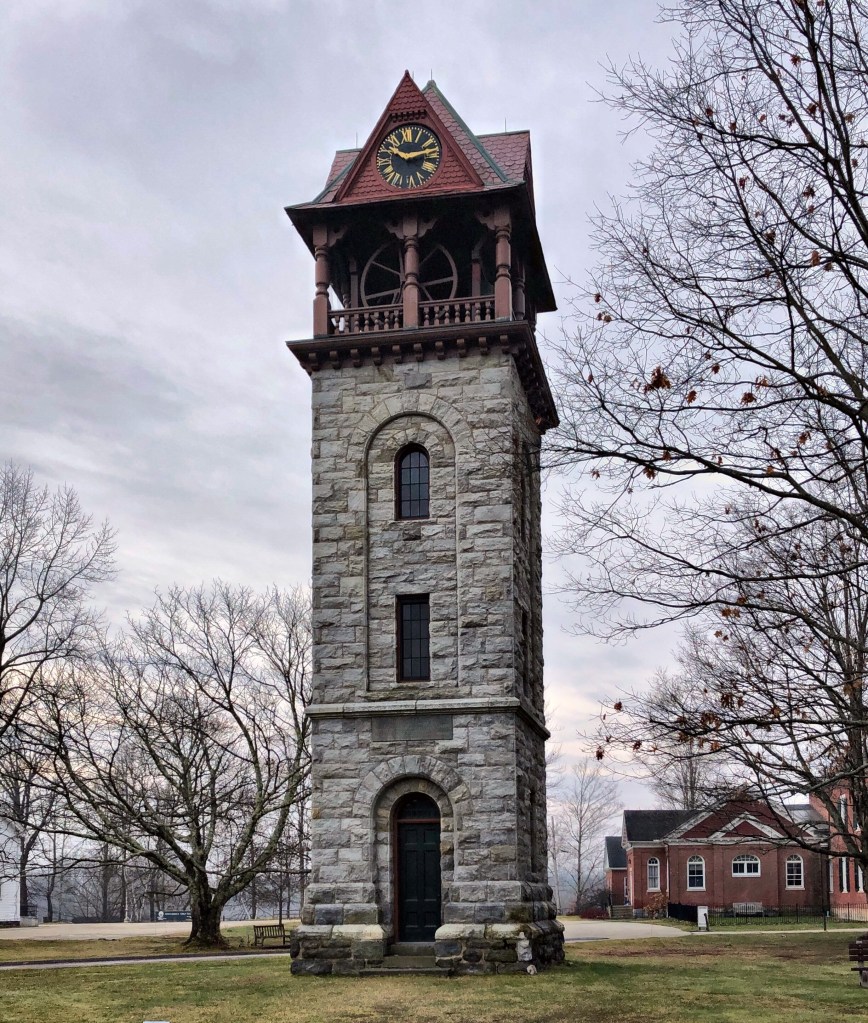
Children’s Chimes Tower // 1878

Located in front of the old Town Hall and Congregational Church in Stockbridge, this tall carillon (bell tower), was gifted to the town by David Dudley Field, Jr. in memory of his grandchildren. His one condition was the chimes were to be rung everyday at 5:30 p.m. between, “apple blossom time and the first frost on the pumpkin”. The tower has a stone base and wooden belfry surmounted by a pyramidal roof with clocks on all four sides. The tower remains a gift, not only to the memory of his grandchildren, but to passersby who are lucky enough to hear the bells toll.

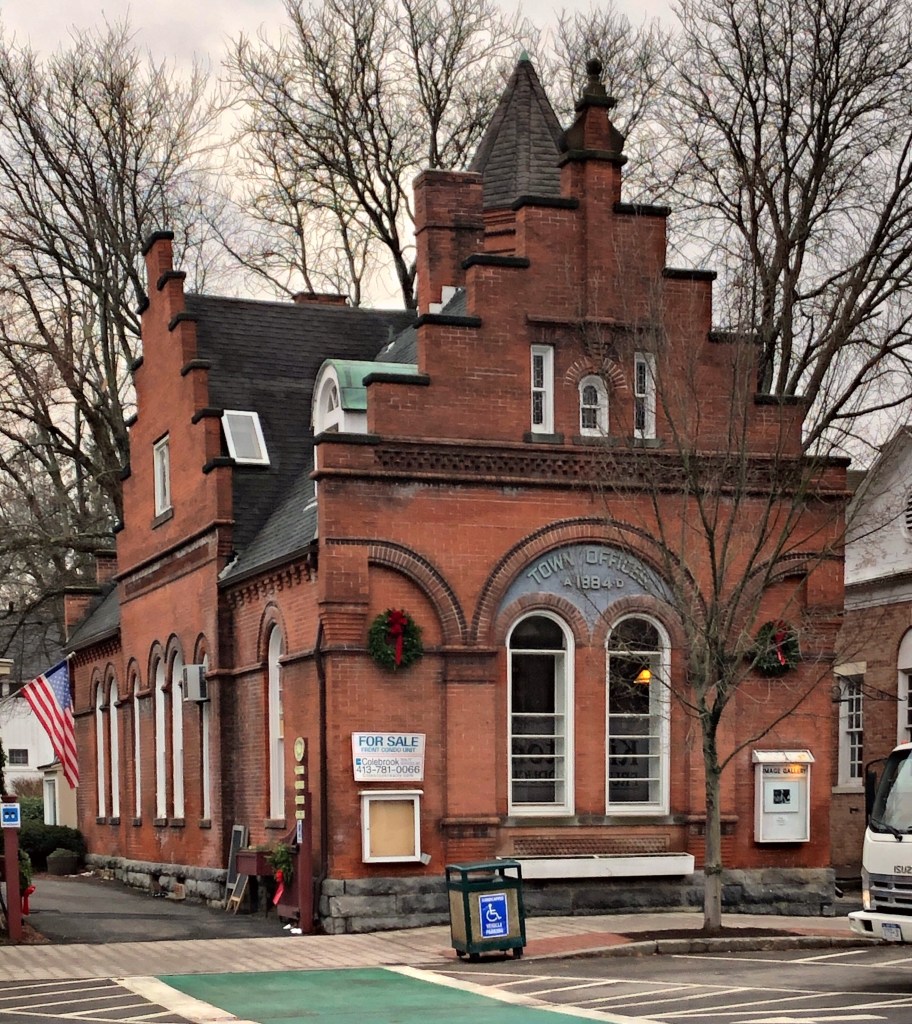
Stockbridge Town Offices // 1884

Built in 1884, the Town Office Building on Main Street in Stockbridge, housed more conveniently located government offices and came equipped with a basement jail. The building was constructed of brick to protect town records from fire and the adjacent buildings. The architecture is Flemish Revival with its stepped gables, a tower, and terra cotta and stained glass ornaments, a distinctive and different type of architecture on Main Street. The building was occupied after the Town Hall, further down Main Street, was deemed inadequate. The building displays the words “Town Offices” with the date 1884 A.D. as the town was sure to label the building as town offices over ‘town hall’ so they could retain the former town hall building after a deal with the First Congregational Church. The town sold the building to private owners in 1960 and has since been used as commercial space.

First Stockbridge Town Hall // 1840

The Town of Stockbridge, MA was incorporated on June 22, 1739. After that time the town held meetings and conducted business in the First Congregational Meeting House until 1840 when this Greek Revival town hall building was erected on the church’s property as a gift. A stipulation was made that if the Town government constructed or moved to a new town hall building, the property ownership would revert to the Church. The town outgrew the building and constructed a new building toward the center of town, but named it Town Offices, a cheeky way to retain ownership of this building. Eventually, that building too was outgrown, and the town hired Pittsfield-based architect Harry E. Weeks to modify and enlarge the building in 1903, in the Neo-Classical style to compliment the original Greek detailing. As expected, the town moved again in the 2000s to a former school, on Main Street, but again retained the building.

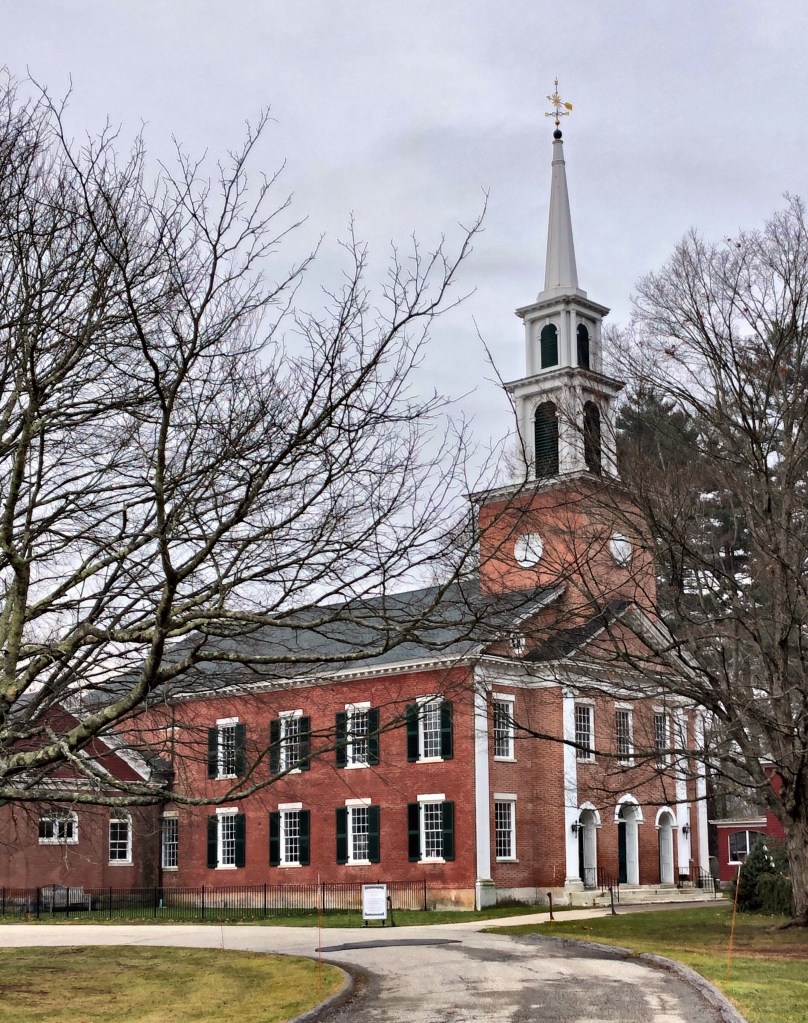
First Congregational Church, Stockbridge // 1824

Stockbridge, Massachusetts was settled by English missionaries in 1734, who established it as a praying town (an effort to convert the local Native American tribes to Christianity), for the Mohican tribe known as the Stockbridge Indians. The township was set aside for the tribe by English colonists as a reward for their assistance against the French in the French and Indian Wars. From this, a Yale-educated missionary, John Sergeant began converting native people to Christianity, essentially stripping them of their own religious culture and practices. Although Massachusetts General Court had assured the Stockbridge Indians that their land would never be sold, the agreement was rescinded. Despite the aid by the tribe during the Revolutionary War, the state forced their relocation to the west, to New York and then to Wisconsin. The village was then taken over by British-American settlers who created the township.

The first congregational church here was formed by Sergeant in 1734, and later succeeded by Jonathan Edwards, another minister. During his time in Stockbridge, Edwards wrote his masterpiece, Freedom of the Will, which remains one of the most studied works in American theology. Edwards later left the church to become the President of The College of New Jersey, now known as a little school by the name of Princeton. The first church was built in 1739, later replaced by a second church building that stood from 1785 to 1824. The present brick building was built in 1824 in the Federal Style. The space was occupied for town functions until the 1840s, when an official town hall was erected next door, demarcating the separation of church and state. The stunning church marks the immense influence religion had in the early colonial days of New England and the impact it had on native peoples (for better or worse).

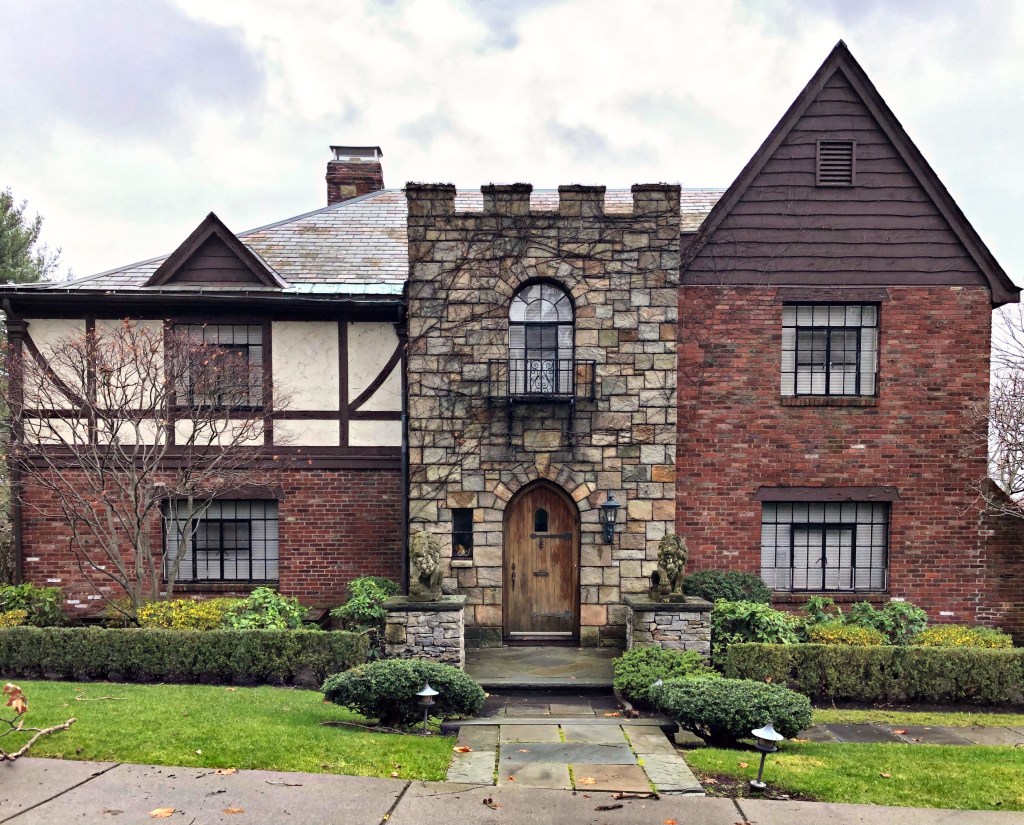
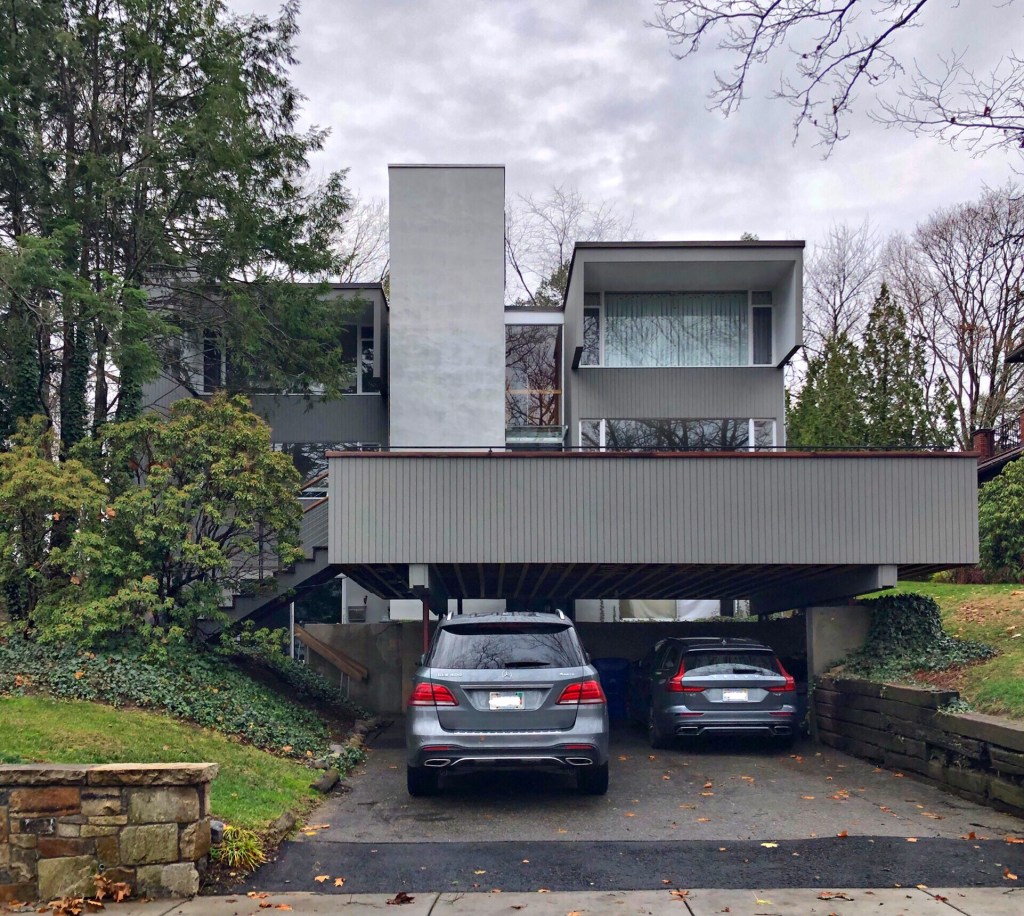
Pastan Houses // 1936 & 1963

Located across the street from each other in Brookline, the Pastan Houses are an excellent example of how architectural tastes can change from one generation to another. The William Pastan House was constructed in 1936, and is Tudor Revival in style. The home has a projecting square entry tower with castellated roofline and interesting mixture of materials and textures. The first owner, William Pastan raised his family in the home, attending the synagogue a couple blocks away. By 1963, Pastan’s son, Harvey became a successful engineer and built a home near his parents for his own family, though in a very different aesthetic. The Modern home features boxy forms, prominent covered parking spaces, and expanses of glass.

Which house would you prefer, William’s (1936) or Harvey’s (1963)?

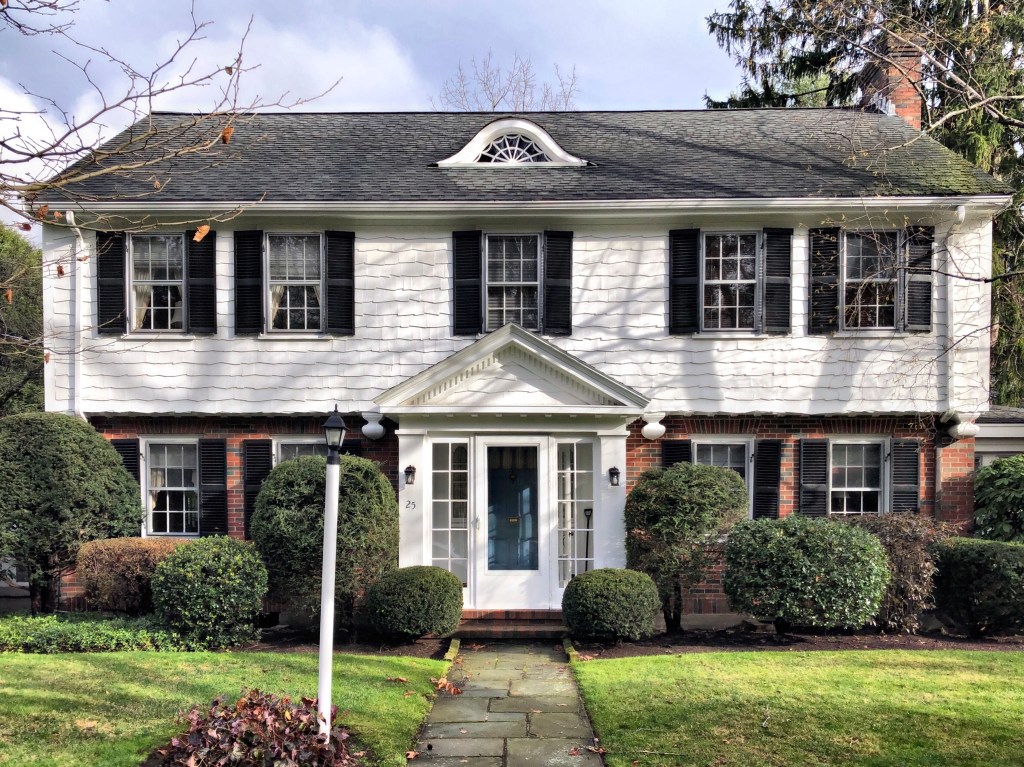
Webber House // 1935

Located in South Brookline, a neighborhood of mostly early-mid 20th century architecture, you can find amazing residential designs for middle-class suburban families in the Boston area. This home was built in 1935 for Max and Rebeccah Webber in the Garrison Colonial Revival style. The home, designed by architect Harry Morton Ramsay, is characterized by a second-story shingled overhang with decorative pendants reminiscent of 17th century American homes. Adding some extra flair, an eyebrow dormer can be found at the roof, as well as a glazed projecting entry porch with a broad pediment and corner pilasters.