Across from the Marion Town Hall (last post), this perfect little cottage showcases what makes coastal New England so special. Built around 1840, by and for Warren Blankinship, a carpenter in town, the home represents a well-preserved example of a modest Greek Revival home. The home is clad in cedar shingles, a hallmark of many coastal homes in New England. White Cedar shingles are so popular historically as the species is such a hard wood that pieces are naturally insect and rot resistant and hold up amazingly well to salt air. Early colonists noted the use of the tree for canoes and other objects by Native people and followed suit, constructing homes from the native tree. The shingles were usually left exposed, and they would eventually weather over time. The exposed, cedar shingles have been a classic look in coastal homes since and even today, evoke a strong sense of place when seen on an old home here.
Welcome to Marion, Massachusetts! Colonized in 1679 as “Sippican”, the town was once a district of adjacent Rochester, Massachusetts. The name, which also lends itself to the river which passes through the north of town and the harbor at the heart of town, was the Wampanoag name for the local tribe that once utilized these lands. Native settlements in present-day Marion dates as far back as 3000 B.C. as the local people were members of the Wampanoag tribe who, when the Pilgrims came, lived in a number of villages in Southeastern Massachusetts under the leadership of the great chief Massasoit. By the 19th century, the town was mostly known for its many local sea captains and sailors whose homes were in town. Today, the coastal town is known for its charming village and large waterfront homes, oh and amazing architecture!
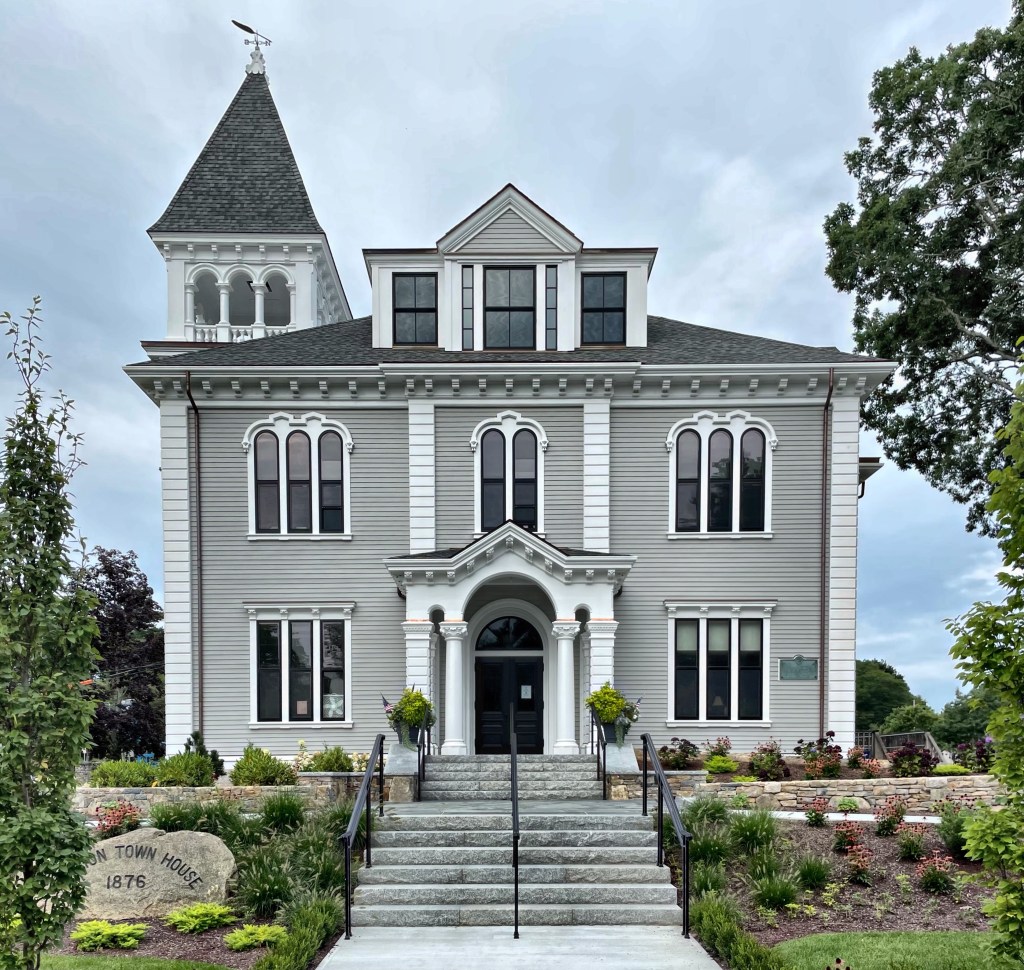
This building was constructed in 1876 by Mrs. Elizabeth Taber (1791-1888), who, at the age of 85, founded Tabor Academy in town. She named it after Mount Tabor in Palestine rather than after herself. The school was built towards the end of the “Age of the Academies”, when in 1852, Massachusetts became the first state in the country to make education compulsory. While some major private institutions already existed, many more were founded in the mid-19th century. Tabor Academy served as a private school for boys and girls over 12 years of age, and was to remain free for local students. With the rise of public schools in the state, many academies began to struggle with admitting students, especially those that had parents willing to pay additional money for enrollment. The school struggled around the Great Depression and thus, traded buildings with the Town of Marion in the 1930s and this building became the Marion Town Hall, a use it retains to this day. The building itself is a stunning Italianate design constructed from plans by Boston architect William GibbonsPreston.
Stay tuned for more buildings and history on one of my favorite Massachusetts towns!
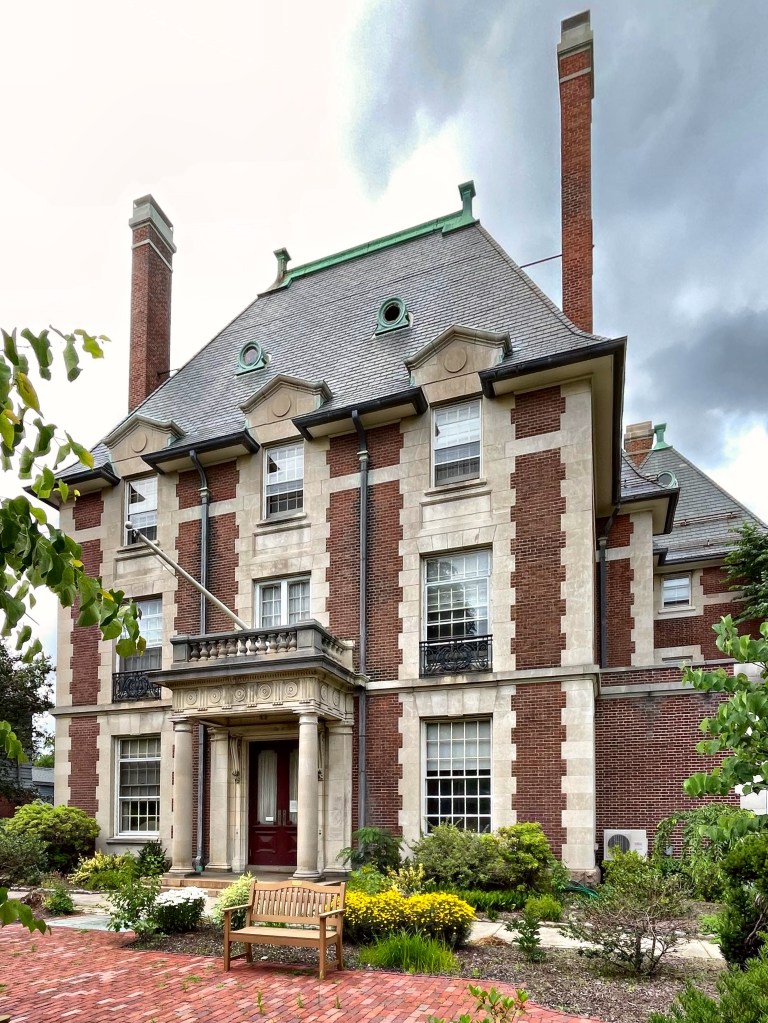
Providence is full of amazing residential architecture from all periods, but one house that stands out to me for being such a high style and unique mansion is the Hamilton House on Angell Street. The mansion was constructed in 1896 for local businessman, Francis W. Carpenter. From 1892 until his death, he was the president of Congdon & Carpenter Company, an iron and steel company which was founded in 1792, and operated in Providence into the 1980s. Carpenter was very influential as chairman of the committee on the construction of a new building for the Central Congregational Church (a previous post) in 1893. So pleased with how the church turned out, he hired the same architects, Carrère and Hastings of New York to design his own mansion which would sit next door to the church! Many in New England may not know how significant it was to have Carrere and Hastings design your house. To put it into perspective, while the firm was designing this house, they were designing the New York Public Library’s Main Branch building! The Carpenter Mansion was designed in the French Renaissance Revival style which was not too common in America, but always turns heads! The large hipped roof emulates the earlier French mansard roof forms, and the bold massing and use of limestone and brick makes the house look like a chateau or castle plucked from the French countryside. The house apparently was not finished until 1915, likely when the porte-cochere was added for the owner’s vehicles. The building is now occupied by The Hamilton House, a non-profit organization that serves as an adult learning exchange with programs from history classes to group fitness courses.
“Less is more” is a phrase adopted in 1947 by architect Ludwig Mies van der Rohe to describe his minimalist, Miesian glass box buildings. While he was referring to Modern architecture, the same phrase can be used in 19th century design, where massing, form, and materials are showcased in all their glory with little frills or additions. The Robert Lippitt House in Providence was constructed by 1854 for Robert Lincoln Lippitt (1823-1858), who worked with his brother Henry Lippitt in owning and managing textile mills. Henry would later build his own mansion nextdoor to his late brother’s house (see past post). Sadly, Robert died four years after this home was built, at the young age of 34. His widow, Louisa Gorden Hallet remained in the home and remarried within a year of her late husband’s death, to Charles Lippitt, possibly a cousin to Robert. Messy. The home was designed by architect Thomas A. Tefft, a promising and respected young architect who also died young, at the age of 33.
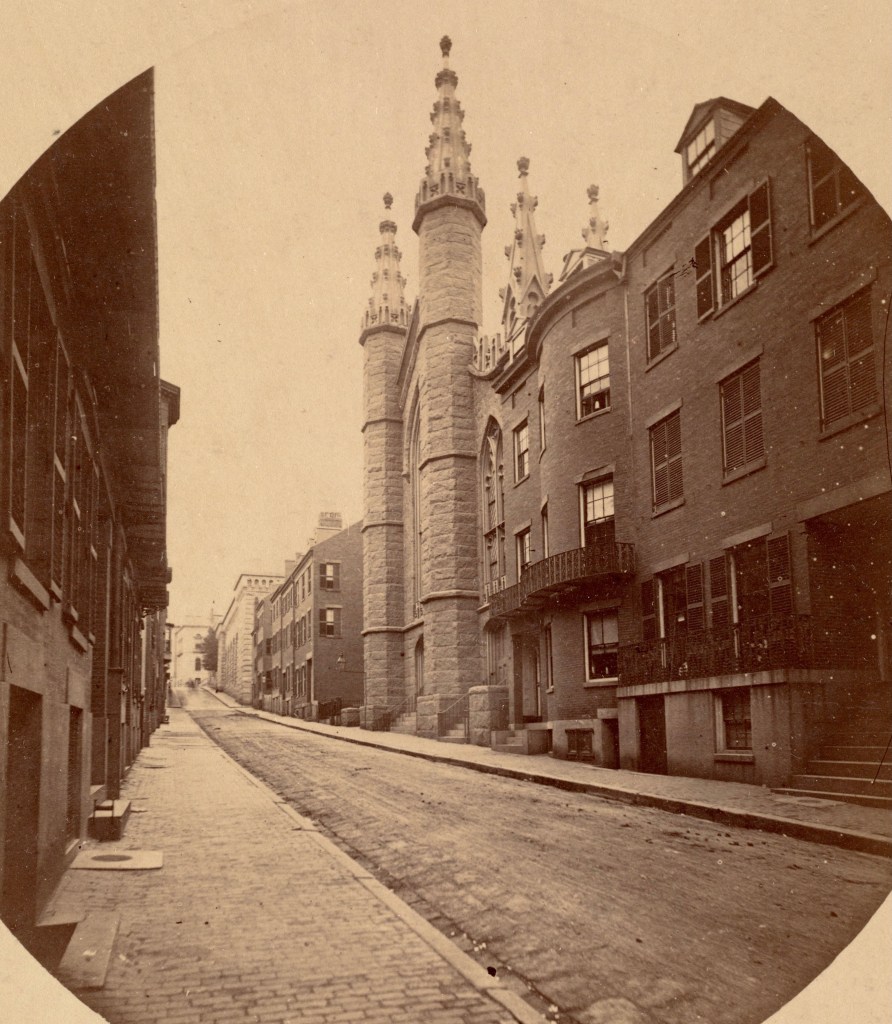
Grace Church was built in 1835 for a growing congregation in Beacon Hill. The absolutely stunning Gothic style church was designed by William Washburn (1808–1890), an architect and city councilor in Boston. The church was constructed of granite and had massive stained glass windows and soaring towers with decorative embellishments. Inside, a massive central window flooded the interior with natural light, and illuminated paintings from Mario Bragaldi, a Milan artist. In 1865, the building was sold to the Methodist Episcopal Society. 1873, it merged with Hanover Street, and took the name First Methodist. The church was variously referred to as First, Grace, or Temple Street, sometimes all at once! This church was occupied until 1962, when it merged with Copley to form First-Copley, which appears to have then occupied the Old West Church. The building was soon after acquired by Boston University and demolished for the building on the site today, a true loss to one of Boston’s most beautiful buildings.
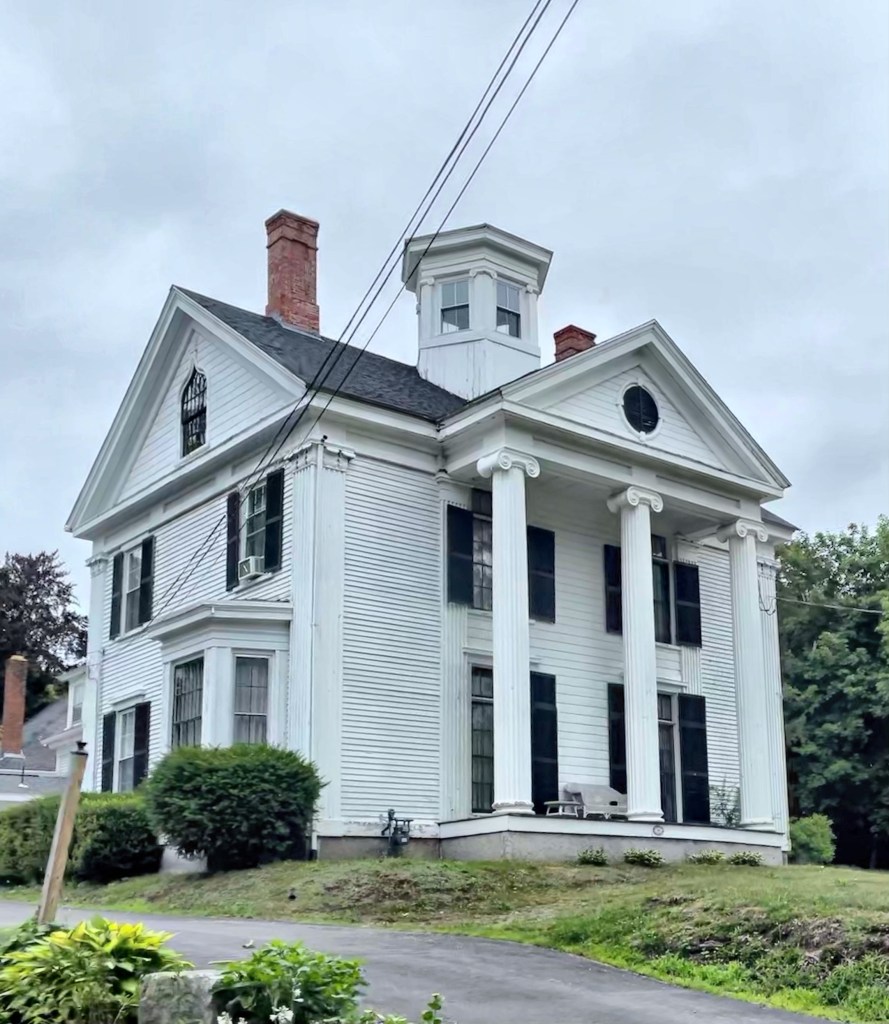
One of the most stunning examples of Greek Revival architecture in Gardiner, Maine, is the Mitchell-Patten House. The home was constructed in the mid-1840s for John S. Mitchell (1804-1891) head of the firm of Mitchell, Wilson and Co., who were traders on the Kennebec river, in lumber and other goods. The home was likely built not long after John’s wife, Philenia Sewall Mitchelldied during childbirth in 1837 to the couple’s son, who died at just two years old himself. After the death of his wife and only son, John met Mary and they married, moving into this home. Together, they had four children. Together, they had three sons, but like with his first marriage, tragedy wasn’t far behind. Their first son was stillborn, their son William died at age 27, and their third son, Egbert died in his first year. The family home was willed to the couple’s only living child, Susan, after her marriage to husband Freeman Patten. Freeman was a successful businessman in town and worked as a bank director, and later served as President of the Board of Trade and as Mayor of Gardiner 1899-1900.
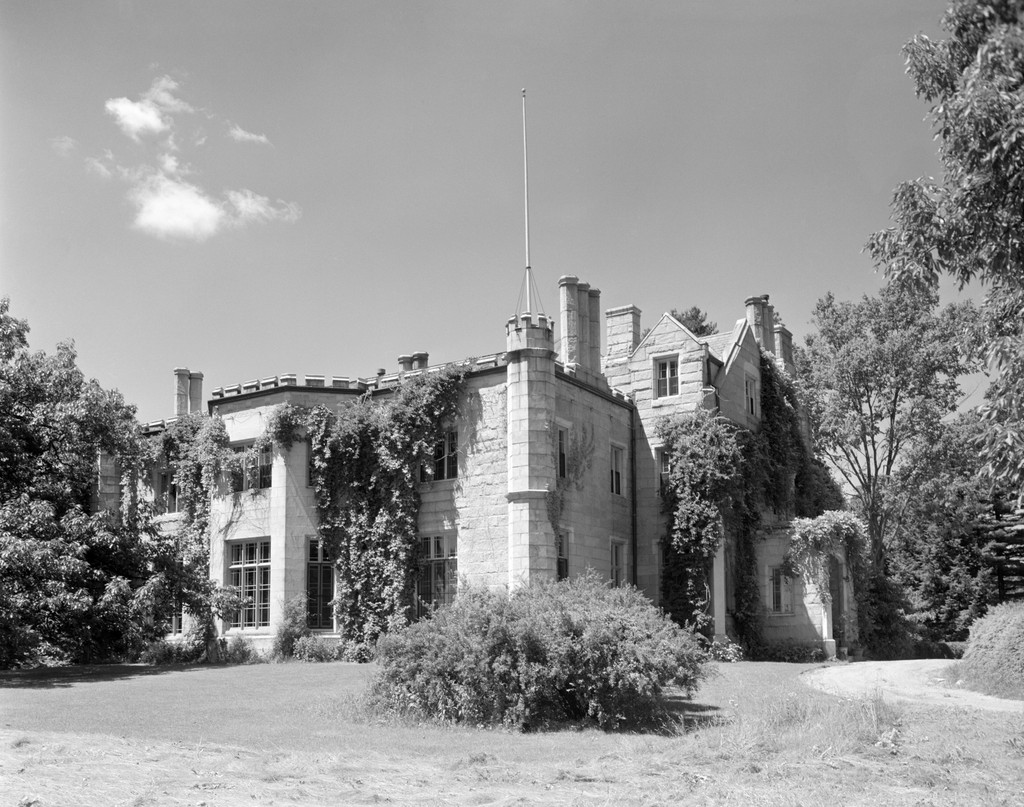
A massive amount of land on the eastern edge of the Kennebec River was acquired by Sylvester Gardiner in the 18th century, but confiscated by the state during the American Revolutionary War (because Gardiner was a Loyalist who fled). Years later, the land was recovered by Gardiner’s grandson and heir, Robert Hallowell Gardiner. Upon coming to age, Robert Hallowell Gardiner returned to Maine in 1803, after graduating from Harvard, ready to straighten out and manage the holdings willed to him by his late grandfather Dr. Sylvester Gardiner, the founder of Gardiner, Maine. He came with no inclinations or training in business, but his cousin Charles Vaughan in Hallowell helped in steer him on the right course. Starting at the age of 25, Robert Hallowell Gardiner embarked on the task of developing an entire city, Gardiner, but with profit and investment in mind over the next sixty-one years. His business enterprises included: six dams, saw and gristmills, shipyards, foundries, a brick mill, broom making industries, furniture manufacture, paper making and the ice-harvesting business. He married Emma Jane Tudor of Boston (who he likely met during his time at Harvard, in 1805. They soon after built a home for their family and welcomed friends and family to stay there on the massive property. The first Oaklands estate burned in 1834 and the present Gothic Revival mansion on the site was built in 1835-37. Designed by English-born architect Richard Upjohn, Oaklands typifies an English country manor house and features a rectangular hip roof, hooded window moldings, turrets and elaborate stonework. Oaklands is among the first and finest 19th-century rural villas in the State of Maine and is among the most significant in the country. The home remains on over 310-acres of sprawling land which looks out over the Kennebec River, and is owned by the Gardiner family to this day!
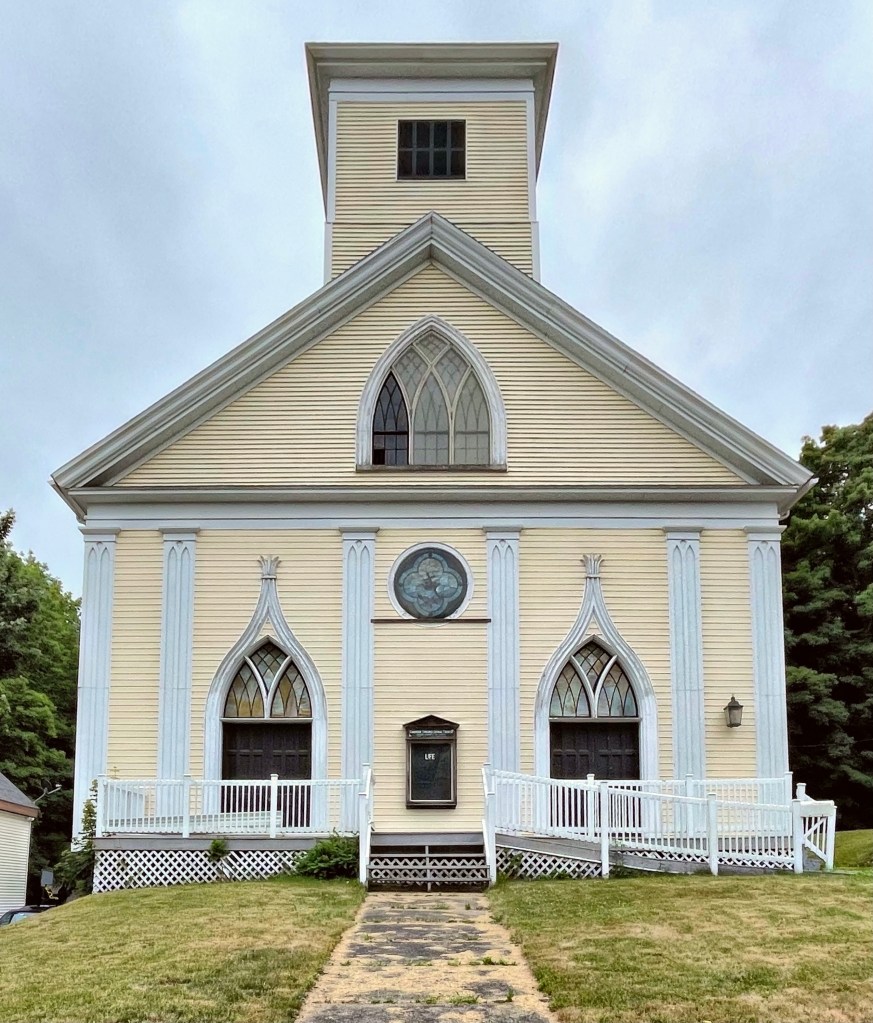
This stunning Gothic Revival church was built in 1843, on the site of the blockhouse, erected 80 years prior for the settlers of the area from native attack. In the 17th and 18th centuries, many rural parts of New England had blockhouses erected to allow the settlers a defensive fort from attack. The blockhouses were often garrisoned wooden structures with small windows on all sides to allow for gunfire to attackers below. The structure would protect those inside from arrows and melee weapons. This building however, was constructed later for the Universalists, who believed in “universal salvation,” who had been meeting since 1821 in a schoolhouse beside the town common. The church, in its original state with its steeple and clock, was an extremely sophisticated example in wood of the Gothic Revival style with its pinnacles, lancet windows and pilasters. Sadly, the steeple and clock were removed in the early 1920’s for safety reasons as the structure could not support it without significant engineering. The church and congregation changed to the United Church of Christ-Congregational denomination in 1964. After that, the building was occupied by a brewery (believe it or not), before being reverted back to a church by the current congregation.
This stunning Queen Anne home in Gardiner, Maine, overlooks the Kennebec River from its high position on a hill. The home was built for Hartley Jewett, who ran a busy lumber mill in town, which sold long lumber, laths, and shingles, some of which ended up on his own home. Maine was huge in the lumber industry, and it’s vast forests were often cut and sent down to cities like New York and Boston on rail to supply their own building booms.
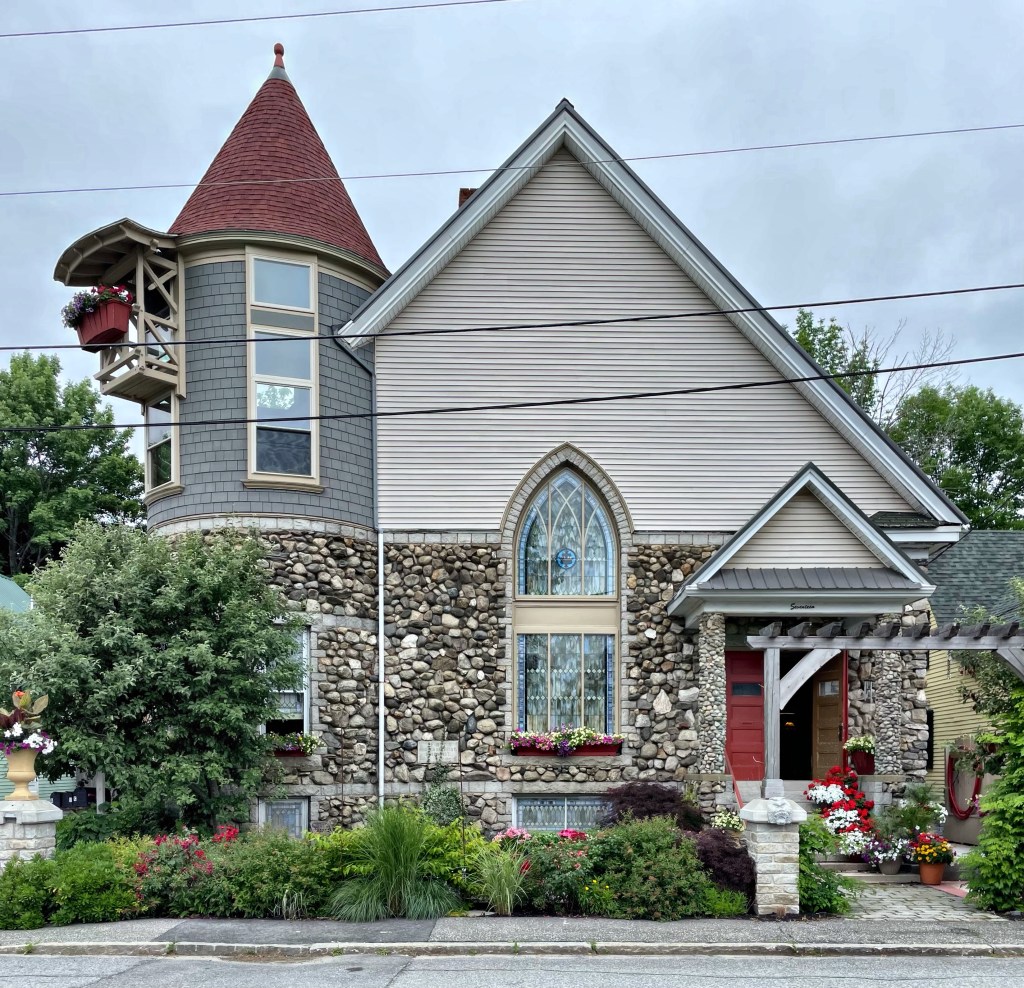
The first purpose-built Church of Christ, Scientist church in Maine is this turn-of-the-century edifice constructed in 1905 in Gardiner. Organized in 1897, this Christian Science Society of Gardiner met for several years in members’ homes and public places nearby until Palmer Noyes and his wife Caroline funded the new building. Caroline and Palmer helped establish the first such church in Chicago, after the couple witnessing a ‘healing’ and then heard Mrs. Mary Baker Eddy lecture in 1882. This church in Gardiner was seemingly designed by Caroline, who was likely inspired by architectural influences on the churches in town, from Gothic style lancet windows, to the shingle style facades. The building was eventually converted to a development center for the disabled, and is now known as “The Stone Turret”, a bed & breakfast, with amazing stained glass windows!



 Buildings of New England