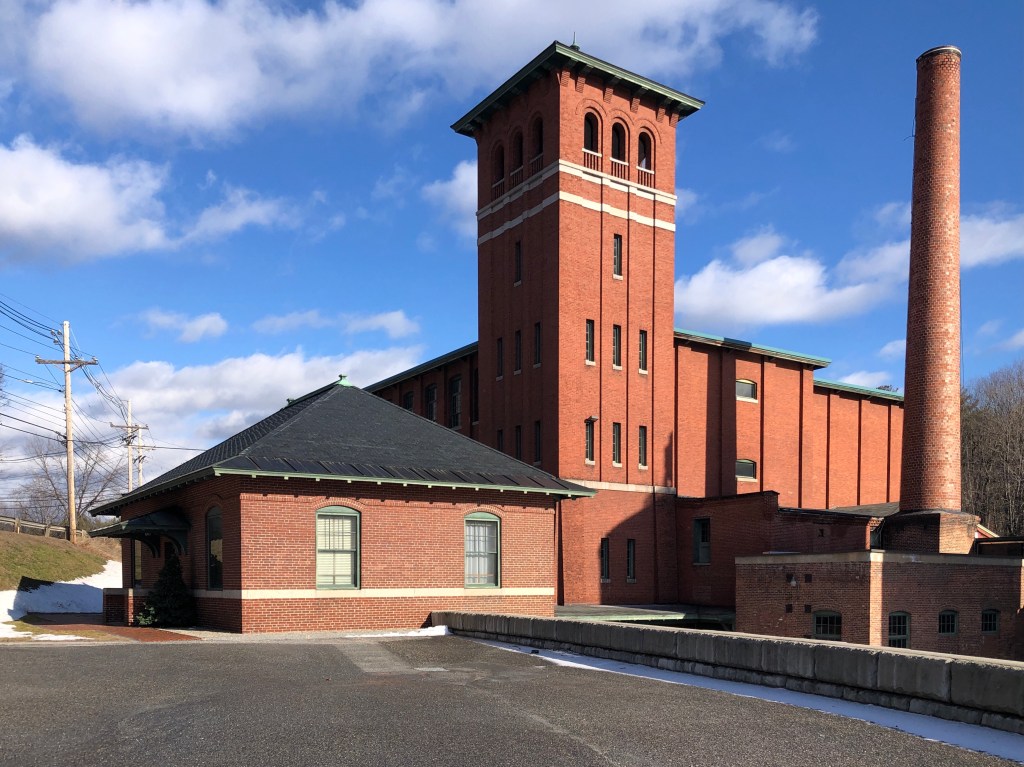
Dexter Richards and Sons Woolen Mill // 1905

The Dexter Richards and Sons Woolen Mill is the last surviving textile mill in Newport, New Hampshire. It was one of the city’s largest and most successful industries and employers. Built in 1905 on the banks of the Sugar River – which supported industrial activity as early as 1768 – the mill reflects the evolution of water-powered mills throughout the city and the region for more than a century. Designed by Peterborough native Edward A. Buss, Richards Woolen Mill is a typical three-story brick mill building from the early 20th century with granite, brick and metal architectural flourishes; it stands out for its five-story Romanesque tower with three tall arched windows on each side. At the base of the tower, above the entrance, are two slate roundels with the dates “1848” and “1905,” marking when both a previous mill on the site and the existing mill were built. In addition to running the mill, the Richards family was instrumental in establishing the Newport Electric Company (1892) and brought both Western Union Telegraph service (1866) and the Concord & Claremont Railroad (1871) to Newport. Richards and Sons, Inc. dissolved in 1926. The property was purchased by Harry W. Brown and Associates and was renamed the Gordon Woolen Mill. That business made wool linings for Army clothing during World War II. The mill was later owned by William Ruger Jr. an heir to the Ruger Firearms Company. Within the last couple years, the mill was purchased for redevelopment into housing, which has not yet materialized.

Eagle Hotel // 1826

Built in 1826 as the Eagle Hotel, this stunning federal structure is representative of the transition from the 18th century tavern, with its domestic scale and features, to a larger-scale 19th century hotel. The town of Newport was situated at the convergence of two stagecoach turnpikes, which transported people through the town regularly. Due to this, James Breck and Josiah Forsaith built the Eagle Hotel to meet that demand. By 1856, additional hotels were built and then owner, S.H. Edes converted the building into a business block. The upper floors were later occupied as apartments and porches were added to the front facade on each floor (since removed). The building is now home to Salt Hill Pub.

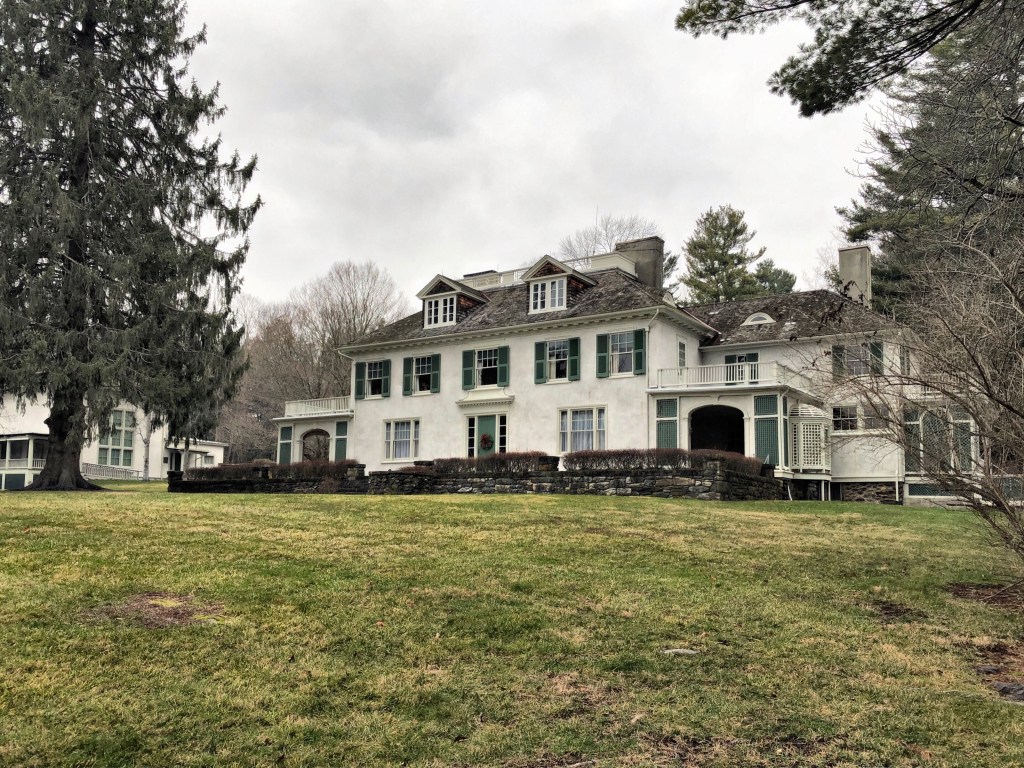
Chesterwood // 1901

Chesterwood is the former summer home, studio and gardens of American sculptor Daniel Chester French (1850–1931), who is best known for creating two of our nation’s most powerful symbols: the Minute Man (1871–75) at the Old North Bridge in Concord, Massachusetts, John Harvard in Harvard Yard, and Abraham Lincoln (1911–22) for the Lincoln Memorial in Washington, D.C. Daniel Chester French was one of the most successful artists of the late 19th and early 20th centuries, producing more than 100 works of public sculpture. In the fall of 1895, he and his wife drove by horse and buggy and discovered the resort town of Stockbridge. They returned the next summer and purchased the Marshall Warner farm from the family who had purchased the land from Mohican Native Americans. The French family and two maids moved into the white clapboard farmhouse the next summer. To ensure that his summer would be productive as well as restful, he improvised a studio in the barn. He asked his friend and colleague, architect Henry Bacon, to design a studio for him (Bacon would later work with French on the Lincoln Memorial). Soon, in spite of renovation, the original farmhouse was deemed inadequate and French commissioned Bacon to design a residence, completed in 1901. The family owned the home for decades, even after Daniel Chester French’s death. Much of the credit for Chesterwood’s preservation and metamorphosis from summer retreat to public site belongs to Margaret French Cresson (1889–1973), the sculptor’s daughter. After her parents’ death, she maintained the property and began to use it year-round, assembled the work of her father, and established the estate as a historic site of the National Trust for Historic Preservation.

St. Paul’s Church, Stockbridge // 1884

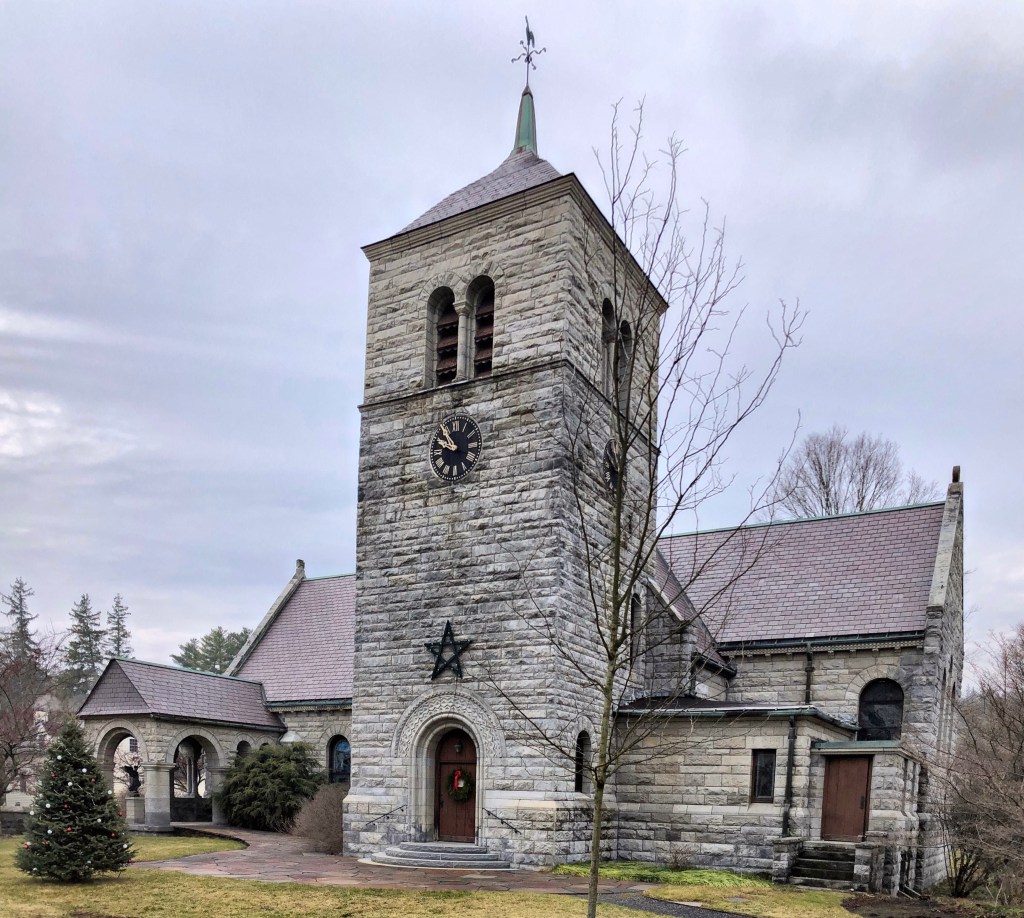
Located on the idyllic Main Street in Stockbridge, MA in the Berkshires, this stone church marks the emergence of the once sleepy town into a summer retreat for wealthy citizens, escaping the cities in the late 19th century. This building is Charles Follen McKim’s first church design, a building reflecting his early training in the office of H. H. Richardson with the use of Romanesque detailing, though with a hint of Norman design. St. Paul’s Church is constructed of gray Berkshire granite with stained glass windows by John La Farge. The church replaced an older wooden church building designed by Richard Upjohn in the Gothic Revival style. The church was almost entirely funded by Charles Butler, a New York lawyer who wanted to honor his late wife Susan Ridley Sedgwick Butler, a descendant of Theodore Sedgwick, whose home I featured not long ago.

Merwin House // 1825

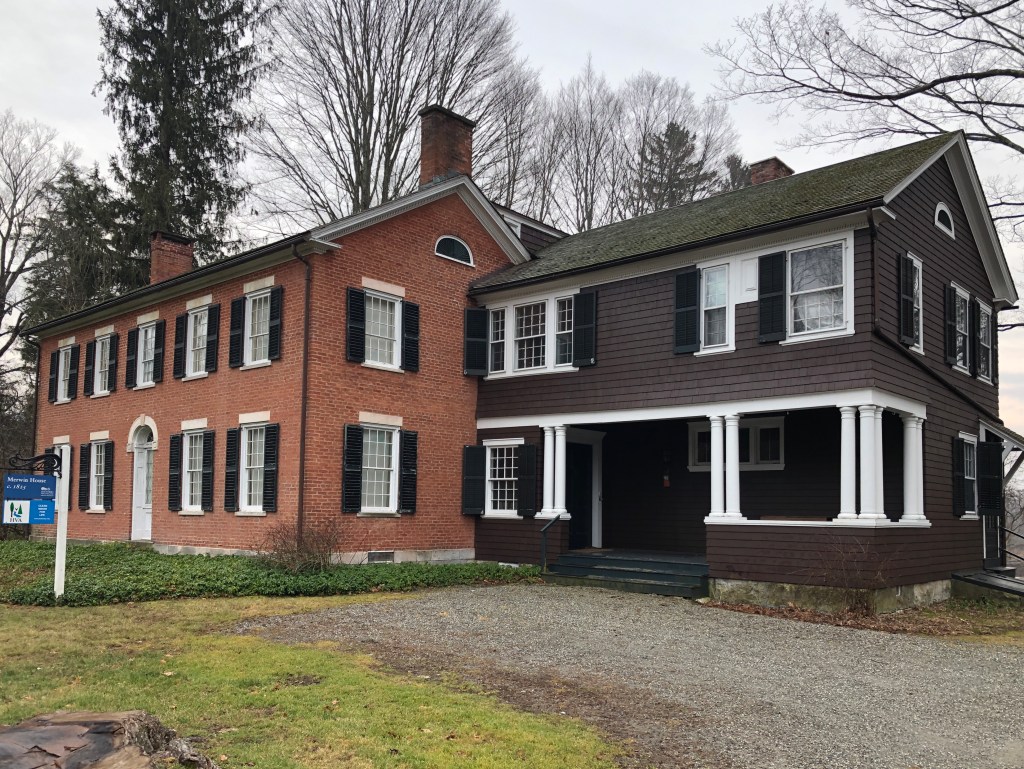
In about 1825, Francis and Clarissa Dresser built this charming brick Federal house in the rural town of Stockbridge, MA. Just 25 years later, the railroad arrived to town, connecting it to Connecticut and New York to the south, opening the town up as a leisure destination for wealthy city dwellers looking to escape the noise and congestion of the city. The period following the Civil War through World War I saw the Gilded Age reach the Berkshires. With artists, writers, financiers, and industrialists flocking to the rural hills of western Massachusetts for seasonal escapes. In 1875, William and Elizabeth Doane, wealthy New Yorkers, purchased Merwin House from the Dresser family to use as a summer retreat. As the Doane family grew to include two young daughters, Vipont and Elizabeth, they added a Shingle Style side addition to the original brick structure. The home became known as “Tranquility”, even after the home was willed to daughter Vipont. After a couple marriages, Vipont married Edward Payson Merwin, a New York stockbroker. Historic New England acquired Merwin House in 1966, shortly after the death of Marie Vipont deRiviere Doane Merwin, known as Vipont. It was her desire to leave Merwin House as a museum, as her will states, “as an example of an American culture which is fast becoming extinct.” The space is occasionally open for tours and is partially occupied by the Housatonic Valley Association.

Flour and Grain Exchange Building // 1892

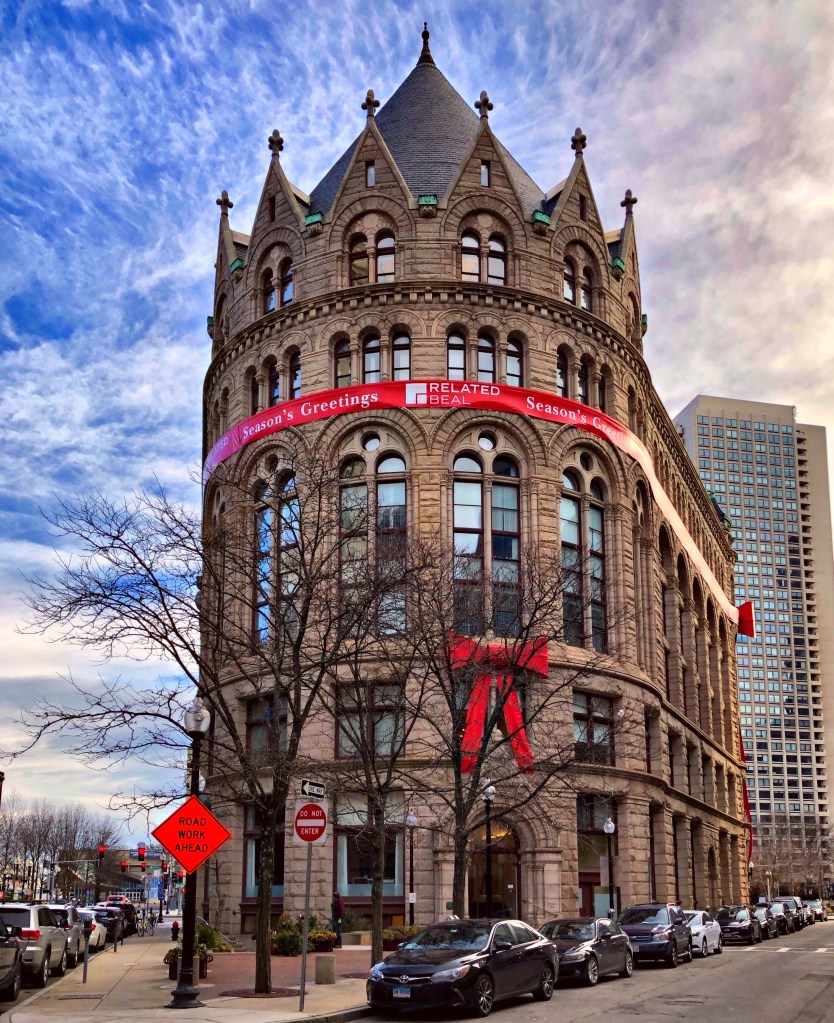
One of my favorite buildings in Boston (and always dressed up with a big red ribbon for the holidays) is the Flour and Grain Exchange Building in Downtown Boston. The third Boston Chamber of Commerce was incorporated in 1884 to promote just and equitable principles of trade, solve disputes between members and acquire and disseminate information related to mercantile interests. There was, however, a feeling among the members that the organization could not attain its full stature until it had a building of its own, one that would be both an ornament to the city and a credit to itself. In 1889, a triangular site was donated to the organization by members, who then hired prominent Boston architectural firm, Shepley, Rutan and Coolidge, the successor to Henry Hobson Richardson‘s practice. It appears the firm was inspired by H.H. Richardson’s F. L. Ames Wholesale Store which was built nearby just years before. The steel-frame building is constructed of rough hewn Milford granite pierced with engaged columns and arched openings, both common in Richardsonian Romanesque buildings. The prominent corner at Milk and India Streets features a rounded corner tower with conical roof, surrounded by a crown of dormers. The building was restored by owners Beal Properties in the late 1980s who own it to this day.

Thomas Carter House // 1830

All I want for Christmas is a brick Federal house! This home in Stockbridge, Massachusetts was constructed in 1830 by Thomas Carter (1777-1863) and his wife Anna. The couple farmed the property and had eleven children (plus two who died in childbirth). According to a family history, the lime for the mortar on the home was burned in a kiln on the property by Thomas. The ancestral home remained in the family for generations, including by John Calvin Calhoun Carter, a town selectman, who added a full-length porch on the home in the mid-late 19th century (since removed). The home’s rural charm remains even-though it sits on a busy road in the Berkshires.

First Congregational Church, Stockbridge // 1824

Stockbridge, Massachusetts was settled by English missionaries in 1734, who established it as a praying town (an effort to convert the local Native American tribes to Christianity), for the Mohican tribe known as the Stockbridge Indians. The township was set aside for the tribe by English colonists as a reward for their assistance against the French in the French and Indian Wars. From this, a Yale-educated missionary, John Sergeant began converting native people to Christianity, essentially stripping them of their own religious culture and practices. Although Massachusetts General Court had assured the Stockbridge Indians that their land would never be sold, the agreement was rescinded. Despite the aid by the tribe during the Revolutionary War, the state forced their relocation to the west, to New York and then to Wisconsin. The village was then taken over by British-American settlers who created the township.

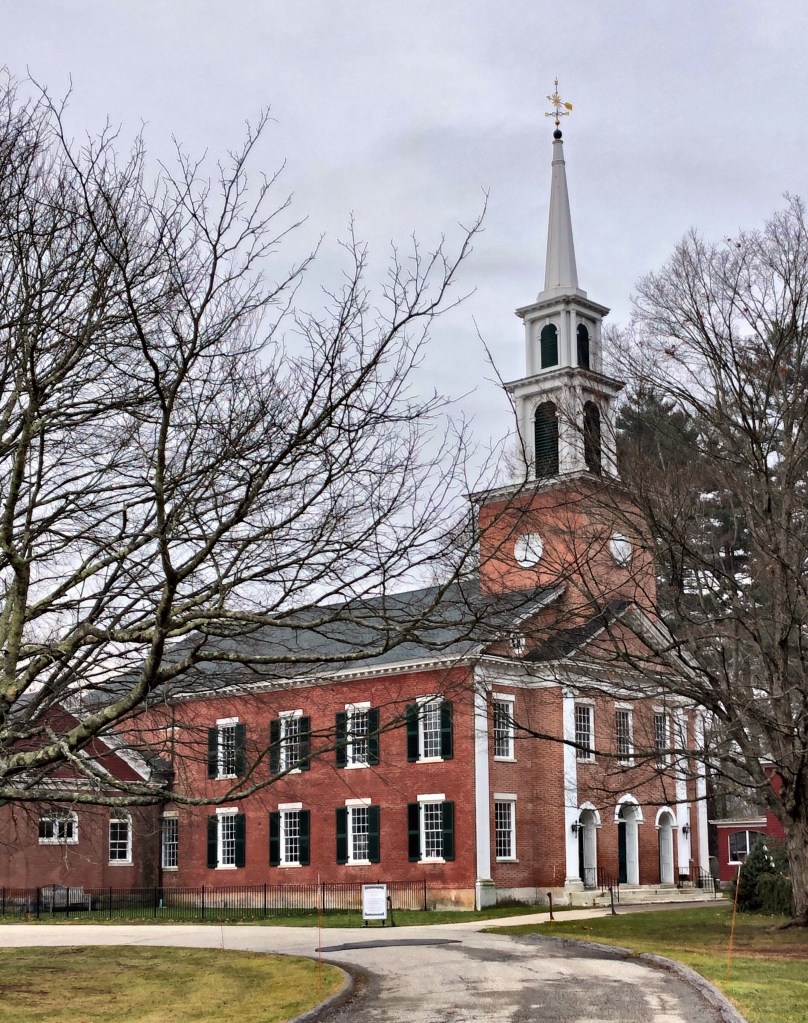
The first congregational church here was formed by Sergeant in 1734, and later succeeded by Jonathan Edwards, another minister. During his time in Stockbridge, Edwards wrote his masterpiece, Freedom of the Will, which remains one of the most studied works in American theology. Edwards later left the church to become the President of The College of New Jersey, now known as a little school by the name of Princeton. The first church was built in 1739, later replaced by a second church building that stood from 1785 to 1824. The present brick building was built in 1824 in the Federal Style. The space was occupied for town functions until the 1840s, when an official town hall was erected next door, demarcating the separation of church and state. The stunning church marks the immense influence religion had in the early colonial days of New England and the impact it had on native peoples (for better or worse).

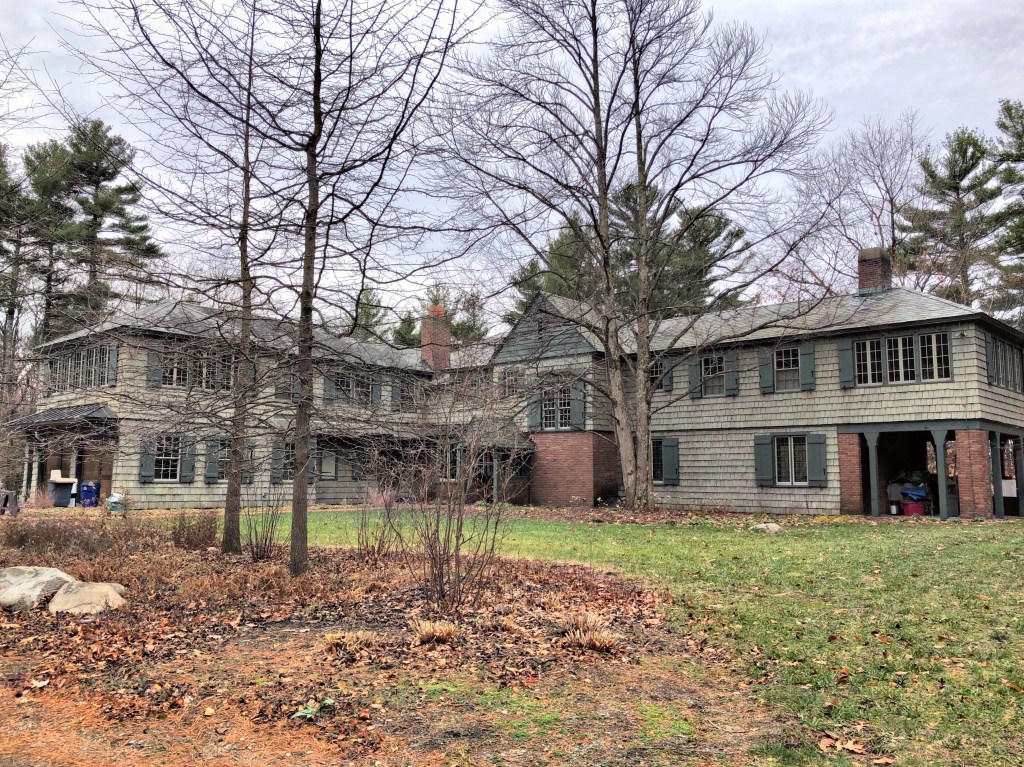
Marion Nichols Summer Home // 1935

This summer estate in Hollis, NH epitomizes the hidden architectural splendor that can be found off the beaten path in many small New England towns. Hollis began serving as a summer destination in the late 1880s and the trend continued until WWII. In many cases, old family homesteads became summer residences for descendants who had moved to the city but desired to return to their “roots” periodically. The Nichols Home is unique in Hollis as it was designed to be a summer retreat for a well-to-do widow and her considerable servant staff, combining all the comforts available with the advantages of a rural retreat. The design of the main house offers separate living spaces for the family and the servants, including a library, living room and dining room for the use of the family. The servants’ wing was designed to include a two-car garage, a butler’s pantry, a manual dumbwaiter connecting the basement and first floor used to transport fireplace wood and a receiving unit for the delivery of milk, groceries and other goods. Sleeping porches, capitalizing on the benefits of the fresh country air, are an integral component of the house design and are included in both the family and servant wings. The home was designed by the Boston architectural firm of Densmore, LeClear & Robbins, who were hired by the 52 year old widow’s children for their mothers’ summer home. It is said that Ms. Nichols never liked the home and decided to summer instead at the old family summer home down the street.

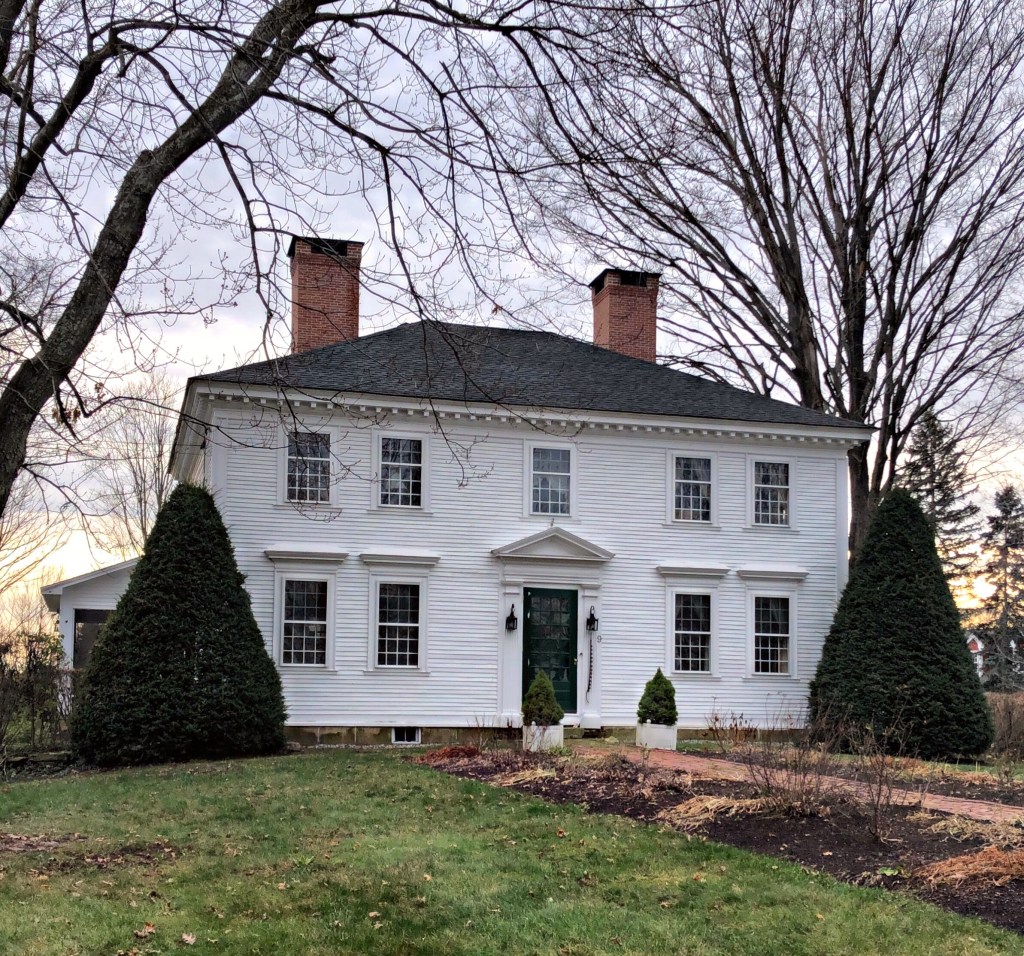
Eli Smith House // 1794

This house on a prominent lot opposite the Town Green in Hollis, NH, was constructed in 1794 for Reverend Eli Smith (1760-1847). In 1794, Rev. Smith married Ama Emerson, the daughter of Rev. Daniel Emerson, then the minister of the Congregational Church in Hollis. After Rev. Emerson’s death, Eli Smith took over the church and became the second minister of the town. Eli’s brother Andrew, a skilled carpenter, is said to have built the stunning Georgian house. After his death in 1847, the property was subdivided and another home was constructed, likely for a member of the family, while Joseph Emerson, one of Eli’s sons lived in the former family home. It remains one of the best-preserved late 18th century homes in the area.