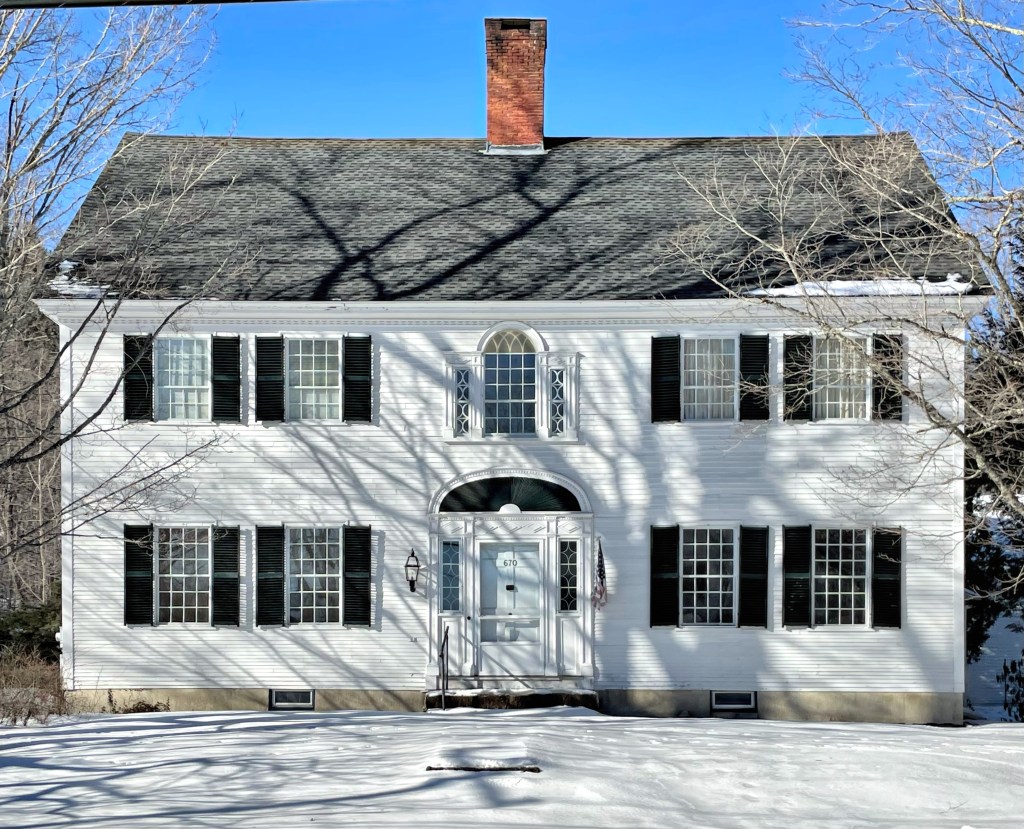
The most architecturally significant example of the Federal style in Waterford, Maine, is this c.1810 home built for Ambrose Knight, who operated a store in town. The high-style Federal home features a well-proportioned fanlight over the entrance with a Palladian window above, all with geometric moulding. The home was likely built by a housewright who employed designs from Asher Benjamin’s pattern books for builders, as the high-style features and Palladian windows are uncommon in this part of Maine.
Dr. Leander Gage (1791-1842) came to Waterford from Bethel, Maine in 1817. He erected and lived in this Federal style house which overlooks much of the South Waterford village. Gage was a prominent medical practitioner in town and involved in local politics as a moderator at town meetings and as a school committee member until his death. The home has a Federal style stable and 1840s barn attached and had remained in the Gage family until at least the 1980s.
Built soon after a massive fire destroyed much of North Waterford Village in Maine, the Iocal order of Odd Fellows decided to rebuild, constructing this building for their members. Though active for several decades after the building was reopened, an aging and dwindling membership forced this chapter to merge with the Odd Fellows of nearby Norway, Maine. After, this building was occupied by the Daughters of Rebekah, an auxiliary group of the IOOF for women until 1973 when it was donated to the recently formed Waterford Historical Society. The society has since moved, and listed the building for sale in 2020 for just $10,000!!
The Town of Waterford, Maine was created as the result of a 1774 grant made by the General Court of Massachusetts to the descendants of a company of Massachusetts soldiers involved in a 1690 expedition against the French in Canada, leading to the Battle of Quebec. The land was surveyed in 1774; in spring of 1775, David McWain of Bolton, Massachusetts arrived with his dog at a lot he bought for $40. He cleared land and built a log cabin, returning to Bolton for two winters until he settled permanently at Waterford in spring of 1777. The town grew around agriculture and industry with sawmills built at streams to manufacture the region’s abundant timber into lumber. The town later became more of a resort area in the early 20th century, with urban-dwellers flocking to the area to take in the fresh air and natural scenery.
This church in North Waterford is located in a more rural part of the town, and was constructed in 1860 by a group of local residents from designs by Maine architect Thomas Holt. The Italianate influence is evident from the round-arched windows set in a recessed arch and a bracketed cornice. The steeple looks to be more contemporary and slightly turns, giving it a really interesting presence.
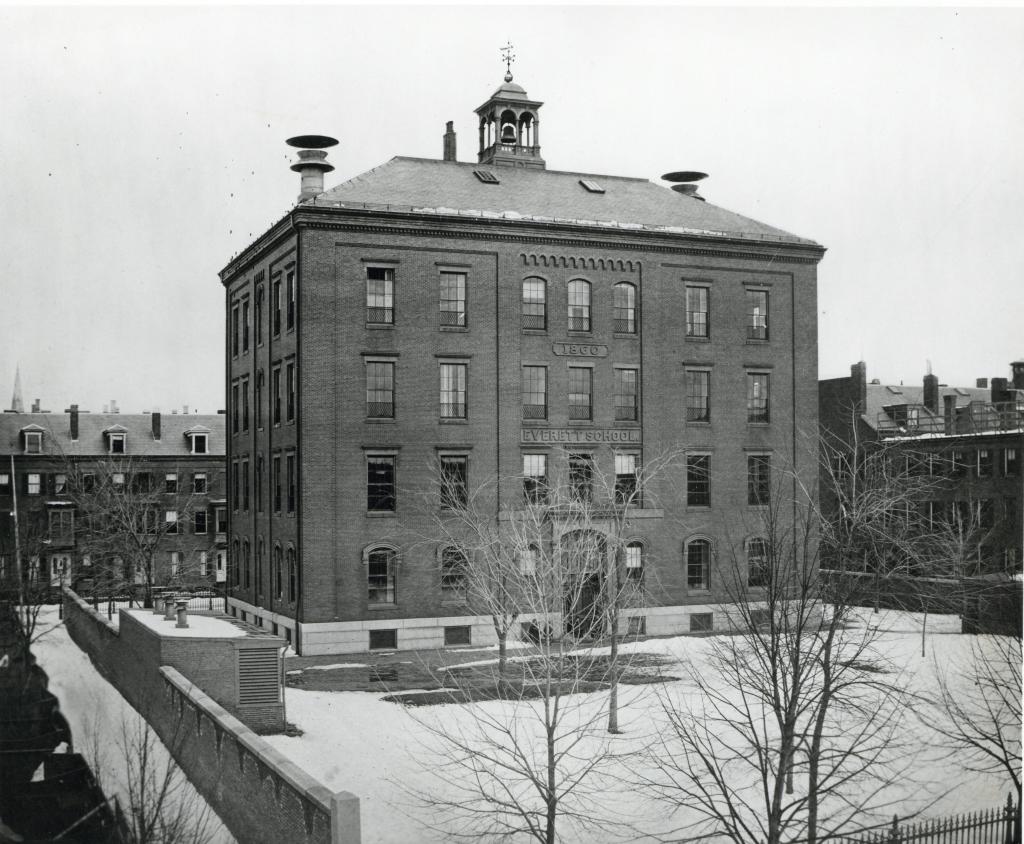
The Everett Schoolhouse opened in 1860 as Boston’s most modern school at the time, serving students in the South End and Roxbury. The school was located on Northampton Street, just off Tremont Street, and stood four stories with lawns surrounding it. The building was architecturally beautiful, with brick walls and stone trim and basement, large double-hung windows, and a slate roof capped by a bell tower. The building was so special, the opening ceremonies were documented in the New York Times in 1860. The school was named after Edward Everett (1794-1865), a Boston-native who served as a U.S. Senator, the 15th Governor of Massachusetts, Minister to Great Britain, and United States Secretary of State. He also taught at Harvard University and served as its president. My favorite tidbit of history on Edward Everett is that he was a great orator, and was the featured speaker at the dedication ceremony of the Gettysburg National Cemetery in 1863, where he spoke for over two hours—immediately before President Abraham Lincoln delivered his famous two-minute Gettysburg Address! The Everett Schoolhouse in Boston saw thousands of children graduate before a fire on the top floor of the building in 1965 and subsequent water damage from fire hoses necessitated its demolition.
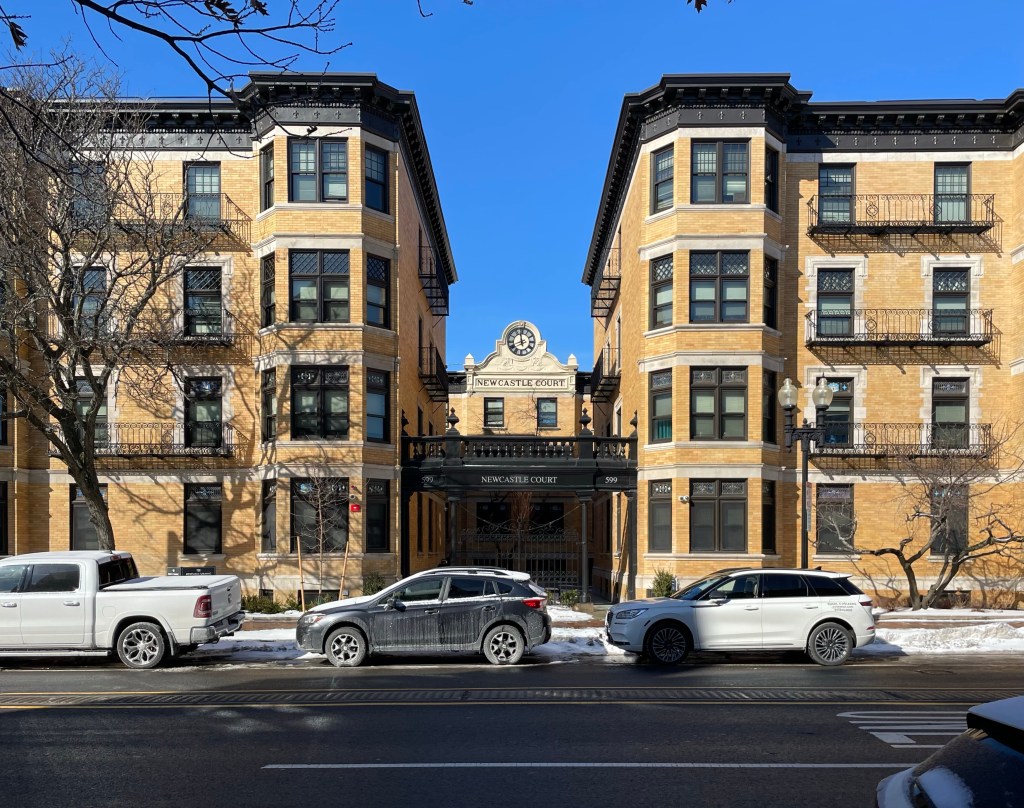
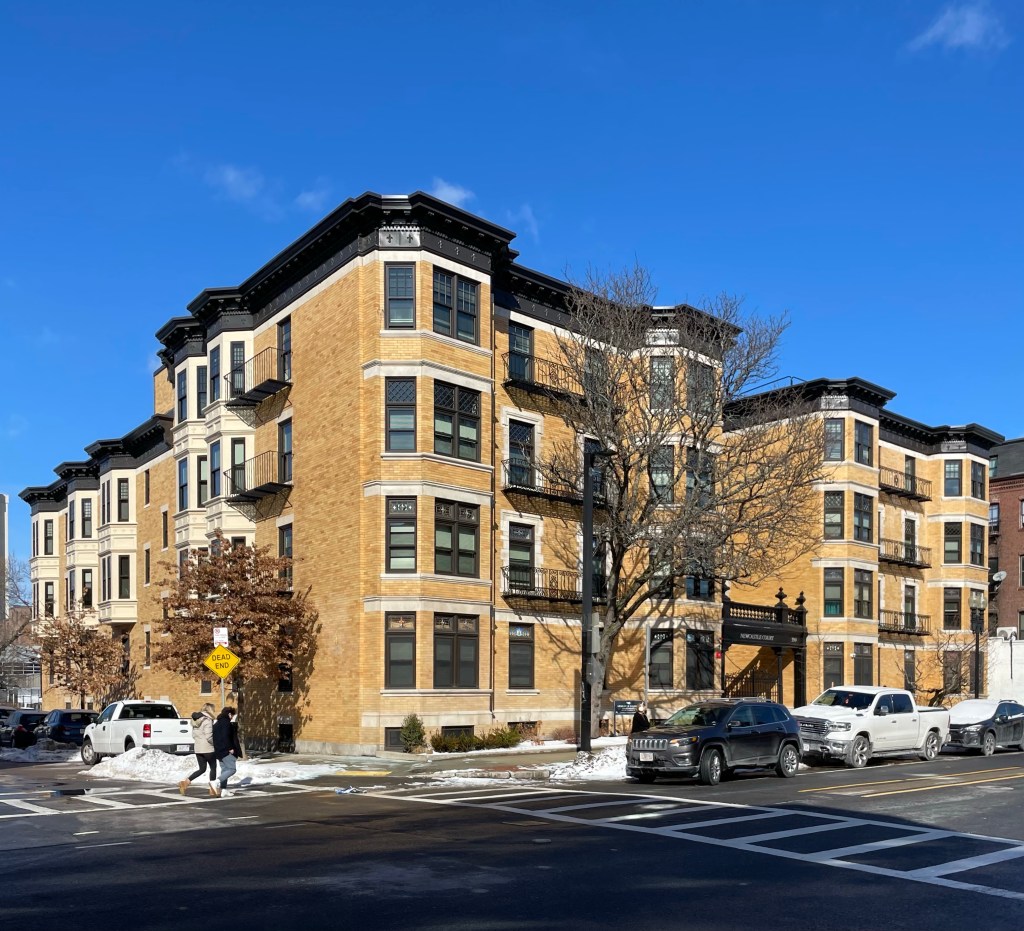
Newcastle Court in Boston’s South End/Lower Roxbury neighborhoods is one of the finest apartment buildings in the city built in the early 20th century. The complex is U-shaped with a central courtyard off Columbus Street, to provide air and natural light in all bedrooms and units of the building. Newcastle Court was built by builder/developer Israel Nesson, who was credited as building the first fireproof apartment building in the city. Nesson and his family built and owned apartment buildings all over Boston and Cambridge, and operated many of them as landlords with massive real estate holdings. Newcastle Court stands out for the garden courtyard set behind the gate. At the back of the courtyard, the building has a raised parapet at the roof, which encompasses a clock. Many of the units retain the original stained glass windows, which are AMAZING!
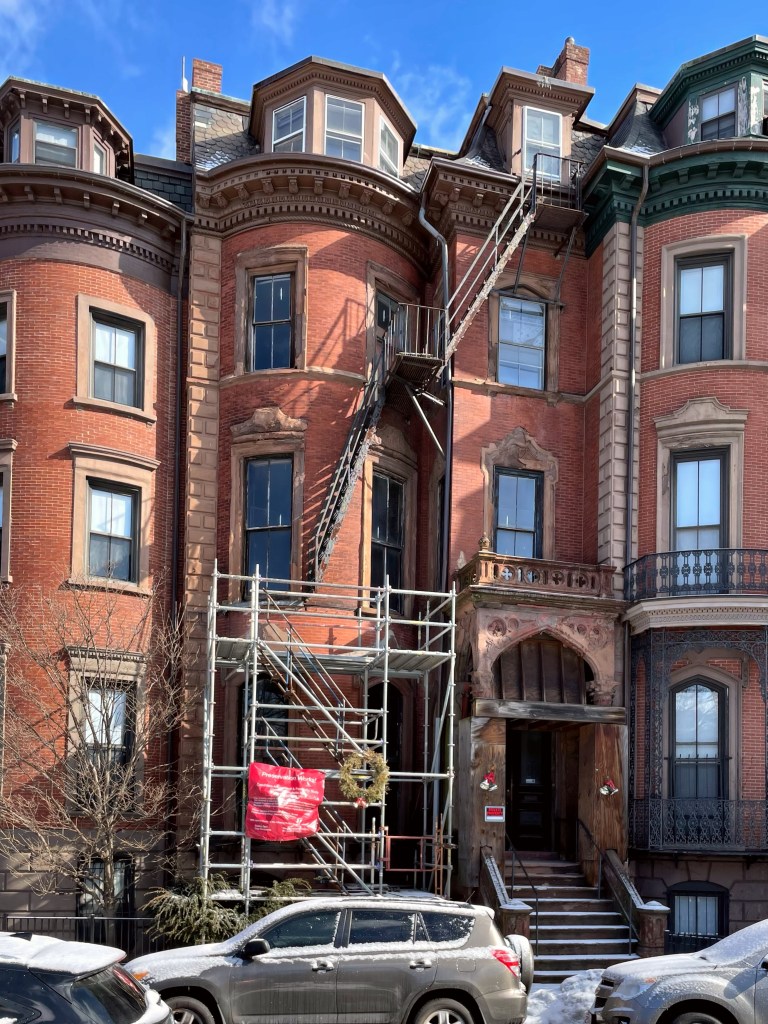
Just a block away from the Women’s Service Club Building (last post) on Mass. Ave in Boston, you’ll find this landmark, with both architectural and cultural significance. The townhouse (along with the house next door) was built around 1860 for William and Martha Carnes. William Rice Carnes was a fine lumber importer and furniture maker, bringing in high-quality mahogany and rosewood to Boston, aligning with the Victorian era housing and furniture boom here, he made a lot of money. Inside his home, he showcased the quality and durability of his product, much of which remains today. It is believed that the house was a stop on the Underground Railroad, with the connected basements of the two houses (#558 and #560) providing an easier escape in the event of a slave-catcher coming by. After William died, the property eventually sold to Nathaniel W. Farwell of Maine on October 29, 1868. The Farwell family occupied the house only until 1910, and as evidence of the decline of the South End, it stood empty until 1920 when it was sold to the League of Women for Community Service, a pioneering Black women’s organization. The League emerged from the ‘30s and ‘40s and as late as the 1950s as a safe place and a popular gathering place for African Americans in Boston. Many hotels at the time were not willing to accommodate Black patrons or charged so much that events there were unattainable. Coretta Scott King lived in the home while she attended college at the New England Conservatory and honed her amazing singing skills. It is at the home that she and Martin Luther King Jr. – then a student at Boston University – likely had dates and began their courtship. The LWCS has recently received funding through grants to preserve and restore the landmark to her former glory.
This historic rowhouse in the South End of Boston was home to the Women’s Service Club, a social and volunteer organization made up of Black women to uplift Black Bostonians of varied backgrounds, including soldiers, students, migrants and mothers. “464,” as some locals admiringly called it, was formed in the early 20th century as Boston. The city, once known as “Freedom’s Birthplace” and the “Athens of America” as a hub of abolitionist activity leading up to the Civil War, saw extreme segregation in housing and education for its Black residents by the early 20th century. From this, local activist Mary Evans Wilson organized a knitting group in 1917 to support soldiers of color fighting in World War I. An estimated 350 women joined the group, donating their talents to produce scarves and gloves for servicemen. Humanitarianism guided the activity of the Women’s Service Club’s over the next half century. This building was purchased in 1919 and operated as part-meeting space and part-settlement house. “A Home Away from Home,” as some described it, the building offered affordable shelter to female workers, migrants, and college students barred from on-campus housing due to racist policies. One of the club’s most prominent members was Melnea Cass (1896–1978), who served as its President for more than fifteen years. Cass initiated the Homemakers Training Program which certified domestic workers so they would be assured a liveable minimum wage, social security and other benefits. The club continues to do great work, but could use funding to restore the landmark building!
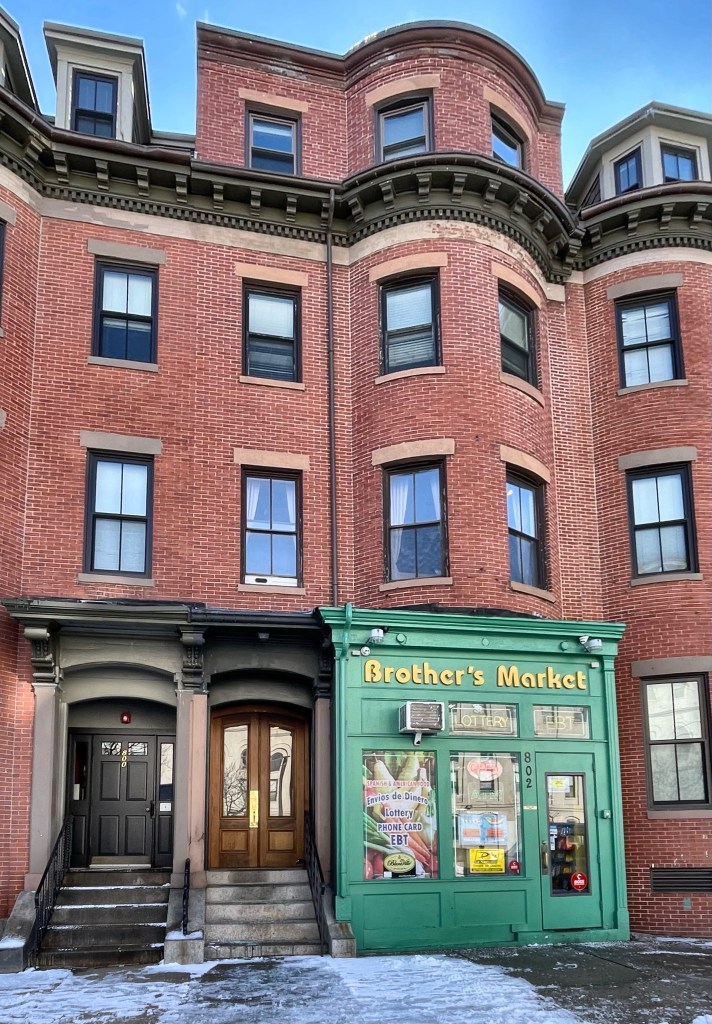
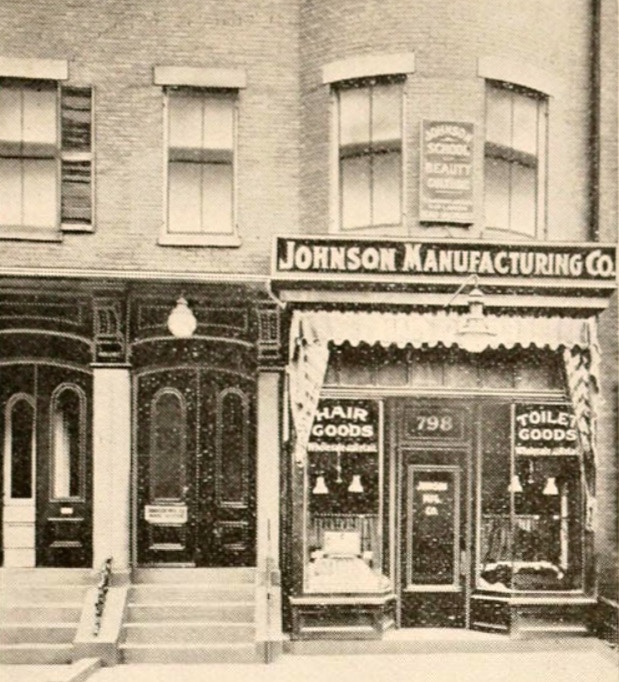
Boston’s South End neighborhood has so much history that NEEDS to be showcased. From the repetitive architecture of beautiful brick and stone bowfronts, to the history of African American activism, enterprise, and stories, the neighborhood is a gem of Boston. This building was constructed around 1865 for Thomas H. Snow (1833-1908) as his home. Snow was a wine and spirit merchant who had a store in Faneuil Hall Square. While that is interesting, Mr. Snow is not the highlight of this building, that comes later in 1899, when the building was rented to Madame Mary L. Johnson, a wig maker, scientific scalp specialist, and hair culturist. Mary Johnson and her husband, Dr. W. Alexander Johnson, were Black and ran one of just 200 Black-owned businesses in the city of Boston by the beginning of the 20th century. At their storefront, they sold hair goods at Johnson’s Hair Store. Sold all over the United States since 1900, their famous “Johnson Hair Food” was “the most scientific pomade yet discovered for growing, beautifying and softening the hair,” they claimed. In connection with their hair product outfit, Madame Johnson operated Johnson’s School of Beauty Culture, where a variety of services including manicuring, shampooing, scalp massage, facial massage, hairdressing, and scalp treatment were offered. The school provided young Black women in Boston technical training and skills, which there were limited options at the time. Mr. Johnson also was President of the Boston Negro Business League, which helped bolster Black businesses at the turn of the century.
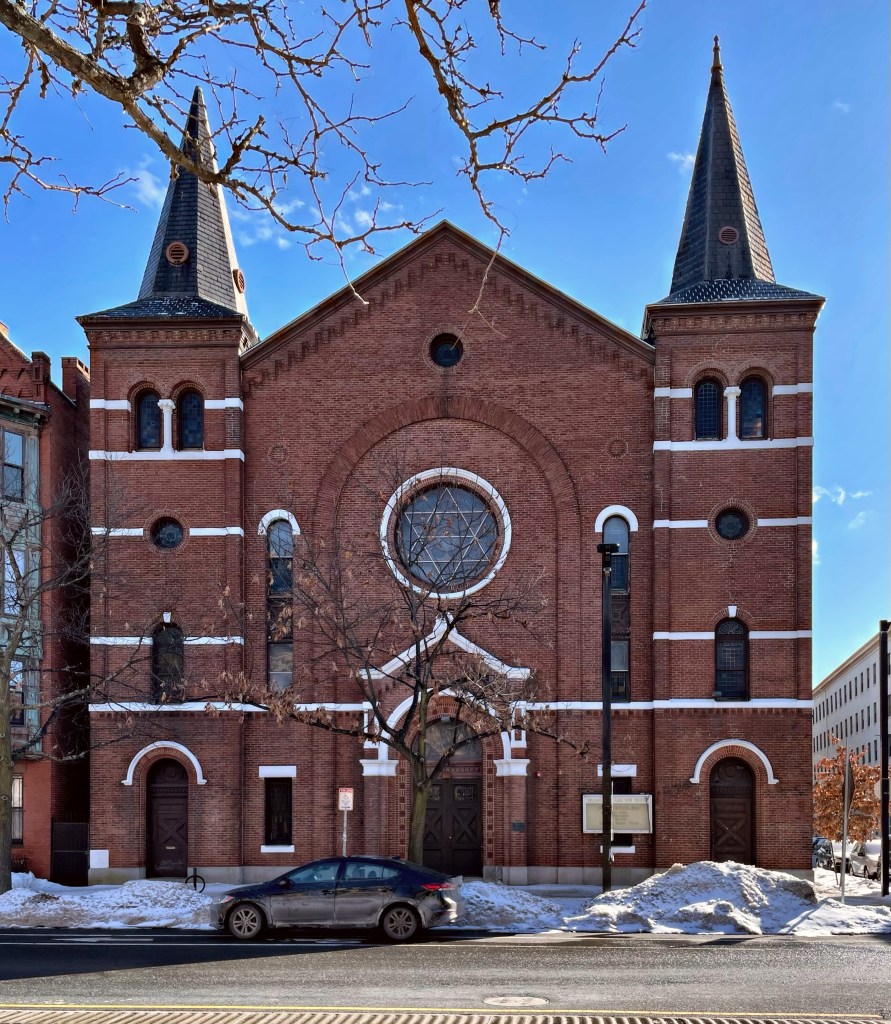
The Columbus Avenue African Methodist Episcopal Zion Church sits on the border of the South End and Lower Roxbury neighborhoods and is a great example of how the area evolved in the 19th and 20th centuries. The beautiful Romanesque Revival building was constructed in 1885 as the first synagogue of Congregation Adath Israel, which was founded in 1854. The congregation sought more space from its current location, and a closer place of worship for many of the German Jews who settled in Boston’s South End. They built this synagogue in 1885 and eventually moved west to a new Kenmore Square synagogue less than thirty years later as the neighborhood’s demographics began to shift. In 1903, the A.M.E. Zion Church purchased the former synagogue as their new home. This congregation had its beginnings in 1838 when seventeen African Americans withdrew from the communion of the Methodist Episcopal Church, then located on Joy Street in Beacon Hill. This group of Black worshippers wanted more religious freedom and desired to become part parcel of The African Methodist Episcopal Zion connection under the leadership of their own race. For many years, this church was the largest and principal Black church in the city of Boston. In 1903, shortly after moving to Columbus Avenue, the church experienced what was called the “Boston Riot.” The church hosted a debate between Booker T. Washington and William Monroe Trotter, editor and publisher of the “Boston Guardian”. Trotter, a Black Bostonian, opposed the gradual conservative approach to civil and political rights as promulgated by Mr. Washington. The debate took place on July 3, 1903 and the church was packed with over 2,000 spectators. Shortly after the opening prayer by Pastor McMullen of the AME Church, Washington was introduced. A disturbance then erupted with Trotter eventually being arrested for disturbing the peace. This building is the oldest synagogue building in Massachusetts and has been a center of Black life in Boston ever since the beginning of the 20th century.



 Buildings of New England