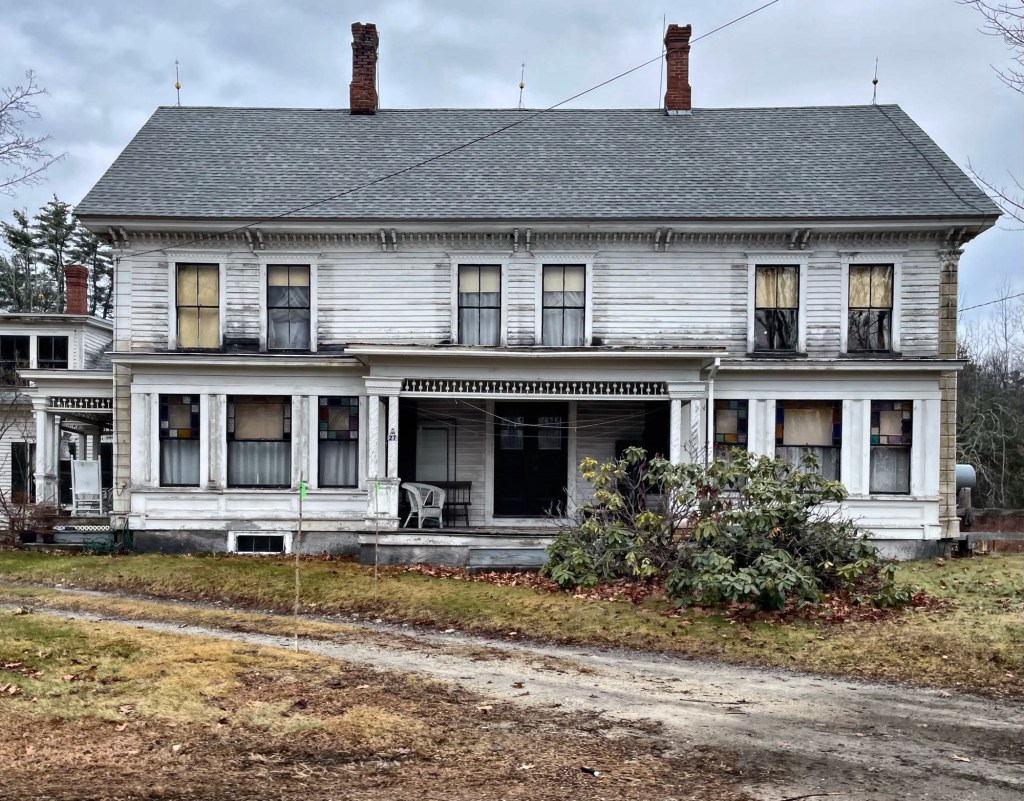
Sumner Stanley House // c.1850

One of the larger homes in Weare, New Hampshire is this sprawling mid-19th century residence, seemingly built around 1850 for Sumner Stanley and his wife, Ruth. Stanley and Ruth (née Dow) acquired land from Ruth’s family and they built their home here. By 1856, Stanley sold a small piece of land to town just to the east of his house for the construction of the North Weare Schoolhouse. The Italianate style house with its Stick style attached barn structure have some amazing detailing!

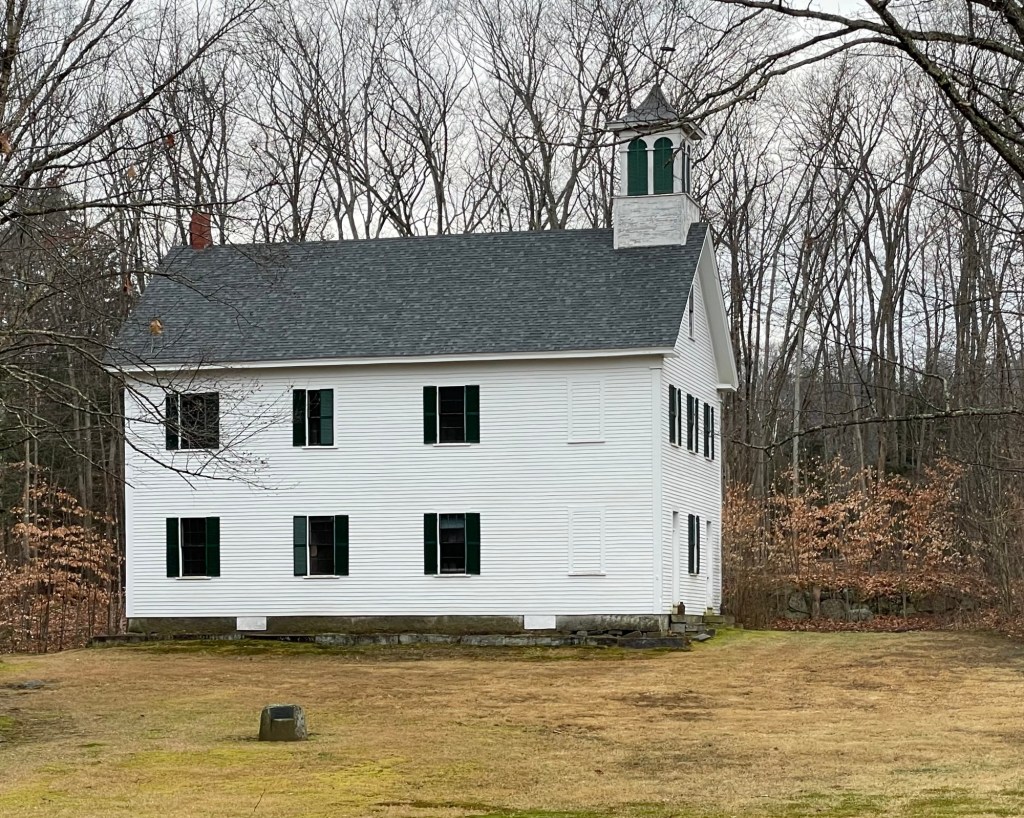
North Weare Schoolhouse // 1856

The Town of Weare, New Hampshire was first divided into thirteen school districts in 1805 as a result of a state law to divide each town into school districts to service all students equally. Over the years the number of school districts fluctuated and were periodically redefined based on population distribution and class sizes. The North Weare Schoolhouse was built in 1856 and was operated as a one-room school until 1952 when a consolidated school was built in town. Architecturally, the building blends multiple styles, most notably the Greek Revival and Italianate styles. The property was later occupied as a Grange Hall with a 1960s addition to the rear. It was purchased in 1985 by new owners who had spent years restoring the building as a residence before they sold it more recently. Today, the former schoolhouse has modern additions and windows, but maintains its charm and uniqueness.

Amos Chase House and Mill // 1836

The Amos Chase House and Mill are located in Weare, New Hampshire, on the banks of the Piscataquog River. The house is oriented facing the road, while the mill is behind it, on the bank of the river. The mill is the only surviving 19th-century mill building in Weare. The house was built about 1836 by Amos Chase, as was a mill. That mill burned in 1844; the present mill was built by Chase as a replacement a few years later. This mill was the only one in the town to survive the New England Hurricane of 1938, although its waterwheel was washed away. Amos Chase was a tool manufacturer and one of several members of a locally prominent family operating small mills in the town. His son later used the mill in the manufacture of baskets. The large Greek Revival style home has all the hallmarks of the style, from the pediment facing the street, to the pilasters at the entrance and corners.

Weare Public Library // 1926

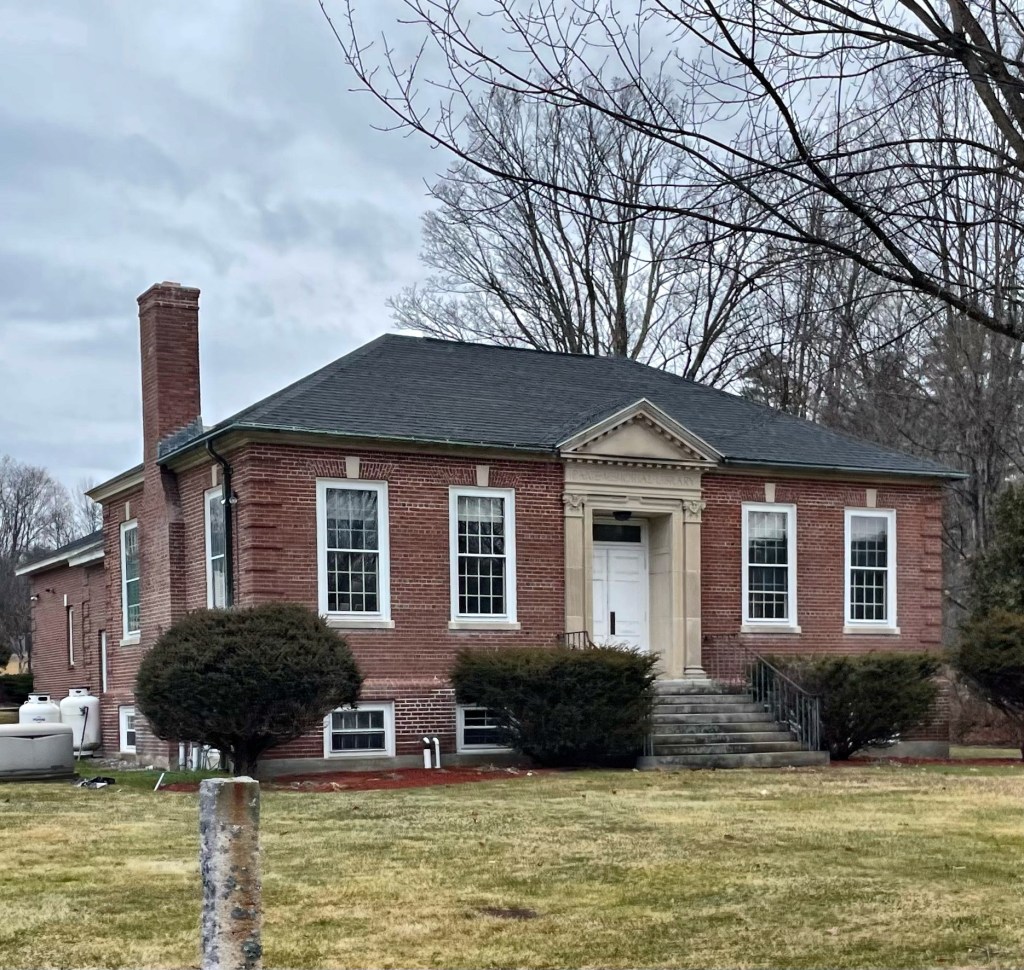
The Colonial Revival style Weare Public Library was built in 1926, being the second purpose-built library building for the town of Weare, New Hampshire. After the Neo-Classical style Stone Memorial Building was taken over as town offices following a fire of the old town hall, local resident Eben Paige saw the need for a new designated library building. Upon his death in 1923, he left his entire estate, over $30,000, to the town to build a new free library. The Boston architectural firm of Kreider and Peterson were selected to design the building, which is still in use today.

Stone Memorial Building // 1896

Designed by New Hampshire architect William Butterfield in 1896, the Stone Memorial building in Central Weare is a significant example of a Neo-Classical style structure in a village setting. The building was constructed with money donated by Joseph Stone in honor of his father, Phineas J. Stone, who was born in Weare and moved to Charlestown, MA, later serving as its seventh Mayor. The building would “provide suitable room for a public town library” and a room for memorials to the Civil War soldiers who fought and died for the Union. When the town hall burned, offices there were relocated to this building. Eventually, the library and town offices left this small building, and it has since been home to the Weare Historical Society.

Hadley Homestead // c.1776

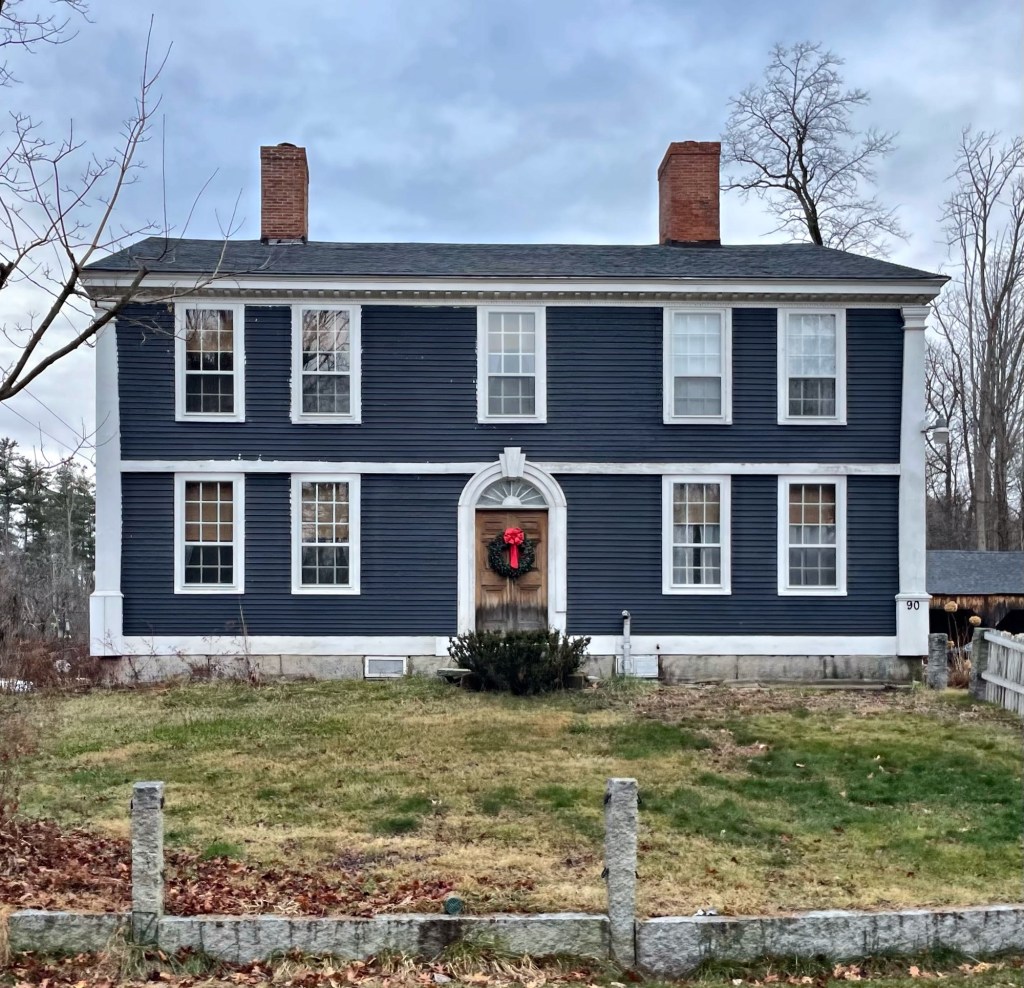
George Hadley (1740-1823) moved to Weare, NH in 1775, buying lot sixty-one in town from the proprietors. Captain Hadley served in the French and Indian War and later in the Revolutionary War, though he was not so eager to serve again. He built his home soon after, living here with his family. The original Hadley Homestead would have been a more traditional Georgian farmhouse with large central chimney and minimal glass/windows. Sometime in the early 19th century – after his wife’s death in 1806 or after his own death in 1823 – the house was modernized in the Federal style. The stunning home has a fan light transom over the door, narrow corner pilasters and twin chimneys projecting through the roof. It sits next door to the South Weare Union Church.

Bailey Farmhouse // c.1767

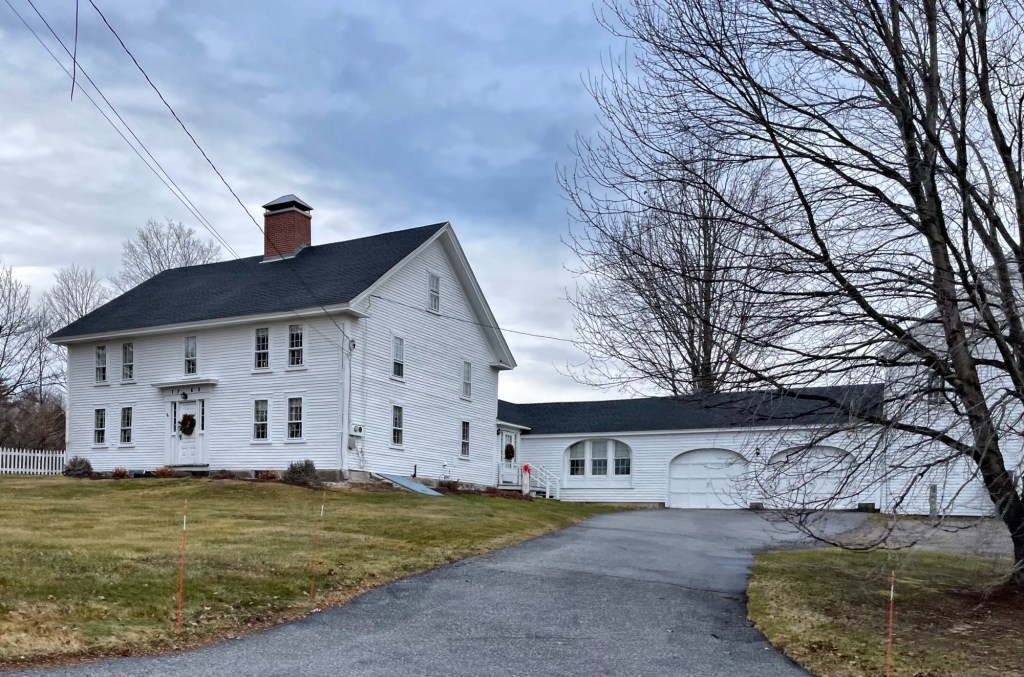
One of the oldest homes in Weare, New Hampshire is this large, Georgian farmhouse apparently constructed around 1767 by Samuel Bailey. Samuel’s father, Ebenezer Bailey, had purchased a property called “Lot 54, Range 1” in Weare, New Hampshire, which he then divided among his sons, Daniel, Samuel and Ebenezer Jr. for their own settlement in about 1767. Samuel received this lot in South Weare, upon which, the twenty-two-year-old and his wife established a farm and a family of at least eight children. Samuel died in 1824 and the farm was inherited by his son, Amos Wood Bailey, who continued operations here. Today, the large five-bay Georgian farmhouse is connected to a massive barn. It is a really spectacular property.

Cyrus Hazen House // c.1850

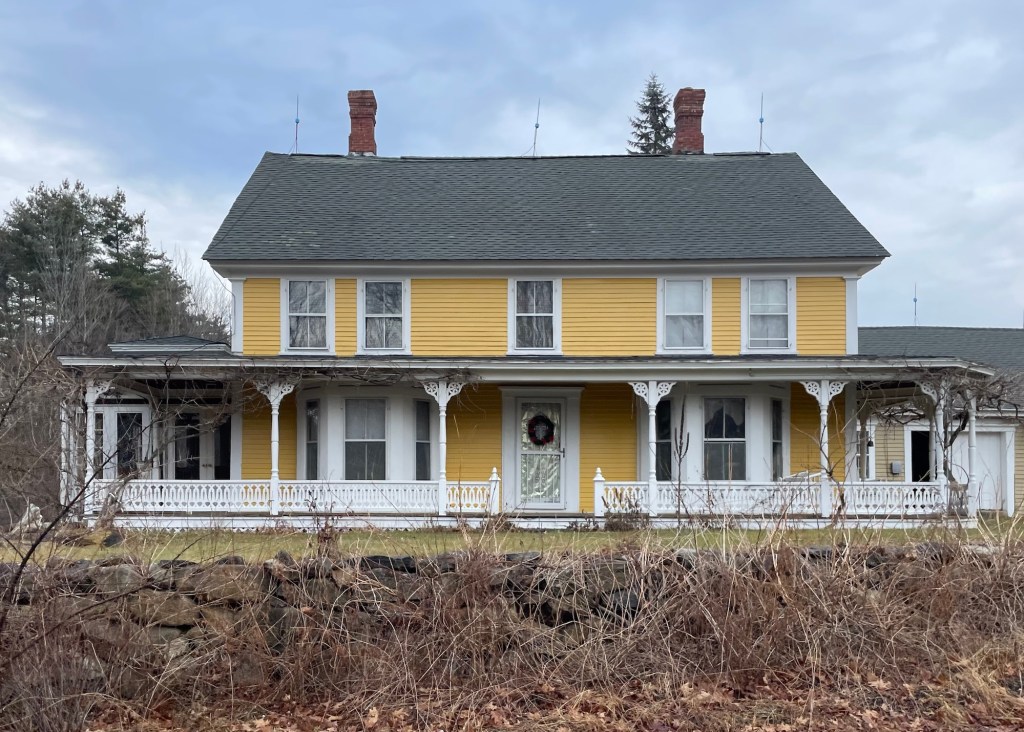
The backroads of New England always lead you to great discoveries! This time, driving around Weare, New Hampshire, I stumbled upon this large farmhouse on the side of the road. The home was owned by Cyrus Hazen by 1858 and due to its style, I would date it to be built in the 1850s. Cyrus Hazen married Louisa Bartlett (as her second marriage) in 1847 and they appear to have had this home built a few years later. The Hazen’s ran a farm from this home for decades. Sometime after the Civil War, the home would have gotten the full-length verandah (front porch) and a side tower, both Victorian-era additions. The home is now attached to the historic barn by an ell.

Osborne Memorial Hall // 1920

Weare is the largest town in Hillsborough County, New Hampshire by land area. As a result, the town’s villages historically were fairly isolated (especially before the arrival of the automobile). Social halls were important gathering places for some of these rural communities, allowing for events and celebrations to be held in a designated location. Before 1920, South Weare only had a Union Church which could meet this demand. In her will, Nellie Osborne donated funds in the memory of her husband Wellman Osborne, who grew up in Weare, to erect a social hall there. South Weare residents established the South Weare Improvement Society to make use of the money and oversee construction of the Memorial Hall. The Arts and Crafts style community building with its pyramidally roof opened in 1921. After numerous decades of deferred maintenance and dwindling use of the facilities, Osborne Hall was in decline and danger of demolition. Luckily, new members banded together and funded a restoration and modernization of the building. Here’s to another 100 years!

Clinton Grove Academy // 1874

Clinton Grove Academy of Weare, New Hampshire was the first Quaker seminary in the state when it was founded in 1834 by Moses Cartland (1805–1863). Moses Cartland was a Quaker abolitionist who served as the first Principal of the school and for fourteen years after. He later would move to Lee, NH, and aided those who escaped slavery in the south, sheltering them and assisting them on their way north to Canada. The original Academy here served as a private high school and included a classroom building, boarding house, barn and sheds. Students came from as far away as Ontario, Nova Scotia, Minnesota and Texas to study here under Mr. Cartland. In 1872, the Academy complex burned. It was quickly rebuilt as one structure here, in 1874. This building served as a district school until the 1930s. Today, it looks like the building is largely vacant, anyone know what its purpose is?