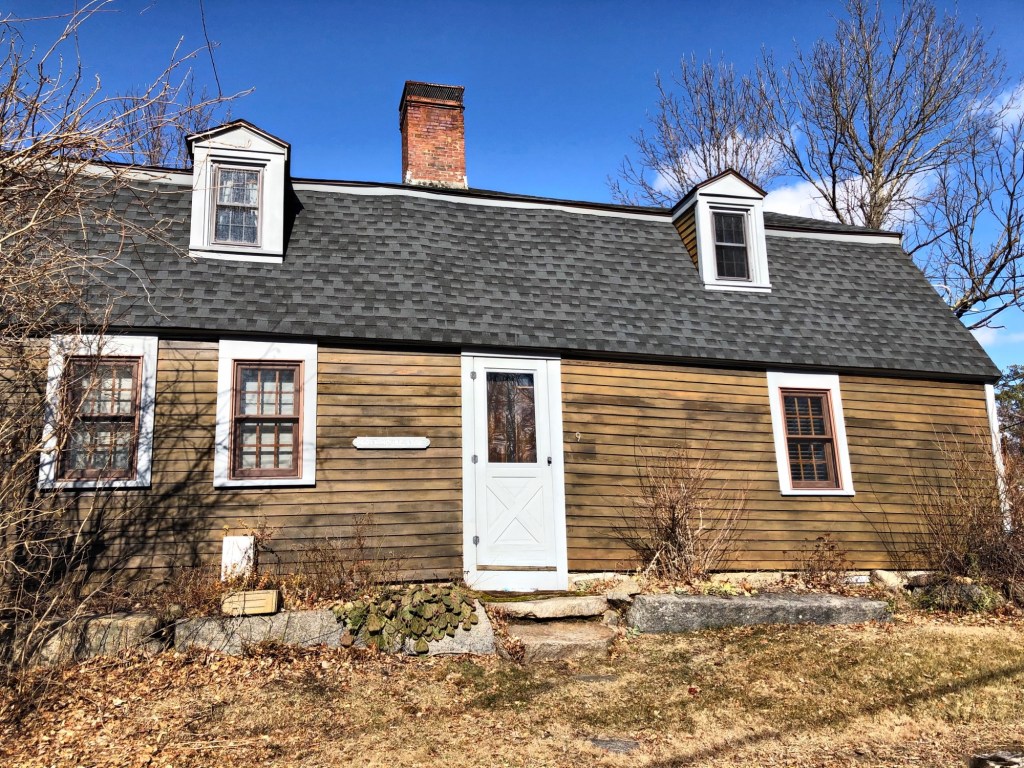
Israel Putnam House // c.1648

The General Israel Putnam House in Danvers, Massachusetts, was built circa 1648 by Lieutenant Thomas Putnam on farmland that then consisted of 100 acres. In 1692, his youngest son, Joseph Putnam, lived here, inheriting the property over his half-brother, Thomas Putnam, Jr. (1652-1699), causing friction within the family. During the infamous witch trials and hysteria in Salem Village, Joseph Putnam was one of two people who took notes during the examinations of the first three to be accused of witchcraft in 1692 – Sarah Good, Sarah Osborne, and Tituba. From that point forward, he was one of the most outspoken opponents of the proceedings, which put him in direct conflict with most of the Putnam family, especially that of his half-brother Thomas. Fearing accusations against him by his half-brother, Joseph was said to have kept horses saddled at all times, ready to escape at a moment’s notice. He was never accused, though Thomas Putnam was responsible for the accusations of 43 people, and his daughter was responsible for 62. In 1718, Israel Putnam, the son of Joseph Putnam, and later Commander of the colonial troops at the Battle of Bunker Hill, was born in this house. It is the only extant structure with direct ties to Commander Putnam. During the Battle of Bunker Hill, Putnam is thought to have ordered William Prescott to tell his troops, “Don’t fire until you see the whites of their eyes.” This command has since become one of the American Revolution’s notable quotations. It was given to make the best use of the low ammunition stocks that the troops had. The Putnam House remained in the family into the 20th century, and due to highway and commercial expansion, the property now sits in the middle of a cloverleaf intersection of two highways. The house was given by the Putnam family to the Danvers Historical Society in 1991, but as of 2020, the Putnam family once again owns the property. The house is not holding up well and I could not locate plans for restoration or preservation of it online. This house deserves to be preserved.

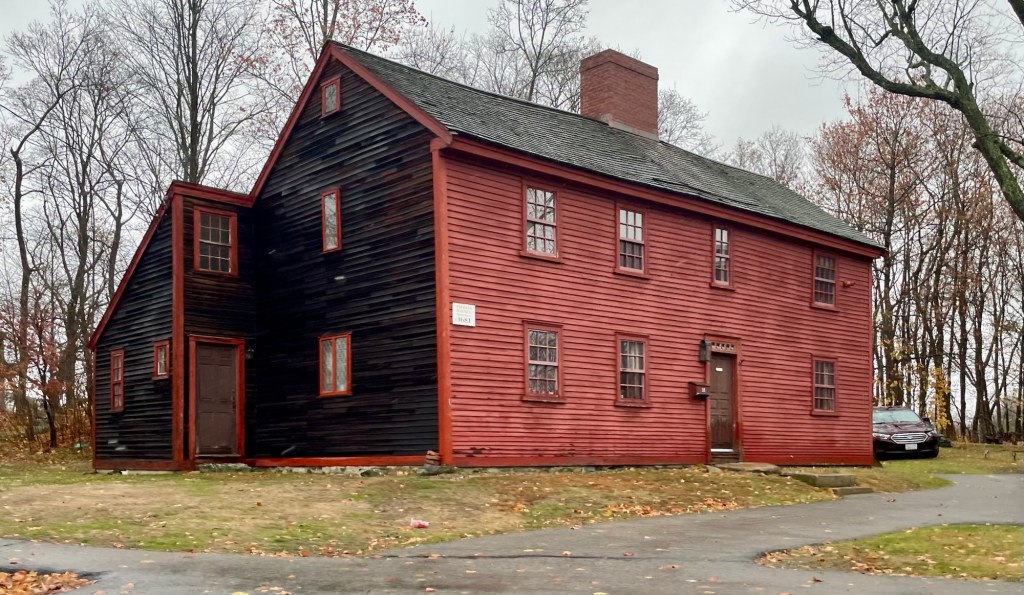
Thomas Haines House // 1681

There aren’t many extant buildings with direct ties to the Salem witch trials of the 1690s, but this First Period house on Centre Street in Danvers is one of them! This is the Thomas Haines House, built in 1681 for Thomas Haines. During the witchcraft hysteria of 1692, Thomas testified in the trials of Elizabeth Howe and John Willard, who were accused of witchcraft. Elizabeth would be executed by hanging on July 19, 1692 and John was hanged on August 19, 1692. Less than a year following the frenzy of the trials, Thomas received a license to keep a public house of entertainment & sell strong drink as an innholder. He remained here until 1703, when he sold his home and land to John Allen, a gunsmith, and removed to Salem, New Jersey. The First Period home with saltbox roof is in great condition and was restored to its historic appearance in the 20th century. The property is privately owned.

Spofford-Root House // c.1830

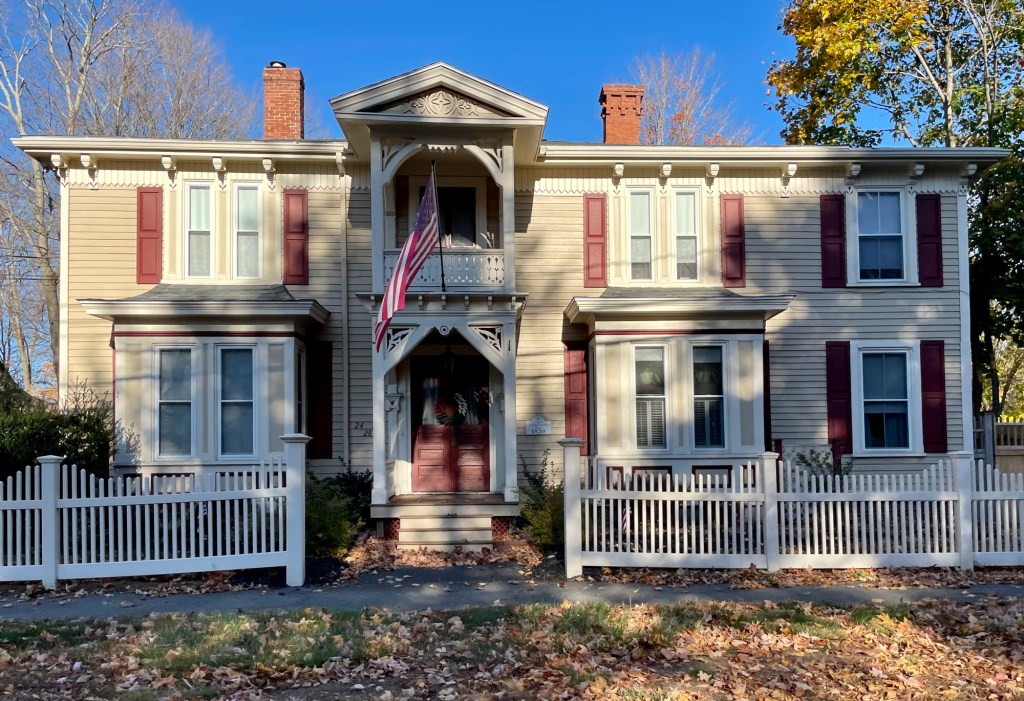
The Spofford Family was one of the earliest to settle in present-day Georgetown, with the earliest enclave of homes built along Andover Road in the western part of town. A few generations later, subsequent family members would built in the town center, taking advantage of the growing commercial and business community. This Federal period home (with later alterations) was built around 1830 for Greenleaf Spofford (1801-1887) the same year as his marriage to Emily Willmarth. The couple would move out of town and sold the home to Dr. Richmond Barbour Root (1846-1930),  the second of a highly respected, three generation family to practice medicine in Georgetown. The overlay of machine-sawn Stick Style decorative porch, bracketed cornice and bay windows were likely added by Root sometime after the Civil War. Unlike most owners of Federal and Greek Revival-style dwellings, Dr. Root may have held a valid professional interest in appearing as up-to-date as possible with a “modernized” home that also served as the site of his office and consulting rooms.

Moody-Hall House // 1830

Transitional Federal/Greek Revival style houses are among my favorite. You can see the emergence of Classical architecture blending with American architecture with features of both styles, which work well together. This example can be found on Elm Street in Georgetown, Massachusetts. The dwelling appears to have been built for Dr. George Moody, one of four physicians in Georgetown in 1840, who began his practice in town in 1830. In his first years there, he oversaw patients during Typhus and Dysentery outbreaks and was credited with having determined that a high sulphur content in the local water supply accounted for the increased cases. Dr. Moody died in 1866, and his widow continued to live in the house until her death in 1880, after which it was sold to Mrs. Charlotte Sawyer Hall, the widow of local shoemaker Seth Hall.

Turk’s Head Inn // 1890-1970

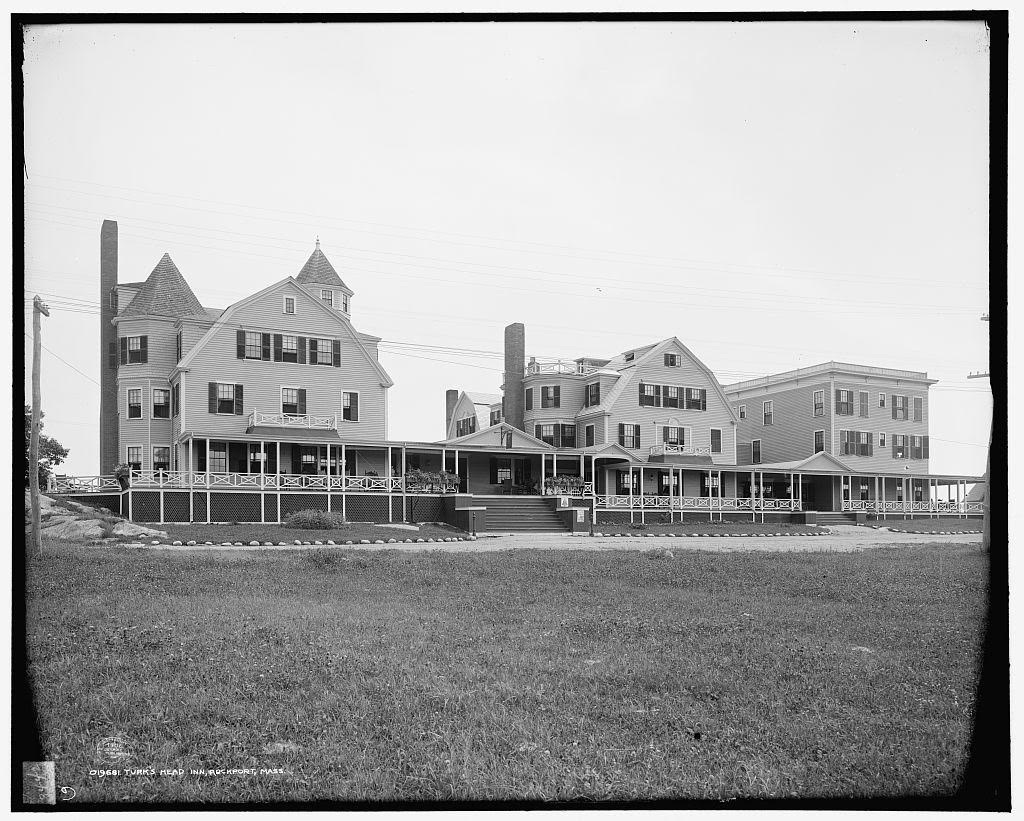
The Turk’s Head Inn was once Rockport’s grandest getaway. For those uninterested in building their own summer cottage to spend the along the coast of Massachusetts, luxury summer resorts provided summer rentals for those escaping the hot and polluted cities in favor of cool ocean breezes. Once situated in the  Land’s End section of Rockport, the Turk’s Head Inn, had sweeping views of the coast and islands in the distance. The initial portion was built from 1889 to 1890 by builder J. M. Wetherill of Rockport based on plans by architect H. M. Stephenson of Boston. It was expanded and became this rambling, E-shaped Colonial Revival structure with a seaboard frontage of two hundred feet and wraparound verandas over three hundred feet in length. Over the years, the Turk’s Head Inn suffered a number of fires, and its central and southeast wings were rebuilt, the latter in 1905 by then owner C.B. Martin. With a peak capacity of 200, the hotel, uncharacteristic of the regional hospitality industry, remained in operation for eighty years before it was closed down, partially destroyed by fire, and the remains removed in 1970.

Old Granite Shore Hotel // c.1755

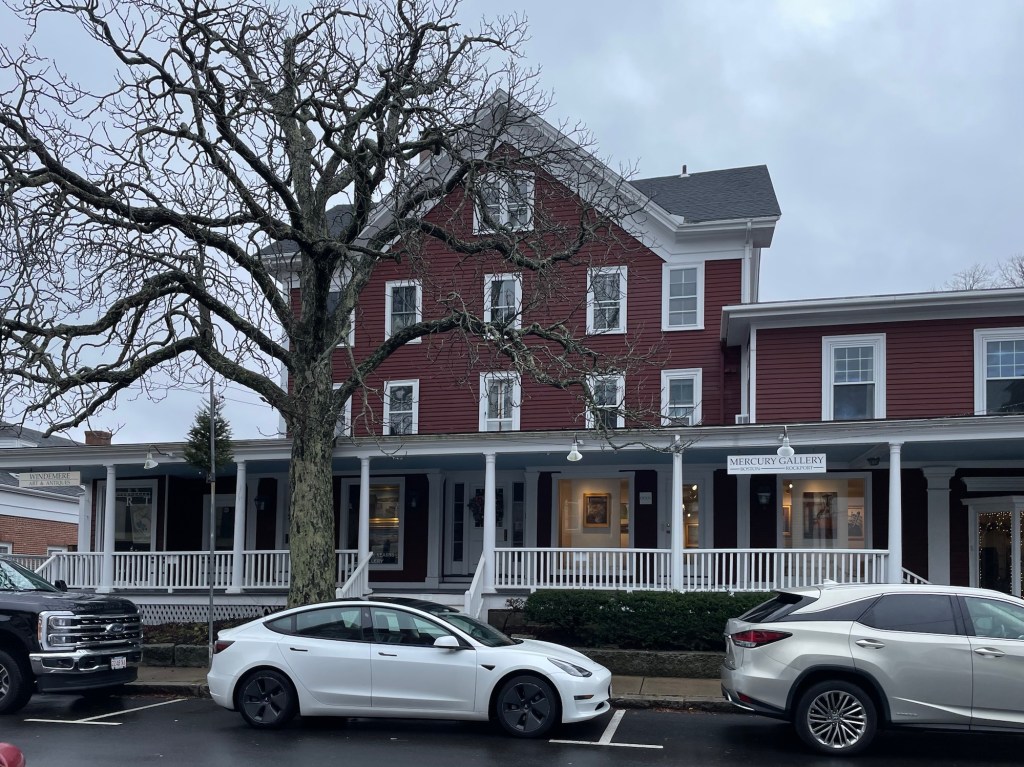
Reverend Ebenezer Cleveland (1725-1805) graduated from Yale College in 1749 and would move to Rockport (then a parish town of Gloucester) accepting the call as the village’s pastor for its Congregational Church. By around 1755, he lived in a house on this site next to the church before becoming a chaplain in the French and Indian War, fighting at the Battle of Bunker Hill, and helping to establish Dartmouth College. The property here was later owned by Jabez R. Gott, a deacon of the Congregational Church and the original cashier of the Rockport National Bank until his death in 1876. Sometime in the next decade, the Cleveland House was converted to a summer hotel, known as the Granite Shore Hotel. The original Georgian-era structure was heavily altered and expanded to provide new rooms and amenities for seasonal guests. An 1905 book showed rooms available at the Granite Shore for $2 a night. By 1919, the rates were $3 a day or between $15 and $18 a week! The hotel closed sometime in the 1940s and the building is now home to art galleries.

Haven Avenue Cottages // c.1877

When Andrews Point in northern Rockport, Massachusetts, was opened for development by speculators Eben B. Phillips and George Babson, they envisioned the colony, “Ocean View” as a rival to other nearby summer colonies of Beverly Farms, Gloucester, and Magnolia. Roads were laid out and house lots were plotted with larger lots for big summer cottages along the coast and smaller cottage lots at the interior of the development. The rocky coast and more limited access compared to its rivals, caused Ocean View to lack in sales, but there are still some great remaining cottages to be found here. These two early cottages are great surviving examples of the modest, middle-class homes for summer residents. These two charming Victorian cottages sit side-by-side and were owned by an L. Brigham and Benjamin Lewis and both are in a great state of preservation 150 years later.

Norwood-Babson Farmhouse // 1799

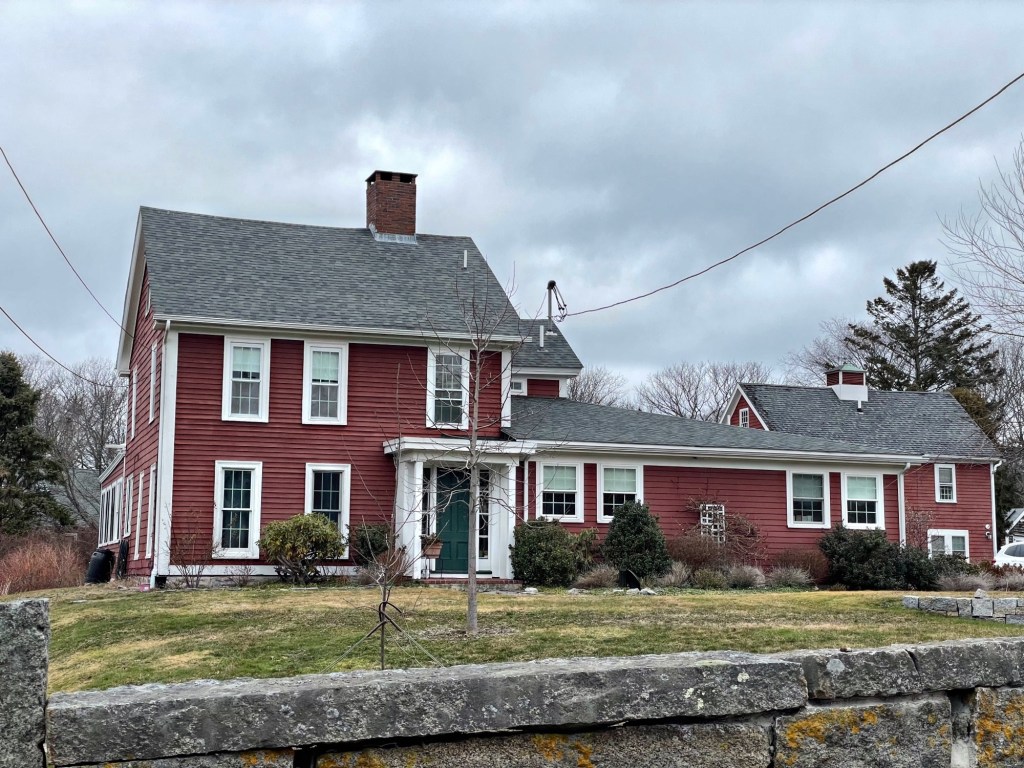
Located in northern Rockport, Massachusetts, you will find this charming Colonial-era farmhouse set amongst the backdrop of ocean cliffs and granite quarries. At the tip of Pigeon Cove, adjacent to the present-day Halibut Point State Park, James Norwood purchased land and would erect this house by 1799 for his family (possibly built from an older dwelling formerly on the site). After James’ death, the property was willed to his daughter and son-in-law and sold a few times until 1820, when it was purchased by David Wallis Babson who raised his family here. As granite-quarrying became a lucrative trade in Rockport by the early-mid 19th century, David’s son Joseph bought twelve of the Babson Farm acres from other family members to organize a stone cutting business here. The property would leave the Babson Family decades later, but retained the family name until today. Edwin Canney would purchase the remaining 70-acre Babson Farm, selling it to the Rockport Granite Company. For the next thirty years, industrial-scale mining and shipping would redefine Halibut Point over the next thirty years. The quarries are now a State Park, and the former Norwood-Babson farmhouse remains intact as a significant piece of the town’s earlier history.

Gott House // 1702

Halibut Point State Park in Rockport is one of the most enchanting places in Massachusetts and it has so many layers of history! Before white settlement, Halibut Point was used seasonally by the Pawtucket people who came to harvest its wild fruits, fish and game on the land. In 1702, Samuel Gott (1677-1748) purchased eight of the 6-acre lots on Halibut Point. At the time, there were no roads to Halibut Point, but Samuel built this house on the land, and he began to farm here. The property passed down the family line and was later owned by Joshua (1754-1846), who came of age just as the War for Independence began. Joshua enlisted with the Revolutionary Army as it was being formed in Boston, and in 1776, he joined General Washington’s forces in the unsuccessful defense of New York. He returned home to lead a long and useful life as farmer and fisherman and was known as Captain Gott. As of the 2010s, the property remained in the same family, handed down through the generations from Samuel Gott over 320 years to today. How cool!