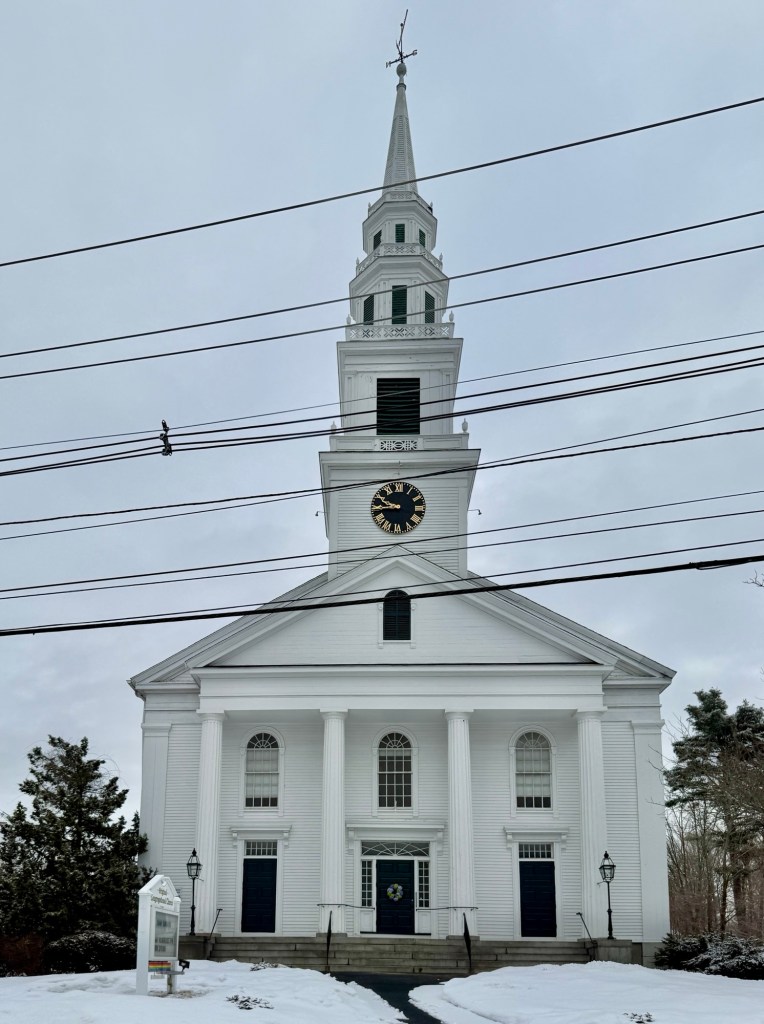
Congregational Church of Deep River // 1833

The town of Deep River, Connecticut, was originally a part of the Saybrook Colony, a large area at the mouth of the Connecticut River that was settled by English colonists. As what has become Old Saybrook grew, settlers moved further and further away from the original settlement and, eventually they received permission to form their own parishes so that they would not have to travel so far on Sundays to attend church services. As these outlying parishes grew, they separated from Saybrook and became the present day towns of Lyme, Old Lyme, Westbrook, Chester, Essex, and Deep River. Residents of present-day Deep River traveled to church services in Centerbrook, a village in Essex until this church was built in 1833. First services were held here the following December. The Greek Revival style church is ecovative of many similar 1830s village churches in New England, employing elements of the Greek Revival architecture style, with large doric columns, corner pilasters, and square belfry also with pilasters. The congregation here has been active for nearly 200 years.

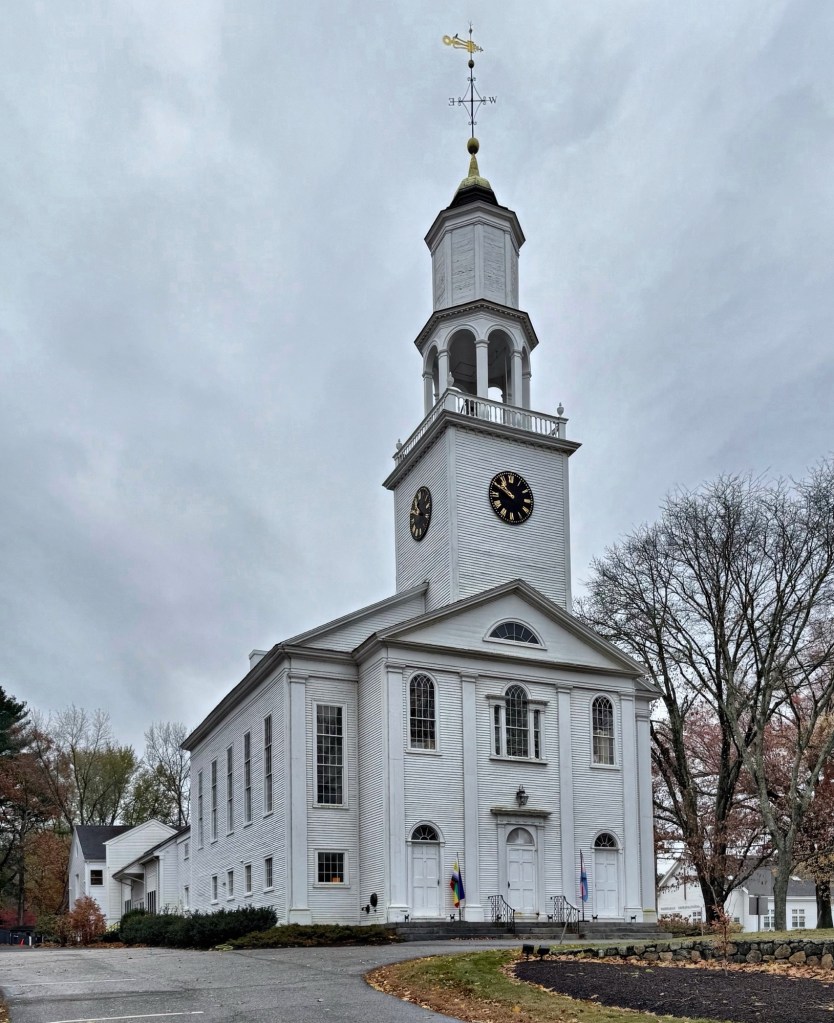
First Parish Church, Wayland // 1814

The First Parish Church of Wayland, Massachusetts, is an iconic church that displays the typical early 19th-century meetinghouse form with Federal-style elaboration. Built in 1814, the church is two-stories with a five-bay gabled-front structure with a projecting enclosed portico of three entrance bays, and a four-stage bell tower that rises above the façade. Today known as Wayland, the town was originally called East Sudbury, after it split away from the western parish in 1780. In 1835, members of town meeting voted to rename East Sudbury “Wayland” in honor of Dr. Francis Wayland, a temperance advocate, abolitionist, and then president of Brown University. The First Parish Church of Wayland was built by Andrews Palmer of Newburyport, who used an Asher Benjamin design. The bell was cast by Paul Revere and Sons and first lifted into the bell tower in 1814. The property also includes the historic, twelve-bay horse/carriage sheds where parishioners would “park” their horses and carriages while attending services.

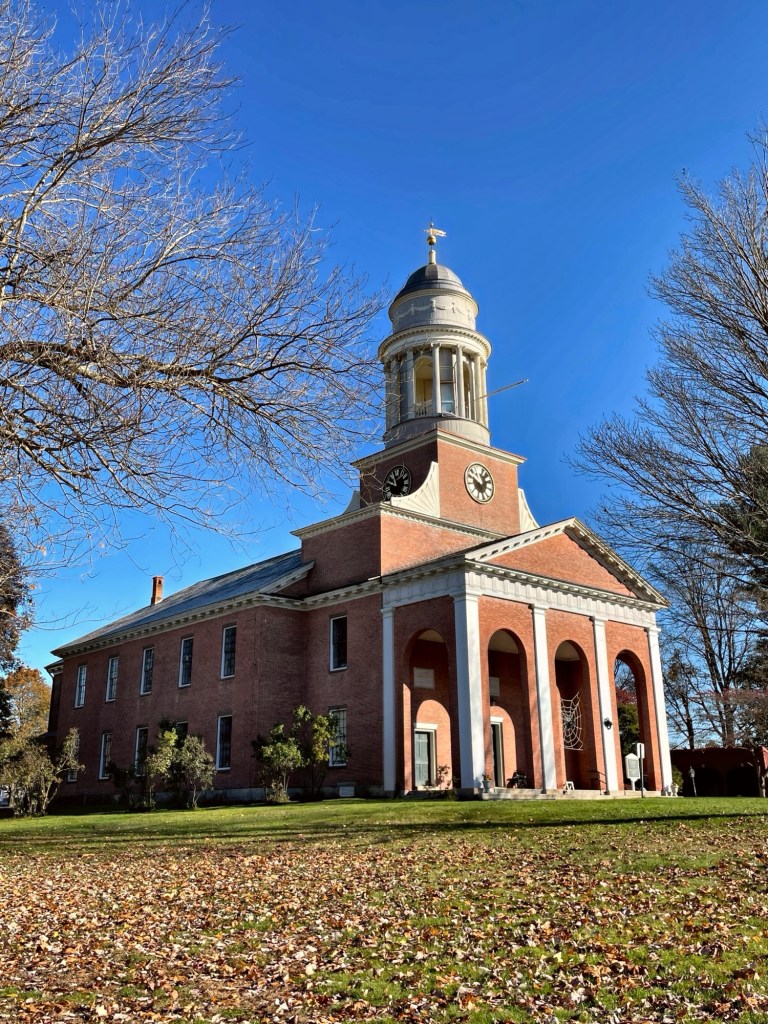
First Church of Lancaster // 1816

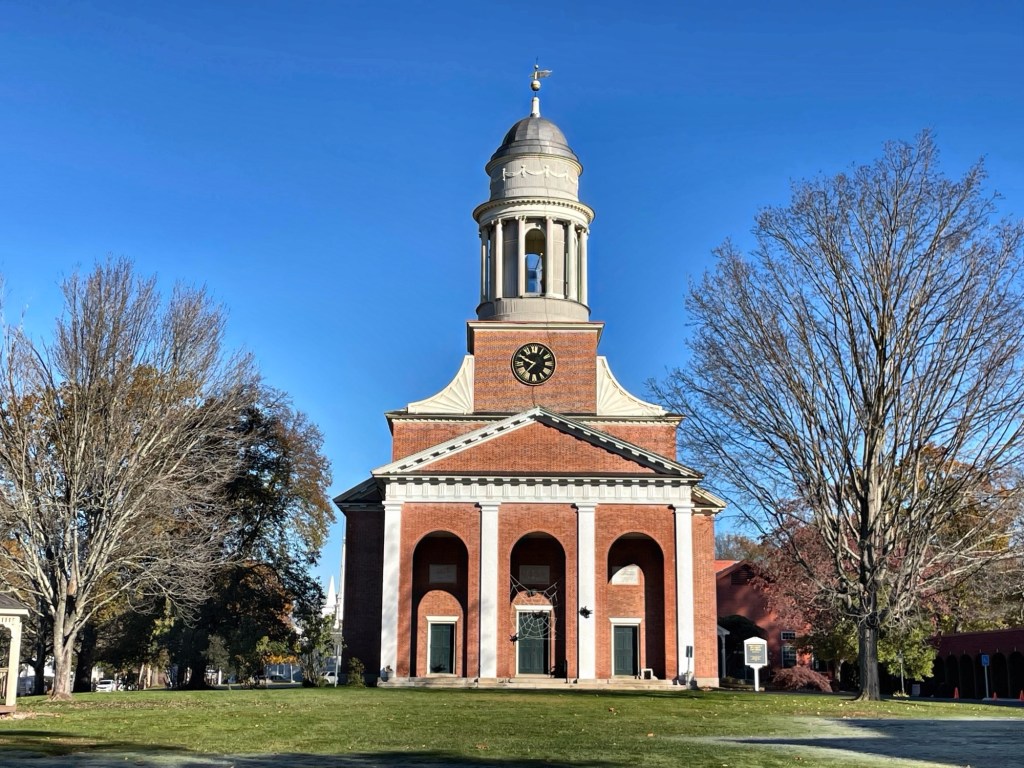
Built in 1816, the First Church of Lancaster is one of just two extant church buildings designed by famed American architect, Charles Bulfinch, and is said to be one of the finest churches in the Federal style in the United States. The fifth meetinghouse of the Unitarian First Church of Christ in Lancaster, this building was constructed of local brick, slate, and lumber from master-builder, Thomas Hearsey. Hearsey is said to have modified Bulfinch’s design, which had proposed one tall center arch flanked by two lower arches to reflect the unequal heights of the three vestibule doors behind them; instead going with three, identical arches. Other than this change, the church remains substantially as originally built, even without artificial lighting or central heat inside. Besides the iconic arched portico, the two- stage brick tower topped by a beautifully proportioned wood cupola surrounded by Roman Ionic columns, and fronted by a giant arcuated portico, is especially noteworthy. The congregation, which dates back to 1653 as a Puritan congregation was the first parish established in Central Massachusetts and remains active to this day.

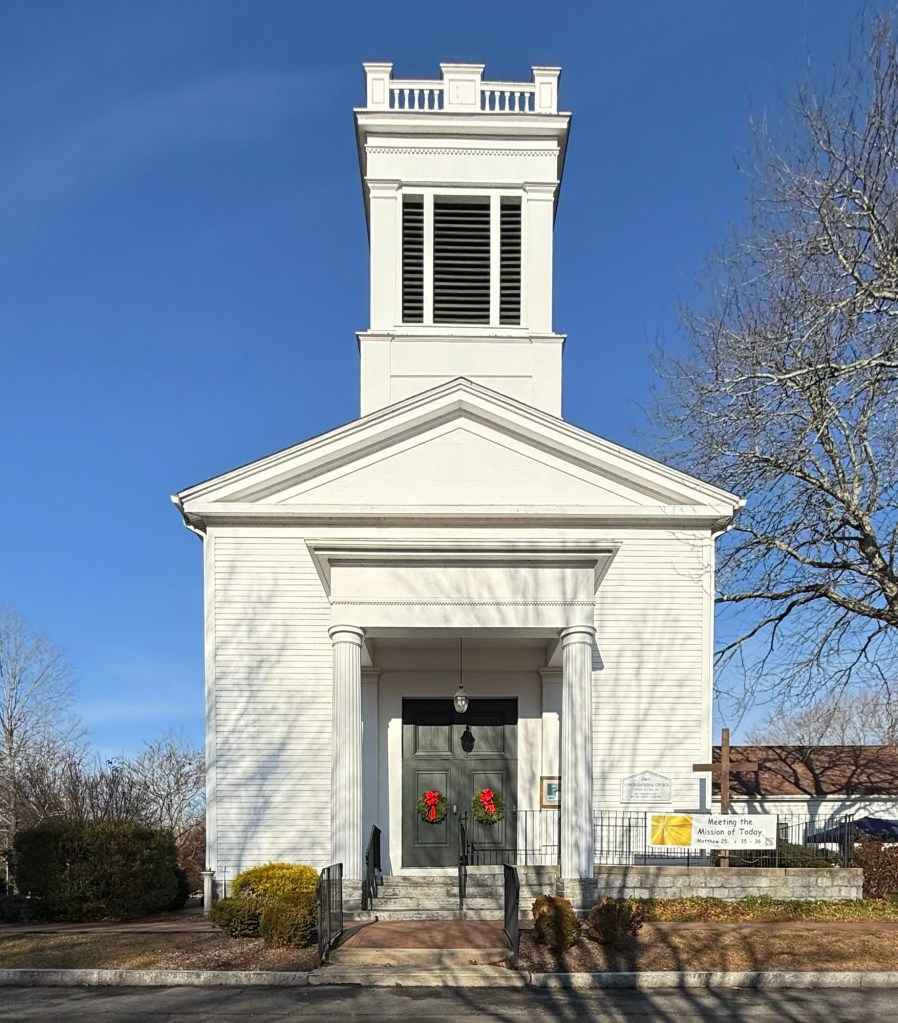
Congregational Church of Westborough // 1834

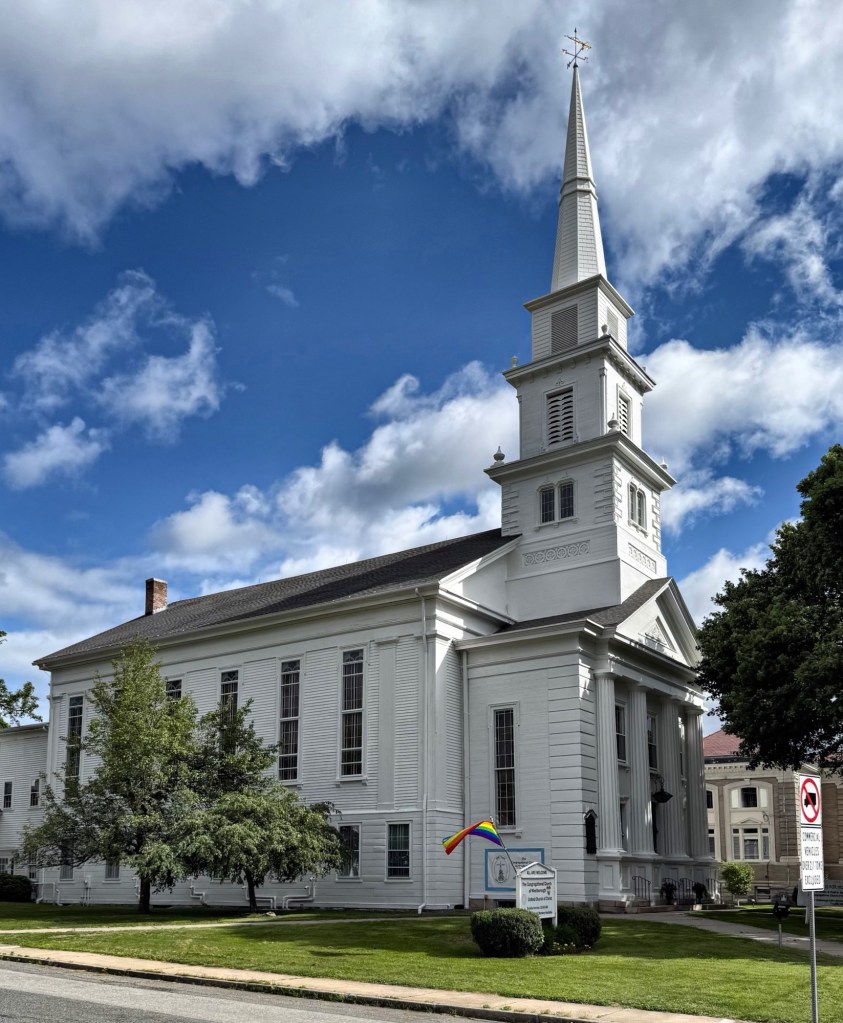
The Evangelical Congregational Church of Westborough, Massachusetts, has its roots in the first church in Westborough, established on Powder Hill in 1724 under Reverend Ebenezer Parkman. The Religious Freedom Act of 1811 and the official separation of church and state, encouraged a diversity of religious views in Westborough and a branching out from the First Church. As a result the church here split in 1834, with some members forming the Evangelical Society, and those who remained, became the First Congregational Unitarian Society. The newly formed Evangelical Congregation built this church at the corner of West Main and Church streets in 1834 and the building is a typical 1830s Greek Revival style religious building in the state. In 1869, the church was remodeled, where the first floor was jacked up to provide basement meeting rooms.

Assumption Roman Catholic Church // 1922

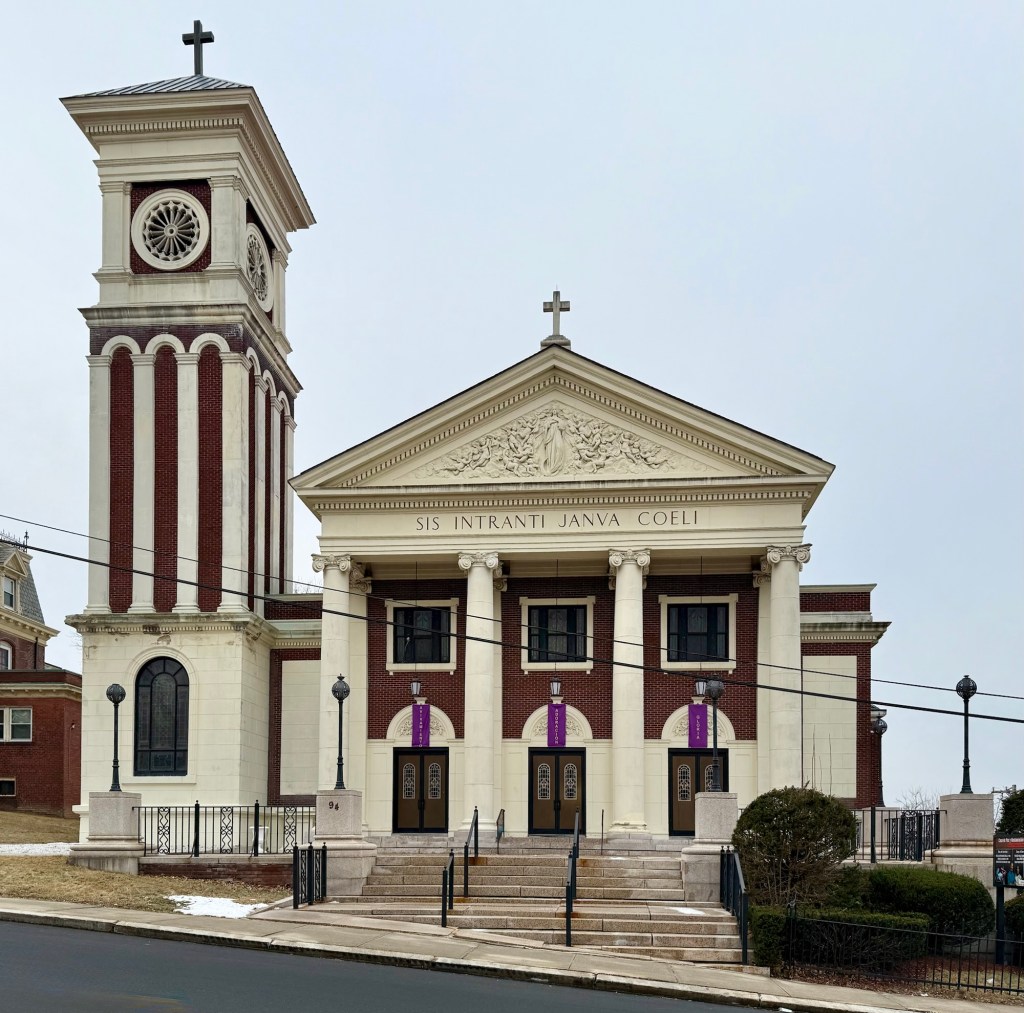
As Chicopee developed into one of the major industrial cities in Western Massachusetts, immigrant groups moved there, finding work at some of the major manufacturing companies. Irish and Polish churches were built and French and French Canadian residents too built their own church, where they could gather and worship in their native language. A wood-frame church was first built in the 1870s and used until it was destroyed by fire in 1912. It took a decade for the congregation to gather enough funds to purchase a new lot and build a new church, but patience was a virtue as their church is a stunner! The cornerstone for the church was laid in 1922 and the building was designed by local architect, George P. Dion, and constructed at the cost of $200,000. The building was dedicated in 1925 and is one of the finest, and most unique churches in the state. Italian Renaissance Revival in style, the church stands out for its 85-foot-tall campanile and cast-stone high-relief in the pediment at the facade. It is believed that within the relief, that depicts the figure of Mary surrounded by Cherubs, depicting the “Assumption of the Virgin,” George P. Dion used the likeness of his granddaughter as a face of one of the cherubs. The congregation moved out of the building but has been recently mortgaged to a new church, Iglesia Cristiana Casa De Paz y Restauración, showcasing the ever-changing demographics that keep our cities vibrant and stewards that do right by our collective history and buildings.

First Congregational Church of Rockport // 1805

Fondly referred to as the “Old Sloop” in town (a name conferred by local fishermen in the 1800s), the First Congregational Church of Rockport stands as one of the most prominent landmarks in the old village. The village of Sandy Bay (now downtown Rockport) had a growing population since the 1700s. Prior to 1755, churchgoers from Sandy Bay made the journey every Sunday by horse or foot in good weather to the parish in Annisquam or the First Parish in Gloucester, and in poor weather, met in a small log schoolhouse on this site. Eventually, a church building was erected in town, which was used until after the Revolutionary War. In 1805, a new meetinghouse was built where it stands today. In 1814, the British invaded Sandy Bay colony and residents rang the Old Sloop’s bell to sound the alarm. British forces fired a cannon at the bell to silence it, but hit the steeple instead. A replica cannonball can be seen to this day in the steeple as a nod to that historic event. In 1840, the people of Sandy Bay voted to establish the Town of Rockport. At that time, the meetinghouse was completely redecorated and the steeple enlarged. After the Civil War, the church was outgrown, and in 1872, the Old Sloop building was cut in half and separated by about twenty feet with an addition built in the middle. At that time the steeple was enlarged and strengthened to accommodate a new and heavier bell and the Town Clock. In 2015, the church began a campaign to replace the deteriorated steeple, which was rebuilt, faux cannonball and all!