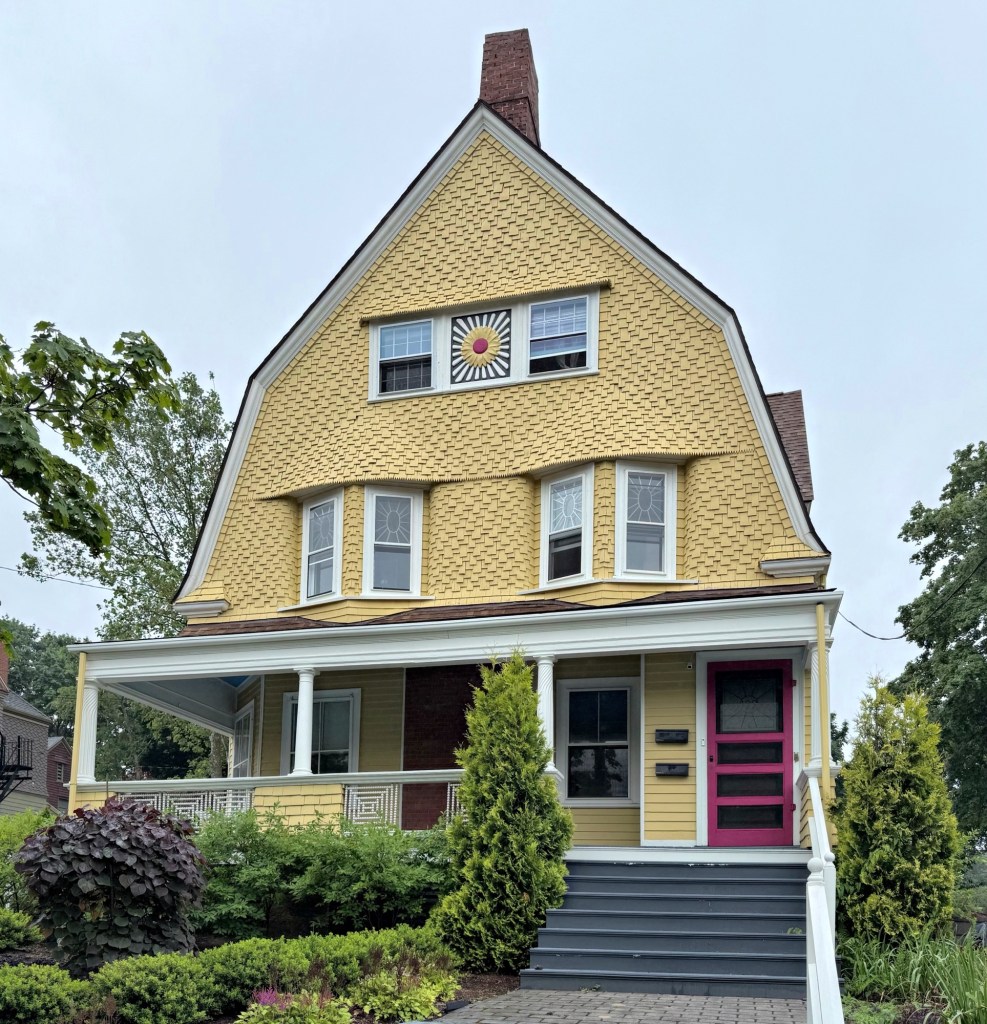
John Wales House // c.1885

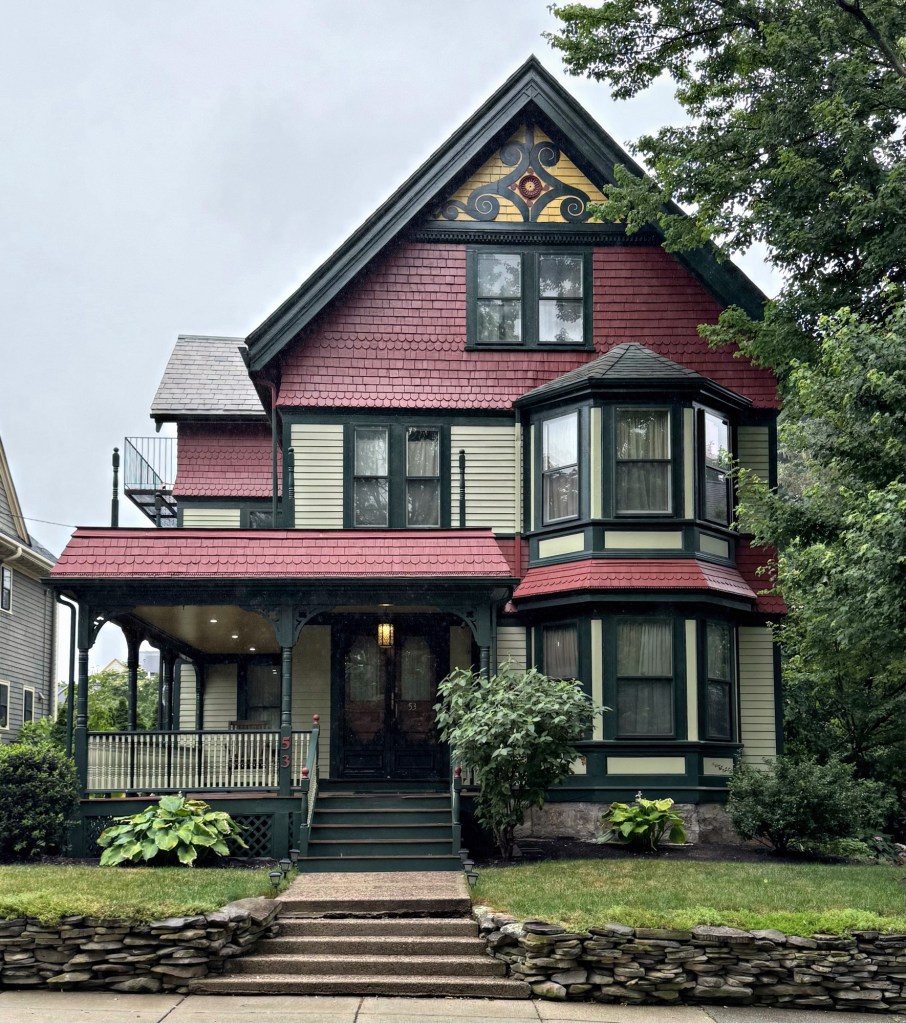
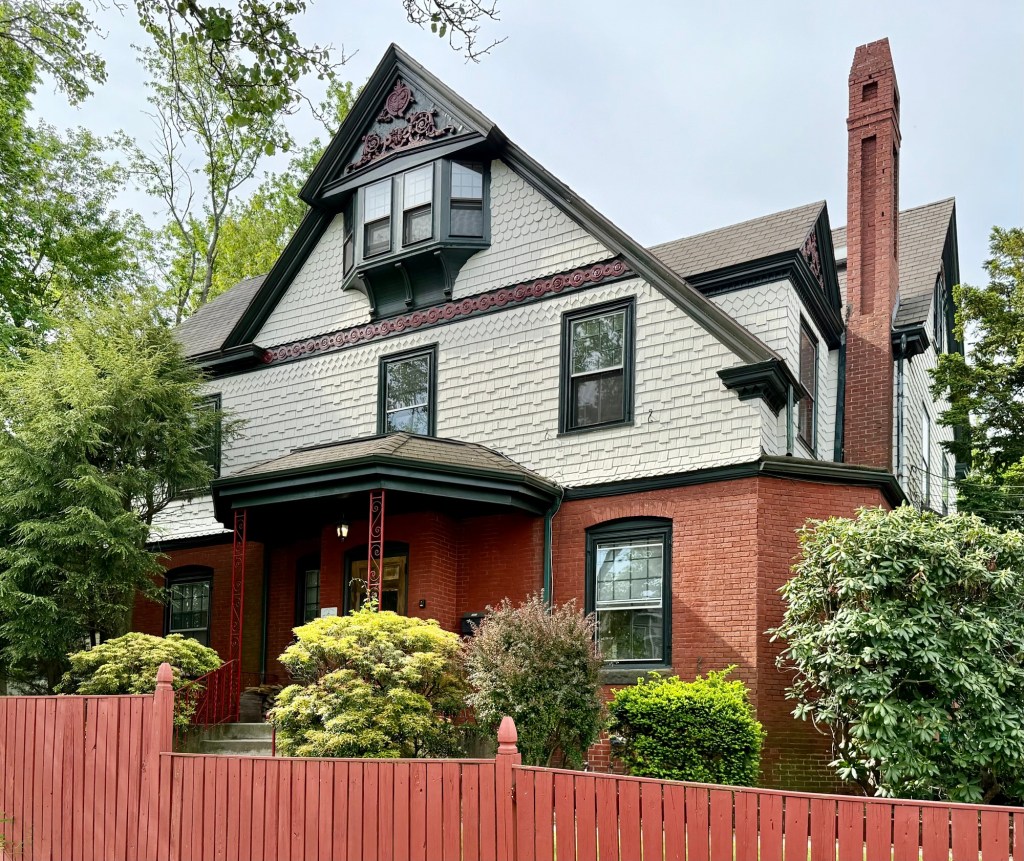
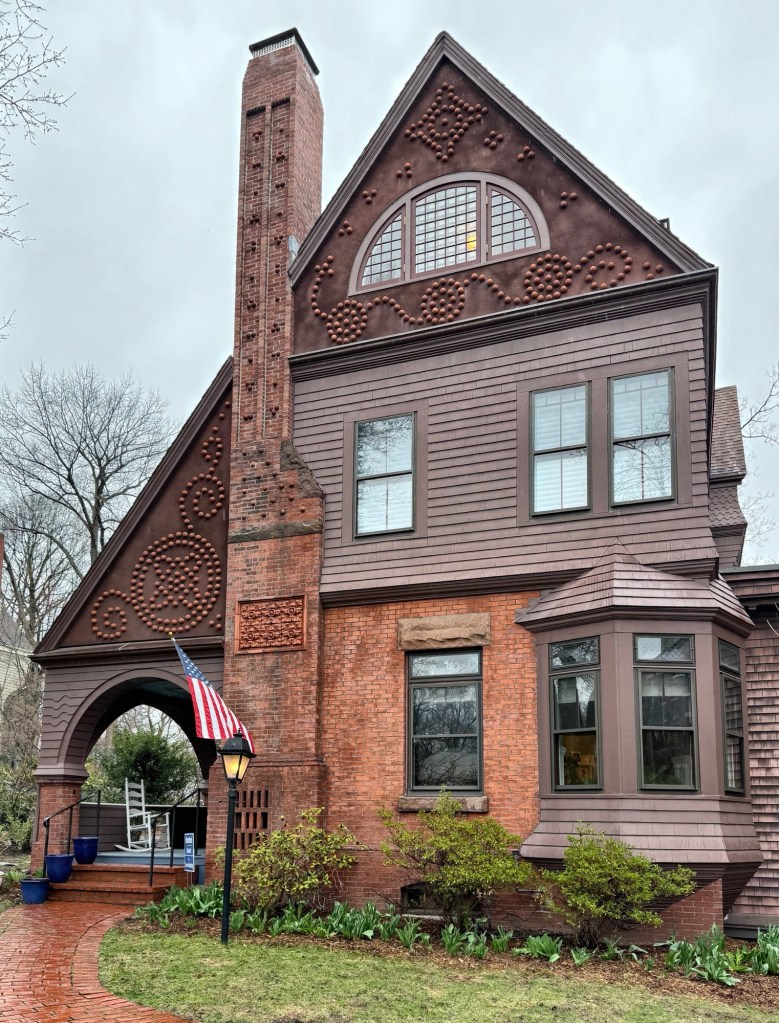
In the mid-1880s, John Wales, a wealthy hardware dealer with offices in Downtown Boston, purchased house lots in the Cottage Farm area of Brookline from Amos A. Lawrence, and set out develop the site with two stately Victorian homes. This lovely home was first occupied by John’s son, George Wales and his wife, Mabel, the year of their marriage in 1885. While the architect is unclear, it is probable that the design can be attributed to architect William Whitney Lewis, who was hired by John Wales the year prior to design a stable near his home in an adjacent neighborhood. The house was rented by Wales and subsequent owners for years. The elaborate Queen Anne style house exhibits an asymmetrical plan with recessed entrance set within an arched opening, shinged and brick walls with a prominent chimney at the facade containing a decorative terra cotta panel, and the most unique stucco gables containing what appear to be terracotta balls in geometric forms. This house is a perfect example of what is so special about the Queen Anne style!

Kramer-Duane House // 1895

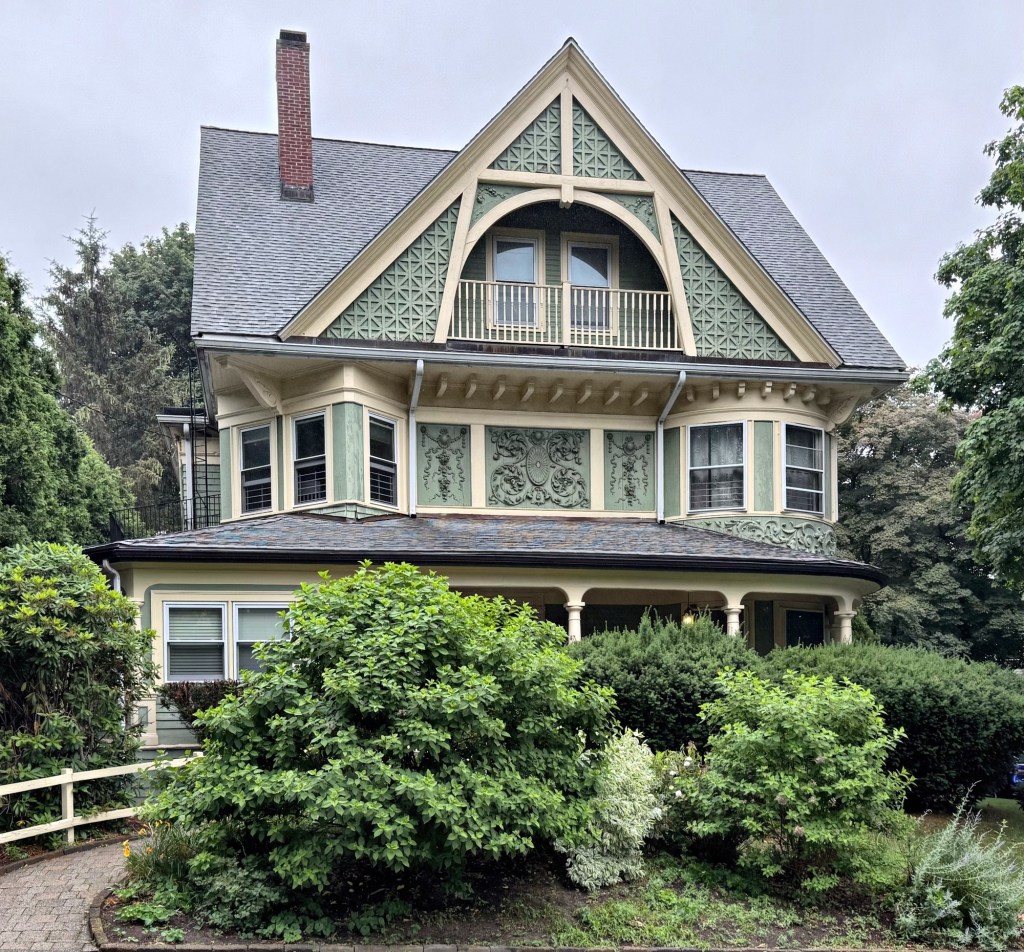
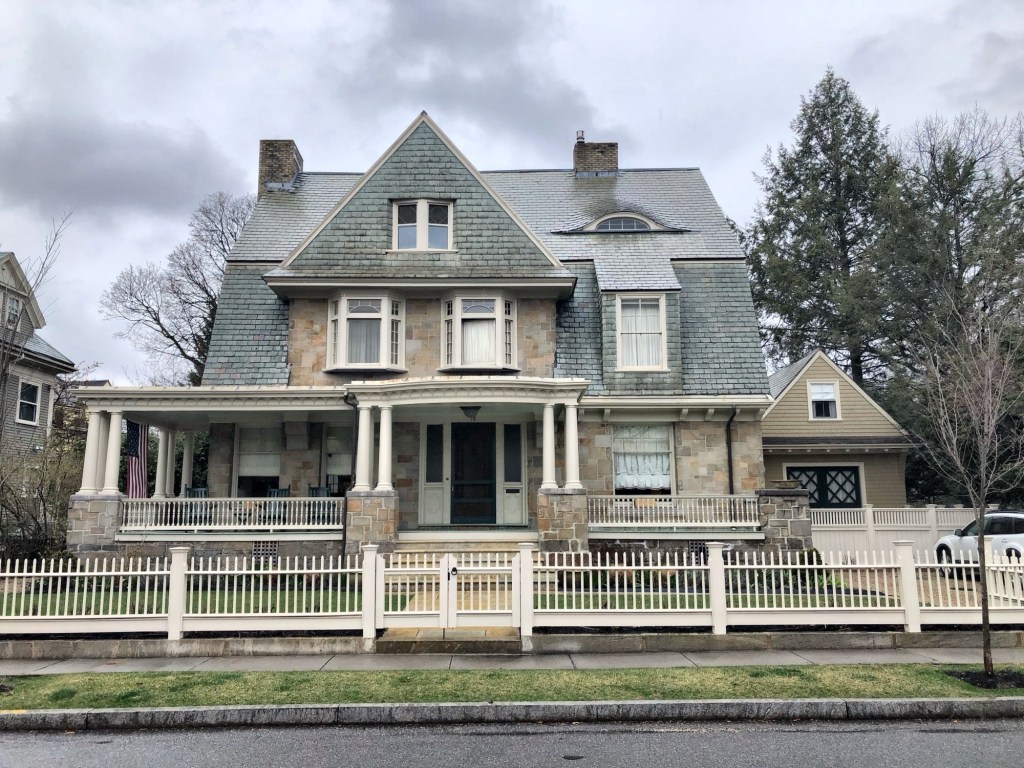
One of five houses built by developer Albert Jewell along Powell Street in the Cottage Farm neighborhood of Brookline, this residence stands out for its materiality and stately design. The house was designed by J. Williams Beal, an architect who trained at Massachusetts Institute of Technology and then worked for McKim, Mead & White before opening his own business. The house was first purchased from Mr. Jewell by Grace and Edwin Kramer, who worked as superintendent for R. H. White & Co., the large dry goods store in Boston. The next long-term owner was Harry B. Duane, a wealthy grocer. The Kramer-Duane House is unique for the stone veneer at its facade, gambrel roof covered in slate, and varied window styles including: bay windows, dormer windows, and an eyebrow dormer window at the roof.

George M. Thornton House // c.1870

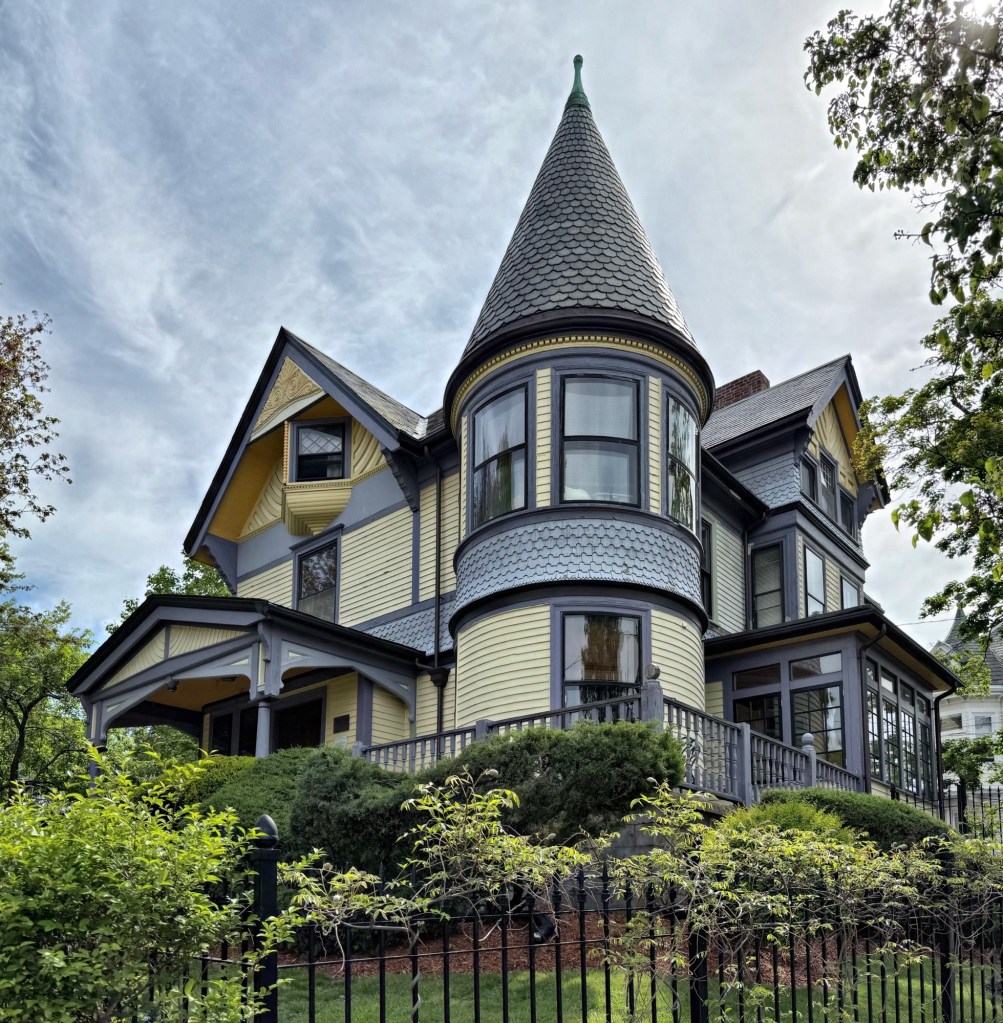
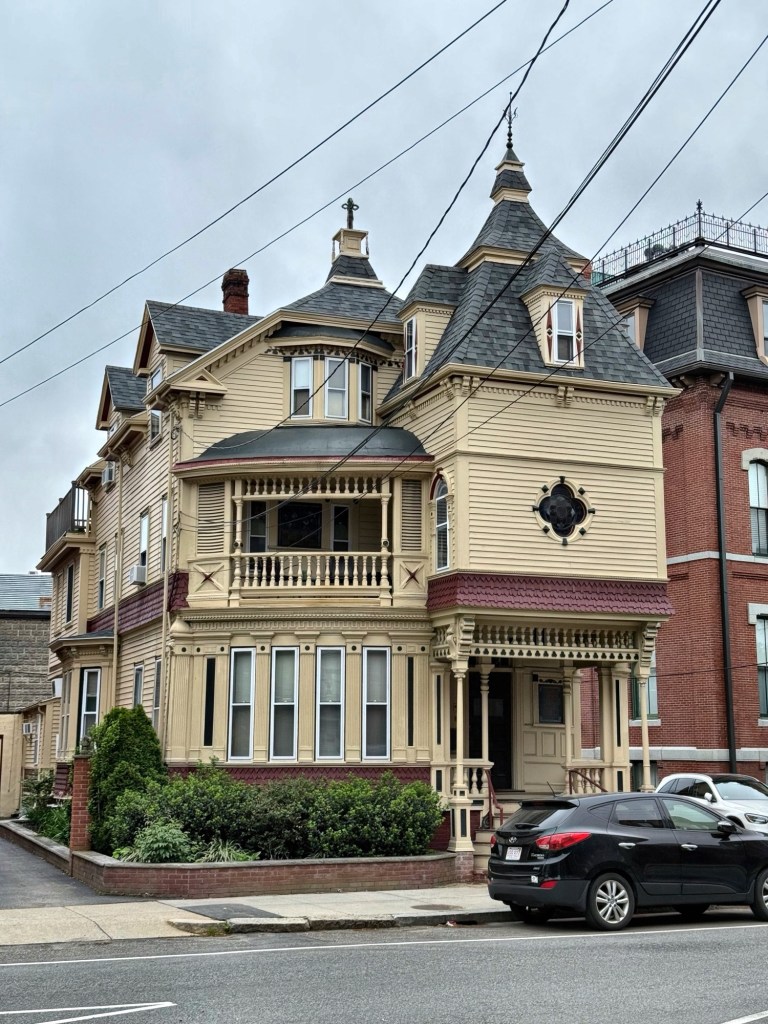
One of the finest homes in Central Falls, Rhode Island, is this eclectic Victorian residence on Clay Street. The home was seemingly built around 1870 and modified by the end of the 19th century by later owner, George Mumford Thornton (1850-1916). Mr. Thornton was an industrialist who was elected as one of the first aldermen when Central Falls incorporated in 1895. The well-preserved house features varied siding, a rounded corner tower with spiral-columned porch and conical roof, and original multi-light sash windows. What a spectacular home.

Edward Johnson House // c.1886

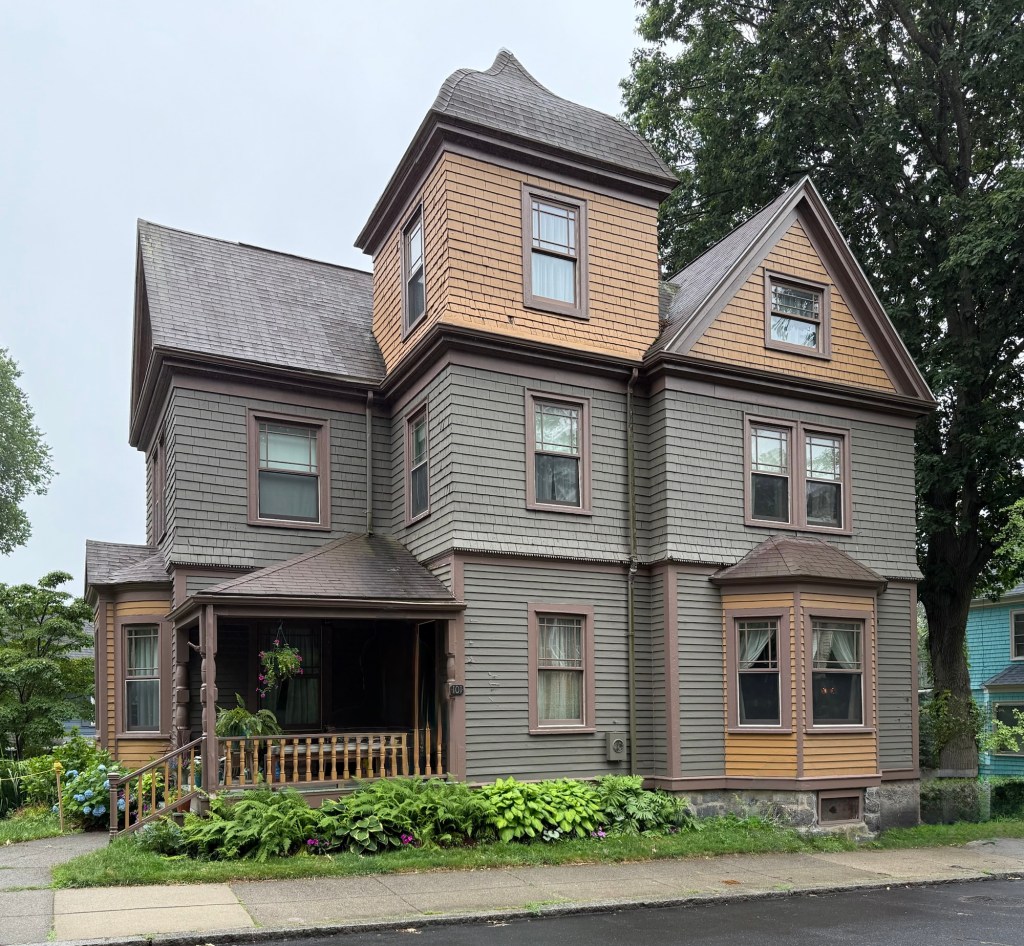
Central Falls, Rhode Island, is not necessarily known for its residential architecture, but like any good industrial city, there are some excellent examples of Victorian houses from the mid-late 19th century to be discovered! This is the Edward L. Johnson House on Cross Street in Central Falls. The house was built around 1886 for Mr. Johnson, a manufacturer, who resided here for some years with his wife, who founded the Pawtucket Women’s Club in 1899 and was an active member of the Daughters of the American Revolution. The house is an excellent example of the Queen Anne architecture style, from the various siding types including clapboard and patterned shingling; its steep cross-gable roof; and its variety of windows, including a shallow bay on the first floor and oval and half-round windows in the 2nd-floor porch. 

Broad Street Fire Station // 1889

Built in 1889 at the same time as the Central Falls City Hall across Broad Street, this former fire station in Central Falls, Rhode Island, is a great example of late 19th century architecture for a civic use. The fire station was built in the dense Central Falls village, before it separated from Lincoln, creating their own city. The brick, Queen Anne style structure features a unique mansard roof which is broken by a series of pedimented dormers. The original arched doors have since been infilled, but maintain the original openings, awaiting a thoughtful restoration. The fire station was designed by Pawtucket-based architect, Albert Humes. Due to ever-growing fire trucks, the historic station was eventually deemed obsolete, and a new station was built elsewhere. Today, the former Broad Street Fire Station is occupied as the Morabeza Health Center.

Central Falls City Hall // 1888

Welcome to Central Falls, an industrial city in Providence County, Rhode Island. With an area of only 1.29 square miles it is the smallest and most densely populated city in the smallest state, and the 23rd most densely populated incorporated place in the United States. Originally, Central Falls was one of the many villages within the town of Smithfield, but in 1871, the town split into three smaller towns: Smithfield, North Smithfield and Lincoln. Central Falls village then became part of the town of Lincoln until Central Falls’ industrial character and differing needs had it split off to form the small city of Central Falls in 1895. Before it was its own city, Lincoln officials had this building constructed in 1888-9 on Broad Street, the commercial and civic center of the city. This red brick, Queen Anne building with its four-stage tower was built as Lincoln High School, the first school in the town built exclusively for secondary education. Designed by William R. Walker & Son, architects, the building features shingles in the gable, asymmetrical plan, and carved terracotta panels. The building continued as Central Falls High School until 1927, when the city offices were moved there, and it has remained as the City Hall ever-since.

Parsons-Zielinski House // 1897

Bounded by three streets and overlooking the town Common, this stately house in Salem, Massachusetts, showcases a blending of Queen Anne and Colonial revival styles. Built in 1897 from plans by Boston architect, Alfred Fernald, the house was constructed by and for its first owner, Joseph Parsons, a Civil War veteran and house builder. The Parsons family continued to live in the house until Joseph’s death in 1915, after which his widow, Minnie, sold the property and moved to Florida. Dr. Ignatius Zielinski purchased the property in the 1920s and divided the house into a physician’s office and several residential units. Tragically, Dr. Zielinski died while serving his country during WWII, and the family would retain the property until 1987. The house is unique for its materiality with the first floor consisting of ashlar, rough-faced stonework with a wood-shingled second story, stained glass windows and a wrap-around porch.

Odell House // 1887

Built in 1887 for Charles Odell and his wife, Alice, this Queen Anne house on Winter Street in Salem, Massachusetts, stands out as a high-style example of Victorian architecture on the street notable for early-mid 19th century architecture. The house lot was purchased by the Jewett Family who lived in the brick house next door and long used the lot as a garden. Charles and Alice Odell married in 1888, so this Victorian home was built for the newlywed couple to raise their family. Charles A. Odell (1863-1931) worked at his father’s insurance and real estate business, later assuming ownership of business upon death of his father and was a district agent for New England Mutual Life Insurance Company. Sheathed in a combination of wood clapboards and shingles in a variety of patterns, the house has a steeply hipped, slate roof punctuated by cross gables and hipped dormers. The predominant window sash style consists of a distinctive sash in which the upper displays a triangle with central muntin over a conventional two-light lower sash. The property has been lovingly preserved for well over a century and is a landmark example of a Queen Anne style house in Salem.

Blaisdell-Carter House // 1890

The Blaisdell-Carter House is a great example of a Queen Anne style home in Chicopee, Massachusetts. The house was built in 1890 for Harriet P. Blaisdell following the death of her husband, Samuel Blaisdell, a cotton broker, in 1888. Mrs. Blaisdell hired David B. Griggs, a builder in Chicopee under the firm D. B. Griggs & Sons, to design and build the residence, which sat across the street from Griggs’ own home. Harriet would pass away just three years after her home was built, and the property would eventually be sold to Nathan P. Ames Carter (1864-1959). The residence sits on a large lot and exhibits varied siding, asymmetrical plan with porches, additions, and steep gable roofs, and the use of irregular windows of varied sizing and locations. While the second floor porch has been enclosed, the house retains much of its original fabric and has not been covered by vinyl or aluminum siding, a rarity in Chicopee.

Griggs House // 1891

This fancy Queen Anne Victorian residence can be found in Chicopee Falls, Massachusetts, and is one of the most unique houses in the industrial city. This property was built and occupied by David B. Griggs, a builder in Chicopee under the firm D. B. Griggs & Sons. The firm was very busy in the late 19th and early 20th centuries, as Chicopee saw rapid industrial prosperity followed by a population boom, growing in population from over 9,000 residents in 1870 to 36,000 in 1920. Builders like David Griggs were able to grow to upper-middle class and buy property on desirable house lots and build large homes for their family, as was the case here. David Griggs died in 1896, five years after his home was built, and the property was inherited by his son, Millard Griggs. While the residence is covered in vinyl siding (original siding and trim is likely underneath the present siding), the house retains much of its original fabric including the brackets, delicate open friezes at the porches, and four-story tower.