Sidney A. Kimber House // c.1894

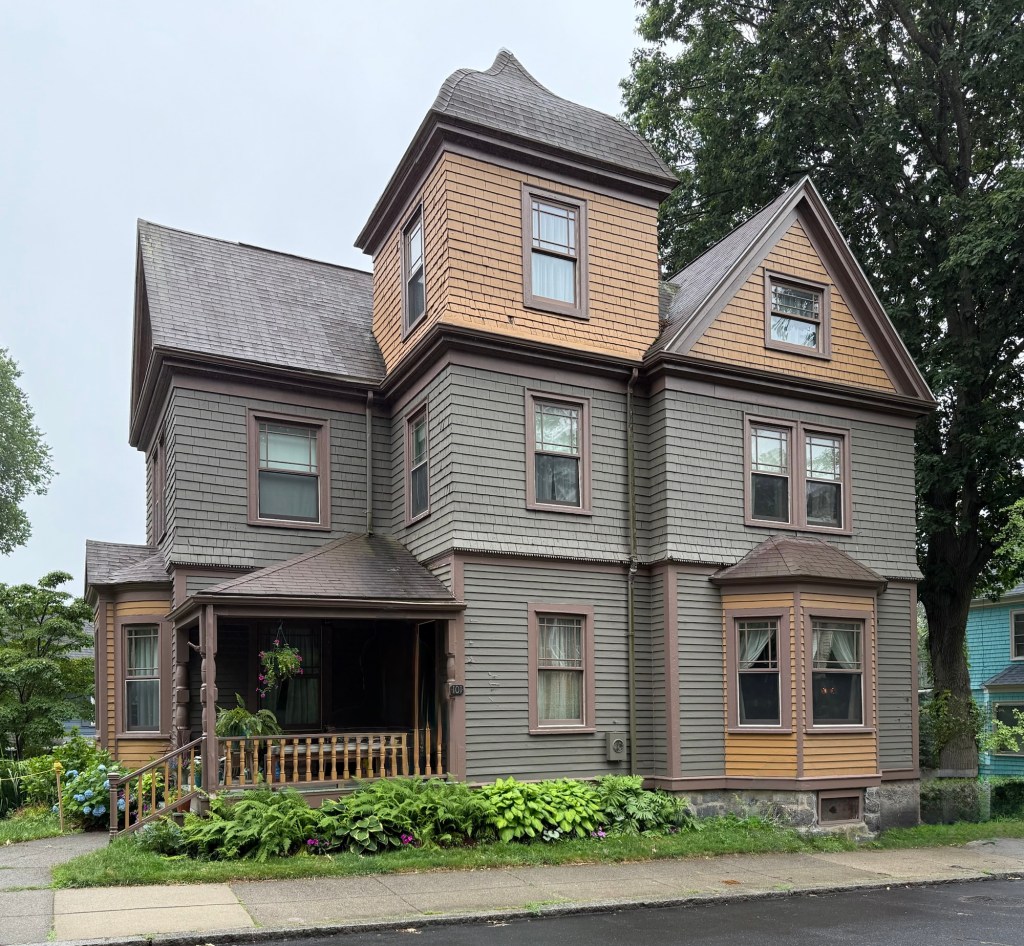
Built by 1894, this fabulous Queen Anne victorian house can be found on Ashmont Street in Dorchester, and it has a period-appropriate color scheme. The residence here was built for Sidney Arthur Kimber (1866-1956) a London-born printing expert, who for years worked at the University Press in Cambridge. Mr. Kimber was an expert on printing and wrote many books on the subject; he even built a working model of the first printing press brought over from England to Cambridge in 1638. The Kimbers lived here for just a few years before moving, and the house was sold a few times until the first long-term owner, Helena T. Shortell. The house is lovingly preserved and features a unique entry tower capped by an ogee roof.
Louville V. Niles House // 1887

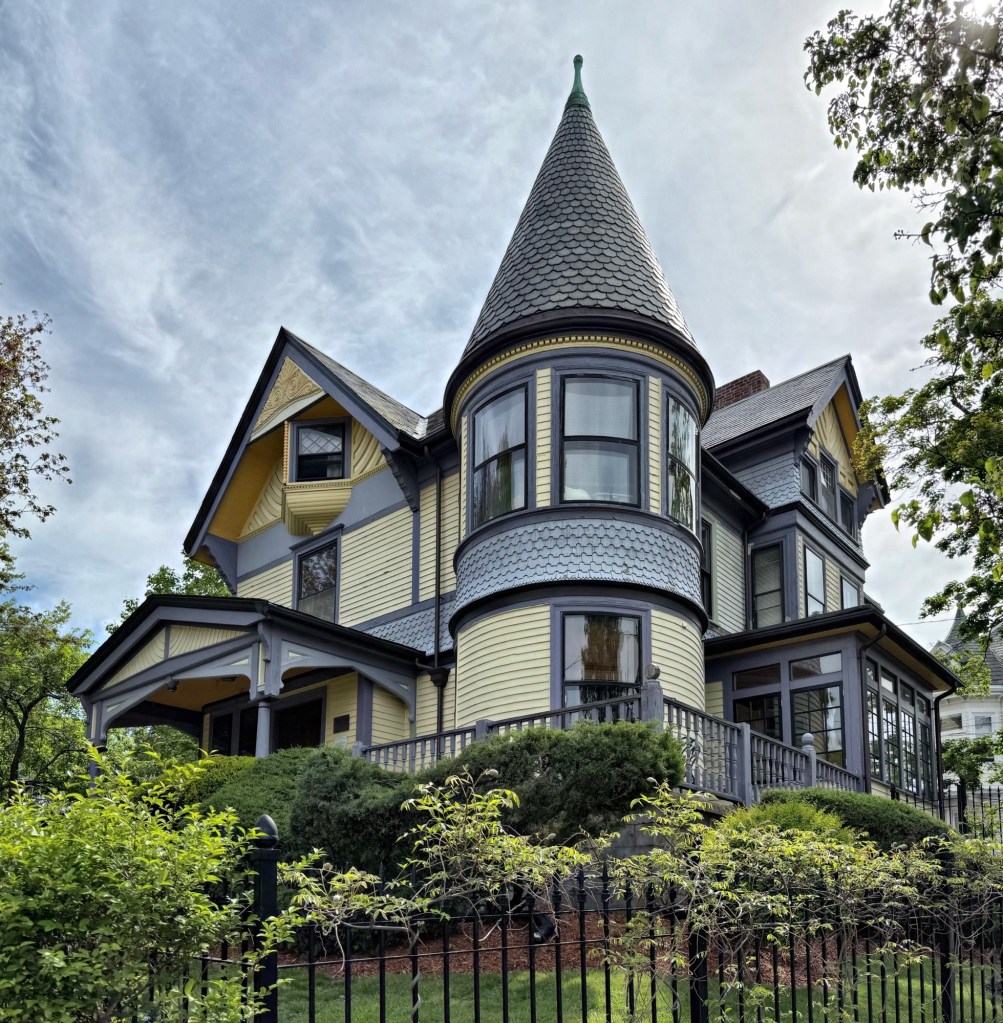
Louville Varanus Niles (1839-1928) was born in Maine and came to Boston in 1860 for the chance to make his fortune. In 1870, he formed a partnership with his two brothers in the provisions business under the name Niles Brothers. The company would later merge with the Boston Packing and Provision Company. Niles moved from Boston to Somerville in 1882, purchasing the Bradshaw estate on Walnut Street. He remained in the house until he decided to redevelop the property, building a number of dwellings on the former estate bounded by Walnut, Boston and Munroe streets. For his own residence, Louville hired the firm of T. B. Blaikie and Son, who designed this beautiful example of a Queen Anne style house in 1887. The building has irregular massing, with numerous gables and rooflines. There is a prominent two-story, rounded tower at the corner, capped with a conical roof, and applied ornament in the gable ends, all common features in this style in the Victorian period. The owners have painted the house to accent the many unique details found here. 

John E. Sylvester House // 1884

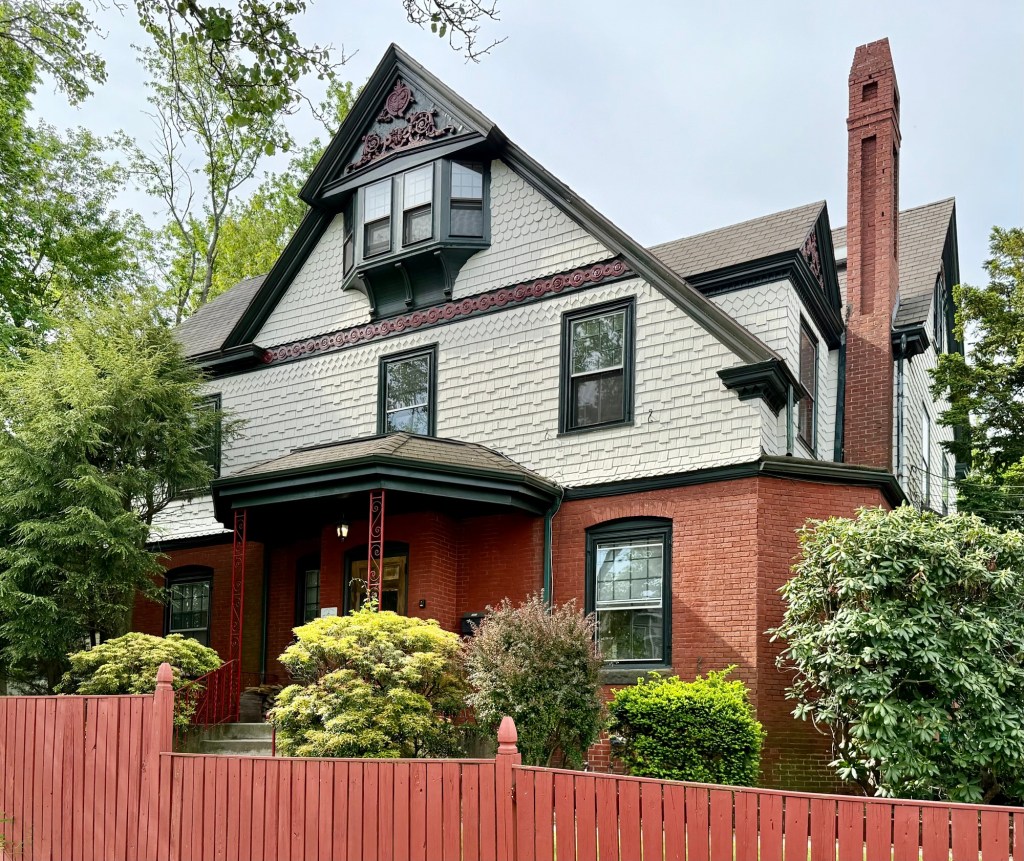
One of the many beautiful old Victorian houses in the Prospect Hill area of Somerville can be found here on Summit Avenue, a tree-lined street with sweeping views to Boston and other neighborhoods. This house was built in 1884 for John Edwards Sylvester (1839-1901) and his wife Clarissa (Clara). The Queen Anne style house has a brick ground floor with shingled walls above. The facade is dominated by its gable roof with varied shingle siding, decorative belt course, and oriel window with highly ornate pediment above. The house was likely designed by the Boston firm of Sturgis & Brigham, who included Sylvester in their list of clients. Mr. John E. Sylvester was head of the John E. Slyvester Co. in Somerville, a spike manufacturing company started by his father. After John died in the home from heart failure in 1901, his widow, Clara, remained in the home with her daughter until after WWI, when the property was sold. 

Richmond Block // 1892

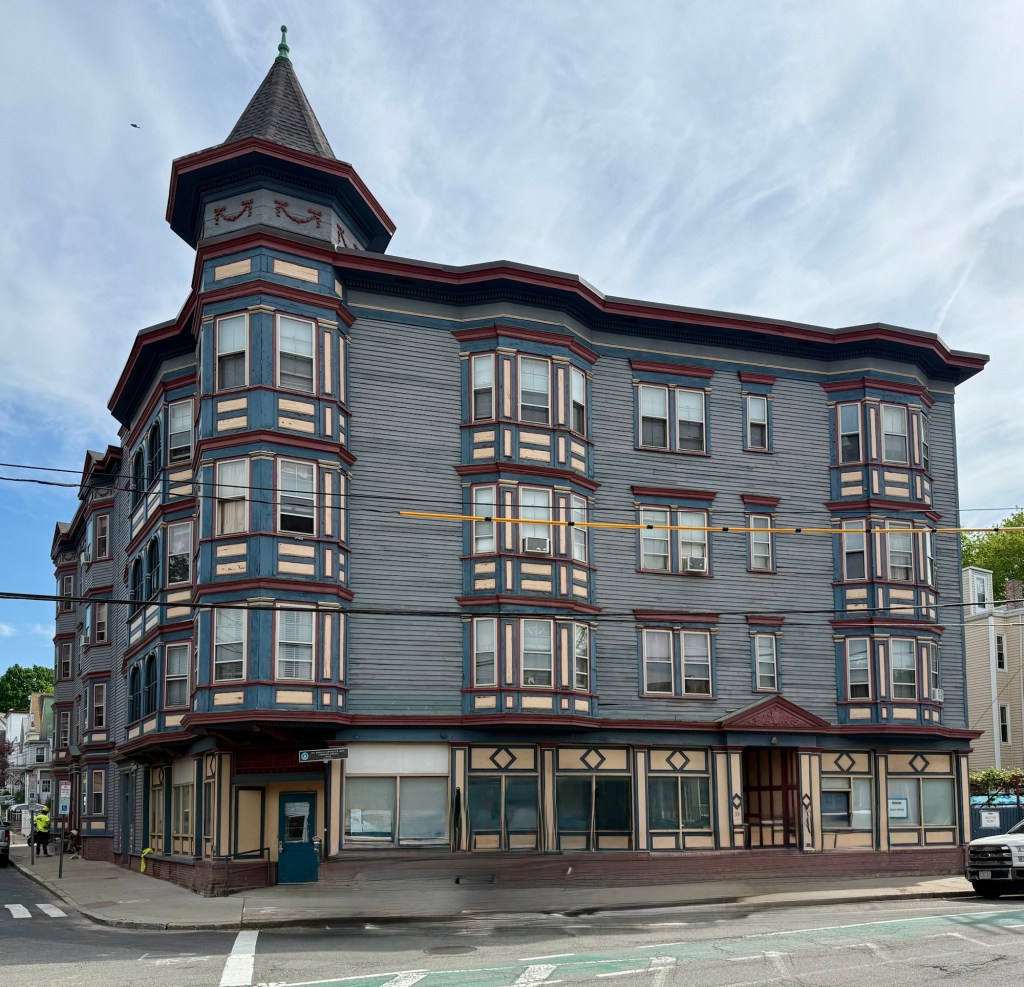
The Richmond Block on Bow Street in Union Square, Somerville, is a historic and architecturally significant mixed use building. Constructed in 1892 as one of the substantial wood-frame buildings in the western section of Union Square, the Richmond was designed by architect Aaron Gould for Mr. Charles Drouet, who developed the Drouet Block, a historic flatiron building just years later. Designed in the Queen Anne style, this building is noteworthy for its corner tower, octagonal oriel bay windows, sleeping porches on the side facade, and polychromatic color scheme to highlight the many architectural details on the block.

Barnes-Luce House // c.1890

This lovely Queen Anne style home can be found on Highland Avenue in Somerville, Massachusetts. Built around 1890, the residence was built for Walter Saunders Barnes (1838-1931), a manufacturer with a paper box business in Boston. The property was sold in 1903 to Robert Luce (1862-1946), a prominent businessman and politician who founded the Luce’s Press Clipping Bureau before he was elected a member of the Massachusetts House of Representatives in 1899 and 1901–1908. He was elected the 42nd lieutenant governor of Massachusetts in 1912. After serving as Lt. Governor, Luce would spend the next decades in the House of Representatives. His Somerville house is a well-preserved example of the Queen Anne style and includes a steeply pitched hipped roof with gable and dormers, asymmetrical plan, porch with braced supports, and a half-round window in the gable.

George M. Thornton House // c.1870

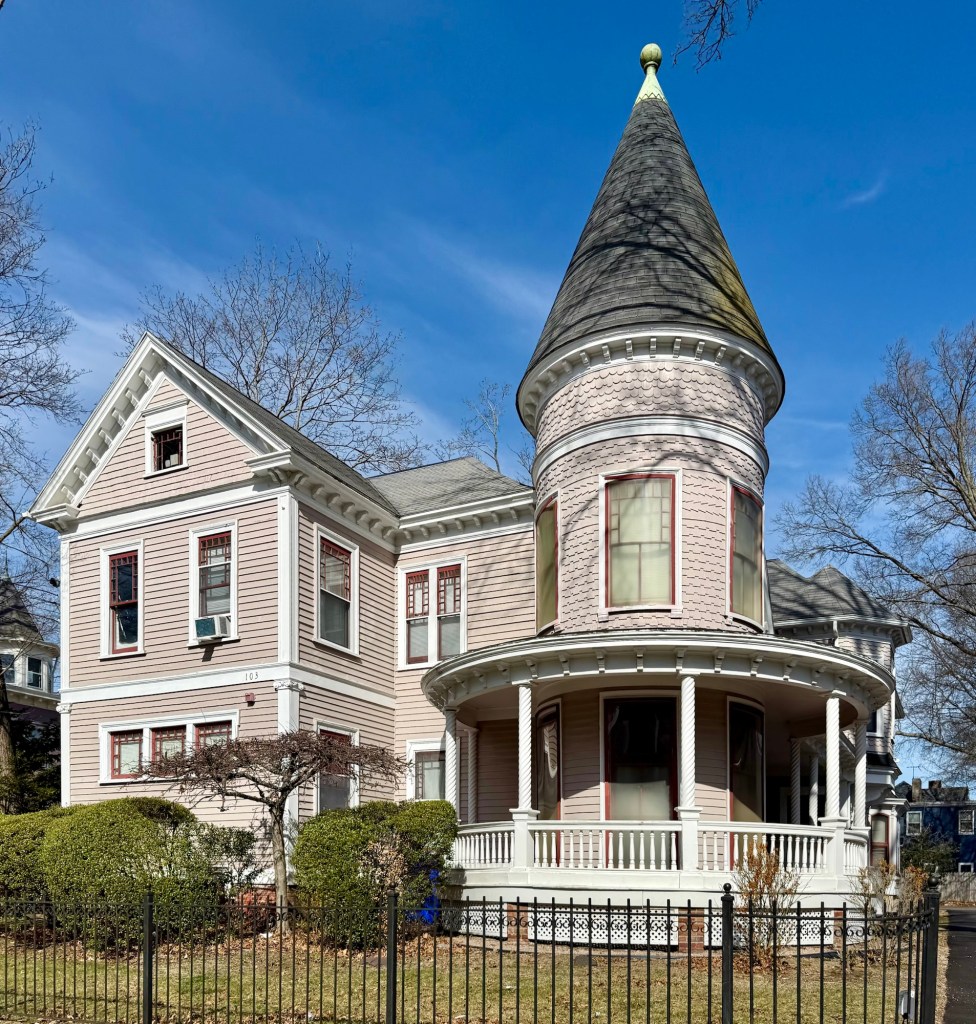
One of the finest homes in Central Falls, Rhode Island, is this eclectic Victorian residence on Clay Street. The home was seemingly built around 1870 and modified by the end of the 19th century by later owner, George Mumford Thornton (1850-1916). Mr. Thornton was an industrialist who was elected as one of the first aldermen when Central Falls incorporated in 1895. The well-preserved house features varied siding, a rounded corner tower with spiral-columned porch and conical roof, and original multi-light sash windows. What a spectacular home.

Central Falls City Hall // 1888

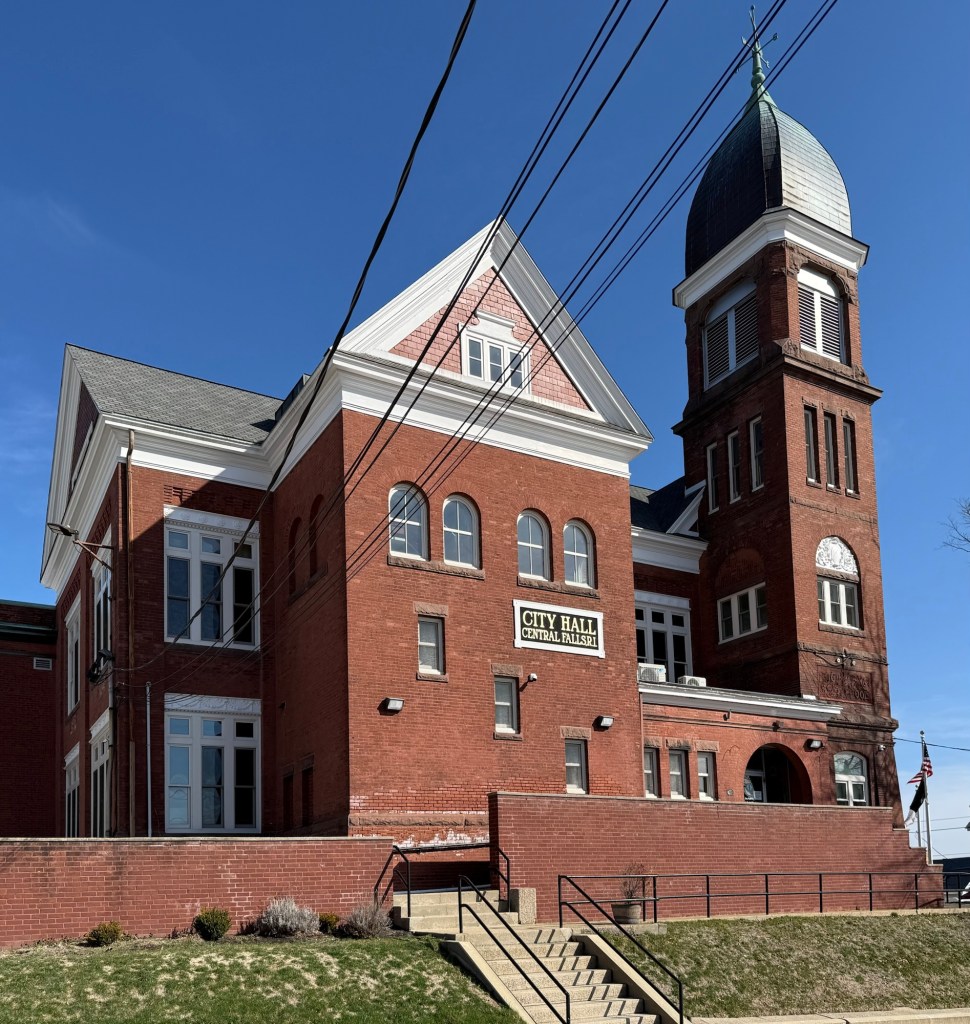
Welcome to Central Falls, an industrial city in Providence County, Rhode Island. With an area of only 1.29 square miles it is the smallest and most densely populated city in the smallest state, and the 23rd most densely populated incorporated place in the United States. Originally, Central Falls was one of the many villages within the town of Smithfield, but in 1871, the town split into three smaller towns: Smithfield, North Smithfield and Lincoln. Central Falls village then became part of the town of Lincoln until Central Falls’ industrial character and differing needs had it split off to form the small city of Central Falls in 1895. Before it was its own city, Lincoln officials had this building constructed in 1888-9 on Broad Street, the commercial and civic center of the city. This red brick, Queen Anne building with its four-stage tower was built as Lincoln High School, the first school in the town built exclusively for secondary education. Designed by William R. Walker & Son, architects, the building features shingles in the gable, asymmetrical plan, and carved terracotta panels. The building continued as Central Falls High School until 1927, when the city offices were moved there, and it has remained as the City Hall ever-since.

Odell House // 1887

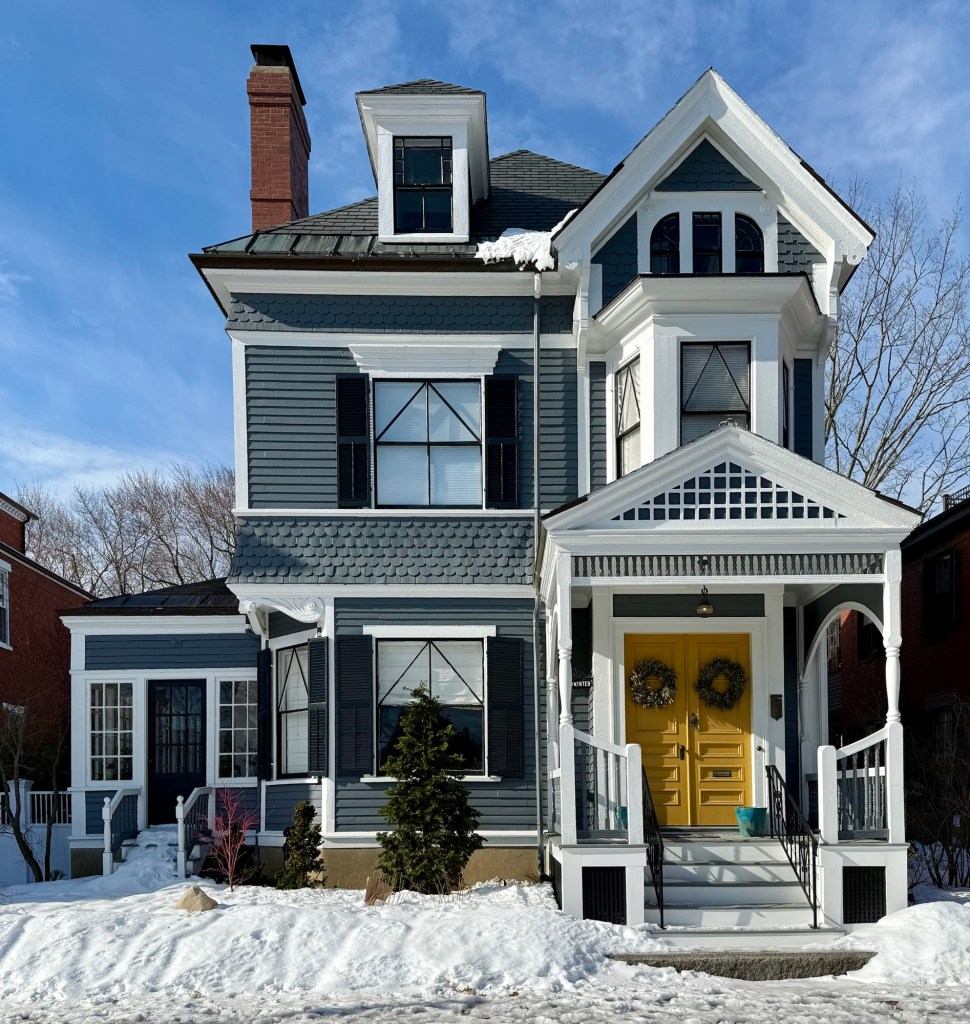
Built in 1887 for Charles Odell and his wife, Alice, this Queen Anne house on Winter Street in Salem, Massachusetts, stands out as a high-style example of Victorian architecture on the street notable for early-mid 19th century architecture. The house lot was purchased by the Jewett Family who lived in the brick house next door and long used the lot as a garden. Charles and Alice Odell married in 1888, so this Victorian home was built for the newlywed couple to raise their family. Charles A. Odell (1863-1931) worked at his father’s insurance and real estate business, later assuming ownership of business upon death of his father and was a district agent for New England Mutual Life Insurance Company. Sheathed in a combination of wood clapboards and shingles in a variety of patterns, the house has a steeply hipped, slate roof punctuated by cross gables and hipped dormers. The predominant window sash style consists of a distinctive sash in which the upper displays a triangle with central muntin over a conventional two-light lower sash. The property has been lovingly preserved for well over a century and is a landmark example of a Queen Anne style house in Salem.

Roughwood Estate Cow Barn // 1892

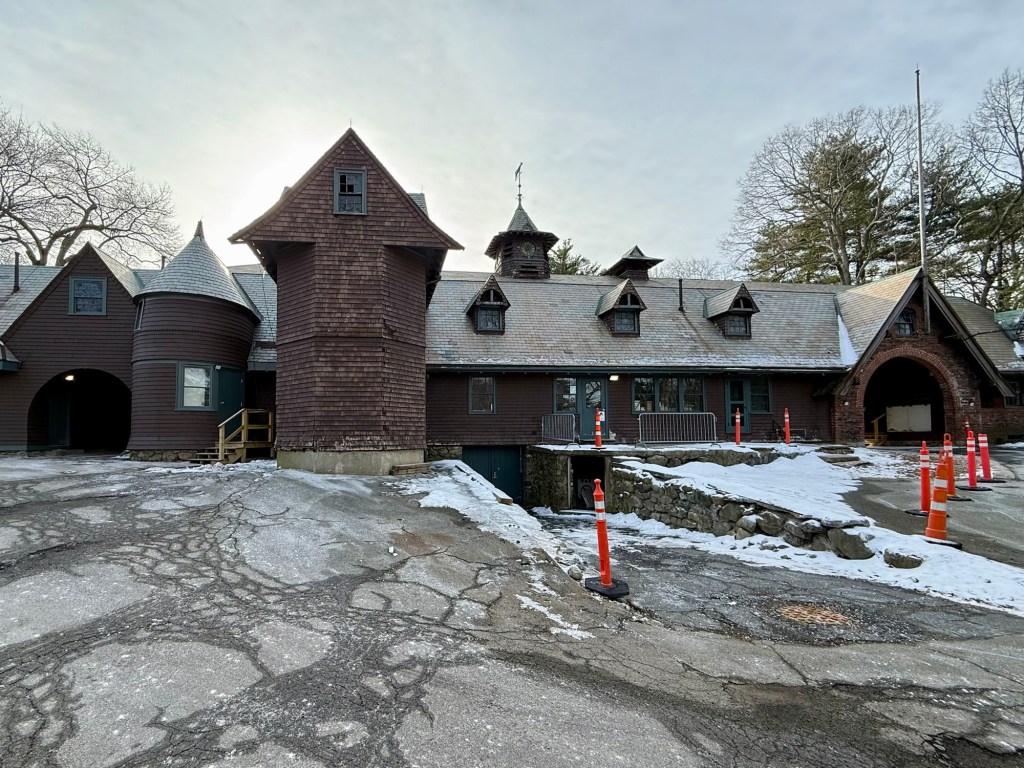
Like the Roughwood Mansion and carriage house, this building was designed and built in Brookline, Massachusetts, in the early 1890s as part of the “Roughwood” estate. Despite its high-style and ornate detailing, the building was actually constructed as a cow barn. Built in two phases for its two owners, William Cox and Ernest Dane, the large barn structure blends Victorian design into a use more reserved for vernacular detailing. The building was designed by Andrews, Jacques and Rantoul, and like the mansion and carriage house, blends Queen Anne and Shingle styles under one roof. Ever-since the estate became a college in the 1960s, the building has been used as a maintenance building. It appears that since it has been owned by Boston College as part of it’s Messina Campus, it is undergoing a thoughtful restoration!

Blaisdell-Carter House // 1890

The Blaisdell-Carter House is a great example of a Queen Anne style home in Chicopee, Massachusetts. The house was built in 1890 for Harriet P. Blaisdell following the death of her husband, Samuel Blaisdell, a cotton broker, in 1888. Mrs. Blaisdell hired David B. Griggs, a builder in Chicopee under the firm D. B. Griggs & Sons, to design and build the residence, which sat across the street from Griggs’ own home. Harriet would pass away just three years after her home was built, and the property would eventually be sold to Nathan P. Ames Carter (1864-1959). The residence sits on a large lot and exhibits varied siding, asymmetrical plan with porches, additions, and steep gable roofs, and the use of irregular windows of varied sizing and locations. While the second floor porch has been enclosed, the house retains much of its original fabric and has not been covered by vinyl or aluminum siding, a rarity in Chicopee.