Old St. Stephen’s Church – Barker Playhouse // 1840

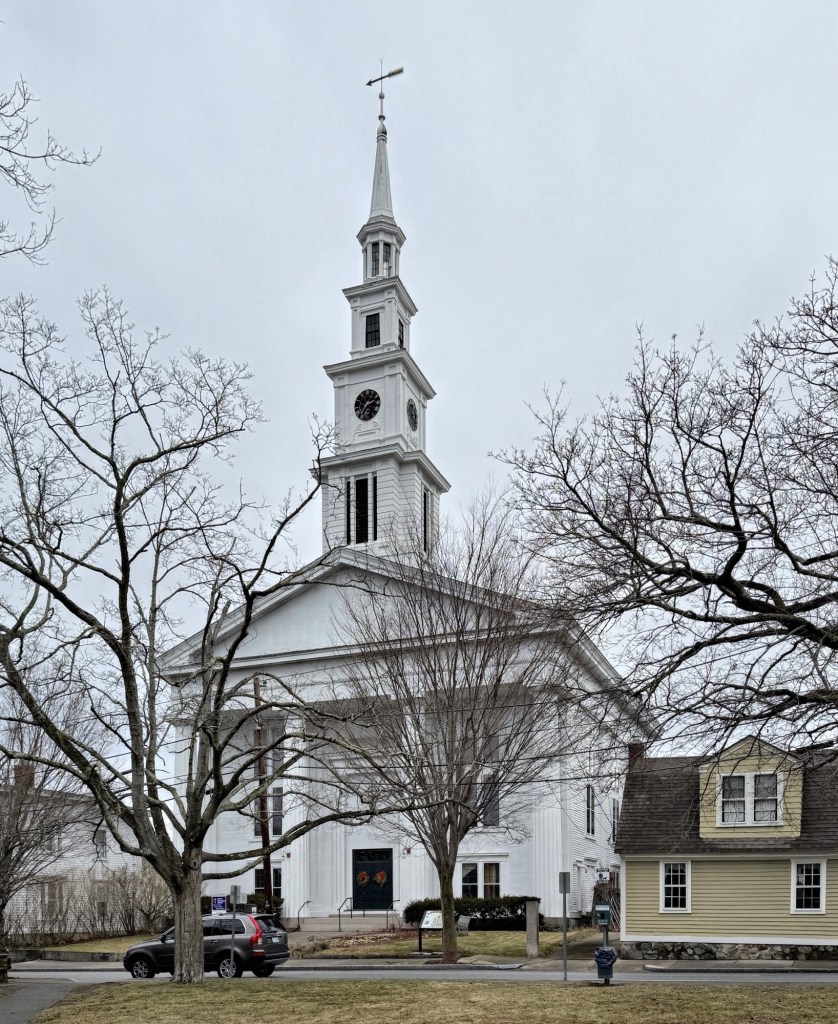
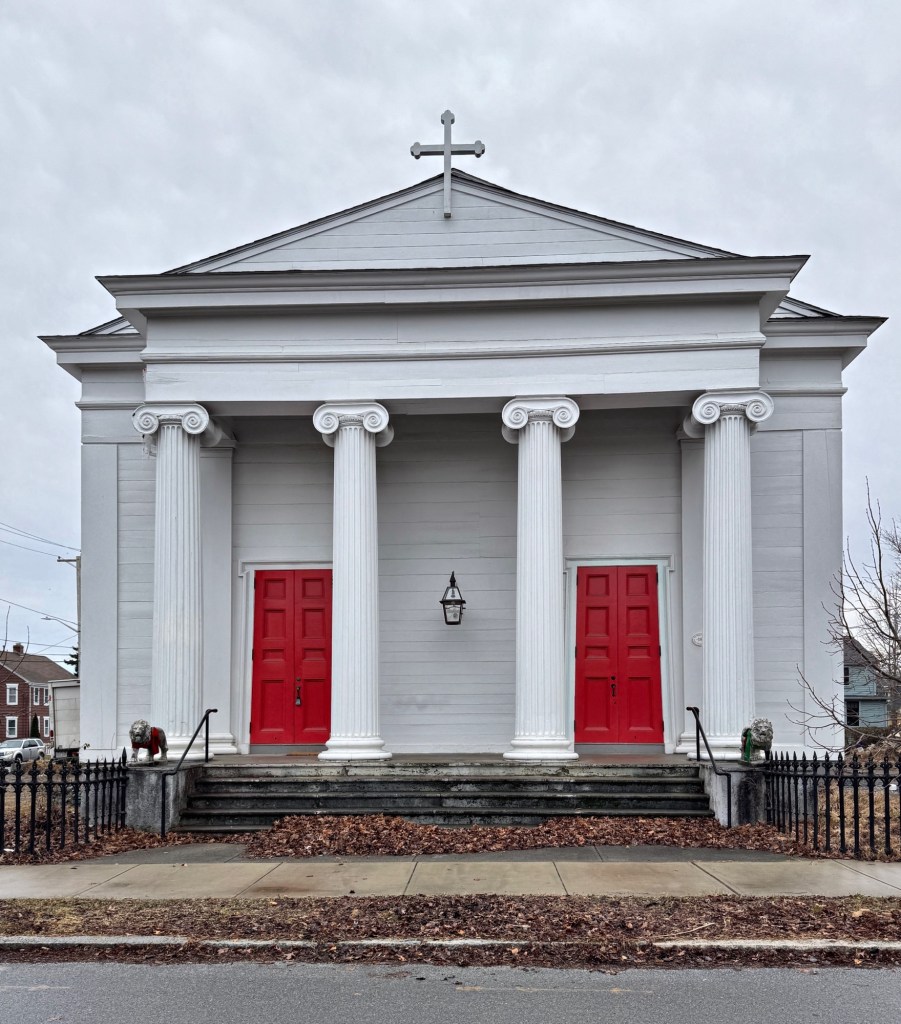
The old St. Stephen’s Episcopal Church in Providence’s Fox Point neighborhood is an architecturally distinctive Greek Revival style church building located on charming Benefit Street. The church had its beginnings in 1839, when the newly established congregation called on 29-year-old Francis Vinton to serve as their first pastor. The congregation funded this small church which broke ground in 1840, and before it was completed, Rev. Vinton resigned as Rector. The building, built of stone and covered in stucco, once had a spire and belfry above the main entrance. The congregation grew over the next decade and it was soon realized that a larger and more central church should be built for members, many of whom were wealthy residents with mansions surrounding Brown College. In 1860, the parish purchased a lot on George Street, and hired architect, Richard Upjohn to design the new church in the Gothic style. For reasons of location, and possibly social class, twenty-two men and women remained here at the less fashionable church and formed a new parish, the Church of the Saviour. The smaller, mission church with its stucco walls, remained until the property was sold in 1932 to house the Barker Playhouse, reputed to be the oldest continuously operating little theatre in the United States.


First Baptist Church, Providence // 1774

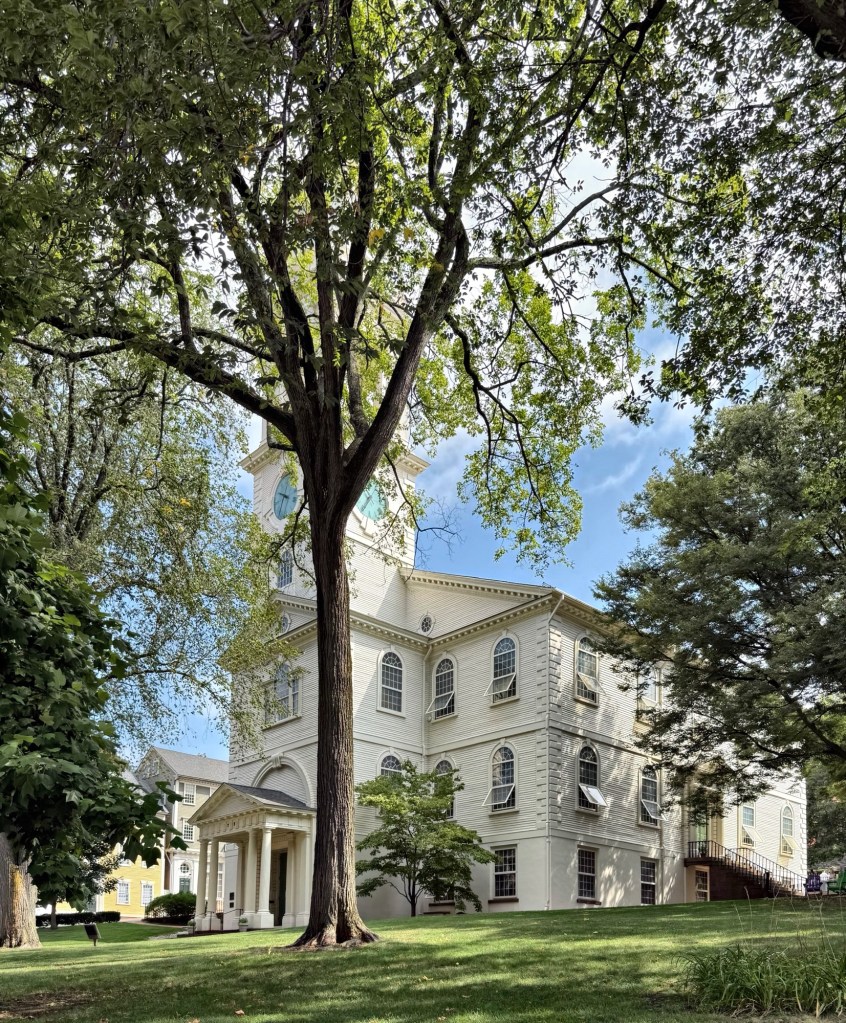
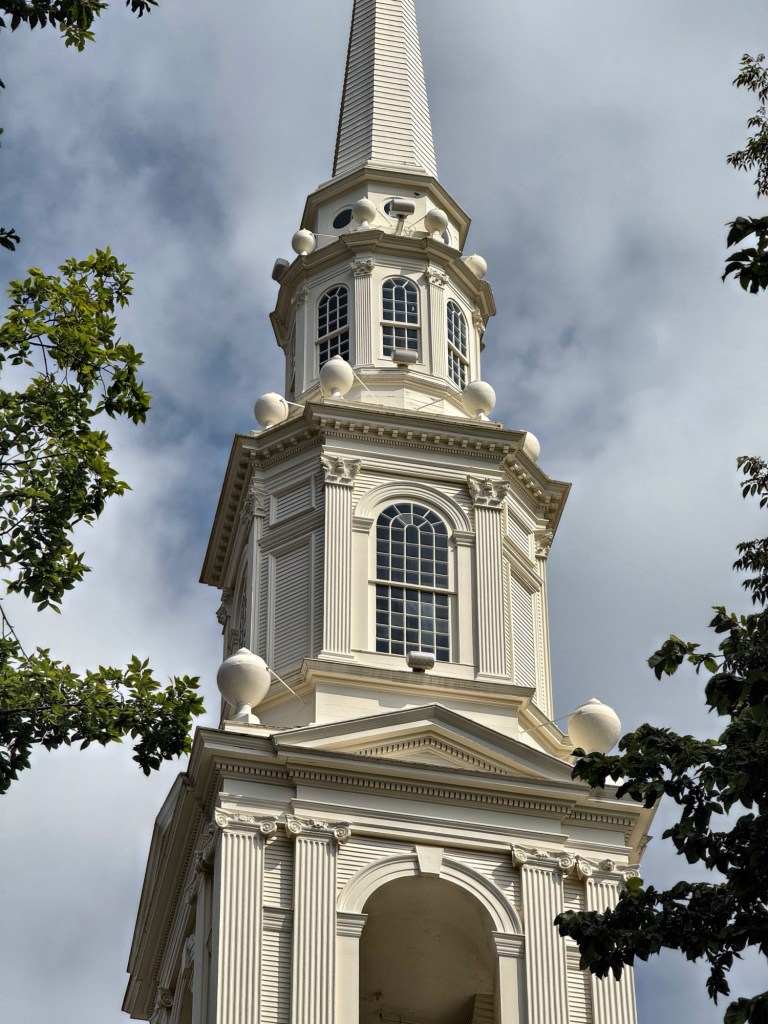
The First Baptist Church of Providence, also known as the First Baptist Church in America is the oldest Baptist church in the United States. The Church was founded in 1638 by Roger Williams, who before building this church in 1774, often met in private residences or in more plain meetinghouses to not show vanity. By the early 1770s, a new building for Providence Baptists was needed, and it was conceived in a very large (and ornate) way. Built to accommodate over 1,200 people (just under a third of the entire population of Providence at that time), this church was built “for the publick Worship of Almighty God; and also for holding Commencement”, referring to the commencement ceremonies of Rhode Island College (later Brown University), also founded under Baptist auspices. The church was designed by local amateur architect, Joseph Brown, who was likely inspired by Sir Christopher Wren’s London churches in James Gibbs’s Book of Architecture (1728). The construction was greatly aided by the fact that the British had closed the port of Boston as punishment for the Boston Tea Party. Many shipwrights and carpenters were thrown out of work and came to Providence to build the meetinghouse there. The structure was dedicated in May 1775, and the 185-foot steeple was added shortly thereafter. This was the first Baptist meetinghouse in New England to have a steeple, and it has survived dozens of hurricanes and hundreds of years of change since. The church is a National Historic Landmark and remains as one of the most significant buildings in New England.

St. George’s Episcopal Church, Central Falls // 1922

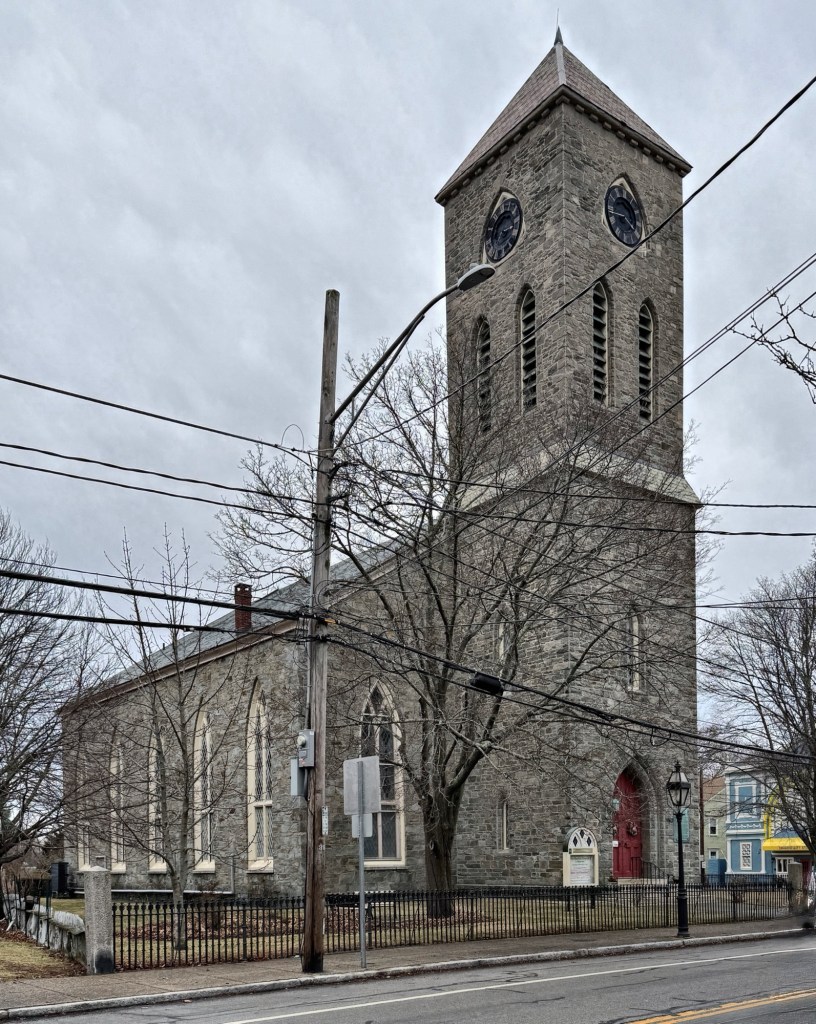
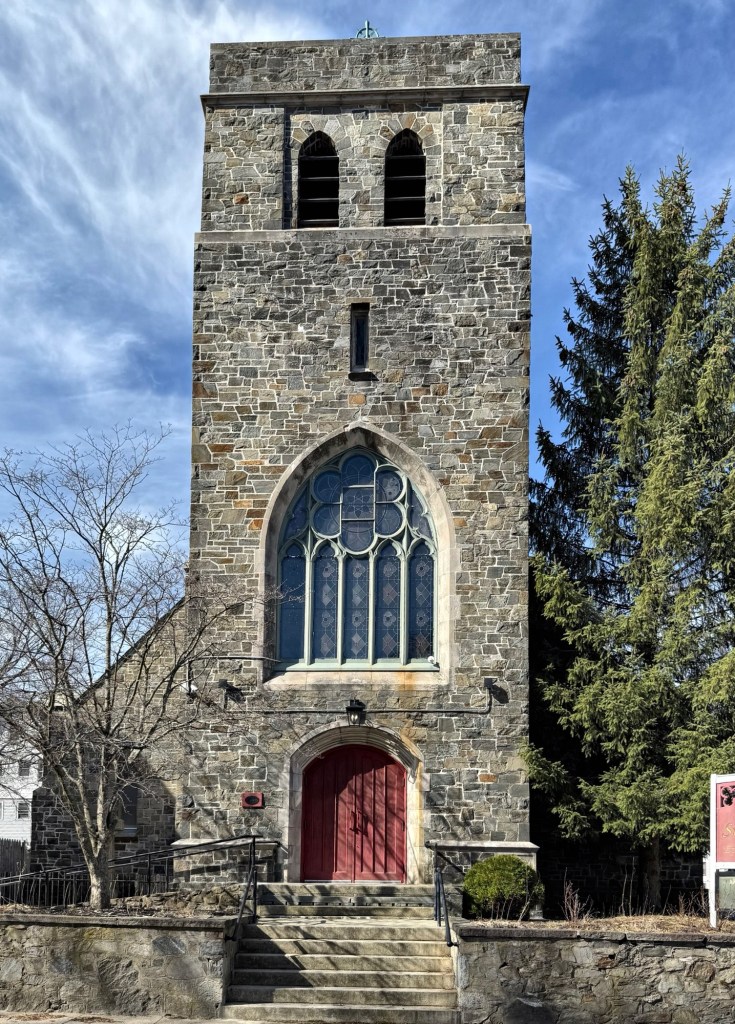
Tucked away in the middle of a residential neighborhood in the dense city of Central Falls, Rhode Island, this Neo-Gothic style church more closely resembles an English country church than one typically found in a dense, industrial city. This is the St. George’s Episcopal Church, located at the corner of Central and Clinton streets, and built for the local Episcopal congregation there in 1922. The church was designed by the Rhode Island architectural firm of Clarke & Howe and is built of rough-faced stone with limestone trim. The highlight of the design is the large central tower with lancet, stained glass window, and belfry. 

St. Joseph’s Catholic Church // 1915

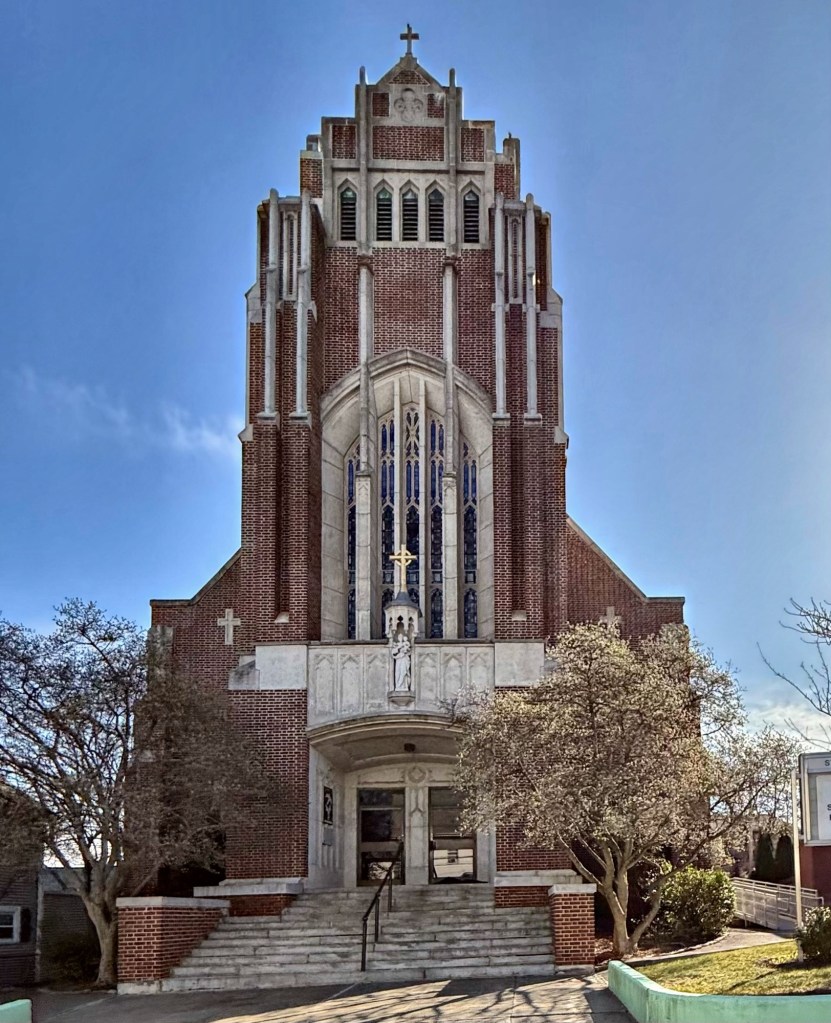
As the city of Central Falls, Rhode Island, continued to see population growth spurred by the industrial development, immigrant groups began to seek to establish their own community centers and houses of worship. The local Polish population was a major immigrant group that organized and became one of the Polish Catholic Churches in New England. Founded in 1905, the St. Joseph Parish waited years until it had the funding to erect this church, which was designed in 1915 by Providence architect John F. O’Malley. The brick and stone church is Neo-Gothic in style with ornate masonry and detailing. 

Channing Memorial Church // 1880

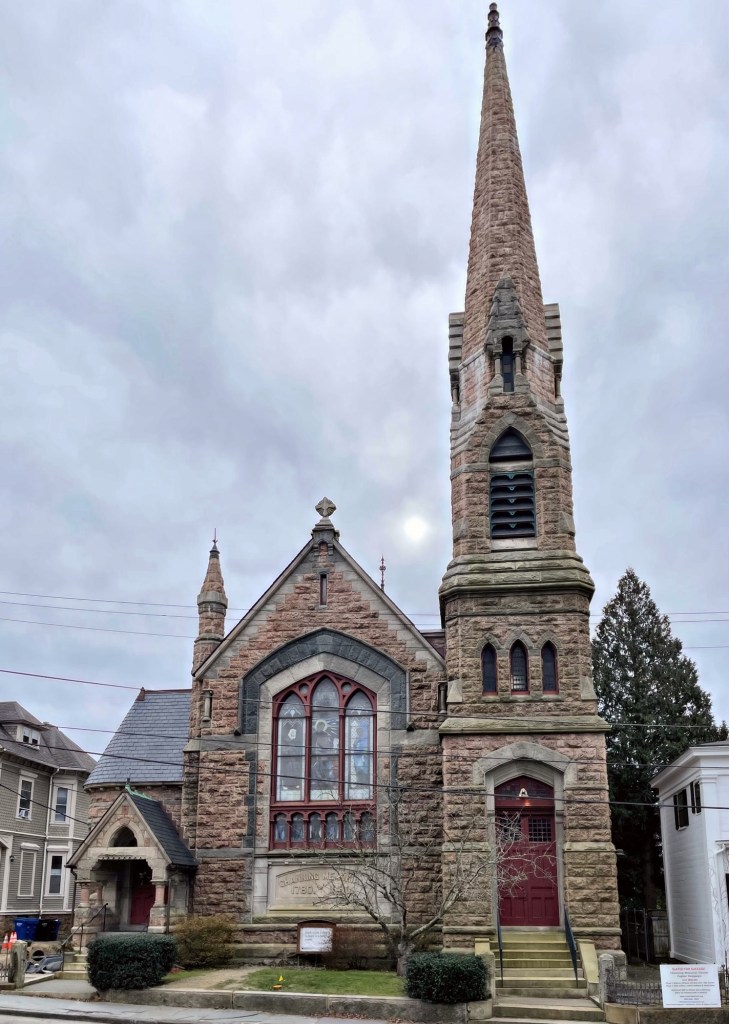
The Channing Memorial Church of Newport, Rhode Island was named in the memory of William Ellery Channing (1780-1842), an ardent abolitionist and founder of the Unitarian faith in America. In 1835, ten men formed the first Unitarian Society in Newport in October 1835 and met in the home of Channing’s grandfather, William Ellery, one of the 56 signers of the United States Declaration of Independence. In 1879, the congregation’s minister, Rev. M. K. Schermerhorn, conceived the idea of a memorial to William Emery Channing, whose centenary would be the following year. He decided upon the ambitious project of a new church building and planning began immediately. On Rev. Channing’s 100th birthday, the cornerstone laying ceremony occurred in 1880. The Victorian Gothic stone church designed by Elbridge Boyden took a year to be completed and was was built from granite, cut in Lyme, Connecticut. Inside, two stained glass windows, the first ecclesiastical commission of John LaFarge, flood the interior spaces with warm colored light. The church looks much as it did when completed almost 150 years ago, thanks to an active congregation preserving this great landmark.

Old Swedish Lutheran Church, Newport // 1896

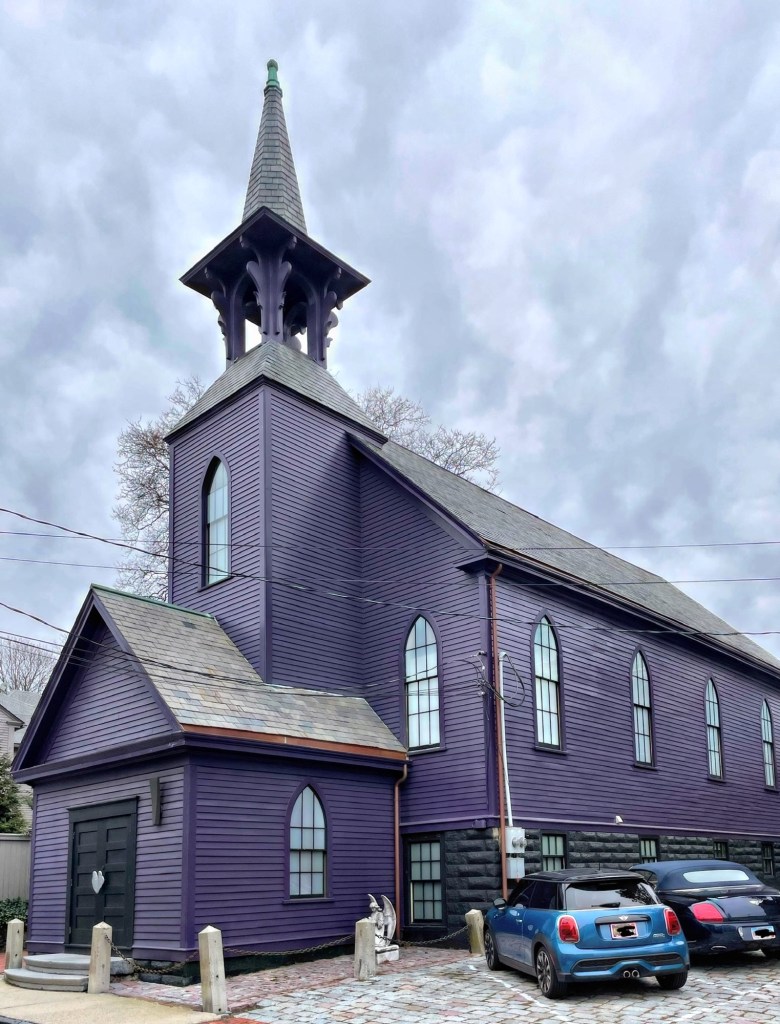
By the end of the 19th century, the summer colony of Newport, Rhode Island continued to see the erection of large summer cottages which required large staffs to maintain them. Scandinavian girls were preferred by the wealthy residents for maids and drivers, and beginning in the 1870s; they joined other ethnic groups, such as the Irish in establishing their own communities in the coastal city. In 1892, organized under the New York Conference of the Augustana Synod, a Lutheran Church for Swedish-speaking residents was established. A small lot on Corne Street was purchased and work began on this small wood-framed church. Completed in 1896, the church was designed by by architect James W. Smith in the Gothic Revival style. It has a central bell tower and a spire and the interior of the church originally had an hourglass pulpit. Gold and white decorations surrounded an oil painting of the risen and ascending Christ. In the 1950s, the congregation purchased land on Broadway in the north end of Newport and built St. Peter’s Lutheran Church. The Corne Street church was sold and is now a private residence.

Warren Baptist Church // 1844

Photo by Kenneth Zirkel

Stone churches are some of the most entrancing and imposing buildings, so I always have to feature them when I see them! This is the Warren Baptist Church on Main Street in Warren, Rhode Island. Built in 1844 from plans by famed architect Russell Warren, the Gothic style edifice features randomly laid rubblestone which adds to the intrigue. This is the third church building on this site. The first (1764) was burned by the British in 1778; its replacement in 1784 was demolished for the present building in 1843. Interestingly, this is the site that the predecessor college for Brown University began! The Baptist school, an institution parallel to those of the Congregationalists at Harvard and Yale and the Presbyterians at Princeton, was first known as Rhode Island College. In 1770, the school moved to Providence, the home of Baptism in this country and where Baptists promised more financial support than those in Newport , and changed its name to Brown University in 1804. This Baptist congregation is still very active in town and they maintain the building and its stunning stained glass windows very well!

Trinity Church, Newport // 1725

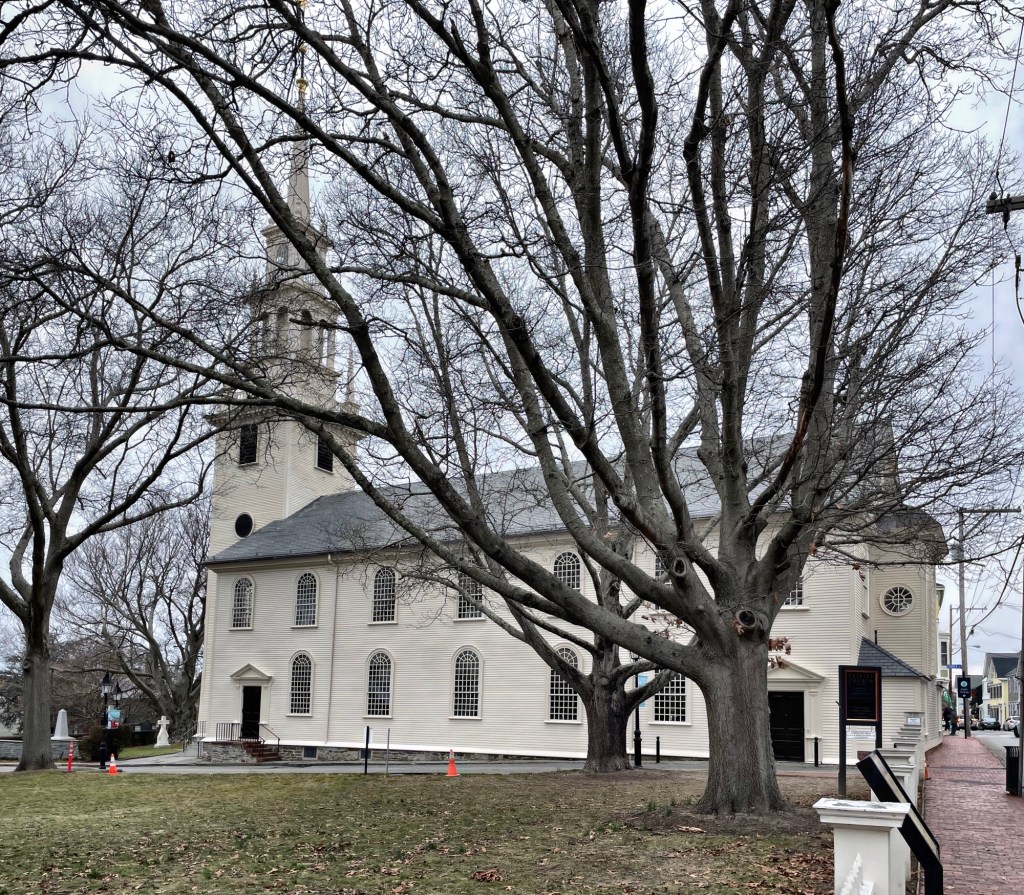
Trinity Church in Newport, Rhode Island is one of the largest extant 18th century churches in New England, and founded in 1698, it is the oldest Episcopal parish in the state. Built in 1725, the Georgian style church was built just as the influence of Sir Christopher Wren’s churches reached the colonies, about a quarter century after his work had come to dominate ecclesiastical design in London. Trinity is the second major church built in the original colonies influenced by Wren, following Old North Church in Boston’s North End (1723). Stylistically, both churches are similar, with the notable difference in material (Old North in brick and Trinity Church in clapboard). Local builder Richard Munday, is credited with the design of Trinity Church. By the late 19th and early 20th centuries, many members of the Vanderbilt family and other wealthy residents attended sermons here when summering in Newport. When Newport was undergoing Urban Renewal in the mid-20th century, Queen Anne Square (the park which fronts the church) was created in the 1970s to establish a town common in a city which had never truly had one. “Early” buildings in the area to be bulldozed for the common were moved to other sites to enhance the “colonial” rehabilitation of the area around the harbor, making this one of the few examples of urban renewal having a positive impact on a city.

First Church of Christ Scientist, Providence // 1906

One of the most stunning and monumental buildings in Providence is this building, a church which pretty closely resembles the Rhode Island State House! Christian Scientists in Providence began to hold informal services in 1889 and received a charter from the state legislature in 1895. Construction started on this church, the First Church of Christ, Scientist in 1906 from plans by local architect Howard Hoppin who roughly modeled the building after the congregation’s Mother Church in Boston. The Classical Revival building is capped by a copper hemispherical dome supported by a colonnade of Corinthian columns. The main block of the structure at the street is fairly modest, possibly due to the residential character of its surroundings.