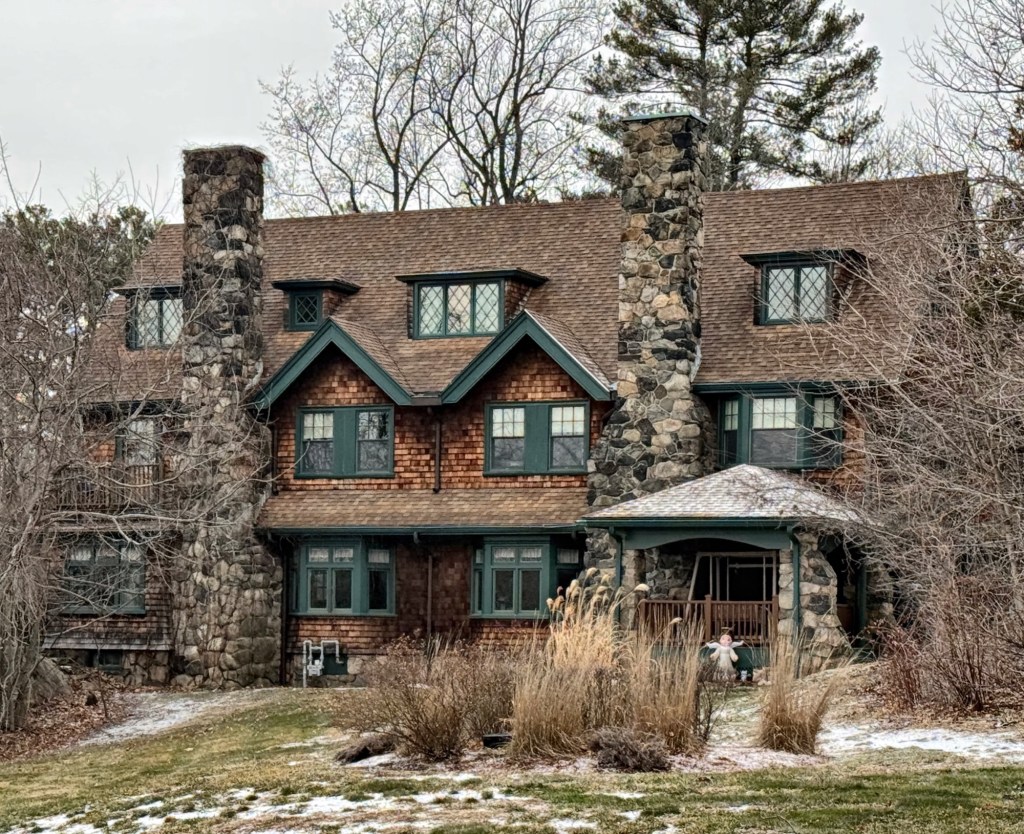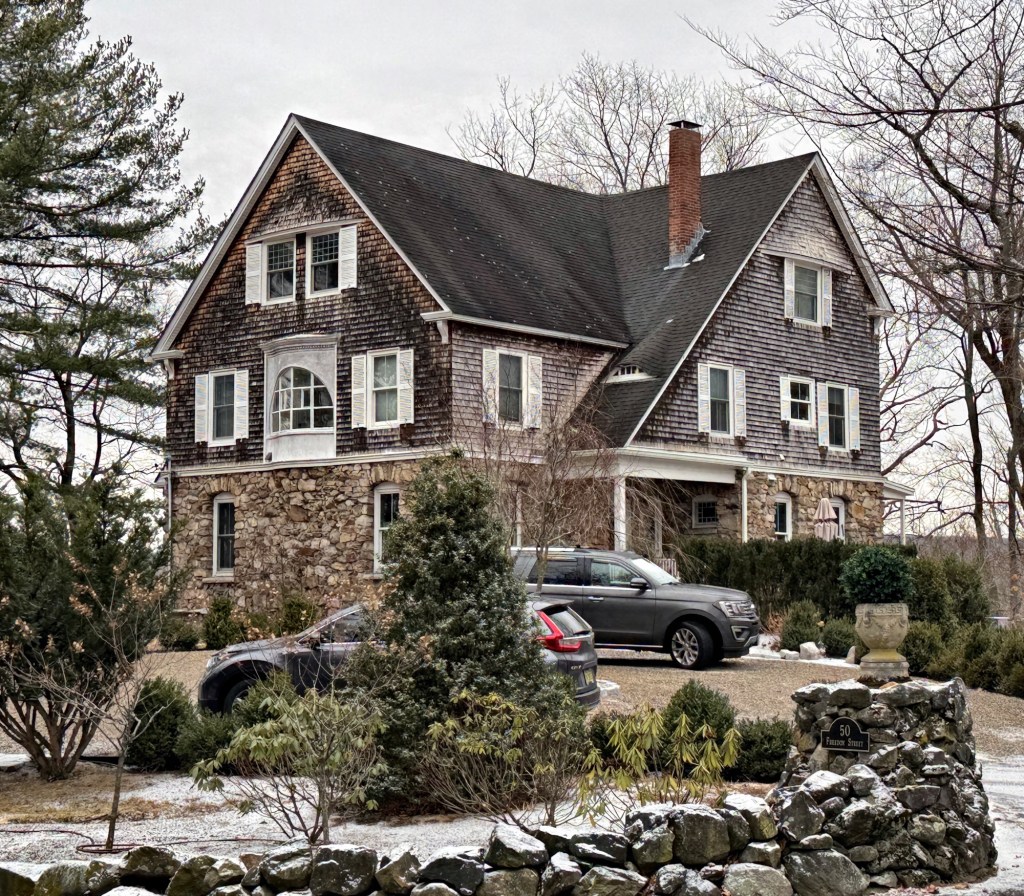
Charles F. Roper House // c.1890

Charles Frederick Roper (1847-1916) was a machinist and inventor who moved to Hopedale, Massachusetts, where he found employment from the Draper Corporation. His inventions were important for the company, and included loom machinery, air supply for motors to prevent overheating, and grinding machines. Before his death, Charles Roper had over 100 patents and from his success, he afforded one of the finest Victorian homes in Hopedale. In around 1890, Charles Roper had this Shingle style residence built on Freedom Street from plans by Robert Allen Cook, a Milford-based architect who was a favorite of the Drapers. The residence sits on a rubblestone first floor with cedar shingles above.
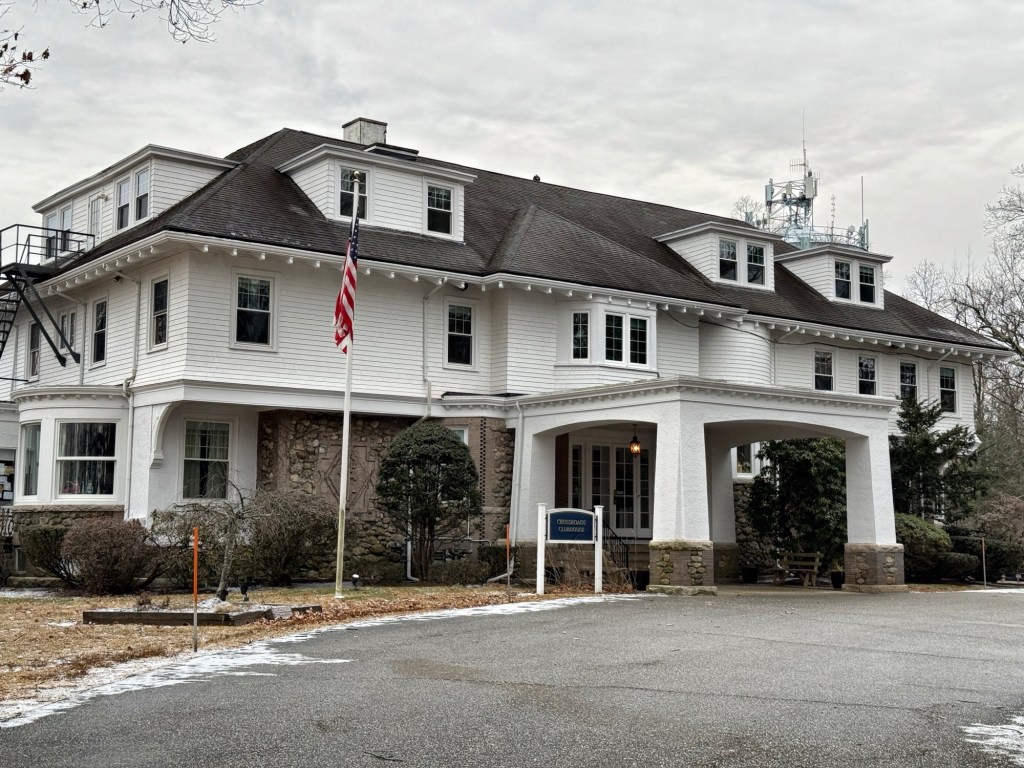
The Larches // 1910

George Otis Draper (1867-1923) was born in Hopedale and attended MIT to prepare to help run the extremely successful family business, the Draper Corporation in town, which was experiencing a period of rapid growth and expansion of factories. With his position at the company, his wealth afforded him the ability to build a massive country estate known as The Larches. The shingled Colonial Revival style home featured a massive crenelated tower and appeared like a castle in the countryside. George O. Draper sold this home to his aunt Hannah Thwing Draper Osgood in 1909, and within a month, the home burned to the ground. She began construction on the “new Larches“, a shingled mansion with a stunning blending of Colonial Revival and Craftsman styles. The home was likely designed by Robert Allen Cook, who was based out of nearby Milford, MA. The property today is run by Crossroads Clubhouse, an employment and recovery center that offers people with mental health conditions opportunities to achieve their full potential.

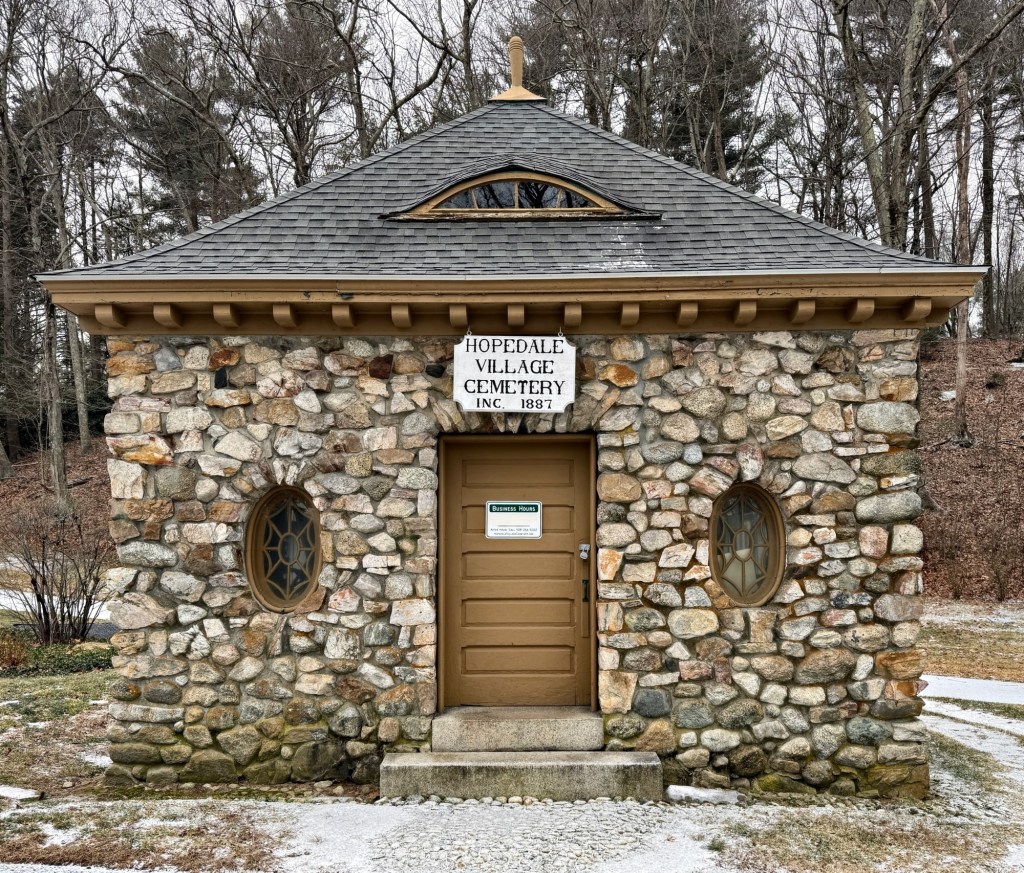
Hopedale Village Cemetery Tool House // 1894

At the heart of the Hopedale Village Cemetery, this diminutive historic tool shed and office showcases that even for functional buildings set within a cemetery, high-quality materials and good design can enhance the landscape. The cemetery was laid out in 1845 in connection with Hopedale’s Utopian settlement, but expanded later in the 19th century as a formal landscaped cemetery in about 1887. The growth and investment of the cemetery coincides with the growth of the community as it prospered with the success of the Draper Corporation factories in town. Landscape architect, Warren Henry Manning updated the landscape here, with scenic vistas and hills, which followed the popular Rural cemetery movement of the 19th century. The cemetery contains many graves and mausoleums of the wealthy factory managers and benefactors of the community, which dot the sprawling landscape. In 1894, architect, Robert Allen Cook, designed this stone tool shed, which may have also contained a small office with cemetery records. The one-story, hip-roofed building features rough rubblestone walls with an eyebrow dormer centered on the façade, and has been preserved by the community for well over 100 years.

Frank J. Dutcher House // 1904

Located on Adin Street in Hopedale, this excellent turn-of-the-century mansion was built for Frank Jerome Dutcher, a manufacturer who worked for his father’s company before selling it to the Draper Corporation, later becoming a wealthy salesman. Blending Shingle, Queen Anne, and Arts and Crafts styles, the Frank J. Dutcher home sits atop a rock ledge and was designed by architect, Robert Allen Cook, who designed other buildings in town for the Draper Corporation and community, behind his original home that burned in 1903. The home features two massive fieldstone chimneys, shingled siding, and a series of dormers and bays that provide a rich dialogue along the long street-facing facade. In the mid-20th century, the property became a nursing home, known as Oakledge Manor. The building was recently bank-owned and it is unclear if the building was converted back to a single-family home, or remains a housing facility.

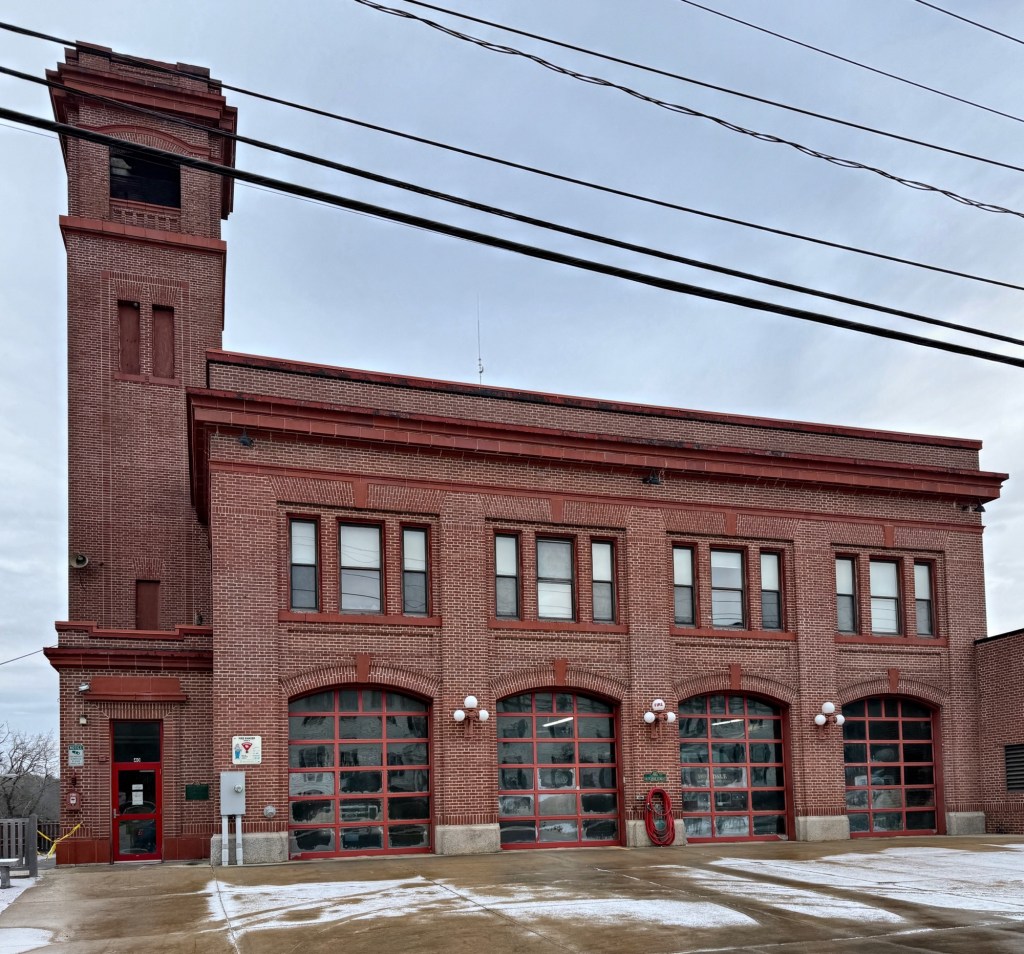
Hopedale Central Fire Station // 1915

Hopedale’s Renaissance Revival Central Fire Station on Dutcher Street was designed by Milford architect, Robert Allen Cook, a favorite of the Draper Corporation, who had oversaw the design of the Draper Company Offices just five years earlier. Very similar in style and detailing to the Draper Offices, Cook created a fire station of brick and terra cotta with a monumental hose tower at the corner, all in the Renaissance Revival style. The building was largely funded by the company, who was by far the largest employer in town and had funded many municipal and institutional buildings in the community as part of the company town. As fire prevention was important for the Draper Corporation, they even funded some of the first fire trucks in Massachusetts, even for such a small community. The town has done a great job preserving this architectural landmark for over 100 years. 

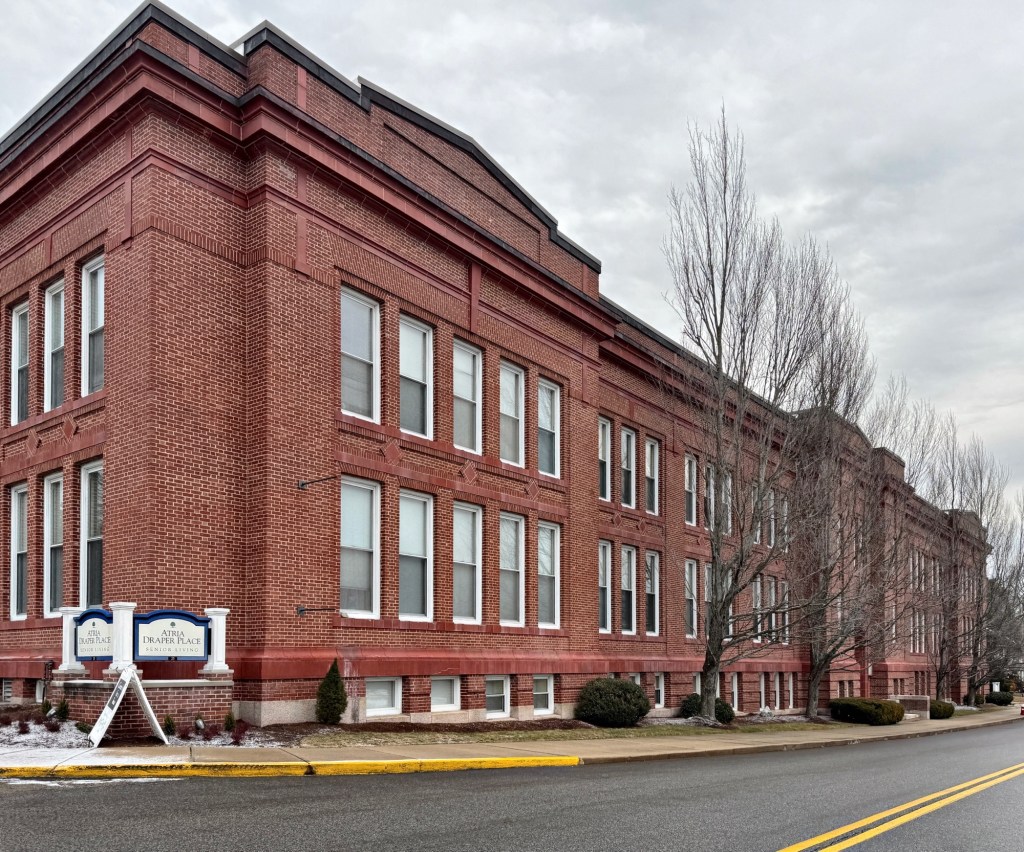
Draper Corporation Company Offices // 1910

After decades of growth of the Draper Corporation in Hopedale, Massachusetts, in the late 19th century, the company began a massive building campaign of larger, architecturally significant (and most importantly, fireproof) buildings for company use. The original company office building, constructed in 1880, was outgrown and it was decided a new, larger company office was needed. Designed by Milford-based architect, Robert Allen Cook in 1910, the former office building was located across Hopedale Street from the main plant. This massive two-story brick building on a raised basement is an example of the Renaissance Revival style built of brick and terra cotta. The building closed along with the company in the mid-20th century, but as opposed to the main complex, was adaptively reused through a renovation as a senior living facility.