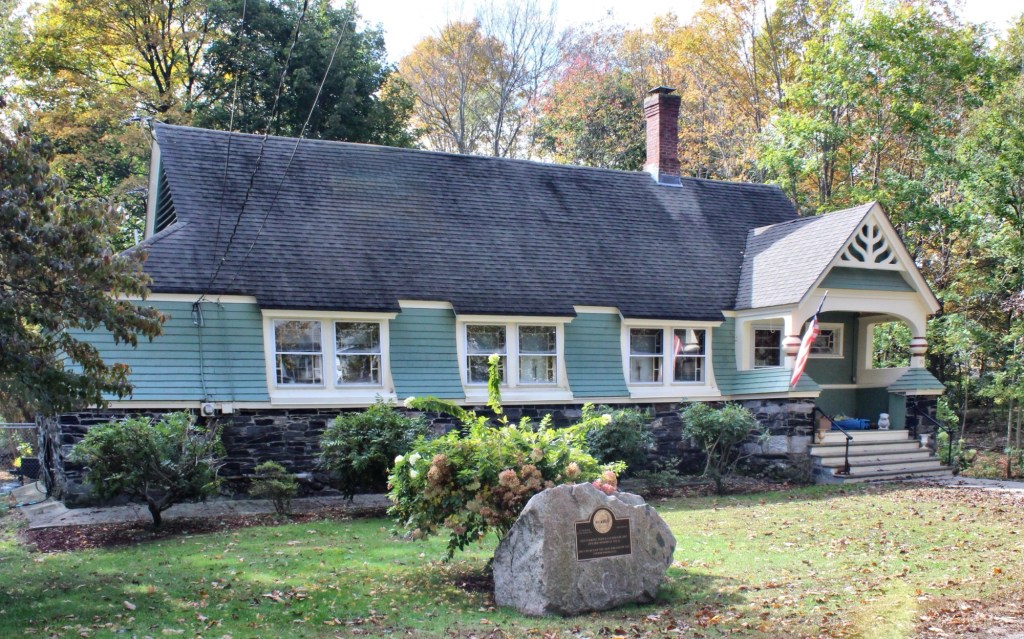
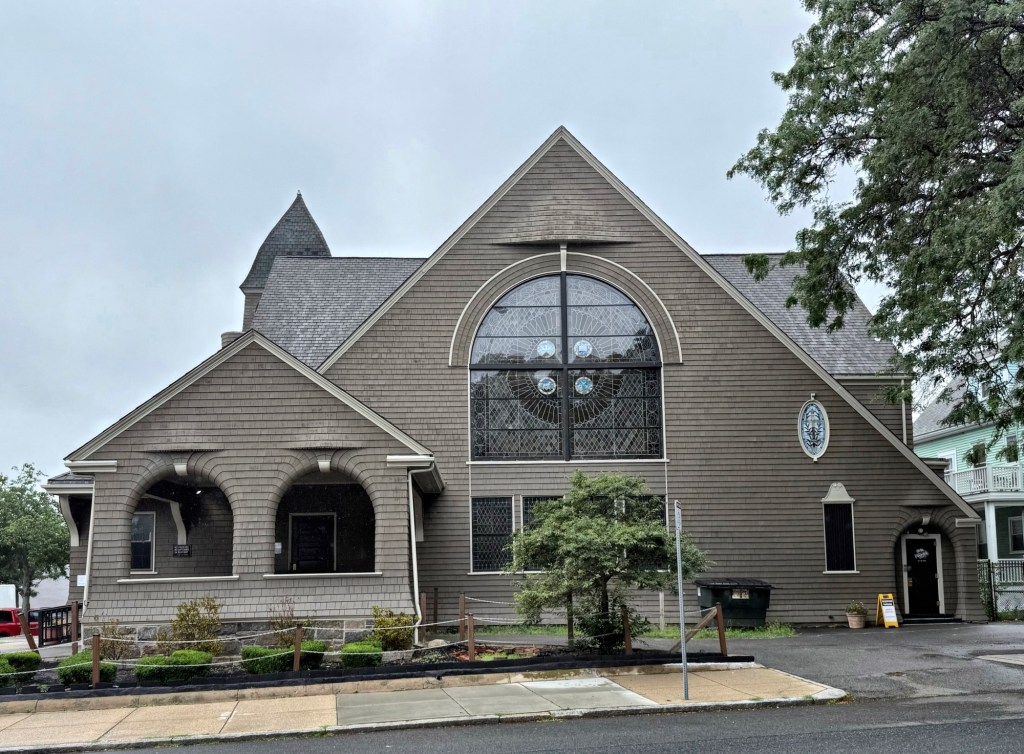
Swedenborgian Church of Lancaster // 1881

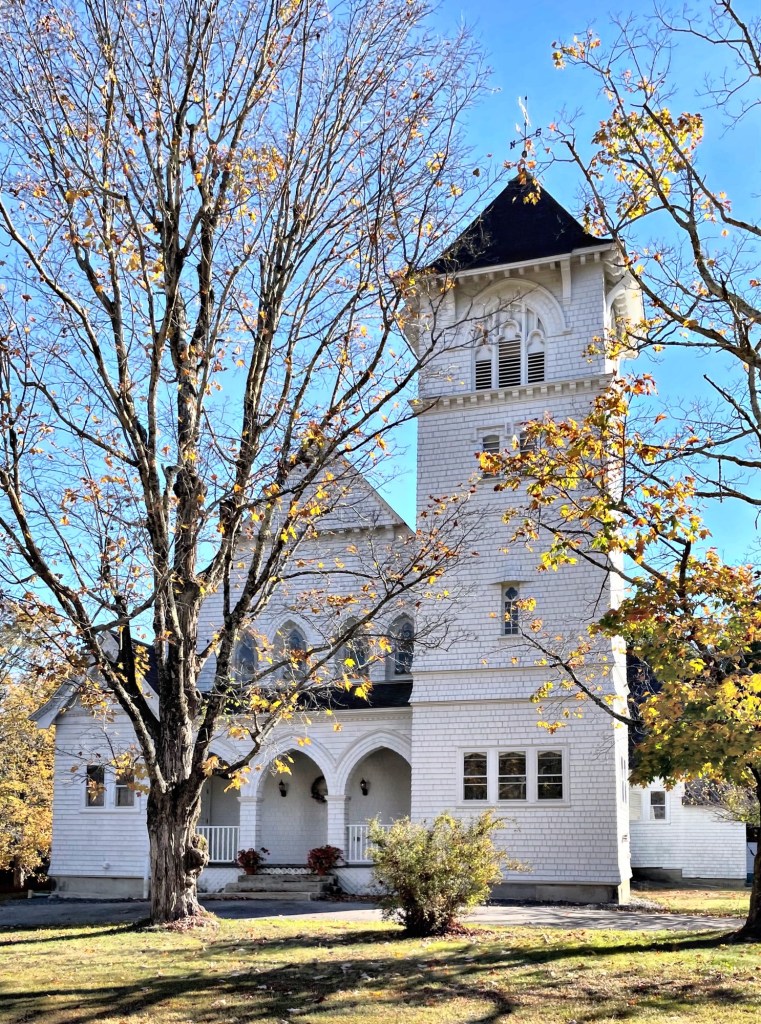
Built in 1881, the Swedenborgian Church of the New Jerusalem in Lancaster, Massachusetts, is a handsome Victorian-era chapel that has been well-preserved for nearly 150 years. The Queen Anne/Shingle style church was designed by architect Francis Ward Chandler of the firm, Cabot & Chandler, for the local Swedenborgians in Lancaster, some of which likely spent summers in Lancaster from Boston. The membership of the church dwindled in the early 20th century, and the congregation sold the church to a local women’s social group, the Current Topics Club in 1923. The women’s club met in the old church and maintained the building for nearly a century until the building sold to private owners in about 2007, who converted it to a residence, preserving the unique architecture we still see today.
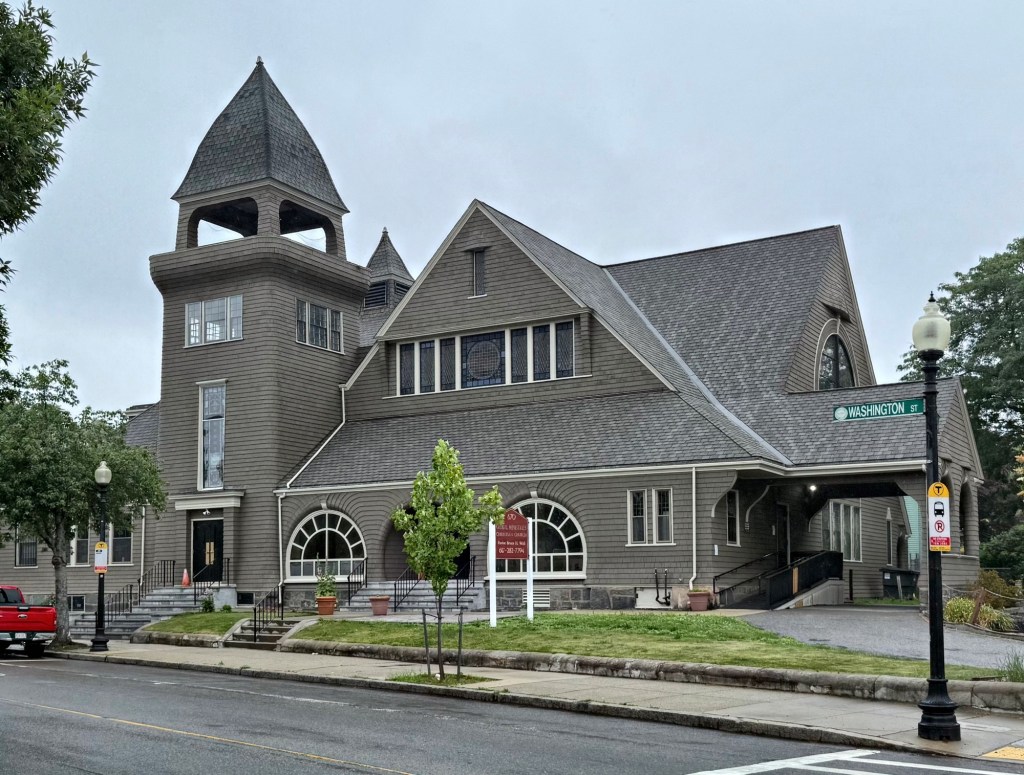
Dorchester Temple Baptist Church // 1889

Located at the corner of Washington Street and Welles Avenue, the Dorchester Temple Baptist Church was designed in 1889 by architect Arthur H. Vinal, as one of the best examples of a church designed in the Shingle Style in New England. The church began in 1886 as a mission church of the Tremont Temple Baptist Church in Boston. At this time, Dorchester was a semi-rural area and would surge in development when the streetcars were electrified in the 1880s. With a rapidly developing neighborhood, the congregation here, purchased lots and hired Vinal to furnish plans for a house of worship. The church’s cornerstone was laid October 3, 1889, with the church membership numbering ninety-nine at that time. Membership would decline in the decades following WWII, and shifting racial and ethnic demographics in the neighborhood brought new members to worship here. The building was renamed as the Global Ministries Christian Church by the current congregation, who with the assistance of preservation grants, worked with Mills Whitaker architects to restore the iconic landmark. Specific details of the building stand out, including the stained glass windows, the belfry with bulbous form, and the arched openings with continuous shingled walls.

New Ipswich Congregational Church // 1903

The New Ipswich Congregational Church was built in 1903, replacing the former 1813 Meeting House on the site, the fourth in the town, which stood here until a fire caused by lightning destroyed it in 1902. Interestingly, the design is more Victorian than Colonial Revival, which makes this church stand out amongst the village dominated by Georgian, Federal and Greek Revival style residences. The present building blends the Shingle style with Gothic elements with the tracery at the belfry and lancet windows. The architects were Gay & Proctor of Massachusetts who created a statement building with iconic tower that has been well-preserved by the congregation ever since.

Southport United Methodist Church // 1904

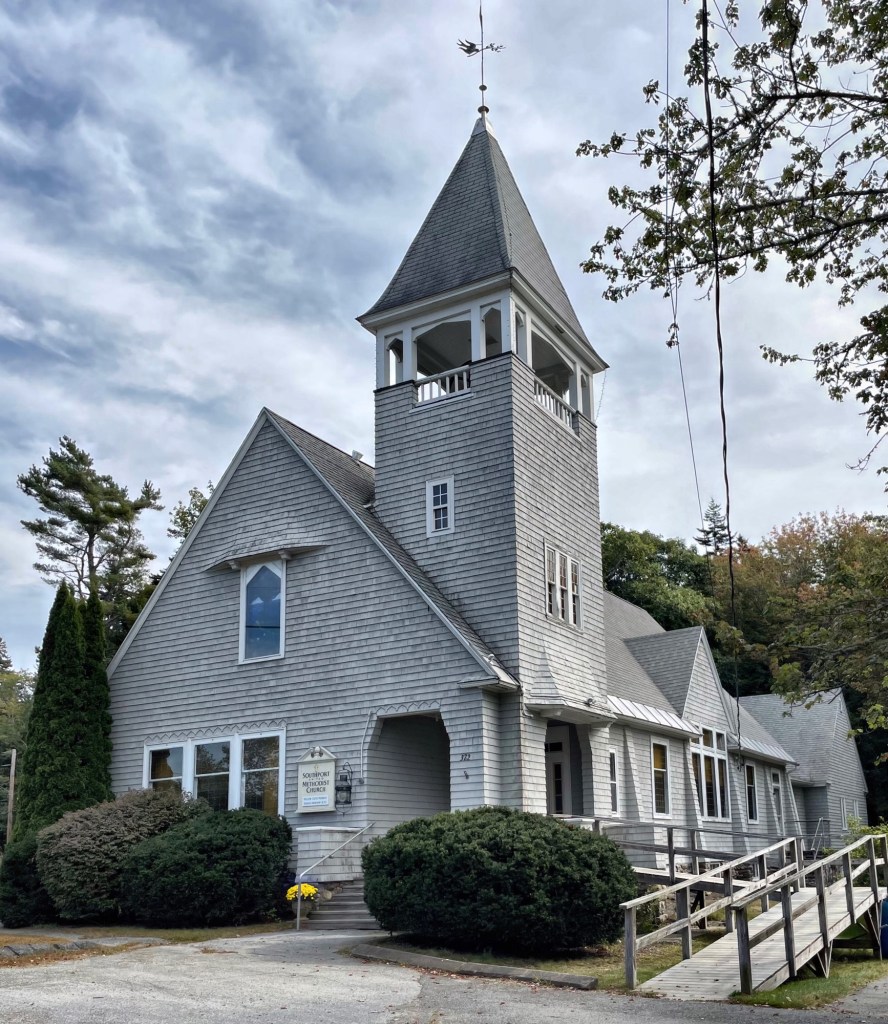
The Southport United Methodist Church of Southport sits cross the street from the Town Hall of Southport, Maine, and is one of the best examples of a Shingle style church in the state. The modestly sized church was built in 1904, shortly after a fire destroyed the local Methodist congregation’s former church building. Members hired the great Maine architect, John Calvin Stevens, who had just joined in a professional partnership with his son, John Howard Stevens, to design the new church. It remains as one of the more notable architectural landmarks in the town of roughly 600 year-round residents.

St. Margaret Catholic Summer Chapel // c.1895

When the Grindstone Neck Summer Colony of Maine was in full-swing, wealthy summer residents would frequent the colony’s Episcopal chapel (featured previously). What the summer residents did not really plan for was the influx of other residents as summer staff, largely Irish servants who in large part were Catholic. As a result, the St. Margaret Catholic Chapel was built to provide a house of worship, largely for those summer workers on Grindstone Neck. Keeping with the rustic architectural character of the colony, the chapel was designed in the Shingle style. I could not find any information on the architect, so any additional insight would be greatly appreciated!

St. Christopher’s-by-the-Sea Episcopal Church // 1892

In 1891, a proposal was made to build a summer Episcopal chapel, to be known as St. Christopher’s by the Sea, on Grindstone Neck in Winter Harbor, Maine. This project was supported by local area residents and by the summer community on Grindstone Neck. The construction of the church started in 1892, but it was not until August 6, 1893 that the first service was held in the chapel. The Rev. Julius Atwood, rector of St. James’ Church in Providence, Rhode Island, officiated and preached the first sermon. The church was designed by Lindley Johnson, a Philadelphia-based architect who also summered in a cottage on Grindstone Neck and designed other cottages in the colony. The Shingle style chapel is architecturally unique and rustic, a quality which is also visible at the interior, which is rustic in appearance with exposed beams and shingled walls.

Channing Chapel – Winter Harbor Public Library // 1888

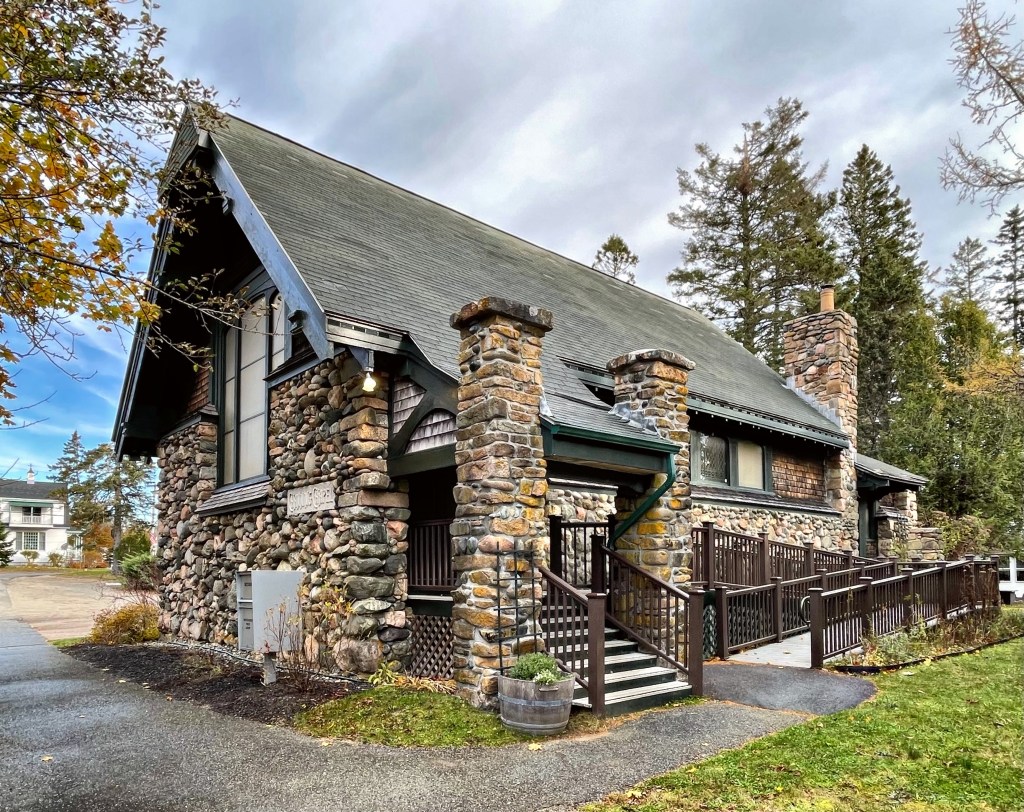
At a time before women could vote or be admitted to the American Medical Association, Almena Guptill (1842-1914) left her small home on Harbor Road to graduate from Boston University of Medicine in 1876 and become a respected Boston physician. She married David Flint (1816-1903), a successful lumber dealer and philanthropist. Almena met David when treating his late wife in Boston. The two, both widowers, married in 1891. Being a staunch follower of William Ellery Channing and believing that there was sufficient interest in Unitarianism here, Flint felt that there was need for a meeting place in his summer town of Winter Harbor. He had this chapel built adjacent to his summer house in the winter of 1887-1888, having field stones brought to the site of the future chapel by people of the village sliding them over ice in the winter. I could not locate the name of the architect of the building. The chapel was deeded to the American Unitarian Association and was later gifted by the association to the Town of Winter Harbor in 1958, the town would sell the property that year. In 1993, a preservation group purchased the chapel and sold it in 1999 back to the town. It now houses the Winter Harbor Public Library. Talk about full-circle!

First Baptist Church of Stoneham // 1892

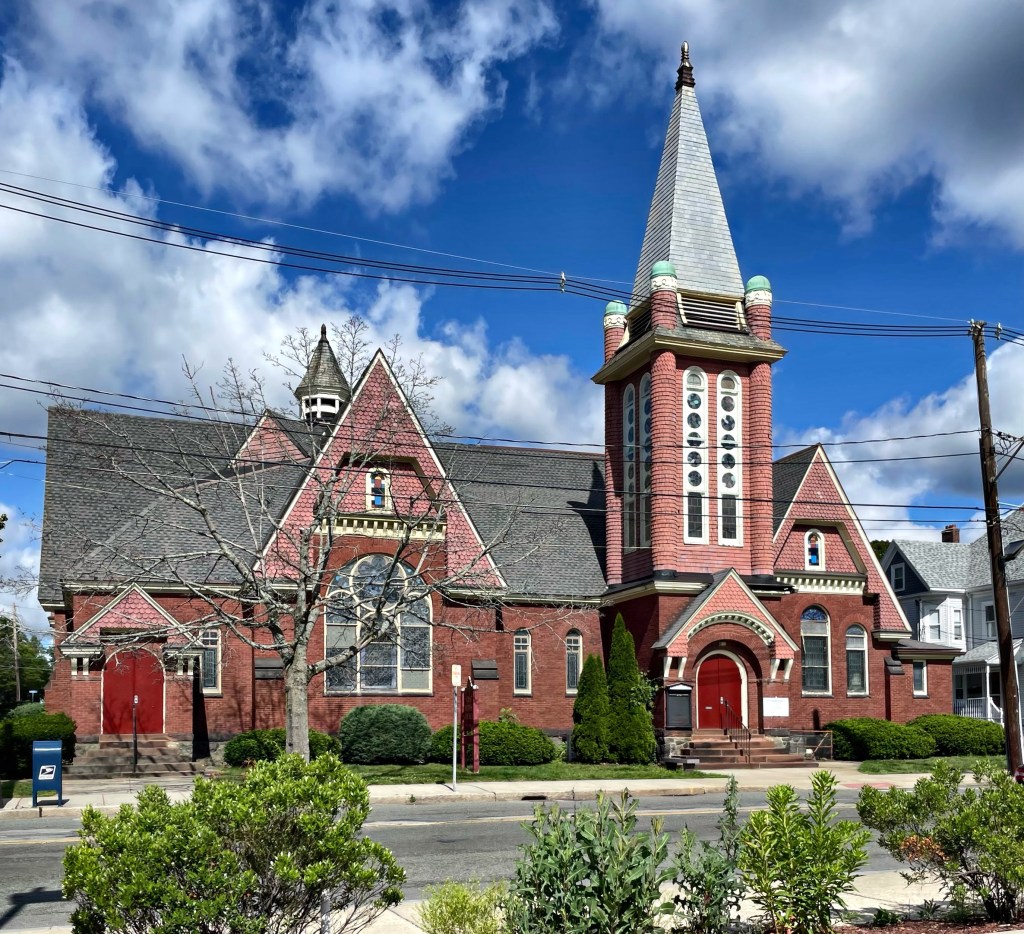
In 1891, the Baptist Society of Stoneham, Massachusetts unveiled that it had acquired funding and approved the plans for its first purpose-built church building in town. The organization met in a shared chapel in town since its founding in 1870. The new church would be unique in the Boston suburb as the only in town to be of the Queen Anne/Shingle style. A prominent site on South Main Street was acquired and work began in 1892 to erect the new house of worship. The design of the church is credited to the firm of L.B. Volk & Sons, a firm who specialized in church buildings with commissions all over the country. The church is complex in plan and combines brick and shingle siding in its construction with a prominent two-story tower with rounded corners and stained glass rondels (round windows).

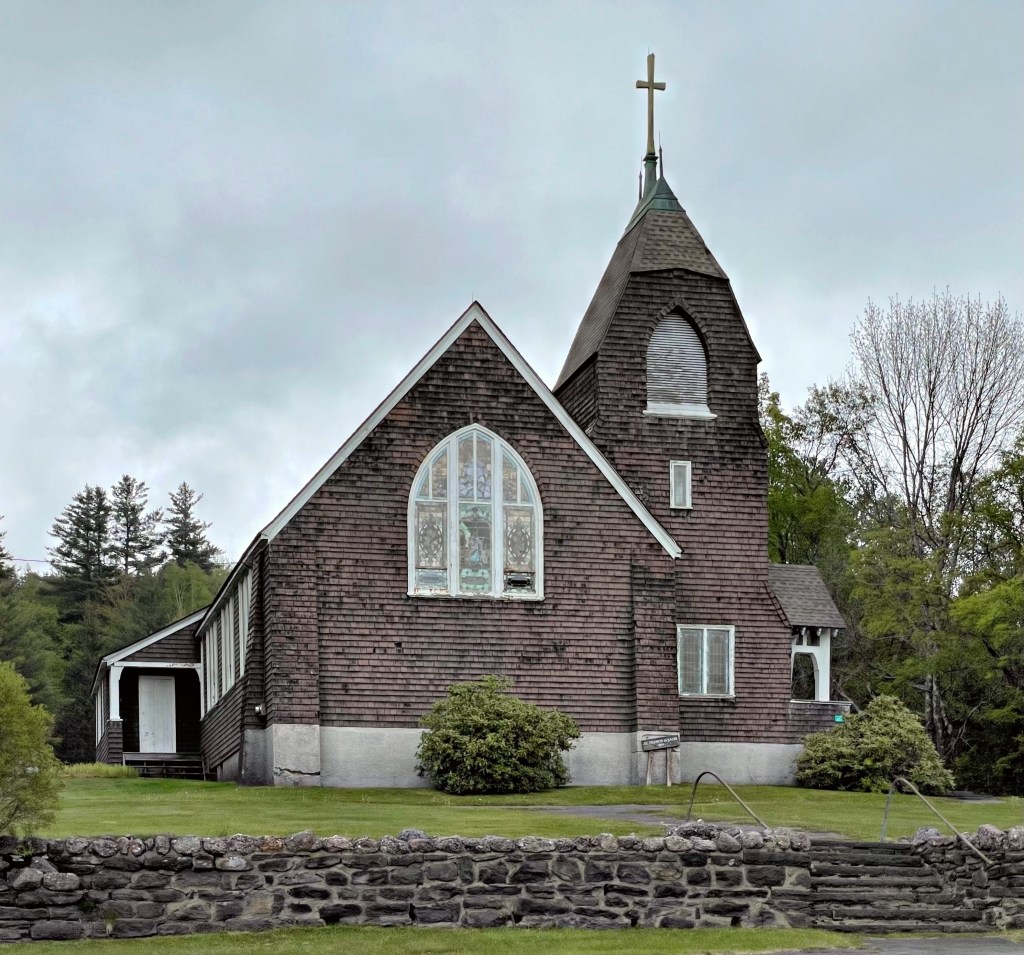
St. Francis de Sales Church, Elka Park // 1912

Down the street from the Old Platte Clove Post Office in Elka Park, New York, I stumbled across this large, shingled church with few houses nearby. I had to investigate! In 1888 parish lines for the Catholic church were redrawn in the area necessitating a new church near the summer colony of Elka Park. By 1891, a small, shed-like church was built here. By 1911, the small house of worship had outgrown its usefulness and it was considered a blight compared to the high-style homes nearby. A local summer resident, Francis H. Lewis funded $5,000 of the $6,500 cost of the building, and local carpenter Arthur Showers, was commissioned to erect the building. Father Keefe had conveyed to the builder some remembrances he had of a small church in France, and wished for it to be designed that way. Using local building traditions, the church was constructed of local lumber with shingled siding. The building and adjacent cemetery remain active to this day.

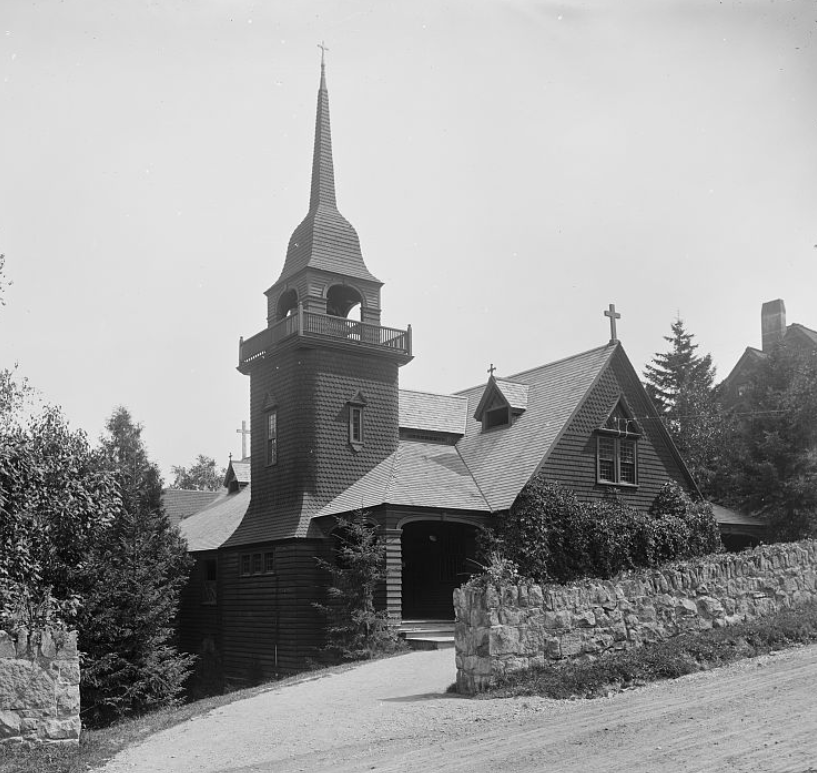
St. Sylvia’s Catholic Church // 1881-1909

Photo in Detroit Publishing Co. Collection.

As wealthy citizens from cities like Boston, Philadelphia and New York, began building summer cottages on Mount Desert Island in Maine, an influx of carpenters and tradespeople from Ireland followed to construct and work on them. Realizing this, cottager DeGrasse Fox along with Brooks White of Philadelphia, donated land for a new Catholic church building. Maine architect, William Ralph Emerson, donated plans for the church. A masterpiece of Shingle style design, the church, which seated 300 people, was deemed too small for the growing village’s summer congregation. A new, stone church was built closer to town (featured previously). The spire and belfry resemble another church Emerson designed in Beverly, MA, St. Margaret’s Catholic Church. Sadly, St. Sylvia’s burned down in 1909.