Chester Meetinghouse // 1793

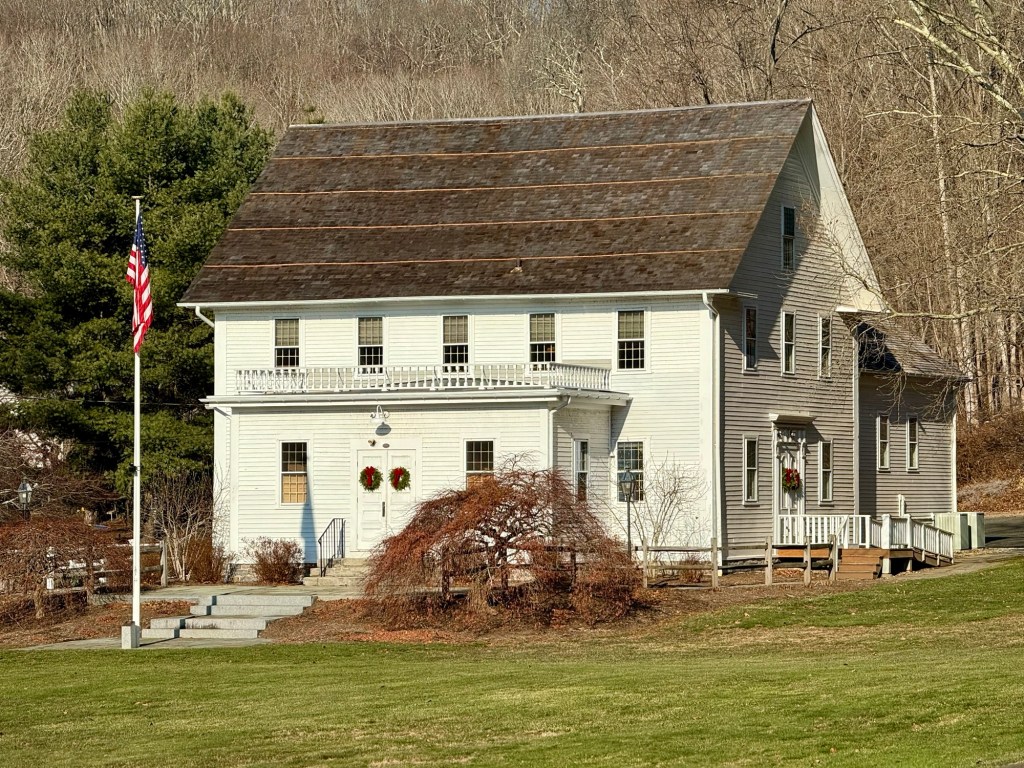
The Saybrook Colony was established in 1635 and covered a large geographic area near the mouth of the Connecticut River in Connecticut.  This area was later subdivided into different towns after colonial era villages were established, each with their own church congregations. As was common in the colonial era, these divisions were centered on the establishment of separate church congregations. The Fourth Ecclesiastical Society of Saybrook in what is now the town of Chester, Connecticut, was established in 1742. As the town grew, this building was constructed in 1793 as Chester’s second meeting house and served as a church until 1846, when the third Meeting House was built. In 1847, the Town of Chester acquired this old meetinghouse and from that date until 1960, it was used as the Town Hall. In 1876, the old meetinghouse was renovated with a new, projecting main entrance added to the south side of the building when the Old Town Hall enjoyed its heyday as a theater and concert hall. The Old Town Hall witnessed many events under its roof, including hosting P.T. Barnum’s Tom Thumb, who performed here, as did musical events, high school proms, and school graduations. The building had become threatened following the construction of the new Chester Elementary School, which better-hosted events, in the 1960s. Luckily, in 1970, the newly formed Chester Historical Society acquired the building and restored it as a significant piece of the town’s rich history.

Deep River Town Hall // 1893

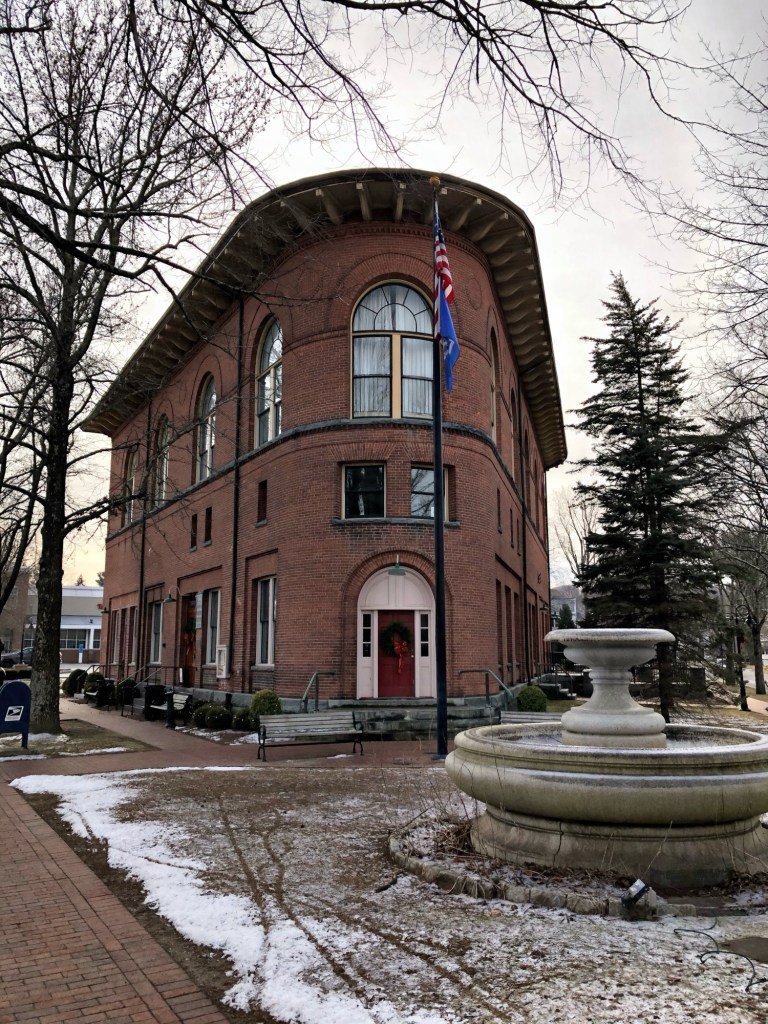
The town of Deep River, in Middlesex County, is located in the lower Connecticut River Valley and was originally colonized as part of the Saybrook Colony. The community was incorporated in 1859 as Saybrook and renamed Deep River in 1947. An early shipbuilding and quarrying town, it later manufactured wire goods, lace, glass, ivory combs, and piano keys and is today a small community of just over 4,500 residents. The original town hall for Saybrook (Deep River) was used until it was destroyed by fire in 1891. The community, which was bolstered by a vibrant industrial community, began planning for a new, stately town hall at a triangular lot at the corner of Elm and Main streets. Plans were completed by Springfield architect, Francis R. Richmond, who laid out the flatiron building with town offices on the ground floor with an auditorium/opera house space on the upper floors. The Romanesque Revival style building features prominent rounded corners with arched openings, a granite string course, and overhanging bracketed eaves.

Brookline Town Hall // 1965

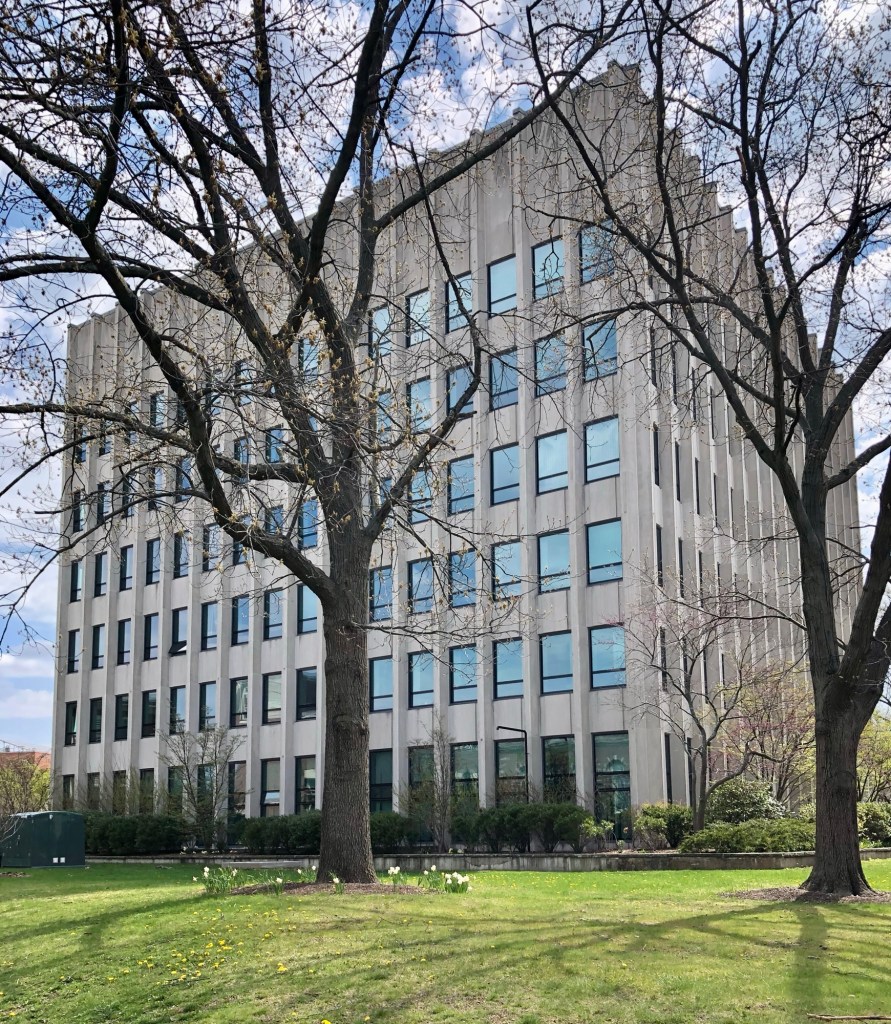
The modernist Brookline Town Hall building stands in stark contrast to the many historic buildings in Brookline Village, and even more-so from the town’s third Town Hall, a Victorian Gothic design by architect Samuel J. F. Thayer. Completed in 1965 as a six-story municipal “skyscraper”, the structure was designed by Anderson, Beckwith, and Haible, architects who specialized in sleek, clean, Modernist designs, primarily in office parks and college campuses. The unadorned box is broken up only by the rows of identical windows and slightly projecting fins, which break up the bays in their own monotony. Like many such municipal and office buildings of the time, the structure is set back from the street and surrounded by landscaping, with surface parking behind. While the building was lauded when it opened in 1965, tastes shifted and like in many communities, a majority of the public (and likely the employees who work here) would have preferred its predecessor.

Old Wayland Town House – Lovell’s Market // 1841

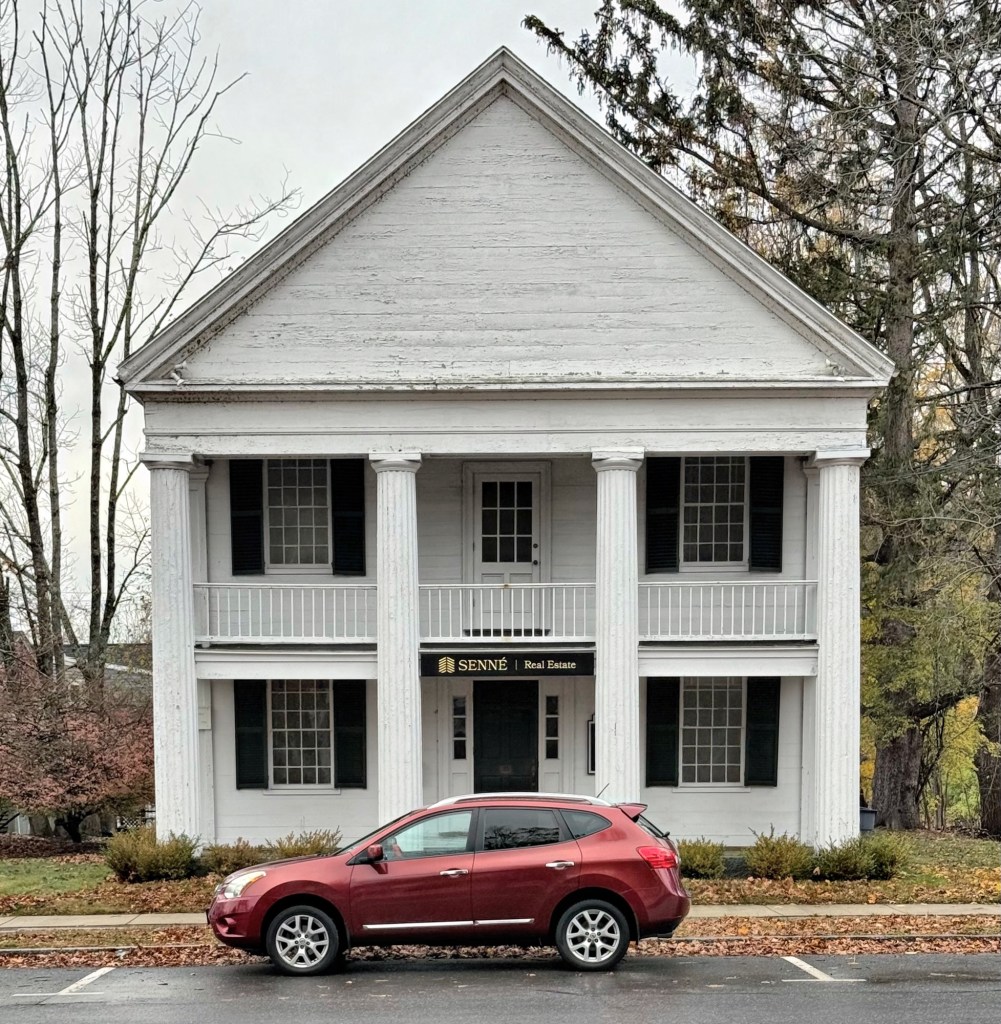
The Old Wayland Town House on Cochituate Road is an imposing Greek Revival temple-front building that has served various uses for the community. The structure was built in 1841 to serve as Wayland’s first municipal building and it was referred to as the Town House, with a large classroom and a small entry space on the first floor and a town meeting hall on the second. In 1850, the Wayland Free Public Library was opened in the building, in a small room in the front of the building. The small building was quickly outgrown for its civic uses, and in 1878, Wayland built a new, large Stick style town hall (demolished in 1958). The old Town House was sold to Lorenzo Knight Lovell (1837-1909), who soon after converted the Town House into a dry goods and grocery store known as Lovell’s Market. Following Lorenzo Lovell’s death, his son William S. Lovell ran the store until about 1922 when he leased the building to Lawrence Collins, who remained here for nearly 60 years operating his own store. Collins Market was eventually purchased in the late 1980s and converted to office space, which remains today.

Bolton Town Hall // 1853

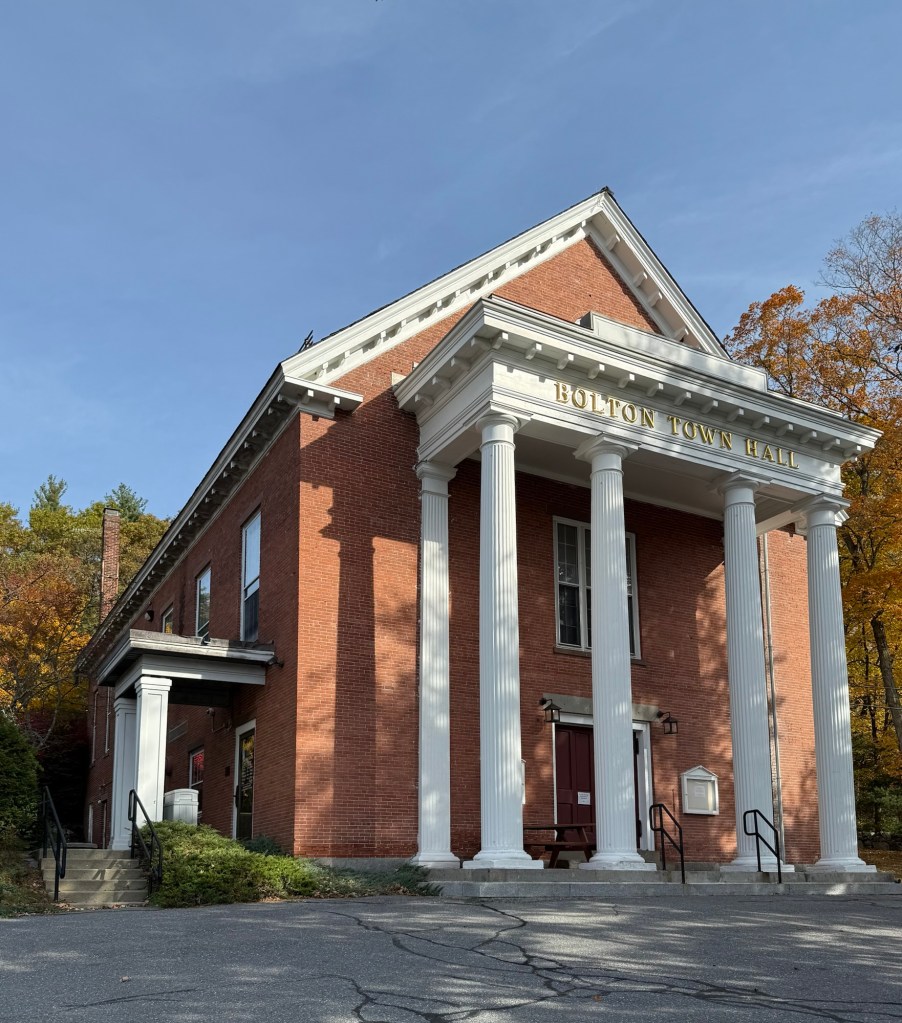
The Town Hall building in Bolton, Massachusetts, is significant as the hub of the town’s municipal activities for the past century and a half and architecturally as a mid-19th century town hall built in the transitional Greek Revival and Italianate styles. The structure was completed by the town in 1853 as a replacement for the former 1834 wood-frame town hall, which had burned down in 1851. The original wood-frame building was constructed at the time that municipal functions were being moved out of town meetinghouses across Massachusetts following the desire to separate church and government functions. Like many town halls of its era, the larger 1853 building was designed to accommodate multiple aspects of the community’s institutional and public life. The two-story building included a fireproof vault for town records, with town meetings held in the second floor meeting hall, with selectmen meeting in a room on the first floor. A small room was fitted for a library until the early 20th century when the town’s first purpose-built library was constructed farther down Main Street. The fairly unadorned Town Hall was modernized in around 1916 with the addition of the front portico and a rear addition. The Bolton Town Hall remains as a source of pride for the small, yet charming town of just under 6,000 residents.

Lancaster Town Hall // 1908

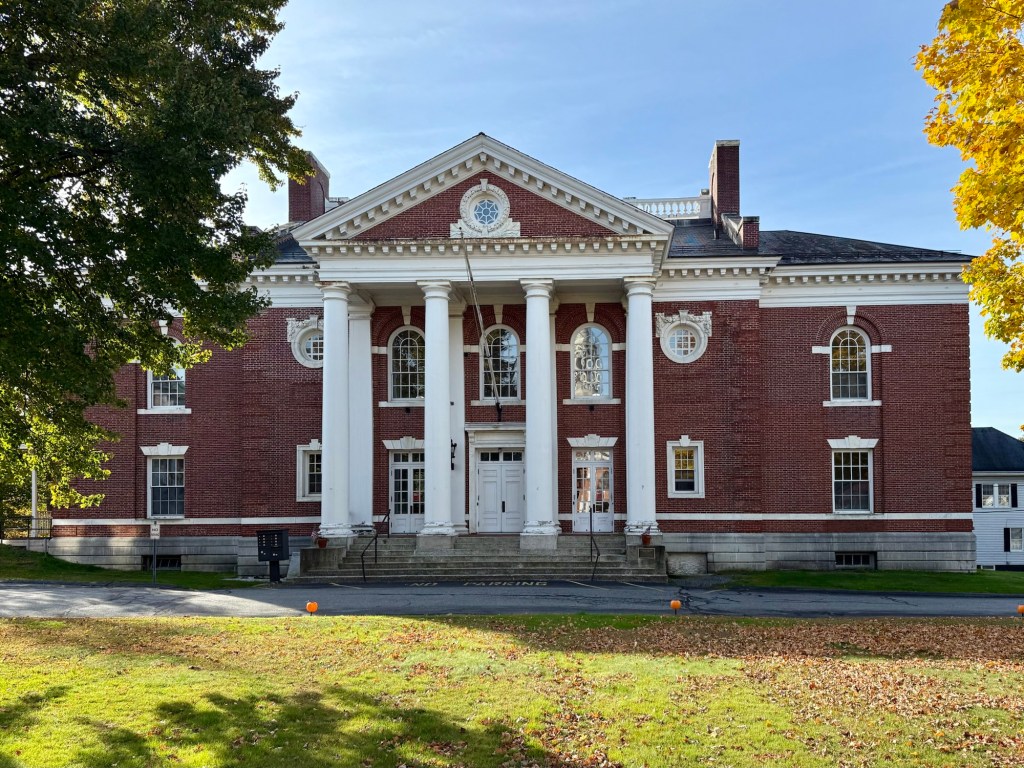
The Town Hall of Lancaster, Massachusetts, was built in 1908 and is one of four religious and civic buildings framing the village’s bucolic town green. The Town Hall was built opposite the Charles Bulfinch-designed First Church of Lancaster and replaced an earlier town hall building that was constructed in 1848. The building was largely funded as a gift from wealthy Lancaster-native, Nathaniel Thayer’s sons, following their late-father’s death. Boston architect, Alexander Wadsworth Longfellow, the nephew of poet Henry Wadsworth Longfellow, was hired to furnish plans for the building, which is Colonial Revival in style, a perfect compliment to the historic New England town.

Old Town House, Marblehead // 1727

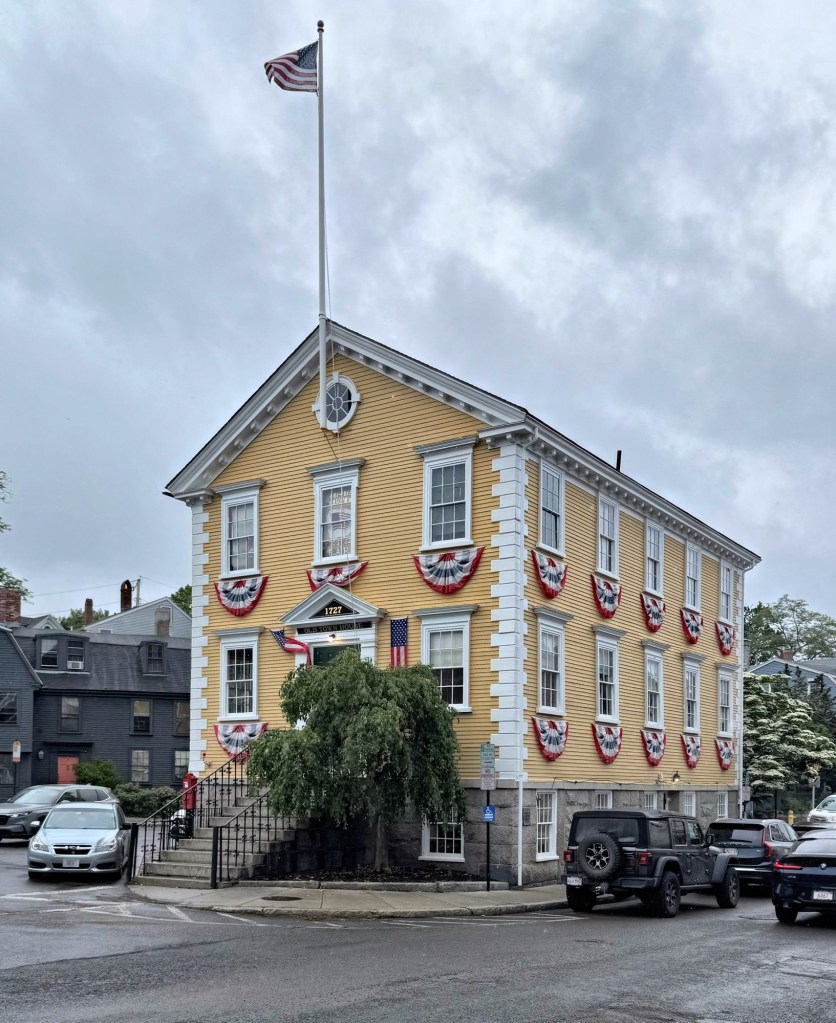
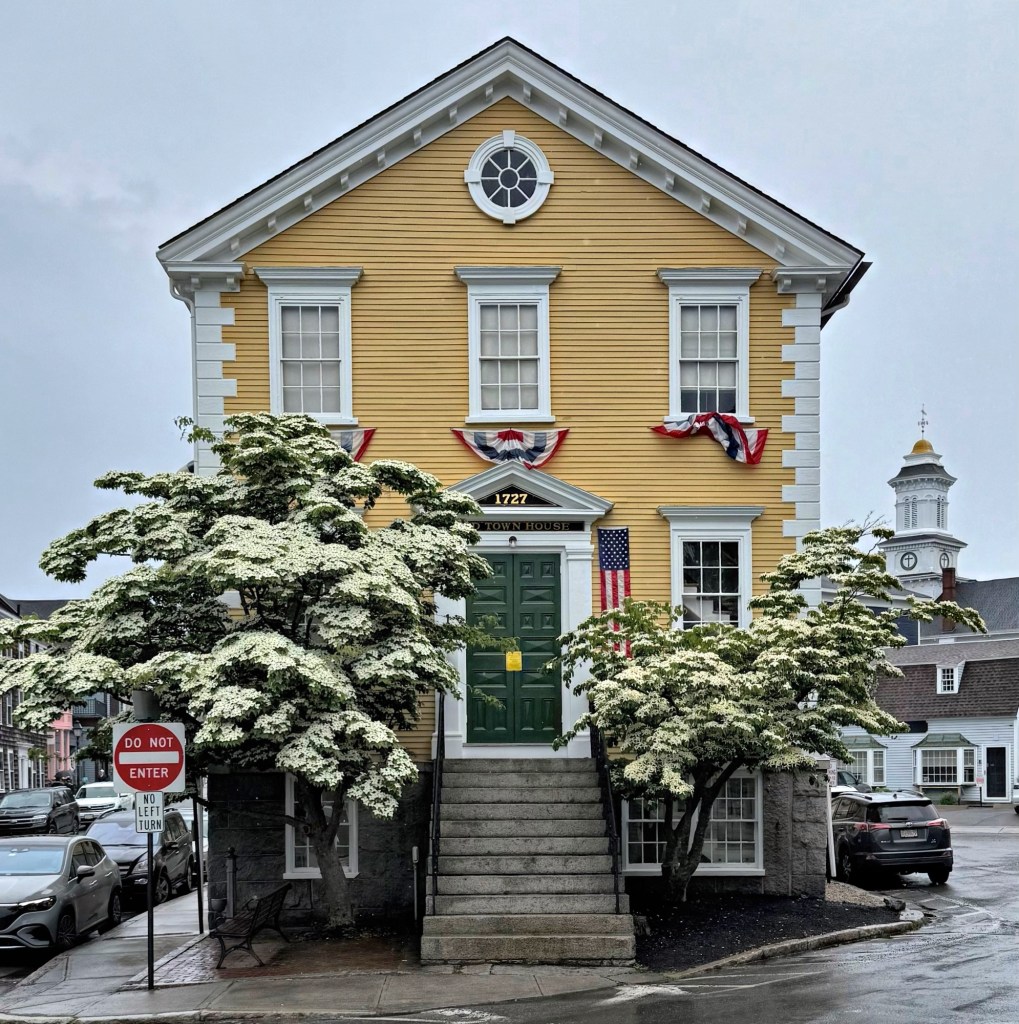
By the early 18th century, Marblehead had grown from a small fishing village to one of the most affluent and influential seaports in the colonies. This new wealth and the increasing secularization of government led town officials in 1727 to fund and build a Town House, to replace the Old Meeting House from 1696. The upper level of the building served as a town hall, while the lower level was originally used as a market. The Town House was later the gathering place to protest the Stamp Act and the Boston Port Act, and was a primary location for Sons of Liberty to meet and discuss Revolution. After Independence, the Town House was host to such dignitaries as presidents George Washington, Adams, Jackson and Munroe, Samuel Adams, John Hancock and the Marquis de Lafayette. The building would eventually be replaced as the town hall when the new Abbot Hall was built in 1876. The top floor became the GAR Museum, established after the Civil War as The Grand Army of the Republic veterans organization. The main floor houses meeting and exhibition space. The iconic Revolutionary-era Georgian building has been lovingly maintained and restored for nearly 300 years, a testament to the historic and architectural significance of this handsome structure.

Westborough Town Hall // 1929

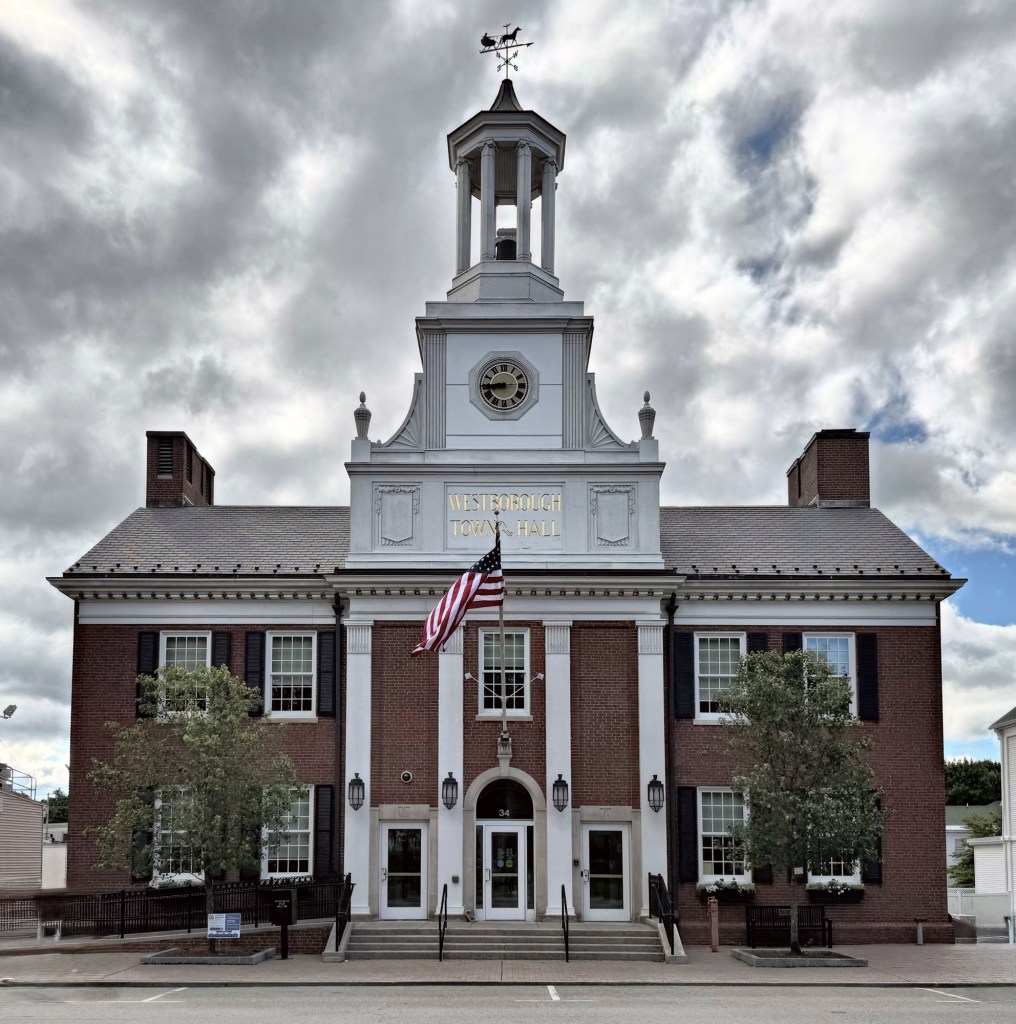
Welcome to Westborough (sometimes spelled Westboro), Massachusetts, a suburban town in Worcester County that has a lot of history! Westborough was first settled by colonists in 1675, when a few families had settled on land in the “west borough” of Marlborough, which was settled decades earlier. Before this, the land was occupied by the Nipmuc Indians, who hunted and fished near Cedar Swamp and Lake Hoccomocco. The town grew as an agricultural center with turnpikes crossing through connecting Boston to Worcester and other points. Later connections from rail and later the Mass Pike, had allowed for rapid growth and commercialization of the current population of over 22,000 residents. After WWI, the town’s outdated wood-frame meetinghouse was deemed inadequate for the growing population and higher demand for quality services. The meetinghouse was demolished and soon-after replaced with this handsome Town Hall in 1929. Designed by Boston architectural firm, Kilham, Hopkins & Greeley, who specialized in thoughtful infill developments and were among the best to design in the Colonial Revival style. The building was highlighted in architectural publications in 1930 with one stating, “An ultra-modernistic building on the elm shaded street of this Massachusetts town would have been an intrusion and would have been felt as such by the citizens, but the designers felt that it was entirely possible to combine the new ideas with the well-known red brick and white cupola of the native idiom, and the result is a modern building harmonizing perfectly within its environment.” I couldn’t agree more!

Scotland Town Hall // 1896

The town of Scotland, Connecticut, is a rural community centered around agriculture and is the smallest municipality in Windham County’s ‘Quiet Corner‘. European settlement began in earnest following the purchase of 1,950 acres of land from then Windham, by Isaac Magoon, a Scotsman, who named the new village after his ancestral home. The present-day town hall and offices of Scotland, was originally built in the 1840s as a one-room schoolhouse. In 1894, the town voted to consolidate all the school districts in a single building, and to expand the one-room village school to accommodate them. The present two-story structure was completed in 1896 and was added to the front of the old building. It is unclear if anything remains of the original schoolhouse. The vernacular, Stick style building served as the town’s consolidated school until a modern school building was constructed in the 1960s. This building became the town hall/offices and remains a significant visual anchor to the town’s common.

Central Falls City Hall // 1888

Welcome to Central Falls, an industrial city in Providence County, Rhode Island. With an area of only 1.29 square miles it is the smallest and most densely populated city in the smallest state, and the 23rd most densely populated incorporated place in the United States. Originally, Central Falls was one of the many villages within the town of Smithfield, but in 1871, the town split into three smaller towns: Smithfield, North Smithfield and Lincoln. Central Falls village then became part of the town of Lincoln until Central Falls’ industrial character and differing needs had it split off to form the small city of Central Falls in 1895. Before it was its own city, Lincoln officials had this building constructed in 1888-9 on Broad Street, the commercial and civic center of the city. This red brick, Queen Anne building with its four-stage tower was built as Lincoln High School, the first school in the town built exclusively for secondary education. Designed by William R. Walker & Son, architects, the building features shingles in the gable, asymmetrical plan, and carved terracotta panels. The building continued as Central Falls High School until 1927, when the city offices were moved there, and it has remained as the City Hall ever-since.