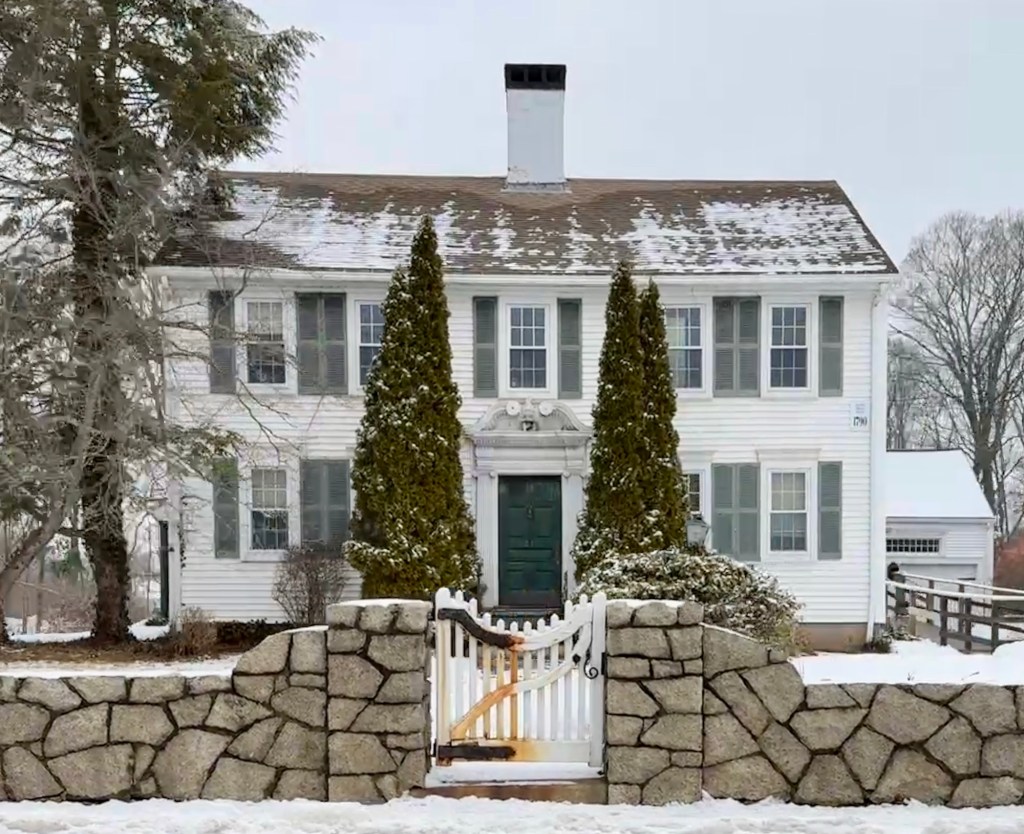
In 1787, Oliver Druce (1760-1797) married Sarah “Sally” Kollock (1764-1789) and had this large residence built overlooking the Town Common in Wrentham, Massachusetts. The young couple raised one daughter here until Sarah died in 1789 at 25 years old, followed years later by Oliver, who died in 1797 at 37 years old. By the turn of the 19th century, the late-Georgian residence was owned by John Francoeur, a French Huguenot. The Druce-Francoeur House is one of the finest Georgian style residences in Wrentham, which retains its magnificent doorway framed by fluted Ionic pilasters with broken scrolled pediment above.
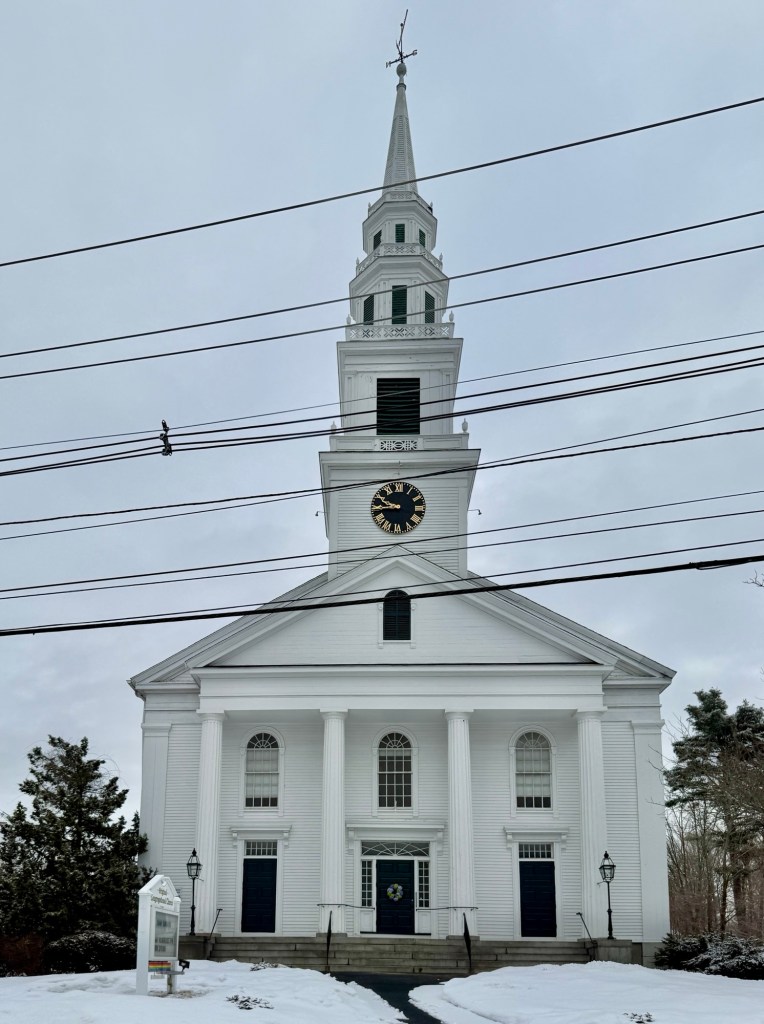
The Wrentham Congregational Church is the oldest house of worship in the suburban community, and the fourth consecutive meetinghouse for the congregation at the town center that was originally established in 1692. The frontier town grew slowly as a largely agricultural community and three houses of worship were built nearby the town common until 1833, when it was decided that a church worthy of its historic congregation be built. It is not clear who designed the Greek Revival church, but timbers were transported to town in 1834 for the new edifice which was completed that year. Over the following century, the church was expanded and modernized, all-the-while retaining its historic character. The four-stage steeple toppled during the New England Hurricane of 1938, and was rebuilt. The congregation remains active in the community and is a visual landmark at the town center.
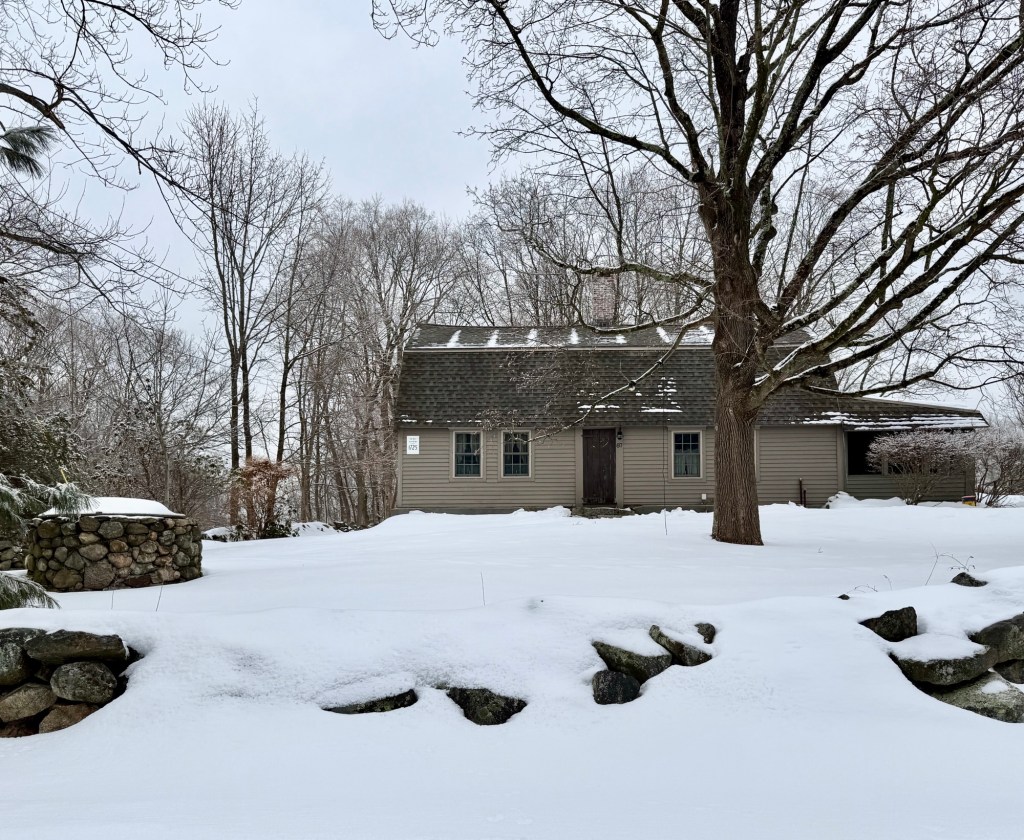
Wrentham, Massachusetts, was originally known as Wollomonopoag, roughly translating to “place of shells” a name given by the native tribes living here, referencing to area lakes as a food source for the people living here for over 8,000 years before European settlement. The area was settled by colonists in 1635 and became part of Dedham, when it was established in 1636. In 1673, the General Court allowed for the separation of what is now Wrentham, to incorporate as its own town. The community adopted the name Wrentham after the town in Suffolk County, England, a small village of just under 1,000 residents. About 50 years after incorporating, this historic Georgian farmhouse off Cumberland Road, not far from the Rhode Island state line, was built. The Boyden-Clark House is among the few pre-Revolutionary era homes remaining in the suburban community and retains its rural character. The house is said to have been built for Thomas Boyden (1681-1771) and wife, Mary (Clark) Boyden around 1725. The Boyden’s enslaved laborers who worked the farm here for decades. The property was later owned by Stephen Clark who farmed the land and likely added the stone well in the front yard. The house retains its gambrel roof and central chimney, hallmarks of the Colonial era.