All I want for Christmas is a brick Federal house! This home in Stockbridge, Massachusetts was constructed in 1830 by Thomas Carter (1777-1863) and his wife Anna. The couple farmed the property and had eleven children (plus two who died in childbirth). According to a family history, the lime for the mortar on the home was burned in a kiln on the property by Thomas. The ancestral home remained in the family for generations, including by John Calvin Calhoun Carter, a town selectman, who added a full-length porch on the home in the mid-late 19th century (since removed). The home’s rural charm remains even-though it sits on a busy road in the Berkshires.
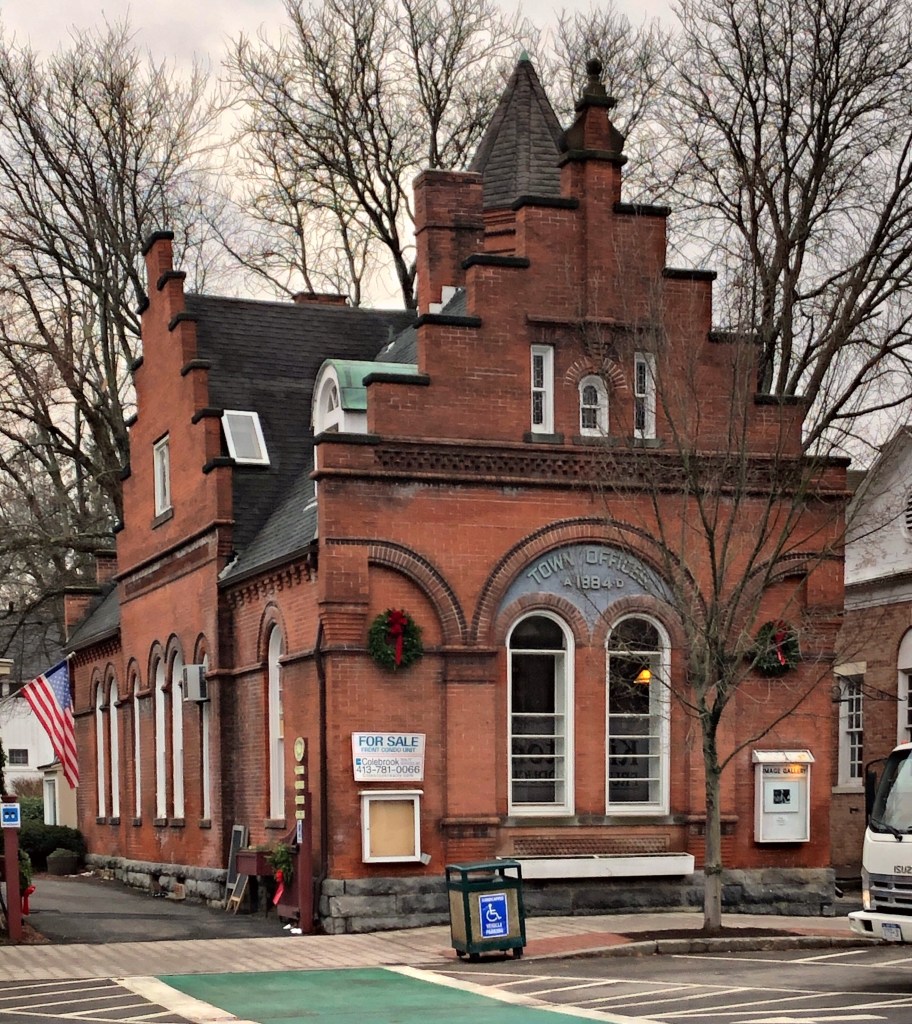
Built in 1884, the Town Office Building on Main Street in Stockbridge, housed more conveniently located government offices and came equipped with a basement jail. The building was constructed of brick to protect town records from fire and the adjacent buildings. The architecture is Flemish Revival with its stepped gables, a tower, and terra cotta and stained glass ornaments, a distinctive and different type of architecture on Main Street. The building was occupied after the Town Hall, further down Main Street, was deemed inadequate. The building displays the words “Town Offices” with the date 1884 A.D. as the town was sure to label the building as town offices over ‘town hall’ so they could retain the former town hall building after a deal with the First Congregational Church. The town sold the building to private owners in 1960 and has since been used as commercial space.
The Town of Stockbridge, MA was incorporated on June 22, 1739. After that time the town held meetings and conducted business in the First Congregational Meeting House until 1840 when this Greek Revival town hall building was erected on the church’s property as a gift. A stipulation was made that if the Town government constructed or moved to a new town hall building, the property ownership would revert to the Church. The town outgrew the building and constructed a new building toward the center of town, but named it Town Offices, a cheeky way to retain ownership of this building. Eventually, that building too was outgrown, and the town hired Pittsfield-based architect Harry E. Weeks to modify and enlarge the building in 1903, in the Neo-Classical style to compliment the original Greek detailing. As expected, the town moved again in the 2000s to a former school, on Main Street, but again retained the building.
Stockbridge, Massachusetts was settled by English missionaries in 1734, who established it as a praying town (an effort to convert the local Native American tribes to Christianity), for the Mohican tribe known as the Stockbridge Indians. The township was set aside for the tribe by English colonists as a reward for their assistance against the French in the French and Indian Wars. From this, a Yale-educated missionary, John Sergeant began converting native people to Christianity, essentially stripping them of their own religious culture and practices. Although Massachusetts General Court had assured the Stockbridge Indians that their land would never be sold, the agreement was rescinded. Despite the aid by the tribe during the Revolutionary War, the state forced their relocation to the west, to New York and then to Wisconsin. The village was then taken over by British-American settlers who created the township.
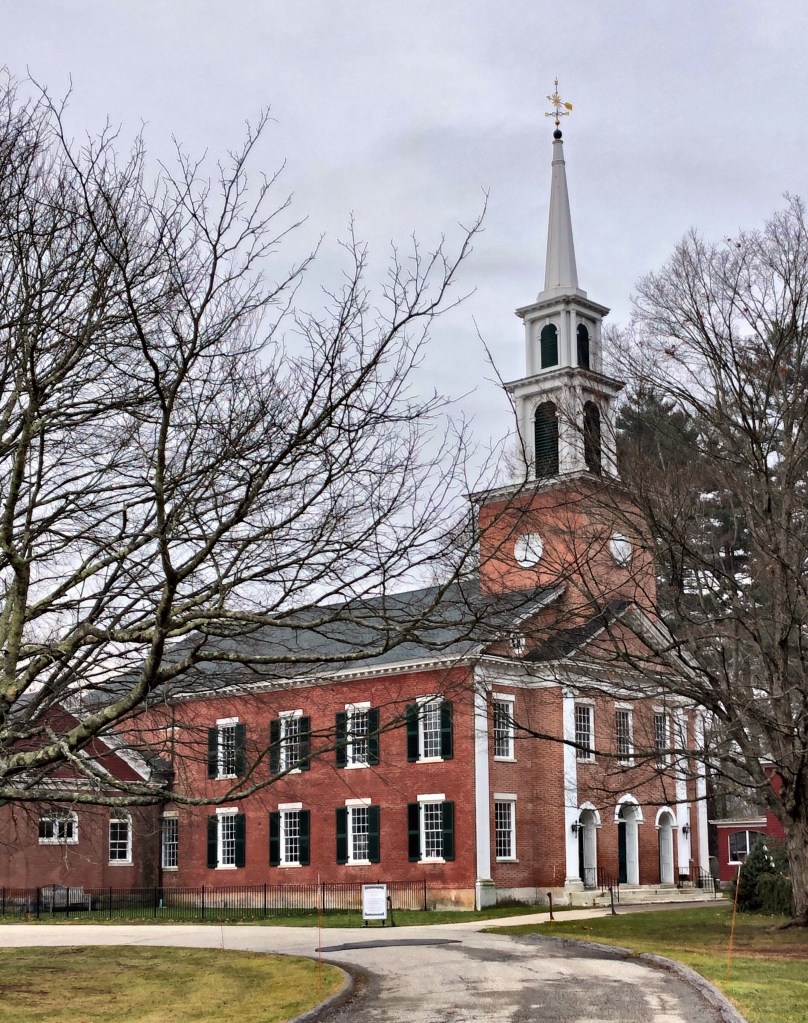
The first congregational church here was formed by Sergeant in 1734, and later succeeded by Jonathan Edwards, another minister. During his time in Stockbridge, Edwards wrote his masterpiece, Freedom of the Will, which remains one of the most studied works in American theology. Edwards later left the church to become the President of The College of New Jersey, now known as a little school by the name of Princeton. The first church was built in 1739, later replaced by a second church building that stood from 1785 to 1824. The present brick building was built in 1824 in the Federal Style. The space was occupied for town functions until the 1840s, when an official town hall was erected next door, demarcating the separation of church and state. The stunning church marks the immense influence religion had in the early colonial days of New England and the impact it had on native peoples (for better or worse).
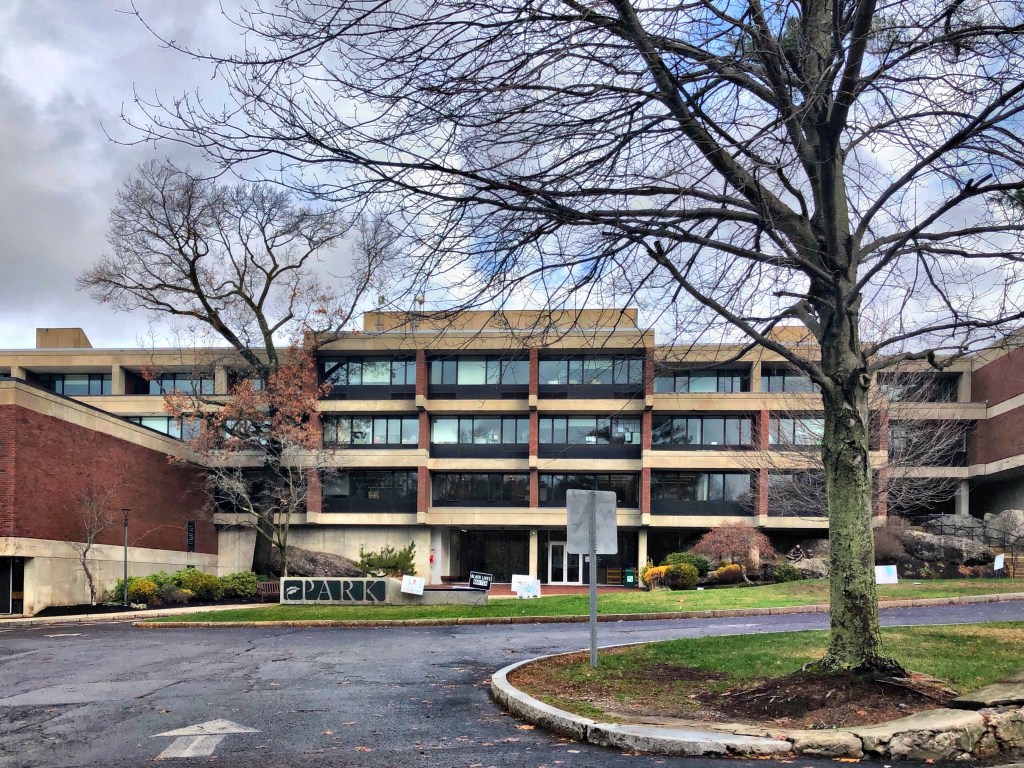
Founded in 1888, The Park School, one of the premier private schools in the Boston area began off Walnut Street in Brookline in half of a house. Founded by Miss Caroline Pierce, the school was officially incorporated in 1923 and named to commemorate Julia Park, principal from 1910-1922. The school occupied the former Hill Estate before the school board voted in 1967 to look for a new campus, with space to grow. James and Mary Faulkner donated 14-acres of rolling fields and woods to the school for their new campus. The Park School hired architect Earl Flansburgh of Cambridge to design the new, Modern school building. The Brutalist building allowed for large, open classrooms with the flexibility for the school to adapt as its needs changed. The school is built of reinforced precast concrete as a stack of modular classroom and office spaces with wall-length windows for more natural illumination of rooms. Since the 1970s, the school has expanded a couple more times, notably with a 1990s addition by Graham Gund. The school remains one of the most desired in the region and fits well within its landscape.
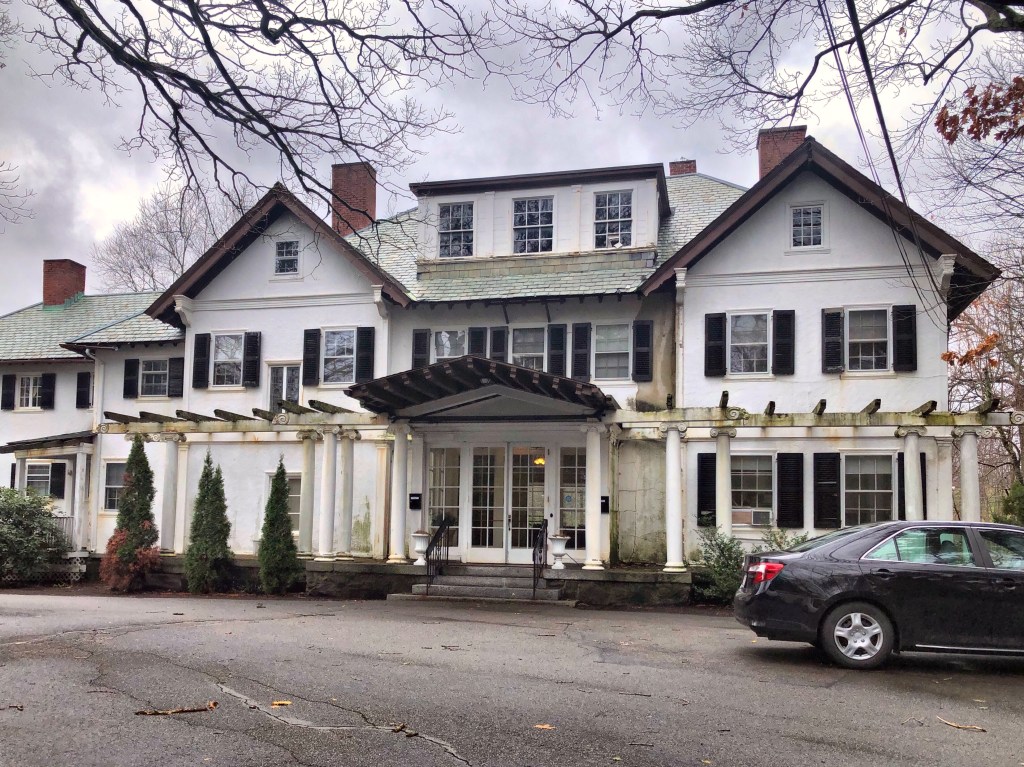
The area just west of Jamaica Pond between Boston and Brookline can be characterized as a neighborhood of well-preserved 19th and 20th century homes and large, former estates converted to institutional use. The Hartt House in Brookline, off Goddard Ave, was built in 1899 for Arthur Hartt and his wife Augusta Batchelder. Arthur worked as a clerk with the New England Mutual Life Insurance Company in Downtown Boston and built a couple large estates in Massachusetts, including a summer home in Marion. The Colonial Revival home sits on a hill, setback off the street, with a landscape designed by the Olmsted Brothers. The property was bought in the 1970s by the Hellenic Association of Boston, who turned the home into offices and the former barn into a chapel. The home appears to be suffering from some deferred maintenance, but is in overall good shape.
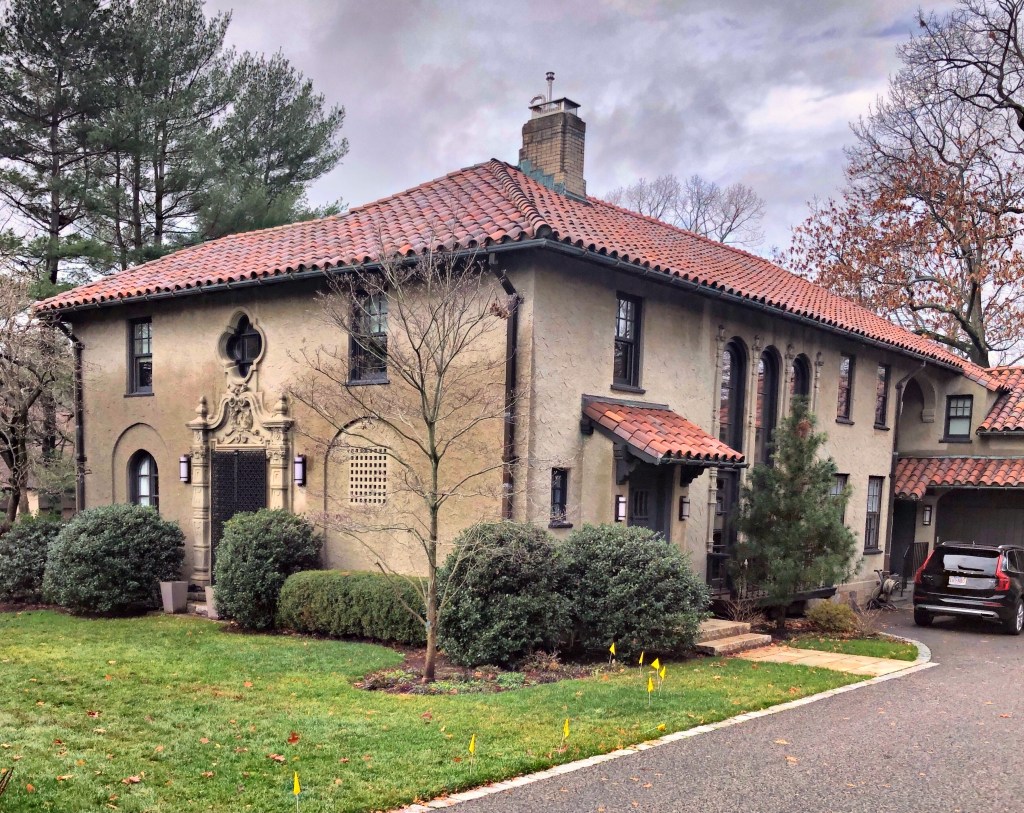
Located across the street from Larz Anderson Park and the former Larz Anderson Estate, this stunning Spanish Revival home, built in 1927, was constructed as a guest house for visitors of Larz and Isabel Anderson. Between 1925-29 the Andersons constructed three guest houses outside the estate on Goddard Avenue. The designs were intended to call to mind places the Anderson’s had visited. “Puddingstone”, was named for a nearby outcropping of puddingstone on the Anderson estate, and was modeled after a house the couple had seen in Santa Monica, California. The Andersons used the buildings occasionally as guesthouses for relatives or friends who came for long stays at Weld, especially when Larz and Isabel were not in residence there. But for the most part, the houses remained empty and it was only after Larz’s death in 1937 that Isabel disposed of them. She donated them to Boston University for use as the Brookline Campus, who in turn, sold them off as private residences years later. Built in a Spanish Colonial style, it features a red terra cotta tile roof, adobe-colored stucco walls, and a center entrance framed by an elaborate cast stone surround in a Spanish Baroque style. To the right of the front door, a clathri (grid/lattice in architecture) over a window can be found in a blind arch.
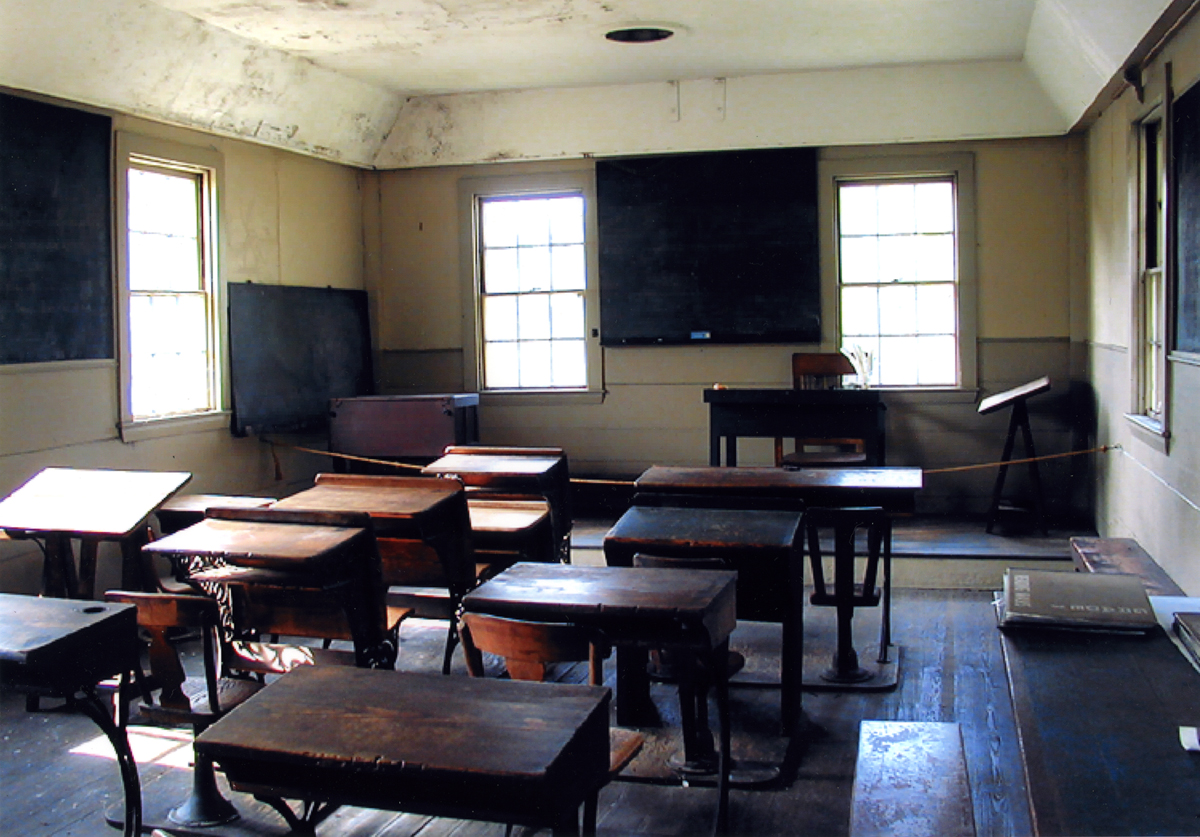
Colonial-era one-room schoolhouses once dominated the landscape of New England, providing a learning space for young children. The number of these structures have plummeted due to changing development patterns and limited funding to preserve or adaptively reuse such buildings. In the town of Brookline, this c.1768 schoolhouse has been altered frequently, showing various styles and techniques in construction used during the eighteenth, nineteenth, and twentieth centuries. The original one-room school house was enlarged in 1840 by an addition to the rear to fit additional pupils. In 1847 a shed was built for storing coal or wood and providing an entry vestibule. According to town records, in 1855 the ceiling in the schoolroom was raised, the windows enlarged, and the desks and chairs repaired. The double privy was built around 1898, probably replacing an earlier single privy. There is some evidence that in 1938 the school was used temporarily as a Catholic church and at some time following World War II as a synagogue. In 1966, the school was moved from its original site on Grove Street to its present location at Larz Anderson Park for the future preservation of the building by the town and local historical society. The schoolhouse is normally open for tours at various points during the year or by appointment.
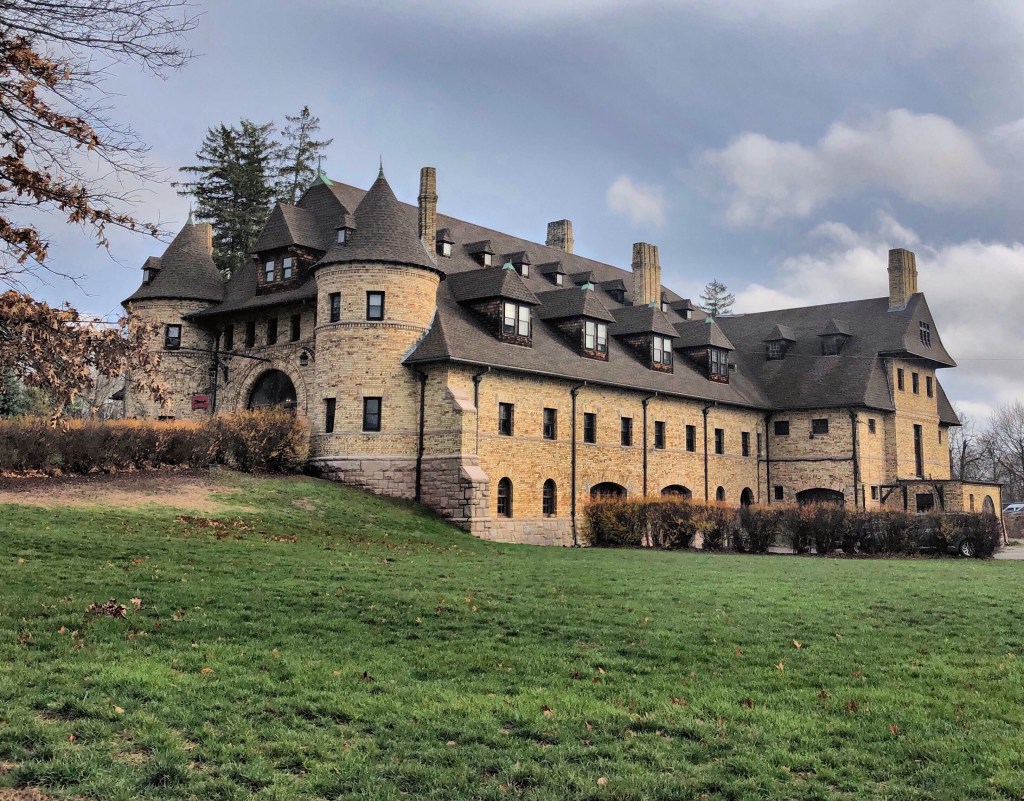
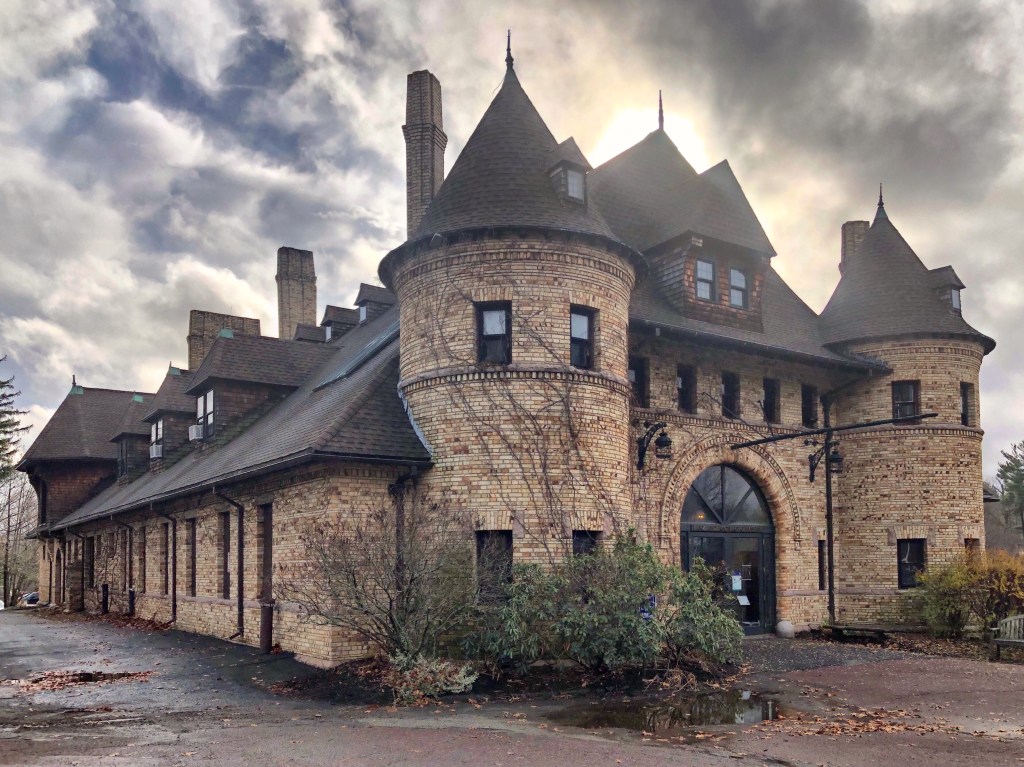
This large and imposing brick and stone structure, located in Larz Anderson Park in Brookline, was once the carriage house of “Weld”, the estate owned by Larz and Isabel Weld Anderson. Constructed in 1888, it was inspired by the Chateau de Chaumont-Sur-Loire in France and designed by Edmund M. Wheelwright, the city architect of Boston. First constructed to house a working stable, it later served to house and maintain the Andersons’ growing automobile collection. After Isabel Anderson’s passing in 1948, the collection was entrusted, at Isabel’s bequest, to the Veteran Motor Car Club of America. The VMCCA then established the nonprofit organization that is now known as the Larz Anderson Auto Museum. The former mansion suffered from vandalism in the 1950s and caught fire, later demolished by the Town, who could not afford to rebuild the home.
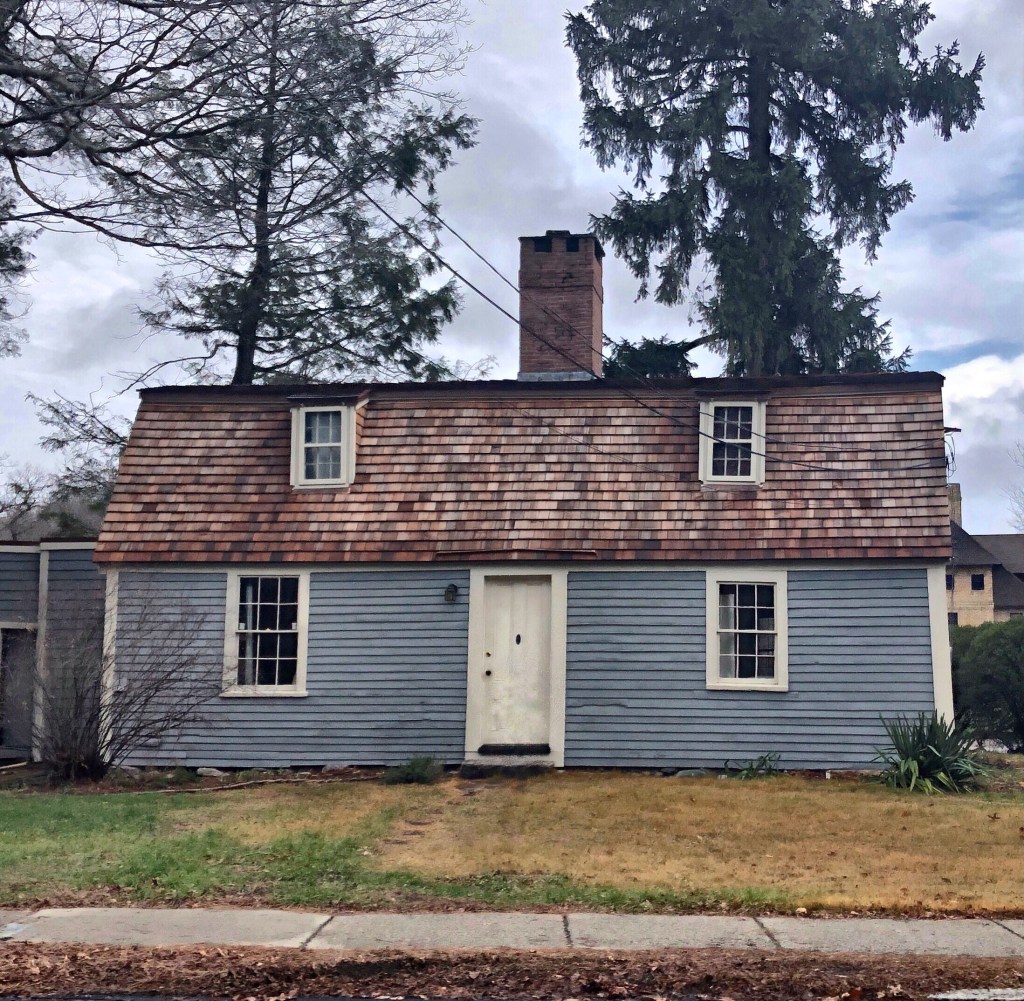
This cute little Georgian home in Brookline was built around 1772 for Hannah Winchester Harris, a widow at the time. Hannah’s husband, Timothy died in 1772 and it appears the widow had this small gambrel-roofed home constructed sometime soon after. Ms. Harris died in 1805 and the home was occupied by a new family, who added the saltbox addition. The home is today owned by the Town of Brookline, who maintain the building through the Brookline Historical Society. the home sits on the boundary of the old Weld Estate.



 Buildings of New England