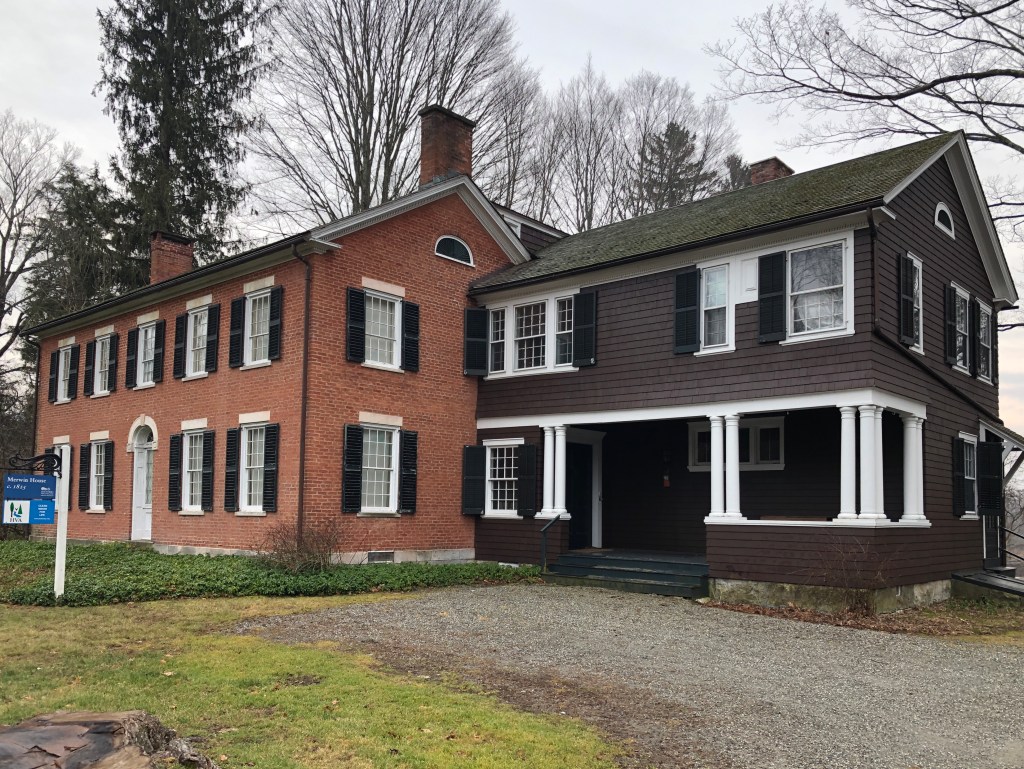
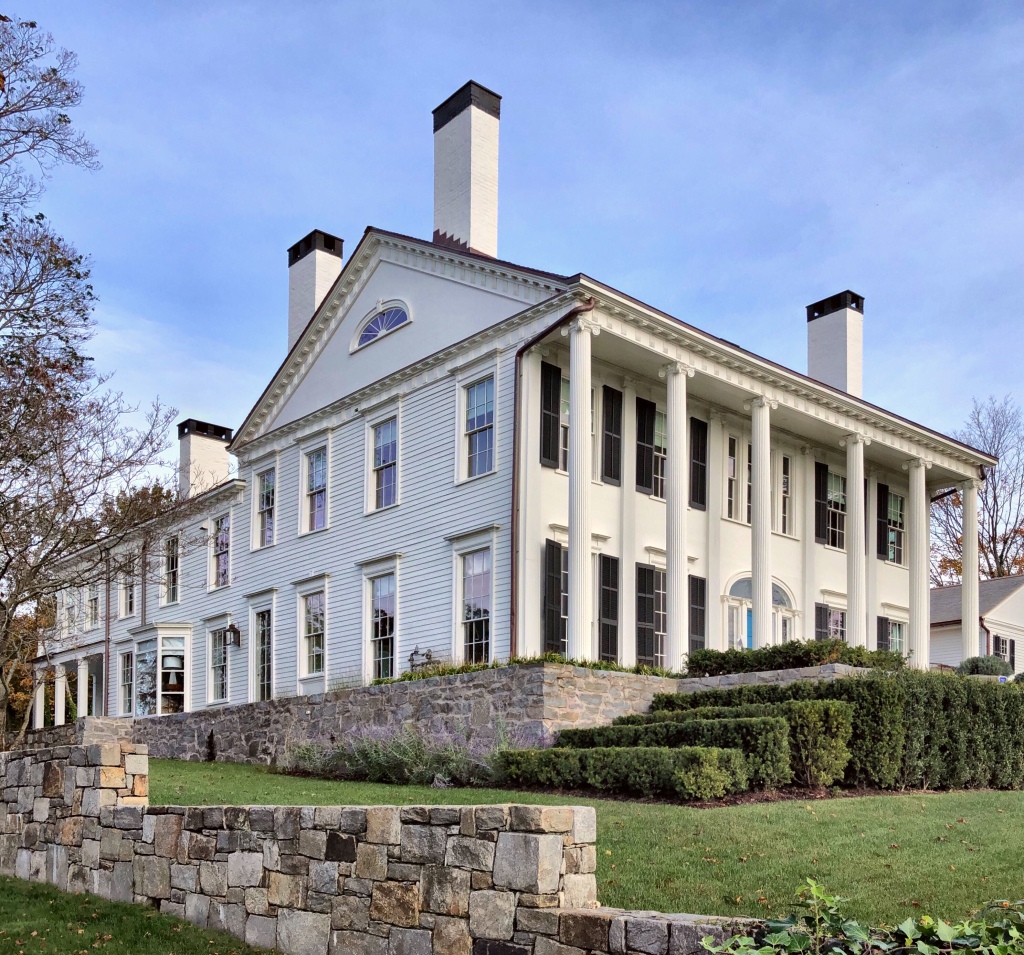
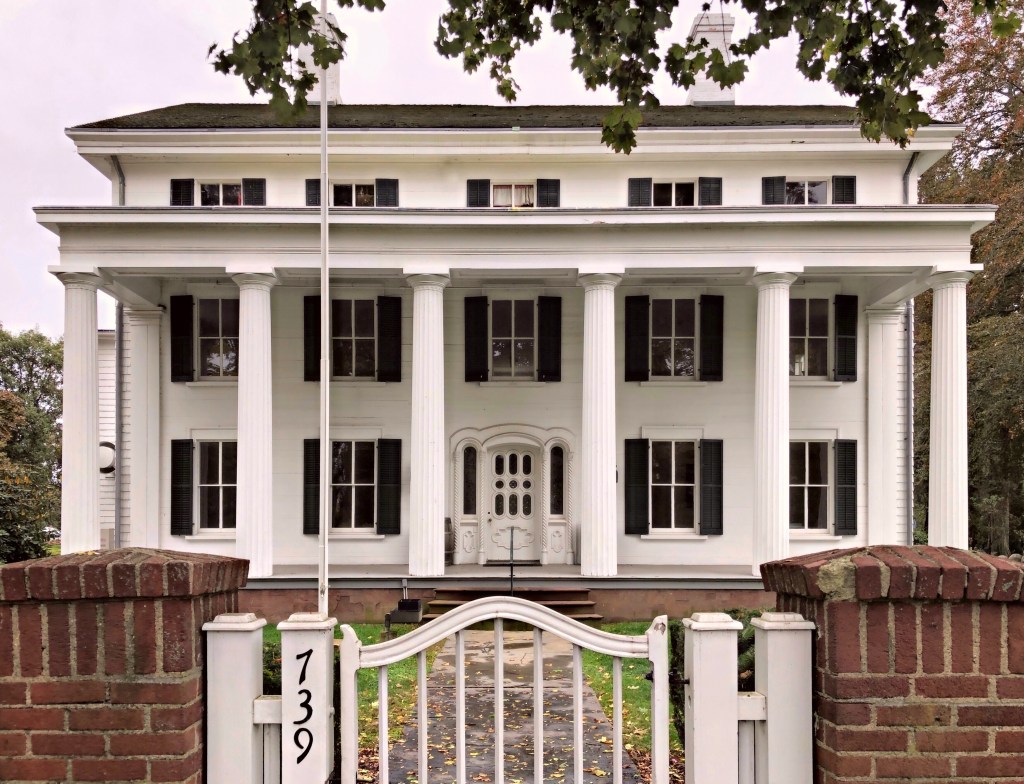
Parker-Hoogs-Baury House // c.1755

Thought to be the oldest extant house in Newton Lower Falls, this historic mansion has seen a lot of change over its nearly 300 years in the village. The house believed to have been built around 1755 by John Parker (1687-1761) for his son Ezra (b. 1731) after his marriage. William Hoogs, a ship carpenter from Boston, took ownership of the house in 1781 from his father-in-law (and boss), Aster Stoddard, who had bought it from the Parker family. William Hoogs was a sole-owner of a paper mill in the village and made a good name for himself. The house was likely modified during this period in the Federal style, with a third floor added. The home was possibly passed to his son, also William, who was written about in papers as fleeing town to Canada with the family maid, who was late in her pregnancy and their two-year-old child together. Hoogs had debtors looking for him. Hoogs had a change of heart and sent for his eight children to live with him in Quebec that same year. Sadly, the ship bringing them up sunk on Lake Champlain and all perished. By 1813, the property was purchased by Samuel Brown of Boston, a wealthy merchant who was a strong financial supporter of Saint Mary’s Church. By 1825, he officially bequeathed the property to Dr. Alfred Louis Baury (1764-1865) rector of Saint Mary’s Church. By 1917, the Lucy Jackson Chapter of the Daughters of the American Revolution operated it as a chapter house and a museum for antiques. In 1971, the Newton Redevelopment Authority bought the property and sold it to a developer for conversion into office space, it was rotated 90 degrees to face Concord Street at this time.

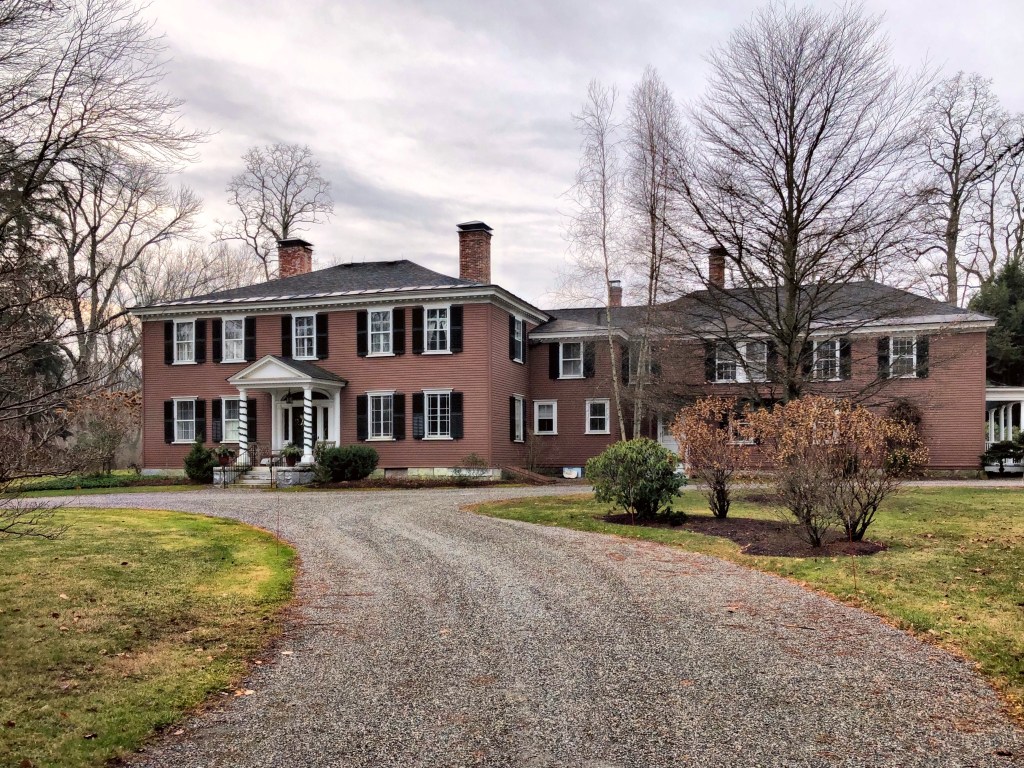
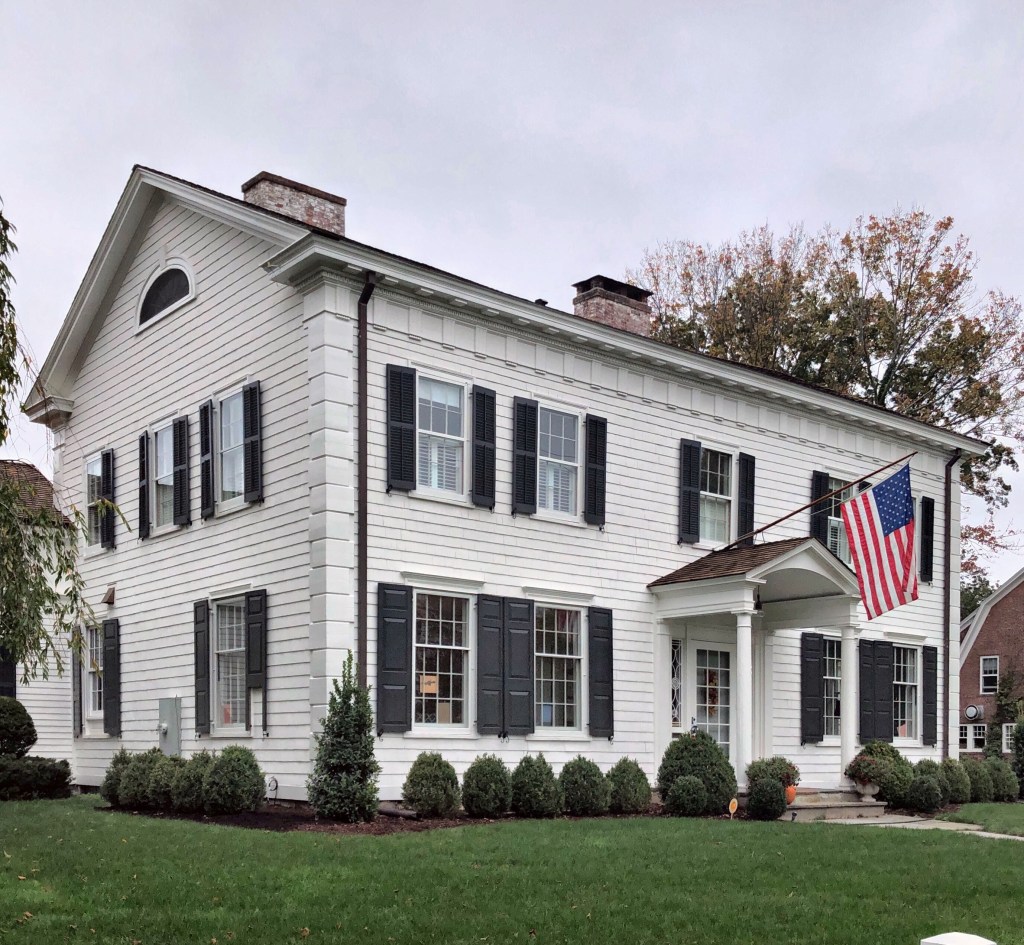
Haskell House // 1830s

Located next to the John Wright House (last post), this gorgeous 19th century home blends the Federal and Greek Revival styles elegantly under one roof. The house was likely built in the 1830s when the Federal style was waning in popularity and the Greek Revival style was THE style for houses and churches in New England. By 1850, the property was owned by William T. Haskell.

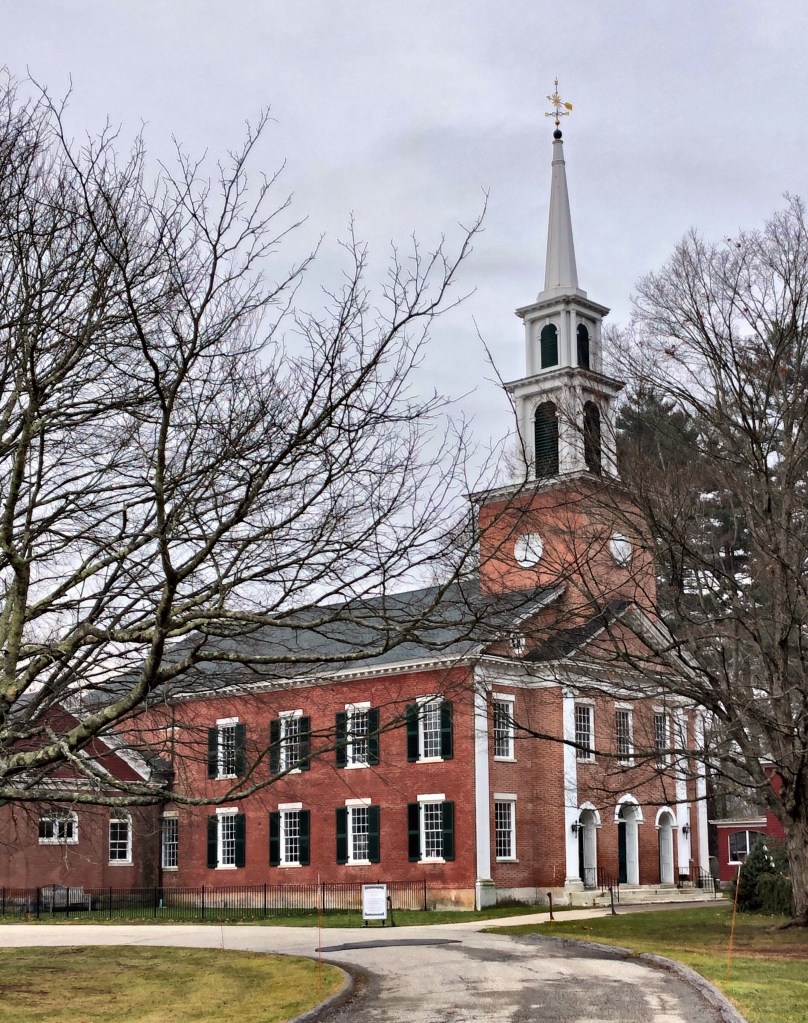
Old North Church, Marblehead // 1825

Old North Church, formally the First Church of Christ Marblehead, was organized in 1635 by fishermen and mariners who formed a church to relieve them of the burden of travel to Salem in order to receive church sacraments and participate in civil affairs (before the separation of church and state). They met in member’s homes until 1638, when a meeting house was constructed overlooking the ocean. By 1695, a “modern” church structure was built on Franklin Street. The structure was not adequate for the growing wealth and prosperity of the town, as Marblehead emerged from local cod fishing to overseas trade. In 1824, merchant-politician William Reed helped the congregation acquire a large lot on Washington Street. Within a year, the new stone church was built. The stone to build the church was blasted from the ledge upon which it stands. In 1879, a wooden meeting house was built to accommodate an increased membership at prayer meetings. The detached meeting house was added onto in 1951, connecting it to the stone church. The two attached buildings were designed/re-designed in the Colonial Revival style to add to the architectural composition of the old Federal period church.

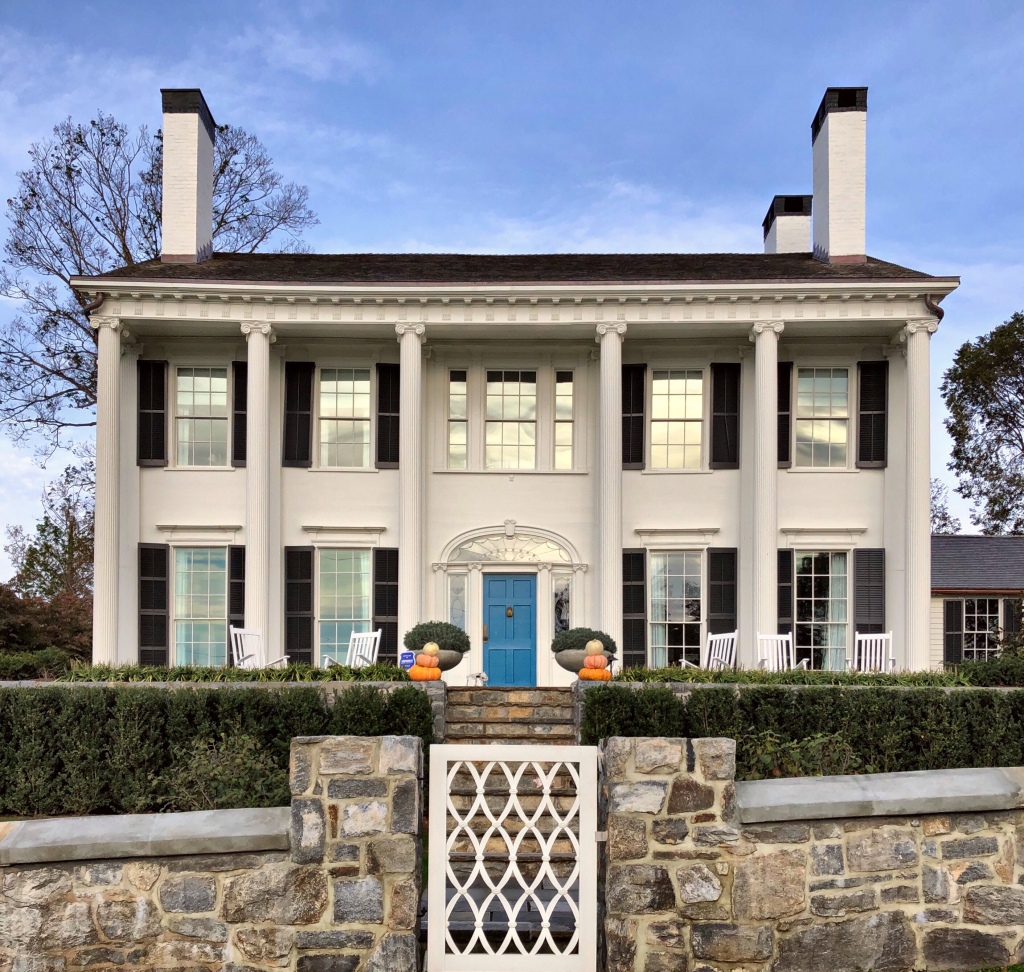
Cross-Kimball House // 1804

In 1803, sea-captain John J. Cross (1768-1804) began building a large Federal style house on land he purchased from his success on the open sea, largely working for the Hoopers. Sadly, before the home was finished, Captain Cross and all his men aboard his ship, the “Traveller” died at sea. The home, which was to be finished by the time of his return was left abandoned when news got back to the shore of the ship’s loss. His wife and three children were devastated and likely sold the property not long after. The property was owned later by Edmund Kimball, a sea-merchant who married into the Hooper Family. Kimball did well for himself and eventually owned multiple vessels. After his first wife, Mary Hooper Kimball died bearing him six children, Edmund remarried to Lydia Mugford Russell. The family home across from the town’s common has been very well preserved since and is an excellent example of a vernacular three-story Federal home on the North Shore.

John Goodwin House // c.1810

Oh, Marblehead, why are you so pretty? The town of Marblehead was originally called Massebequash after the river which ran between it and Salem. The land was inhabited by the Naumkeag tribe under the sachem Nanepashemet. Epidemics in the early 1600s devastated the tribe’s population leading to it’s colonization. In 1635, the General Court of Massachusetts Bay established the town of Marblehead on land that belonged to Salem. The citizens in Marblehead were less devout and conservative than others in Salem, and they incorporated as their own town in 1649. Now… the name. Marblehead is believed to have gotten its name by settlers who mistook its granite ledges and cliffs for marble. The mistake stuck as the namesake. The town thrived as a fishing village, with many fishermen and sea-based jobs, with homes built on small lots along the warren of narrow streets. This home sits on Washington Street, one of the major streets in the Old Town. The home was built around 1810 for John Goodwin on land formerly owned by his grandfather. The Federal style home sits atop a raised stone foundation and has been excellently preserved.

Reverend Abel Fiske House // c.1791

Reverend Abel Fiske (1752-1802) was born in Pepperell, Massachusetts and graduated from Harvard College in the class of 1774. Four years later in 1778, at 26 years old, he was ordained as the successor of Reverend Jonathan Livermore at Wilton, New Hampshire, where he remained until his death. During his time in Wilton, Rev. Fiske built this Federal style home for his family. The house is a short walk to the old church where he gave sermons to the growing rural community.

Buss-Newell House // c.1800

One of the finest Federal homes in southern New Hampshire is this residence that sits in the middle of Wilton Center. The home appears to have been built for Richard Taylor Buss, or another member of the Buss Family who settled in Wilton in the 18th century. By the second half of the 19th century, the property was owned by George A. Newell, who built a gorgeous Victorian era stable on the property. Swoon!!

Wilton Center Baptist Church // 1827

Located next to the Blanchard House, the old Wilton Center Baptist Church stands as one of the only brick buildings in Wilton Center, New Hampshire. Baptists in town originally met and worshipped in nearby Mason, NH, but eventually began services in town. By the 1820s, a new edifice was needed, and the members pooled resources, largely from wealthier members for funding for a new church. The Federal style brick church is stunning with its recessed arched panels surrounding the windows and doors, and its steeple. The building has been converted to residential use.

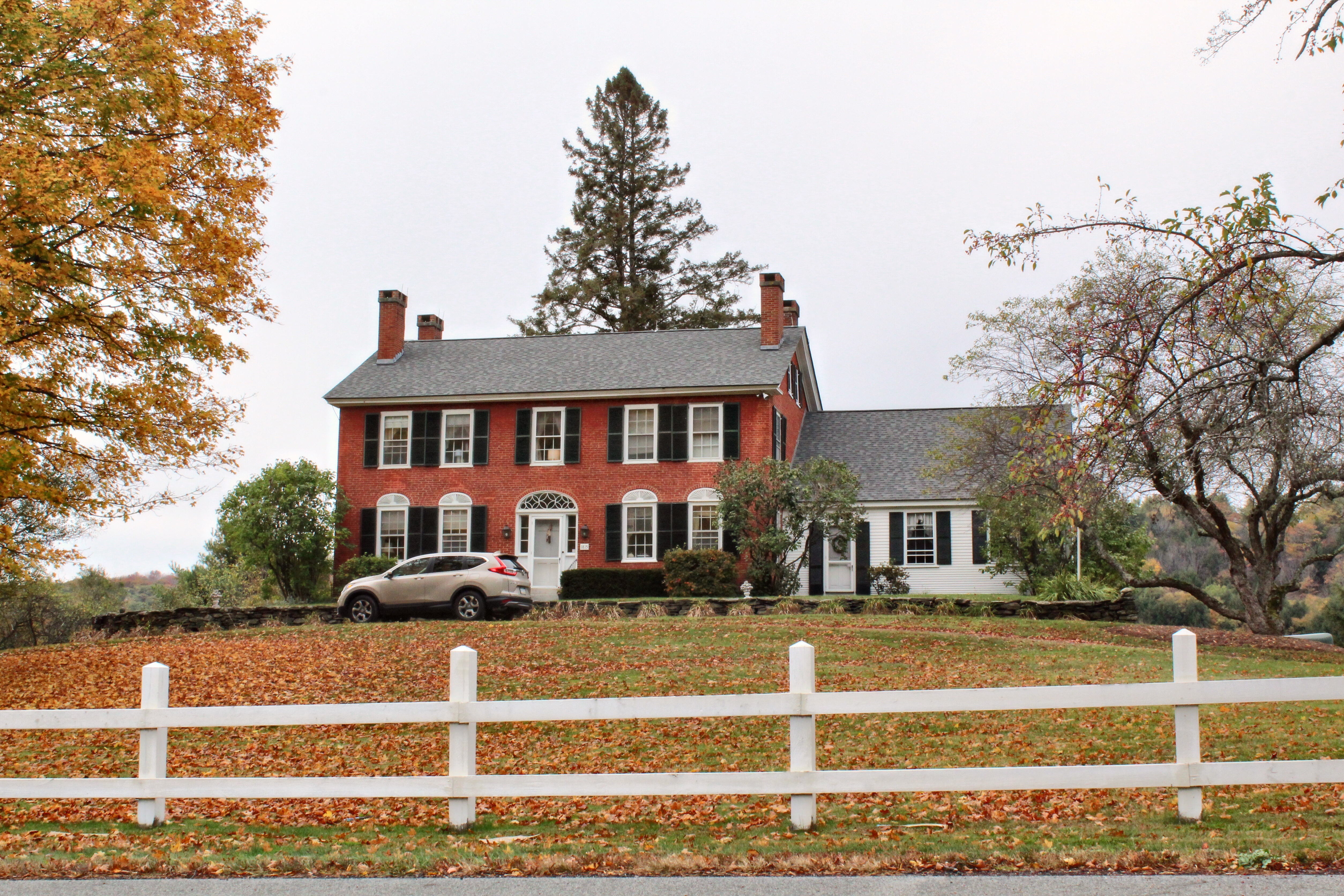
Aaron and Susan Parker Farmhouse // 1796

The oldest portion of this beautiful brick farmhouse in Cavendish, Vermont, its rear ell which was built about 1796 by Aaron Parker Jr., the son of one of Cavendish’s early settlers. Aaron married Susan Sherman in 1796 and likely had a home built here where they could start their family. Sometime in the 1810s, Aaron built the brick main block to which it is now attached. The blind arches and simple transom window above the door were common in brick Federal homes in this region at the time. The Federal style really took off in popularity in New England after the 1797 architectural pattern book, “Country Builder’s Assistant” by Asher Benjamin, who was a resident of nearby Windsor, VT. This home remained in the Parker family until the Great Depression, when it was sold off. The home remains extremely well preserved and is a great example of a rural Federal-period farmhouse in Central Vermont.

Oliver Tarbell House // c.1830

Oliver Tarbell and his wife Sandy erected this stunning brick Federal farmhouse in Cavendish around 1830 for their ever-growing family. The couple had thirteen children who survived infancy, so even this large home was likely stuffed to the gills and hectic! Oliver appears to have built the home, incorporating his ancestral home onto the rear of this brick house, as a rear ell. The house recently sold in 2022, so of course I had to gawk at the amazing interior photos