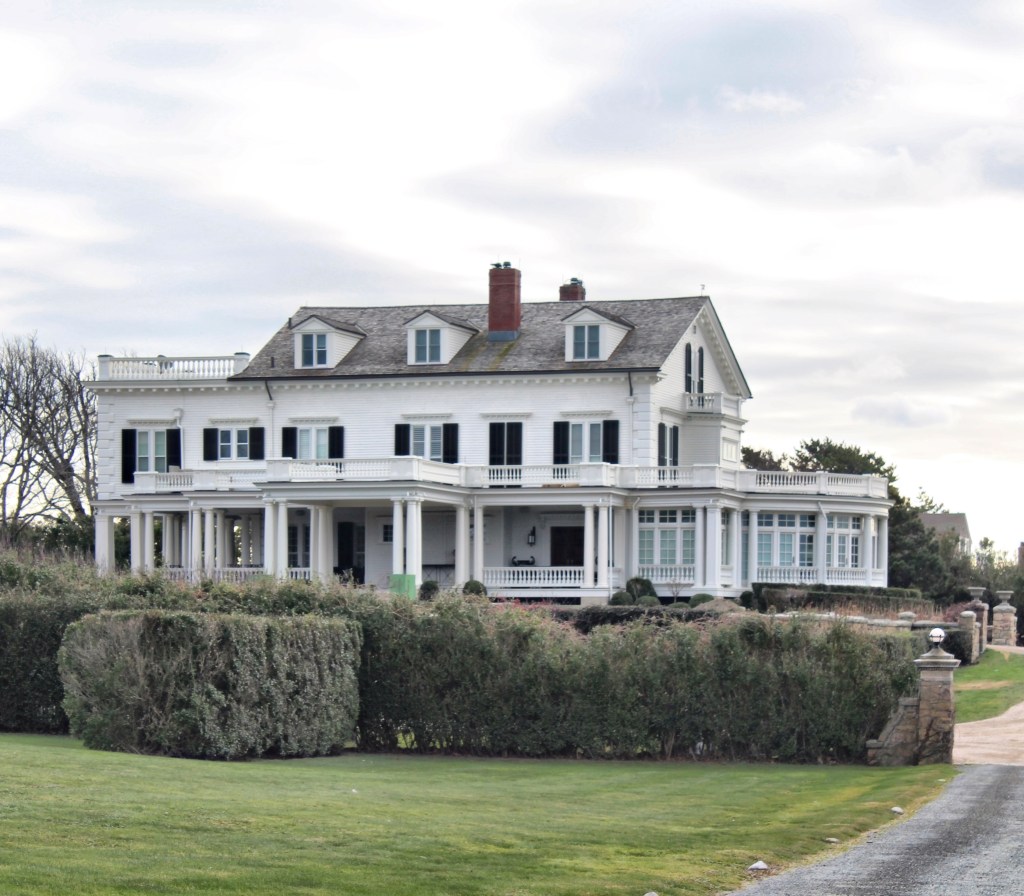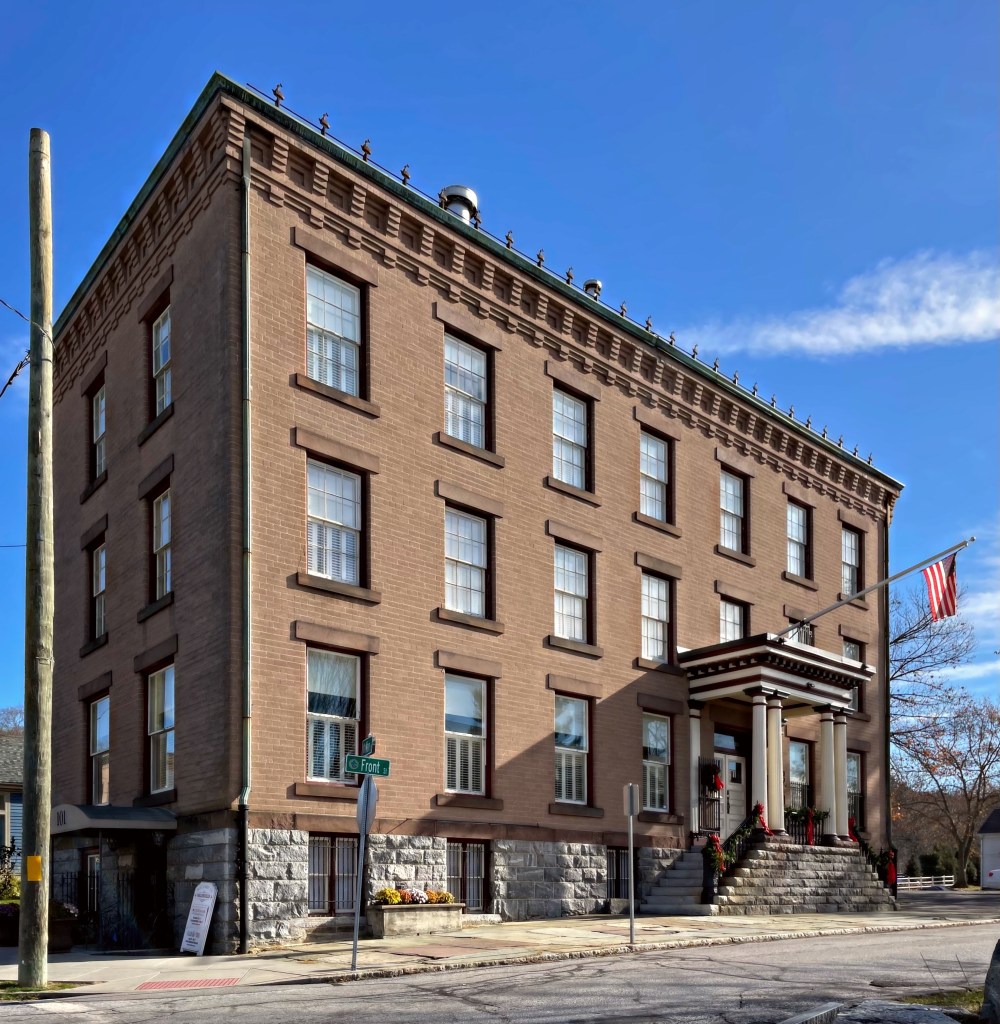
Waterbury Railroad Depot // 1875

Historic train stations are among some of my favorite types of buildings as they transport you to a different time (no pun intended). The Waterbury Railroad Depot was built in 1875 by the Central Vermont Railroad, connecting Montreal, Quebec with New London, CT and to other lines to Boston and Albany on the way. Waterbury service began in 1849, but this updated station was built later as the railway prospered and expanded. The station suffered from some deferred maintenance for decades in the mid-20th century and its fate (like many such stations) was unknown. Beginning in the late 1990s into the 2000s, Revitalizing Waterbury worked with the Great American Station Foundation, the Vermont Agency of Transportation, and Green Mountain Coffee Roasters Foundation, establishing a capital fundraising campaign meeting the goal of $1,200,000 through donations from the private sector and community members. These funds helped restore the building in phases, beginning when Keurig Green Mountain, Inc. agreed to lease the station from Revitalizing Waterbury, and created a visitor center and cafe (now Black Cap Coffee and Bakery) that has become a first-class attraction and provided an economic boost to the downtown.

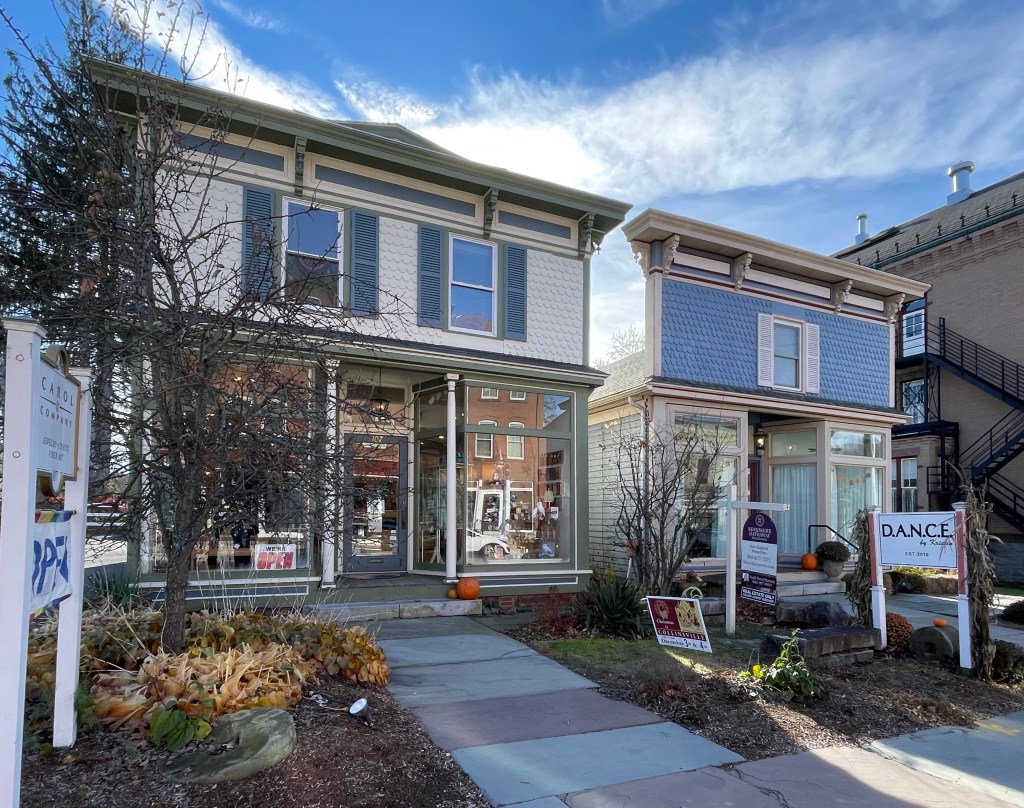
Charles C. Warren House // c.1880

Located just steps from the former State Hospital of Vermont in Waterbury, the Charles C. Warren House on Main Street stands as an important Victorian-era residence in the town. The late Italianate style residence features a detached carriage house at the rear which was later converted to a auto garage and most recently to office space. Mr. Warren was a businessman in town who owned a tannery and creamery. He built a water system in the town in 1879, making a substantial amount of money in the process. Mr. Warren was a serious auto enthusiast who in addition to purchasing the first automobile in Vermont (a 1899 Haynes Apperson), he held Vermont registrations #1 and #2. He had his carriage house converted to an auto garage equipped with a turntable that obviated forever the tedium of backing down the driveway. The building is now home to a law office.

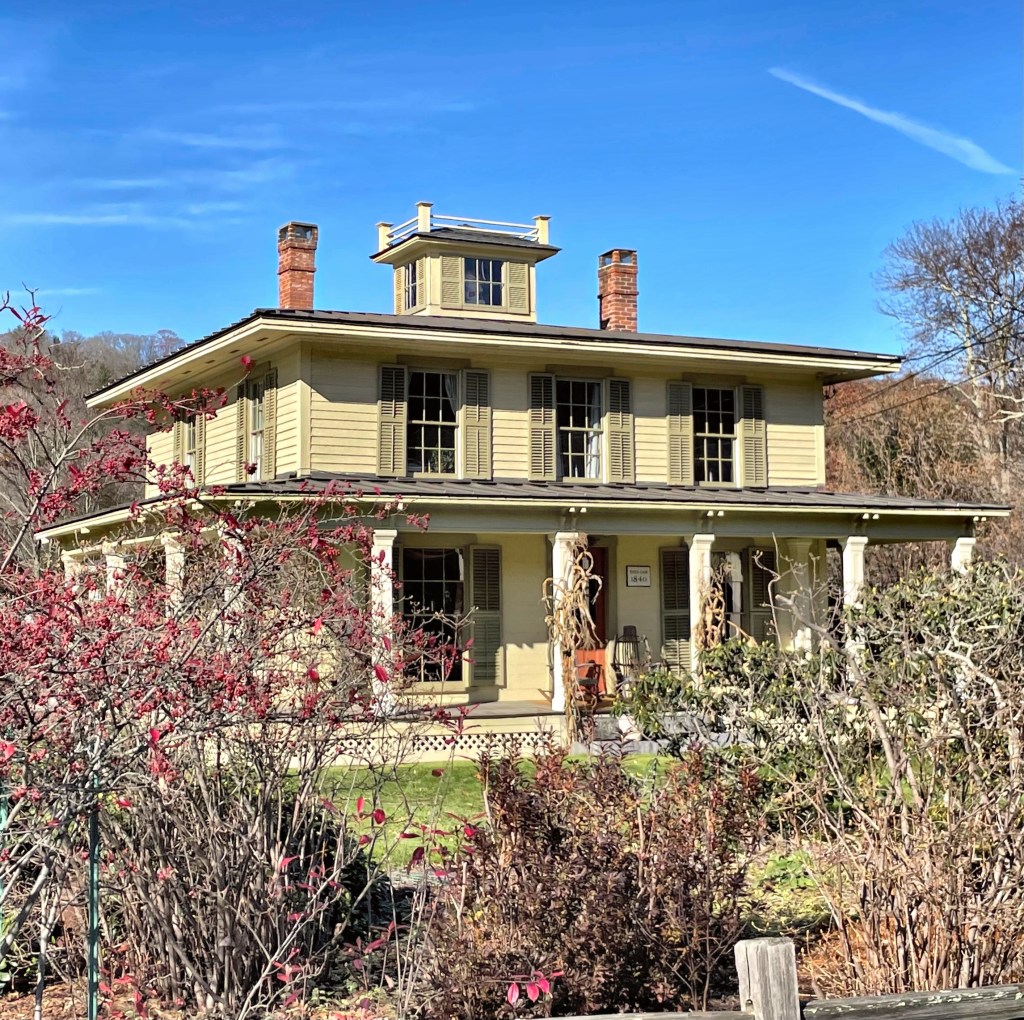
Isaac Newton Center Homestead // c.1850

Isaac Newton Center (1811-1889) was born in Windham, NH and arrived to the rural town of Litchfield, NH in its early days. Upon arrival, he appears to have built this homestead sometime in the mid-19th century based on its style. Like many in town, he was a farmer and was involved with the local Presbyterian Church, which is still neighboring this old farmhouse. After his death, the old farmhouse and homestead was inherited by Isaac’s youngest son, Isaac Newton Center, Jr., who was engaged in local town affairs, serving as City Clerk, Treasurer, Forest Fire Warden, and Library Trustee. The house appears as a melding of late Greek Revival and Italianate, possibly from the 1850s or 1860s.

Dike-Harkness House // 1854

One of the most stunning Italianate style homes in Providence is this stately beauty which is located on Prospect Street. The house was built in 1854 on land sold from Oscar to Henry A. Dike (Dyke), a shoe manufacturer, who erected this stately residence for his family, who only remained there until the early 1860s when it was sold. The home was built on one lot, facing a second house lot, and not the street like many other residences. The property changed hands many times during and soon after the American Civil War, until 1870, when it was purchased by Albert Harkness (1822-1907), a Brown University Classics professor. It was in Professor Harkness’ ownership that the southern house lot was landscaped from plans by Frederick Law Olmsted‘s firm in 1887. The house, which recently sold in 2022, is well-preserved from its massive brackets to the oversized belvedere at the roof!

Oliver Walker House // c.1809

The Oliver Walker House in Kennebunkport Village is one of the better examples that shows how overlapping architectural styles can work really well on an old house (when done right)! The original house was constructed around 1809 for Oliver Walker (1788-1851), a sea captain who later accepted the call and became a deacon for the South Congregational Church in Kennebunkport. Walker died in 1851 and the Federal style property was inherited by his only surviving child, daughter Susan, who had married Portland native, Captain John Lowell Little. Under their ownership, the traditionally designed Federal house was modernized with fashionable Italianate style modifications of the decorative brackets and an enclosed round arched window in the side gable. A later Colonial Revival projecting vestibule adds to the complex, yet pleasing design. I have a feeling the interiors of this house are just as spectacular as the exterior.

Benjamin Mason Store // c.1815

Across from the Luques Store in Dock Square in Kennebunkport, another 19th century commercial building serves as a visual anchor to the vibrant village, this is the Benjamin Mason Store. Built in the 1810s, the Federal style commercial block was originally owned by businessman Benjamin Mason (1777-1855) who built a house in 1812 just nextdoor (which has since been converted to commercial use). The store is three-stories with a cupola at the roof. Later porches were added as the village prospered.

Roswell B. Fitch Store // 1851

Roswell Burrows Fitch (1833-1908) was born in the seaside village of Noank to parents Elisha and Mary P. Fitch. At twelve years of age he commenced to be self-supporting, and from then until he was fourteen, occupied a clerkship in a general store in town. In his teens, summers were spent aboard ships fishing for a livelihood, and his winters attending school. Upon completing his education, he became clerk in a store, and was afterwards engaged to assume the management of a union store which was erected for the special purpose of being placed under his charge. This building was constructed as the union store in 1851 with eighteen-year-old Roswell becoming an active partner in the business. In his twenties, he slowly bought out, one-by-one, the twelve other owners, until he possessed absolute control. The eclectic Greek Revival and Italianate style building features classical detailing, but with a bracketed cornice and gambrel roof which is capped by a parapet. Mr. Fitch retired from business in 1890 and got to work “Victorianizing” his nearby home. Stay tuned for the next post which features his home in Noank.

Woods-Gerry House // 1860

There are always those houses that just stop you in your tracks… For my last post (for the time being) on Providence, I wanted to share this significant property, known as the Woods-Gerry House, perched atop College Hill. Owner Marshall Woods, who married into the Brown family and was active in the affairs of Brown University. Locally he was also involved on the building committee for St. Stephen’s Church where he was a factor in selecting renowned architect Richard Upjohn to design the church. He must have liked Upjohn so much (or got a good deal) that he hired Richard Upjohn to design his new home on Prospect Street. The exterior of the three-story brick building stands out amongst the other Italianate mansions built in the same decade nearby, but is elevated design-wise with a bowed centerpiece on its east elevation with the handsome new front entrance renovated in 1931 by then-owner, Senator Peter Gerry, who was a great-grandson of Elbridge Gerry, the fifth Vice President of the United States (who had given his name to the term gerrymandering). Today, this significant building is owned by the Rhode Island School of Design and houses the Woods Gerry Gallery. The grounds are also very well designed.

Smith Owen Mansion // 1861

You honestly cannot beat Providence when it comes to brick Italianate mansions… The Smith Owen Mansion on College Hill was built in 1861 for jeweler and silversmith Smith Owen (1809-1889) and is one of the finest homes in a neighborhood full of historically and architecturally significant properties. Mr. Owen was in business with his brother George, and they manufactured and sold some of the best jewelery in the region, largely from their commercial block downtown (featured here previously). He hired Alpheus C. Morse and Alfred Stone, local architects who furnished the plans for the colossal home. Owen lived here until his death, which occurred less than a week after his wife’s passing. His daughter Lydia Dexter Owen Beckwith (1850-1947) inherited the property and lived here with her family until her death. It was under Lydia’s ownership that the Colonial Revival entrance details were added with projecting vestibule with columns and urns and central fan transom. It is really something special!

William Binney House // 1859

Another of Providence’s stunning monumental Italianate mansions on College Hill is this, the William Binney House, which was built in 1859 from plans by local architect Alpheus C. Morse. In the mode of an Italian Renaissance palace, it features a strong, symmetrical facade, molded string course, classic trim detail at the windows and doors in brownstone, and a shallow hip roof. The original owner, William Binney (1825-1909) was born in Philadelphia and became a prominent attorney and became involved on various boards, building more wealth. Additionally, he was elected as member of the Rhode Island Assembly and the Providence City Council continuously 1857 to 1874. The house’s rear ell and wooden bay would provide sweeping views to Downtown Providence even today from the aptly named Prospect Street.