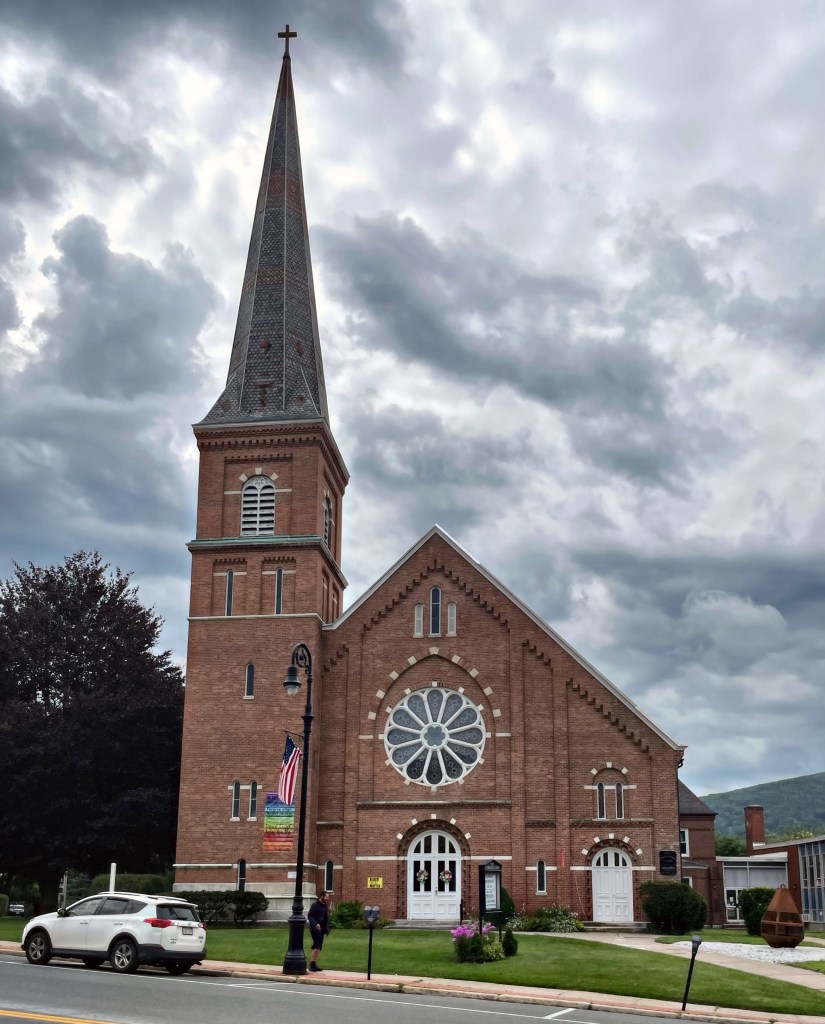
First Congregational Church of North Adams // 1863

Initially the Congregationalists of Adams and North Adams, Massachusetts met in a small, wooden meetinghouse that was lent to them for use by the Baptist Church. The small, but active congregation totaled just 22 people; 5 men and 17 women. The first minister of the church, John W. Yeomans, worked diligently to see the new church succeed. He was able to raise $3000 from Congregationalist members here and in surrounding communities to build a church of their own. In 1827, a new brick meetinghouse was constructed on the site of the current building. Due to the continuing growth of the church, a new building was necessary after membership outgrew the brick meetinghouse. Bricks from the 1827 building were used in the construction of this church. Architect Charles Edward Parker began construction of the First Congregational Church during 1863 and finished building in 1865. The church was constructed in the Romanesque Revival style; which can be seen in the church’s narrow elongated windows that are covered with wide stone arches, as well as its brick and stone construction, and the building’s slate, conical-shaped roof. What a textbook academic example of an early Romanesque church, especially in a relatively remote town!
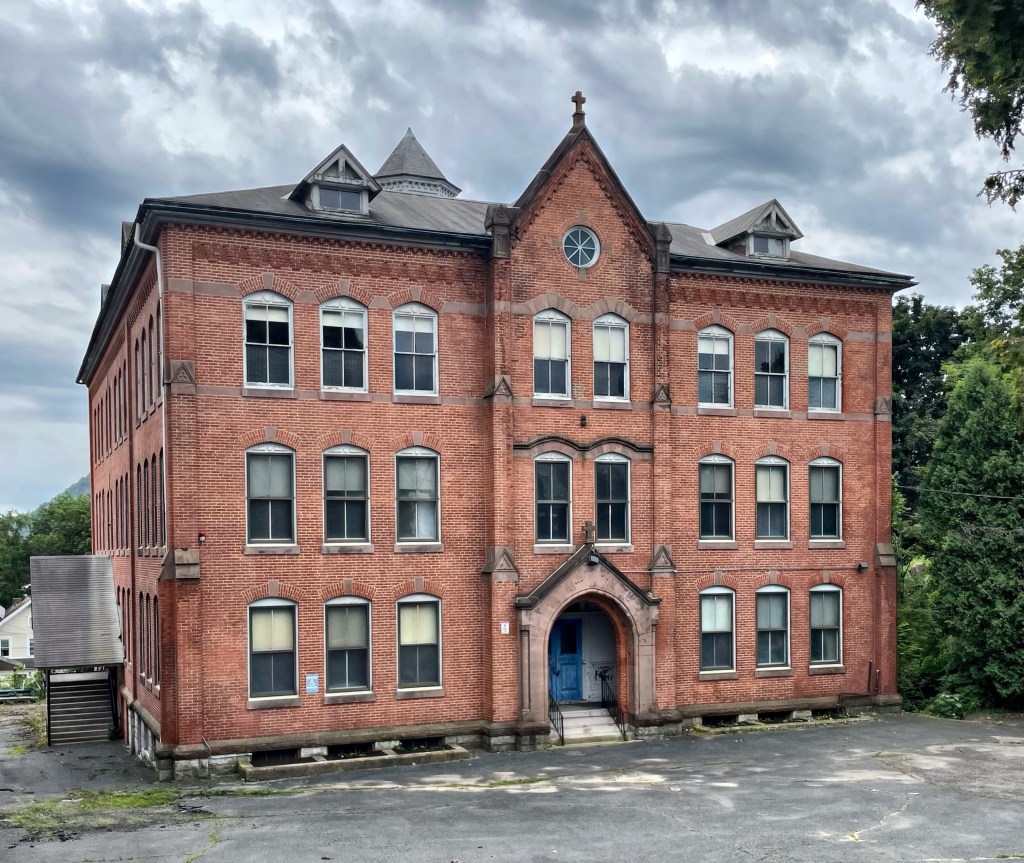
Former Notre Dame Parochial School // 1898

Located next door to the former Notre Dame Roman Catholic Church in North Adams, Massachusetts, this stunning former school building stopped me in my tracks. The sad fact is that the former school is seemingly vacant makes me really sad and concerned for the future of the building. This beauty was constructed in 1898 to serve as a school associated with the Notre Dame Roman Catholic Church located to its east. Local architect Edwin Thayer Barlow, who formerly worked with Carrere and Hastings, designed the building in the Queen Anne and Romanesque Revival styles, both popular at the time. The school remained in operation until the 1968-1969 school year, after several years of declining enrollment. The City of North Adams leased the school beginning in the 1969-1970 school year to relieve overcrowding at the public schools. In 2008, the City of North Adams purchased the school and church properties from the Springfield Roman Catholic Church Diocese after the church closed in 2005, but no plans have yet materialized to restore the beauties. What would you like to see this building converted into?

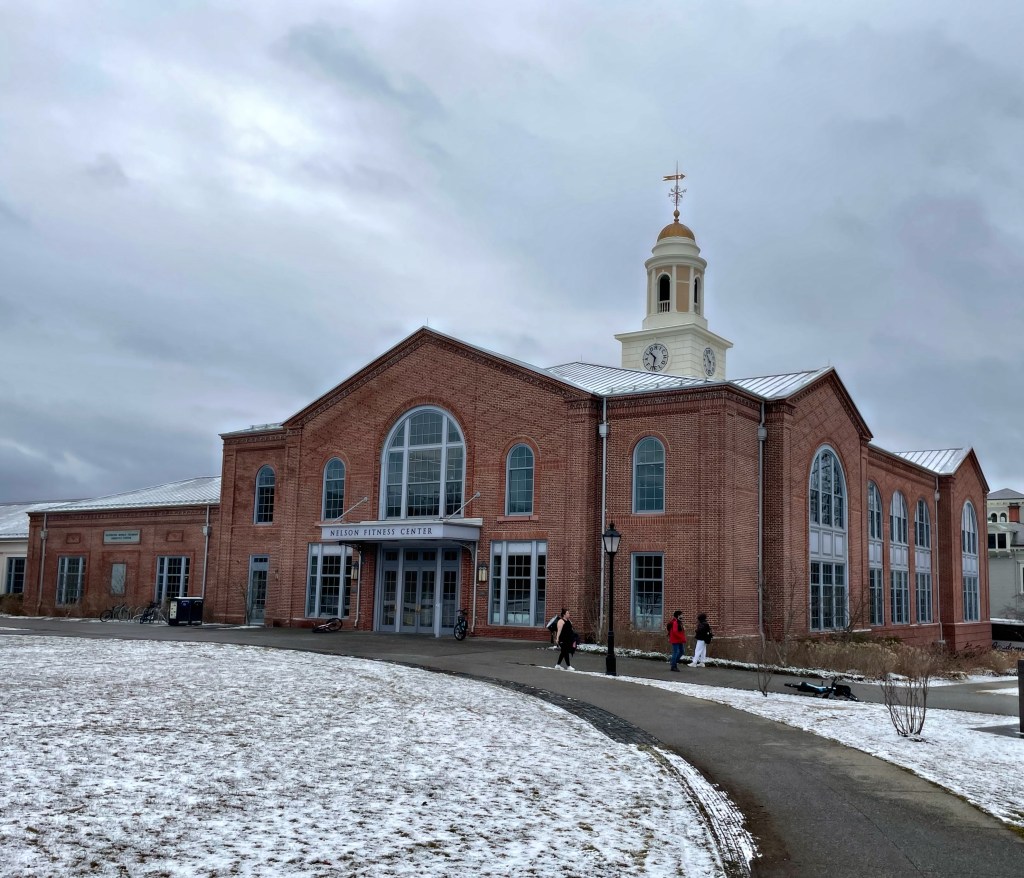
Nelson Fitness Center – Brown University // 2012

When I walked by Brown University’s athletic center, I assumed it was an older building, but was so plesantly surprised to learn that the building was actually completed in 2012! The 84,000-square foot aquatics and fitness center is a $46-million addition to the existing athletic facilities built on and near the site of the former Smith Swim Center. Designed by Robert A.M. Stern Architects and constructed by Shawmut Design and Construction, the project includes the Katherine Moran Coleman Aquatics Center, the Nelson Fitness Center, the David J. Zucconi Varsity Strength and Conditioning Center. Architecturally, the buildings seamlessly blend into their surroundings thanks to timeless traditional design and high-quality materials. The stunning cupola was actually the original cupola from Marvel Gymnasium, a Brown University gymnasium demolished in 2002, it was added atop the Nelson Fitness Center preserving some history of old Brown. American colleges and universities need more of this high-quality design, kudos RAMSA Architects.

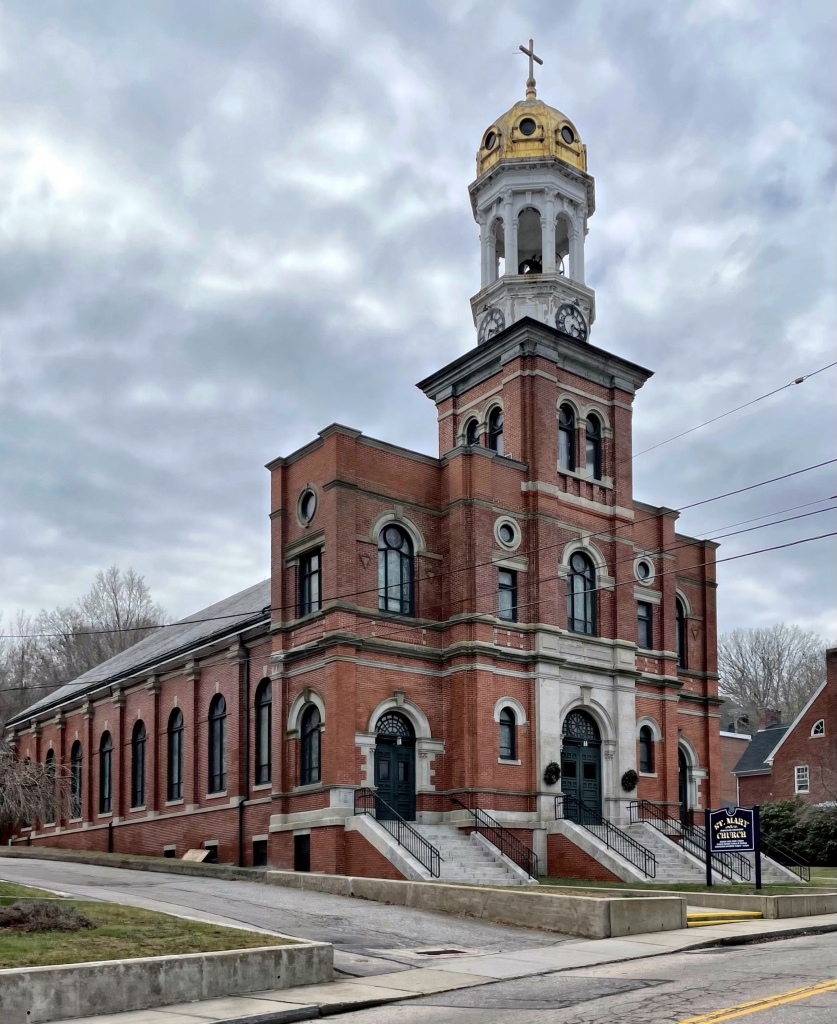
St. Mary of the Immaculate Conception Church // 1911

One of the grandest and high-style buildings in Sprague’s Baltic Village is the St. Mary of the Immaculate Conception Church. As Irish, French- Canadians and Poles settled in the village of Baltic, they formed a substantial Catholic community. This congregation was founded by 1860 and a modest church building was erected at that time. As the town’s Catholic population grew, the Archdiocese decided to fund a new church building. This Romanesque Revival style building was constructed in 1911 and it must have made a big statement when it was completed. The building is one of the most unique church designs that I have seen in Connecticut.

Sprague Former Town Hall and Fire Station // 1911

At the turn of the 20th century, the town of Sprague (including Baltic Village), had 1,300 residents. Just ten years later, in 1910, the population doubled, largely due to Frederick Sayles‘ purchase of the Sprague Mill and re-investment in the village’s housing and buildings. The need for new town offices and a fire station was evident, and this building in the village was constructed in 1911 to serve both needs. The old Town Hall and Fire Station is a late example of Romanesque Revival style architecture with the arched windows at the second floor and in the dormer. The space was outgrown again and the town offices relocated to a Modern building down the street after WWII.

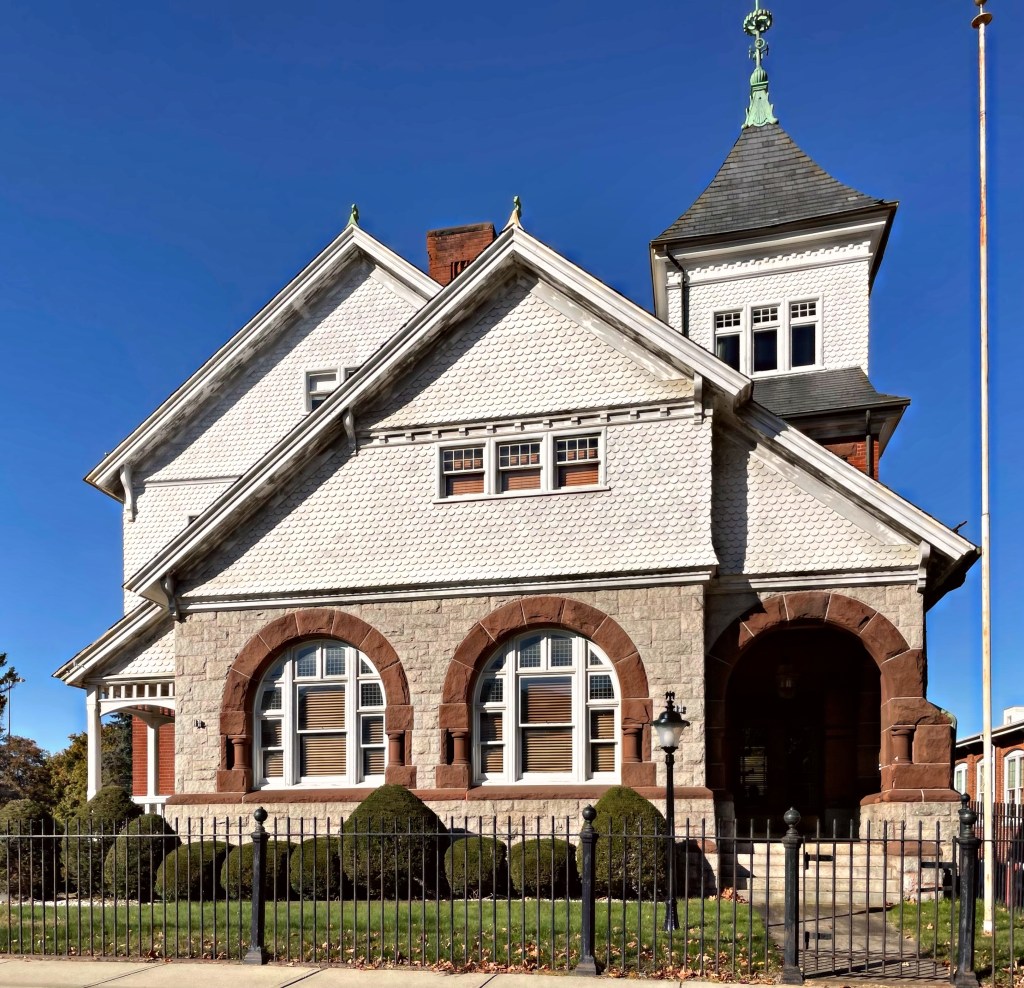
George H. Gilbert Company Offices // 1885

South of the Ware River in Ware’s Industrial Village, you will find this absolutely charming former manufacturing office on the side of the road. The building was constructed in 1885 for the George H. Gilbert Co., a textile manufacturer, as the company offices. The building’s architect could not be readily located, but the building appears to have been the work of a skilled designer. When the Gilbert Company relocated north to a new industrial village of Gilbertville, the Joseph T. Wood Shoe Company moved in. The building now appears to be owned by the present occupant of the mill building nextdoor, American Athletic Shoe Company. The former Gilbert Co. Office is one of the more high-style buildings in the town of Ware and exhibits the best in Queen Anne and Romanesque Revival architecture.

Ogunquit Public Library // 1897

One of Maine’s most charming libraries is right in the coastal village of Ogunquit, and like many of the greatest, it was built as a memorial to someone. George Mecum Conarroe was born Nov. 9, 1831. His father, George Washington Conarroe, was an accomplished Philadelphia portrait artist who provided his family with every advantage mostly from an inherited family fortune. The Conarroes and their cousins, the Trotters, who summered at Cape Arundel, had been associated in a very successful steel venture for several previous generations. George M. Conarroe apprenticed in a Philadelphia law firm and was admitted to the Bar in 1853. He ran a successful probate law practice and his prudent real estate development investments enhanced his formidable fortune. Nannie Dunlap, daughter of another leading Philadelphia lawyer married George M. Conarroe in 1868, they were inseparable. He built a summer estate in York Cliffs, a burgeoning Summer colony just south of Ogunquit (then a part of Wells). George died in 1896, and Nannie fought to keep her late husband’s legacy living in the coastal area he loved so much. She hired Philadelphia architect Charles M. Burns to design a new summer chapel in York and this beautiful village library in Ogunquit. The library was constructed of fieldstone taken from the site and is a lovely example of the Romanesque Revival and Queen Anne architectural styles in Maine.

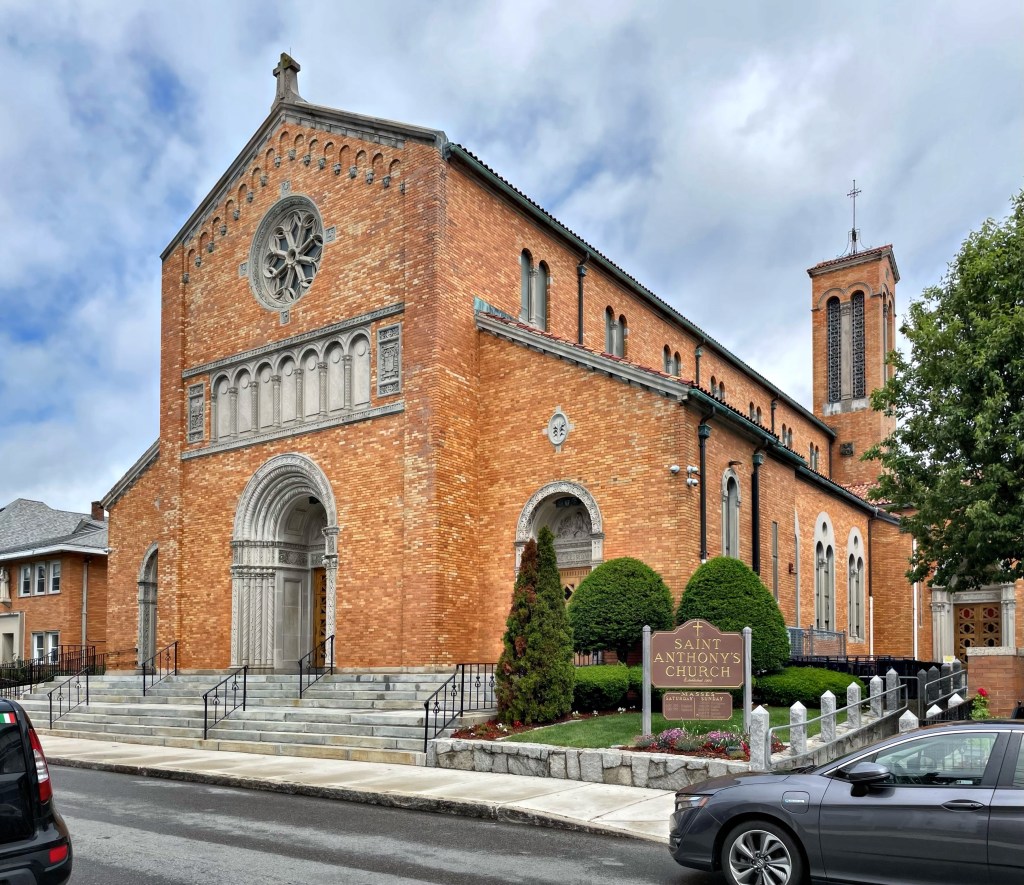
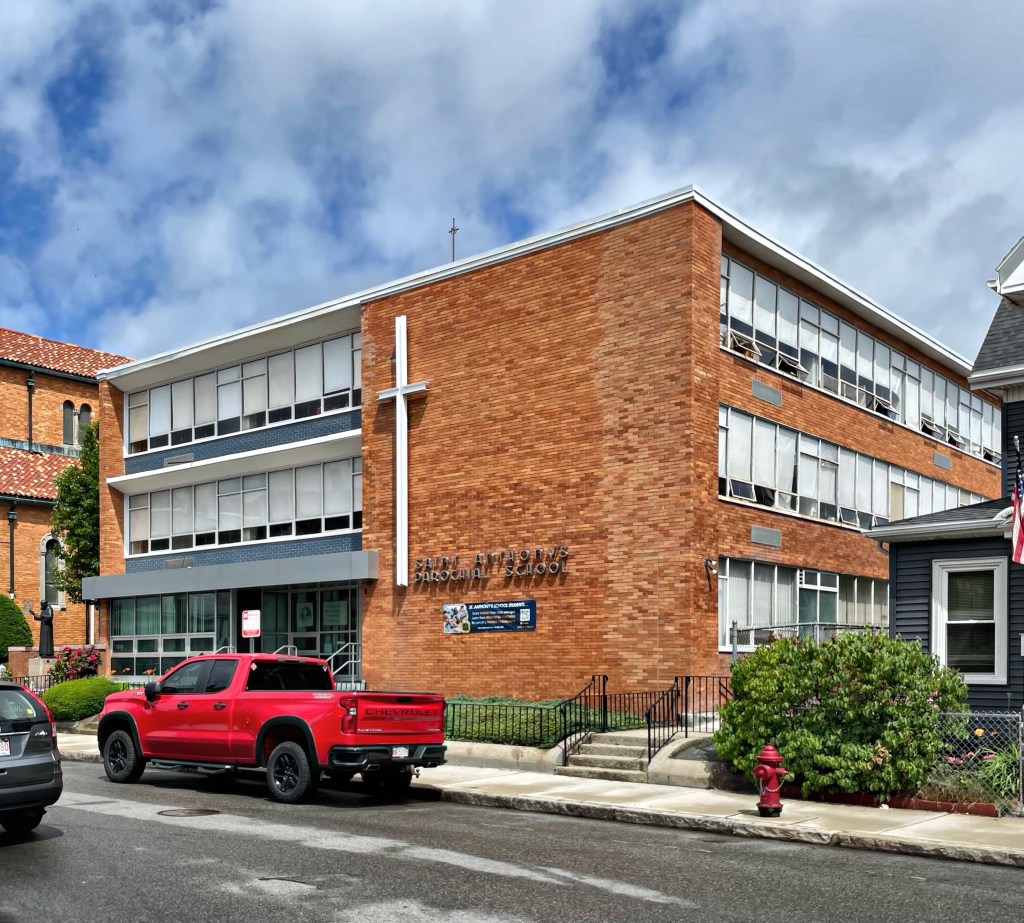
St. Anthony’s Church Campus // 1951

In the 1920s Italian-speaking residents in Everett, Massachusetts appealed to Archbishop of Boston, William O’Connell for an Italian parish. Everett had seen a large influx of Italian immigrants who settled in town and the surrounding communities for work. The Archdiocese saw the demand, and rented the former Broadway Theater to be used as a church for the short term. In 1951, land was acquired a few blocks away for a new church, school and rectory. The church was designed to resemble historic Romanesque-style churches seen in Italy, with the school and renovated rectory following the Modern tradition. The brick and limestone church appears to have been built more in the historical tradition, with hand-carved stone trim and a beautiful rose window. It’s amazing that this church was built in the 1950s!

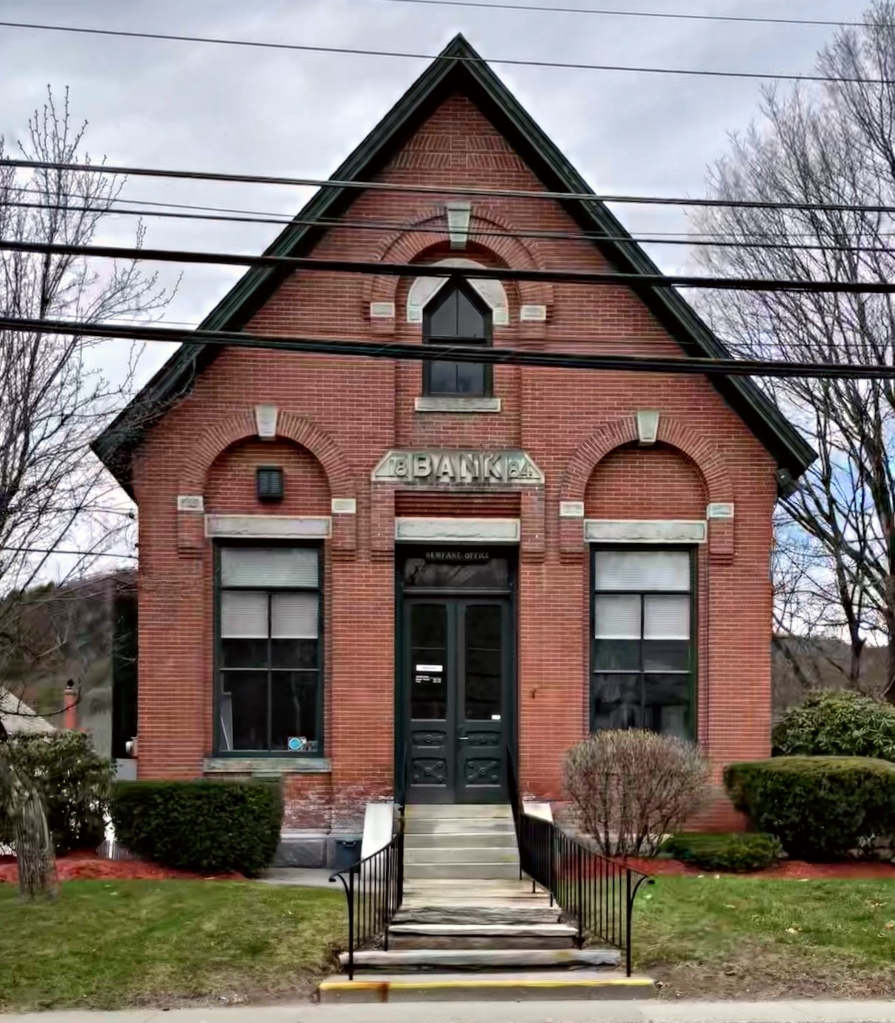
Vermont National Bank // 1884

One of the few brick buildings in Newfane’s Village Center is this charming old bank, right on Main Street. The building was constructed in 1884 as the Vermont National Bank and is a vernacular example of the Romanesque Revival architectural style with the arched openings and brickwork. Vermont architect George A. Hines designed the modest building, which was built for $6,650. The bricks for the building were brought into town by ox cart. Those for the front facade cost 5 cents apiece; those for the sidewalls 3 cents; and those for the back wall 2 cents, showing how the best materials go on the highly visible facades.

First Congregational Church, Ridgefield // 1888

The First Congregational Church was first established in Ridgefield, Connecticut just four years after the establishment of the town. Civic leaders in October 1712 successfully petitioned the Connecticut General Assembly for permission to levy a tax for “the settling and maintaining of the ministry in the said Town of Ridgefield.” Rev. Thomas Hauley, the first minister, also served as town clerk and school teacher. The first meeting house, on the town green, opened for worship in 1726. Plans for a new meeting house were drawn up in 1771 to fit a growing population, but construction was not complete until 1800. The second church was built in a more traditional style with a steeple. With a shift in the towns demographic from rural homeowners to ritzy exurb to New York City, a more suitable church was required by the end of the 19th century. Josiah Cleaveland Cady, one of the many great New York architects at the time was hired to design a new church suitable for the wealthy New Yorkers who summered in town to consider a neighbor, and he did not disappoint! The building blends many styles from Queen Anne, to Victorian Gothic, to Romanesque Revival in a way that isn’t clunky as in some other versions.