Eagle Hotel // 1826

Built in 1826 as the Eagle Hotel, this stunning federal structure is representative of the transition from the 18th century tavern, with its domestic scale and features, to a larger-scale 19th century hotel. The town of Newport was situated at the convergence of two stagecoach turnpikes, which transported people through the town regularly. Due to this, James Breck and Josiah Forsaith built the Eagle Hotel to meet that demand. By 1856, additional hotels were built and then owner, S.H. Edes converted the building into a business block. The upper floors were later occupied as apartments and porches were added to the front facade on each floor (since removed). The building is now home to Salt Hill Pub.

Nettleton House // c.1835

Located just off Main Street in Newport, NH, this stunning 1830s brick house shows an elegant blending of Federal and Greek Revival styles prominent at the time. The home was built for Joel Nettleton, a local hotel and stage coach owner, either by Nettleton himself, or by Samuel George, a local cabinetmaker and painter. The home is a great vernacular example of early-mid 19th century architecture in developing parts of inland New Hampshire and showcases a modest design, though with a use of brick showcasing some wealth. The town acquired the home in 2011 and it has since been occupied and preserved by the Newport Historical Society.

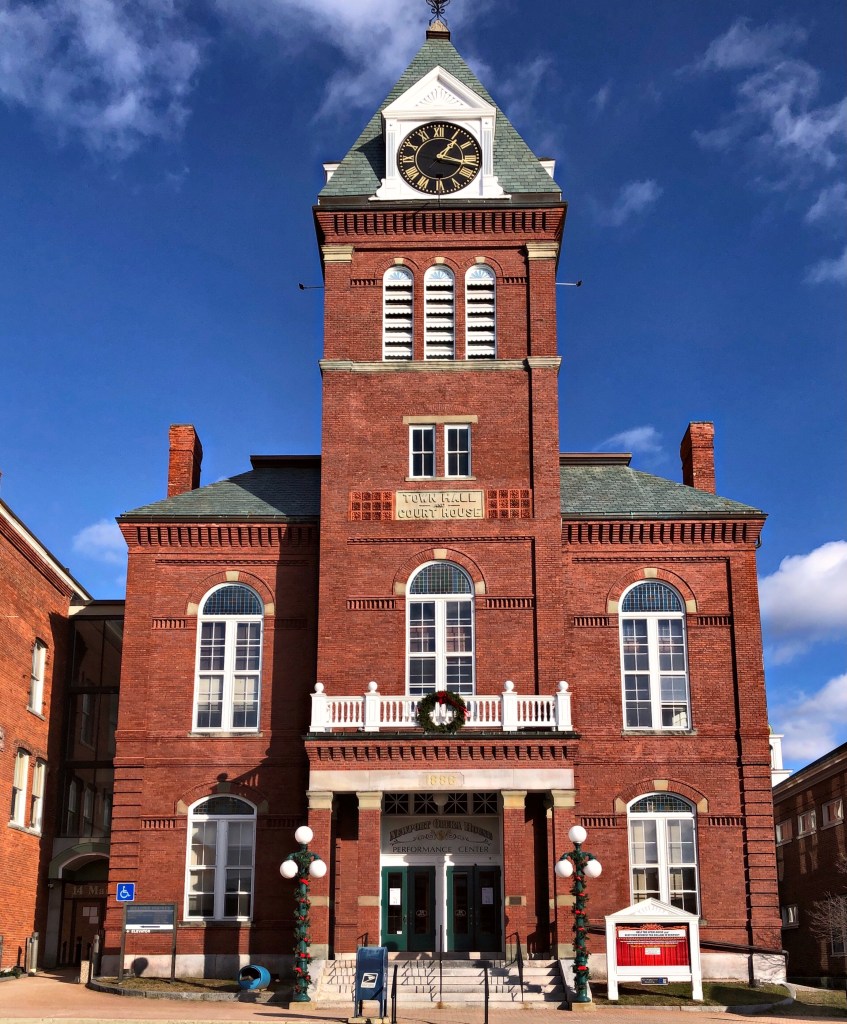
Newport Opera House // 1886

The architectural focal-point on Main Street in Newport, NH is the Newport Opera House, with its solid massing and prominent central tower. The town was growing after the American Civil War and its position as County Seat solidified that growth. A new large civic building was erected in 1872 which housed a new courthouse and town hall. A fire destroyed much of the buildings on Main Street in 1885, and destroyed the courthouse and town hall building. As a response to the loss of the building, a fire-proof structure was erected from designs by Hiram Beckwith, a regionally prominent architect from Claremont. The structure featured space for the county, town, and even an opera house! The jewel of the new building was the Opera House located on the second floor that housed a stage considered the largest north of Boston. The Newport Opera House soon became the center of entertainment in Sullivan County and patrons came from far away to enjoy the large variety of programs presented. The large hall played host to dances, boxing matches, weddings, political rallies, plays, school graduations and more! After a period of severe decline, a group of artists and residents of town worked together to restore the building and use the space as a performance center. It remains one of the finest buildings in this part of the state.

DeWolf Block // 1893

Located next door to the Lewis Block (last post) on Main Street in Newport, NH, the DeWolf Block showcases late Victorian design before the more generic 20th century main street architecture took hold. The DeWolf Block was built in 1893 by Samuel DeWolf Lewis, who also erected the Lewis Block, both named after himself. As was traditional with many business blocks, fraternal organizations occupied the upper floor of the building, and retail uses were located on the ground floor. In the case of the DeWolf Block, it was the Knights of Pythias. By the 1950’s the DeWolf Block was home to J. S. Hirsch Department Store, operated by Joshua & Sally Hirsch, until it was purchased by the Hubert family in the 1970’s. The Huberts operated a clothing store
there until the building was purchased by Sullivan County and has since housed the county offices. The DeWolf Block is a modest Romanesque Revival style building with large, round arched windows at the third story.

Lewis Block // 1886

Following the granting of the royal charter in 1761, Newport, NH was incorporated and named after Henry Newport, a distinguished English soldier and statesman. With excellent soil for farming, and abundant water power from the Sugar River to run mills, Newport grew prosperous. The main street developed, leading to a proliferation of hotels and taverns that were soon situated along the length of Main Street to service the many travelers who stopped along the route, many such structures were wood frame construction. A fire devastated much of Main Street in Newport in 1885, leading to a massive rebuilding campaign by the town’s richest citizens. One of the earliest buildings constructed after the fire was the Lewis Block, developed by Frederick Lewis, who lived a block away, and his son Samuel DeWolf Lewis, who designed the block. The two-story building is broken up by brick pilasters with recessed corbelled detailing which give rise to buttresses capped by gablets (yes its a word), punctuating the flat roof profile.

Frederick W. Lewis Mansion // 1876

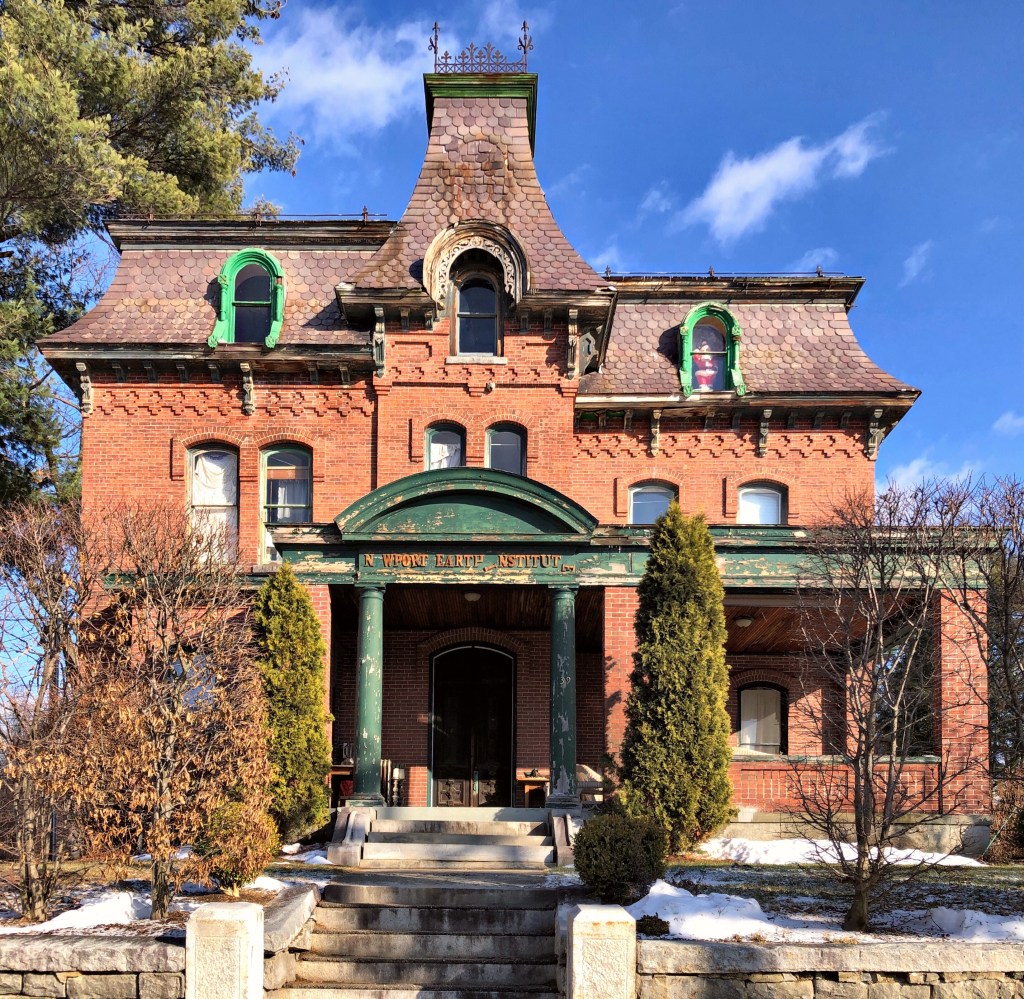
The Frederick W. Lewis Mansion in Newport, New Hampshire is a unique, late-Second Empire home constructed of brick. The home was built in 1876 for Frederick W. Lewis, a merchant who climbed the ranks as a young man, eventually purchasing the store he worked at as a 14-year-old. In 1862, he became cashier of the Sugar River Bank, and held the position until 1865, when the bank was re-organized as a national bank, taking the name of “The First National Bank of Newport.” He then leveraged his position to get into local politics, and took an active role in the development of the town, even incentivizing the railroad to build a stop in town. From this wealth and position, he built this large home. After his death, the home went to his son. By the 1940s, a group of over 30 residents of town purchased the home as a Veteran’s Home. By the end of the 20th century, the home was occupied by the Newport Earth Institute, a school created by esoteric historian and researcher Reverend Vincent Bridges, who died in 2014. The property appears to be vacant now and the home is in much need of some TLC.

“Oronoque” // c1886

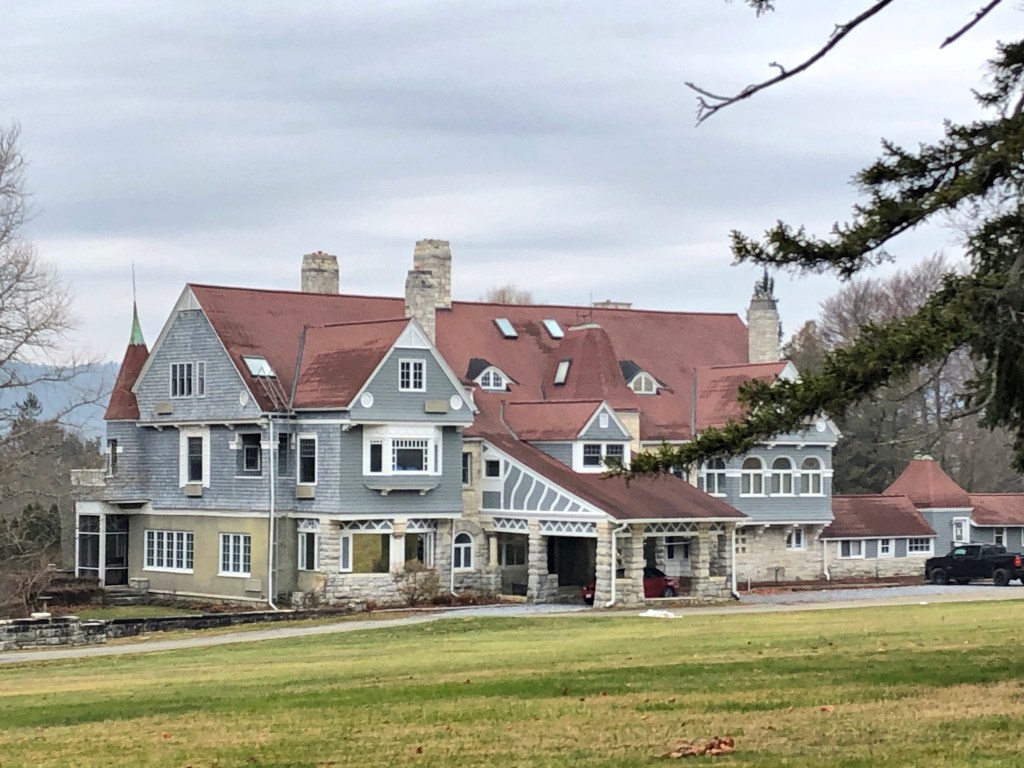
One of the most stunning and unique summer “cottages” in Stockbridge, Massachusetts has to be “Oronoque”, an eclectic Shingle-style home constructed of course ashlar blocks and shingle siding. The home was constructed around 1886 for Birdseye Blakeman, who lived in Stratford, CT. The home’s name is somewhat a mystery, but was possibly the name of his ancestral home in Connecticut. Just a few years after the homes completion, Blakeman died, and his widow continued to summer at the home until her death in 1912. The home was purchased by Norman H. Davis, a U.S. diplomat who later served as President Wilson‘s chief financial advisor at the Paris Peace Conference after WWI. Davis also served as Chairman of the American Red Cross, under three presidents. Under his direction, the Red Cross greatly expanded by thousands of volunteers and blood banks were established. The home was later owned by Boston University, who used it as lodging for students visiting the Tanglewood Festivals. It was later sold to a developer who appears to have converted it to a multi-family property.

Wheatleigh // 1893

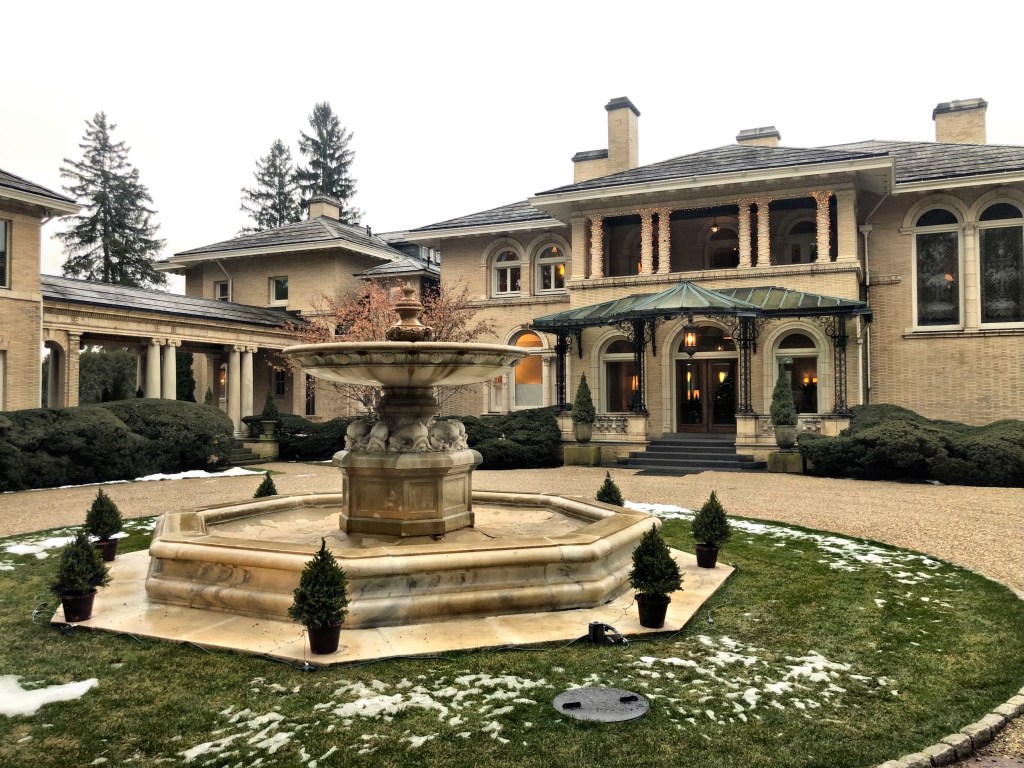
Designed in 1893 by the Boston architectural firm of Peabody and Stearns, Wheatleigh is an early example of Renaissance Revival architecture which became popular for country estates in the early 20th century. The estate was constructed for Henry Harvey Cook, who purchased over 250-acres of forest and lawns overlooking Lake Maheenac for his summer “cottage”. Cook was a New York-based businessman who made his fortune in the railroad and banking businesses, and he wanted a summer house to escape to every year. He named his home “Wheatleigh” as an homage to his family’s ancestral home, Wheatley, Oxfordshire. The mansion is approached by a circular drive that terminates in a formal entrance court partially enclosed by a buff brick wall and evergreen trees, centered on an octagonal marble fountain decorated with a shell and leaf motif. Upon Cook’s death in 1905 Wheatleigh passed to his daughter, Georgie, the Countess de Heredia. Under her ownership the formal garden was opened for evening worshipping services and musical events. Following de Heredia’s death in 1946 the property was divided and changed hands numerous times. In 1976 the mansion and 22 acres were opened as a resort hotel, known as the estates historic name. The Wheatleigh remains one of the most esteemed luxury hotels in the country.

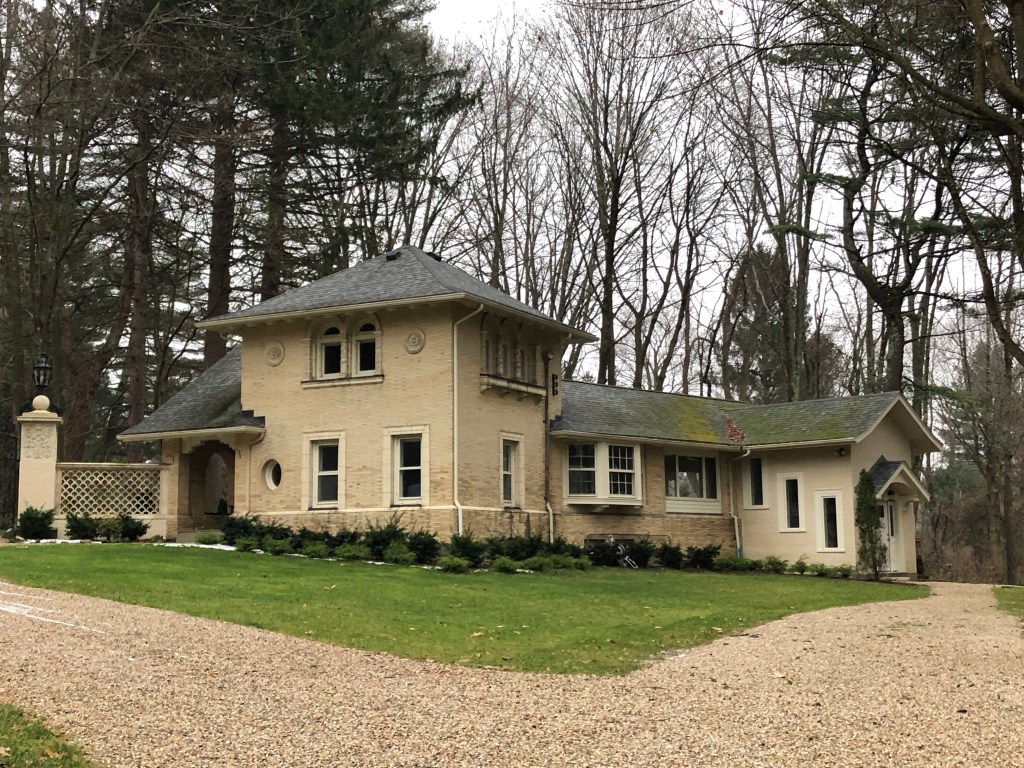
Wheatleigh Caretaker’s house (1893)

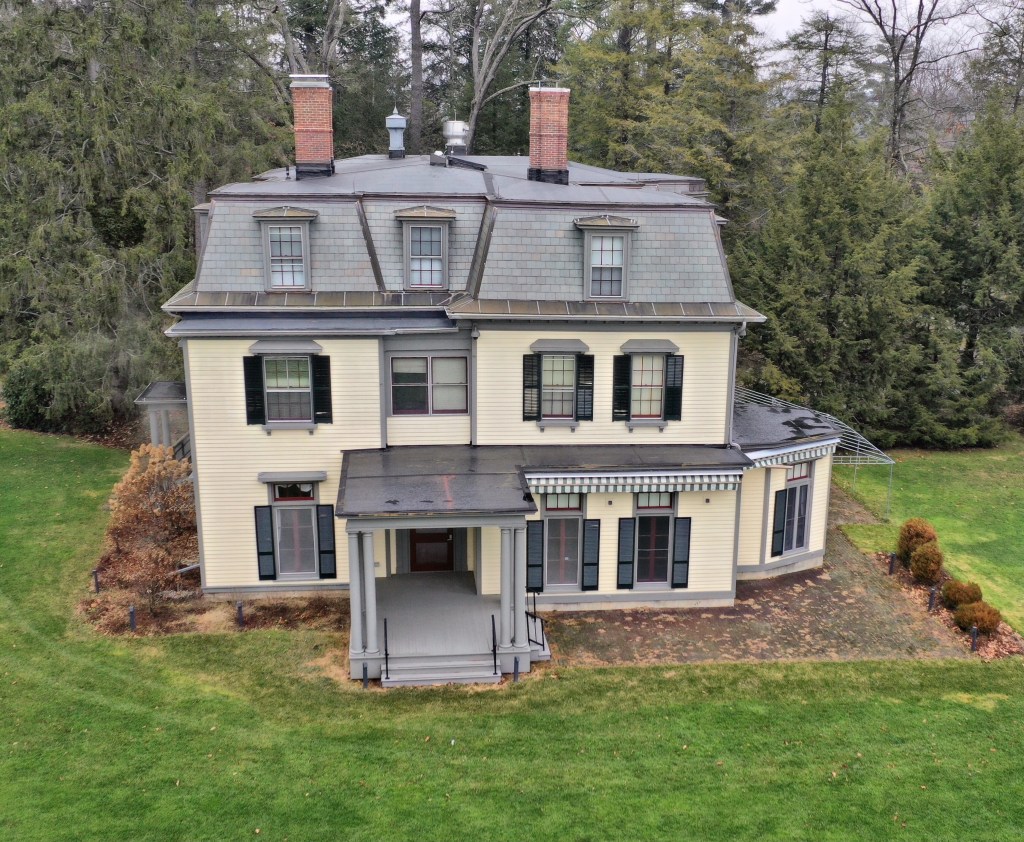
“Highwood” // 1845

“Highwood”, was completed in 1845, and is likely credited to architect Richard M. Upjohn the son of Richard Upjohn Sr., who was known best for New York City’s Trinity Church, who was building a church for the Episcopal congregation in Stockbridge at the time. The home sits near Tanglewood, both since being absorbed into the Tanglewood Music Center campus today. The home was built for 27-year-old Samuel Gray Ward (1817-1907) an American poet, author, and minor member of the Transcendentalism movement. He was also a banker and a co-founder of the Metropolitan Museum of Art. Among his circle of contemporaries were poets and writers such as Ralph Waldo Emerson and Margaret Fuller. He desired country living with his family and became a “gentleman farmer” while he wrote in his home, overlooking the large lake. The family lived here year-round until he was called back to Boston to assist his father in business ventures. In 1857, the Wards realized their time at Highwood had come to an end and sold the estate to another Boston couple, William Story Bullard and his wife, Louisa Norton Bullard who settled into their new home, which they were not afraid to alter, including the addition of a mansard roof. The home was occupied by the family 1960. The home was later acquired by John Mason Harding, a New York lawyer and his wife, Mary Riker Harding. Idyllic summers did not last long for the Hardings as in the late 1970s, Tanglewood and the BSO sponsored rock concerts began playing. Mr. Harding complained that he didn’t expect to have Woodstock in his backyard and brought suit against the BSO to limit the length and noise level of the concerts. The home was eventually purchased by the BSO in 1986.

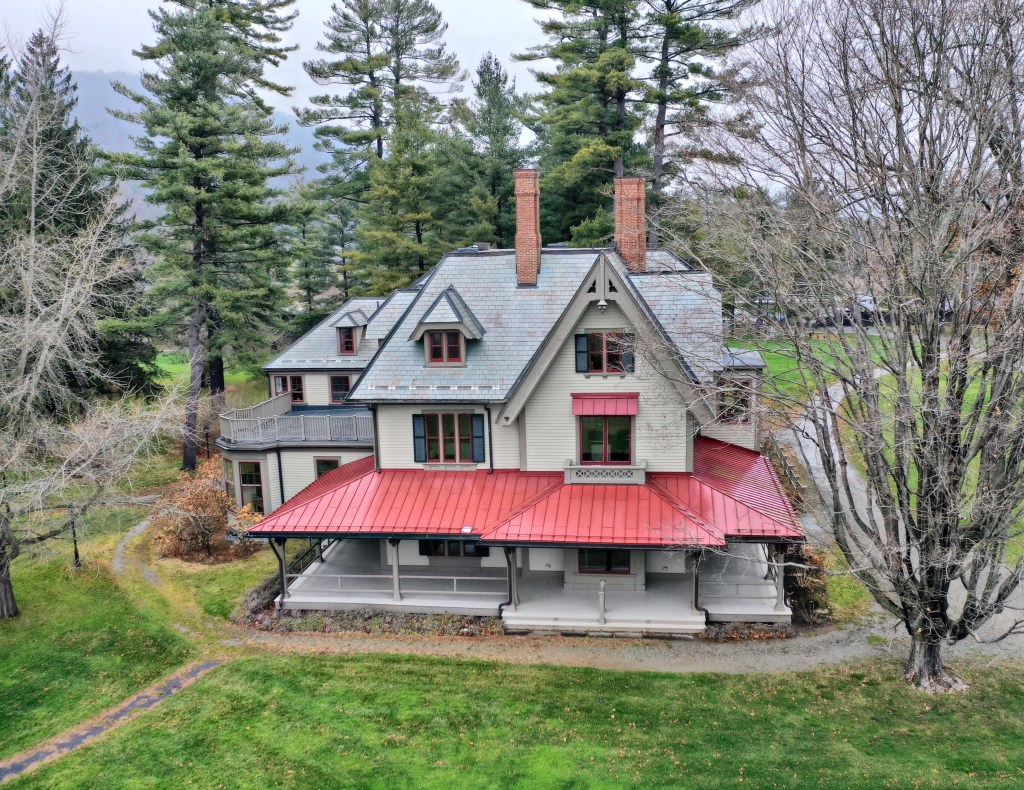
Tanglewood // c.1865

The 200-acre campus of Tanglewood, where the Boston Symphony Orchestra spends its summer months, spreads the grounds of two historic summer cottages in the charming town of Stockbridge, MA. One of the summer “cottages” Tanglewood, where the music center gets its name, was constructed around 1865 for Caroline Sturgis Tappan, husband William Aspinwall Tappan and their two daughters, Ellen Sturgis Tappan and Mary Aspinwall Tappan. Mary, with her niece Rosamund Hepburn, donated the family summer home, Tanglewood in 1937 to Serge Koussevitzky, a Russian-born conductor, composer and music director of the Boston Symphony Orchestra from 1924 to 1949. The campus has since grown astronomically as it hosts musicians and tourists from all over the region and globally to experience the arts in the charming town in the Berkshires. The Tanglewood house retains much of its historic architecture and siting, overlooking the Stockbridge Bowl (lake).