This old Georgian house in rural Canton, Connecticut was built before the Revolutionary War for David Adams (1742-1834). After David’s death, the home was willed to his family, and soon after became a local post office for the village, facilitated by the fact Oliver Adams became postmaster for the area. The family built an attached structure as a post office, but it was removed in the early 20th century. The post office was run out of the home by members of the family until the 1930s. Later owners restored the house and discovered that the home originally had a gambrel roof, which matched the office addition.
The Newhall-Lane House (could be the home of many wives) was built in 1809 by Pliny Newhall, a bricklayer. He purchased the land here at a prominent crossroads in Lancaster in 1808 from his employer who owned a brickyard across the street. At a previous home in town, Newhall’s wife Patty died giving birth to their son, at just 23 years old. Their son also died during childbirth. He remarried and had a full family to grow into the couple’s new house. They relocated to Lincoln and the home was sold to Captain Anthony Lane, who was the son of Deacon Jonas Lane, an important figure in Lancaster town history. Jonas had four wives, outliving three of them. Captain Lane himself, was married twice while living in this house; he had no children from either marriage. Although he was a talented craftsman and cabinetmaker, Captain Lane listed his occupation as farmer. The house is significant architecturally, as a fine example of Federal style architecture in Lancaster . Its sophisticated design is reflected in the graceful entrance. One of the unique features of the house is the pedimented gable of the facade which in combination with the narrow plan of the house, creates a delightful massing in this distinctive combination of Greek Revival and Federal styles.
On the southern end of Center Village in Lancaster, MA, this gorgeous late-Federal style home holds a stately presence built into and atop a sloping hill. The home was built for Elias Danforth (1788-1868) in 1832 and has been so little-altered in the nearly 200 years since. The house features amazing full-length side porches with bold columns, an early sign of the emerging Greek Revival style. The home sold a couple years ago for just over $600,000, which is a STEAL for the location and high-quality house and interior. Wow!
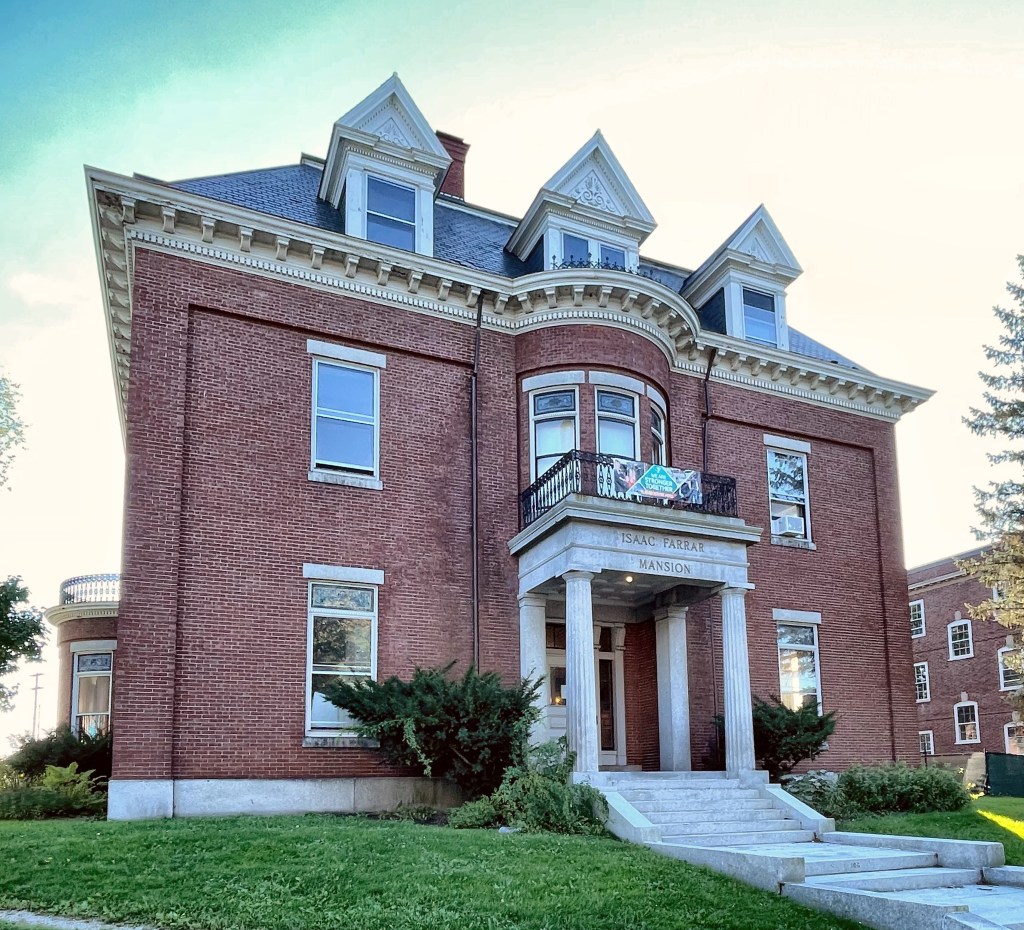
The Isaac Farrar Mansion in Bangor, Maine not only looks gorgeous, it is significant as the one of the first known works of architect, Richard Upjohn. It is important because it shows that English-born Upjohn, who is best-known for launching the popularity of the Gothic Revival style in the United States, began his career by building in the Greek Revival style, the traditional style of the time. This mansion was designed for Isaac Farrar, a lumberman and merchant, and later, President of the Maritime Bank of Bangor. Charles B. Sanford, who lived in the house from 1865-1878, was proprietor of the Sanford Steamship Lines. The home had a few more subsequent owners until 1911, when it was acquired by the University of Maine Law School, which used it as a residency until 1929. It was soon after purchased the Bangor Symphony Orchestra, who renamed it “Symphony House”, and operated the Northern Conservatory of Music on the premises, also hosting the music branch of the Bangor Public Library. In 1972 the school closed, and the symphony sold the building the following year to the local YMCA, which now uses it as an exhibit and reception space. While some aspects of the house look to be from the early 20th century, it retains much of the Greek Revival design by Upjohn. Talk about a full history!
Built in 1897, the Thomas Hill Standpipe is the oldest standpipe in town and has been in constant use since its construction. In 1895, it was discovered that the city pumping station contained faulty equipment, risking the possibility of a city water shortage, so the city councilmen pushed for a new standpipe on one of the highest points in the city to provide a back-up plan. Its purpose is the same today as when it was built; to help regulate Bangor’s water pressure in the downtown area and to provide water storage for emergencies. The New Jersey Steel and Iron Co. assembled the 50-foot high and 75-foot diameter steel tank atop Thomas Hill, with architect Ashley B. Tower of Holyoke, Massachusetts, designing and overseeing construction of the Shingle style wooden structure to cover the metal structure. Originally, the exterior was painted dark gray with the pillars and lattice work painted white. During World War II, the standpipe was painted olive for camouflage purposes, because of its proximity to Dow Army Airfield, and concerns it would be a target when the Germans ultimately crossed the Atlantic. The tower was completely painted white in 1949.
Bar Harbor’s first library is believed to have been organized in 1875 by a group of summer residents. This collection of 176 volumes was assembled for the use of Mt. Desert’s permanent residents and made available to them for two nights per week. A small frame library was built in 1877. In 1883, the growing collection was turned into a subscription library with borrowing privileges charged at the rate of $1.00 per family, but the fee was dropped three years later. By the late 19th century, the village’s population boomed, especially in the summer months when wealthy families descended upon the sleepy town every year to take in the cooler climate and sweeping scenery of Mount Desert Island. Acknowledging the need for a more suitable library, Maria Van Antwerp DeWitt Jesup, the widow of Morris K. Jesup (1830-1908), a New York financier and long-time summer resident of Bar Harbor, gifted the town funds to erect a new building as a memorial to her late husband. The Colonial Revival style library was designed by the New York firm of Delano & Aldrich, and exhibits a beautiful centered entrance recessed in a limestone arch.
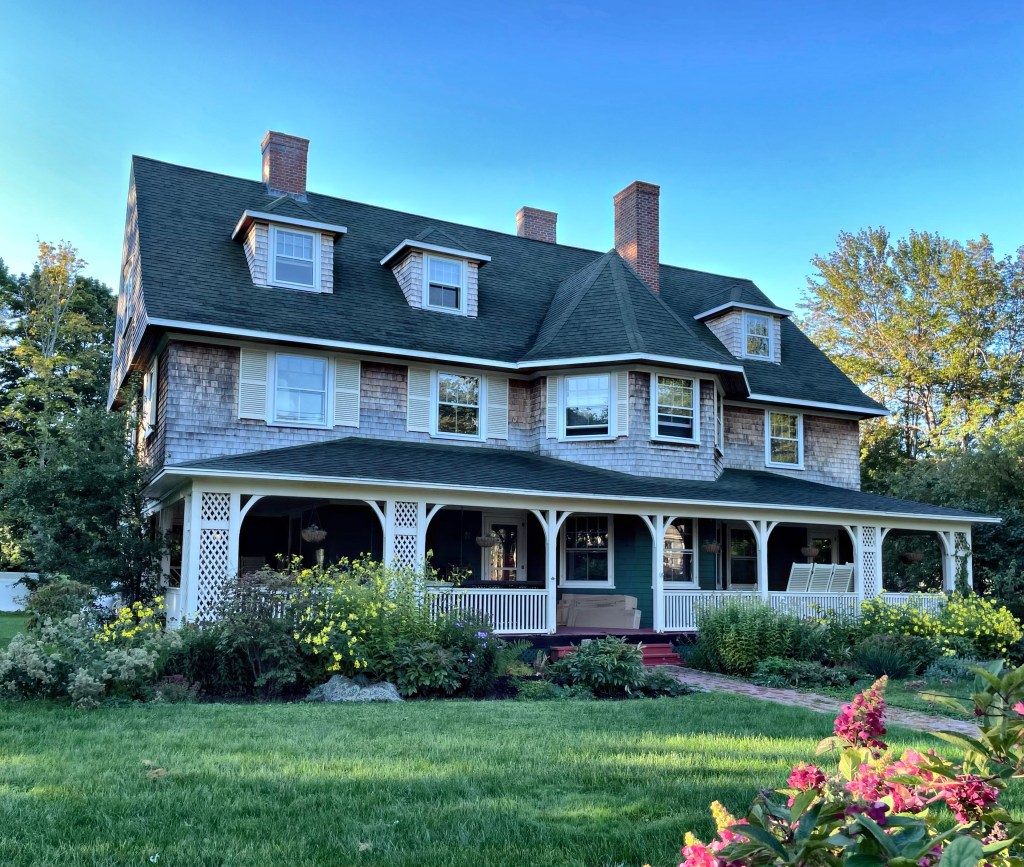
Built in 1901, “The Crossways” is one of Bar Harbor’s most stunning summer cottages built in the 20th century. The home was designed by the illustrious Boston architectural firm of Andrews, Jaques and Rantoul, possibly as part of the of the William B. Rice estate. The home appears to have been rented in early years until it was occupied by Edward and Esther Mears. Edward ran a hotel in town during the summer months before getting involved in real estate, where he made much more money. The home blends together the best of architectural styles of the time from Queen Anne to Shingle Style, and remains in an excellent state of preservation.
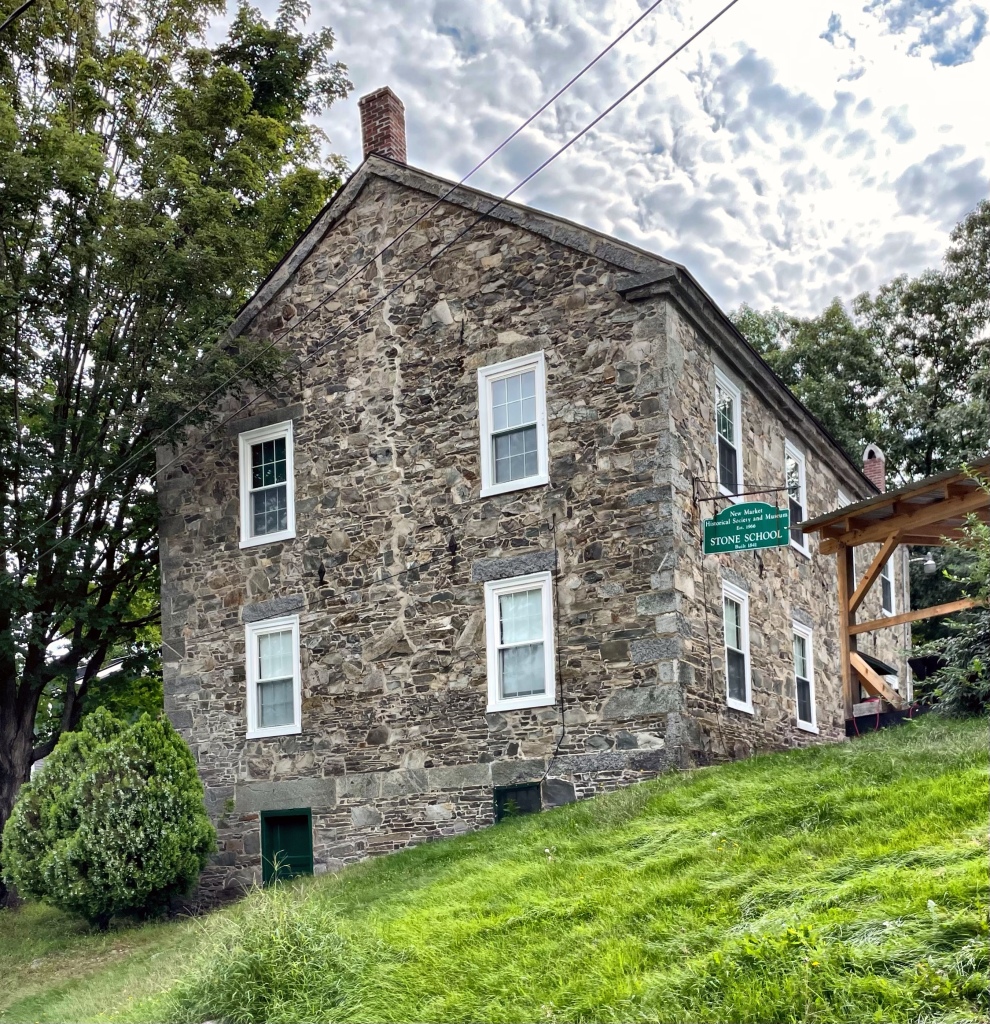
Perched high on a hill, next to the Stone Church (featured previously), the old Stone School in Newmarket is one of a handful of iconic stone buildings in the town. Built in 1841, its stonework executed by William and Robert Channel, local farmers and stonemasons, who likely got their skill from building stone walls on farms. The building was used continuously as a school until 1966, when it was given to the Newmarket Historical Society, which now operates it as a local history museum.
Located on the edge of the Chester Town Green, you can find this beautiful Federal style commercial building. The use of blind arches at the facade is a fairly common feature found in brick Federal style buildings in Vermont. The structure was built around 1830 and has served a variety of uses through its existence, the most notable being the tin shop owned by various members of the Miller and Hadley families that sold stoves and hardware during the latter half of the 19th century. The tin business in New England grew rapidly after 1820. Tin shop owners imported tinplated sheet iron from Great Britain, shaped it into a variety of forms, and distributed their finished goods through peddlers and country stores. They also sold tinware in their shops. Colanders, dippers, dish kettles, funnels, measures, and pans were in greatest demand. Other common items included lanterns, foot stoves, teapots, coffeepots, “tin kitchens”, skimmers, and sconces. After its use as a tin shop, the building was occupied as a telephone exchange and electric utility company office. It presently is home to an antique store.
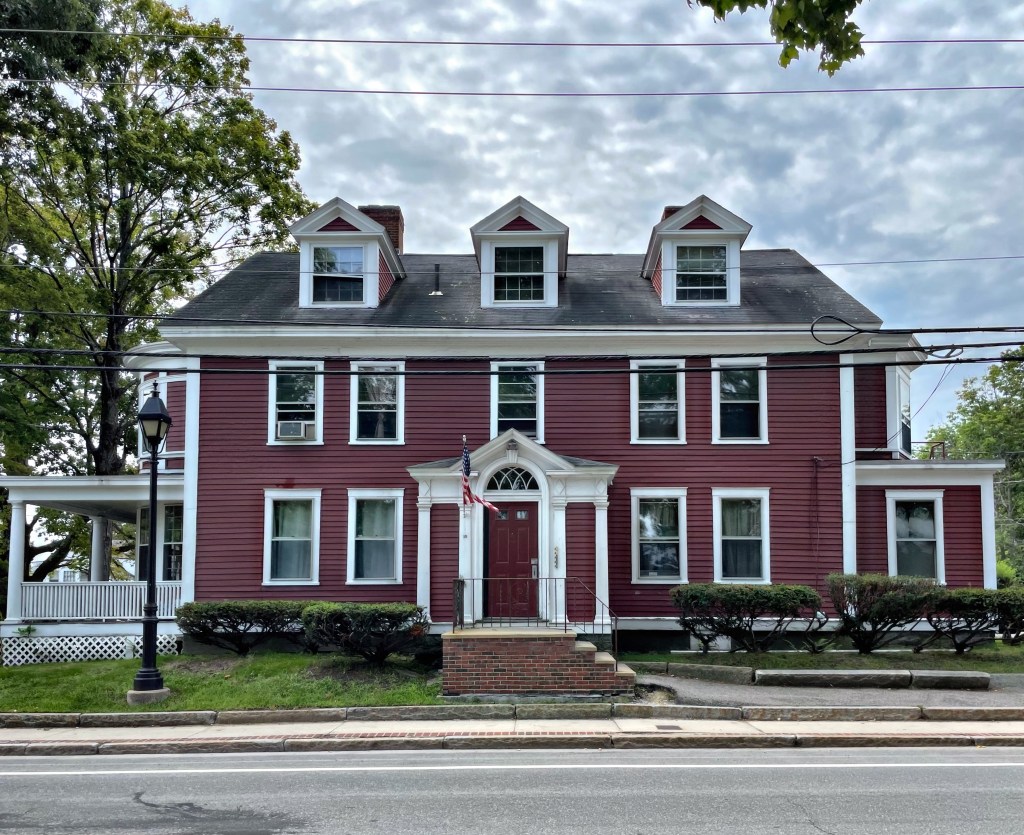
One of the most interesting homes in Durham, NH, sits right on Main Street, and while lacks much of its original grandeur, the house still has a story to tell. When mining engineer, Hamilton Smith met and married Alice Congreve while working in London, the couple envisioned and planned for a sprawling gentleman’s farm in New England to retire to. In 1895, the couple purchased the 1780 Rev. Blydenburgh home on Main Street, a large Federal style mansion. When Alice and Hamilton retired to the Red Tower in 1895, they set about renovating the estate into a jewel of the Gilded Age. They added a three-story tower to the rear of the home, large additions and Colonial Revival alterations, and they purchased large land holdings behind the house for a working farm. On the farmland, they built a carriage house, creamery, and men’s and women’s accessory buildings (a billiards building and tea house, respectively). Hamilton could only enjoy the home for a couple years until his death in 1900. His widow created the family cemetery at the farthest extent of the property and built the stunning Smith Memorial Chapel (last post). In the 1940s, much of the property was sold off and developed for a residential neighborhood for UNH faculty, and the Red Tower mansion was converted to an apartment house for students.





 Buildings of New England