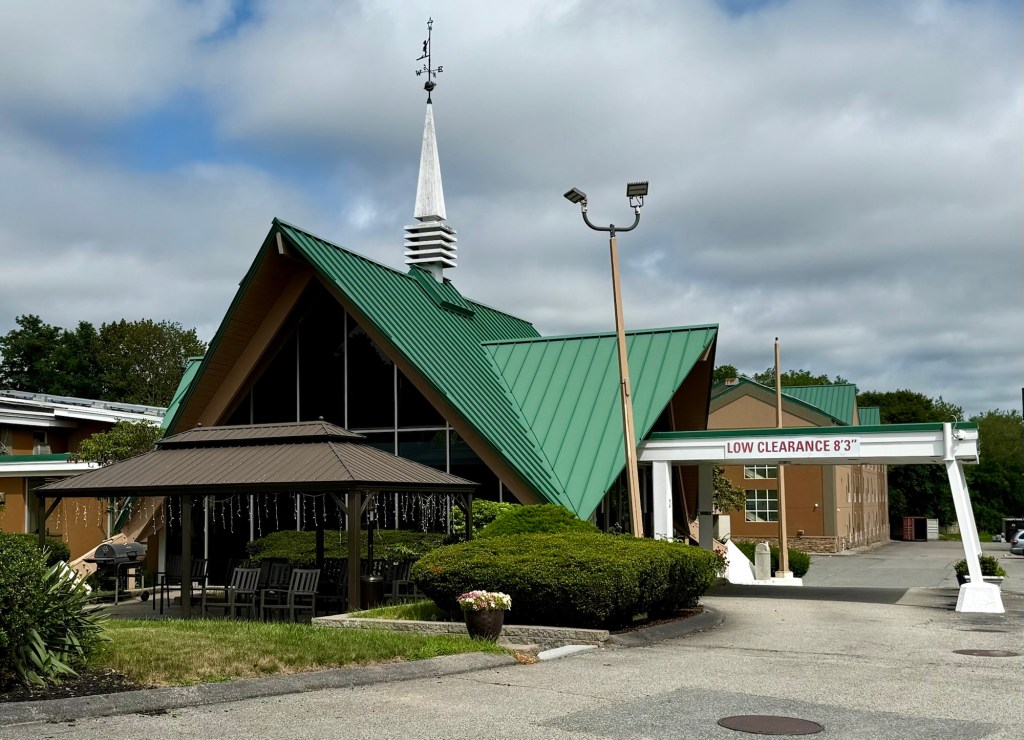
Former Howard Johnson’s Motor Lodge, Kingston // 1956

Howard Johnson’s (Hojo’s) traces its beginnings to the late 1920s when the Boston native Howard D. Johnson (1887-1972) opened a series of ice cream stands at various locations along the South Shore of Massachusetts. By 1940, there were more than 125 restaurants from Maine to Florida and by the late 1950s there were approximately 500 along the east coast. In 1954 the company expanded to motor lodges (motels), eventually opening over 500 across the United States. The growth of the motel tied closely with 1950s legislation that authorized Interstate highways connecting cities via automobile, increasing traffic all across the country. Howard Johnson’s adopted a policy of acquiring real estate directly off highway exit ramps and often the parcels were large enough to include a restaurant and motor lodge. Specifically, many Howard Johnson’s Motor Lodges featured prominent signage and bright orange roof, to help motorists identify the motel while speeding down the interstate. The Kingston location here opened in 1956 along Rt. 3, connecting Boston and points north, to Cape Cod. While it’s iconic name and orange roof do not remain, the unique Googie-esque form of the lobby with very 50s weathervane remain as an important vestige of 1950s America. 

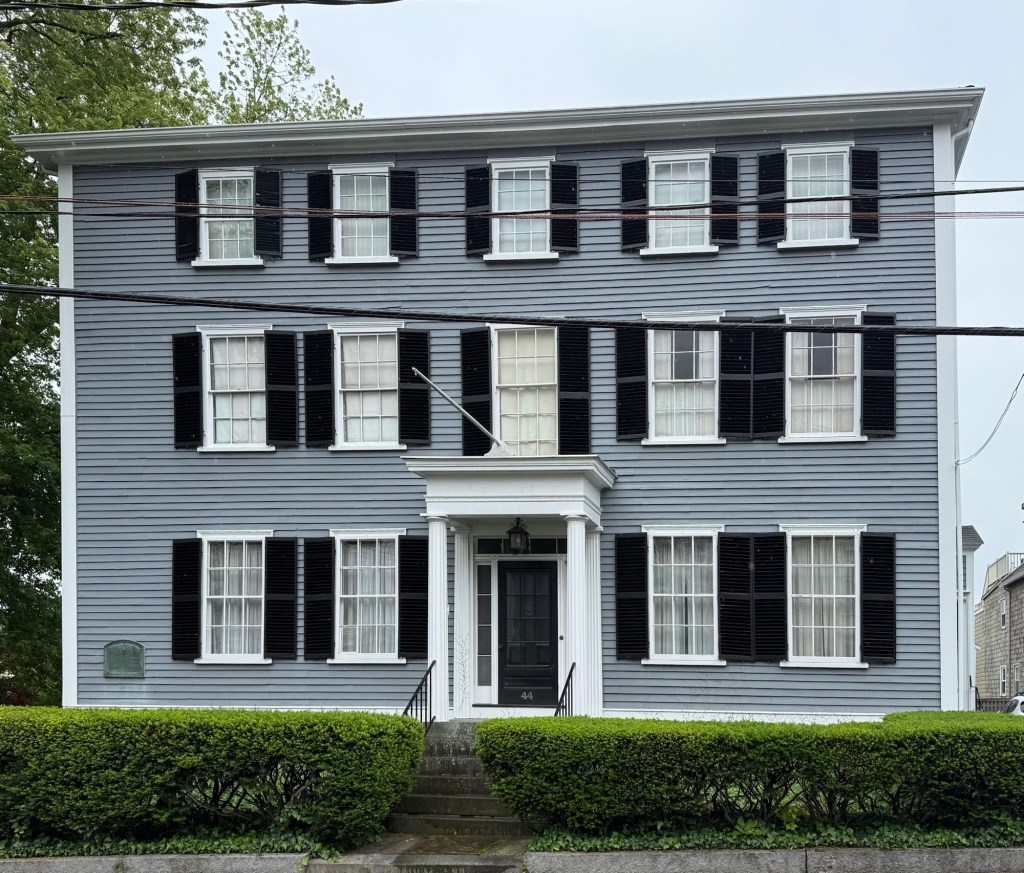
Elbridge Gerry House // c.1734

The Elbridge Gerry House is a historic house on Washington Street in Marblehead, Massachusetts that was built by local merchant, Thomas Gerry around the time of his marriage to Elizabeth Greenleaf. Architectural evidence suggests that the house was a two-story L-shaped Georgian frame structure, that in about 1820, was raised to its present three-story form in the Federal style. It was in this house that Founding Father, Elbridge Gerry (1744-1814) was born, and spent many formative years in. Gerry was a wealthy merchant, politician, and diplomat who served as the fifth vice president of the United States  under President James Madison from 1813 until his death in 1814, and is arguably best-known for Gerrymandering. The term, originally written as “Gerry-mander,” first was used on March 26, 1812, in the Boston Gazette — a reaction to the redrawing of Massachusetts state senate election districts under then-Gov. Elbridge Gerry. One of the remapped, contorted districts in Essex County (where Marblehead is located) was said to resemble the shape of a mythological salamander, hence the name “Gerry-mander”. The newly drawn state senate district in Essex County was lampooned in cartoons as a strange winged dragon, clutching at the region. Elbridge Gerry would live mostly in Cambridge and the family home was sold by around 1820 and modernized about that time.

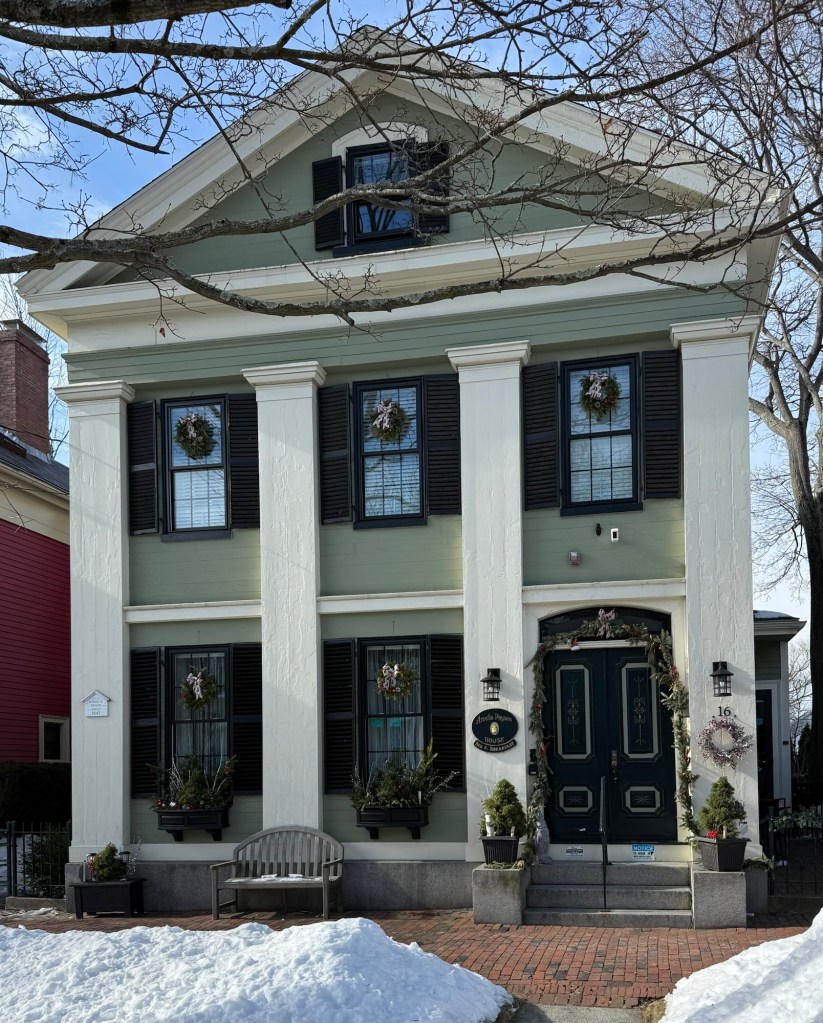
Payson-Fettyplace House // 1845

Behold, one of the finest, and well-preserved Greek Revival style homes in Salem. This is the Payson-Fettyplace House on Winter Street, built in 1845 with its gable facing the street to create a pediment, a wide entablature and cornice, and pilasters on the flushboard façade, which together make the building read more like a Greek temple than a residential home. The residence was built for Edward H. Payson, a bank officer, and his wife, Amelia, who lived in the home for only two years before moving into a larger residence across the street just two years after this house was completed. The property was sold to a Carleton Dole of Maine and again sold in 1850 to Thomas J. Fettyplace. The Fettyplace family were based out of Marblehead and many of them relocated to Mobile, Alabama, to make money in the cotton and shipping industry in the South. Thomas purchased this home in Salem for his mother who spent her final years here until 1861. After the Civil War, the Fettyplace brothers would move back north and this home remained in the family until 1912. The house is now a bed & breakfast known as the Amelia Payson House, named after the original owner.

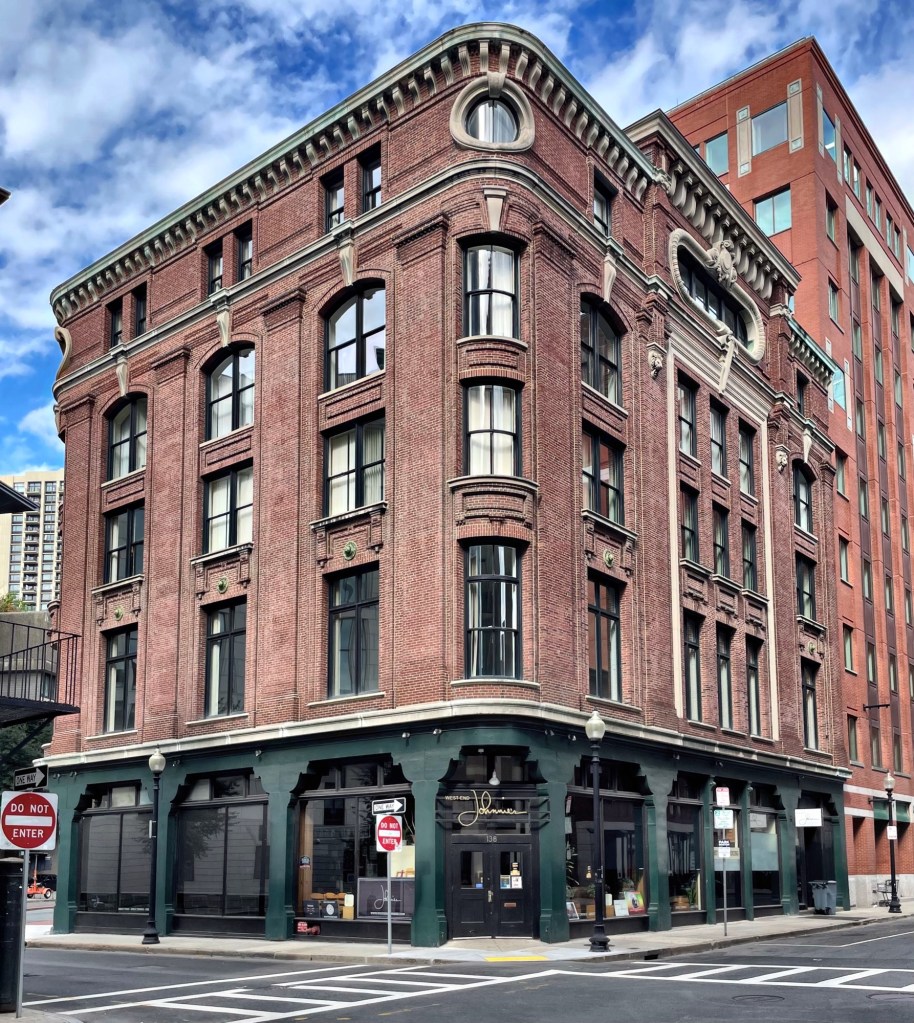
Tarbell Building // 1896

Similar to the Heywood Brothers & Wakefield Co. Building on Portland Street in the Bulfinch Triangle Historic District, the equally stunning building here was also designed by the same architect in a matching style. The building was constructed in 1896 by owner Catherine E. Tarbell , and the Boston branch of the National Casket Company moved in as tenants soon after its completion as part of its national expansion. The company would become the largest manufacturer and supplier of caskets in New England by 1906. The Tarbell building was designed by Stephen Codman in the Beaux-Arts style and is notable for its use of oxeye windows, rounded corners, and engaged pilastered facades. The company held its regional headquarters and sales offices from this building, which benefited from rail access for shipping caskets all over the region. The building is one of the finest examples of the Beaux Arts and Classical Revival styles in Boston.

Dow-Starr House // c.1858

A big departure from the plain, yet classically proportioned Federal period homes in Warren, this Gothic Revival on Main Street turns heads when people pass by. A quintessential Gothic “cottage,” the facade of the Dow-Starr House in Warren has also been graced by a three-sectioned Gothic Revival porch as illustrated in Alexander Jackson Downing’s plan books from the 1840s. As completed, this house followed almost exactly Andrew Jackson Downing’s Design II as illustrated in Cottage Residences 1842 ; it differed only in its use of speckled fieldstone over coursed ashlar. The house was later acquired by and used as a convent for the St. Jean Baptiste Church in Warren, who also built a school building behind. The house has seen some alterations, but remains an important architectural landmark of the town.

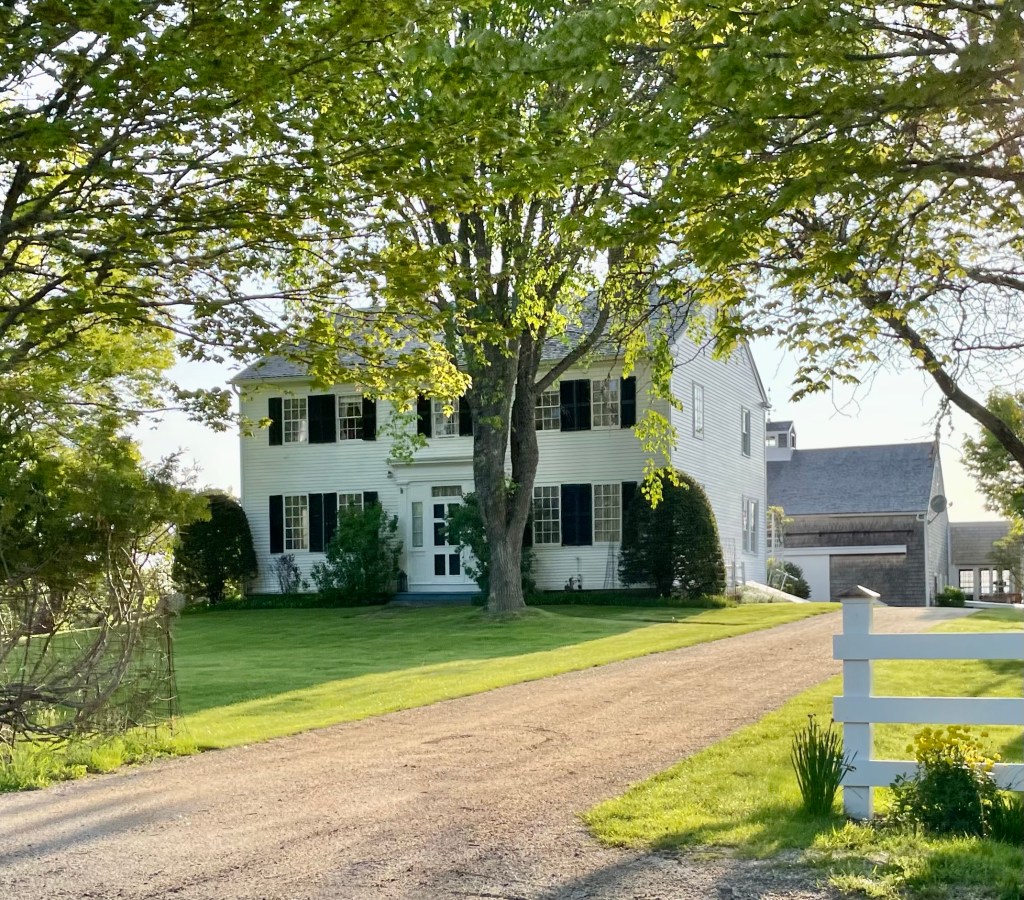
E. B. White House // 1795

The coast of Maine has long been a refuge for those looking for an easier way of life and access to natural splendor. One of the more well-known residents of Maine was author E.B. White, who lived on this farm in Maine for 48 years. The estate sits on 44-acres and was built in 1795 for William Holden by Captain Richard Allen, a local housewright. The property was purchased by E. B. White in 1933 as a summer residence, but it became a full-time home where he and his wife, New Yorker editor Katharine Angell, raised sheep, geese, chickens, pigs, even spiders all with a historic barn and tire swing. Sound familiar? It is from this house that he wrote the iconic children’s book, Charlotte’s Web (and Stuart Little) among others. White was a private person, and despite his internationally famous books, he did not advertise the location of his home while he was alive. In 1977, he convinced an interviewer to report that “he lives in ‘a New England coastal town’, somewhere between Nova Scotia and Cuba“. Katharine died in 1977, and E. B. in 1985. The property was inherited by their son, who summered there for years. The most recent owners, Robert and Mary Gallant of South Carolina, who have summered there for the past 30 years and preserved the house immaculately, selling it a few years ago.

Waterbury Railroad Depot // 1875

Historic train stations are among some of my favorite types of buildings as they transport you to a different time (no pun intended). The Waterbury Railroad Depot was built in 1875 by the Central Vermont Railroad, connecting Montreal, Quebec with New London, CT and to other lines to Boston and Albany on the way. Waterbury service began in 1849, but this updated station was built later as the railway prospered and expanded. The station suffered from some deferred maintenance for decades in the mid-20th century and its fate (like many such stations) was unknown. Beginning in the late 1990s into the 2000s, Revitalizing Waterbury worked with the Great American Station Foundation, the Vermont Agency of Transportation, and Green Mountain Coffee Roasters Foundation, establishing a capital fundraising campaign meeting the goal of $1,200,000 through donations from the private sector and community members. These funds helped restore the building in phases, beginning when Keurig Green Mountain, Inc. agreed to lease the station from Revitalizing Waterbury, and created a visitor center and cafe (now Black Cap Coffee and Bakery) that has become a first-class attraction and provided an economic boost to the downtown.

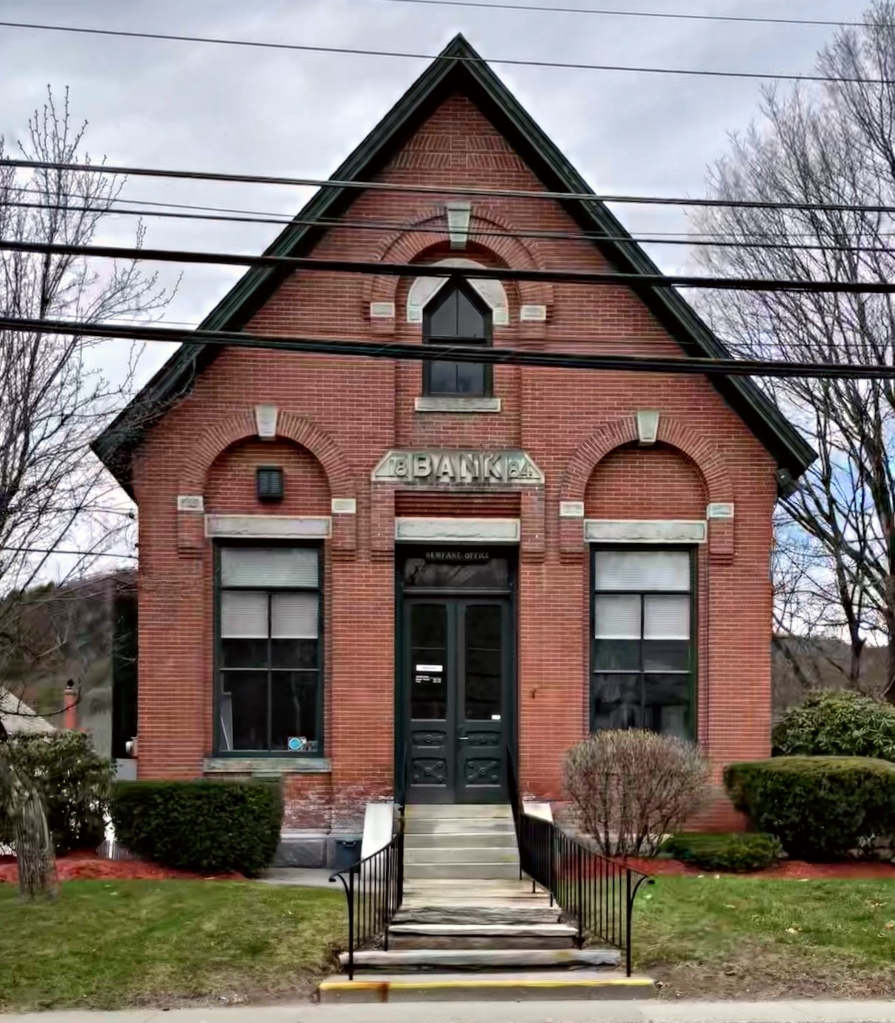
Vermont National Bank // 1884

One of the few brick buildings in Newfane’s Village Center is this charming old bank, right on Main Street. The building was constructed in 1884 as the Vermont National Bank and is a vernacular example of the Romanesque Revival architectural style with the arched openings and brickwork. Vermont architect George A. Hines designed the modest building, which was built for $6,650. The bricks for the building were brought into town by ox cart. Those for the front facade cost 5 cents apiece; those for the sidewalls 3 cents; and those for the back wall 2 cents, showing how the best materials go on the highly visible facades.

First Methodist Church, Burlington // 1869

This beautifully designed Romanesque Revival church consists of a large rectangular block with a steeply pitched gable roof and a square tower surmounted by a spire. The church is constructed of Willard’s Ledge stone (a locally quarried purplish limestone) with trimmings of Isle La Motte grey sandstone from quarries north of Burlington. This church is the only Romanesque Revival style church in the city and just one of four pre-1880 churches in Burlington. Architect Alexander R. Esty (1826-1881) designed the building and was a noted New England architect working during the late nineteenth century. He was trained in Boston and opened his own office in 1850 in Framingham, Massachusetts. The congregation remains active and welcoming.