Moretown Town Hall // 1835

The township of Moretown, Vermont was chartered on June 7, 1763 by Governor Benning Wentworth of New Hampshire. The original charter contained approximately 23,040 acres of land to be divided into about 65 shares of proprietors. Active settlement did not occur until after the Revolutionary War with early buildings constructed on the Winooski River (the northern boundary of the town) and subsequent development along the Mad River (which cuts through the middle of town). Saw and grist mills were built and the town developed as a rural farming and industrial community on the rivers. The Moretown Town Hall was erected in 1835 in the Greek Revival style. It has a pedimented portico with Doric columns that support a large pedimented gable peak in imitation of a Greek temple. Like most buildings in the Mad River Valley, the building is unapologetically Vernacular which means it relies on local materials, local builders, and not on architect-designed finishes. This is an aspect of Vermont architecture that makes the state so charming.

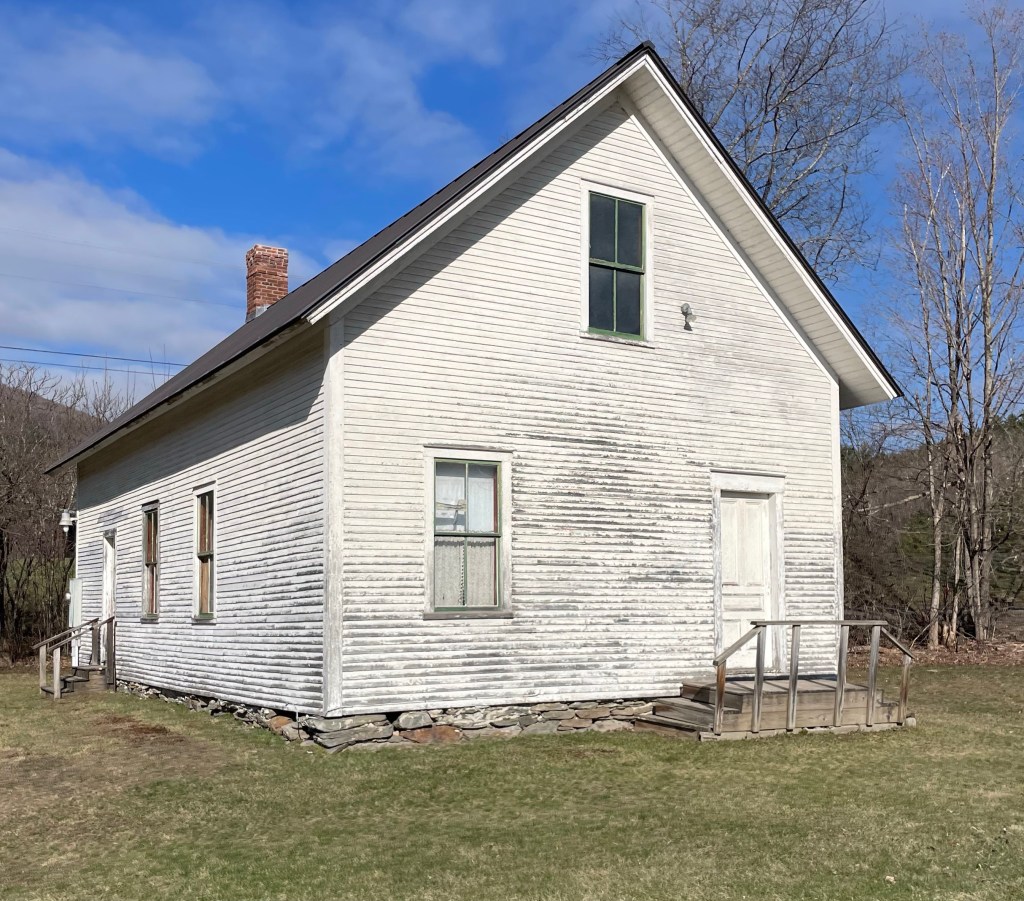
South Duxbury Church and Hall // 1855

This is the first church ever built in Duxbury, Vermont. On December 18, 1854, at the South Duxbury schoolhouse, representatives from six denominations in the newly formed town, gathered to form the First Union Society of Duxbury. The participants were: the Congregationalists, Universalists, Free Will Baptists, Protestant Methodists, Episcopalian Methodists, and the Adventists. Twenty-five names appear on the original subscription list, indicating the pledged money or materials that each would contribute to the construction of the church. Samuel Cook Turner was contracted to build the church, with pews inside purchased by individual families to help fund the construction. The building is vernacular and modest due to the rural character of the congregations and town’s location, but it has a more Classically inspired door enframement. In 1890, funds were gathered for a church hall, which sits nextdoor. The meeting hall would serve as the meeting space for a temperance organization known as the “Independent Order of the Good Templar”. The church hall appears to have some deferred maintenance, but both buildings together share an early history of a rural and often overlooked small Vermont town.

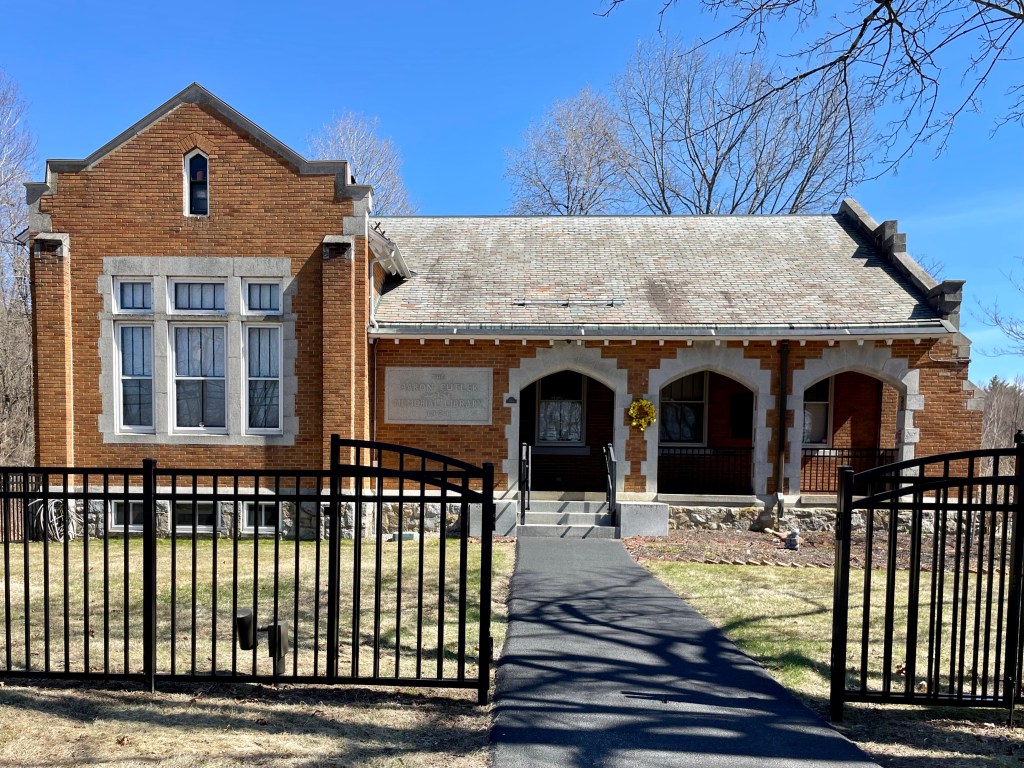
Aaron Cutler Memorial Library // 1924

In his 1917 will, Aaron Cutler of Hudson, N.H. left his estate to family and friends with his remaining estate to be bequeathed “for the purpose of the erection, furnishing and maintenance of a Public Library, upon the express condition that the citizens of said town give land upon which to erect the same. Said land to be located within one-quarter of a mile of the town hall. Said Library to be of brick and slate. And to be known as “The Aaron Cutler Memorial Library.” His town of Hudson recently erected a memorial library, so he sought to fund a library in an adjacent municipality. Land was donated in Litchfield for a new library there and architect William M. Butterfield furnished plans for the building. The library was completed in 1924 and exhibits Tudor/English Revival design, unique for the town.

Isaac Newton Center Homestead // c.1850

Isaac Newton Center (1811-1889) was born in Windham, NH and arrived to the rural town of Litchfield, NH in its early days. Upon arrival, he appears to have built this homestead sometime in the mid-19th century based on its style. Like many in town, he was a farmer and was involved with the local Presbyterian Church, which is still neighboring this old farmhouse. After his death, the old farmhouse and homestead was inherited by Isaac’s youngest son, Isaac Newton Center, Jr., who was engaged in local town affairs, serving as City Clerk, Treasurer, Forest Fire Warden, and Library Trustee. The house appears as a melding of late Greek Revival and Italianate, possibly from the 1850s or 1860s.

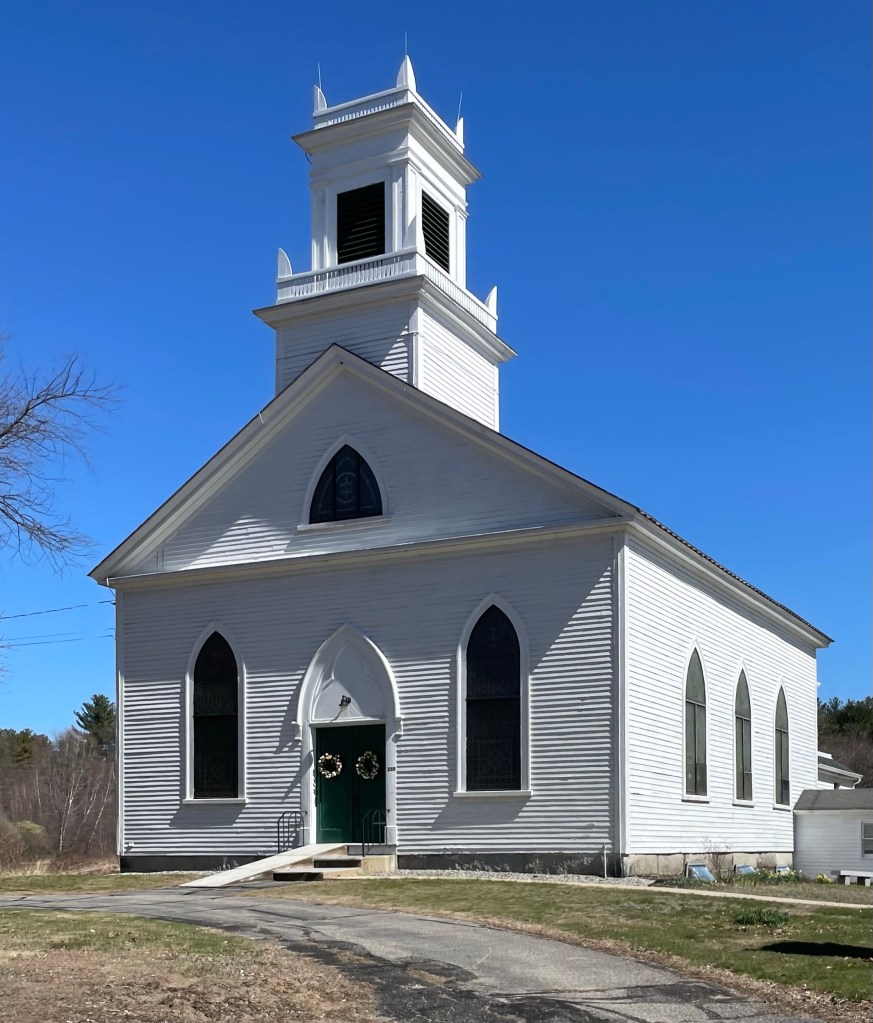
Litchfield Community Presbyterian Church // 1844

Litchfield, New Hampshire remained a rural agricultural town on the eastern banks of the Merrimack River from its founding by white settlers until after WWII when it rapidly became a bedroom community for nearby NH cities and Boston. The area’s Presbyterian residents needed a place to worship, separate from the more common congregationalists, and they built this Gothic and Greek Revival style church near the geographic center of town, a stone’s throw from the Merrimack River. The building features lancet windows, tracery, and a two-tiered belfry with classical pilasters and Gothic finials at the tower.

Litchfield Old Town Hall // 1851

The town of Litchfield, New Hampshire is located at the southern section of the state across the Merrimack River from the town that carries its name. Land which is now known as Litchfield, was once populated by the Abenaki people. The New Hampshire Archaeological Society has located over 30 Native American sites along the shore of the Merrimack River in Litchfield, with artifacts several thousands of years old being uncovered. European influences started in the 1650’s with early records showing that Litchfield was then a part of Dunstable, Massachusetts. Both sides of the Merrimack River were granted in 1656, to William Brenton, colonial governor of Rhode Island. The name was changed to “Brenton’s Farm” in 1729. Chief Passaconaway of the Penacook lived in a Litchfield settlement at least part of the year around this era. In 1728, sixteen proprietors divided up the Brenton Farm Land. In 1749, the land was granted to another group of settlers and named “Litchfield” after George Henry Lee, Earl of Lichfield. The town has historically been comprised of farmland without a true town common or center. A small enclave of buildings did center in town, where the town hall was built. This building, the Old Town Hall of Litchfield, was built in 1851 from parts of an older meetinghouse, which was built across the road from where the building now stands. A shift in the course of the Merrimack River during the early 1800s forced the dismantling of the original Meeting House and a new structure to be built. It is a modest Greek Revival structure with corner pilasters, entablature, and gable end facing the street which reads as a pediment. It is very well maintained to this day as the home to the Litchfield Historical Society.

Richard E. Edwards House // 1981

The Colonial era has had a grip on New England residential design since the 1700s, with each subsequent “revival” showcasing the character-defining features in bold new ways. With this house on College Hill in Providence, Rhode Island, the architect, Friedrich St. Florian, blended traditional Colonial Revival residential design with the flair and quirkiness that comes with the Post-Modern style, popular in the 1980s. The house is five bays wide at the facade with a central projecting bay at the entrance. Post-Modernism takes architectural precedence and turns it on its head, with quirky takes on features and larger proportions. The Edwards House exhibits decorative stone lintels, a Classically inspired entry with pilasters, and a very large cupola at the roof. What do you think of this house? I feel it works well for the neighborhood as it is contextual to the surrounding Colonial-era and Colonial Revival style residences while clearly being of the late 20th century.

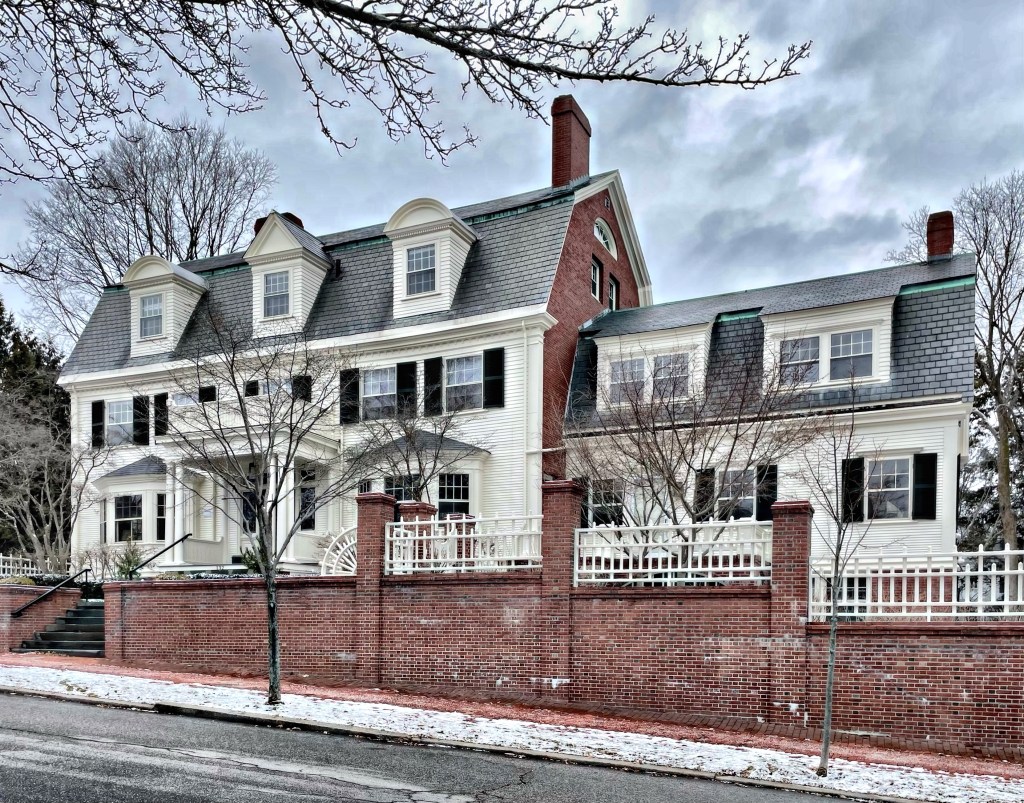
Stephen O. Metcalf House // 1892

I am on a Colonial Revival style kick lately, so bear with me on this recent span of posts on houses in the style! This estate house is an earlier example in Providence, built in 1892 for Stephen Olney Metcalf (1857-1950) a multi-millionaire who was in business in woolen textiles and insurance before diversifying his portfolio further serving as President of the Providence Journal and Evening Bulletin. To make an architectural statement, Mr. Metcalf called the renowned Boston firm of Andrews, Jacques and Rantoul to design his new residence. The oversized Colonial Revival house is an excellent example of how Revival architecture tend to be a more free interpretation of their prototypes, being larger and having exaggerated features and proportions. In his will, Stephen O. Metcalf bequeathed this residence to the Rhode Island School of Design (RISD), an institution his mother helped found, and his daughter served as President. The mansion remains the RISD President’s House to this day.

Dike-Harkness House // 1854

One of the most stunning Italianate style homes in Providence is this stately beauty which is located on Prospect Street. The house was built in 1854 on land sold from Oscar to Henry A. Dike (Dyke), a shoe manufacturer, who erected this stately residence for his family, who only remained there until the early 1860s when it was sold. The home was built on one lot, facing a second house lot, and not the street like many other residences. The property changed hands many times during and soon after the American Civil War, until 1870, when it was purchased by Albert Harkness (1822-1907), a Brown University Classics professor. It was in Professor Harkness’ ownership that the southern house lot was landscaped from plans by Frederick Law Olmsted‘s firm in 1887. The house, which recently sold in 2022, is well-preserved from its massive brackets to the oversized belvedere at the roof!

Henry Samuel Sprague House // 1902

Colonial Revival houses just exude New England charm! This house in Providence’s East Side/College Hill neighborhood was built at the turn of the 20th century in 1902 for Henry Samuel Sprague, a Providence grain dealer, for $15,000. Mr. Sprague clearly did well for himself financially as he could afford a house lot on one of the city’s most beloved streets, Prospect Street. The large mansion has many architectural details which stand out including contrasting brick and shingle on the first and second floors, a massive projecting portico covering a prominent entry, bold fluted pilasters at the center bay, and three pedimented dormers at the slate roof. Inside, this old house has some amazing woodwork and details too!