Union Chapel // 1870

One of the most unique buildings I have ever seen is the Union Chapel in Oak Bluffs on Martha’s Vineyard. The chapel, built in 1870 in the American Stick Style, is in the form of an Octagon, very unique for churches. Built as an inter-denominational house of worship, it is significant as the first non-sectarian religious building to be erected in a community that until 1870, was noted primarily for its strong association with the Methodist Church and its summer camp meeting (Wesleyan Grove) assemblies. The Chapel offered islanders and seasonal visitors regardless of religious affiliation
not only an opportunity to worship but a gathering place for cultural activities. According to historic images, the chapel once had more elaborate stick work and finials, since removed, likely due to storms and general maintenance concerns. The chapel was designed by island resident Samuel Freeman Pratt (1824-1920) who had no known architectural training besides working as a wood carver in Boston, yet his work is characterized as having a dynamic and festive style. Pratt’s other major contribution to Oak Bluffs’ architecture, the Sea View Hotel, was erected at the head of the wharf in 1872, but burned down in 1892.
Methodist Camp Meeting Association Office // 1859

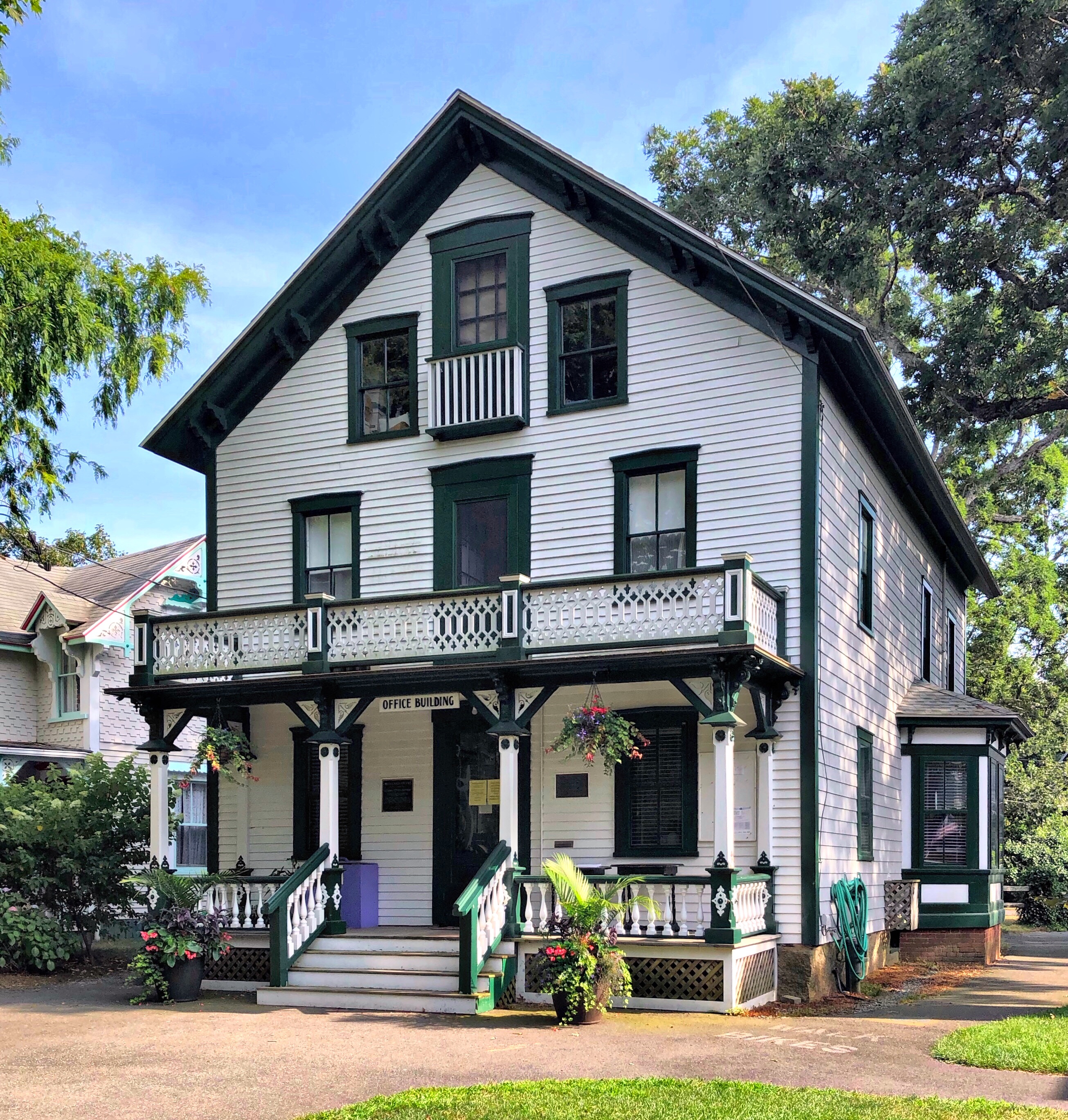
Located at the center of the Wesleyan Grove, – the Martha’s Vineyard Camp Meeting Association – this Italianate building has long served as a hub of the active summer community. The building was constructed in 1859, before any cottages were built in the newly formed summer colony. The office building was not only the headquarters for the Camp Meeting Association, it also served as a storage space for the baggage of the many who stayed in tents, many who didn’t have the means to purchase or rent a cottage. The building even was home to the associations’ post office. It now houses the Association director’s offices and contains the lease holders records back to 1864, a great way to learn about the diverse groups of people who visited and worshiped in this camp.

Riday-Evans Cottage // c.1880

This cottage on Ocean Ave in Oak Bluffs was built before 1880 for J.F. Riday, a manager at the American Mail and Export Journal at the Wesleyan Building on Bromfield Street in Boston. The quaint cottage was photographed shortly after it was built with Riday and two women (one likely being his wife) posing on the front porch overlooking the ocean. By the early 20th century, the home was owned by George and Corielle Evans, a couple from Mexico. They likely modified the home with the shingled siding and front porch with sheltered balcony above, while the original lancet windows and doors remained.

Jones Cottage // 1876

This charming little cottage in Oak Bluffs was built in 1876 for Charles N. Jones, a resident of Medford, MA who had a home built there in 1872. His family’s summer cottage on Martha’s Vineyard was designed by the Ripley Brothers, Alonzo and Walter, carpenters who lived in town and designed and built many of the charming little summer homes there. The home features a wrap-around porch, a covered balcony at the second floor, and pierced board balustrade and cornerboards. Oh, and the paint scheme is perfect!

Massachusetts Normal Arts School // 1886-1967

The Massachusetts Normal Art School was one of the many Richardsonian Romanesque buildings constructed in the Back Bay, but it did not survive like so many others did. The building’s history goes back to the 1860s, when wealthy Bostonians petitioned for the Commonwealth of Massachusetts (State Government) to assist with the founding of new institutions to enhance the quality of life in the state. Due to this, the legislature funded three major institutions including the Massachusetts Institute of Technology (1860) and the Museum of Fine Arts (1870), and founded in 1873, the Massachusetts Normal Art School. The Normal Arts School was tasked with training future teachers for public schools and budding professional artists in the arts, with courses ranging from drawing to architecture. The Commonwealth of Massachusetts rented space in various buildings in Downtown Boston before they appropriated $85,000 and hired the firm of Hartwell & Richardson to design and oversee construction of the new school at the corner of Newbury and Exeter Streets. The Richardsonian Romanesque building was constructed of red brick and brown freestone, featured entrances on both street facades, and held gallery spaces inside for members of the public to view the work created at the school. The school outgrew the original building, which could comfortably fit just 100 students, and in 1929, a new building was constructed at Brookline and Longwood Avenues. Before moving one more time to its current location in 1983, the school was renamed to the Massachusetts College of Art and is best known as MassArt today. The original school in Back Bay was demolished in 1967 and was home to a surface parking lot before the existing building was constructed.

Bayberry Cove Cottage // 1915

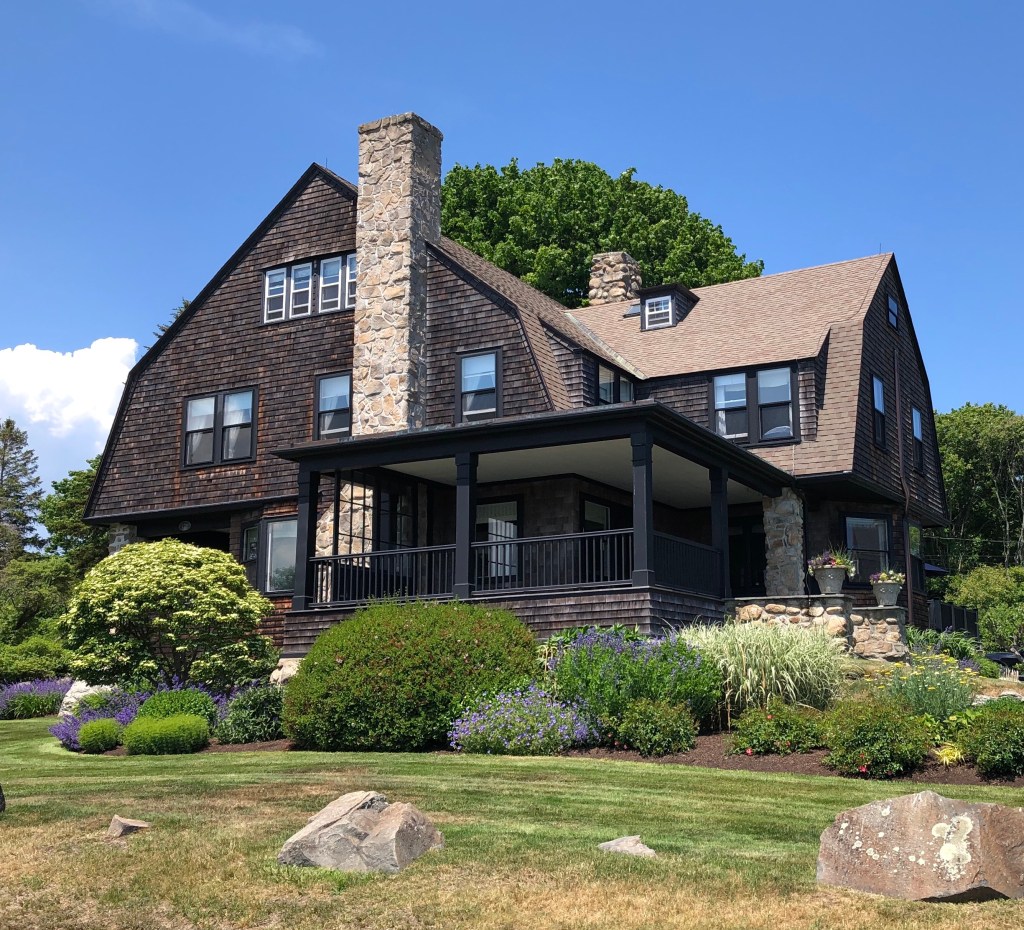
Perched atop a seaside cliff on a neck jutting into the Atlantic ocean, this large summer cottage exhibits the rugged, yet enchanting character of the Maine coast. The house is part of the Cape Arundel Summer Colony and is one of the last built as part of the original period of development. The home was designed by Henry Paston Clark, a Boston architect who previously built a home on Cape Arundel and had summered there for years. His most notable design here is St. Ann’s Church, built for the summer residents of the area. The Bayberry Cove Cottage was built in 1915 for James Harrison and his wife and employed the use of cedar shingles, stone, and slate, to blend in with the rugged plot of land.

Inglesea Cottage // 1889

One of the larger Shingle style homes in Kennebunkport, Inglesea Cottage, was designed in 1889, possibly by Henry Paston Clark, who designed or worked on many homes and buildings in the summer colony. The original owner, Dr. George Frederick Brooks, a doctor based out of New York, who spent his childhood on the coast of Maine, and decided to spend his elderly summers there. By 1903, the home was purchased by Ms. Lucy Fay (1864-1937) of Fitchburg, MA, who hired Henry P. Clark, to add the cross gambrel addition to enlarge the home. Lucy Fay was the daughter of the the wealthy industrialist George Flagg Fay and his wife, Emily Upton, and upon their deaths, inherited their fortune (her sister died at just seven years old, making her an only child). The home remains in impeccable shape and is a head-turner everytime I drive down the coast.

Talbot Cottage // ca.1890

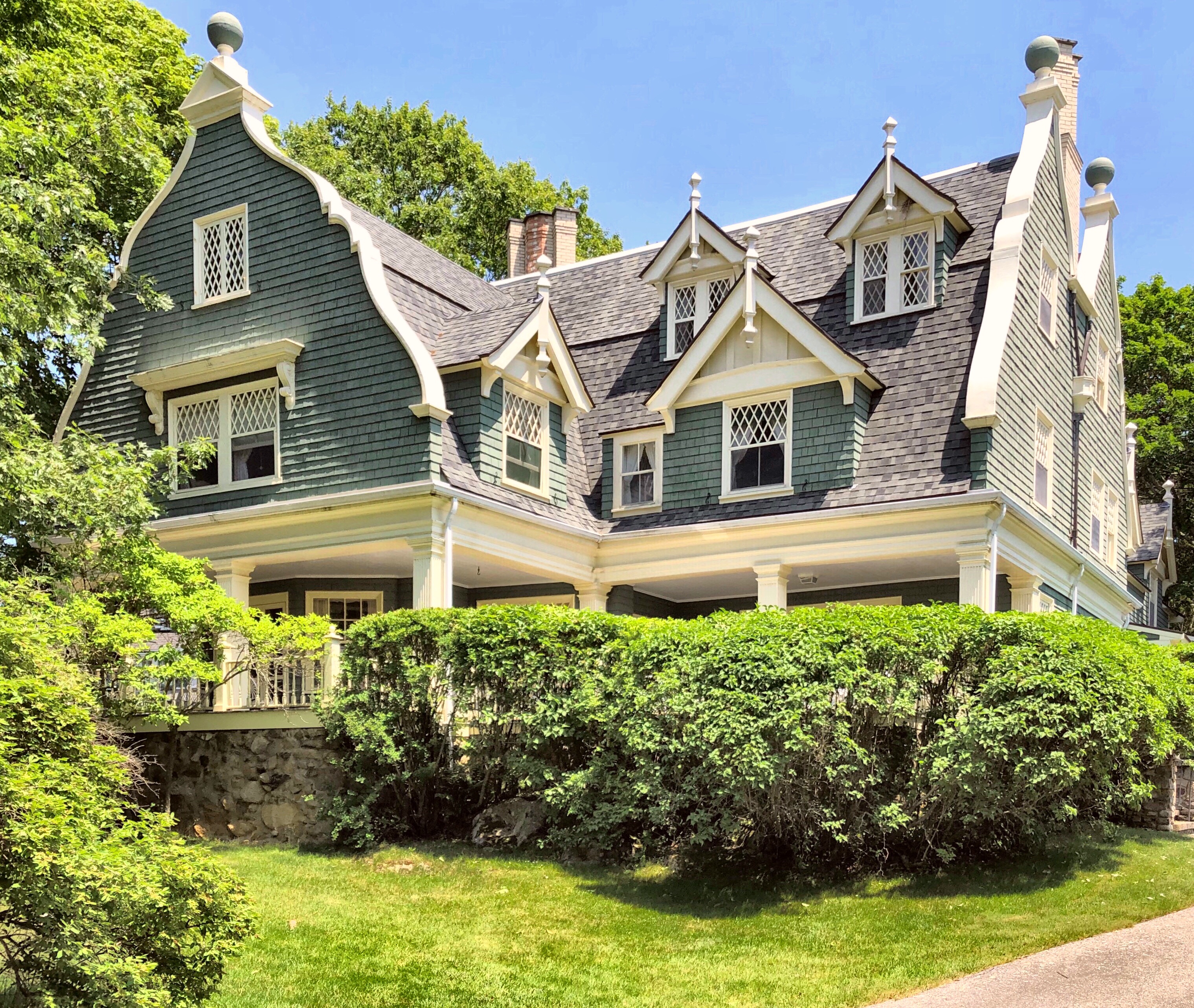
One of the more unique summer cottages in Kennebunkport is the Talbot Cottage, a ca.1890 eclectic Shingle style home. The home features curvilinear Flemish gables crowned with ball finials, diamond paned windows, gabled dormers with finials and pendants, and a wrap-around Colonial Revival porch with fluted columns. The stunning home was built for Julian Talbot, of the Talbot Family who ran a mill in Lowell, MA. The home was soon after sold to George Hubbard Clapp, a Pittsburgh pioneer in the American aluminum industry, who summered in Kennebunkport.

White Columns // 1853

The majestic Greek Revival house on Maine Street in Kennebunkport was built in 1853 for Eliphalet Perkins III, a member of the Perkins Family, one of the earliest families to settle in the area known today as Kennebunkport. Eliphalet apparently sold the home to his son, Charles, who moved in within the year with his new wife Celia Nott. The couple decorated the ornate home inside and out with furnishings still retained inside after the Kennebunkport Historical Society acquired the building in 1955. The home is now known as White Columns, and houses the First Families Museum. One interesting thing I noticed is the rounded arch windows in the pediment, an awareness to the Italianate style which took over in the 1850s-1870s throughout New England, though this home is quintessentially Greek.

The Cedars // 1900

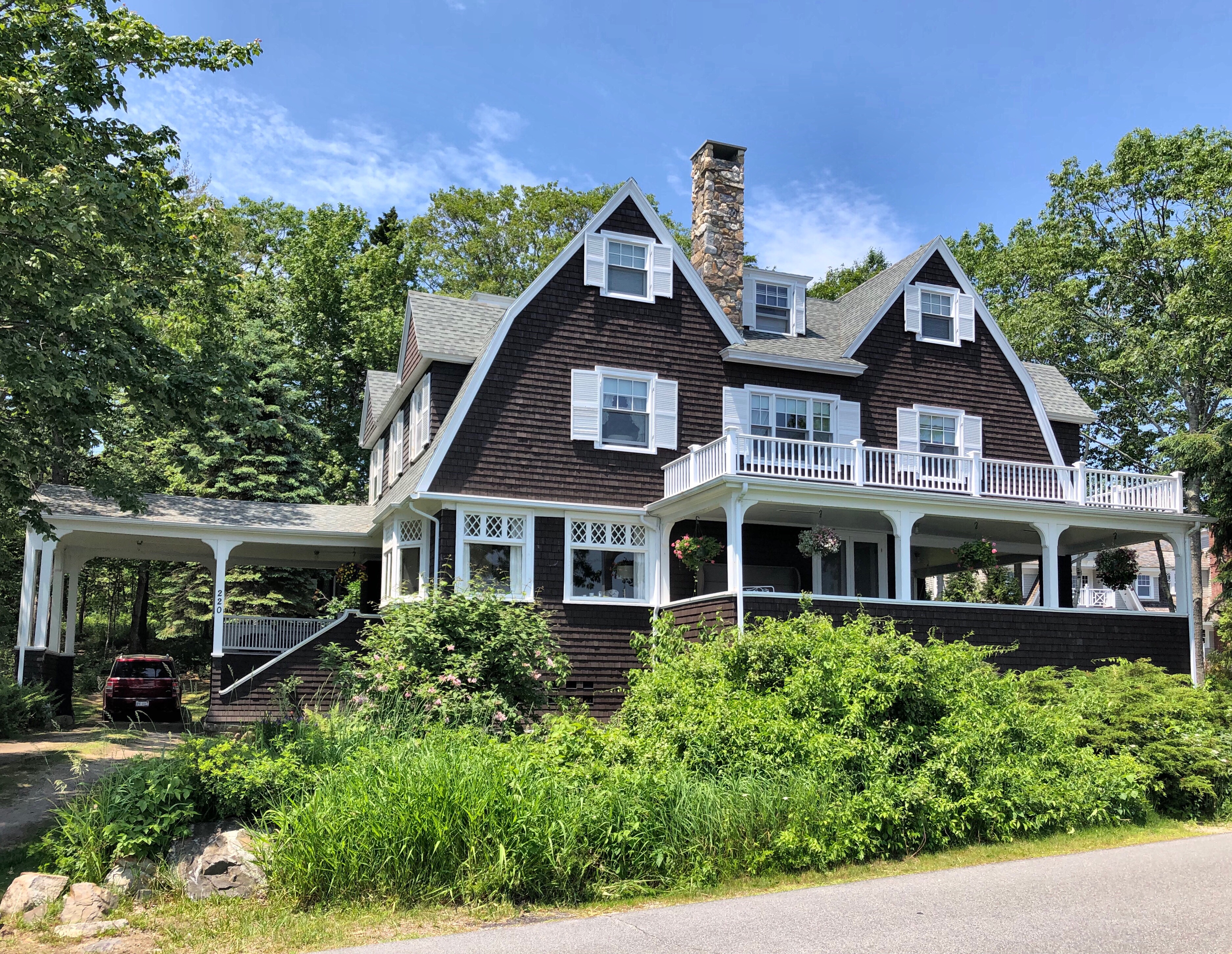
This shingled cottage was built in 1900 for Dr. Francis B. Harrington, a surgeon who worked at Mass. General Hospital in Boston. The stunning cottage was designed with double gambrel gables, a large piazza/porch overlooking the ocean, and a porte-cochere, which was likely added after the home was completed. The home was designed by architect Henry Paston Clark (1853-1927), a Boston area architect who was briefly associated with Henry Vaughan, a leading Boston architect who executed several significant institutional and ecclesiastical works in the Boston area. Clark would later become best-known for his Shingle-style and Colonial Revival works throughout New England and spent his final years in Kennebunkport, where he died.