First Stockbridge Town Hall // 1840

The Town of Stockbridge, MA was incorporated on June 22, 1739. After that time the town held meetings and conducted business in the First Congregational Meeting House until 1840 when this Greek Revival town hall building was erected on the church’s property as a gift. A stipulation was made that if the Town government constructed or moved to a new town hall building, the property ownership would revert to the Church. The town outgrew the building and constructed a new building toward the center of town, but named it Town Offices, a cheeky way to retain ownership of this building. Eventually, that building too was outgrown, and the town hired Pittsfield-based architect Harry E. Weeks to modify and enlarge the building in 1903, in the Neo-Classical style to compliment the original Greek detailing. As expected, the town moved again in the 2000s to a former school, on Main Street, but again retained the building.
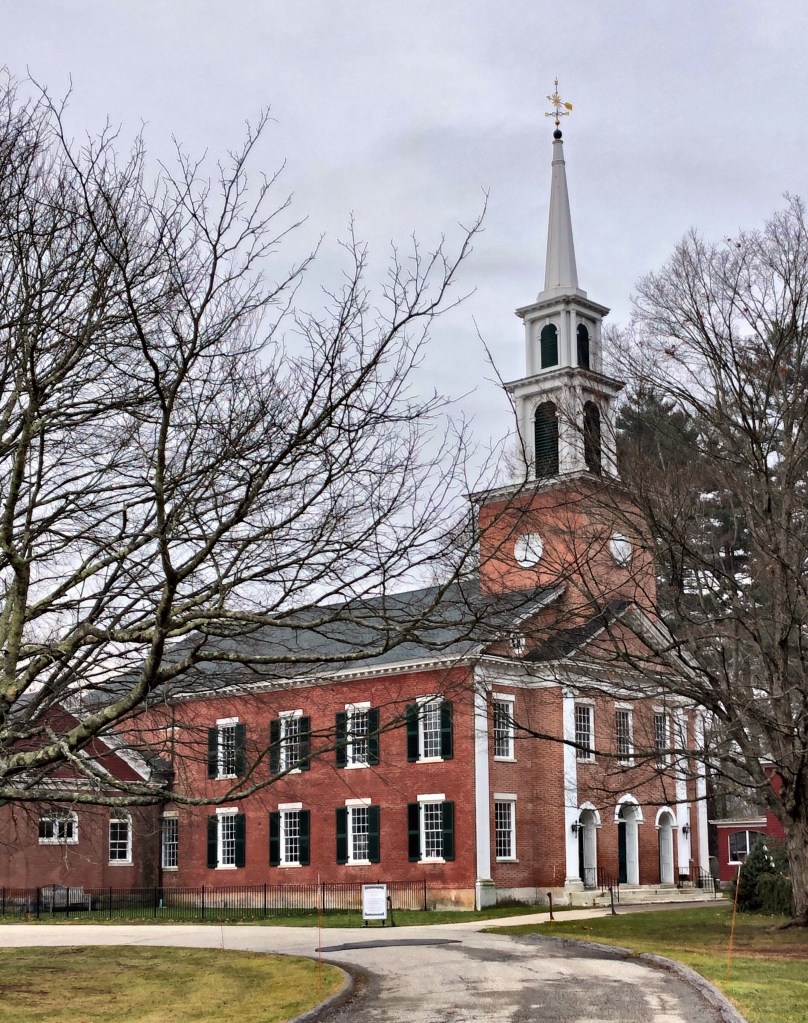
First Congregational Church, Stockbridge // 1824

Stockbridge, Massachusetts was settled by English missionaries in 1734, who established it as a praying town (an effort to convert the local Native American tribes to Christianity), for the Mohican tribe known as the Stockbridge Indians. The township was set aside for the tribe by English colonists as a reward for their assistance against the French in the French and Indian Wars. From this, a Yale-educated missionary, John Sergeant began converting native people to Christianity, essentially stripping them of their own religious culture and practices. Although Massachusetts General Court had assured the Stockbridge Indians that their land would never be sold, the agreement was rescinded. Despite the aid by the tribe during the Revolutionary War, the state forced their relocation to the west, to New York and then to Wisconsin. The village was then taken over by British-American settlers who created the township.

The first congregational church here was formed by Sergeant in 1734, and later succeeded by Jonathan Edwards, another minister. During his time in Stockbridge, Edwards wrote his masterpiece, Freedom of the Will, which remains one of the most studied works in American theology. Edwards later left the church to become the President of The College of New Jersey, now known as a little school by the name of Princeton. The first church was built in 1739, later replaced by a second church building that stood from 1785 to 1824. The present brick building was built in 1824 in the Federal Style. The space was occupied for town functions until the 1840s, when an official town hall was erected next door, demarcating the separation of church and state. The stunning church marks the immense influence religion had in the early colonial days of New England and the impact it had on native peoples (for better or worse).

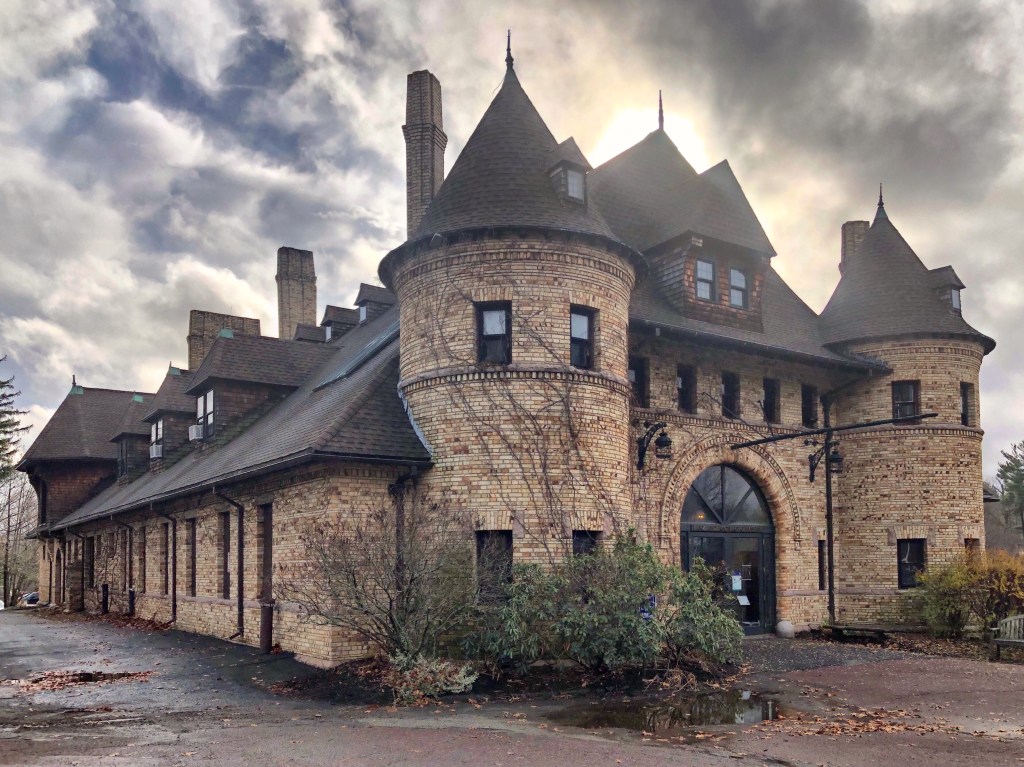
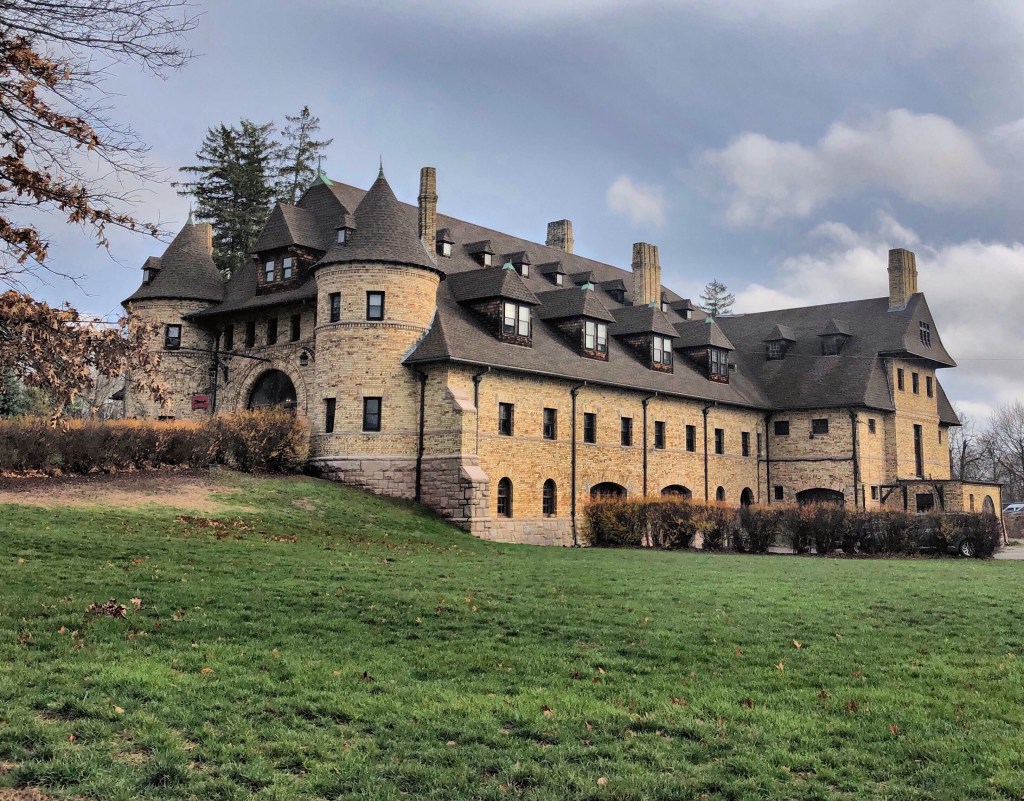
Larz Anderson Carriage House // 1889

This large and imposing brick and stone structure, located in Larz Anderson Park in Brookline, was once the carriage house of “Weld”, the estate owned by Larz and Isabel Weld Anderson. Constructed in 1888, it was inspired by the Chateau de Chaumont-Sur-Loire in France and designed by Edmund M. Wheelwright, the city architect of Boston. First constructed to house a working stable, it later served to house and maintain the Andersons’ growing automobile collection. After Isabel Anderson’s passing in 1948, the collection was entrusted, at Isabel’s bequest, to the Veteran Motor Car Club of America. The VMCCA then established the nonprofit organization that is now known as the Larz Anderson Auto Museum. The former mansion suffered from vandalism in the 1950s and caught fire, later demolished by the Town, who could not afford to rebuild the home.

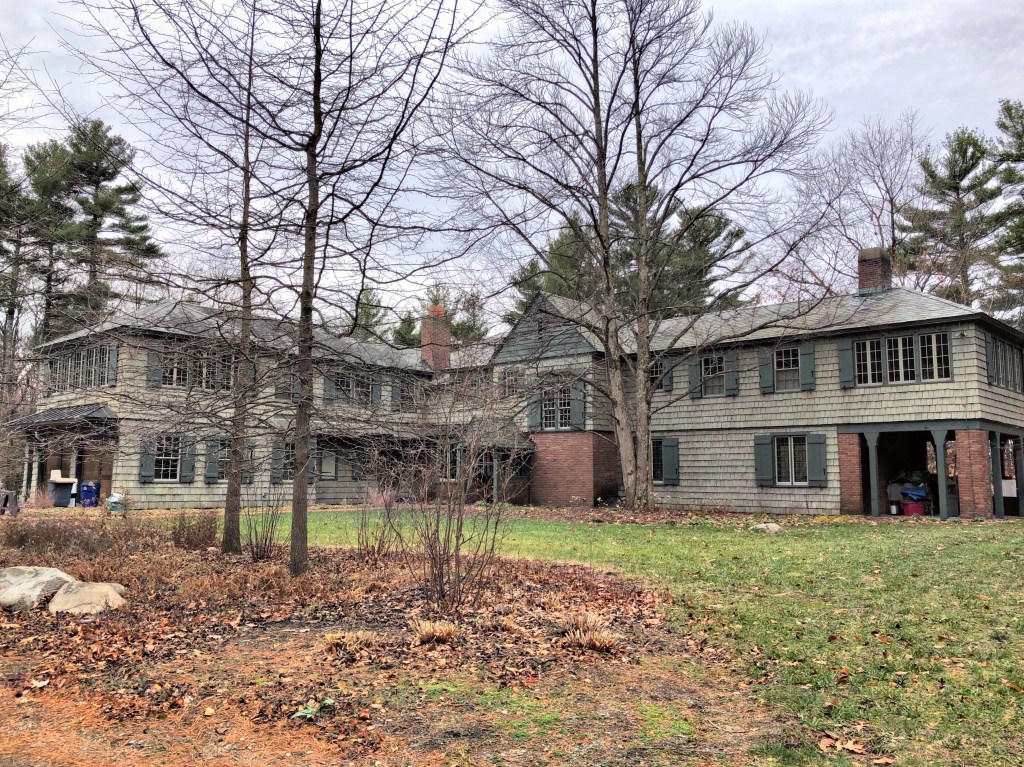
Marion Nichols Summer Home // 1935

This summer estate in Hollis, NH epitomizes the hidden architectural splendor that can be found off the beaten path in many small New England towns. Hollis began serving as a summer destination in the late 1880s and the trend continued until WWII. In many cases, old family homesteads became summer residences for descendants who had moved to the city but desired to return to their “roots” periodically. The Nichols Home is unique in Hollis as it was designed to be a summer retreat for a well-to-do widow and her considerable servant staff, combining all the comforts available with the advantages of a rural retreat. The design of the main house offers separate living spaces for the family and the servants, including a library, living room and dining room for the use of the family. The servants’ wing was designed to include a two-car garage, a butler’s pantry, a manual dumbwaiter connecting the basement and first floor used to transport fireplace wood and a receiving unit for the delivery of milk, groceries and other goods. Sleeping porches, capitalizing on the benefits of the fresh country air, are an integral component of the house design and are included in both the family and servant wings. The home was designed by the Boston architectural firm of Densmore, LeClear & Robbins, who were hired by the 52 year old widow’s children for their mothers’ summer home. It is said that Ms. Nichols never liked the home and decided to summer instead at the old family summer home down the street.

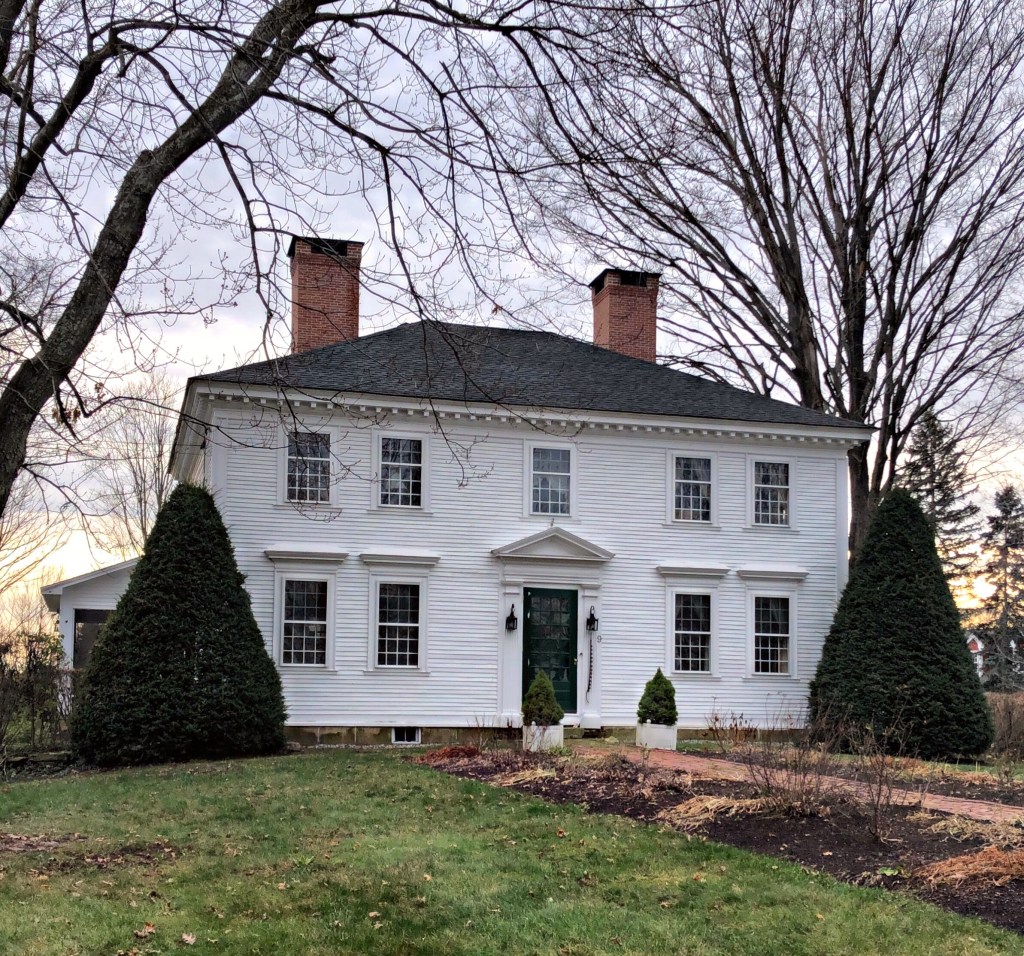
Eli Smith House // 1794

This house on a prominent lot opposite the Town Green in Hollis, NH, was constructed in 1794 for Reverend Eli Smith (1760-1847). In 1794, Rev. Smith married Ama Emerson, the daughter of Rev. Daniel Emerson, then the minister of the Congregational Church in Hollis. After Rev. Emerson’s death, Eli Smith took over the church and became the second minister of the town. Eli’s brother Andrew, a skilled carpenter, is said to have built the stunning Georgian house. After his death in 1847, the property was subdivided and another home was constructed, likely for a member of the family, while Joseph Emerson, one of Eli’s sons lived in the former family home. It remains one of the best-preserved late 18th century homes in the area.

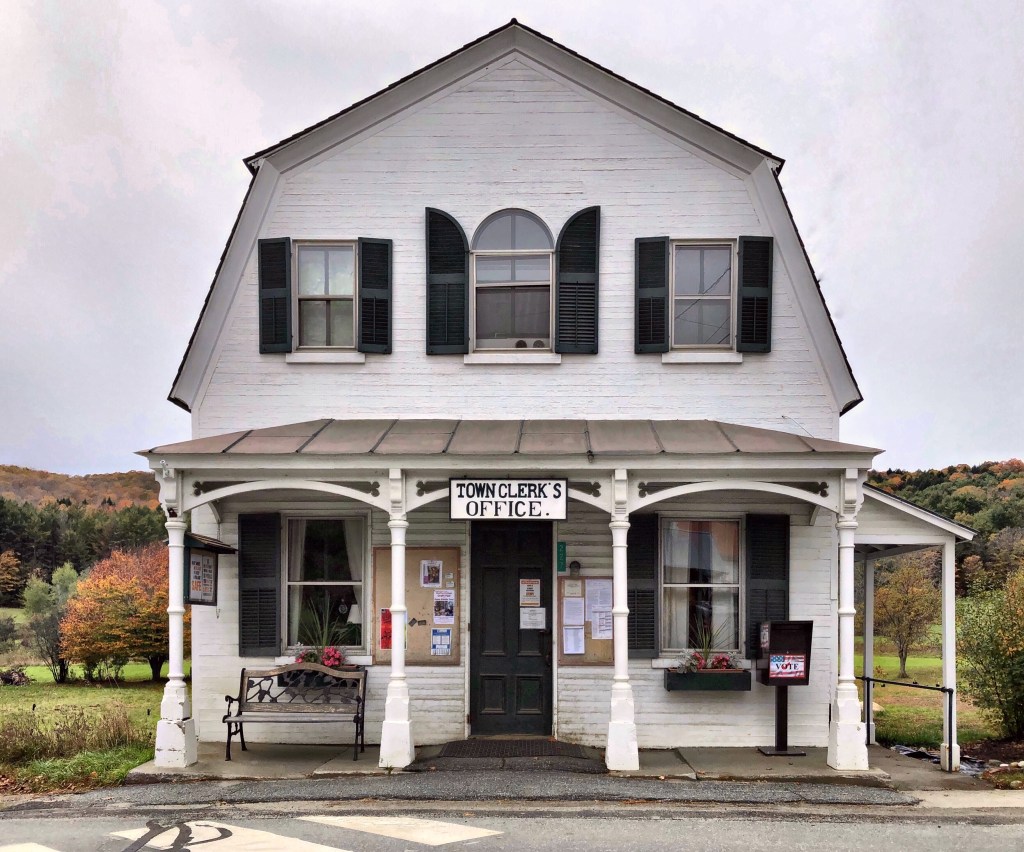
Strafford Municipal Building // 1883

Designed and built by Senator Justin Morrill in 1883, this building was donated to the town of Strafford by Morrill in memory of his mentor Jedidiah Harris. It was given to the town as a public library in part to house the Harris Library, which in turn had been created by a bequest from Harris. This structure remained a library until the Morrill Memorial Library building was completed in 1928 and its collection was joined with Morrill’s. It is currently used as the Town Office building providing space for the Town Clerk/Treasurer and Town Records, and town boards. The white clapboarded building has Victorian detailing with the spindled posts at the porch with a prominent gambrel roof covered in slate. Cute!

Farist House // 1894

Joel Farist (1832-1904) emigrated to America with his family by the way of Sheffield, England, working originally as a laborer as a child. By his thirties, he formed the Farist Steel Company in Springfield, MA, later relocating to Bridgeport, CT in 1872. Due to his prestigious role and success, he became well-connected in Bridgeport, later becoming the first President of the Bridgeport Electric Light Company and Vice President of Bridgeport Hospital. He built this massive home in nearby Fairfield, CT, likely to get away from the polluted Bridgeport air, for a more bucolic area. The massive Queen Anne home he had built (likely as a second home) features prominent towers, a full-length porch, and a porte-cochere off the side. The home has been restored a few times recently, and a new (hopefully not final) paint scheme in yellow was recently painted on the front facade.

Chaffee House // 1931

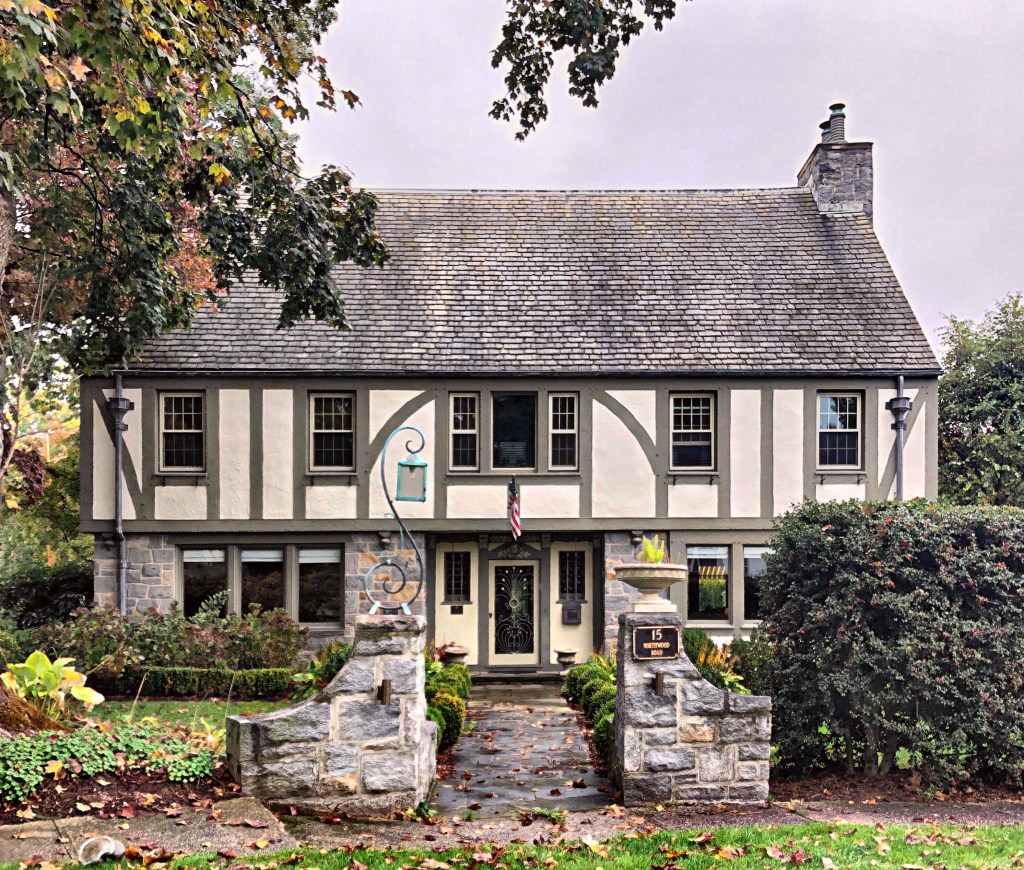
Herbert Almon Chaffee and Irma Chaffee had this Tudor home built by 1931 for their family in Fairfield, Connecticut. Mr. Chaffee was the Vice President and Assistant Treasurer of the City Savings Bank of nearby Bridgeport. Chaffee also at that time worked as Vice President of the A.W. Burritt Company, a lumber mill that produced building supplies and also operated as a real estate company that bought land and constructed on it. The home he had built clearly showcased the company’s work and features hallmarks of the English Tudor Revival style, with half-timbering, slate roof, and jettying (upper floor slightly overhanging the first).

Howard Lee House // c.1928

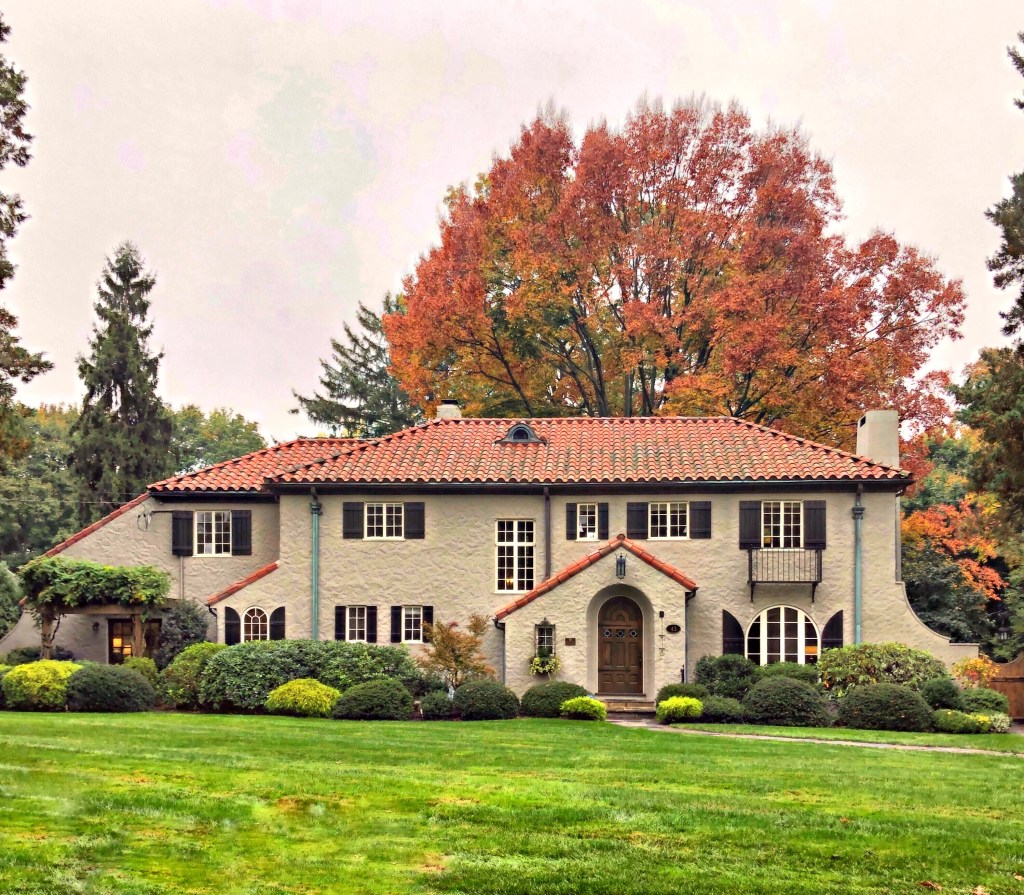
Fairfield in the early 20th century began to shift as a suburban town with neighborhoods of large homes in planned districts. The proliferation of the personal automobile led to the “suburbanization” past streetcar suburbs closer to downtowns. Howard Greeley Lee (1893-1965) worked as Vice President of the Lee Brothers Furniture Co. based out of nearby Bridgeport. The company clearly did well as Howard had this large home built in the fairly uncommon (in New England) Spanish Revival style. It features a red tile roof, stuccoed siding, metal casement windows, and arched windows and front door, all commonly found in the style.

First Church Congregational of Fairfield // 1892

The First Church Congregational in Fairfield, Connecticut is the sixth church to occupy this site! The first structure was built in 1640, and the current building was constructed in 1892. The third version of the church was burned by the British in 1779, while the fourth “meeting house” took nearly 42 years to finish and was partially funded by the sales of properties which formerly belonged to Tory sympathizers. The Romanesque Revival church was designed by architect J. Cleaveland Cady, who is best known for his design of the south entrance of the American Museum of Natural History on the Upper West Side of Manhattan.