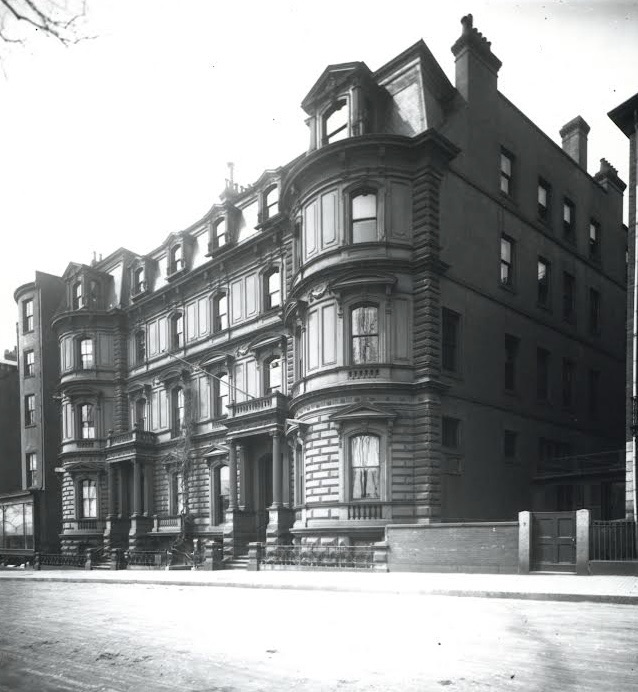
Brewer & Beebe Townhouses // 1863-1917

Boston is ever-changing and while change can be good, there have been some major architectural losses. This trend of redevelopment is not new however, as this single site on Beacon Street has seen two major losses, all before 1918! This lot on Beacon Street was originally home to Hancock Manor, a landmark Georgian mansion built between 1734-1737 for the wealthy merchant Thomas Hancock (1703–1764), and later inherited and occupied as the home of United States Founding Father John Hancock, yes, that John Hancock. In 1863, the Hancock Manor was sold at public auction and was purchased for $230. The house was demolished within days. While the building was torn down, souvenirs of it were actively sought as it fell. To replace it, two of the finest homes ever built in Boston were constructed on the site, from plans by elite Boston architect, Gridley James Fox Bryant. The double Second Empire style homes were first occupied by wealthy merchants, James Madison Beebe (the house on the left) and Gardner Brewer (right). In 1916, plans for the extension of the Massachusetts State House necessitated a taking of these (and other nearby) properties. These two houses were razed by 1917.

I wonder if the Hancock Manor would have survived to this time, would preservation prevail to save it?

Henry Parsons King Mansion // 1907

One of the finest townhomes in the Back Bay of Boston is this stunning residence on Beacon Street. The house was constructed in 1907 for Henry Parsons King (1867-1913) and his wife Alice Spaulding King following the destruction of a house previously on the lot. Henry King was an extremely wealthy businessman who went to Harvard College before working his way up the ranks to become the president of the Whittier Machine Company and the Boston manager of the Otis Elevator Company. For their Back Bay mansion, the couple hired the esteemed firm of Little & Browne to design the stately home with its full bowed facade. Henry King died in October of 1913 and his funeral was in the home, with his body laid under the main circular staircase inside (which according to sources is one of only two free-floating marble staircases in the United States!) Alice King and their only surviving child, Henry Parsons King, Jr., continued to live at 118 Beacon. Alice died in 1938 and the family home was purchased the next year by the Fisher Business School (later Fisher College). The transaction was reported in the Boston Globe, which noted that 118 Beacon was “well known for its interior woodwork, paneling and flying staircase of polished marble,” and that the school would install “modern lighting and furnishings, including a cafeteria for student use.” Fisher College would purchase more buildings in the area and the former King Mansion is now home to the Fisher College Library.

Converse Townhouse // 1886

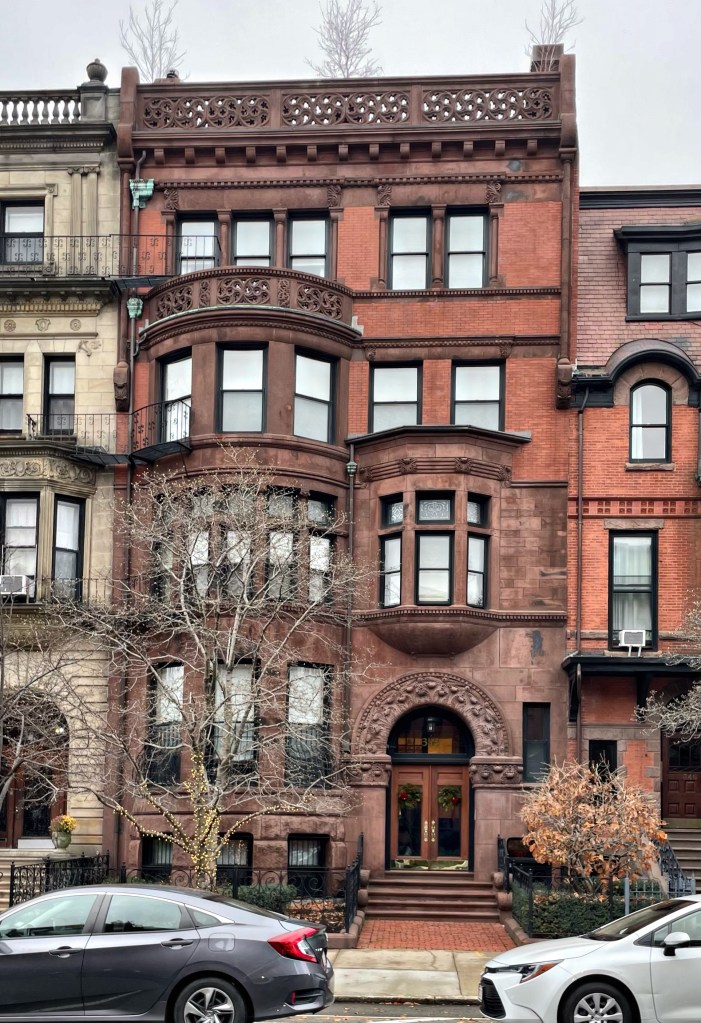
One of the best townhouses on Beacon Street in the Back Bay neighborhood of Boston is this absolute stunner! Built in 1886-7 from plans by architects Allen and Kenway and constructed by Norcross Brothers, builders, this was the Boston home of Elisha Slade Converse and his wife, Mary Diana (Edmands) Converse. Also residing in the newly built home was their son-in-law and daughter, Costello Coolidge Converse and Mary Ida (Converse) Converse, who were first cousins… Elisha Slade Converse was founder and treasurer of the Boston Rubber Shoe Company, president of the Rubber Manufacturers Mutual Insurance Company, and president of the First National Bank of Malden. He was Malden’s first mayor and had represented it in the Massachusetts legislature in the early 1880s. Costello Converse was treasurer of the Boston Cold Storage and Freezing Company and later assumed his father-in-law’s interests in the Boston Rubber Shoe Company. The families shared their Boston residence when not at their Malden or summer homes on the North Shore until their deaths. The house was later converted to a boarding house and is now five condominium units. The Richardsonian Romanesque style townhouse has an ornate pierced stone parapet at the roof and rounded bay and detailed carved stone arch at the entrance. So much detail!

Maria Blake Townhouse // 1888

Beacon Street in the Back Bay neighborhood of Boston is not as strolled as Commonwealth Avenue, but there are some great old buildings to be found! This stunning townhouse was built in 1888 for Ms. Maria C. Blake (1824-1913), widow of Charles Blake, who made his fortune as a partner in the furniture manufacturing and sales office of Blake & Alden. Architecturally, the house stands out for its longer format brick, later bow window over the entry, and the leaded glass transom and side lights at the front door. Ms. Blake hired esteemed architect, John Hubbard Sturgis, to design the new townhouse, which she lived in with her unmarried son, William Blake, who worked in real estate. William would eventually marry and lived in the home with his mother and new wife until Maria’s death in 1913. The home (like many in the neighborhood) was converted to a lodging house in 1941, and into apartments in the 1950s. Today, the former single-family residence is a five-unit condominium.

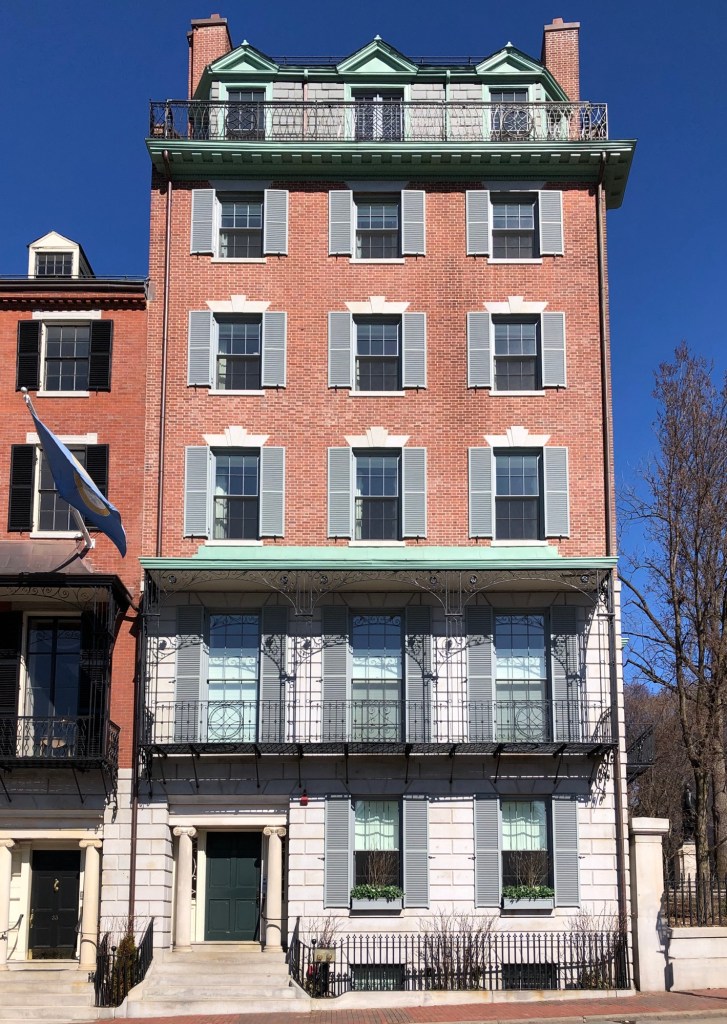
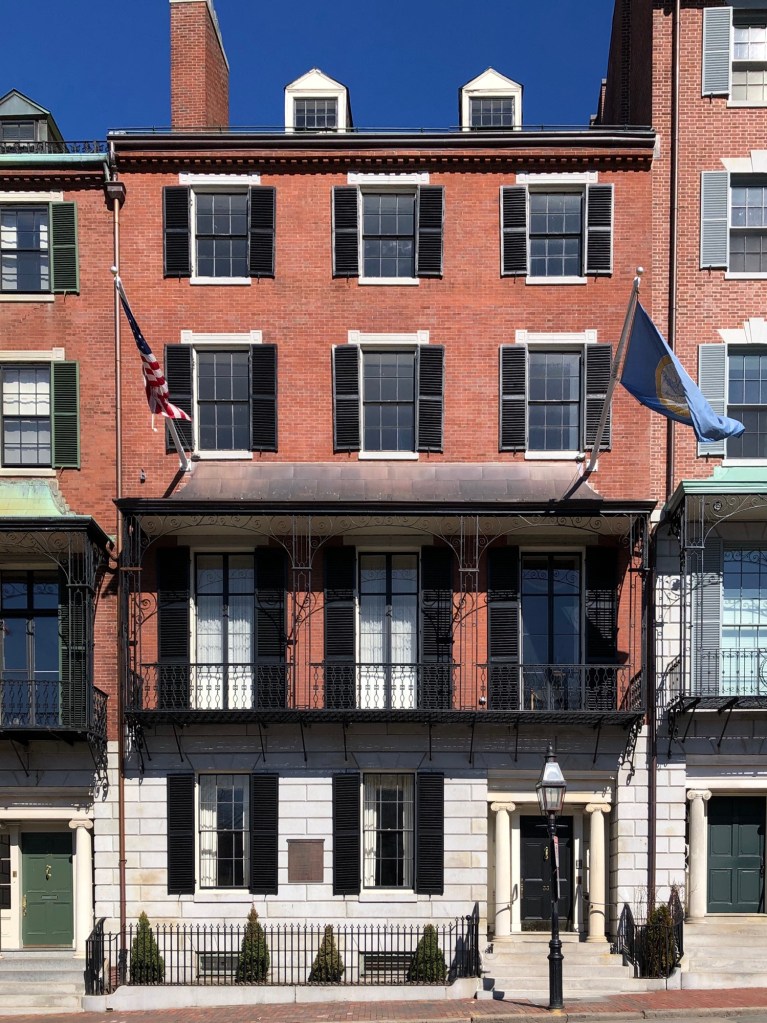
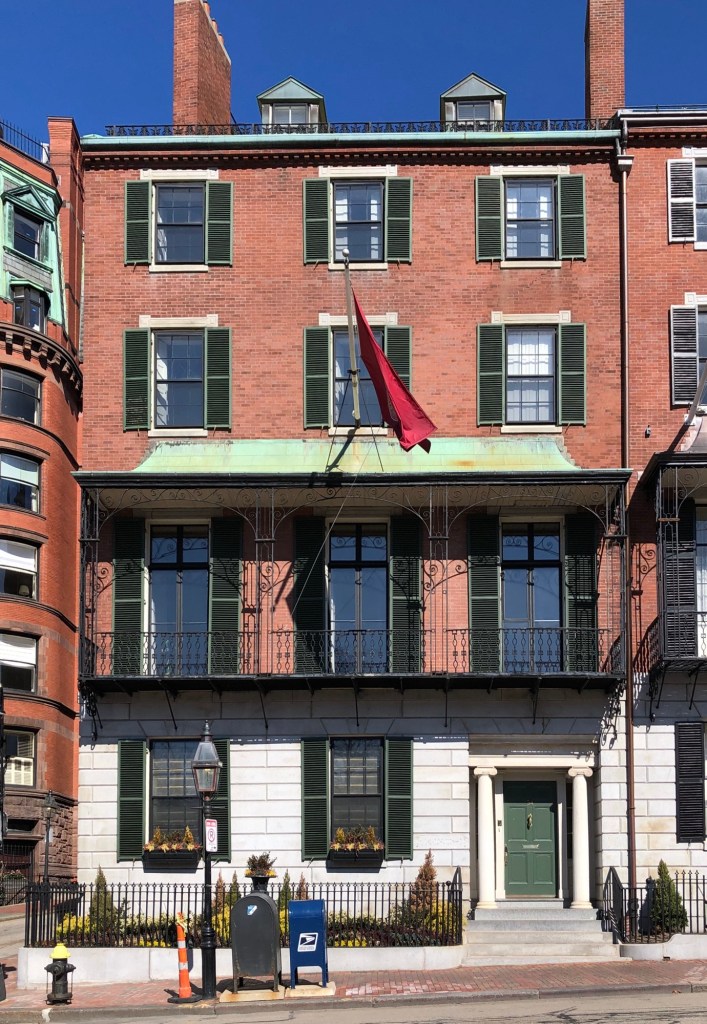
Minot-Herter House // c.1825

Set along Beacon Street, one of the finest streets in Boston, this townhouse has uninterrupted views of the Boston Common and Public Garden. The house was built around 1825 after a large fire destroyed nearly all the homes on the block. Build it and they will come, and the upper-class Boston elite did! Attorney William Minot (1783-1873) purchased the land here as early as 1817, and is said to have hired Peter Banner, the English architect who designed Park Street Church, to design the first house on this site, which stood less than 10 years. Minot had a new home built in the 1820s and lived there until his death in 1873. By the late 1920s, Christian Archibald Herter lived here. Herter held a number of important offices in state and national government, serving as the Speaker of the Massachusetts House of Representatives, Governor of Massachusetts, and President Eisenhower’s Secretary of State (1959 to 1961). It was Herter who likely added the Federal Revival features on the house, including the porch, dormers and updated door surround.

Hotel Royal // 1886

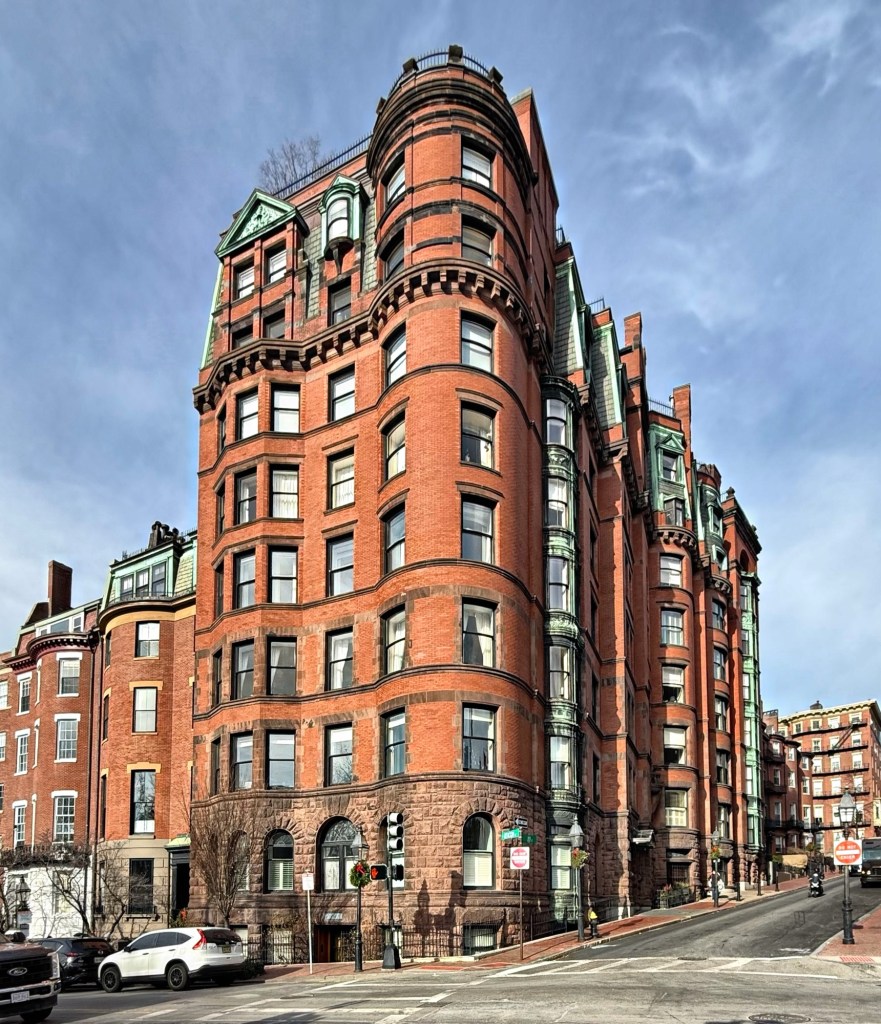
This large apartment house at the corner of Beacon and Exeter Streets in the Back Bay neighborhood of Boston commands its site with a six-story rounded corner oriel. Built in 1885-6 for George H. Brooks, a developer, the apartment house exhibits a Romanesque Revival design with the use of a monumental arch at the entrance, decorative brownstone and terra cotta, and the large full-height rounded bays. The apartment hotel was designed by architect Samuel D. Kelley, who designed many apartment houses and tenements in the Boston area. Sadly, the conical roof atop the corner oriel was removed sometime in the 20th century, somewhat minimizing its architectural integrity. The apartment hotel is now home to 30 condominium units.

Warren House // 1913

This stunning townhouse on Beacon Street in the Back Bay neighborhood of Boston was constructed in 1913 for George Eddy Warren and his wife Frances Knowles Warren. The home, designed by Parker, Thomas & Rice, is one of the more elegant Classical Revival townhomes in the city, with its symmetrical, prominent bowfront, piano nobile with full-height windows, classical lintels, and thoughtful use of brick and stone construction. George E. Warren was a coal dealer, who was selected to head the U.S. Army’s Raw Materials Division during WWI for his expertise. During the war he was in charge of the fuel and forage division, overseeing an important aspect of 20th century warfare, petroleum manufacturing and distribution. His wife Frances was the daughter of Francis B. Knowles, a co-founder of Rollins College in Florida, the oldest institution of higher learning in the state of Florida. Frances volunteered her time in Boston as President of the YWCA, progressing women’s empowerment and social justice in the city. After successive ownership, the townhome was acquired by Emerson College and combined with its neighbor on the interior. In 2000, the home was reverted back to a residence and houses two condominium units.