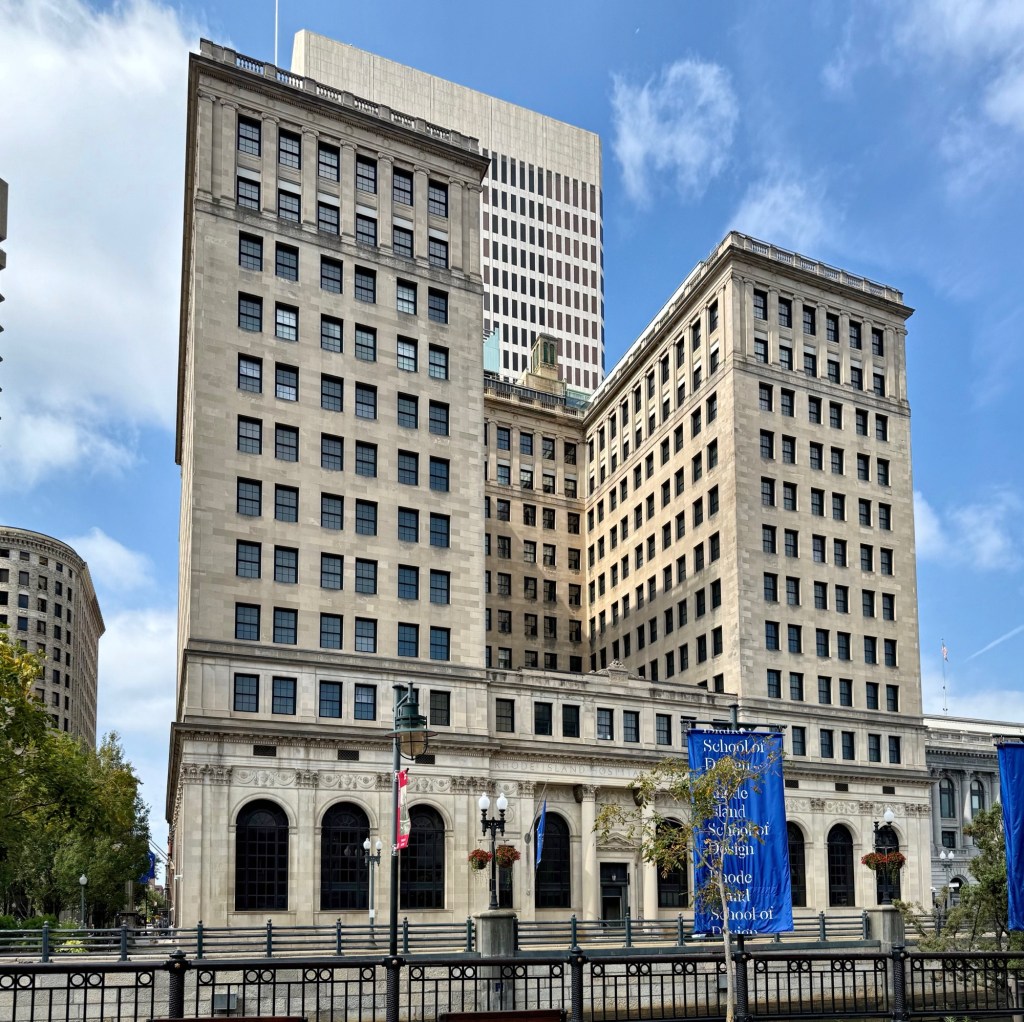
Rhode Island Hospital Trust Building // 1917

Located at the eastern edge of Downtown Providence, the Rhode Island Hospital Trust Building is significant as one of the city’s finest examples of the Beaux Arts style of architecture and as the headquarters of what was once the largest banking institution in the state of Rhode Island. The Rhode Island Hospital Trust incorporated in 1867 as the first trust company in New England. It owes its unique name to the fact that it was chartered by the board of trustees of Rhode Island Hospital, founded four years earlier, with the trust company established to help finance operations of the hospital. The original, purpose-built bank was constructed in 1891, and quickly outgrown as the institution grew exponentially into the early 20th century. In 1916, the trust hired the New York architectural firm of York & Sawyer to furnish plans for the present structure. Construction began in 1917, and after delays caused by WWI, the building finally opened in 1919. The 11-story U-shaped building was designed in an exaggerated form of Renaissance palazzo, with steel-framed construction that is faced with marble on the two lower levels and limestone elsewhere. After a series of mergers throughout the 20th century, the building was owned by FleetBoston, who donated this pristine building to the Rhode Island School of Design (RISD), which was renovated into a dormitory by RISD-alumni and architect Nader Tehrani of NADAAA Architects. It is today known as the Mandle Building.
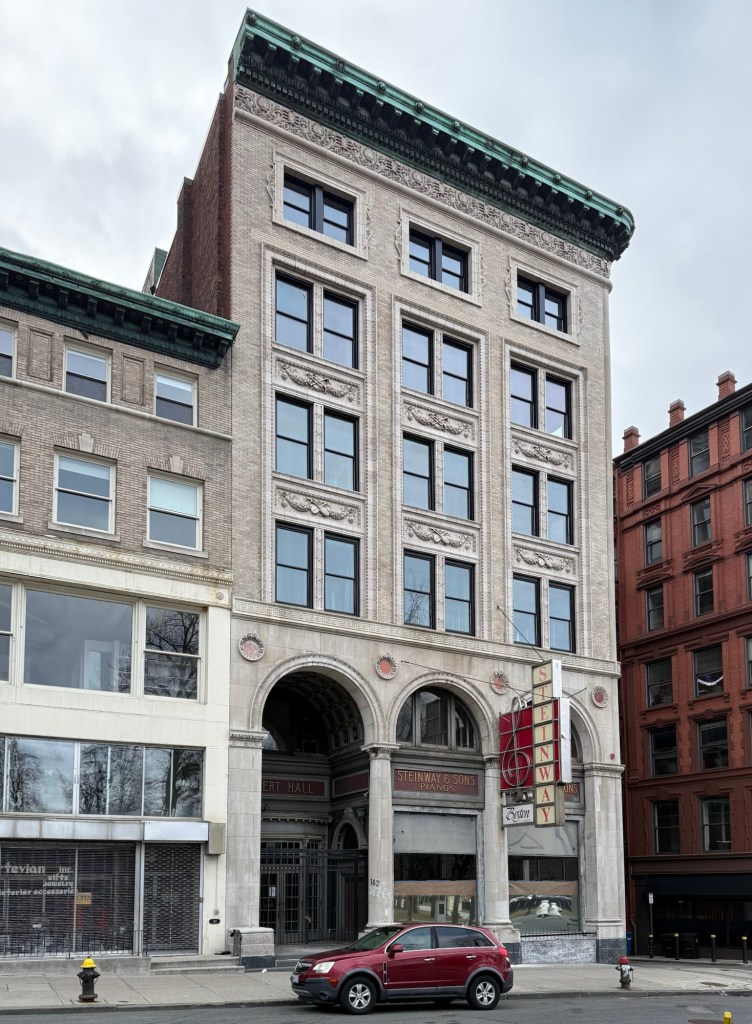
Steinert Building // 1894

The Steinert Building on Boylston Street in Boston is one of the city’s most iconic and mysterious buildings. The Beaux Arts style building was constructed in 1894 from plans by architects Winslow & Wetherell and contained three floors of display rooms, three floors of teaching studios and practice rooms. The building is arguably best-known for the 650-seat Steinert Hall, a basement concert hall constructed 35′ under ground and considered by some to be one of the most perfect concert halls, acoustically, in the U.S. The building was constructed as the national headquarters for the prestigious firm of M. Steinert & Sons, one of the largest and finest music stores in New England. Established in 1860 by Morris Steinert, a Bavarian musician, musical instrument collector and founder of the New Haven Symphony (originally Steinert’s Family Orchestra). The company was expanded under his second son, Alexander Steinert, who had the Steinert Building in Boston built, requiring a music hall to showcase musicians and their products. The subterranean concert hall closed in the 1940s, following the 1942 Cocoanut Grove fire, the third-deadliest building fire in American history, which resulted in deaths of 492 people. This tragedy inspired an entirely new set of building and fire codes throughout the city; which ultimately would close Steinert Hall, as it had only one means of egress, making it too cost-prohibitive to bring the theatre into compliance. The building was long-operated as a piano showroom, but closed in 2017 and has been vacant ever-since. The basement music hall remains frozen in time, awaiting a new life.

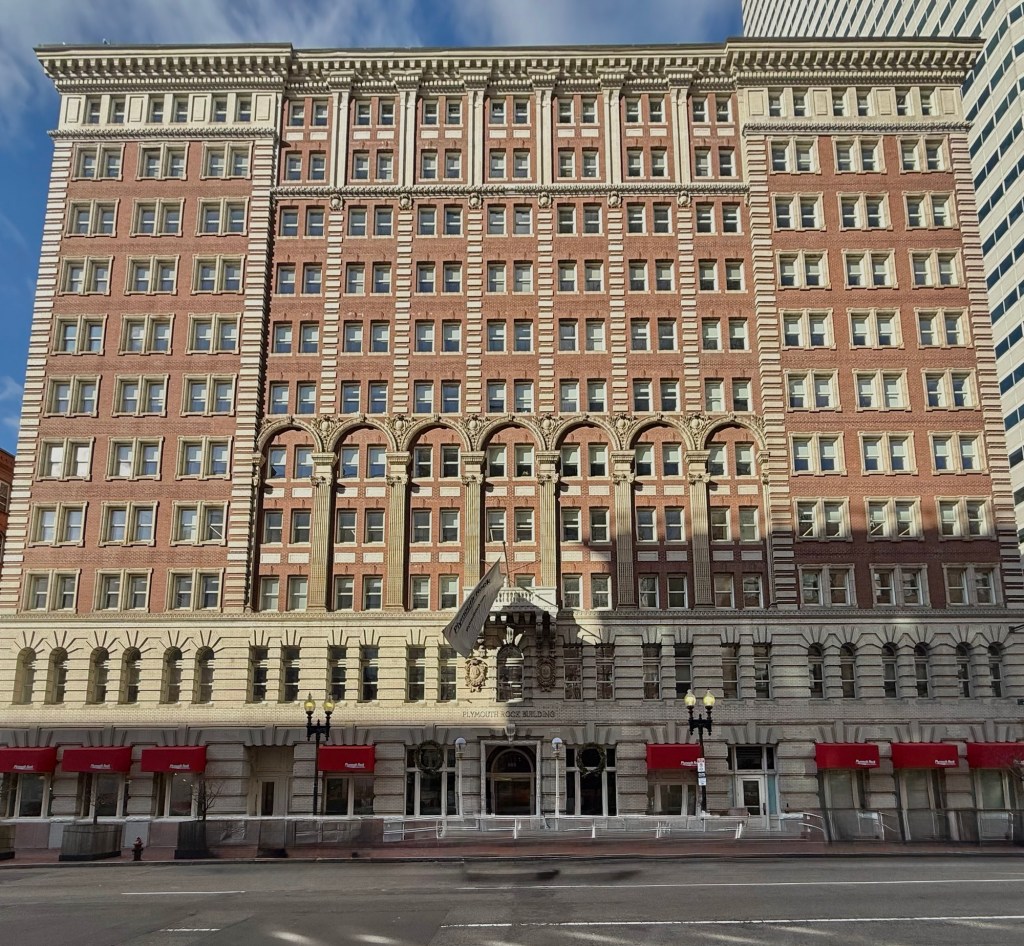
Hotel Essex – Plymouth Rock Building // 1900

The construction of a new South Station Terminal in 1899, prompted a development boom for the nearby area, which had for the previous decades been almost entirely mercantile and centered around the leather and woolen industries. Due to increased land values and an influx of travelers to the area, developers saw an opportunity to erect this building to serve as a hotel for visitors to Boston via South Station. Boston architect, Arthur H. Bowditch, furnished plans for this building in the Beaux Arts/Renaissance Revival style, with use of brick and limestone construction, ornate finishes at the façade including the fluted pilasters, arches and cartouches in the spandrels. The building was completed in 1900 and known as Hotel Essex and featured a long, storied history as a hotel until it closed in the second half of the 20th century. After years of deteriorating conditions, the building was adapted as the corporate offices for Plymouth Rock Assurance Corporation in 1982. The building was restored and has been known as the Plymouth Rock Building ever since.

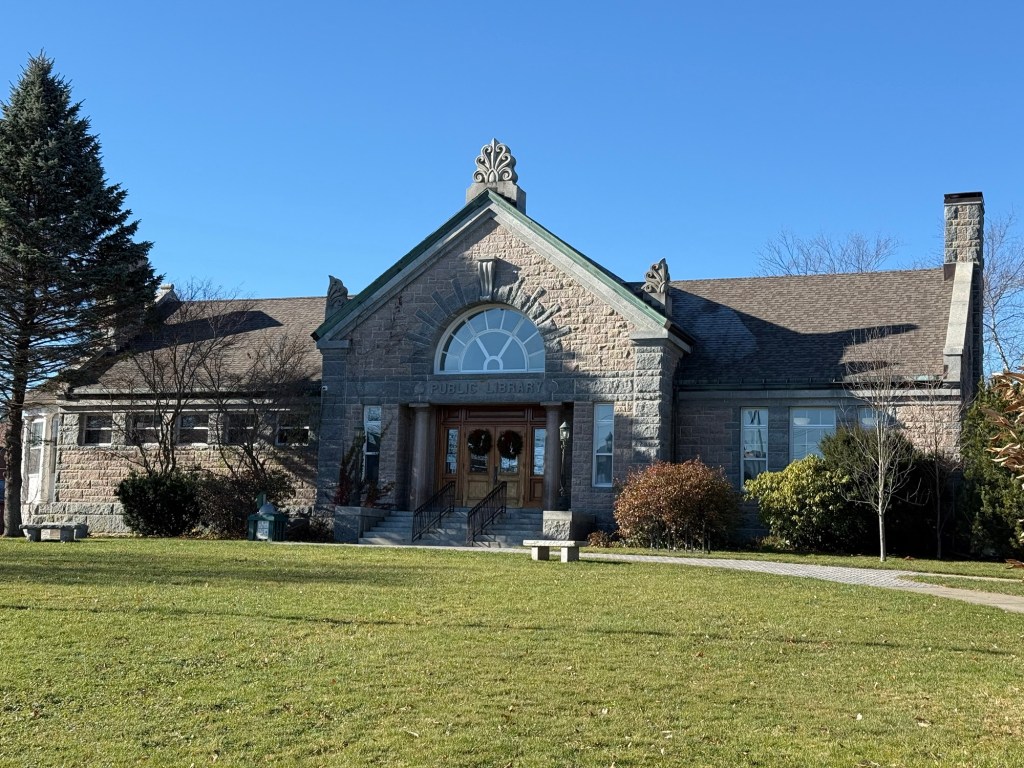
Rockland Public Library // 1903

The Rockland Public Library in Rockland, Maine, is an architecturally significant civic building that showcases the coastal town’s prosperity at the turn of the 20th century. The library was built in 1903–04, and was funded in part by a $20,000 grant from Andrew Carnegie. It is the city’s only major example of Beaux Arts architecture, a style that is also uncommon in the state. The library was designed by Maine native George Clough, who used granite quarried from nearby Vinalhaven in its construction. The building was later expanded by an addition at the rear, but from the street, the handsome Beaux Arts library looks near-identical as to when it was built over 120 years ago!

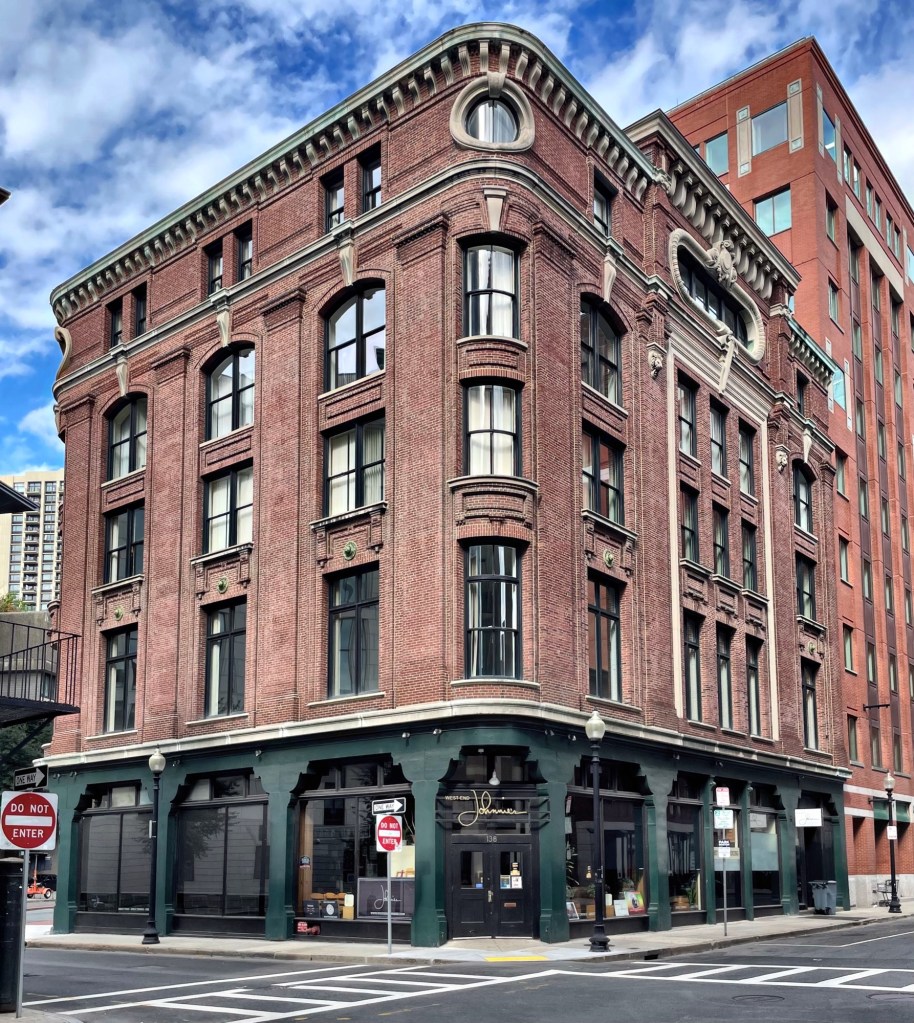
Tarbell Building // 1896

Similar to the Heywood Brothers & Wakefield Co. Building on Portland Street in the Bulfinch Triangle Historic District, the equally stunning building here was also designed by the same architect in a matching style. The building was constructed in 1896 by owner Catherine E. Tarbell , and the Boston branch of the National Casket Company moved in as tenants soon after its completion as part of its national expansion. The company would become the largest manufacturer and supplier of caskets in New England by 1906. The Tarbell building was designed by Stephen Codman in the Beaux-Arts style and is notable for its use of oxeye windows, rounded corners, and engaged pilastered facades. The company held its regional headquarters and sales offices from this building, which benefited from rail access for shipping caskets all over the region. The building is one of the finest examples of the Beaux Arts and Classical Revival styles in Boston.

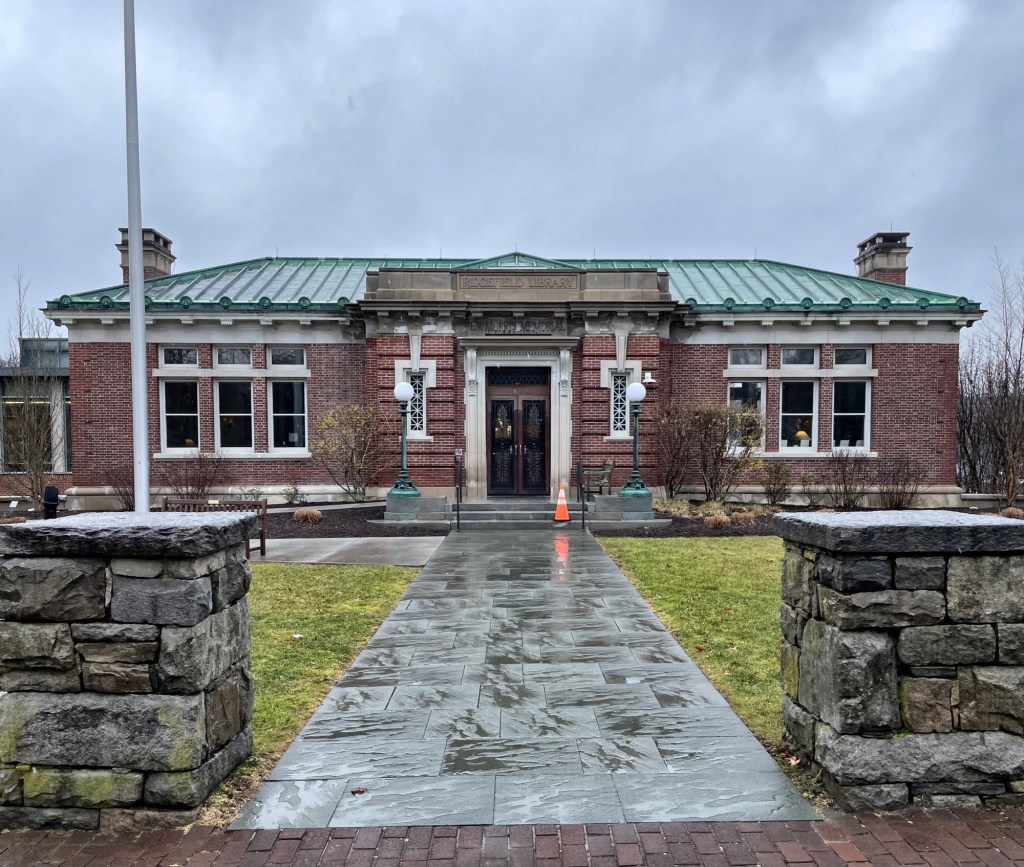
Ridgefield Public Library // 1901

The Ridgefield Public Library is an intriguing Beaux Arts style building from the turn of the 20th century. Built in 1901, the brick structure replaced the Smith Tavern, a 1798 frame structure built by Amos Smith right on Main Street. In 1900 the Smith Family sold the property to James N. Morris who had this library built in memory of his wife, Elizabeth, donating it to the town. Architect Raleigh G. Gildersleeve is credited with the design which is comprised of a one-story building constructed of brick with cast stone trim details and ironwork at the door. The library was given later additions, which are recessive in location and detailing to let the original building shine, as it should!

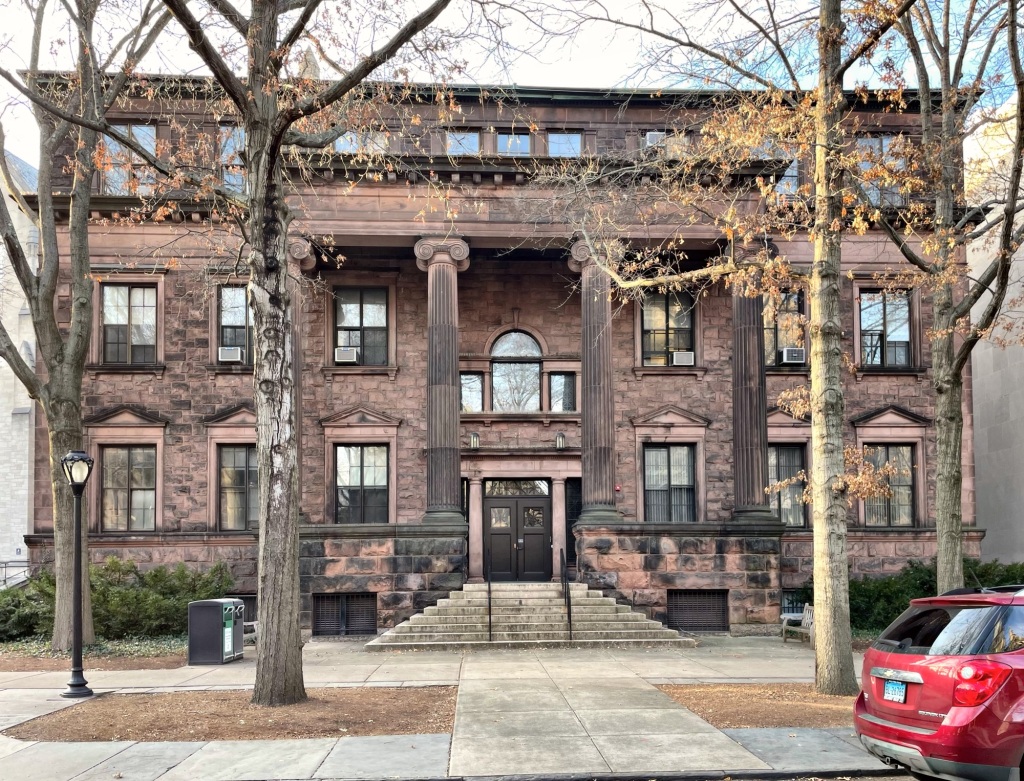
Yale University – Kirtland Hall // 1902

Yale has such great architecture. Walking around the campus, you can find examples of buildings of every time period and architectural style, it is like a living museum of architecture in that sense. Located on Hillhouse Avenue, Kirtland Hall is arguably Yale’s best example of Beaux Arts/Neo-Classical architecture, but it stands out for its use of local East Haven and Longmeadow sandstone. The building was the first laboratory to be built at Yale in the 20th century and was named after Jared Potter Kirtland (1793-1877), the first medical student enrolled at Yale. After graduation, Dr. Kirtland practiced medicine throughout Connecticut until 1823, when his wife died and he moved to Ohio. During his life, Dr. Kirtland also developed an interest in natural history and assisted in the first geographical survey of Ohio. In the early 20th century, Lucy Hall Boardman, a philanthropist and niece of Dr. Kirtland, not only donated funds for scholarships at Yale, but also donated a building, Kirtland Hall. As part of her gift, Ms. Boardman stipulated that her nephew, architect Kirtland Cutter, would be commissioned to design the building, and of course, Yale obliged. The building originally housed the Geology Department and became an integral part of the Sheffield Scientific School.

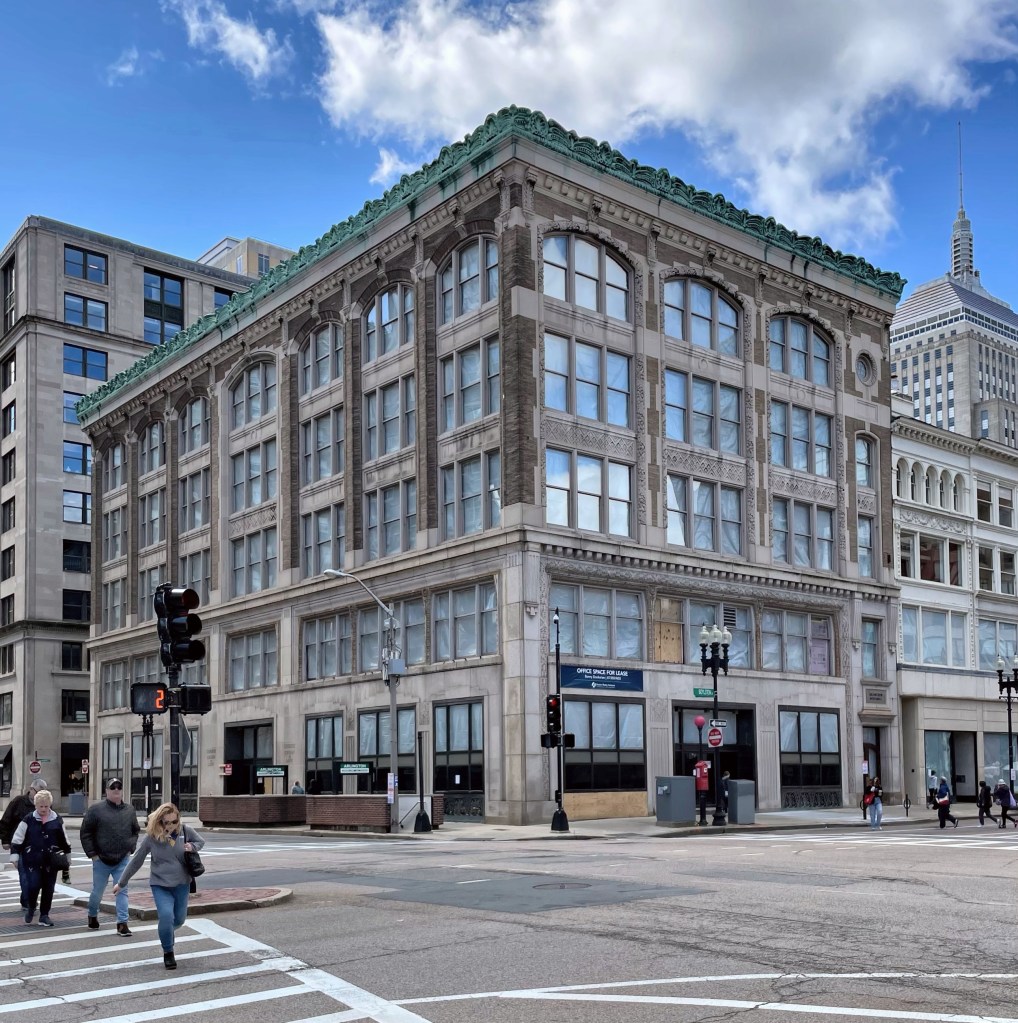
Arlington Building // 1904-2022

This one took me a while to write about because it still pains me to see it was demolished… The Arlington Building was constructed in 1904 as a mid-block building on Boylston Street, across from the Public Garden for the Bryant and Stratton Commercial School. It was designed by architect William Gibbons Rantoul of the firm Andrews, Jacques & Rantoul in the Beaux Arts style. The school building was significantly altered when Arlington Street was extended southward through Boylston Street, making this building suddenly a corner landmark. The new Arlington Street elevation was modeled after the Boylston Street facade. By 1929, Shreve, Crump & Low, established in 1796, the oldest purveyor of luxury goods in North America, moved into the building. The next year, they hired architect William T. Aldrich to add Art Deco embellishments and storefront designs, along with interior renovations to modernize the structure. The luxury company had downsized and moved out of the building, and its prominent site was threatened when owner/developer Druker Co. submitted for a demolition permit to raze the building (and others on the block) to erect a modern office/commercial building. After years of fighting between local preservationists and business interests and developers, the latter won and the building was demolished by late 2022. The new building, 350 Boylston Street, is presently undergoing construction, and in my opinion, is a poor attempt to fit into the surrounding context and is neither as unique or inspiring as the former building.

The Elms – Stable and Garage // 1911

By 1911, the Berwind’s wooden stable at their summer home, The Elms, was deemed inadequate and the couple’s new automobiles needed an appropriate structure to protect them from the elements. Edward Berwind purchased a large estate from Ms. Ida Powell Johnson, abutting his sprawling property and razed it to have a new stable and garage structure built there. The two structures are modeled after the Louveciennes Pavillon de Goury in France, built originally for Madame du Barry. Above the garage space lived the stable keepers and gardeners. As the space shifted from stable to garage, it is said that the head coachman, in order to keep his job, became the family driver, but he could never learn to back up, so a large turntable had to be installed in the garage. The complex originally held space for ten carriages, stalls for six horses and room for eight automobiles, as well as harness repairs, laundry rooms and living quarters. The Beaux Arts style building employs the best of French architecture, including a mansard roof, corbels, and raised central pavillion.

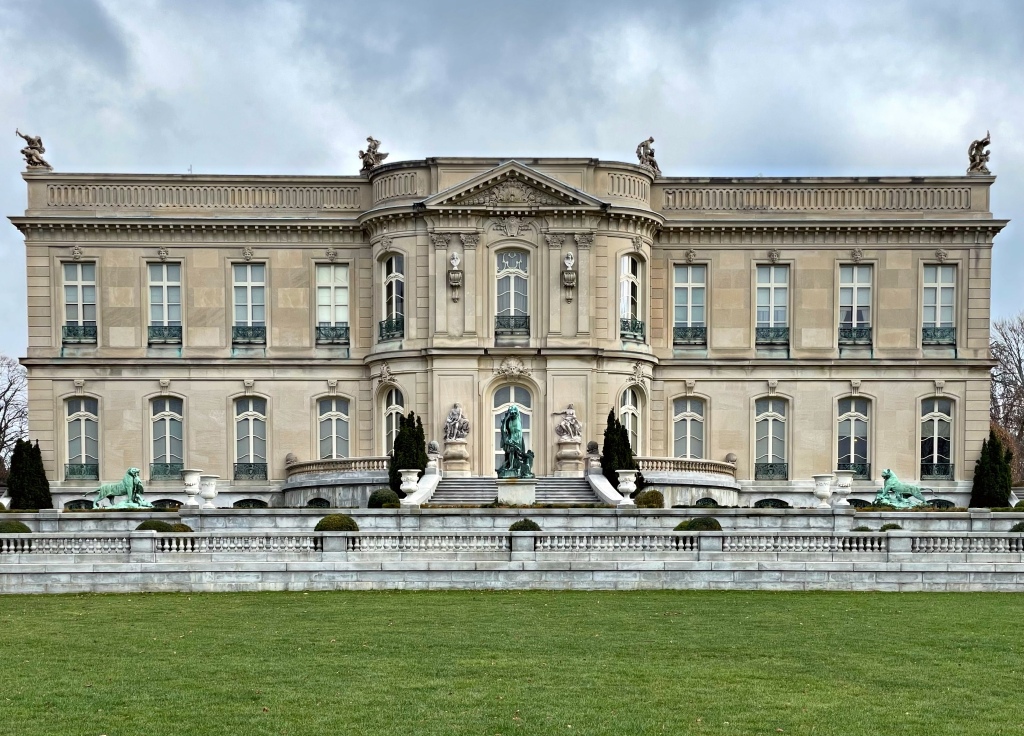
The Elms // 1899

One of my favorite things to do each holiday season is to explore Newport and the mansions all gussied up with lights, ornaments and holiday cheer. This year, I visited The Elms, one of my absolute favorite buildings in Newport, which is a house museum! Stay tuned for some room features, similar to my series last year on The Breakers mansion.

The Elms was commissioned in 1898 by coal baron Edward Julius Berwind (1848–1936) and his wife Sarah Torrey Berwind (1856-1922) as a summer cottage where the couple could escape the woes of city life for a few weeks of every year. Edward was “new money” (his parents were middle-class German immigrants); and by the 1890s, he was hailed as “one of the 58 men who rule America”, making him one of Newport’s most important summer residents. To live up to his new status, he hired Philadelphia architect Horace Trumbauer, who took inspiration from the 18th century Château d’Asnières in France. The site on the iconic Bellevue Avenue is not directly on the water, so Trumbauer sought to enhance the siting of the mansion by elaborate landscaping (more on that later). The house was built to be fireproof, after the complete loss of the original Breakers mansion in 1892 and is clad with Indiana limestone. The couple held many lavish parties in the Elms until 1922, when Mrs. Berwind died. Mr. Berwind invited his youngest sister, Julia, to become his hostess at his New York and Newport houses. Mr. Berwind died in 1936 and Julia continued to summer at The Elms until her death in 1961. Childless, Julia Berwind willed the estate to a nephew, who did not want it and fruitlessly tried to pass The Elms to someone else in the family. Finally the family auctioned off the contents of the estate and sold the property to a developer who wanted to tear it down. In 1962, just weeks before its date with the wrecking ball, The Elms was purchased by the Preservation Society of Newport County for $116,000. It remains one of the most visited house museums in the nation to this day.