Lincoln Street Garage // 1956

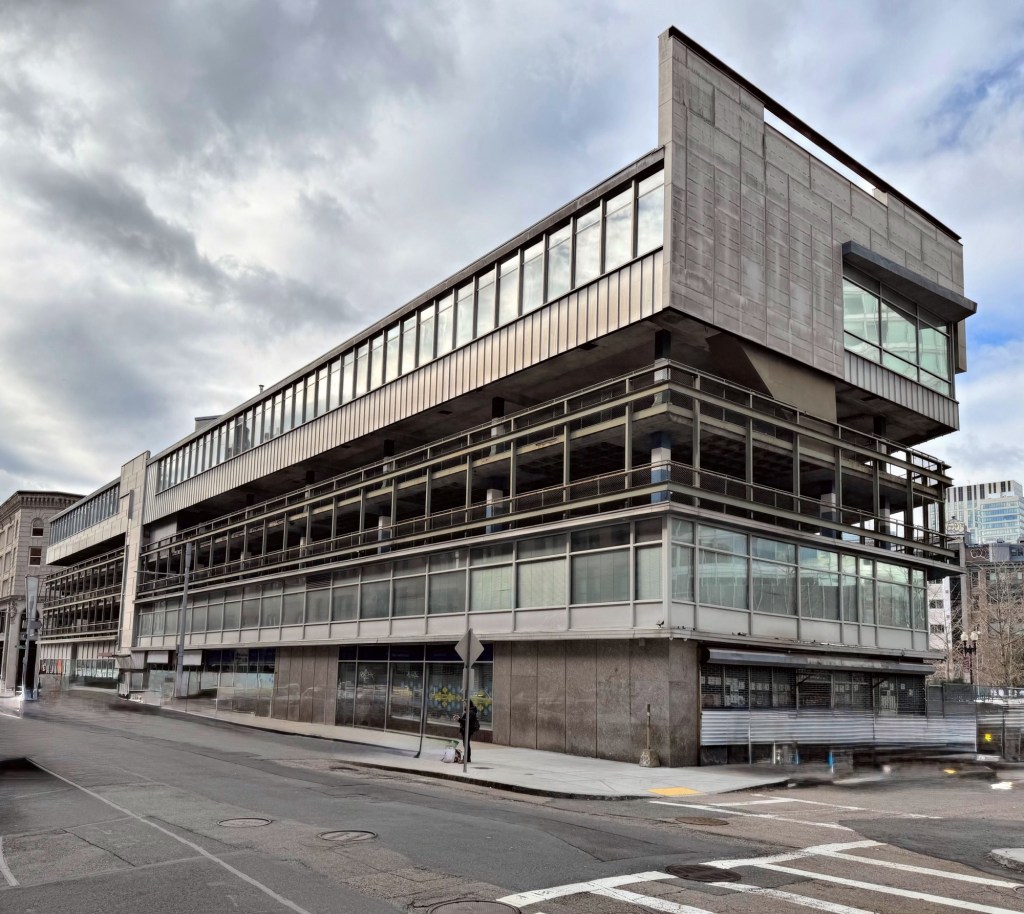
Few buildings in Boston showcase the evolution of its neighborhood (or bring out the architectural critics) quite as well as the Lincoln Street Garage in the Leather District of Boston. This Post-WWII mixed use building was originally constructed in 1956, on the former site of the United States Hotel (1839), one of the first major hotels in the nation, which was razed in 1930. The original building was designed by architect Archie Riskin, and stood three stories high with parking on half of the second floor and on the 3rd floor and roof. A fifth floor of office space was designed and constructed by 1959 also by Riskin. Due to its site at the edge of a historic commercial/industrial district and adjacent to the Central Artery, a raised highway that snaked its way through Downtown Boston, the building was minimally visible and faded away to obscurity until the late 1990s when the highway was buried under the city as part of the “Big Dig”. The open scar and subsequent re-greening of much of the former highway spaces necessitated the owners to re-work the building, due to its newfound gateway presence into the neighborhood. Brian Healey Architects renovated the building, adding an additional floor of offices and reworked facades. The result is a Post-war mixed-use hodgepodge of a building that expresses its use visually on each floor in a no-nonsense way, making it a unique urban building. Additionally the building has long been rented to small businesses, almost all Asian-owned with direct ties to the Chinatown and Leather District neighborhoods. Recent plans have been approved for a new office tower on the site and supported by preservation groups stating that “the existing garage is historically significant or beneficial to the neighborhood”, but to me, the further erasure of quirky buildings for more out-of-context developments is not the way to go.
South Station // 1899

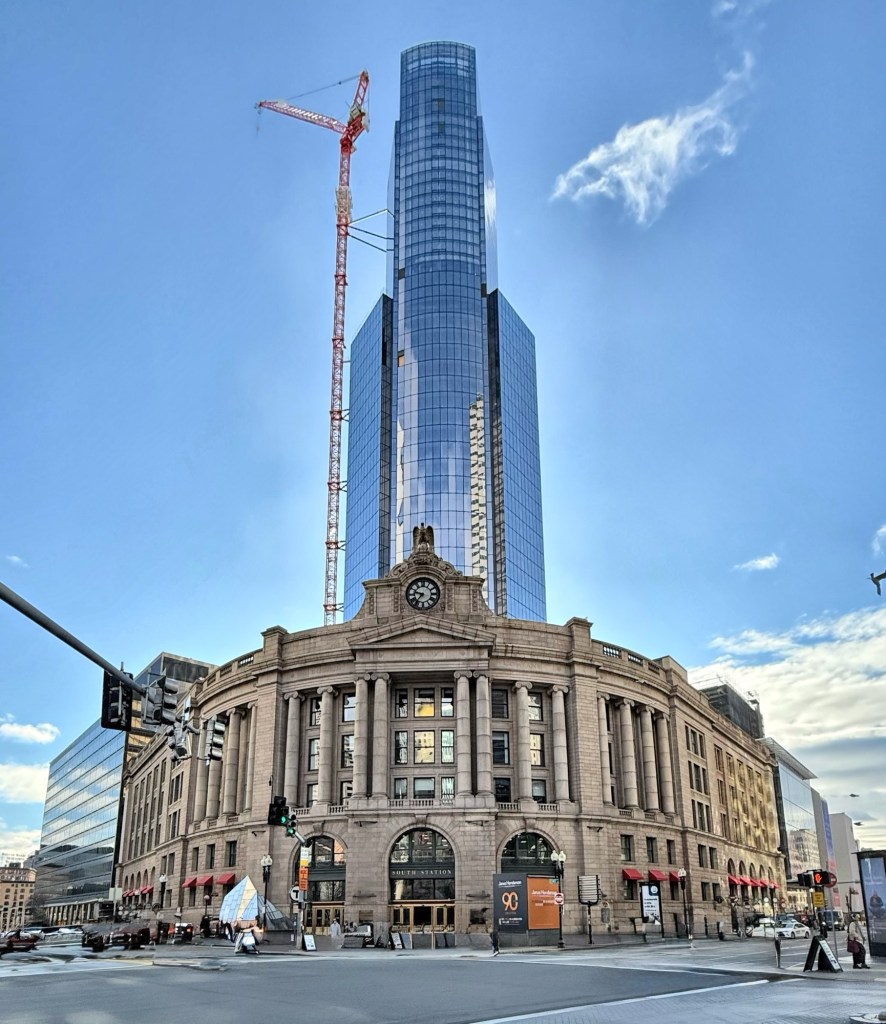
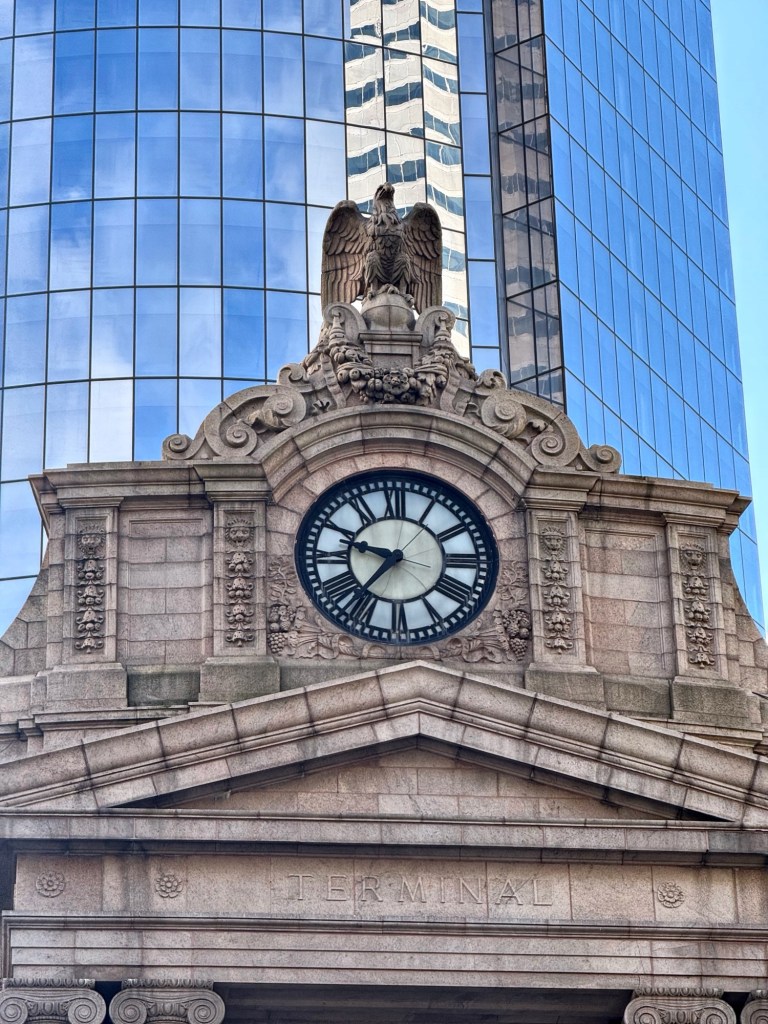
When the railroads serving Boston were first laid out and built, each line stopped at its own terminal which created a dysfunctional and cumbersome travel experience for those entering or leaving the city. The Boston Terminal Company, established in 1897, was charged with the task of consolidating service from the four terminals at a single terminal, a union station (similar to North Station), for routes south of the city. South Station was designed by architects were Shepley, Rutan and Coolidge of Boston and quickly became New England’s busiest transportation center. The five-story Classical Revival style station built of stone is an architectural landmark with three-story Ionic colonnade crowned by a clock surmounted by an eagle, stands above the triple-arched brick masonry lower level corner entrance. While the station handled 125,000 passengers each day during World War II, post-war passenger rail traffic declined in the US. South Station was sold to the Boston Redevelopment Authority in 1965 and (surprise!) they demolished portions of the building and later developed plans to demolish the rest of the station and replace it with a multi-use development including a new train and bus station with large parking garage. Luckily for everyone, the BRA failed in this endeavor and the building remained to the point where public transportation is again invested in and beloved and the building has since been restored. Recently, a glass “crown”, known as South Station Tower, a 51-story designed by Pelli, Clarke & Partners, with new office space, luxury residences, and a redesigned, arched interior concourse (which in my opinion, is the best part). The redevelopment is a push towards transit-oriented development and blends new and old in an innovative way.

What do you think of it?

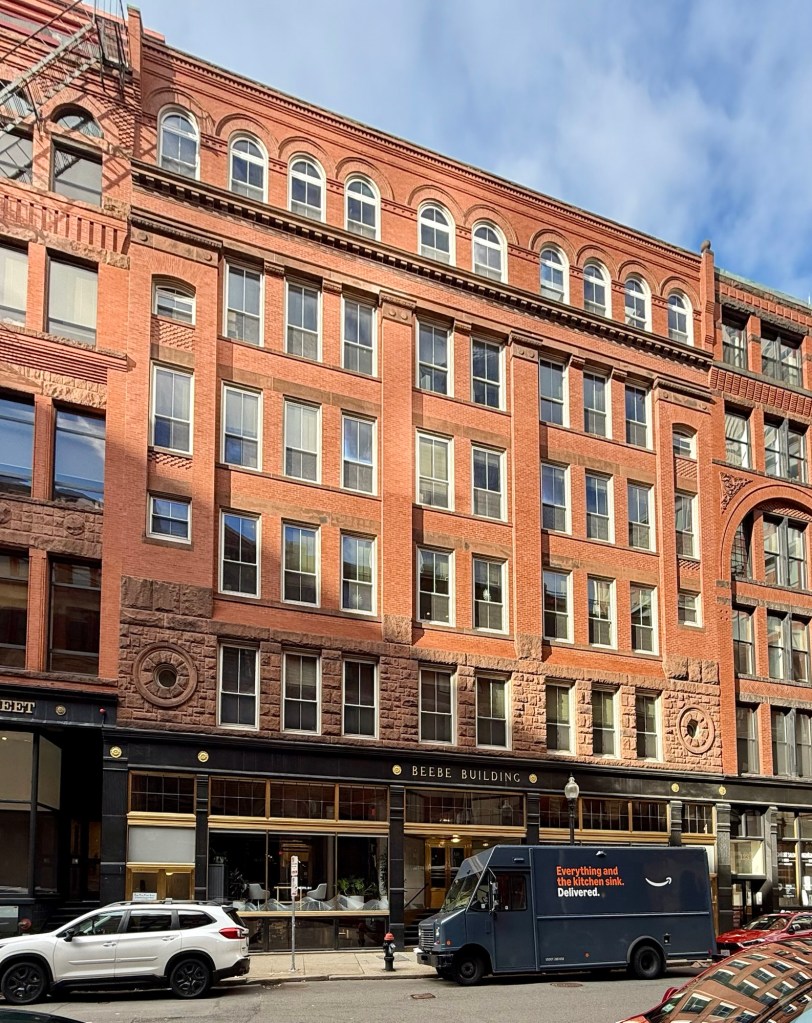
Beebe Building // 1886

Located at 127-133 South Street in the under-appreciated Leather District of Boston, the 1886 Beebe Building is an excellent vestige of the leathergoods trade and commercial architecture of the late 19th century. This building was constructed by J. Franklin Faxon (1832-1912), a business owner who engaged in real estate development and built a number of commercial blocks in this part of Boston. Rand & Taylor, architects, designed the building in an effective blending of Classical and Romanesque styles with rock faced brownstone ashlar above the storefronts, oculus windows, and segmental arched openings on the top floor. The Classical detailing of the two-story brick pilasters and modillion cornice add to its complexity. The building was originally occupied by the Thomas E. Proctor Leather Company and was later purchased by leather goods company Lucius Beebe & Sons and the storefront was renovated by Hutchins & French in 1930. The building has since been known as the Beebe Building and has been well-maintained by subsequent owners.  

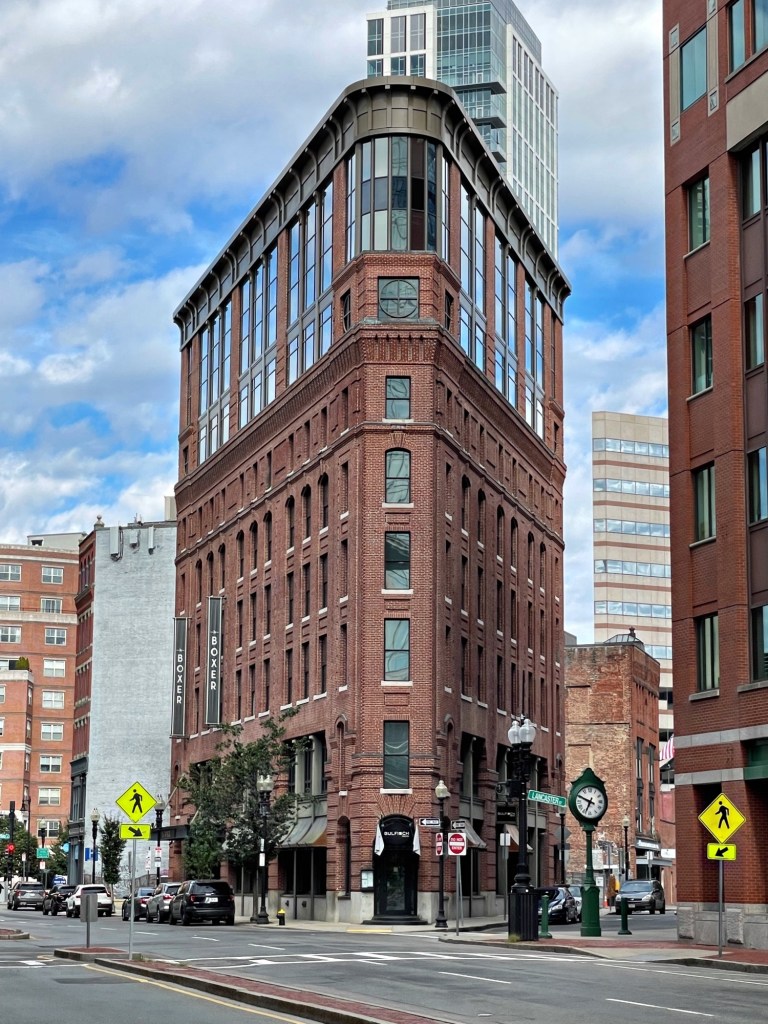
Boston Flatiron – The Boxer Hotel // 1900

The interesting street-layout of the Bulfinch Triangle area of Boston created some oddly shaped triangular building lots which for decades, saw only small, modest wood-frame structures built upon them. By 1900, Boston’s own Flatiron Building (built two years before New York’s more iconic example) was constructed on this site and it has been an icon ever since. The structure was built by ownerCharles Pelham Curtis III (1860-1948), who was born in Boston and graduated from Harvard Law School and became a police commissioner and attorney in the city before moving into real estate development. He hired architect Stephen Codman to design this commercial block, which was rented out to local businesses and professional offices. The building has been home to a hotel for a number of decades, with a major renovation undertaken beginning in 2000, 100 years after the building was constructed. Three floors were added to the top of the original six-story, which are Modernistic in design with large expanses of windows within three center bays that align with the bays of the original building and which are defined by brick piers. The hotel today, The Boxer Hotel, perfectly blends the history of the building with modernity and style. What a gem of a building!

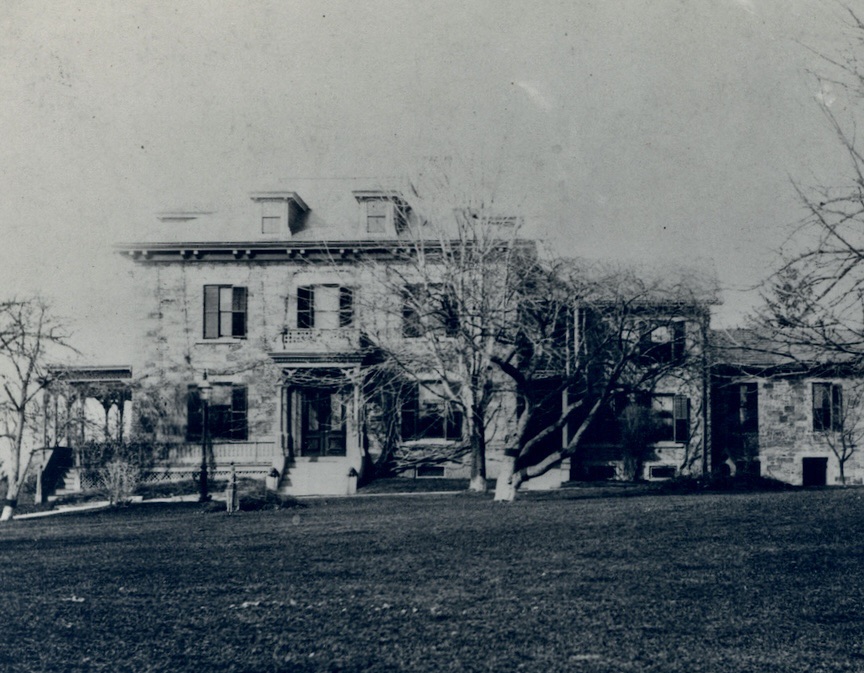
Hutchings-Pfaff Mansion // c.1865

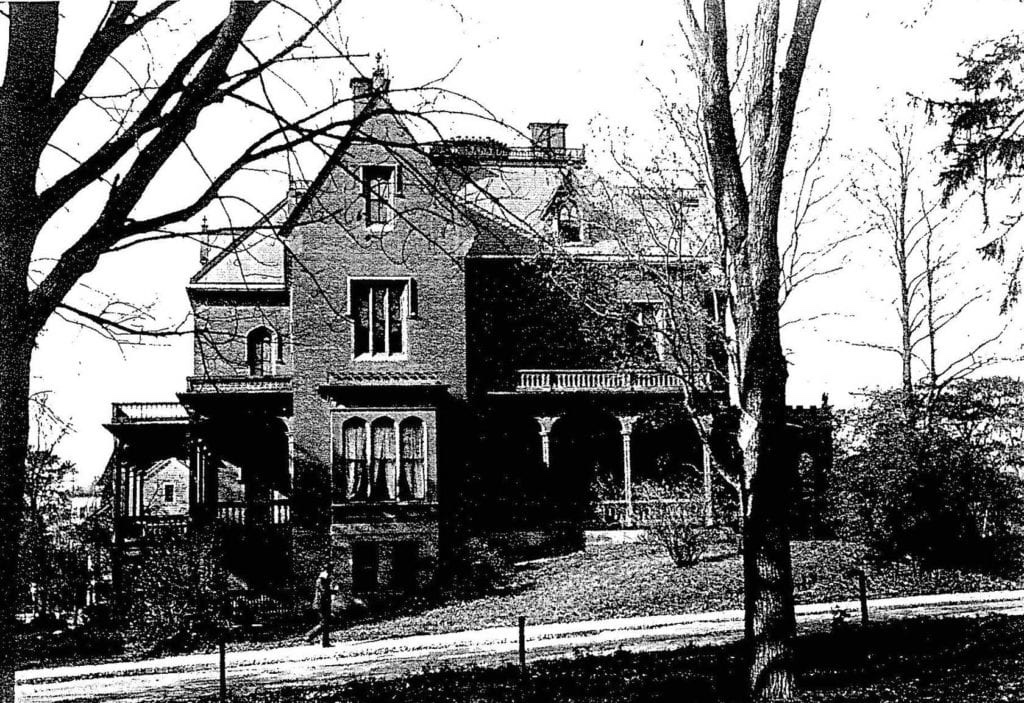
In the mid-19th century, Roxbury was seen as a country retreat for wealthy Bostonians. Many purchased large estates of land and built mansions where they would find peace and solitude from the polluted Downtown areas. As the need increased for more workers, old farms and estates were subdivided, and single family homes, row houses, and multi-family homes sprang up to accommodate the growing population with the advent of trolley service in 1887. This is one of those estates that were demolished. This house was seemingly built for Colonel William Vinson Hutchings after the conclusion of the American Civil War. The stone mansion featured ample porches and a large stone stable amongst winding dirt paths and mature trees. The property was eventually purchased by Henry and Agnes Pfaff, of the Pfaff Brewing Company nearby. The lot was subdivided by 1895 with houselots carved out of the larger estate. By the 1930s, the stone mansion and stable were demolished, leaving just the stone gatehouse (next post) as the last survivor of this once great Roxbury estate.

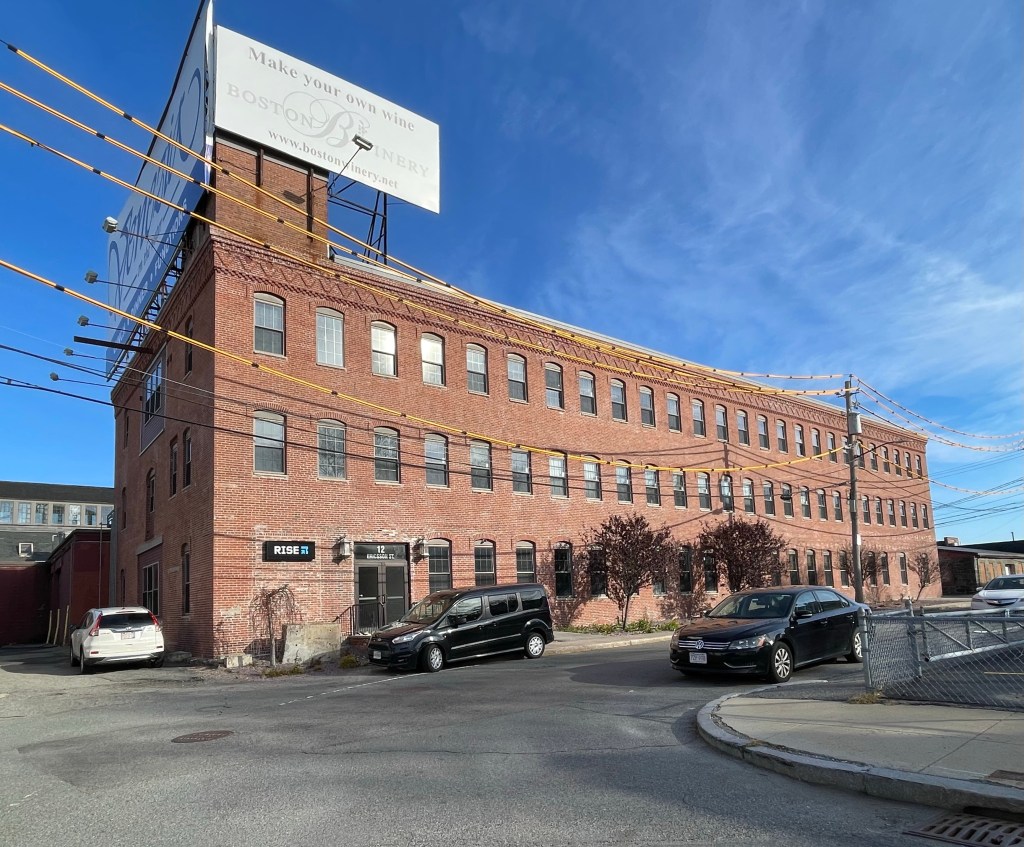
Putnam Nail Company Factory // 1860+

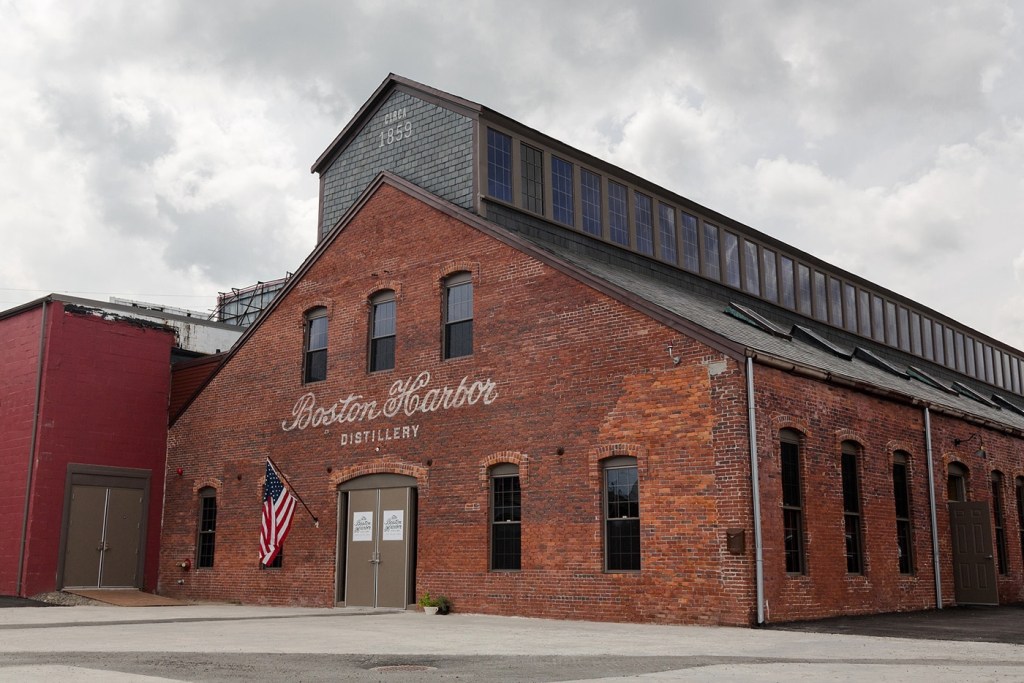
The Putnam Nail Company was founded in 1860 and located at the northern tip of the Port Norfolk neighborhood of Dorchester, Boston, Massachusetts. The company was founded by Silas Safford Putnam (1822-1895), who was the seventh of nine children by Israel Smith Putnam and Charlotte Safford of Hartford, NY. He moved to Boston and found work as Boston’s industrial growth took-off. He owned a curtain factory before patenting a process to manufacture wrought nails in the 1850s. After some time in Abington and Roxbury, he moved to Dorchester, purchasing large pieces of land and began building a manufacturing complex for his new Putnam Nail Company. The company made world-class horseshoe nails until it closed in the early 1900s. The property here was acquired by the George Lawley & Son Shipyard, who moved from their cramped City Point, South Boston shipyard to this newer yard. Already an established and respected New England manufacturer, the Lawley company had been building wooden ships in Massachusetts since 1866. The site was later the home to Seymour’s Ice Cream and was abandoned in the late 20th century. The large 1890s brick factory is now occupied by RISE, a development/construction management firm, with other buildings occupied by the Boston Winery and Boston Harbor Distillery.

The Atherton // c.1890

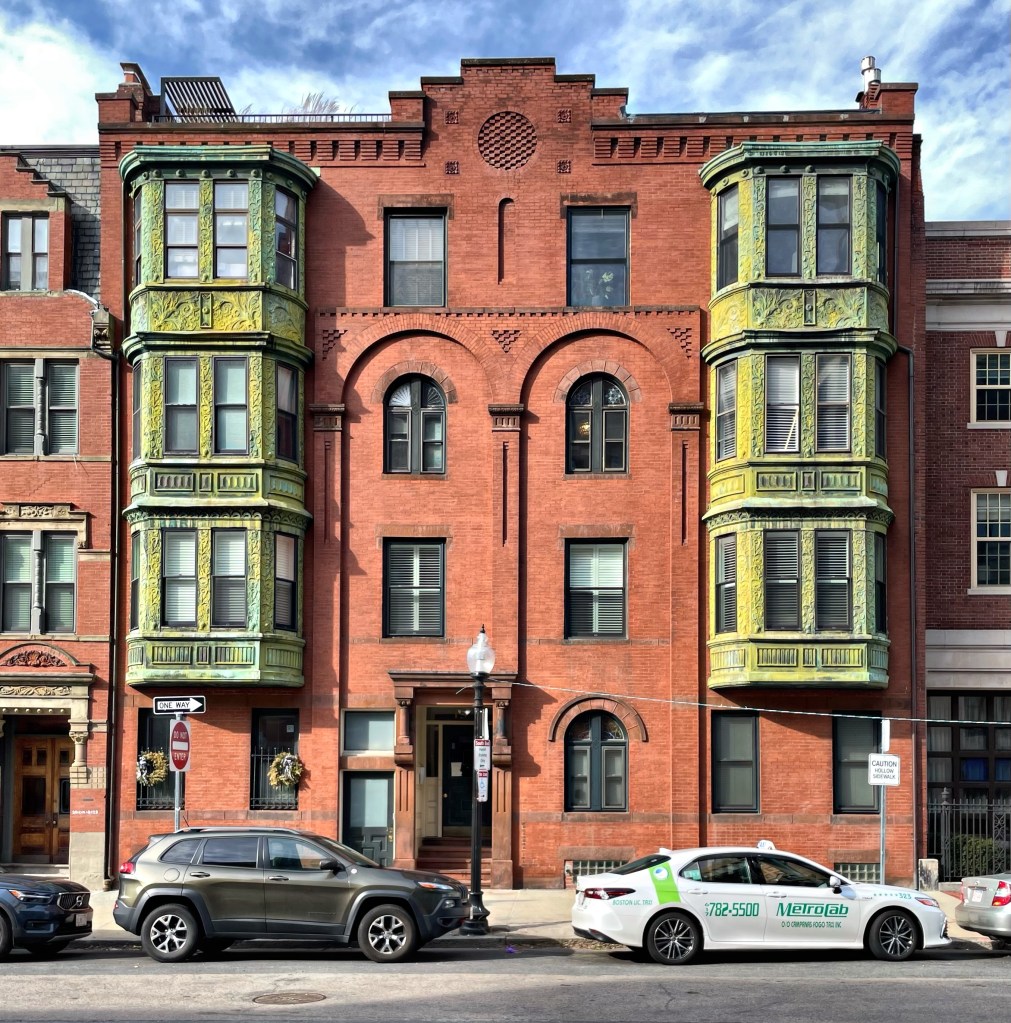
About ten years after the nearby Carlisle building (last post) was completed by owner Jonas Gerlusha Smith (1817-1893), he began construction on another large, apartment hotel next door. He again retained architect Arthur Vinal, who was acting City Architect for the City of Boston to furnish the plans on the building, which would be attached to the older portion which fronts Gray Street behind. The building is extremely well-preserved and has some stunning metal bays with decorative details which really pop!

The Carlisle // 1880

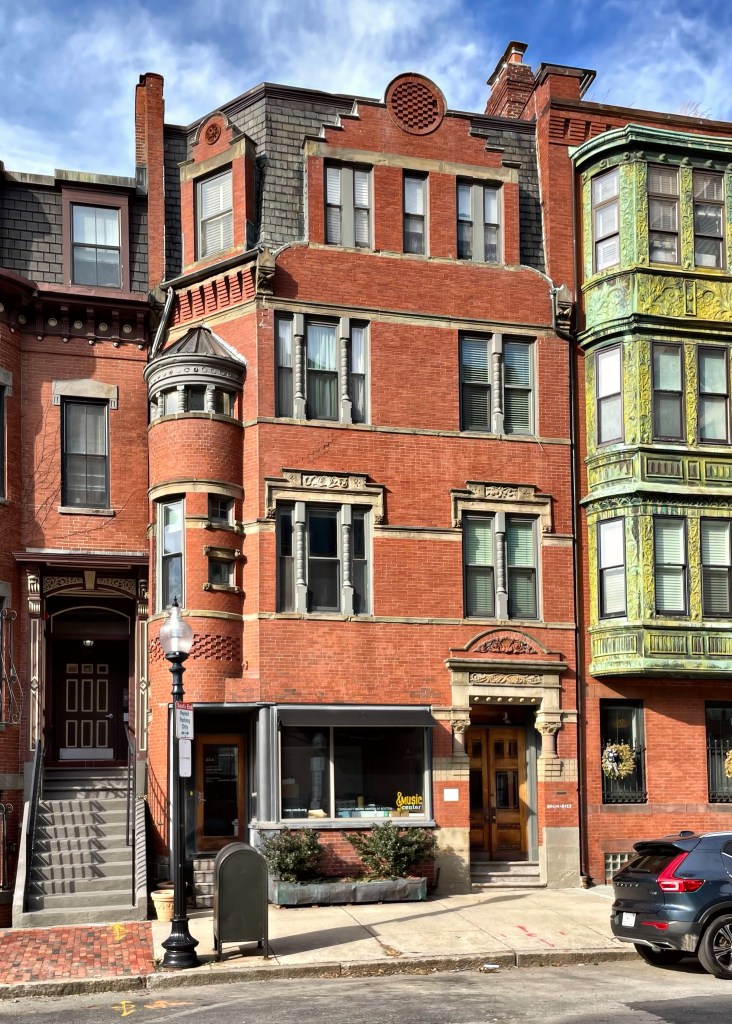
In 1880, Jonas Gerlusha Smith (1817-1893) received a permit to erect a multi-family apartment building on Warren Avenue in present-day South End. The lot was close to his personal residence at 13 Warren Avenue and would have been easy to maintain and oversee tenants in the building. Mr. Smith hired 26-year-old architect Arthur H. Vinal, who furnished the plans for the handsome Queen Anne building. Vinal would later become the City Architect of Boston from 1884 to 1887, designing the High Service Building at the Chestnut Hill Reservoir just seven years after this building. By the late 1880s, the building was known as The Carlisle and it remained in the Smith family holdings under Walter Edward Clifton Smith until the 1930s. Walter attended the Cambridge Episcopal Theological School and later worked at various churches in the Boston area, serving as pastor in his later years. He lived on Follen Street in Cambridge while he held the Carlisle for additional income. Under new ownership in 1950, a retail storefront was added to the first floor which was occupied as a florist for some years. In 1979, after years of deferred maintenance, the property was purchased by Louis G. Manzo and his son David W. Manzo, who meticulously restored the building over time into the time-capsule that it is today!

Horatio Harris Villa // 1857

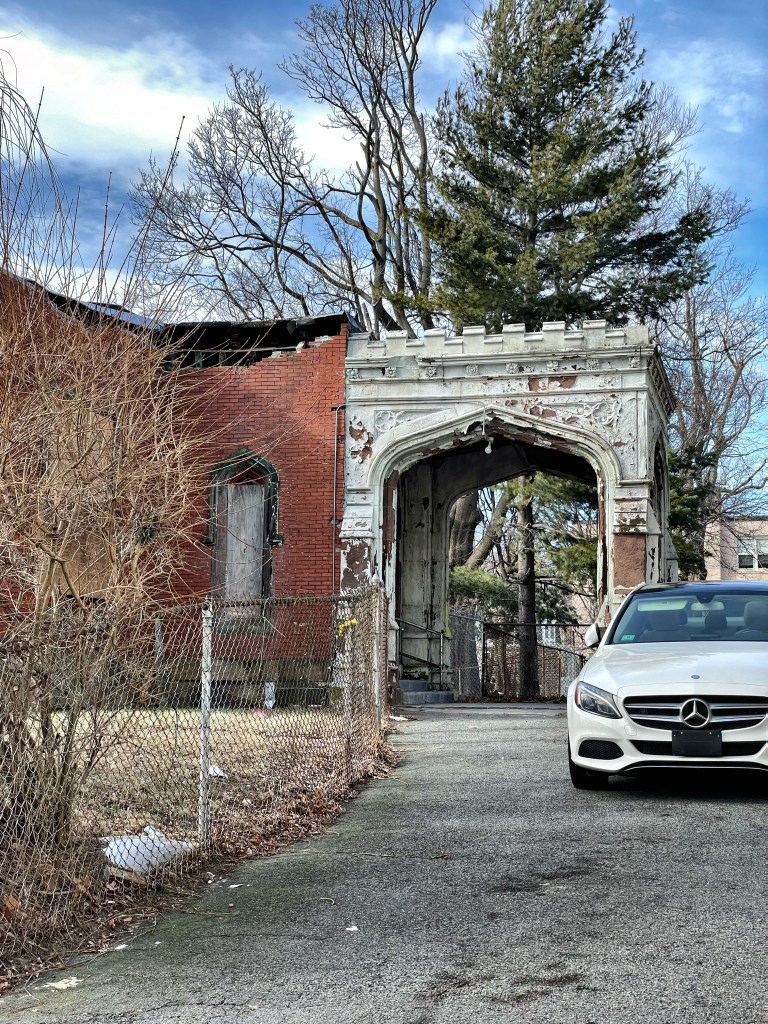
Not much remains of one of Roxbury’s once grand rural estates, but as there is some left, I want to feature it before it’s all gone, possibly any day now! Horatio Harris was born in Dorchester (present-day South Boston) in 1821 and ran a prominent auction house in Boston. He built his country estate in Roxbury beginning in 1857 in the Gothic Revival style, adding on and updating numerous times. During the Civil War, the firm of Horatio Harris & Co. obtained the contract to sell at auction all goods which were confiscated by the United States’ land or naval forces and brought to Boston. He made a lot of money and added to his land holdings and estate house in Roxbury. The mansion’s construction was timely as Roxbury was transitioning from a rural town, with farms and country estates of wealthy Boston merchants, to a streetcar suburb, increasing the land value of his holdings. The estate included nearly 30 acres of meandering paths, a lake with an island, outbuildings, and an observation tower – one of which remain today besides the ruin of the former mansion. Horatio died in 1876, in the decades following his death, his heirs began subdividing the estate, developing some and selling other plots off for houselots. By the early 1900s, Jewish people began moving into Roxbury, mixing with the predominantly Yankee population. By 1915, the Harris manor house was owned by the Hebrew Alliance of Roxbury, Inc. By the 1920s, they expanded facilities, adding a school building to the front of the former Harris Mansion, completely obscuring the facade of the old estate. In the 1940s, the upper stories were removed. Seemingly the death knell of the old Harris Villa was a fire in 2019, which gutted much of the remaining original fabric of the estate. All that remains is a bay window, some window trim details and a Gothic porte-cochere at the rear of the estate. See it before it’s too late!

Harriswood Crescent // 1889

Harriswood Crescent was built in 1889-90 at the height of Roxbury’s development as a streetcar suburb which coincided with the electrification of the streetcar lines in Boston. The area of Roxbury in which the Crescent is located, known at the time as Boston Highlands due to its rocky terrain and steep grades, was an extremely desirable residential location. As land values raised, middle and upper-class families looked for varied housing types that fit their demands. Seen as a great investment of the family estate, the heirs of wealthy businessman Horatio Harris (1821-1876) redeveloped lots on one side of a rocky park for fine townhouses, which were named Harriswood Crescent. The name was probably chosen for its historical associations with Boston’s Tontine Crescent and the great Georgian crescents of London and Bath in England. Architect J. Williams Beal designed the row, which was one of his first commissions upon returning to Boston in 1888 after employment as a draftsman at McKim, Mead & White and a long study in England to view architecture. Built at 15 separate units, the row of Tudor style houses is among the only of such developments in Boston, and New England at large.