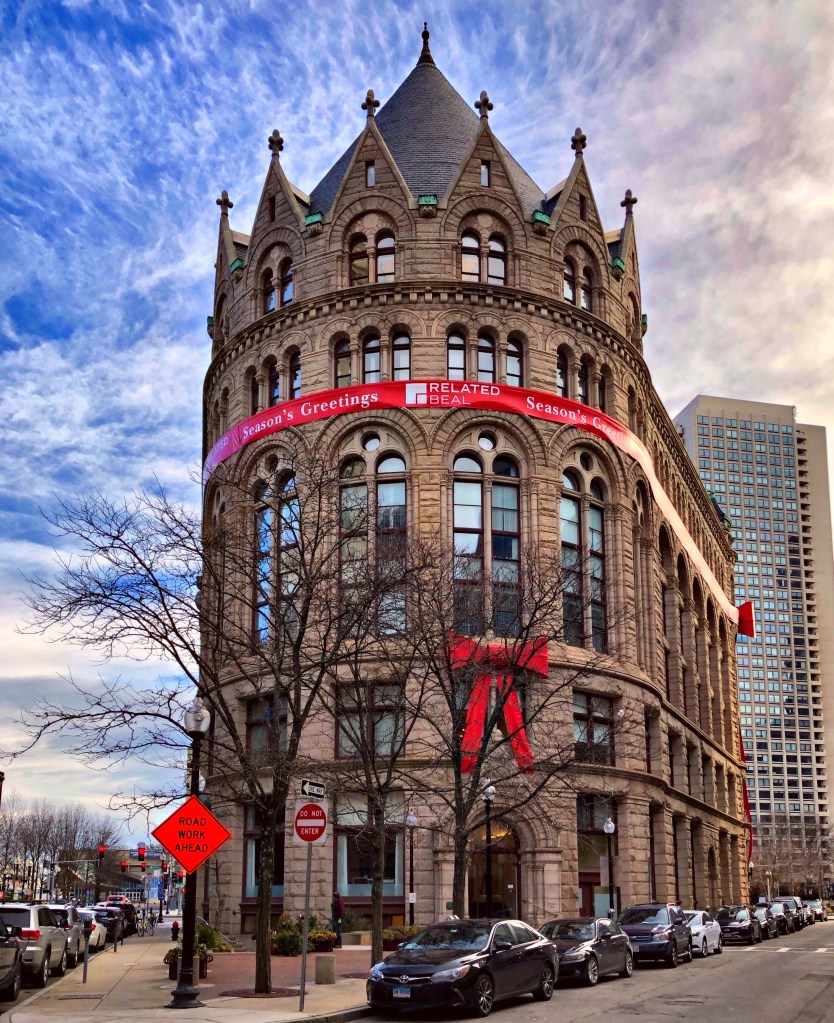
Flour and Grain Exchange Building // 1892

One of my favorite buildings in Boston (and always dressed up with a big red ribbon for the holidays) is the Flour and Grain Exchange Building in Downtown Boston. The third Boston Chamber of Commerce was incorporated in 1884 to promote just and equitable principles of trade, solve disputes between members and acquire and disseminate information related to mercantile interests. There was, however, a feeling among the members that the organization could not attain its full stature until it had a building of its own, one that would be both an ornament to the city and a credit to itself. In 1889, a triangular site was donated to the organization by members, who then hired prominent Boston architectural firm, Shepley, Rutan and Coolidge, the successor to Henry Hobson Richardson‘s practice. It appears the firm was inspired by H.H. Richardson’s F. L. Ames Wholesale Store which was built nearby just years before. The steel-frame building is constructed of rough hewn Milford granite pierced with engaged columns and arched openings, both common in Richardsonian Romanesque buildings. The prominent corner at Milk and India Streets features a rounded corner tower with conical roof, surrounded by a crown of dormers. The building was restored by owners Beal Properties in the late 1980s who own it to this day.
Hartt House // 1899

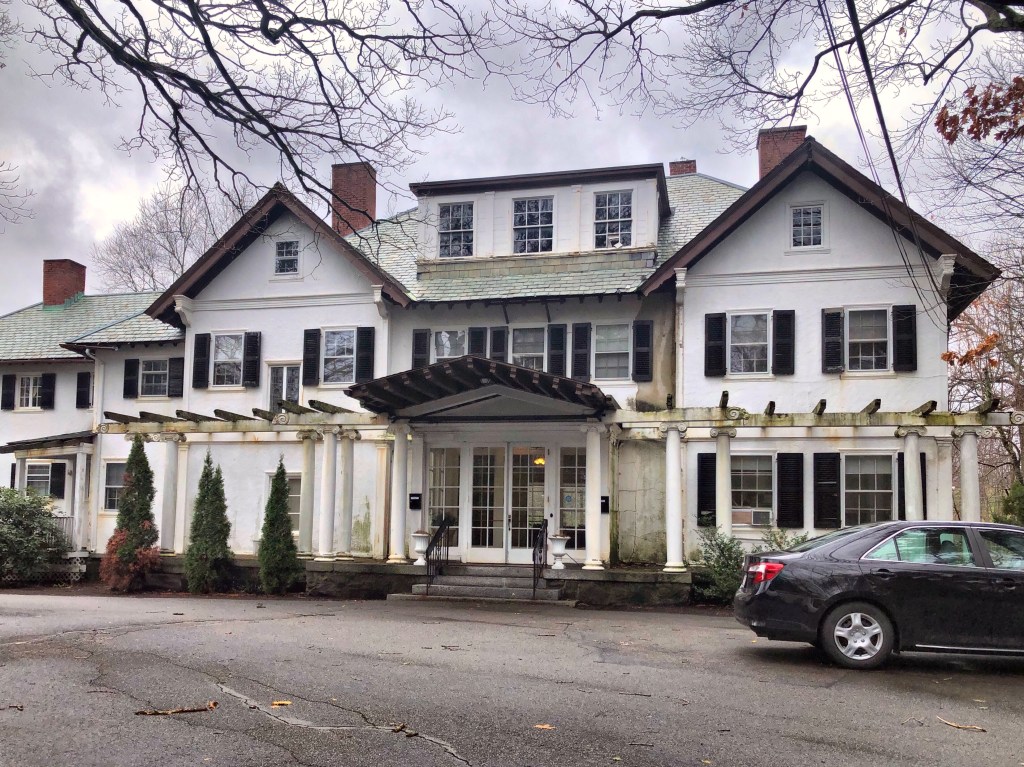
The area just west of Jamaica Pond between Boston and Brookline can be characterized as a neighborhood of well-preserved 19th and 20th century homes and large, former estates converted to institutional use. The Hartt House in Brookline, off Goddard Ave, was built in 1899 for Arthur Hartt and his wife Augusta Batchelder. Arthur worked as a clerk with the New England Mutual Life Insurance Company in Downtown Boston and built a couple large estates in Massachusetts, including a summer home in Marion. The Colonial Revival home sits on a hill, setback off the street, with a landscape designed by the Olmsted Brothers. The property was bought in the 1970s by the Hellenic Association of Boston, who turned the home into offices and the former barn into a chapel. The home appears to be suffering from some deferred maintenance, but is in overall good shape.

Webber House // 1935

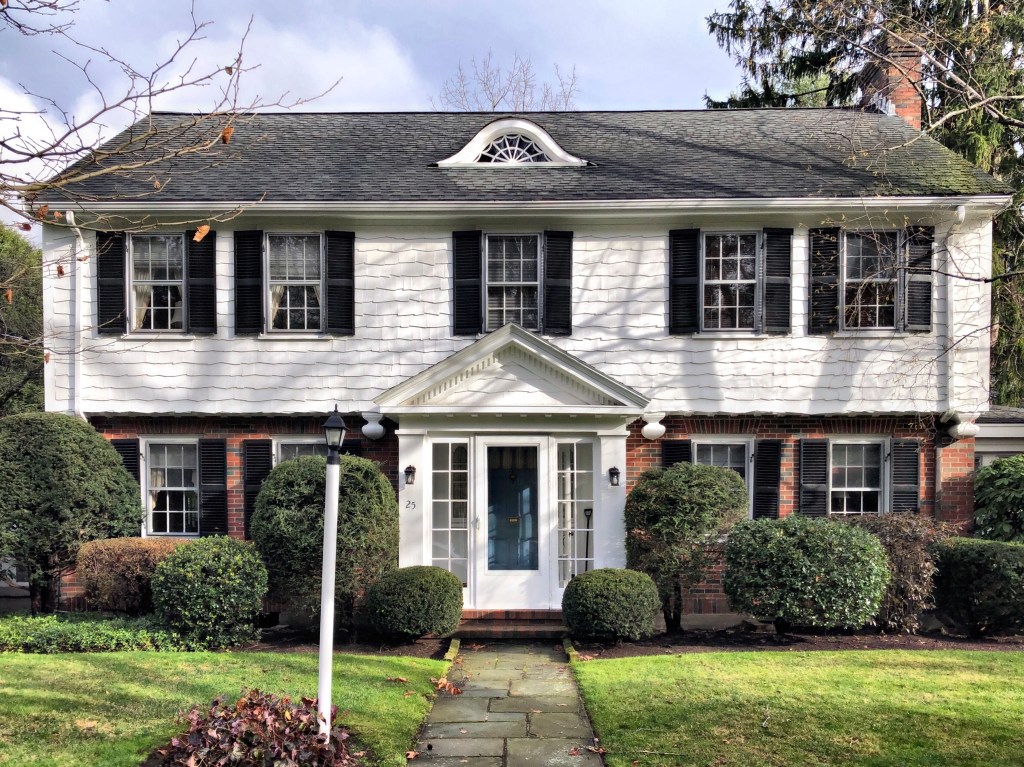
Located in South Brookline, a neighborhood of mostly early-mid 20th century architecture, you can find amazing residential designs for middle-class suburban families in the Boston area. This home was built in 1935 for Max and Rebeccah Webber in the Garrison Colonial Revival style. The home, designed by architect Harry Morton Ramsay, is characterized by a second-story shingled overhang with decorative pendants reminiscent of 17th century American homes. Adding some extra flair, an eyebrow dormer can be found at the roof, as well as a glazed projecting entry porch with a broad pediment and corner pilasters.

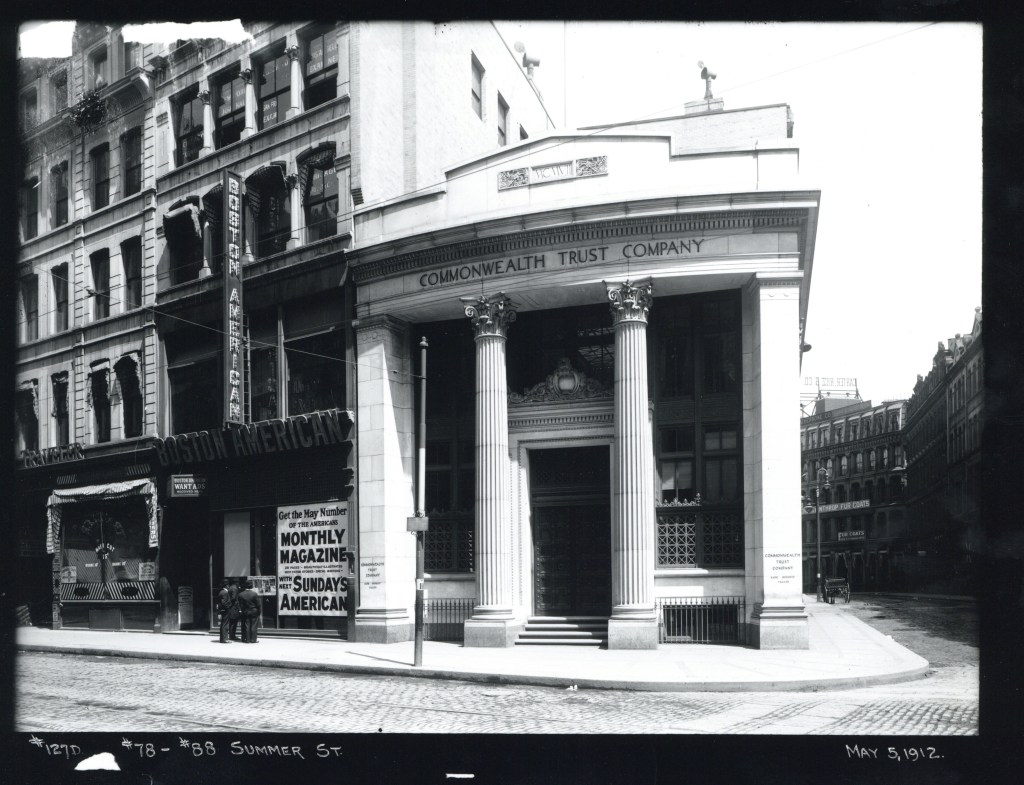
Commonwealth Trust Company // 1908-c.1974

Ca. 1910 image courtesy of Boston Public Archives.

Located at the corner of Summer and Devonshire Streets in Downtown Boston, the Commonwealth Trust Company’s two-story marble banking house commanded the corner, despite its short stature. The building, completed in 1908, was constructed with Lee marble and decorated with ornate wrought and cast-iron grilles over windows. The building was designed by the architectural firm of Parker, Thomas & Rice in the Classical mode with large, fluted Corinthian columns and boxed corner pilasters framing the recessed center entrance, Corinthian pilasters ran along the side facade. At the inside, the building was coated with Cararra and Blanco marble with paneled oak offices. At the ground floor, offices and banking stations framed the outer walls, with the safety deposit boxes located on the second floor. The building was demolished by the 1970s and replaced with a one-story minimalist Modern building (I could not figure out why the former building was razed). The new building was demolished after a few decades with a larger building, better fitting the commercial district.

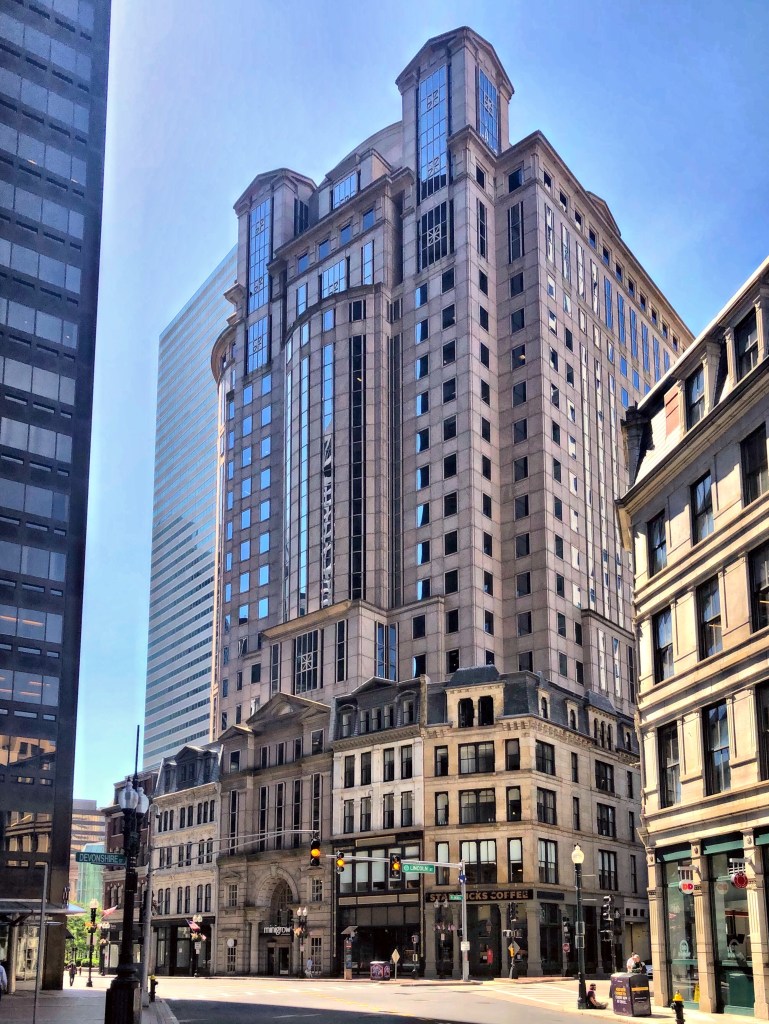
125 Summer Street // 1989

The late 1980s were a time of financial success for developers and banking companies all over the country. It seems that more skyscrapers were constructed in Boston this decade than any other of the 20th century, but working within the confines of the historic downtown of the city, left architects and developers to come up with creative ways to build here. The architectural firm of Kohn Pederson Fox was hired to construct a 20+ story office tower at the southern edge of the Financial District in Boston, while preserving the small-scale commercial buildings there. A row of four-story commercial blocks constructed after the Great Boston Fire of 1872 were retained with the tower seemingly growing out of them. The process here is known as “facadism” which is a valuable preservation tool to balance preservation with density in historic downtowns, though not always done right. This KPF design with its Post-Modern tower in concrete and granite fits well within the streetscape and maintains a walkable block downtown.

What do you think of this design?

McLaughlin Tenements // c.1875

After the American Civil War, the North End of Boston saw a massive phase of redevelopment, replacing the dilapidated wooden dwellings with larger brick tenements to house the neighborhood’s growing immigrant population. Nearly all of the North End was replaced with these dwellings, which has now added so much to the appeal of the neighborhood. One of the earliest and notable examples is this building on Endicott Street. Built around 1875, the tenements were owned by George T. McLauthlin (also spelled McLaughlin), who owned the engineering and machinery company on Fulton Street, housed in one of the last remaining cast-iron facades in Boston. The tenement house was later owned by George’s son Daniel, likely providing housing for the company’s employees and/or providing additional income for the family. The building also appears to have always had commercial use on the ground floor, allowing merchants to also rent the space. The late-Italianate panel brick block is modest in design, but contributes to the diverse population and worker’s housing in the North End.

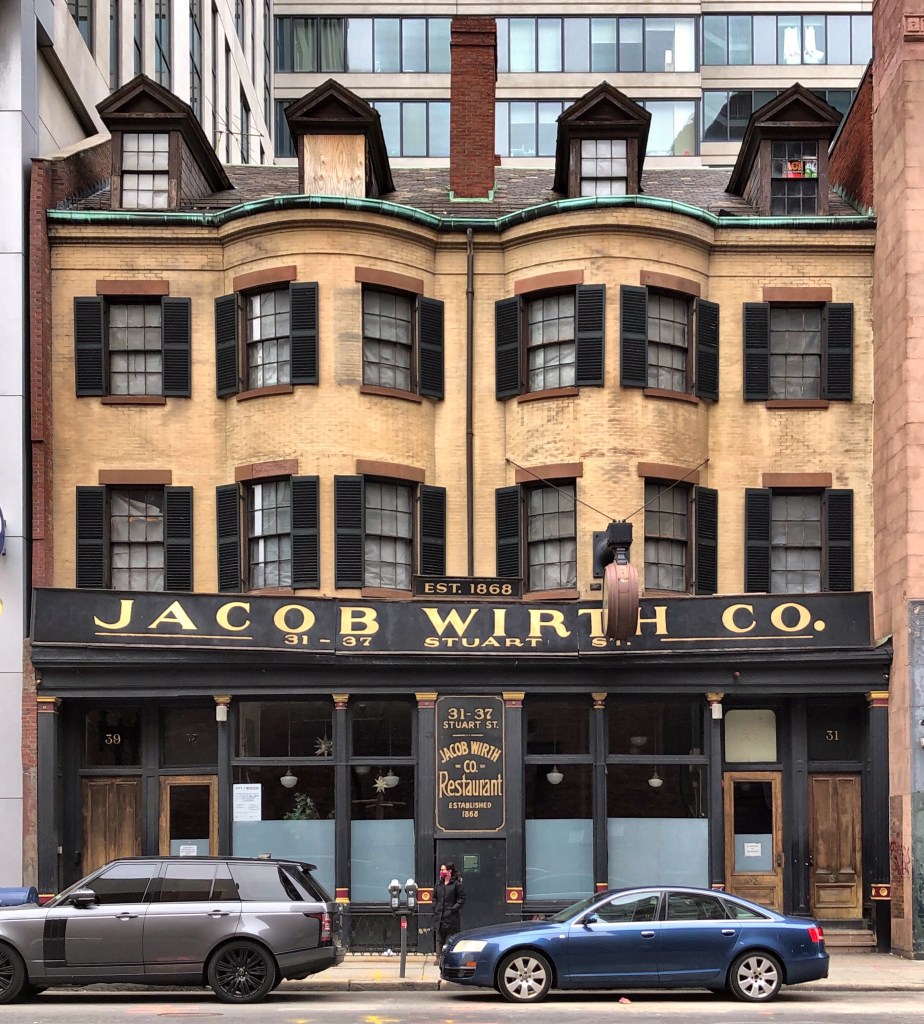
Jacob Wirth Building // 1844

Comprising twin bowfront Greek Revival rowhouses, the Jacob Wirth Restaurant buildings on Stuart Street are scarce survivors of a century of urban change in an area in which the building type once abounded. Built by developer housewrights quite active in the area, the twin houses were soon sold to “gentlemen” for rental purposes. Jacob Wirth, a German emigrated to Boston from Bingen, Germany, and began work as a baker before getting into the restaurant business. Wirth bought the left building seen here in 1878 as his dwelling above and ran his authentic German restaurant below. Due to the success of the restaurant, he purchased the adjacent home in 1889 and constructed the storefront that now unites them. Jacob Wirth ran the restaurant until his death in 1892, which was then managed by his son, Jacob Wirth Jr., who also managed it until his death in 1965! In 2018, Jacob Wirth’s, the second oldest continuously operated restaurant in Boston, closed its doors following a fire. The future is somewhat uncertain for the space, but as it is landmarked, there are protections (even at the interior) of the building.

Did you get a chance to eat at Jacob Wirth’s before it closed?