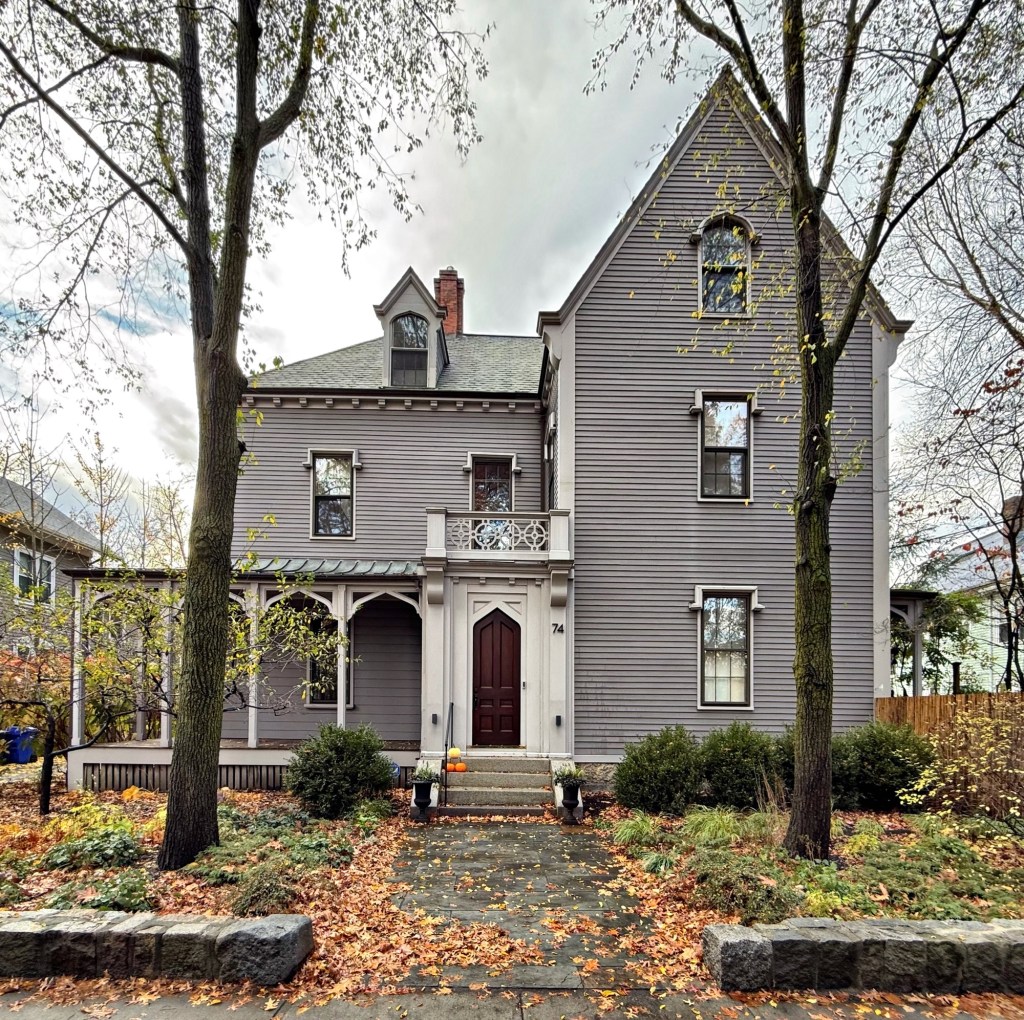
Elijah Emerson House // 1846

Elijah Carleton Emerson (1807-1888) was a wealthy Boston merchant, making his fortune as Director of the Second National Bank and President of the Middlesex Horse Railroad. In his late 30s, he purchased land in Brookline Village and established his estate on the land that is now Emerson Park in 1846. The bucolic setting of his estate included a pond, boathouse and adjacent cottage, but as the surrounding area continued to develop with easy access to Downtown Boston, Elijah Emerson began to develop his estate. Emerson began to build residences on his land for supplemental income. After his death in 1888, Emerson’s two daughters, Sarah Davis and Tirzah Snell Arnold, maintained the property but sold it to the Town of Brookline in 1907. Brookline officials originally sought to build a new library on the site, but ultimately built it on Washington Street in 1910. The Emerson house and carriage barn were moved across Davis Street from their original site and Emerson Park was established. Emerson’s granddaughter, Mrs.Katharine Snell and her husband, inventor, Cullen B. Snell moved into the relocated house. The Elijah Emerson House (and carriage house at the rear) is a great, well-preserved example of a suburban Boston residence designed in the Gothic Revival style.

Graham Apartments // 1904

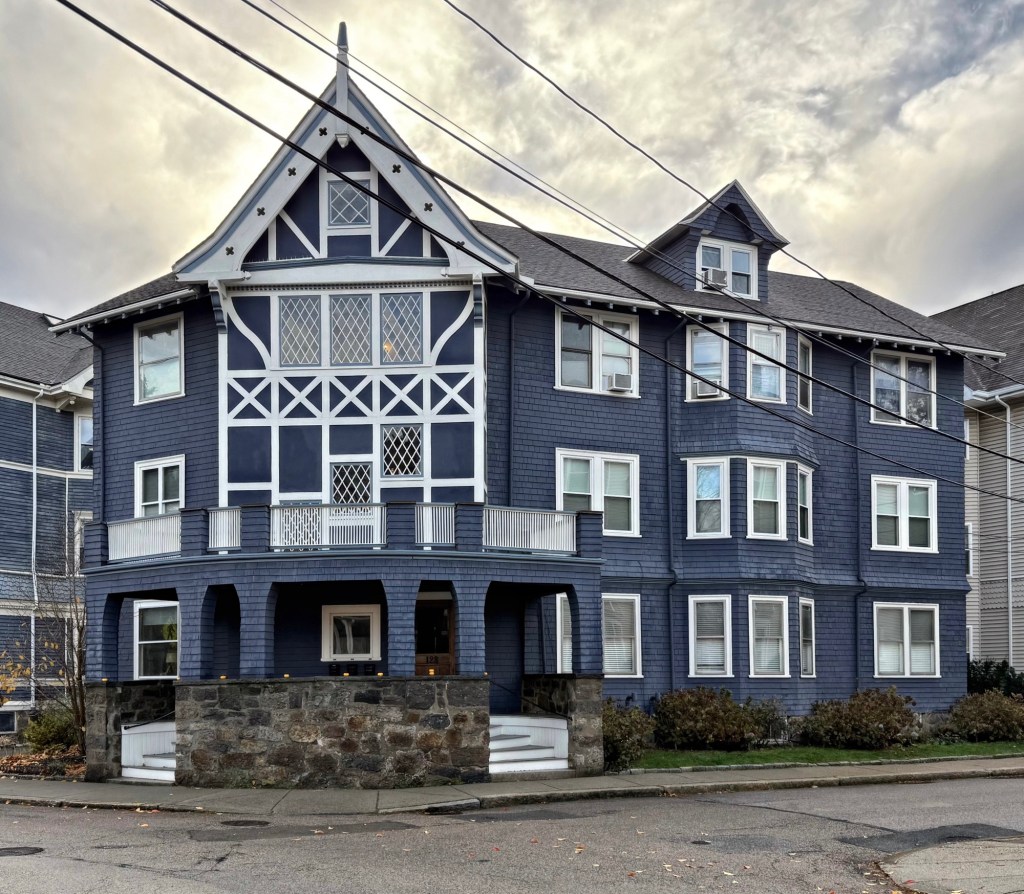
This handsome, and unique example of a three-decker in the English Revival style is located on a corner lot at 128 Davis Avenue in the Emerson/Brookline Village neighborhood of Brookline, Massachusetts. Built in 1904 from plans by architect and genealogist, J. Gardner Bartlett, whose work focused on colonial New England and the English origins of colonial families. Trained as an architect at MIT, he gave up architecture for genealogy, but still occasionally designed buildings in the Boston area. The building here was developed for Richard Graham, an Irish immigrant, who along with his wife, operated a laundry business in the village. The use of a shingle and stone entrance porch and entrance bay with stucco half-timbering and diamond-pane casement windows stand out architecturally as one of the few examples of a three-decker built in this style in New England.

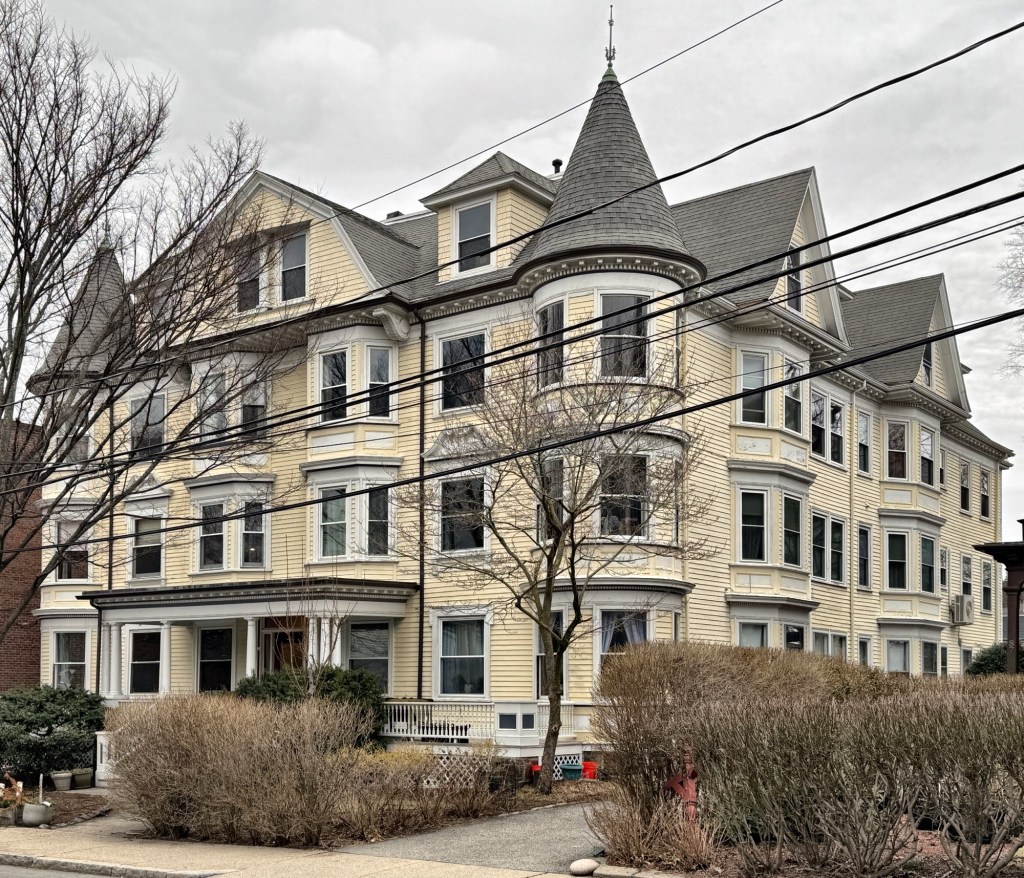
The Linden Apartments // 1885

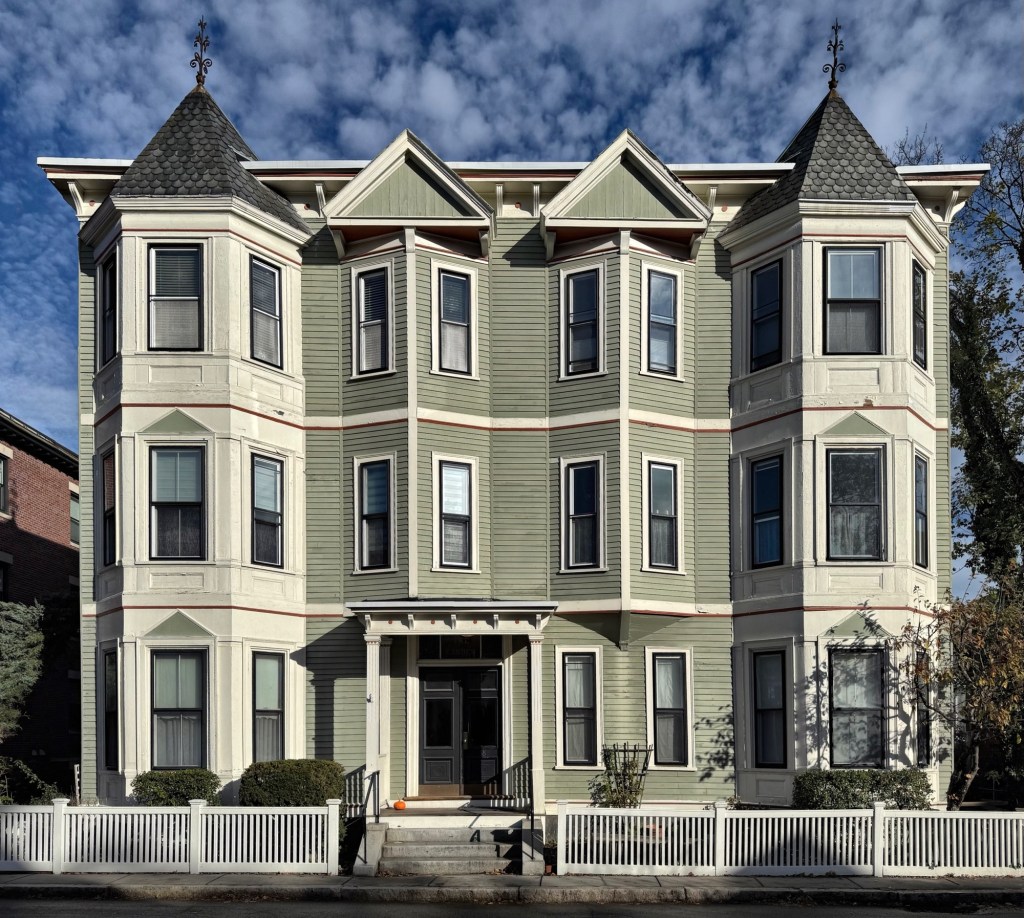
The Linden Apartments is an early multi-family apartment building in Brookline Village that shows how density can be done tastefully. The building is located at the center of Linden Place, Brookline’s first planned subdivision which was laid out in the 1840s. By the end of the 19th century, development pressure associated with the growth of Brookline Village lead to further subdivision of the original building lots and greater density of settlement in this neighborhood. The Lindens was constructed in 1885 by and for James W. Tobey (1830-1914), a local builder, as an income-generating property. Designed in the Queen Anne style, the Linden Apartments contained six suites, all with exceptional quality materials and finishes. The façade is embellished with two octagonal bays at the ends and two angled bay windows with gables which break up the otherwise rectangular form. The building has been lovingly maintained by residents and contributes to the rich history of Brookline Village from a sleepy village to a vibrant and dense “downtown”.

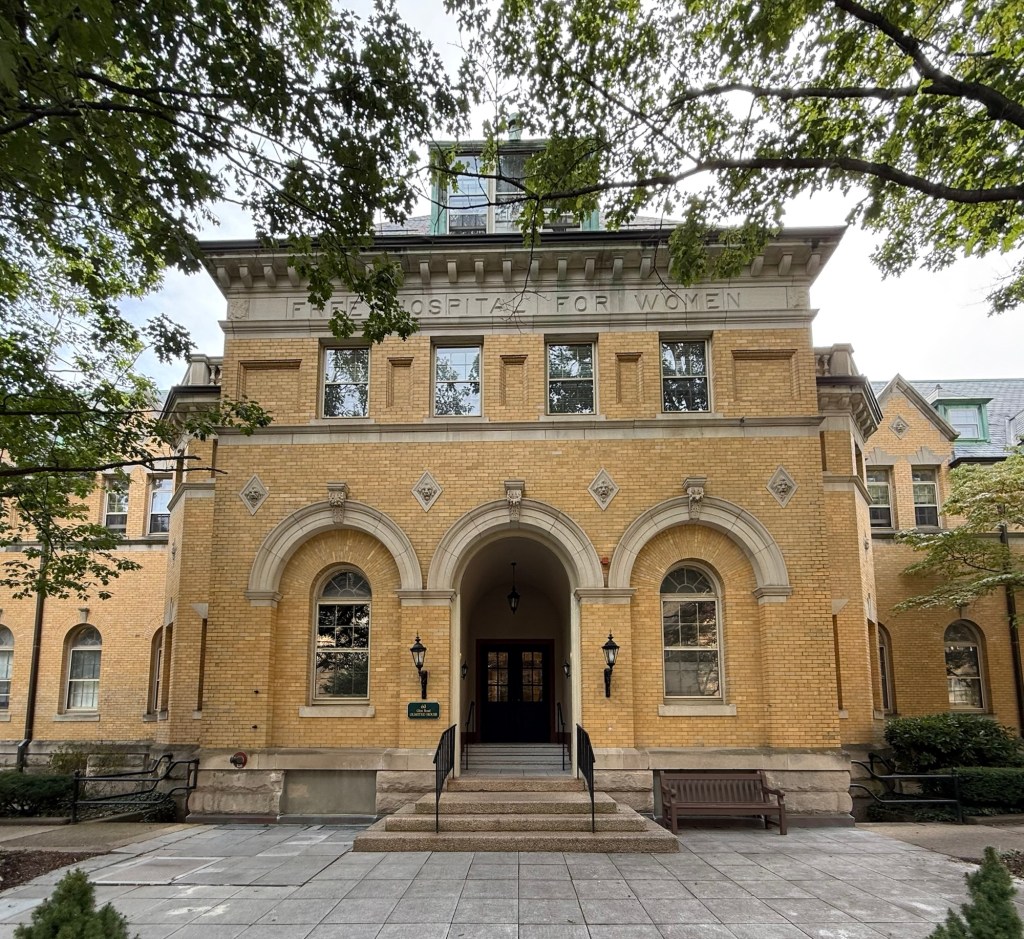
Boston Free Hospital for Women, Nurse’s Residence // 1908

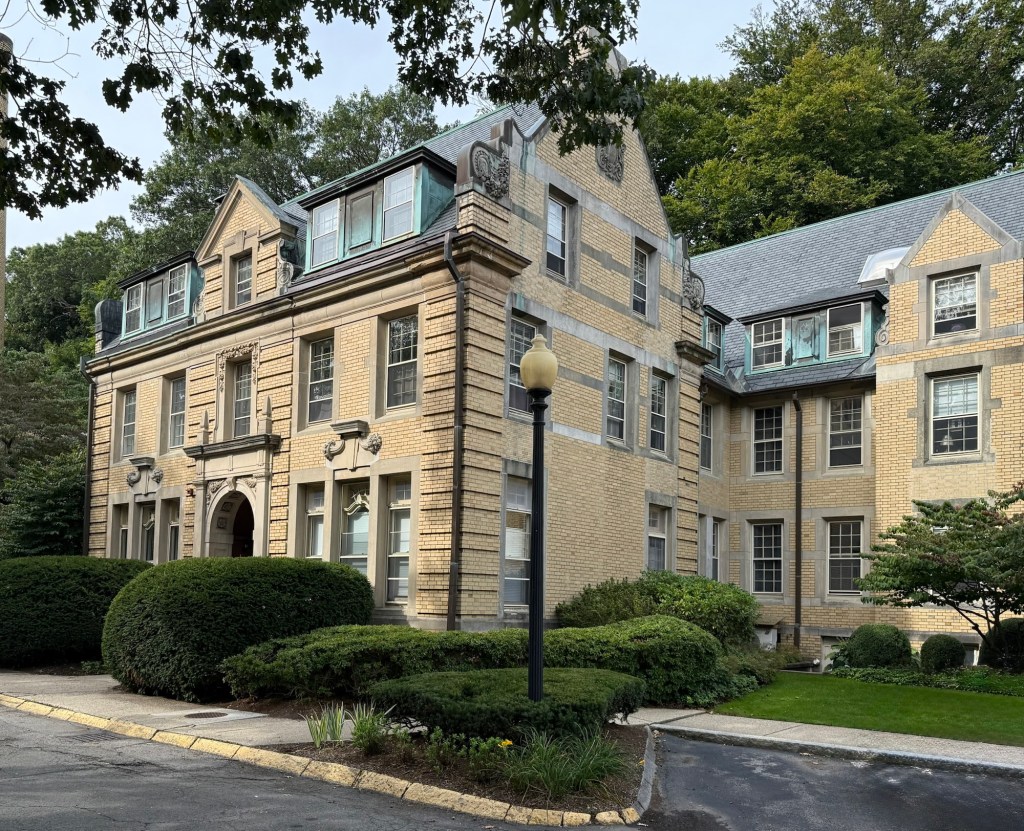
Located behind the former Boston Free Hospital for Women in Brookline, this charming yellow brick building employs materials and design elements of its neighbor, but was designed and built by different architects nearly a decade later. Built in 1908 as a nurse’s residence this handsome building was crucial to the expansion and growth of the women’s hospital here, providing much-needed living space for employees of the hospital who worked around the clock to provide some of the highest-quality medical care in the Boston area. Designed by the firm of Coolidge & Carlson, the nurse’s residence employs intricate limestone detail

Boston Free Hospital for Women // 1895

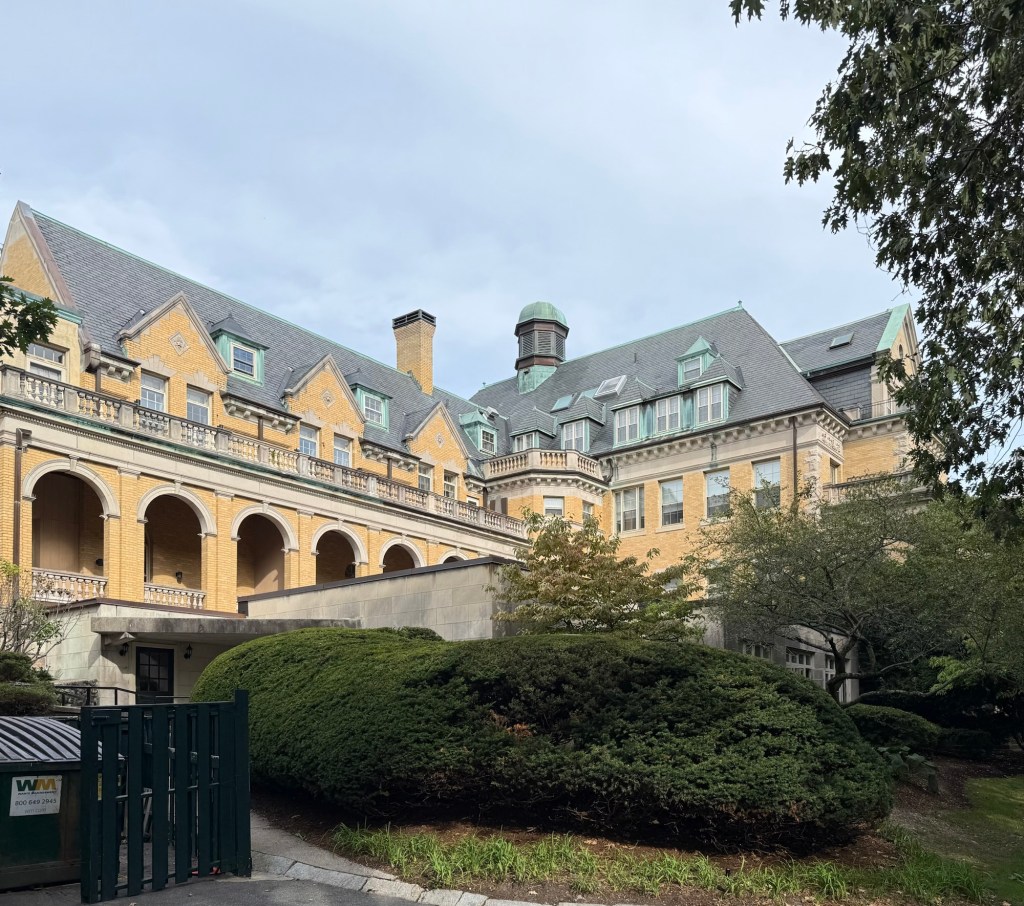
This handsome yellow brick building, designed by architects, Shaw and Hunnewell, was completed in 1895 as the Boston Free Hospital for Women. The hospital was organized in 1875 in a converted rowhouse in Boston’s South End, and after relocating once, it was decided that a purpose-built hospital was needed for the growing demands of the institution. A site in Brookline on the Muddy River, overlooking Frederick Law Olmsted’s Riverway and Olmsted Park, was purchased and the hospital was opened in 1895. The brick and limestone hospital building is somewhat Chateauesque in style and when opened, had no electricity and no telephone. The hospital is historically significant as the first teaching hospital for Harvard and as the first hospital in the country to apply radiation treatment for cancer, along with being a major research facility in fertility, especially the work of Dr. John Rock (who lived nearby) on the development of the birth control pill and research on in-vitro fertilization. The Free Hospital for Women merged with the Boston Lying In
Hospital (now part of Brigham & Women’s), which closed its Brookline Campus in the 1960s. In 1984, the firm of Childs, Bertman and Tseckares oversaw the conversion of the buildings to condominiums, called The Park, with sympathetic new construction.

Curtis House – Boston University Children’s Center // 1904

Built in 1904 as one of the finest Tudor Revival style residences in the Boston area, this residence in the Cottage Farm neighborhood of Brookline showcases all of the important elements of the iconic architectural style. The residence was built for Harry and Carrie Curtis, with Mr. Curtis being a partner with Curtis & Sederquist, bankers and brokers, with offices on Congress Street in Boston and in New York City. The couple hired architects Howard B. Prescott and William Sidebottom of the firm, Prescott & Sidebottom, to design the house. Rectangular in plan with massing enlivened by numerous cross gables and dormers, the house is decorated with exterior walls covered with wood shiplap at first story and half-timbered stucco at second story. The property was sold to Helen and Edward Mills by 1913. Mr. Mills was president and treasurer of the Edward C. Mills Leather Company. By 1931, the residence was owned by Erland F. Fish (1883-1942), a prominent lawyer and politician as well as the son of Frederick Fish, who owned the house across the street. Boston University purchased the property in 1964 as part of their institutional expansion into this neighborhood. Originally used as an alumni house, it later became the location for the Department of African American Studies. After an extensive expansion and restoration by Studio MLA (now Ashley McGraw Architects) and Kaplan Construction, the Tudor mansion is now a children’s daycare for Boston University faculty, staff, and graduate students.

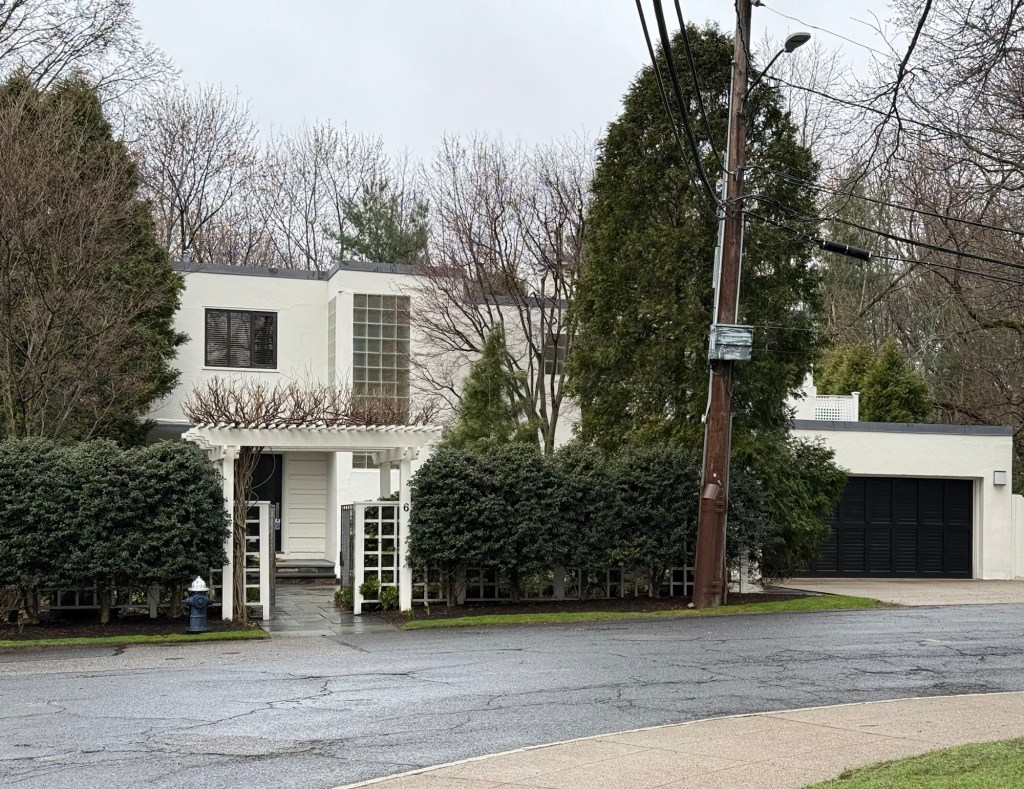
Frederick and Erna Gibbs House // 1936

Built at a time when Colonial Revival and Tudor Revival styles dominated the suburban landscape of the Boston area and elsewhere, the Frederick and Erna Gibbs House on Chilton Street in the Cottage Farm neighborhood of Brookline, Massachusetts stands out. Built in 1936 for Frederic and Erna Gibbs, the house is said to be the first International style single-family home built in the Boston area, predating the famous Gropius House in Lincoln by a couple years. Erna Leonhardt-Gibbs (1904–1987), a German-born pioneer in the development of electroencephalography (EEG) technology, in 1930, married Frederic A. Gibbs, a neurologist, and would soon-after vacation in Germany, seeing the Modern revolution of architecture there in the interwar period. Upon returning the States, the couple hired architect Samuel Glaser, to design their dream home in the Bauhaus style. Set amongst a street of 1930s Tudor houses, the Gibbs residence stands out for its stark white stucco walls, boxy form, with elongated and block windows. While set behind a tall fence and hedge, the house is a landmark example of the style and appears much as it did when built 90 years ago.

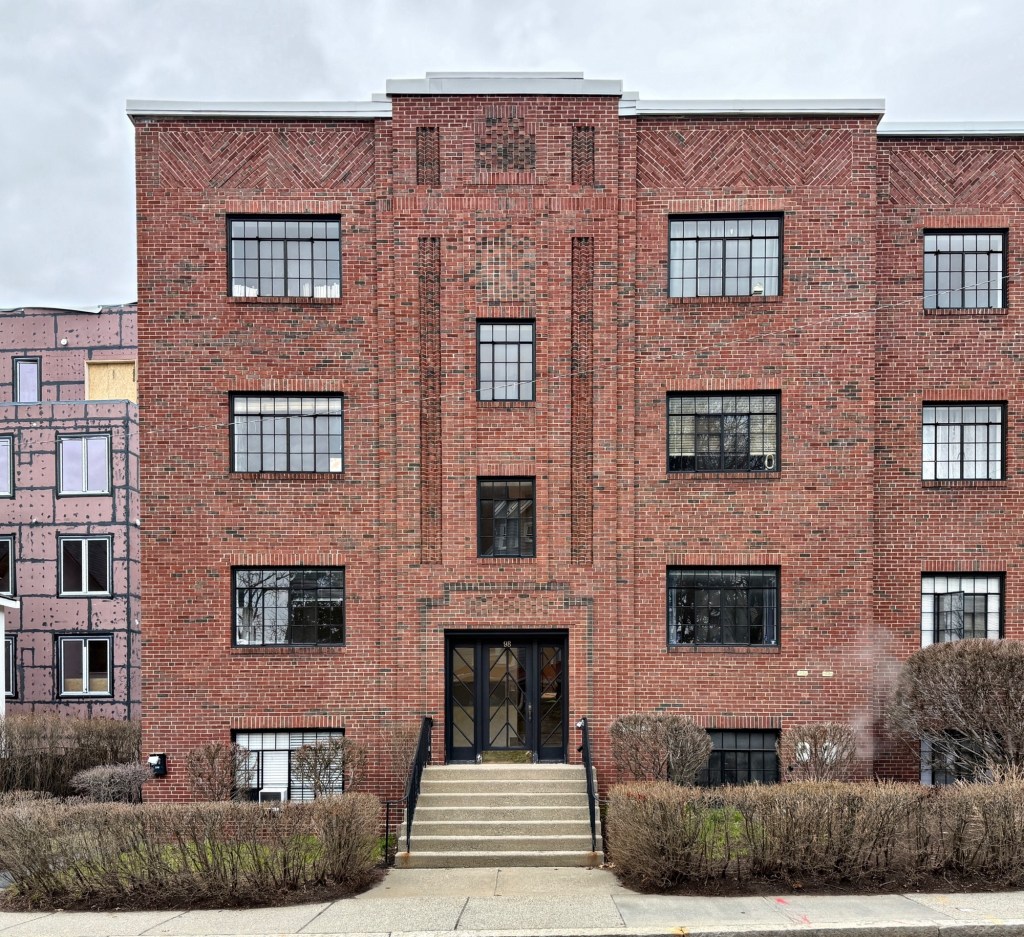
New England Fireproof Construction Co. Apartments // 1917

One of the most unique and architecturally pleasing buildings in Brookline has to be these apartments on Egmont and St. Paul streets that break the mold of traditional brick or wood-frame apartment houses. Built in 1917 by the New England Fireproof Construction Company as an example of how cheaper cement material can be used effectively and beautifully to design and construct high-quality housing. The company hired architect G. Bertram Washburn to design the buildings which utilize concrete block and cast concrete details with the facades embellished with pilasters capped with Corinthian capitals, engaged balusters, and modillioned and corniced entrances decorated with a lion’s head over each doorway. Additionally, a special touch is the recessed wells in the facade which not only break up the massing of the building, but provide additional light and air into the apartments inside. 

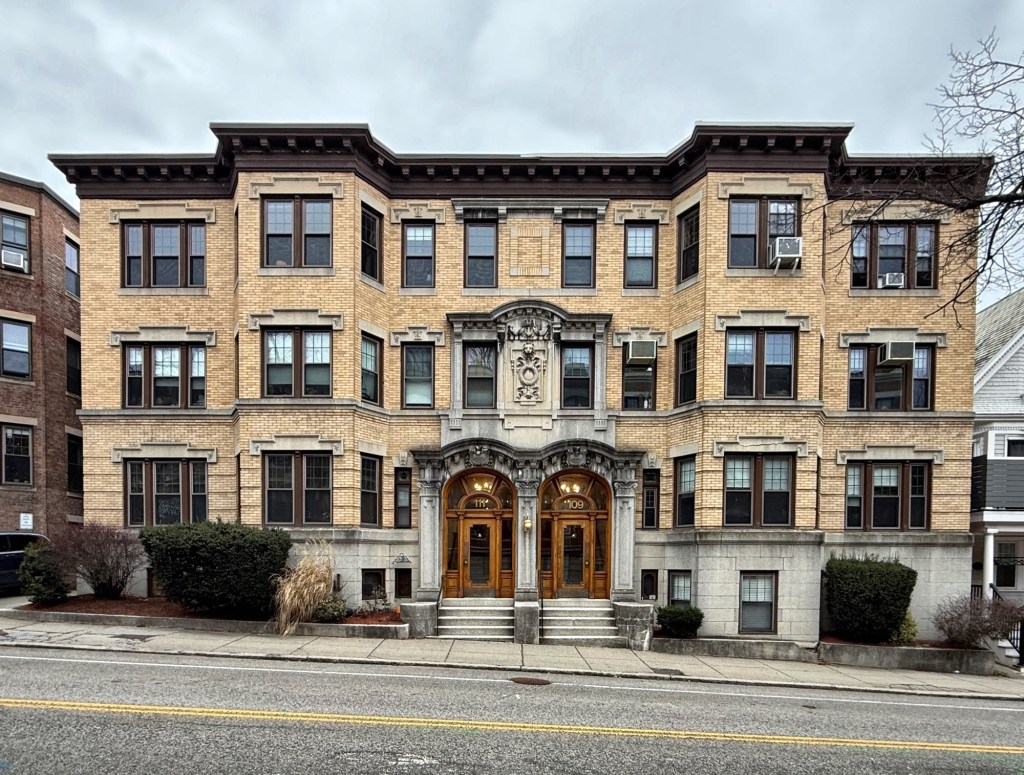
Snider and Druker Apartments // 1913

By the beginning of the 20th century, Brookline was developing rapidly as a desirable Boston suburb, with easy-access to downtown via streetcar and rail, all with less cramped land and less industrial development impacting the air quality. Developers soon realized that they could build high-quality apartment blocks within established neighborhoods to market to middle-income families who wanted to live in these desirable enclaves without breaking the bank. Developers Snider & Druker (a precursor to the Druker Company) purchased house lots in the neighborhood adjacent to Cottage Farm, a rich enclave of large homes on large lots, and began building apartment buildings. They hired architect Frederick A. Norcross, who specialized in multi-family housing designs, to furnish plans for these Renaissance Revival style apartments at the corner of Browne and Powell streets. Besides the use of buff brick, limestone trim and detailing, and the use of projecting bays to break up the facades, the building’s terracotta roof adds intrigue and individuality to a building form often maligned for blandness. 

Levi T. Lyon Two-Family House // 1895

When Brookline Village filled in with multi-family housing in the late 19th and early 20th centuries, many speculative real estate developments sprouted up from larger residential estates. As so many were built on speculation, high-quality designs and construction were a necessity to bring in picky buyers. This two-family house was built on the corner of Brook and Toxeth streets by Levi T. Lyon, a builder and developer, who lived on Brook Street. This house was designed by F. Manton Wakefield, a relatively unknown architect who apprenticed under Shingle-style maestro William Ralph Emerson, before opening his own firm. Buildings like this are great as they provide much-needed housing, while being built of a good scale that allows residents to know their neighbors, not as easy in a high-rise.