George P. Davis House // 1893

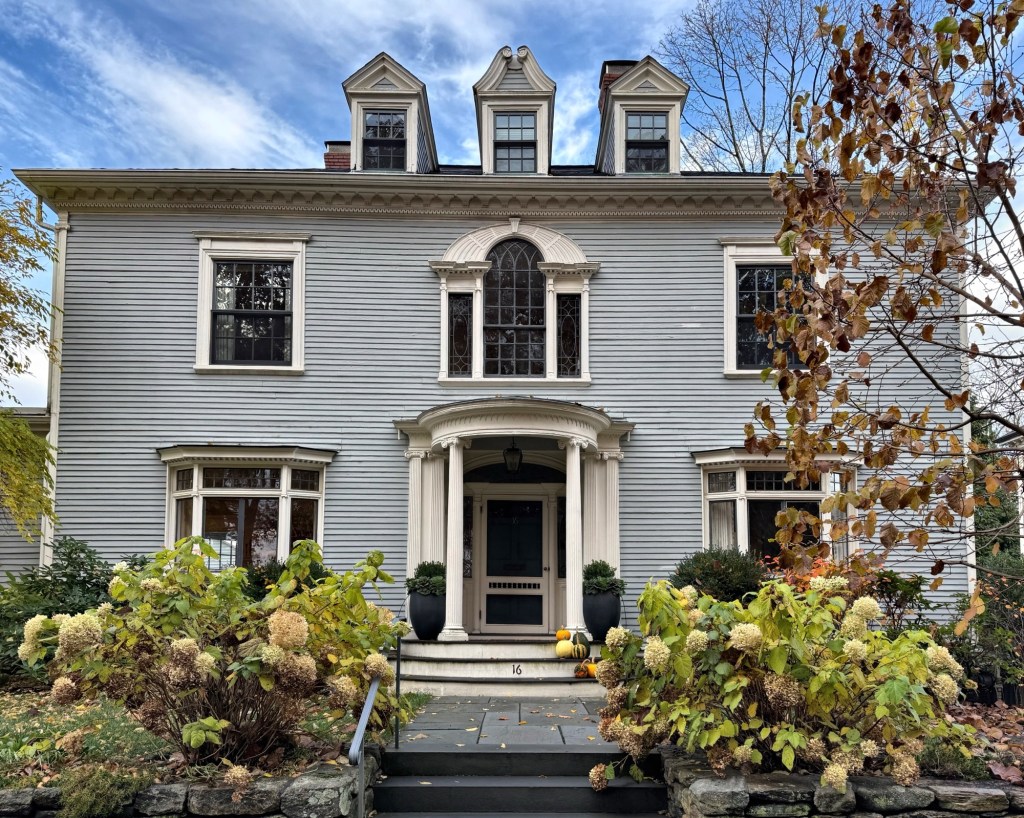
This Colonial Revival style single-family house on Emerson Street in Brookline Village, was built in 1893 on the former Emerson Estate, that was subdivided by the heirs of Elijah Emerson as Brookline Village filled in during the late 19th century. This house was seemingly built for Elijah’s daughter, Sarah C. Emerson Davis, and her husband, George Peabody Davis from plans by Boston architect, Olin Wesley Cutter. Of particular note, the Davis House features a symmetrical facade with round entry portico, Palladian stairhall window with leaded glass, and pedimented dormers, with the center dormer in a swan’s neck pediment. The oddly proportioned pilasters with tiny Ionic capital on the corners of the house were great to see as well!

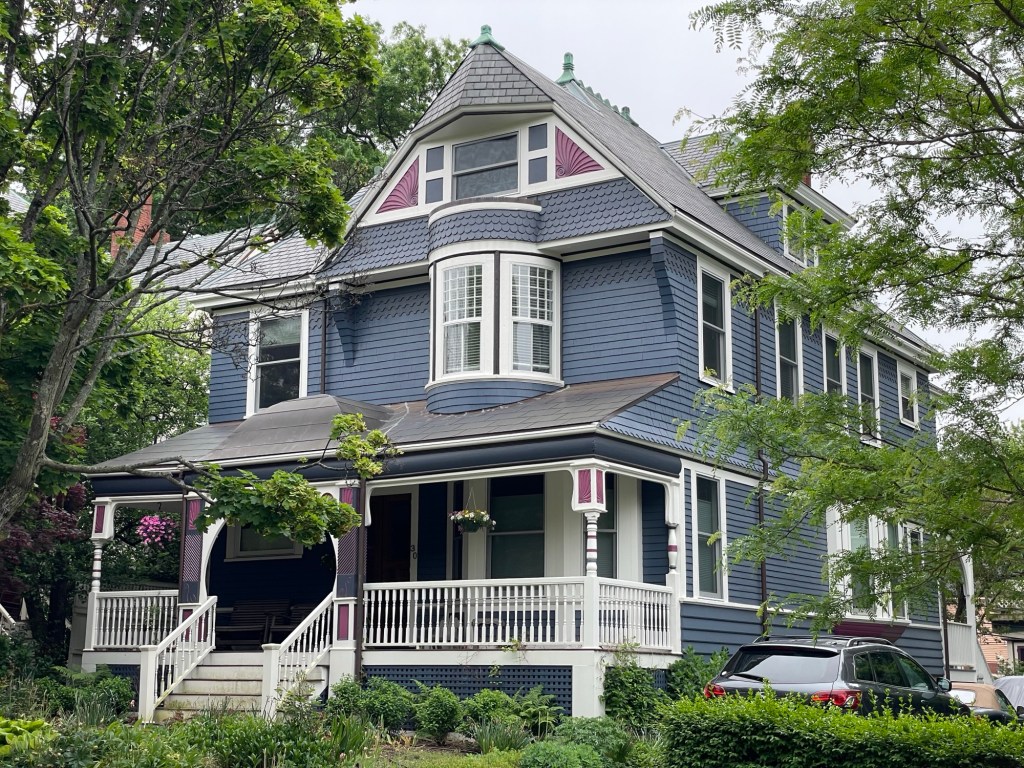
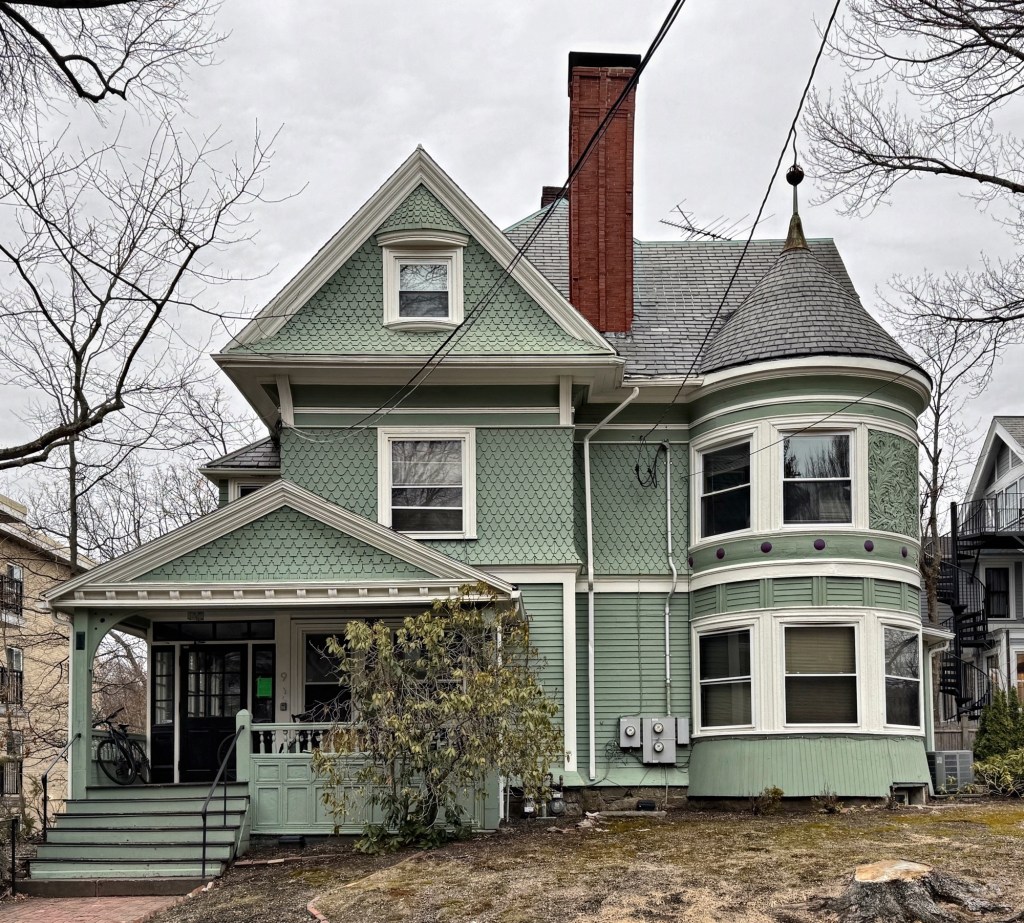
Charles H. Rutan House // 1889

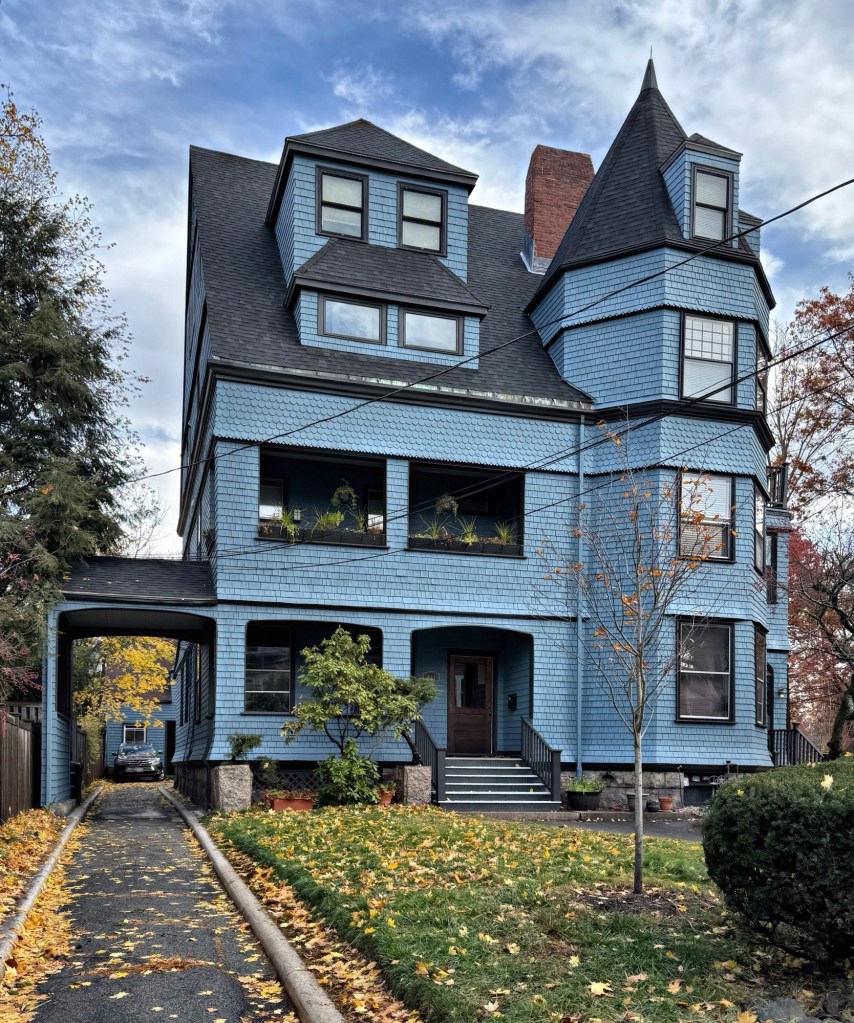
In 1889, prestigious architect Charles H. Rutan, purchased a house lot from the heirs of Elijah Emerson on the family estate and oversaw construction of his own residence in Brookline Village. Charles Hercules Rutan (1851-1914) was born in New Jersey and moved to Brookline in 1874, where he worked in the office of famed American architect, Henry Hobson Richardson. After Richardson’s death in April 1886, at the height of his career, Rutan and two other senior employees, George Foster Shepley and Charles Allerton Coolidge, took charge of the studio and its uncompleted work. Soon after, the three formed a formal partnership, Shepley, Rutan & Coolidge, to succeed to Richardson’s practice, and in 1887 moved the office to Boston. From his new position as head of a prominent firm, Rutan designed this handsome Queen Anne/Shingle style mansion for his family, where he lived until he suffered from two debilitating strokes in 1912, when he and his wife moved to an apartment on a nearby street. Besides the blue color, the house retains so much of its original architectural integrity and is one of the most significant residences in the Brookline Village neighborhood.

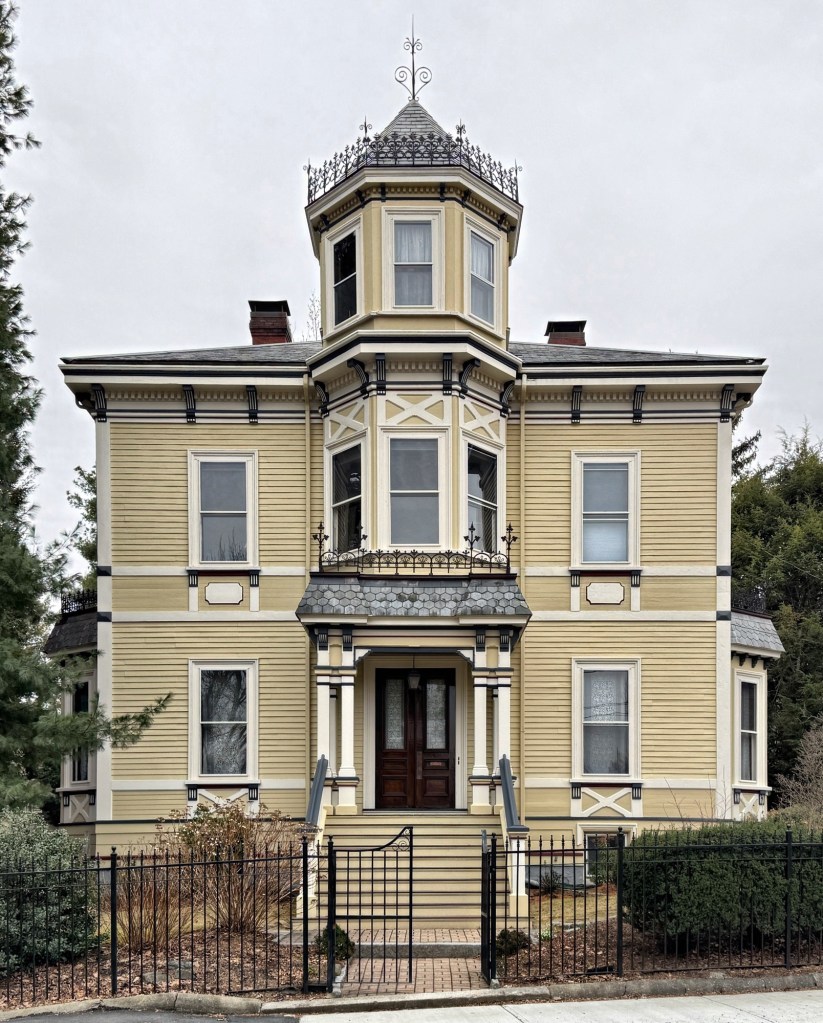
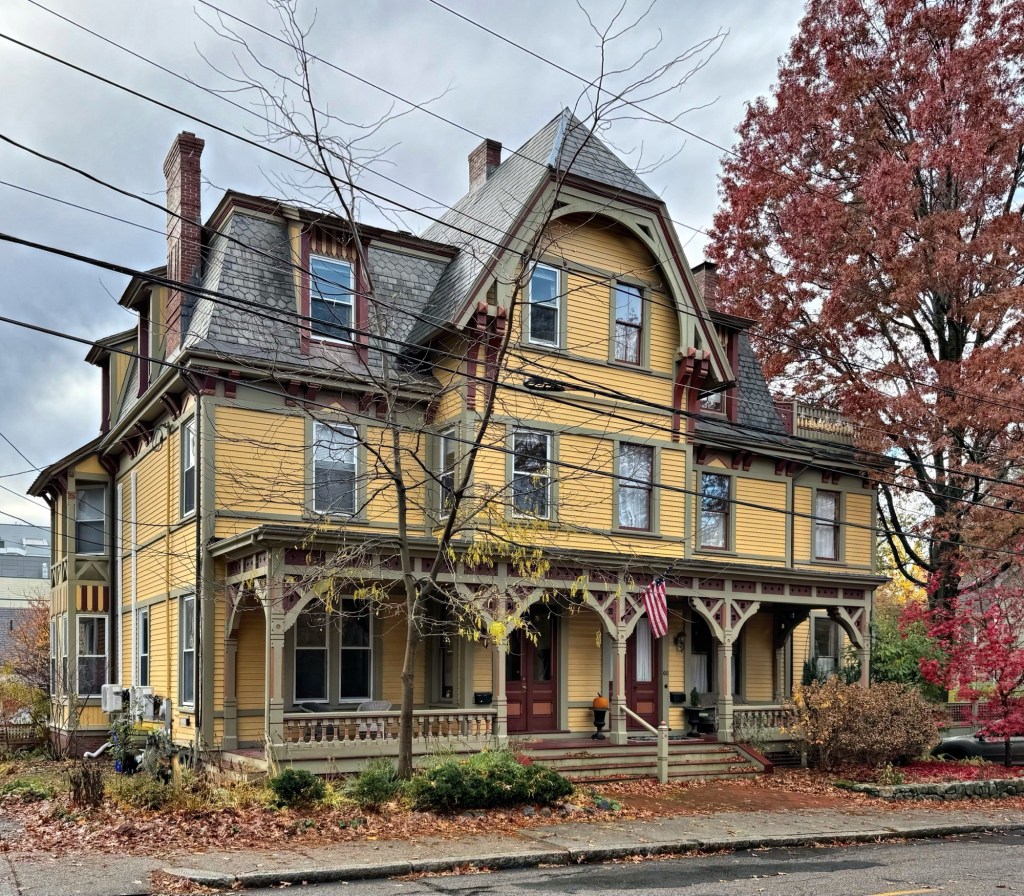
Emerson-Arnold Double-House // c.1875

Elijah Carleton Emerson (1807-1888) was a wealthy Boston merchant, making his fortune as Director of the Second National Bank and President of the Middlesex Horse Railroad. In his late 30s, he purchased land in Brookline Village and established his estate on the land that is now Emerson Park in 1846. The bucolic setting of his estate included a pond, boathouse and adjacent cottage, but as the surrounding area continued to develop with easy access to Downtown Boston, Elijah Emerson began to develop his estate. Emerson began to build residences on his land for supplemental income. This handsome Stick style double-house was built around 1880 and rented by Mr. Emerson and was eventually occupied by his granddaughter, Tirzah and her husband, George Francis Arnold. The residence features a mansard roof, decorative brackets and applied stickwork, and a handsome porch with turned posts.

Elijah Emerson House // 1846

Elijah Carleton Emerson (1807-1888) was a wealthy Boston merchant, making his fortune as Director of the Second National Bank and President of the Middlesex Horse Railroad. In his late 30s, he purchased land in Brookline Village and established his estate on the land that is now Emerson Park in 1846. The bucolic setting of his estate included a pond, boathouse and adjacent cottage, but as the surrounding area continued to develop with easy access to Downtown Boston, Elijah Emerson began to develop his estate. Emerson began to build residences on his land for supplemental income. After his death in 1888, Emerson’s two daughters, Sarah Davis and Tirzah Snell Arnold, maintained the property but sold it to the Town of Brookline in 1907. Brookline officials originally sought to build a new library on the site, but ultimately built it on Washington Street in 1910. The Emerson house and carriage barn were moved across Davis Street from their original site and Emerson Park was established. Emerson’s granddaughter, Mrs.Katharine Snell and her husband, inventor, Cullen B. Snell moved into the relocated house. The Elijah Emerson House (and carriage house at the rear) is a great, well-preserved example of a suburban Boston residence designed in the Gothic Revival style.

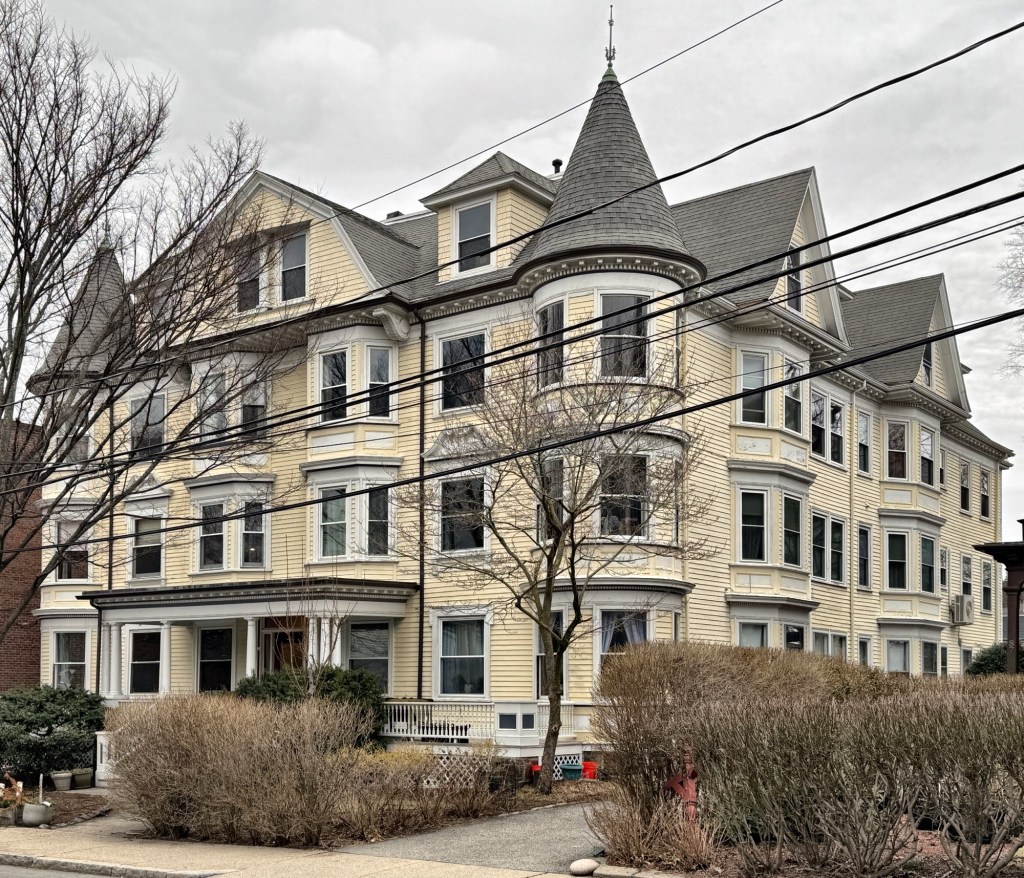
John D. Sturtevant Double-House // 1892

John Dean Sturtevant (1816-1889) was born in New Hampshire and became engaged there in local woolen mills, quickly growing into advanced management positions. He operated woolen mills in New Hampshire, Maine, Connecticut, and Massachusetts, and settled in Brookline where he had access to other states via excellent rail service. When he died in 1889, John’s heirs inherited their late-father’s properties, and began to develop them as Brookline filled out in the last decades of the 19th century. This handsome double-house at the corner of Cypress and Waverly streets was built in 1892 by the Sturtevant Estate, who rented the property to two families of wealthy residents. The Sturtevant Double-House is a landmark and exceptionally preserved example of the Queen Anne style, with varied siding, asymmetrical forms, complex roofline with dormers, and applied ornament in the form of carved panels.

Isaac Rich House // 1846

The Lindens neighborhood, located just east of the civic and commercial core of Brookline Village, was long an apple and cherry orchard known as Holden Farm. Beginning in 1843, the area became the earliest planned development in the town and was laid out as a “garden suburb” for those wishing to escape the growing congestion of Boston. As originally conceived in 1843, it reflected the latest ideals of planned residential development for a semi-rural setting on land owned by Thomas Aspinwall Davis. The streets, parks, and house lots here were laid out by civil engineer, Alexander Wadsworth, who two years earlier, laid out plans for Mount Auburn Cemetery in Cambridge, the first “Rural Cemetery” in America. Early homes were built on speculation by John F. Edwards, an architect-builder, for Davis, who was strict about high-quality designs in the Greek and Gothic revival styles in his newly laid out neighborhood. This house on Linden Street was built in 1846 in the Greek Revival style and was purchased upon completion by Isaac Rich. Isaac Rich (1801-1872) was a prominent merchant and philanthropist and founder of Boston University. The house was modernized in the 1860s with the addition of a mansard roof and paired windows.

William A. Wellman House // 1844

The Lindens neighborhood, located just east of the civic and commercial core of Brookline Village, was long an apple and cherry orchard known as Holden Farm. Beginning in 1843, the area became the earliest planned development in the town and was laid out as a “garden suburb” for those wishing to escape the growing congestion of Boston. As originally conceived in 1843, it reflected the latest ideals of planned residential development for a semi-rural setting on land owned by Thomas Aspinwall Davis. The streets, parks, and house lots here were laid out by civil engineer, Alexander Wadsworth, who two years earlier, laid out plans for Mount Auburn Cemetery in Cambridge, the first “Rural Cemetery” in America. Early homes were built on speculation by John F. Edwards, an architect-builder, for Davis, who was strict about high-quality designs in the Greek and Gothic revival styles in his newly laid out neighborhood. This Greek Revival style house was built in 1844 and sold in 1849 to William A. Wellman (1805-1878), the assistant collector at the United States Custom House in Boston. Wellman’s family held this property through the end of the 19th century. In 1903, as the neighborhood developed further, the property was purchased and re-oriented to face Linden Square, making room for a brick apartment building. Architecturally, the Wellman House stands out for its flushboard facade with bays divided by pilasters with elaborate capitals, and an L-shaped porch with columns capped by acanthus capitals.

Faxon-Howe House // 1844

The Lindens neighborhood, located just east of the civic and commercial core of Brookline Village, was long an apple and cherry orchard known as Holden Farm. Beginning in 1843, the area became the earliest planned development in the town and was laid out as a “garden suburb” for those wishing to escape the growing congestion of Boston. As originally conceived in 1843, it reflected the latest ideals of planned residential development for a semi-rural setting on land owned by Thomas Aspinwall Davis. The streets, parks, and house lots here were laid out by civil engineer, Alexander Wadsworth, who two years earlier, laid out plans for Mount Auburn Cemetery in Cambridge, the first “Rural Cemetery” in America. Early homes were built on speculation by John F. Edwards, an architect-builder, for Davis, who was strict about high-quality designs in the Greek and Gothic revival styles in his newly laid out neighborhood. This house, at 53 Linden Street, was built in 1844 by Edwards, and sold soon-after to John G. Faxon (1793-1861), a lumber merchant who made his fortune in Lubec, Maine until he moved to Brookline. Faxon sold the house in 1851 to Thomas Howe, who likely added the Italianate style tripartite windows with the lower having scroll brackets.

Thomas Aspinwall Davis House // 1844

The Lindens neighborhood, located just east of the civic and commercial core of Brookline Village, was long an apple and cherry orchard known as Holden Farm. Beginning in 1843, the area became the earliest planned development in the town and was laid out as a “garden suburb” for those wishing to escape the growing congestion of Boston. As originally conceived in 1843, it reflected the latest ideals of planned residential development for a semi-rural setting on land owned by Thomas Aspinwall Davis. The streets, parks, and house lots here were laid out by civil engineer, Alexander Wadsworth, who two years earlier, laid out plans for Mount Auburn Cemetery in Cambridge, the first “Rural Cemetery” in America. Early homes were built on speculation by John F. Edwards, an architect-builder, for Davis, who was strict about high-quality designs in the Greek and Gothic revival styles in his newly laid out neighborhood. This stately house was built as Thomas Aspinwall Davis’ own residence in the Gothic Revival style. The house originally had a Gothic style full-length porch, but when the house was relocated in 1903 to the present site, to make room for new houses as the neighborhood grew denser. During the move, the porch was removed, but the Davis House still maintains the belvedere at the roof, historic window trim, and decorative bargeboards at the eaves.

Charles Scudder House // 1844

The Lindens neighborhood, located just east of the civic and commercial core of Brookline Village, was long an apple and cherry orchard known as Holden Farm. Beginning in 1843, the area became the earliest planned development in the town and was laid out as a “garden suburb” for those wishing to escape the growing congestion of Boston. As originally conceived in 1843, it reflected the latest ideals of planned residential development for a semi-rural setting on land owned by Thomas Aspinwall Davis. The streets, parks, and house lots here were laid out by civil engineer, Alexander Wadsworth, who two years earlier, laid out plans for Mount Auburn Cemetery in Cambridge, the first “Rural Cemetery” in America. Early homes were built on speculation by John F. Edwards, an architect-builder, for Davis, who was strict about high-quality designs in the Greek and Gothic revival styles in his newly laid out neighborhood. This house, at 12 Linden Street, was built in 1844 by Edwards, and sold soon-after to a Charles W. Scudder, a Boston hardware merchant. The Scudder House is an excellent example of the Greek Revival style in which the front facade of the house suggests a classical temple with flush-board siding resembling the smooth surface of stone. The wrap-around columned porch would have provided great views of the surrounding orchards and gardens until the neighborhood filled in later in the 19th century.