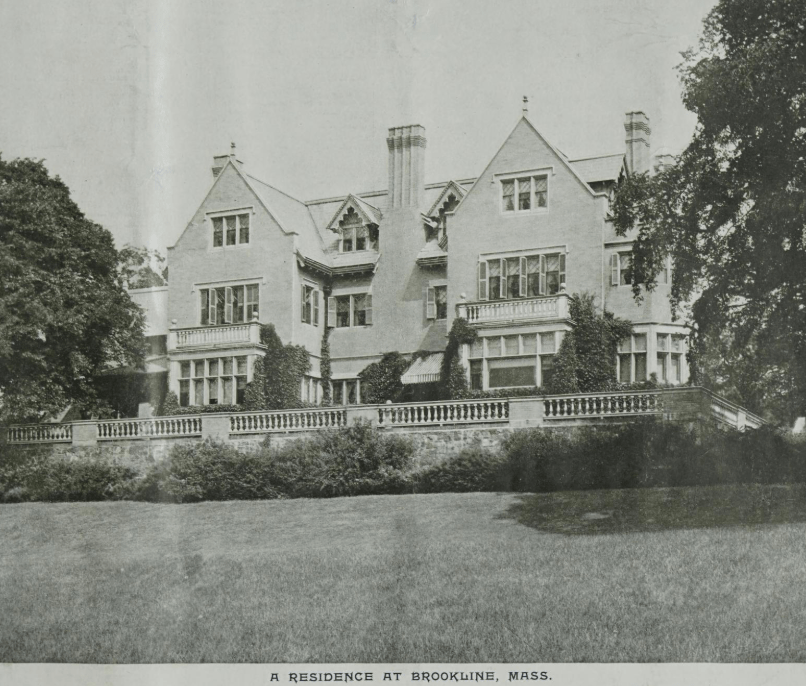
John G. Wright Mansion // 1907-1967

John Gordon Wright (1843-1912), was a Boston wool merchant who purchased farmland on this site in the 1890s and hired architects Chapman & Frazer, to design this stone mansion as an estate house. He previously moved into an earlier wood-frame home on the site and a decade earlier, had the architects design his carriage house and stable, which survive today as the Soule Recreation Center. The stone Tudor Revival style mansion house was massive and featured in national periodicals when completed. The estate was beautified by landscaping designed and laid-out by the Olmsted firm. In 1942, the property was purchased by the Rivers School (now located in Weston) and converted into classrooms and administrative offices for the private school. When the school moved to Weston, the Town of Brookline in 1961 bought property for recreational purposes. Sadly, in 1967, the mansion house burned down, but the carriage house and gate lodge remain as lasting remnants of a once great Brookline estate.
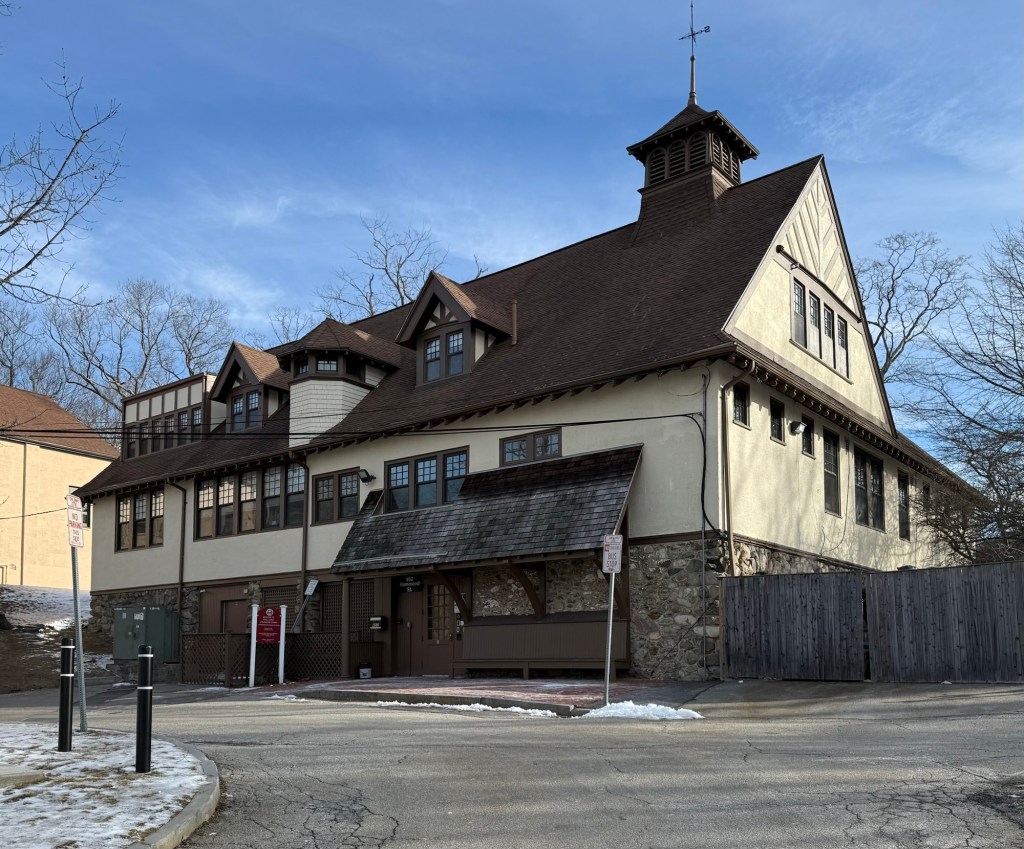
Wright Carriage House – Soule Recreation Center // 1897

The Soule Recreation Center in Brookline, Massachusetts, was originally the stable and carriage house on the John G. Wright estate. John Gordon Wright (1843-1912), was a Boston wool merchant who purchased farmland on this site in the 1890s and hired architects Chapman & Frazer , to design an estate house (since demolished), and this building to serve as a carriage house and stable for horses. The stone Tudor Revival style mansion house was complemented by the earlier wood-frame Tudor carriage house, resembling an English manor with grounds designed and laid-out by the Olmsted firm. In 1942, the property was purchased by the Rivers School (now located in Weston) and converted into classrooms and administrative offices for the private school. When the school moved to Weston, the Town of Brookline in 1961 bought property for recreational purposes. Sadly, in 1967, the mansion house burned down, but the carriage house and gate lodge remain as lasting remnants of a once great Brookline estate.
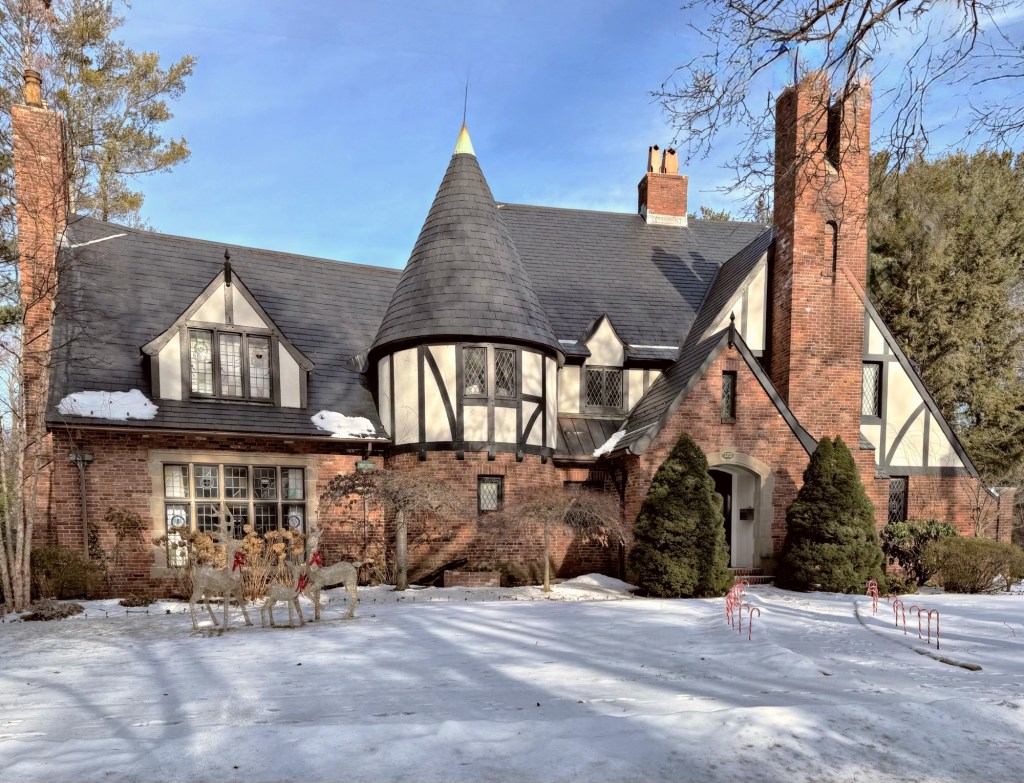
Barnard Gordon House // c.1928

Found on Woodland Road in Southern Brookline, Massachusetts, this brick dwelling is one of a dozen-or-so whimsical Tudor cottages built there in the1920s and 1930s. The Barnard Gordon House, built around 1928, utilizes brick and stucco cladding with ornamental half-timbering, diamond pane leaded glass casement windows on the second story, and decorative half-timbering. The main attraction is the round tower with conical roof also serving as the entrance, resembling more of Rapunzel’s tower than a normal suburban home. We need more unique houses today like they built 100 years ago. Everything today feels so sterile and unwelcoming, maximizing interior layout at the loss to street presence.

Arthur B. Bernard House // 1928

A playful interpretation of a medieval English cottage, with its stucco cladding, half-timbering, weatherboards in the gable ends and ornamental well enclosure in the front yard, can be found on Woodland Road in Brookline. The whimsical cottage was built in 1928 for Arthur B. Bernard, the son of the president of the New England Leather Company in Boston’s Leather District. Arthur would follow his father’s footsteps and join the business himself. Architect and builder, Fred S. Wells of Newton designed and constructed the house (and others in the area in the same style). What’s your favorite part of this house?

Dr. Miner House // 1928

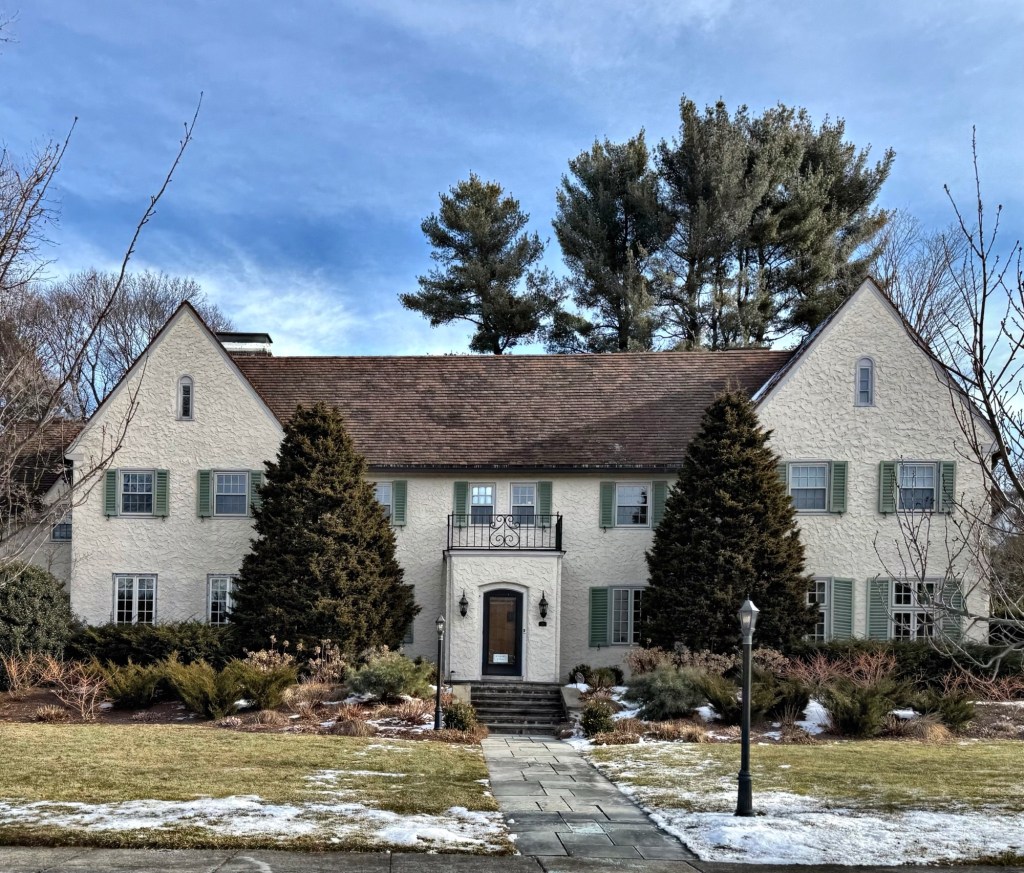
The early decades of the 20th century were the golden years for suburban development in the Boston area. With personal automobiles better-connecting the city to lesser developed areas like Milton, Newton and Brookline, middle-upper class residents were able to relocate to the suburbs and build stately homes, typically in one of three architectural styles: Colonial Revival (most common), Tudor Revival, or Arts and Crafts (least common). This large house is located on Randolph Road in the Woodland/Heath area of Southern Brookline, and dates to 1928. The residence was constructed for Dr. Walter C. Miner, an orthopedic dentist, and his wife, Ethel and designed by the firm of Strickland, Blodgett & Law. The large house sits on a double-lot, and is notable for its symmetry, slate tile roof, and rough-faced stucco walls.

Frederick & Arabella Holden House // 1893

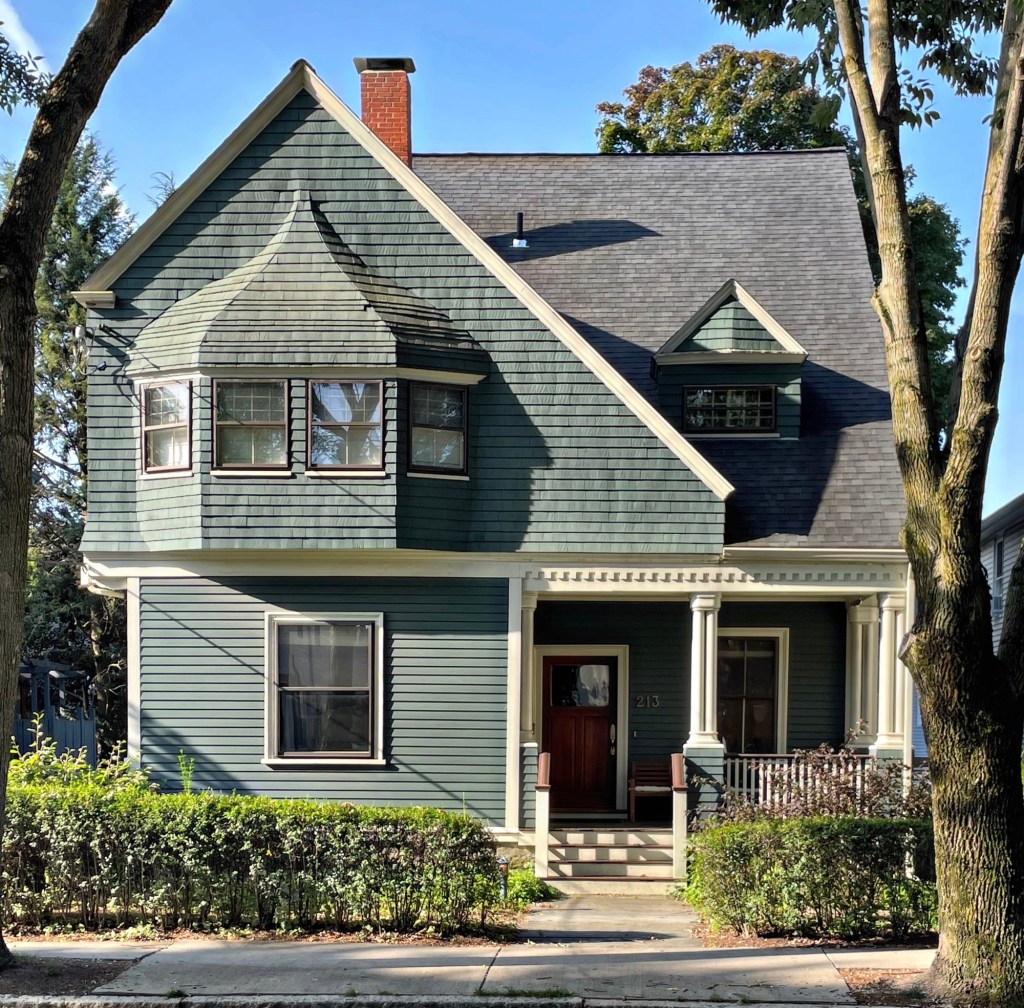
The Frederick & Arabella Holden House sits on Aspinwall Avenue in the Brookline Village neighborhood of Brookline, Massachusetts. Built in 1893, the excellently designed Shingle style dwelling was actually built on speculation by developers, and sold upon completion to the couple. Fred G. Holden (1858-1927) was a marble dealer who managed the Boston Marble Company and had connections in his home state, Vermont for the highest quality marble to sell around Boston, largely for building products and grave memorials. Arabella Proctor Holden (1859-1905) was born in Cavendish, Vermont, as the eldest daughter of Redfield Proctor, 37th Governor of Vermont and the founder of the Vermont Marble Company, the largest such company in the world. I could not find the architect of the house, so any more information, let me know. I’d love to solve the mystery!

Dr. Thomas J. Shanahan House // 1892

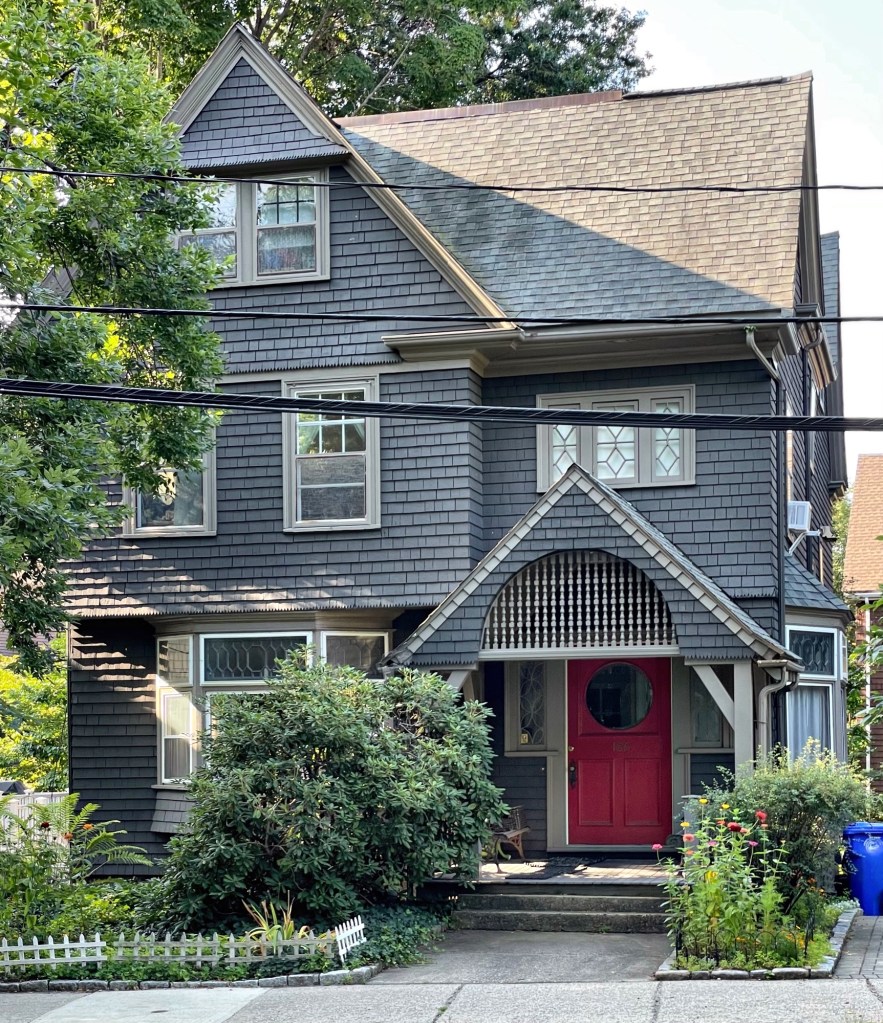
Dr. Thomas Joseph Shanahan (1873-1929) was born in Lawrence and graduated from Harvard Medical School in 1896. He practiced medicine in Brookline and Boston and was engaged in local organizations. He purchased this 1892 house on Aspinwall Avenue in Brookline in 1911, which had previously been rented to families. Two generations of Shanahans would own the house until the 1970s. After Dr. Shanahan’s death in 1929, the widowed Margaret Shanahan remained in this house with their daughter, Mary Margaret Shanahan, who was employed in 1940 as a medical secretary for a hospital. Mrs. Shanahan transferred title to the property in 1947 to her daughter, who converted the house to a two-family dwelling in 1953 for supplemental income. Architecturally, the house is Queen Anne and Shingle styles with continuous shingle siding, complex form with bays and oriels, and a unique arched opening in the gable over the entrance filled with a spindle screen. Architects were William Langley Morrison and Peter J. McEwen.

St. Paul’s Church Rectory // 1886

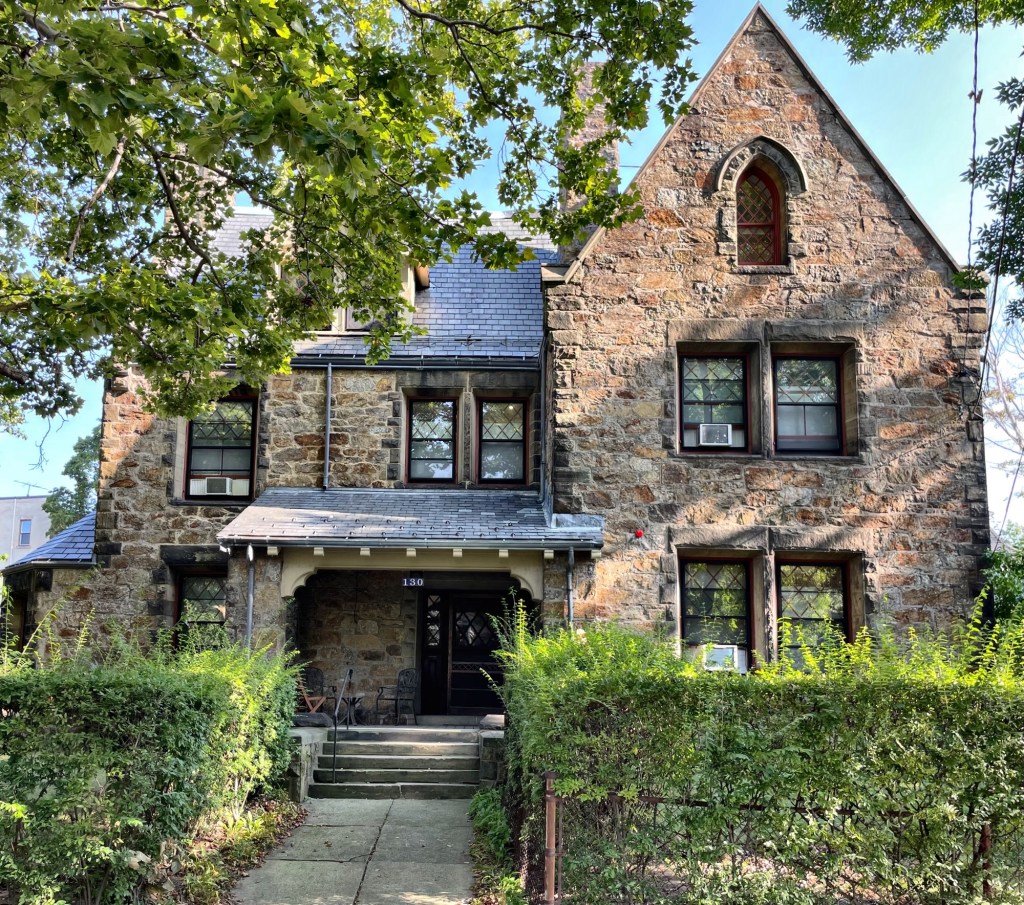
Located next door to the St. Paul’s Episcopal Church in Brookline, Massachusetts, the church’s rectory is equally stunning and compliments the 1850s Gothic church. The Rectory was built in 1886 from plans by Boston architects, Peabody & Stearns, in harmony with the architecture of the Church, with masonry walls of Brighton puddingstone with Nova Scotia freestone trimmings. The Rectory’s architectural style, is somewhat Jacobethan/Tudor due to the pitch of the roof, elbows on the parapet wall, diamond panes in the sashes of the windows, and projecting bay window on the second floor.

St. Paul’s Episcopal Church, Brookline // 1852

The St. Paul’s Episcopal Church of Brookline, Massachusetts is an architecturally and historically significant landmark to the area. The congregation was established in 1849, and within months, in May 1850, the corporation, which was made up of wealthy Boston-area residents, accepted an offer from Augustus Aspinwall of a building lot to erect a church. Esteemed ecclesiastical architect, Richard Upjohn, the architect of Trinity Church in New York, was hired to design the church in Brookline of the same, Gothic style. The wealth of the congregation was evident by the consistent expansions of the complex, to include a chapel, rectory, parish house, and other expansions to those buildings. St. Paul’s Church is the oldest religious structure in Brookline, and almost was lost when the sanctuary was devastated by fire in 1976, leaving only its exterior walls and two stained glass windows. The congregation rebuilt the interiors and the building remains well-preserved at its exterior, built of Roxbury Puddingstone.

Levi T. Lyon Two-Family House // 1895

When Brookline Village filled in with multi-family housing in the late 19th and early 20th centuries, many speculative real estate developments sprouted up from larger residential estates. As so many were built on speculation, high-quality designs and construction were a necessity to bring in picky buyers. This two-family house was built on the corner of Brook and Toxeth streets by Levi T. Lyon, a builder and developer, who lived on Brook Street. This house was designed by F. Manton Wakefield, a relatively unknown architect who apprenticed under Shingle-style maestro William Ralph Emerson, before opening his own firm. Buildings like this are great as they provide much-needed housing, while being built of a good scale that allows residents to know their neighbors, not as easy in a high-rise.