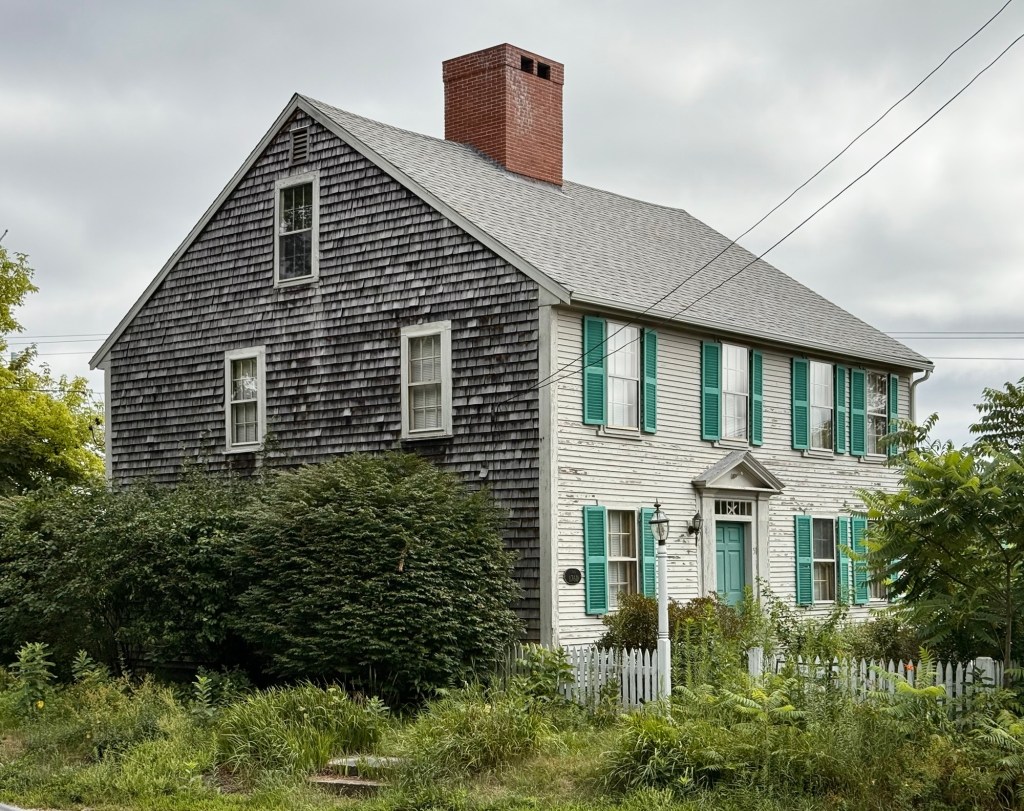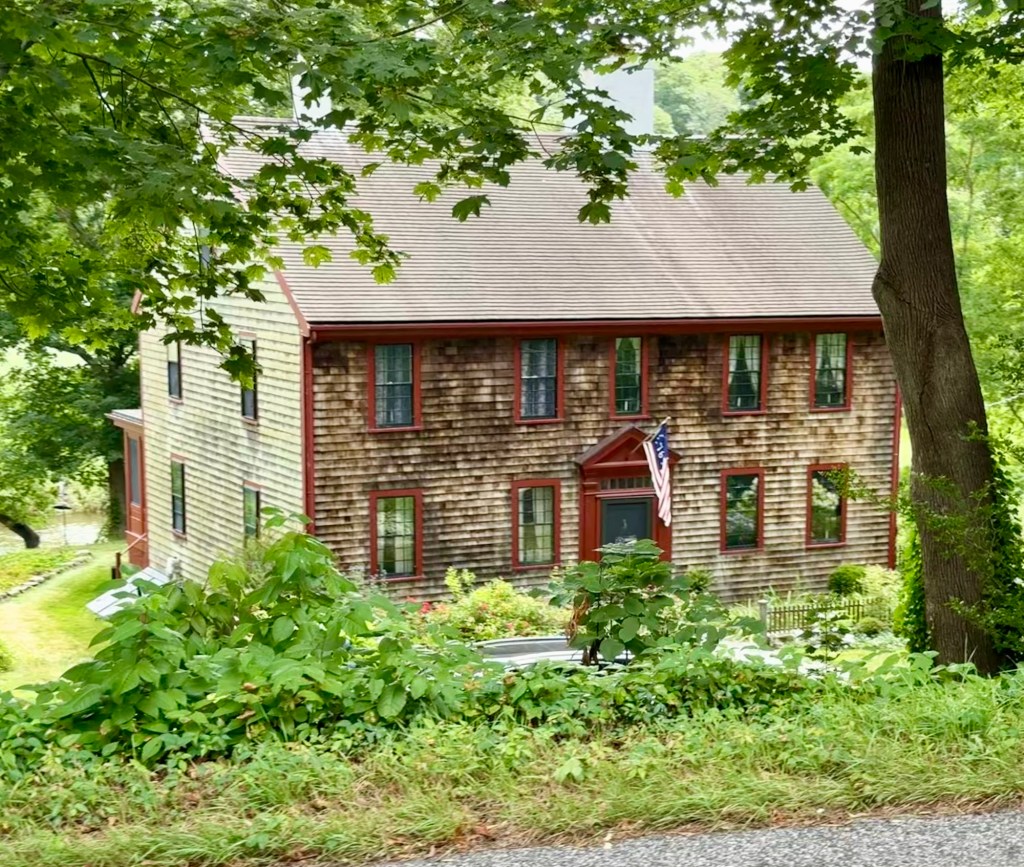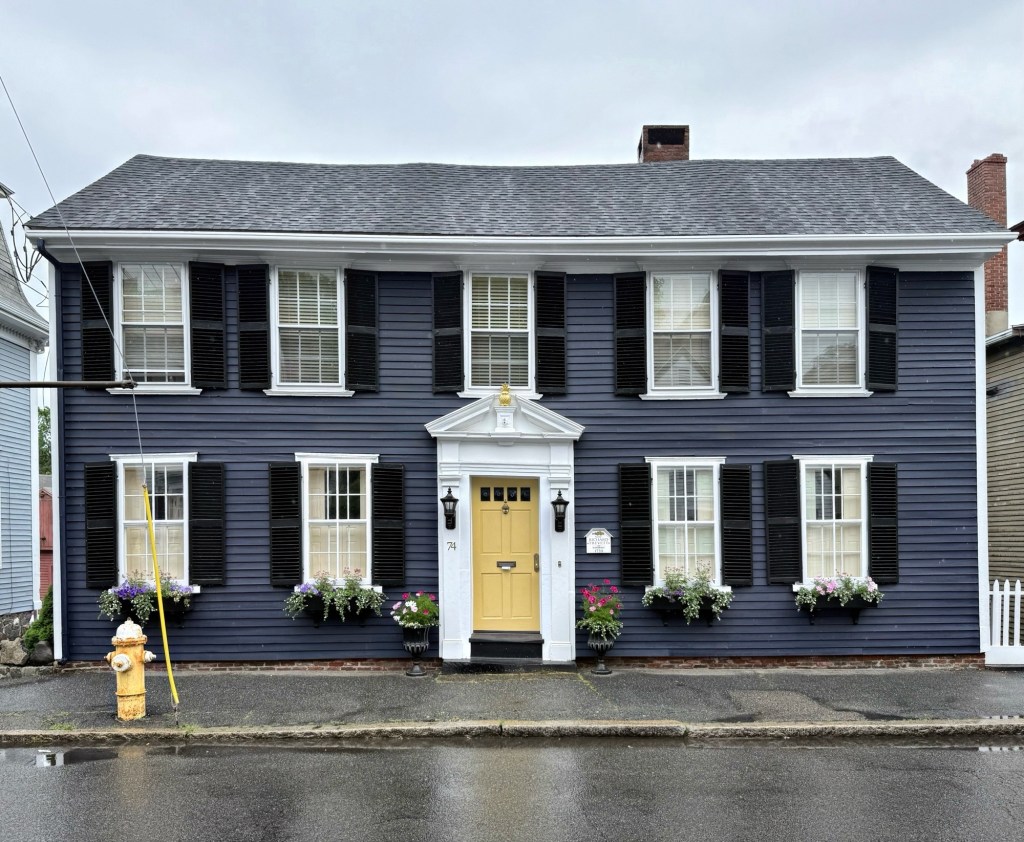
Richard Trevett House // 1730

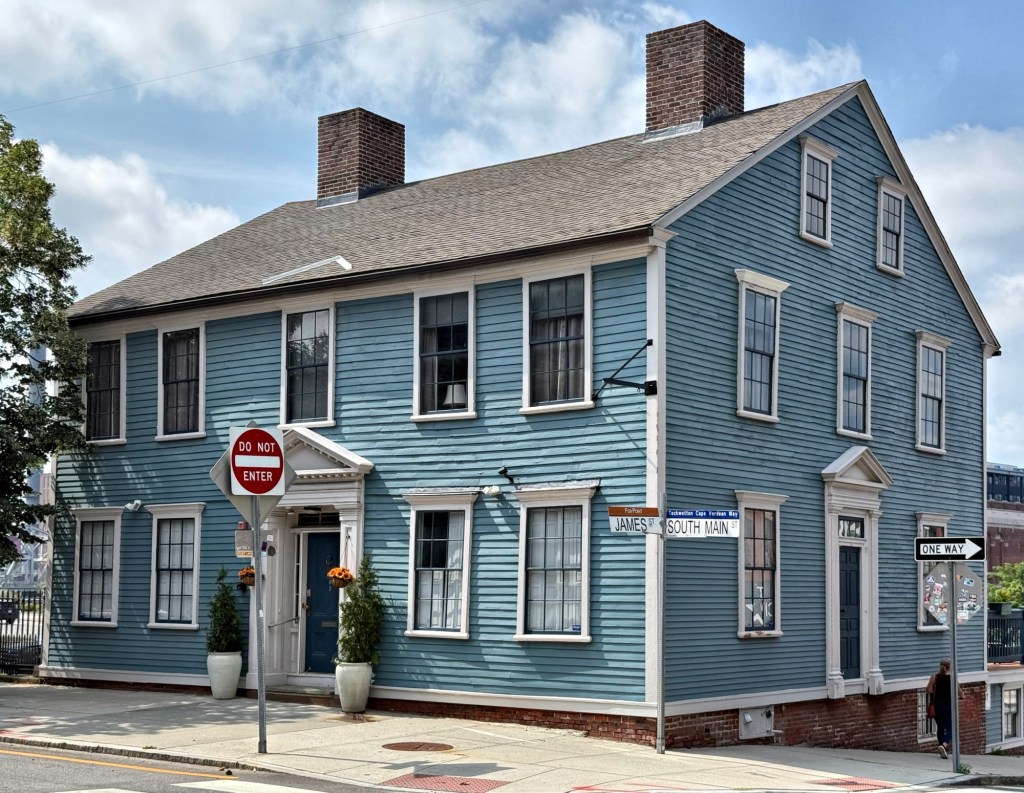
Richard Trevett Jr. (1690-1749) was a wealthy shipwright and sparmaker (a carpenter who finishes and installs spars, masts, and cargo booms) in Marblehead, and part of a wealthy shipowning family. He would build this house on Washington Street (originally named King Street before the Revolution) and reside here with his family. Trevett lived here for just a few years until the death of his father, and he sold the property, which was later purchased by Joseph Pedrick, a wealthy ship owner, who’s son, John Pedrick, built an even larger mansion down the street. By the turn of the 19th century, this house was owned by Captain Samuel Horton, a commander in the Revolution under General John Glover. After the war, Samuel Horton engaged in mercantile pursuits, importing goods from all over the world. He likely brought home pineapples similar to the pineapple motif over the doorway from plantations in the Caribbean and South America as well.

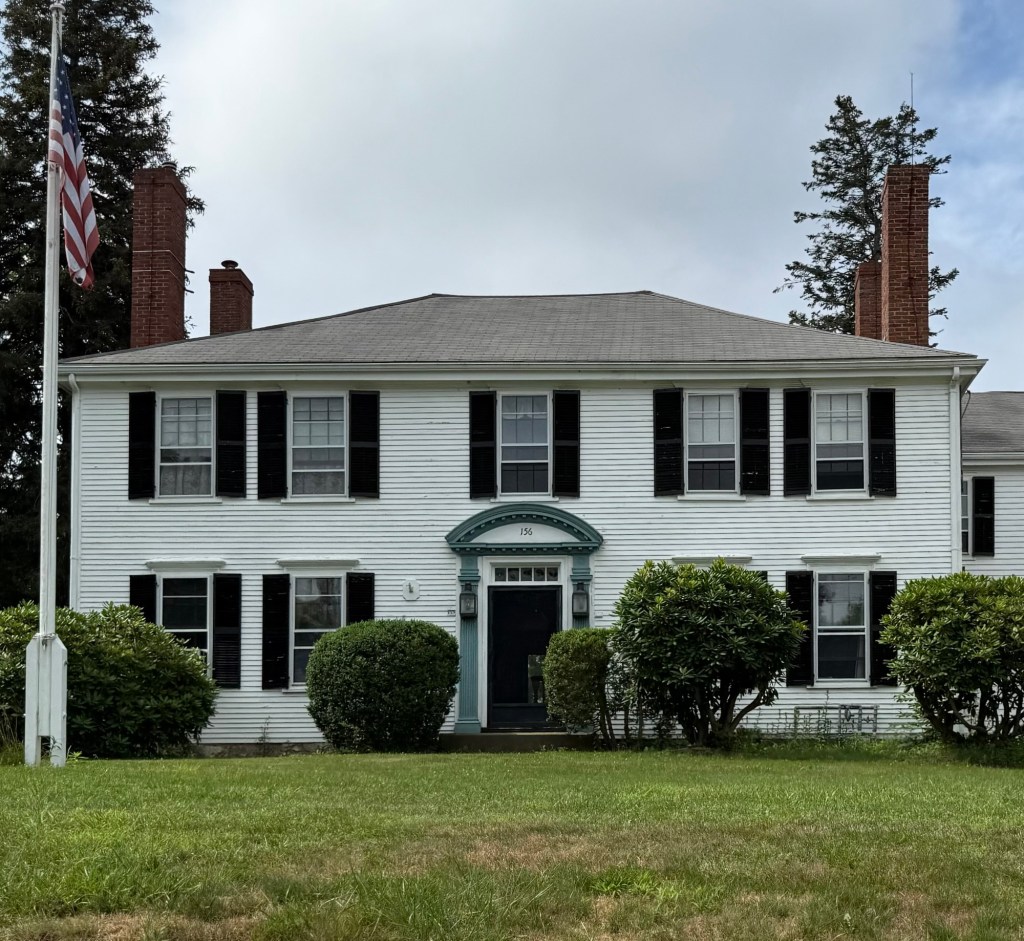
Pedrick Mansion // c.1756

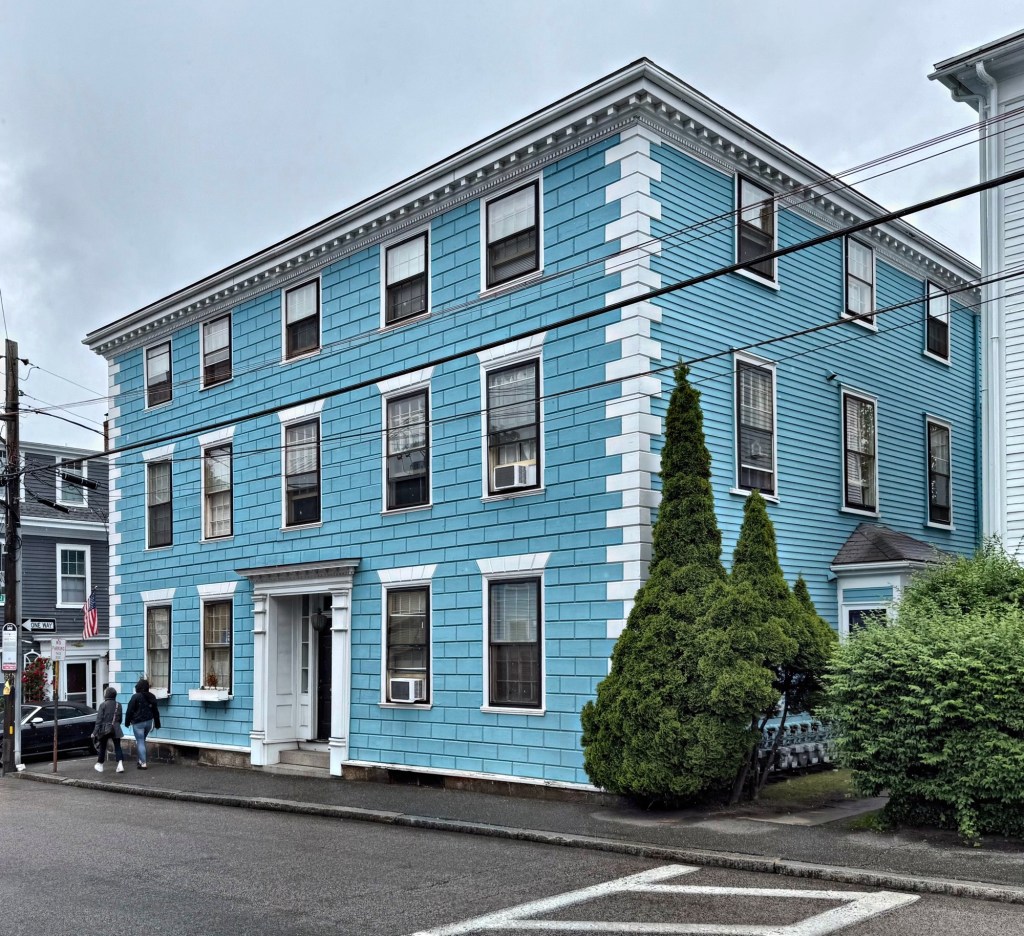
One of the great Colonial-era houses of Marblehead is this stately residence, the John Pedrick Mansion on Washington Street. The house dates to about 1756 and was built for John Pedrick (1733-1780), a wealthy shipping merchant. According to ‘The History and Traditions of Marblehead’, Pedrick’s “ships sailed to nearly every port in England, Spain, and the West Indies, and his transactions were with some of the largest mercantile houses of Europe. At one time, it is said, he owned twenty-five vessels engaged in the foreign trade.” The Revolutionary War, which proved so disastrous to the merchants of Marblehead, bore with especial severity upon Major Pedrick, as several of his vessels were destroyed by British cruisers in Massachusetts Bay, and many others rotted in port from blocades and engagements. The property was likely modernized after John Pedrick’s death in 1780 with a more Federal form, possibly adding the third floor and shallow hipped roof. The building’s facade is scored to resemble ashlar masonry, giving it a more stately appearance, but the bright blue really diminishes the feature, which should typically be colored a natural stone.

Elbridge Gerry House // c.1734

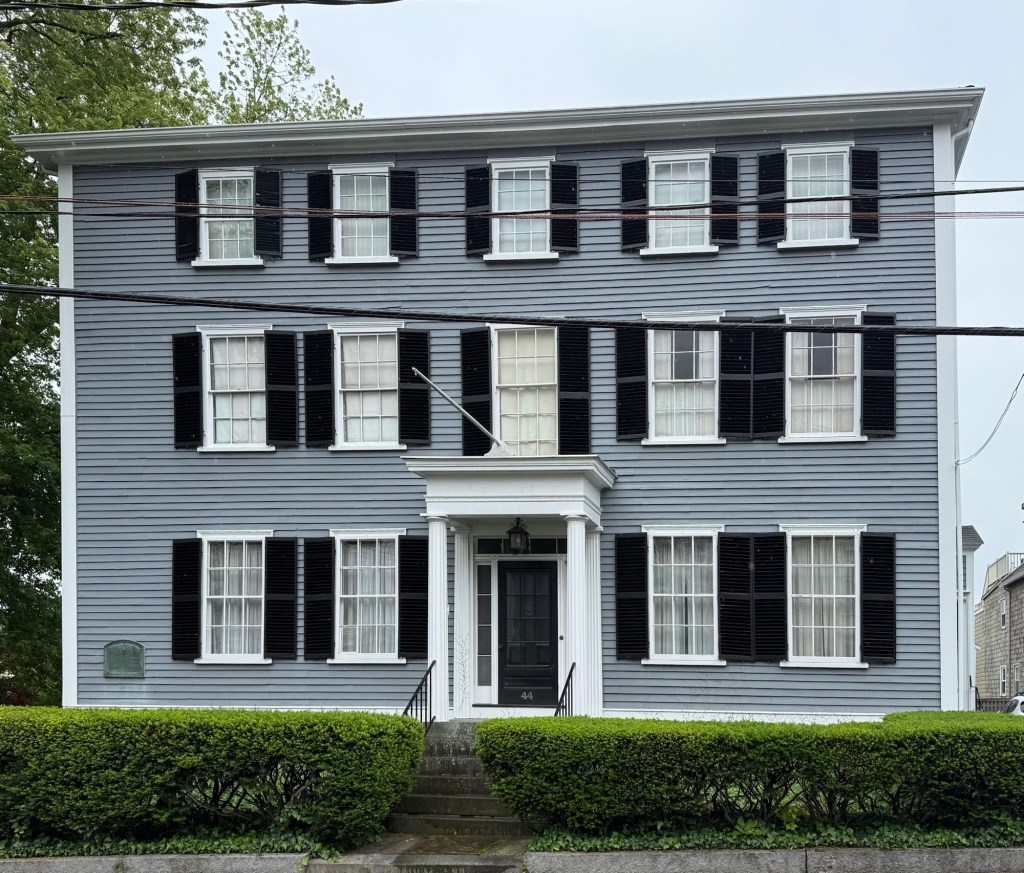
The Elbridge Gerry House is a historic house on Washington Street in Marblehead, Massachusetts that was built by local merchant, Thomas Gerry around the time of his marriage to Elizabeth Greenleaf. Architectural evidence suggests that the house was a two-story L-shaped Georgian frame structure, that in about 1820, was raised to its present three-story form in the Federal style. It was in this house that Founding Father, Elbridge Gerry (1744-1814) was born, and spent many formative years in. Gerry was a wealthy merchant, politician, and diplomat who served as the fifth vice president of the United States  under President James Madison from 1813 until his death in 1814, and is arguably best-known for Gerrymandering. The term, originally written as “Gerry-mander,” first was used on March 26, 1812, in the Boston Gazette — a reaction to the redrawing of Massachusetts state senate election districts under then-Gov. Elbridge Gerry. One of the remapped, contorted districts in Essex County (where Marblehead is located) was said to resemble the shape of a mythological salamander, hence the name “Gerry-mander”. The newly drawn state senate district in Essex County was lampooned in cartoons as a strange winged dragon, clutching at the region. Elbridge Gerry would live mostly in Cambridge and the family home was sold by around 1820 and modernized about that time.

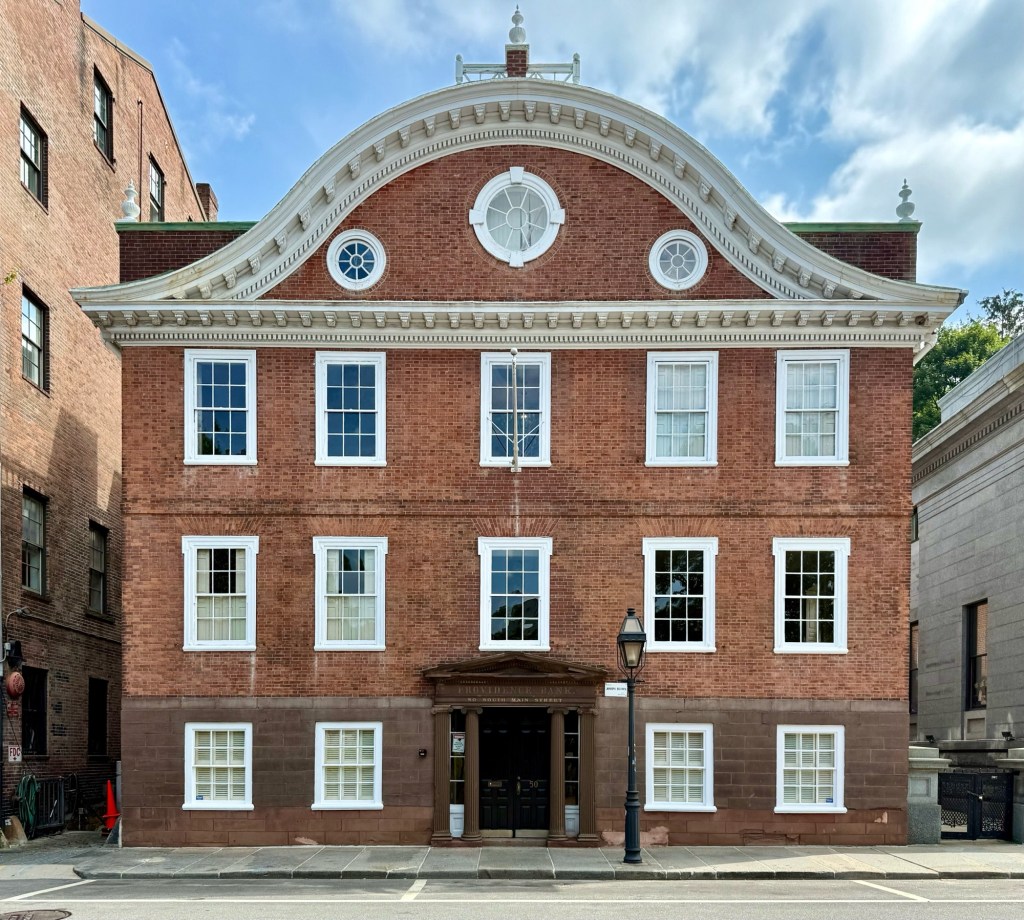
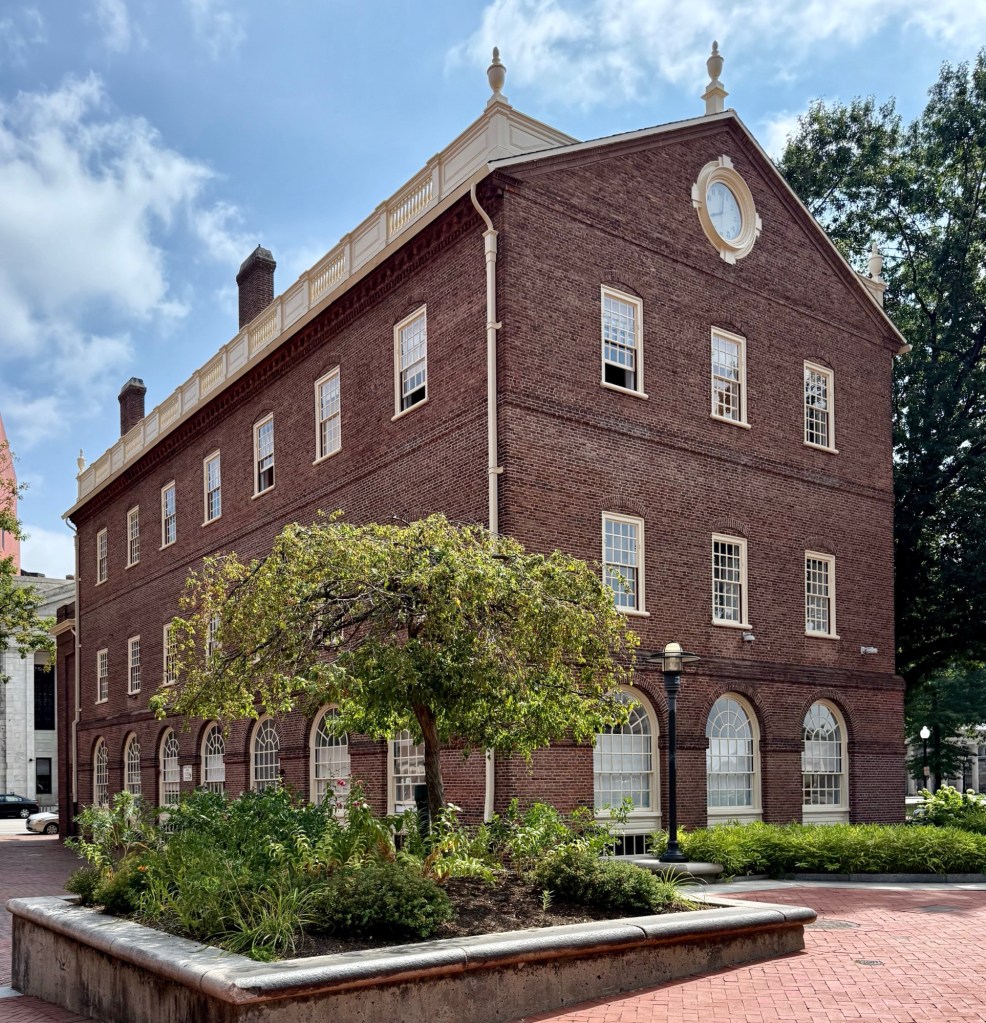
Old Town House, Marblehead // 1727

By the early 18th century, Marblehead had grown from a small fishing village to one of the most affluent and influential seaports in the colonies. This new wealth and the increasing secularization of government led town officials in 1727 to fund and build a Town House, to replace the Old Meeting House from 1696. The upper level of the building served as a town hall, while the lower level was originally used as a market. The Town House was later the gathering place to protest the Stamp Act and the Boston Port Act, and was a primary location for Sons of Liberty to meet and discuss Revolution. After Independence, the Town House was host to such dignitaries as presidents George Washington, Adams, Jackson and Munroe, Samuel Adams, John Hancock and the Marquis de Lafayette. The building would eventually be replaced as the town hall when the new Abbot Hall was built in 1876. The top floor became the GAR Museum, established after the Civil War as The Grand Army of the Republic veterans organization. The main floor houses meeting and exhibition space. The iconic Revolutionary-era Georgian building has been lovingly maintained and restored for nearly 300 years, a testament to the historic and architectural significance of this handsome structure.

Knight-Tutt House // c.1750

The Knight-Tutt House on Franklin Street in downtown Marblehead, Massachusetts, is a great example of a pre-Revolutionary Georgian home built for the working class. The house, like its neighbor, has a three-bay, side-hall facade with a large, central chimney. The residence was built around 1750 for William Knight (1722-1799), who worked as a shoreman, loading and unloading the many ships that docked in Marblehead harbor. By 1850, the house was jointly owned by an F. Bateman and William Russell Tutt, a shoemaker. The residence remains one of a large number of well-preserved Colonial homes in the town of Marblehead, a testament to preservation planning and its effect on streetscapes and vibrant communities.

Russell-Goodwin House // c.1750

Marblehead is one of the oldest towns in America, first settled by colonists in 1629 and incorporated twenty years later. For the following decades, the coastal community grew, and was even one of the ten largest towns and cities in the colonies in 1790! From this history, the town has worked to preserve the unique character and walkable warren of narrow streets, that makes the town feel so charming and a great place to visit. There are dozens of pre-Revolution houses in Marblehead’s downtown area, including this side-hall Georgian house on Franklin Street, with a neighboring “sister house”. The residence dates to about 1750 and was occupied early on by Richard Russell, who according to the house plaque, was a fisherman. Later, in 1850, the house was occupied by John Goodwin Jr., who fought in the Civil War, and ultimately lost his life in the Battle of Roanoke Island, on February 8, 1862, when he was killed when he was struck in the chest by a cannonball. After his death, local Marblehead veterans established the G.A.R. Hall, John Goodwin Jr. Post 82 in his honor. The Russell-Goodwin House remains one of the many charming Colonial-era houses in Marblehead’s walkable village, telling a story of the generations of families who made this coastal community home.

Rev. Ebenezer Parkman House // 1750

Reverend Ebenezer Parkman (1703-1782) was a graduate of Harvard University and served as the first minister in Westborough, Massachusetts, from 1724 until his death. The town’s first meetinghouse was located on Powder Hill; however, in 1748, the community decided to build a new meetinghouse closer to the town center. In 1750, the town built Reverend Parkman a second parsonage, this large Georgian house, closer to the meetinghouse which would accommodate his growing family. It is said that when built, some members of the church felt the home was too grand and luxurious for the minister and particularly made reference to the numerous windows as glass was an expensive commodity at the time. From his residence and serving as the town’s minister for 58 years, Parkman watched his town grow from an English settlement on the fringe of civilization to a prosperous village in the independent United States. Parkman’s insights into the life of these times are recorded in his daily journal, now housed at the American Antiquarian Society in Worcester. It has also been digitized, providing a glimpse into daily life at the time. The house was originally located nearby but relocated in 1867 to its present location on High Street, where it remains in a great state of preservation. 

James Adams Farmhouse // c.1785

This handsome New England farmhouse is located in rural Canterbury, Connecticut, and showcases the type of farmhouses available to local wealthy residents in the late 18th and early 19th centuries. The construction dates to about 1785, just after James Adams, a Lieutenant in the American Revolution, purchased land here. The property remained in the Adams Family until 1859. The structure rests on
a fieldstone foundation and is sheathed with clapboards. The Georgian farmhouse incorporates a five-bay facade with central entry with five-light transom and a large stone central chimney and jettied gable ends on the sides.

John Carter House // c.1765

One of the many stunning and well-preserved Colonial homes in Canterbury, Connecticut is this residence, the John Carter House on S. Canterbury Road. Records show that the house was built around 1765 for John Carter and his wife, Mary Smith. This house is a good example of the domestic architecture of 18th-century Connecticut and while there have been some changes over time, it continues to exhibit all the major hallmarks of the colonial type, such as a center-chimney plan, clapboard exterior, and five-bay facade. The house originally had a saltbox roof sloping to the rear, but was removed sometime in the 19th or 20th centuries, likely when the projecting Colonial Revival-era porch was added at the entrance. What a spectacular home!

Samuel Pellett House // c.1752

The Samuel Pellett House in Canterbury, Connecticut, dates to the mid-18th century and is an excellent example of a Colonial-era home in this part of the state. Research in the land records suggests that this house may date from the time of Samuel Pellett’s second marriage in 1752 to Hannah Underwood. The couple planted two sycamore trees in front of the house to signify husband and wife but one was lost in the 1938 hurricane while the other survives to this day. According to historians, Sarah Harris Fayerweather, the first Black student at Prudence Crandall’s school nearby, worked as a servant in this house, then owned by Jedediah Shepard. The Pellett House is an excellent example of a Colonial Georgian home in Connecticut, with clapboard siding, center chimney, five-bay facade and small pane sash windows.