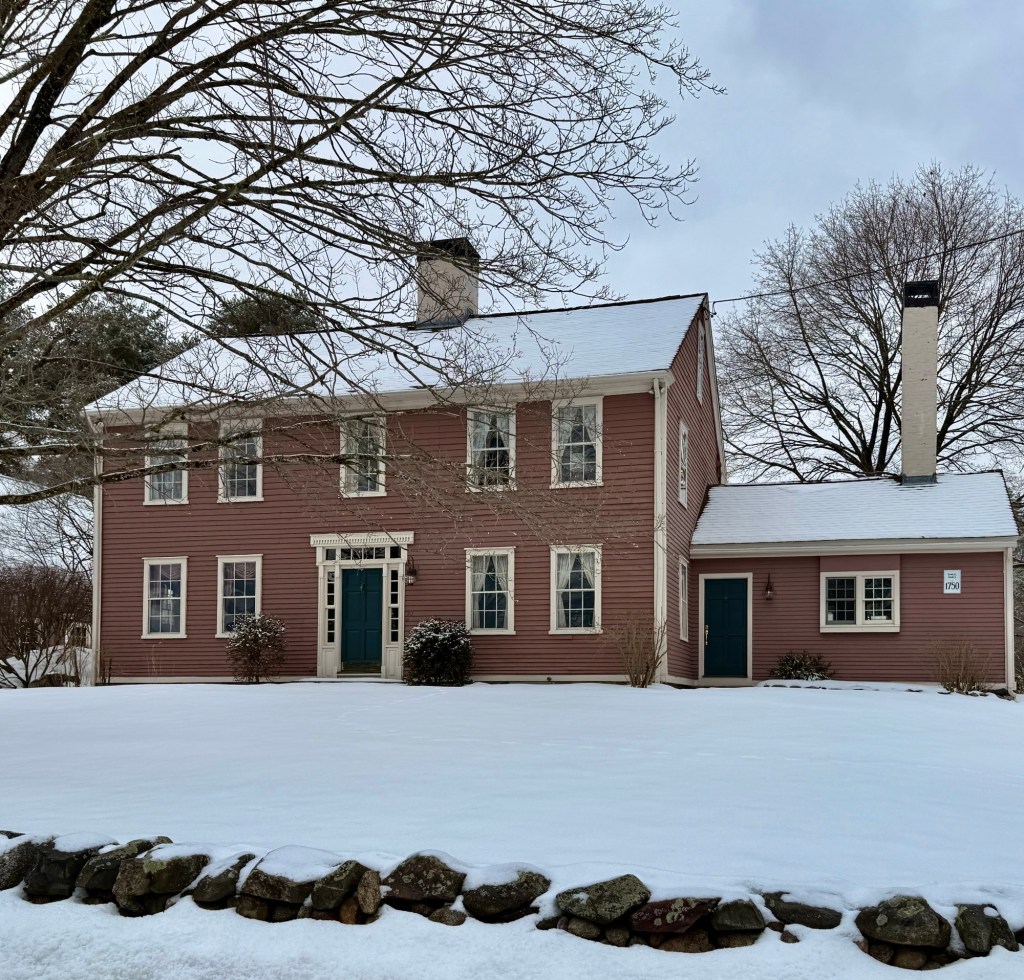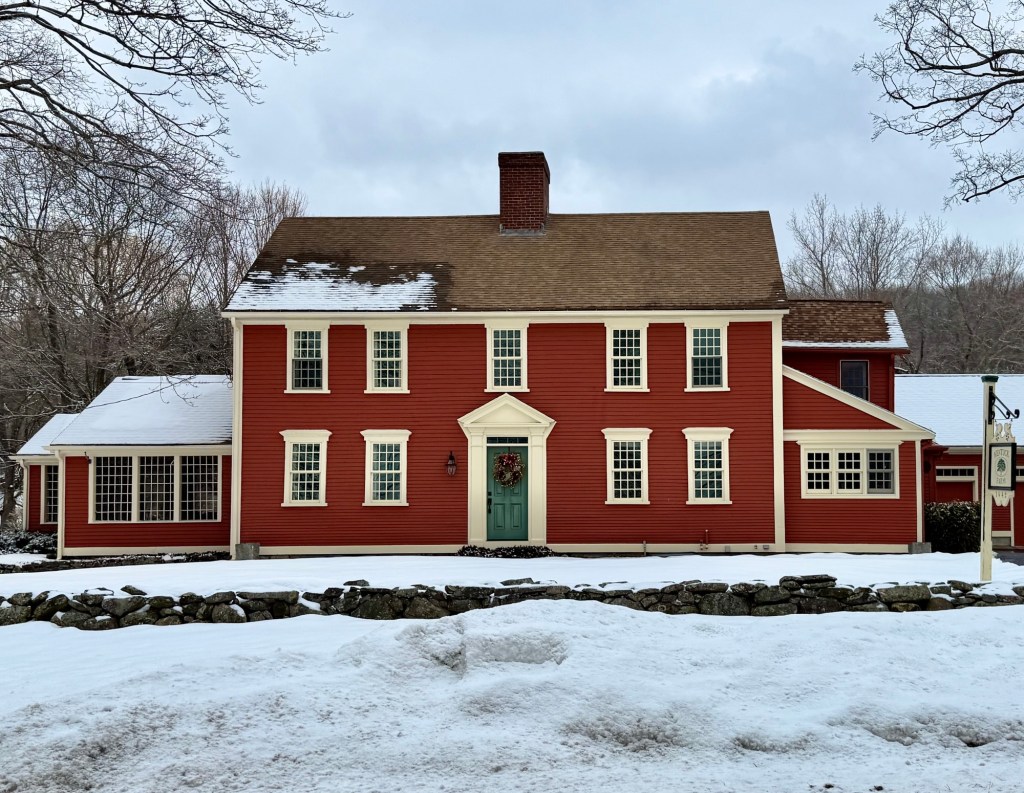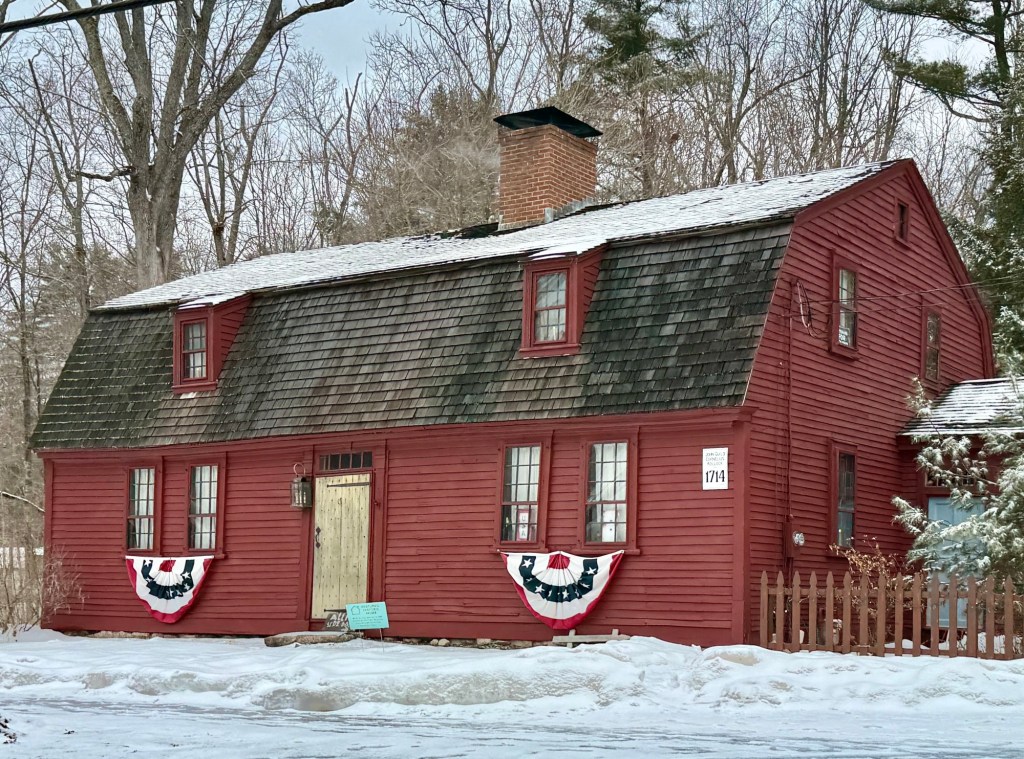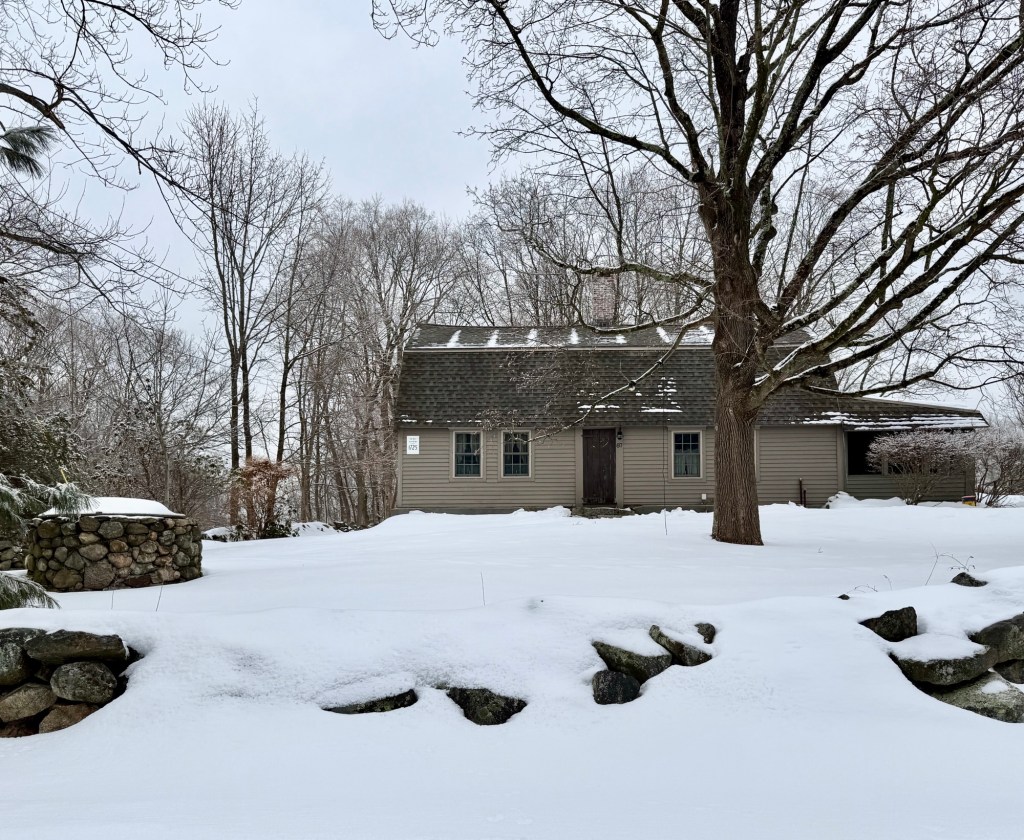
Dunk Homestead // c.1672

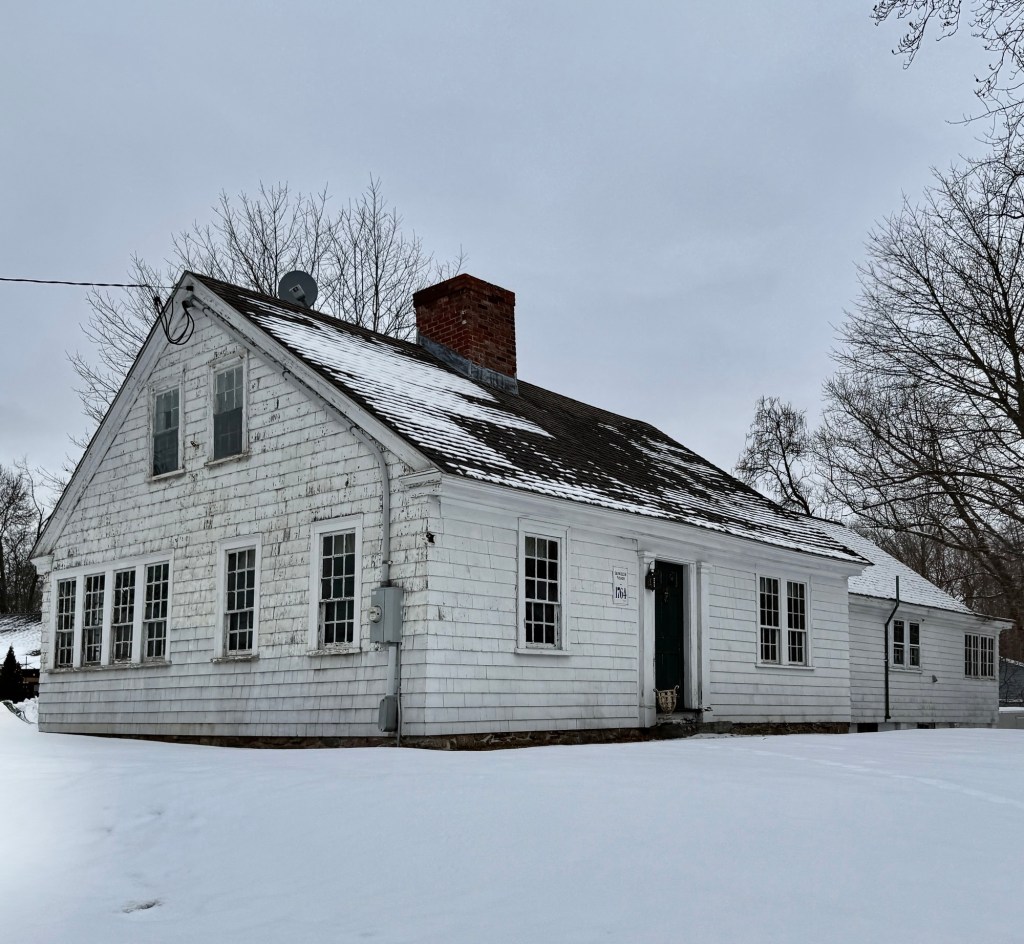
The oldest building in Chester, Connecticut, is believed to be this First Period residence on North Main Street, which was originally built sometime after 1672, when land here was deeded to Thomas Dunk (1648-1683). The property was inherited by various members of the Dunk family, including Deacon Jonathan Dunk (1711-1781), who added onto what was originally a one-room, gambrel-roofed house as their families and wealth grew. The old Dunk Homestead is one of the many great landmarks in Chester and has been lovingly preserved for over 350 years!

Griffin-Malloy House // 1720

This First Period Home on in Wayland, Massachusetts, can be found at 184 Glezen Lane and is one of the community’s oldest residences. The Griffin-Malloy Homestead dates to about 1720 and is a large, single-family farmhouse that is just over 300 years old! Records state that the house was built by early settler, Samuel Griffin and possibly expanded later by his son, Deacon Jonathan Griffin. After generations of Griffin Family ownership, the old farmhouse was purchased in 1877 by Timothy Malloy (1839-1909) an Irish immigrant who settled in Wayland and operated a farm here. The house as of the 20th century, retained much of its original wood paneled walls and fireplaces, and has been lovingly preserved by generations of great stewards. 

Bryant-Finlay House // c.1713

This large First Period house in Wayland dates to the early 18th century and was originally located in Kingston, Massachusetts, and moved to its present location in the 40s. The historic home was built by 1713 for Jonathan Bryant (1677-1731). After 250 years in Kingston, the house was threatened with demolition, and was ultimately saved by Wayland resident, Allan Finlay. Allan was a member of the town’s Planning and School boards, and was active in overseeing the Modern expansion of Wayland’s schools in the 1950s and 60s. In 1941, Finlay had this house disassembled and rebuilt on land on Old Sudbury Road for his family. The house, with its expansive setback, overlooks preserved wetlands.

Hopestill Bent Tavern // 1710

The Hopestill Bent Tavern is a historic First Period tavern, now a private residence, in Wayland, Massachusetts, on the Old Connecticut Path, a Colonial postal road. The tavern was owned and occupied by Hopestill Bent (1672–1725), a veteran from the King William’s War (one of the French and Indian Wars). Hopestill Bent was the great-great-grandfather of Charles Bent, a fur trader and first territorial Governor of New Mexico during the Mexican-American War, who was later scalped and killed by Pueblo warriors, during the Taos Revolt. The Bent Tavern served as a tavern until about 1780, was moved to the present site farther back from the street in 1800, and enlarged to the current size.

Grout-Heard House // c.1743

The Grout-Heard House on Cochituate Road in Wayland, Massachusetts, is one of the oldest extant residences in the community and architecturally significant as it shows the evolution of architectural tastes throughout the centuries. The house was built around 1743 for Jonathan Grout (1701-1748), a grandson of an original settler in the area, by the time of his marriage to Hannah Heard in 1743. Early records suggest that the house was originally just one bay deep and two-stories tall with a central entry. The property was sold in 1744 to Richard Heard, Jonathan’s brother in-law. In 1787, Silas Grout (1755-1820), a blacksmith, purchased the house and likely added rooms on the rear of the house. In 1822, Silas’ descendants added the side ell and the residence became a double-house in the mid-19th century. The house was moved from the site to make room for the 1870s Town Hall, and the rounded two-story side bay was added. After the Town Hall was razed in the 1950s, the Grout-Heard house was moved back to its original site in 1962. Since that date the Grout-Heard House has been the offices, research center, artifact repository and house museum of the Wayland Historical Society, who added a two-story Modern addition at the rear.

Smith-Curtiss House // c.1714

The Smith-Curtiss House, which is possibly the oldest extant building in Derby, Connecticut, has sat vacant and decaying for years and is owned by the State of Connecticut. Believed to have been built sometime between 1714 and 1740, this historic saltbox farmhouse at 411 Hawthorne Avenue is slowly decaying due to lack of maintenance and funding. Early ownership is difficult to determine, but by the 19th century, the property was owned by Ms. Alice E. Curtiss. The old estate was sold by Ms. Curtiss in 1913 to Frances Osborne Kellogg, a businesswoman, philanthropist and environmentalist, as part of her 350-acre dairy farm and land-conservation holdings. The Smith-Curtiss House was used as a residence for the herdsmen who ran the farm nearby. Before her death in 1956, Frances deeded the property to the state as a public park, and allowed her head herdsman life-occupancy of this house for the remainder of his life. The State of Connecticut assumed possession of this house in 1981. The building has suffered from deferred maintenance since this period, with the State attempting to lease the building to tenants. I hope that local and statewide preservation groups can mobilize to secure grants and funding to restore this important property.

Whitcomb Inn and Farm // c.1708

The Whitcomb Inn and Farm in Bolton, Massachusetts, is believed to be the oldest extant building in the rural community and is believed to have been built around 1708. The oldest portion of the farmhouse, the three-bay, two-story, side-hall house, was likely built when David Whitcomb (1668-1730) acquired the land from his father. David married Mary Hayward in 1700 and the couple had many children, necessitating additions to the old farmhouse, including the rear saltbox with a “Beverly jog” (a section of the rear addition projecting beyond the side of the original structure) that was built in the 1710s. The building underwent stylistic changes in the 19th century, most of which were removed during a major restoration in 1937–38 by Philip Phillips, a Harvard professor in Archaeology, who drew the plans for the restoration of the old house and 1850s barn. Professor Phillips was also a conservationist, and donated some of his land, which directly abuts the highway (built in 1962) was donated to the town and is now known as Split-Rock Trail. The Old Whitcomb Inn and Farm was listed on the National Register of Historic Places in 2002, ensuring that any future highway expansion or re-routing would require preservation of this significant home.

Gen. Stephen P. Gardner House // 1798

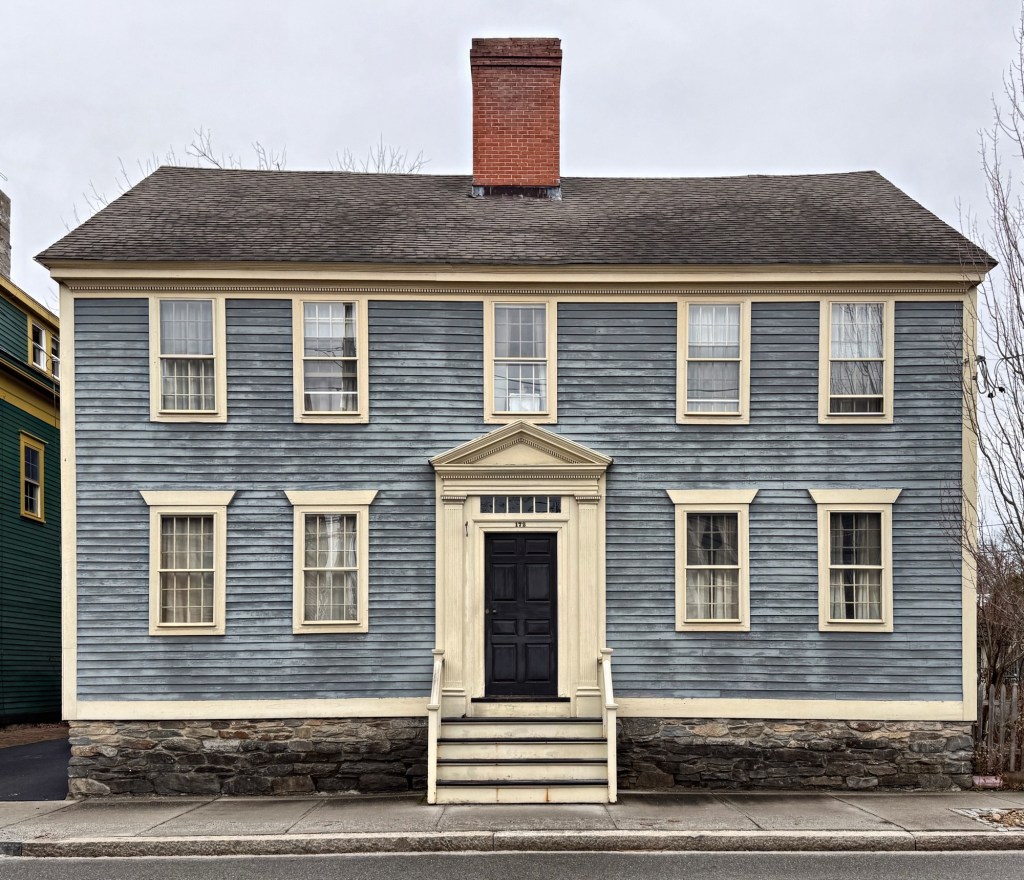
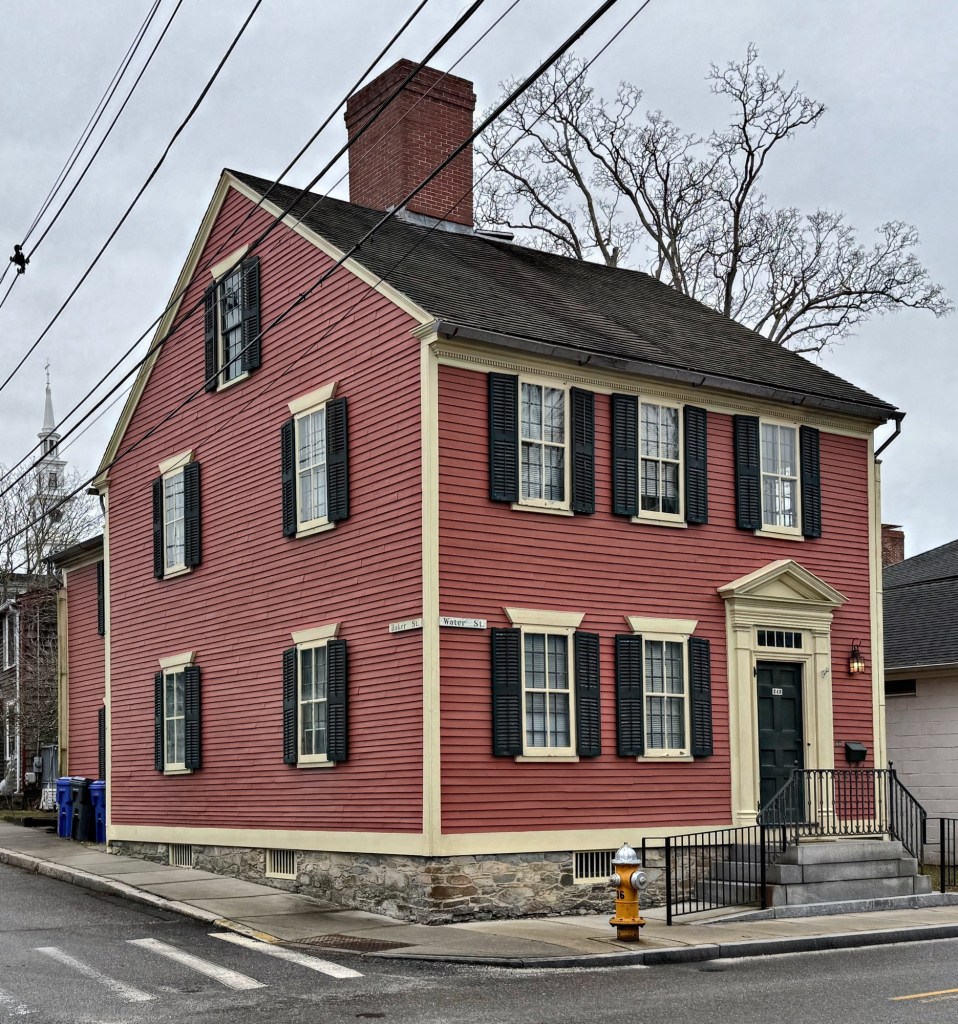
The Stephen P. Gardner House on Main Street in Bolton Center, Massachusetts, is a stunning late-Georgian style residence evocative of rural housing built in the decades following the American Revolution. The home was built by 1798 for Stephen Partridge Gardner (1766-1841) upon the occasion of his marriage to Achsah Moore. Stephen Gardner was born in Sherborn but settled in Bolton where he quickly became one of Bolton’s most important residents. He served as Town Clerk for twenty years from 1797 to 1816, as Town Treasurer from 1810 to 1820, and was also an Assessor and a Selectman for many years. Stephen Gardner was chosen to help write the petition from Bolton against the Embargo Act prior to the War of 1812, and rose to the rank of Brigadier General in the Massachusetts militia. In 1873, the house was purchased by the First Parish Church and used as the minister’s residence for about fifty years before being sold to private owners. The now purple house is well-preserved and maintains its traditional pedimented doorway and central chimney.

Dr. Amos Parker House // 1801

Built in 1800-1801, this house on Main Street in Bolton, Massachusetts, had multiple owners in quick succession until 1806, when it was purchased by Dr. Amos Parker. Amos Parker (1777-1861) was born in Hubbardston and later moved to Bolton to work as the town’s doctor, and also served as Bolton’s first Postmaster, from an ell that was once attached to this residence. Dr. Parker and his wife, Elizabeth (Whitney,) had at least four children, who of which died as infants and two daughters remained unmarried. Elizabeth Lydia Parker (1809-1882) and Louisa Jane Parker (1812-1900) inherited their parent’s home and lived here until their deaths. Louisa worked as a teacher in Bolton schools, and was forced to remain unmarried to keep her teaching position by law. In 1904, the Parker home was acquired by the local Baptist church and occupied as a parsonage and was later sold to private owners who restored the home to its near-original condition.

Joseph and Ruth Sawyer House // c.1782

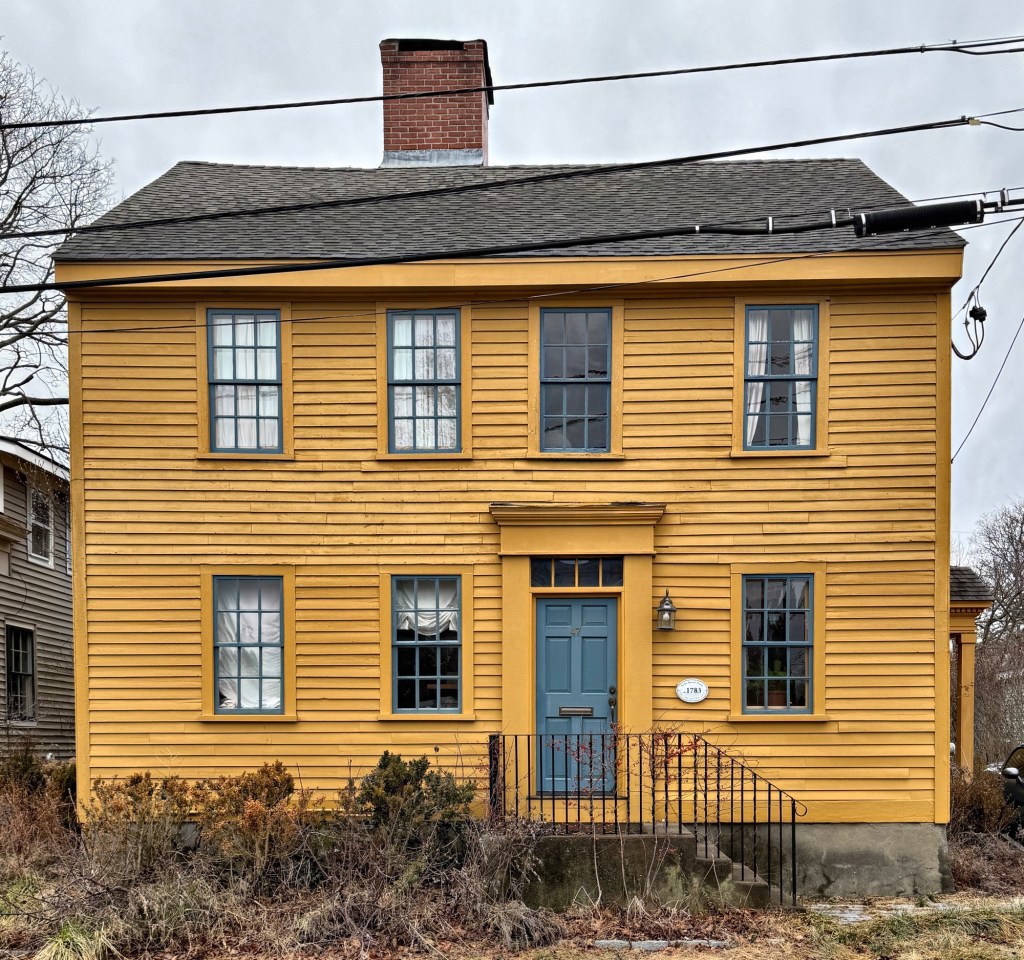
The town center of Bolton, Massachusetts, as we know it, was largely an early Colonial landholding and farm held by William Sawyer (1679-1741) who possessed roughly 300 acres in the area when Bolton was still a part of Lancaster. The Town of Bolton seceded along the Still River from Lancaster and incorporated in 1738. A year later, an aging William Sawyer gifted two acres of his land for the town’s newly designated burying ground, now the Old South Burying Ground, where his own grave (dated 1741), is the oldest marked burial in the cemetery. In 1780, William’s son, William Sawyer, Jr., sold over sixty-acres of the family farm to his son, Joseph Sawyer (1756-1828) who was to marry Ruth Walcott in 1782. This house was probably built about the time of their marriage. Joseph had previously fought in the Revolutionary War, and marched with the Bolton militia to Lexington on April 19, 1775, and upon his return, he worked as a blacksmith and operated the farm while serving in various town offices.