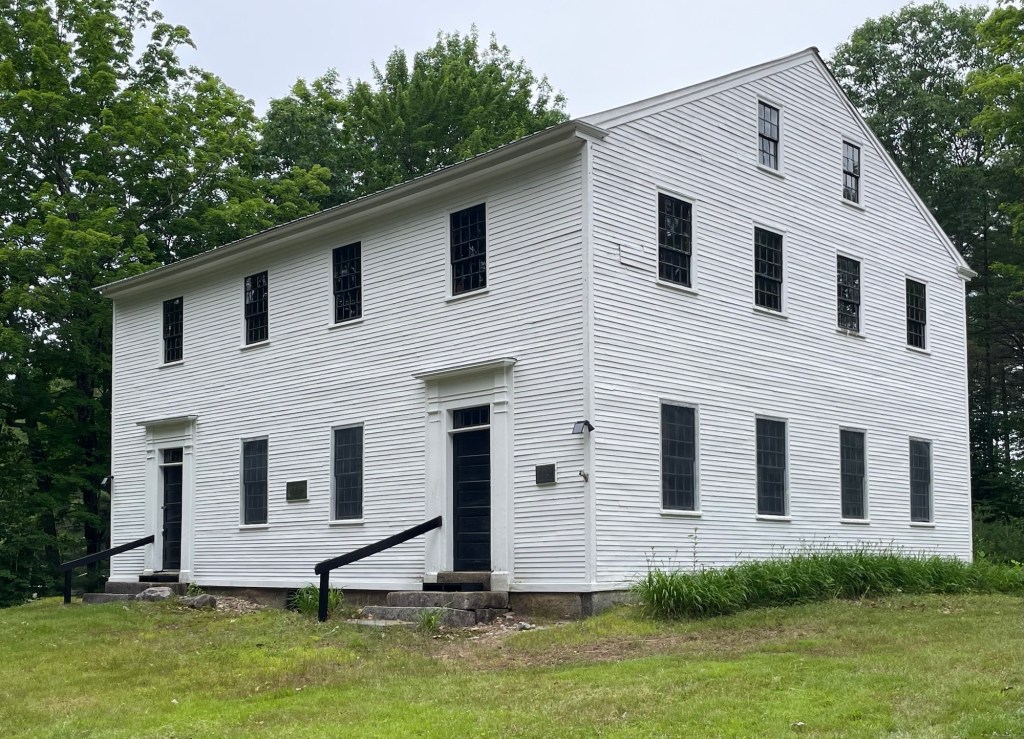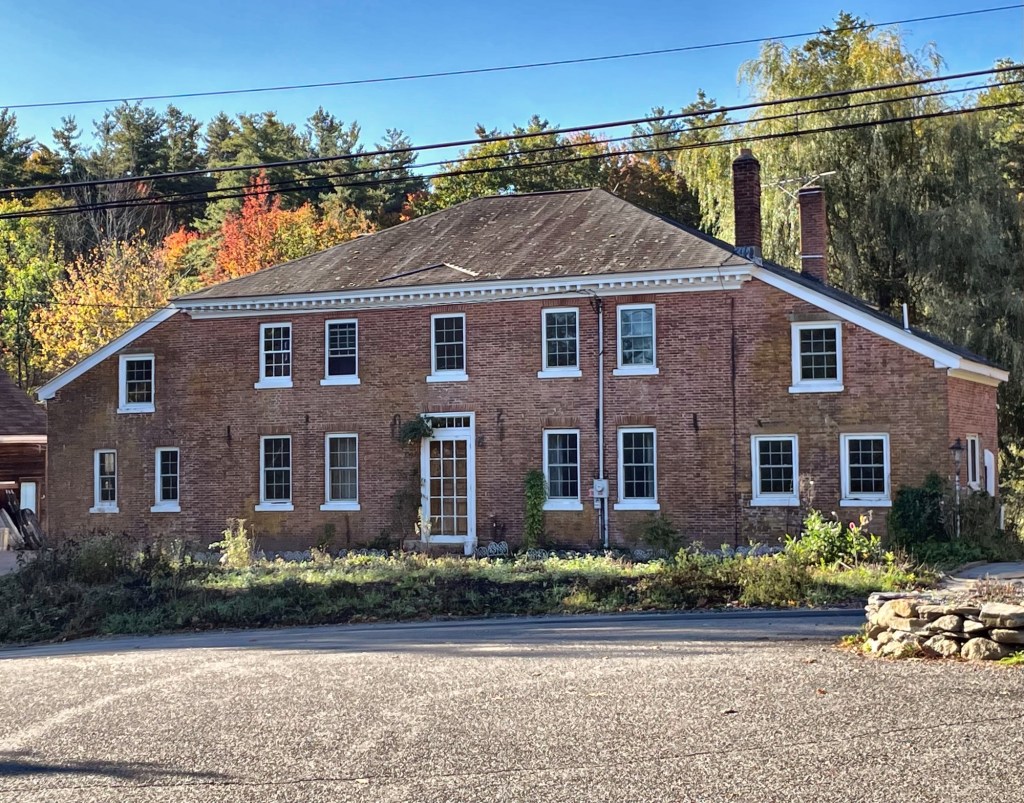
Old Porter Meetinghouse // 1818

Welcome to Porter, Maine! The town is located on the Maine/New Hampshire border and was first called Portersfield Plantation. Porter was incorporated in 1807 and named after its first proprietor, Dr. Aaron Porter (1752-1837). The Porter Meetinghouse was built beginning in 1818 and it is said that it was not completely finished until 1824. The original congregation was a Freewill Baptist organization led by Reverend Jeremiah Bullock, and were known locally as “Bullockites“. The structure housed the Baptists and town meetings as needed. The plain vernacular, meetinghouse is typical of many early meetinghouses of the period in rural New England. The inside retains its original character with its space as a single large chamber with a gallery above on three sides. The walls are plaster, much of it original, with trowel marks visible. The main floor is populated with original box pews and a replica pulpit. The structure is a rare survivor!

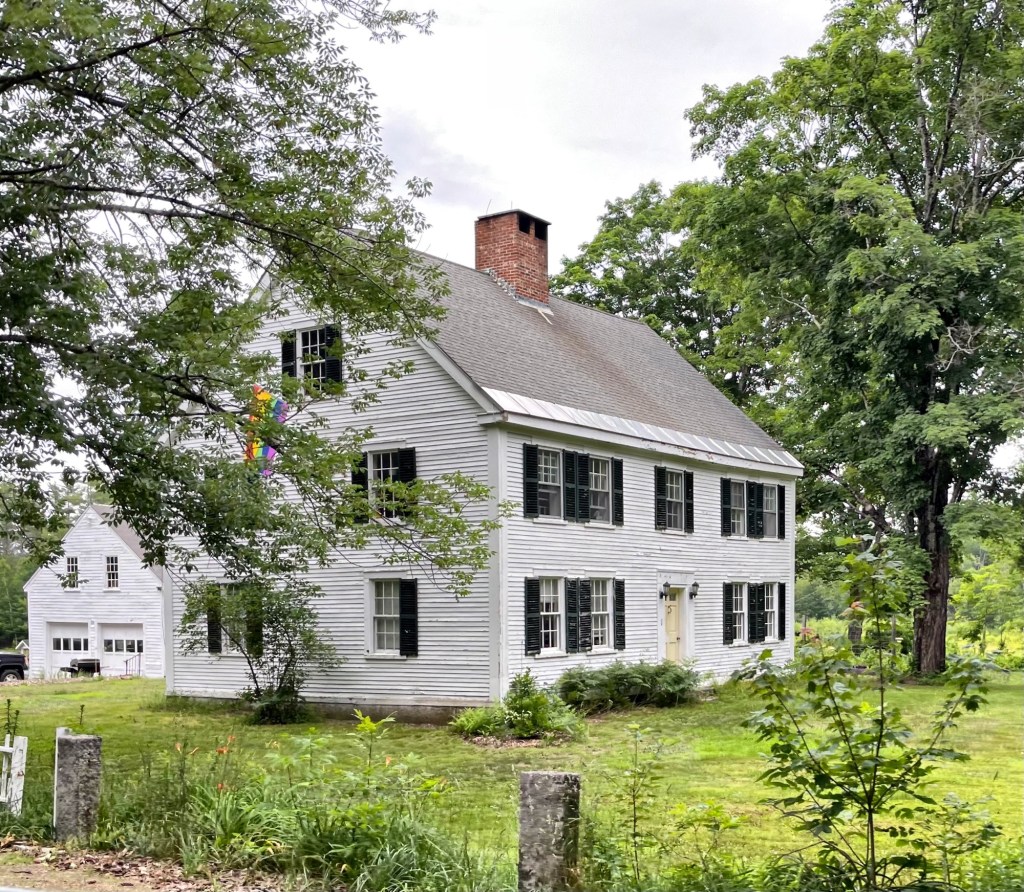
Dearborn-Keay House // c.1772

The town of Effingham, New Hampshire, was settled by members of the Leavitt family of HamptonNew Hampshire, led by Captain John Leavitt. From them the settlement first took the name “Leavitt’s Town”. In 1749, the land here was officially granted by Governor Benning Wentworth, and he renamed it “Effingham” for the Howard family, who were Earls of Effingham in England and who were related to the Wentworths by marriage. The town was incorporated in 1778, six years after this house was built. This is the Dearborn-Keay House, a 1772 Colonial home in Effingham, built by Benjamin Dearborn, who was an early settler of the area from Hampton, New Hampshire. The homestead was enlarged by his nephew Asahel Dearborn in the early 1790s, giving the home its present appearance. After later ownership in the Dearborn Family, the property was purchased by Cyrus Keay, who would die in the home in 1894. The property remained in the ownership of the Keay family for many years more.

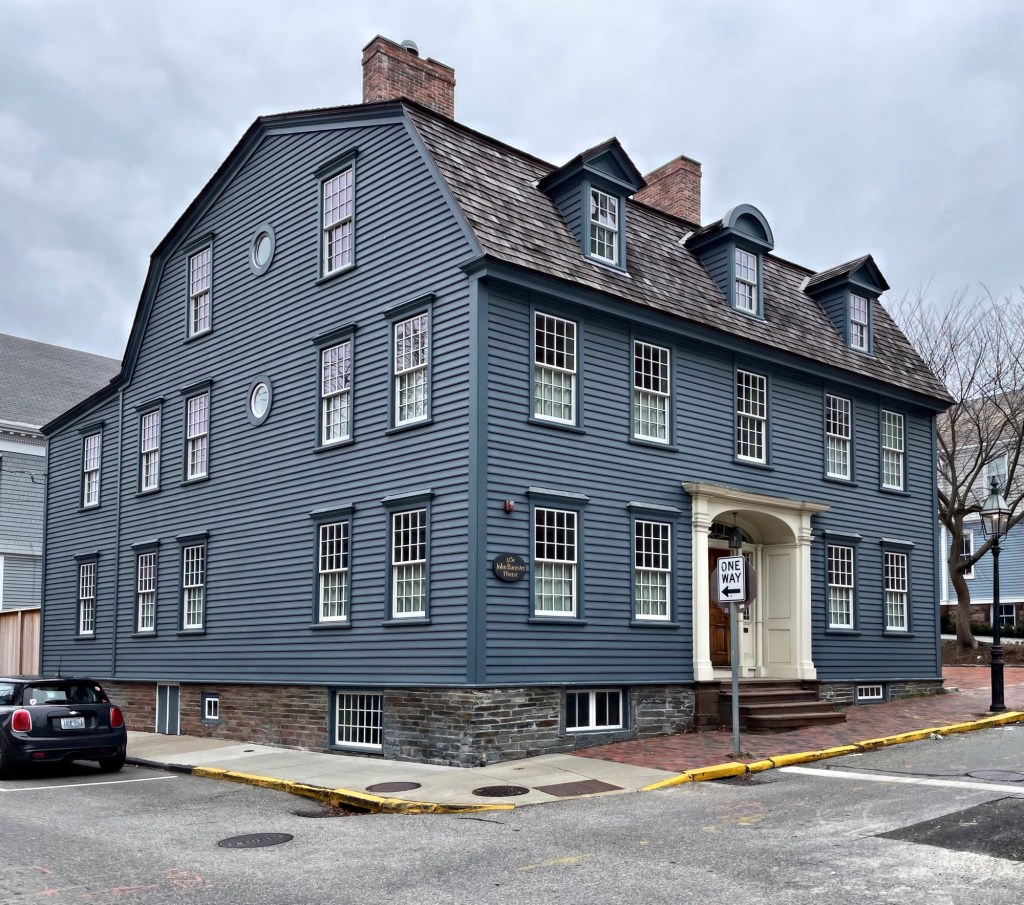
John Banister House // 1751

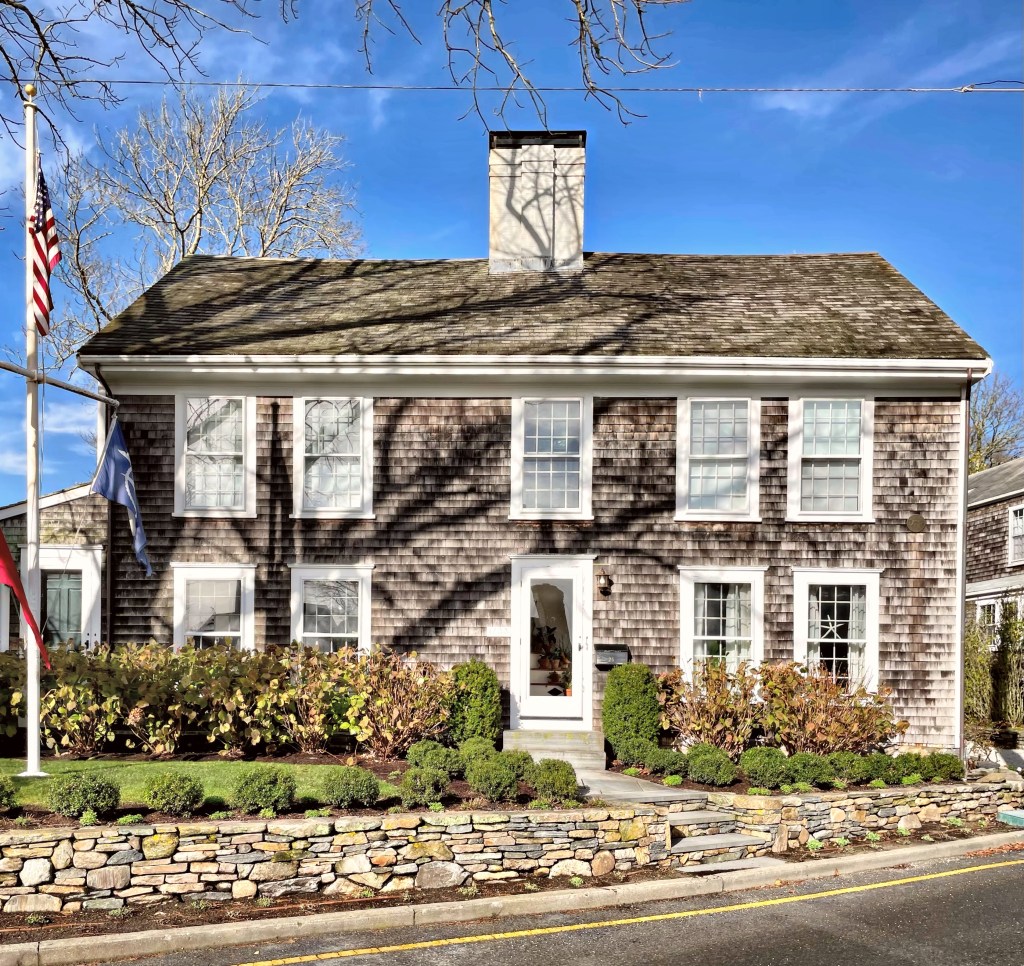
This deep, gambrel-roofed house is among my favorites in Newport. The house was built in 1751 for John Banister (1707-1767), a Boston-born merchant who moved to Newport in 1736, marrying Hermoine Pelham (1718-1765), a granddaughter of Gov. Benedict Arnold, that next year. Banister quickly established himself as a leading Newport merchant, trading with England, the West Indies, engaging in privateering and the slave trade. In 1752, he held one of the last public slave auctions in Rhode Island at his store, describing them in advertisements as “the finest cargo of slaves ever brought into New England”. The couple also built a country estate in Middletown, Rhode Island. John and Hermione had two sons, John and Thomas, who grew up in this home. John inherited the house after his father’s death in 1767, but the two brothers would soon find themselves on opposite sides of the battle for independence. Thomas was a loyalist, and even enlisted in the British army during the occupation of Newport, while John supported American independence. In retaliation for his patriot views, the occupying British forces seized this house, along with John’s farm in nearby Middletown. The house became the headquarters of General Richard Prescott during the occupation, although John later reclaimed his property following the British evacuation of Newport in 1779. The house has a later Federal entry, but otherwise is one of the best-preserved Colonial homes in Newport. It is a single-family home.

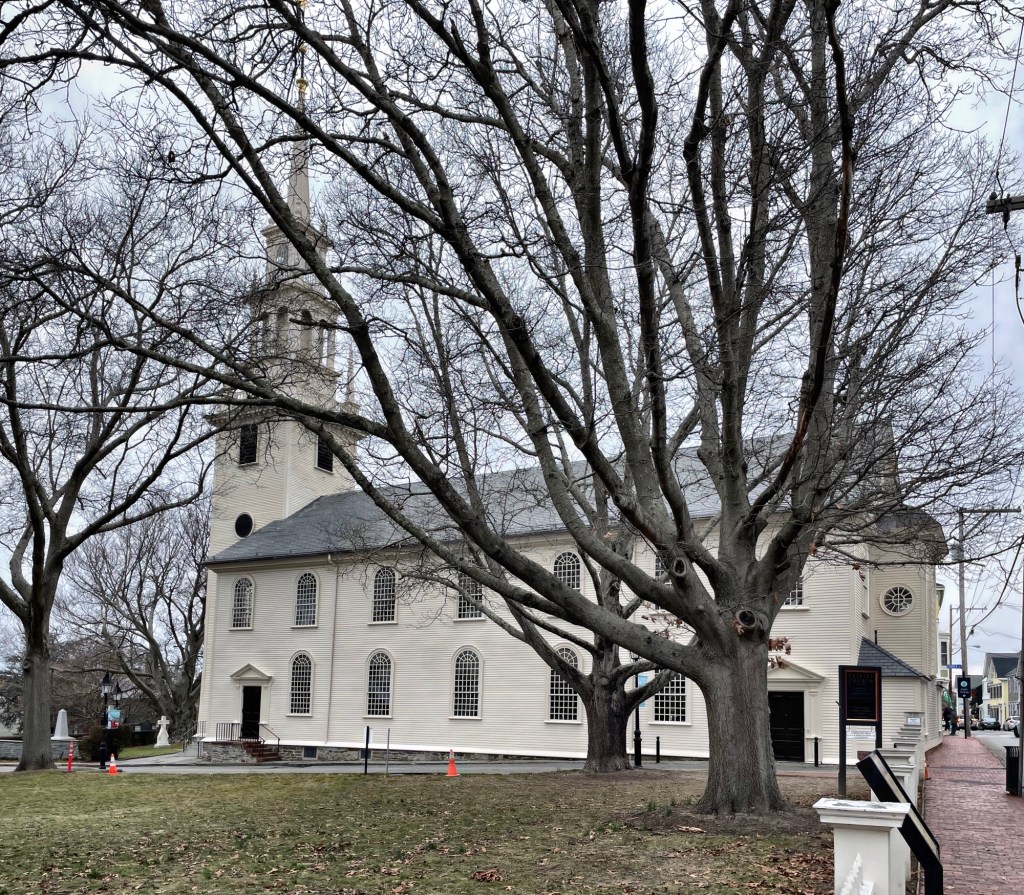
Trinity Church, Newport // 1725

Trinity Church in Newport, Rhode Island is one of the largest extant 18th century churches in New England, and founded in 1698, it is the oldest Episcopal parish in the state. Built in 1725, the Georgian style church was built just as the influence of Sir Christopher Wren’s churches reached the colonies, about a quarter century after his work had come to dominate ecclesiastical design in London. Trinity is the second major church built in the original colonies influenced by Wren, following Old North Church in Boston’s North End (1723). Stylistically, both churches are similar, with the notable difference in material (Old North in brick and Trinity Church in clapboard). Local builder Richard Munday, is credited with the design of Trinity Church. By the late 19th and early 20th centuries, many members of the Vanderbilt family and other wealthy residents attended sermons here when summering in Newport. When Newport was undergoing Urban Renewal in the mid-20th century, Queen Anne Square (the park which fronts the church) was created in the 1970s to establish a town common in a city which had never truly had one. “Early” buildings in the area to be bulldozed for the common were moved to other sites to enhance the “colonial” rehabilitation of the area around the harbor, making this one of the few examples of urban renewal having a positive impact on a city.

Nathaniel Backus House // c.1702

Welcome to Franklin, Connecticut, which frankly (pun intended) I had never heard of before driving through it not long ago! The town is located in New London County and was originally a part of Norwich, Connecticut and was called West Farms village. The town incorporated in 1786, creating its own town at that time, and the citizens decided to name their new town after Benjamin Franklin. I wonder if there are more place names in the United States after Benjamin Franklin or George Washington…

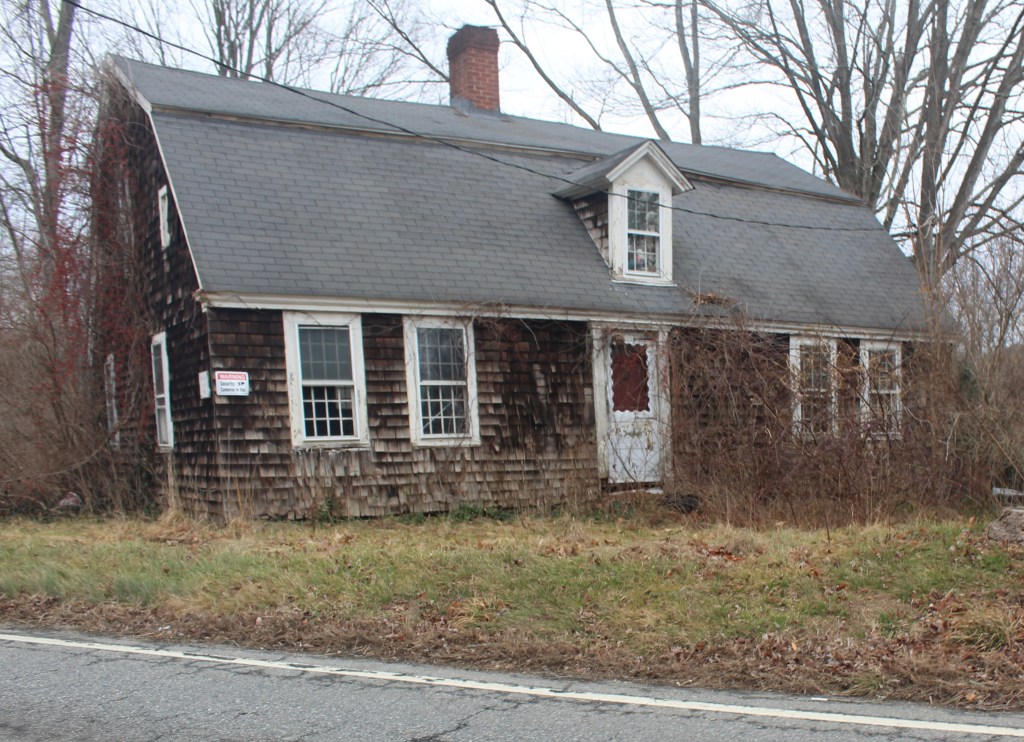
This is one of the oldest houses in the sleepy town of Franklin, and it was built around 1702 by Nathaniel Backus, about the same time he was married to his wife, Elizabeth. The Georgian Cape house features a large gambrel roof and a small gabled dormer. The house is representative of many of the earliest homes which once existed in this landscape in the early 18th century. The home appears to have been vacant for some time, and in 2022, was auctioned off. Its future is unclear at this time sadly.

Fosdick-Calder Double House // c.1745

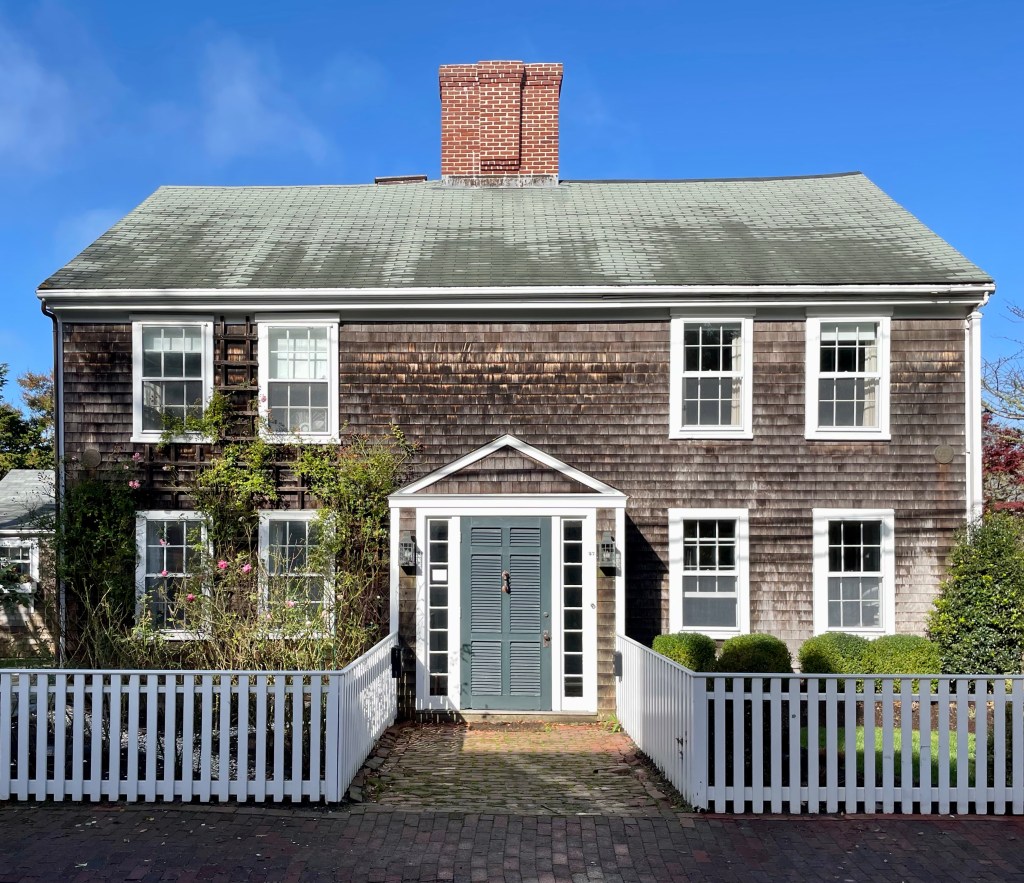
This 2 ½-story, five-bay house was built for Benjamin Fosdick (1713-1801) and his family on Nantucket. After Benjamin died in 1801, the house was inherited by two of his surviving sons and they divided the house into two, creating a double-house for them and their own families. The symmetrical home was divided down the middle at the central chimney, and two front doors provided access to the two dwellings. The right section was once the home of Capt. William Calder, who escaped shipwreck at Cape Horn
on his first voyage at age 13. He later was captured by the British during the War of 1812, and escaped from Dartmoor Prison in England, making his way back to Nantucket. The double house has retained much of its original design since 1801 until the 1960s when the projecting entrance porch was added.

Abel Gardner House – Wisteria Lodge // 1733

Another of Nantucket’s old Colonial homes is the Abel Gardner House, which was built in 1733 by its namesake. The saltbox Georgian house was constructed on a large plot of land which was farmed for some time by the Gardner family. Decades later, a portion of the estate was subdivided for the erection of a home for Abel’s grandson, Grindell. The Abel Gardner House was eventually owned by Caleb Gardner and became known as Wisteria Lodge for the climbing wisteria vines up the facade and on arbors. I can only imagine how glorious this colonial would be covered in purple!

Hyde-Richardson House // c.1728

The Hyde-Richardson House is one of roughly twenty remaining pre-Revolutionary War homes in Newton. The home was built for Timothy Hyde (1689-1756) after he inherited the property including 36 acres and a house from his father John Hyde. Timothy had two wives: Rebecca Davis who he married in 1718 and died in 1724 (seemingly in childbirth); and his second wife Sarah Whitmore, whom he married in 1727. The home was likely built soon after his second marriage. It is possible that parts of the original home on the site were reused for this structure. He served as Surveyor of Highways and Constable and in 1710 was drafted to serve with the militia in the successful siege of Port Royal in Canada. In 1761, Jeremiah Richardson bought the property and married his wife Dorcas Hall that same year. Richardson was a deacon and like Timothy, served as Surveyor of Highways. The property remained a farm until the 1930s when the automobile and suburban expansion reached the Oak Hill section of Newton. The farmland was ultimately was subdivided to create the surrounding neighborhood in the mid 20th century.

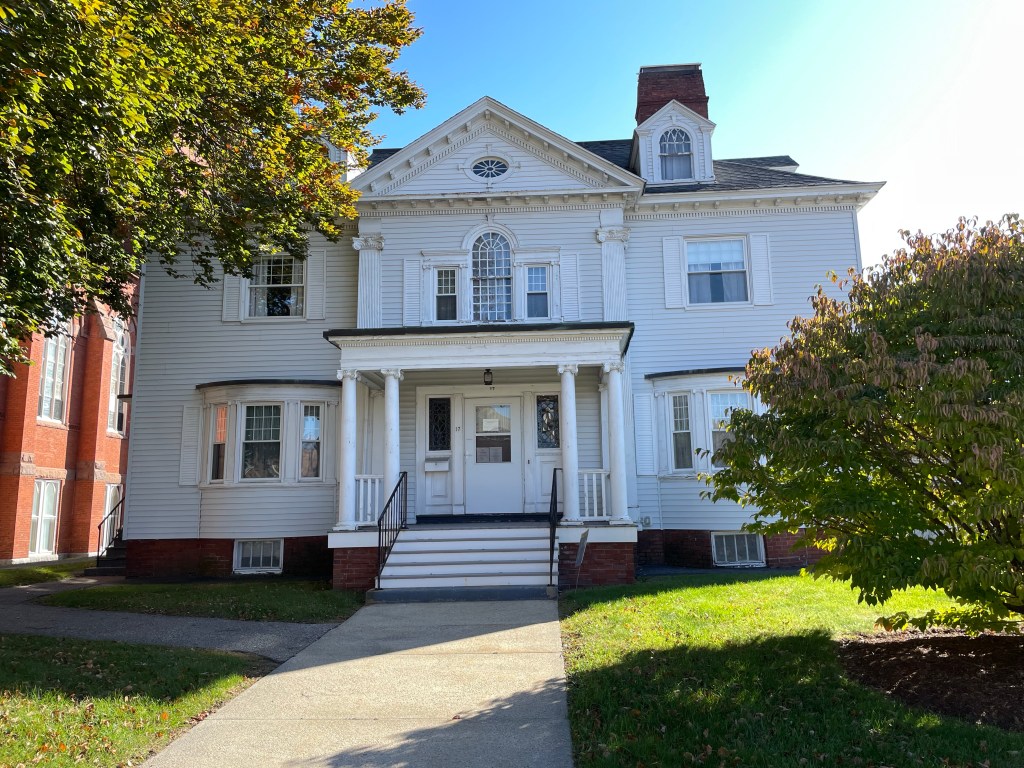
All Saints Parish House // 1893

As soon as the All Saints Church of Ware was completed, work immediately began for the parish house which was to be built nextdoor. It is not clear who was retained as the architect, but it could have been Patrick W. Ford, who designed the high-style Victorian Gothic church. The design is almost the complete opposite of the church, in that the parish house is of wood-frame construction, modestly scaled, and is Colonial Revival in style. The parish house features nice proportions with its symmetrical facade, pedimented central bay framed by pilasters and the large Palladian type window at the center.

Daniel Davis Homestead // 1739

In 1739, recently married Daniel Davis (1713-1799) and Mehitable Lothrop Davis (1717-1764) inherited land in Barnstable Village from Mehitable’s father Thomas as their wedding present. The young couple broke ground on a new family home that year. Daniel Davis fought in the American Revolution and was was a selectman, assessor, town clerk, and treasurer for Barnstable and represented it at the Massachusetts House of Representatives and Council. Davis also held the position of Guardian of the Mashpee Indians, a position begun in 1746 when Massachusetts appointed white guardians to manage each Indian reservation in the province, the Mashpees protested. Daniel Davis died in the home in 1799. The house retains much of its original design from the multi-pane double-hung windows to the large, central chimney.