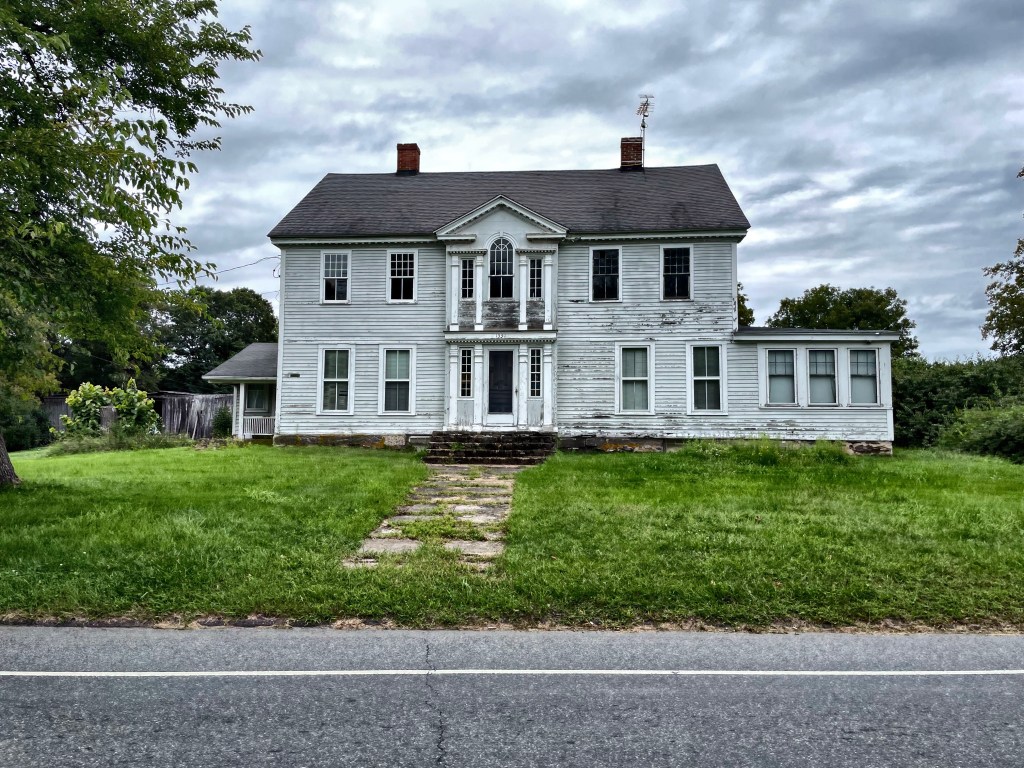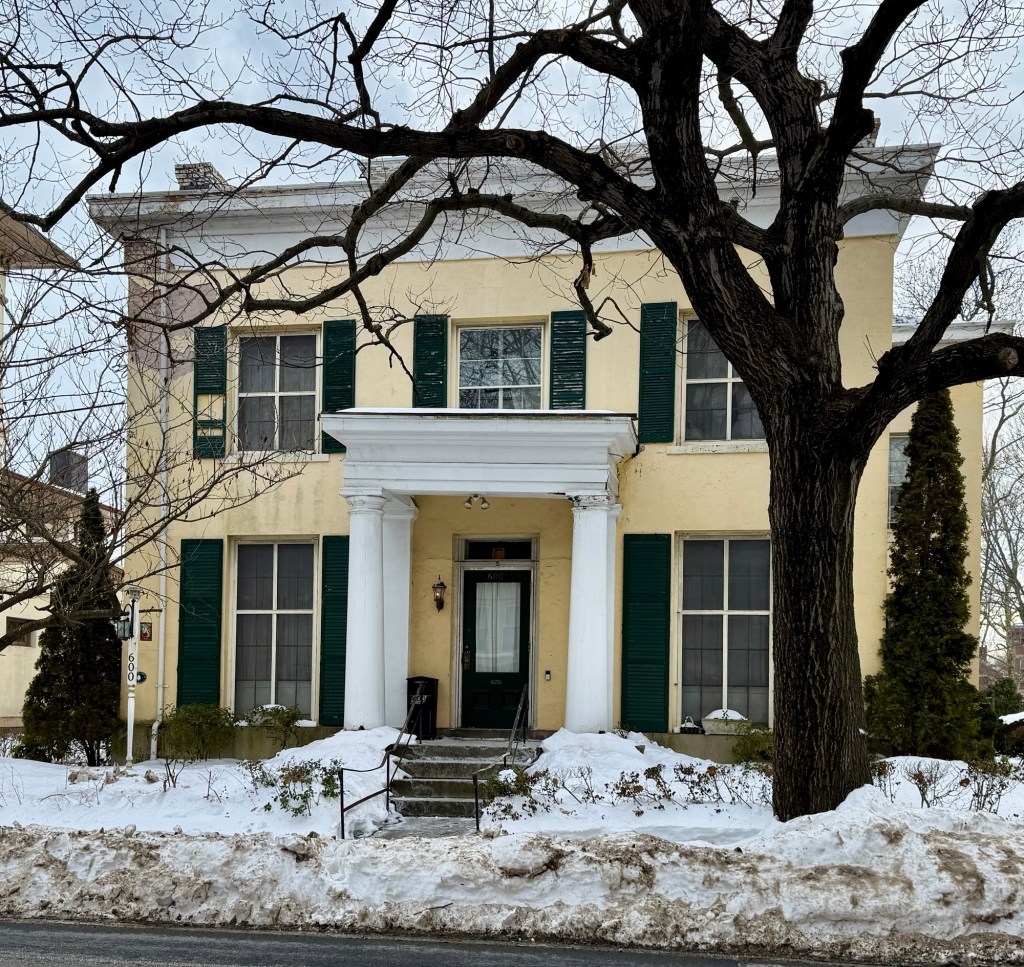
Smith-Curtiss House // c.1714

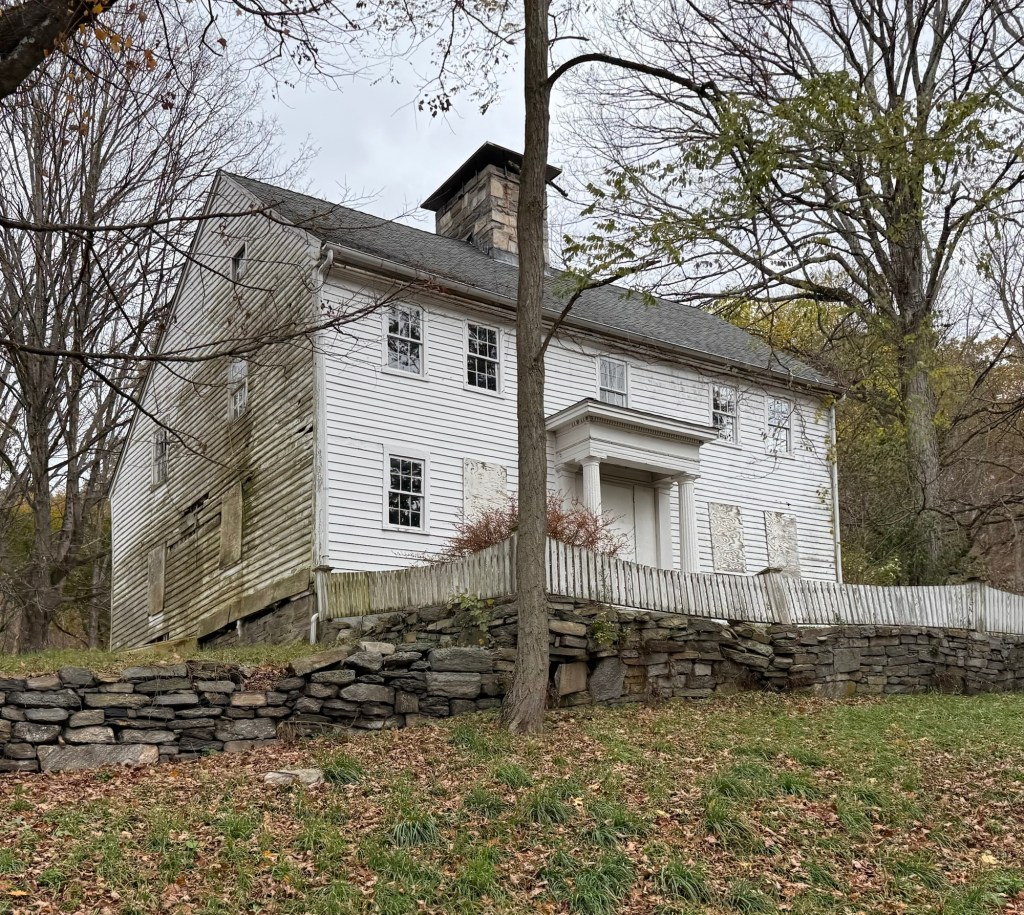
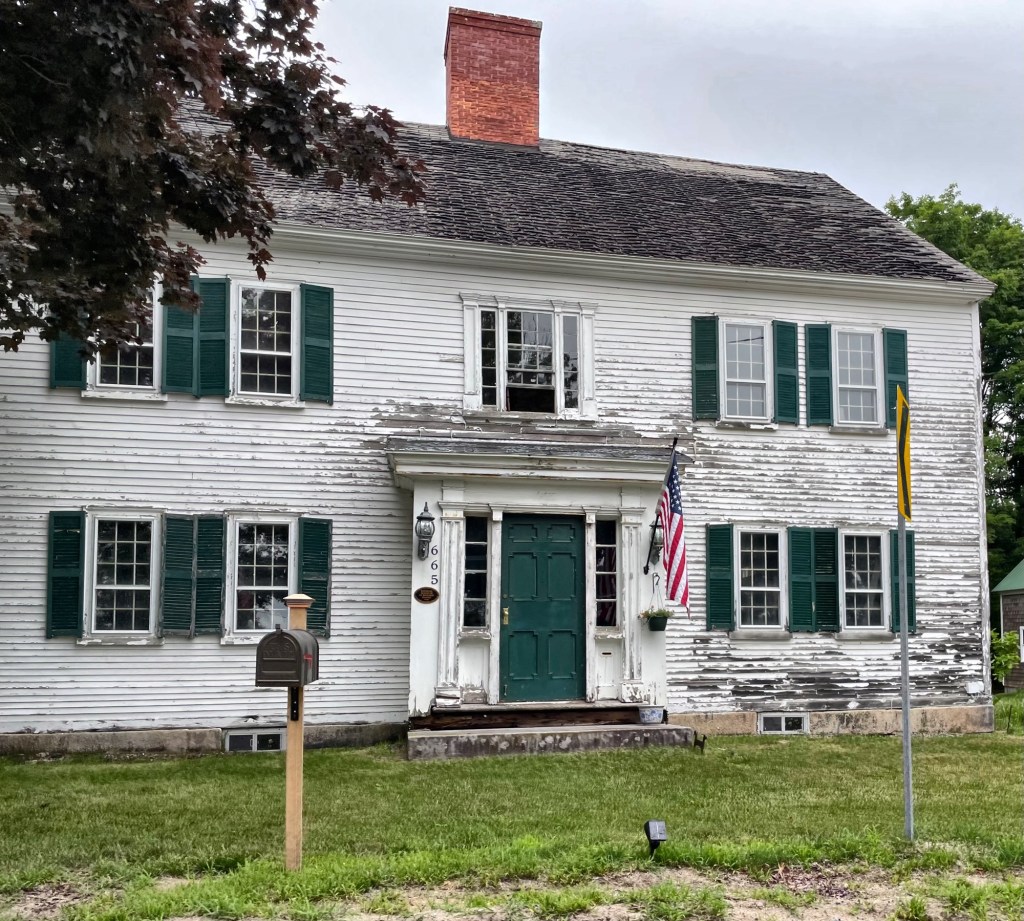
The Smith-Curtiss House, which is possibly the oldest extant building in Derby, Connecticut, has sat vacant and decaying for years and is owned by the State of Connecticut. Believed to have been built sometime between 1714 and 1740, this historic saltbox farmhouse at 411 Hawthorne Avenue is slowly decaying due to lack of maintenance and funding. Early ownership is difficult to determine, but by the 19th century, the property was owned by Ms. Alice E. Curtiss. The old estate was sold by Ms. Curtiss in 1913 to Frances Osborne Kellogg, a businesswoman, philanthropist and environmentalist, as part of her 350-acre dairy farm and land-conservation holdings. The Smith-Curtiss House was used as a residence for the herdsmen who ran the farm nearby. Before her death in 1956, Frances deeded the property to the state as a public park, and allowed her head herdsman life-occupancy of this house for the remainder of his life. The State of Connecticut assumed possession of this house in 1981. The building has suffered from deferred maintenance since this period, with the State attempting to lease the building to tenants. I hope that local and statewide preservation groups can mobilize to secure grants and funding to restore this important property.

Joshua Delano House // c.1785

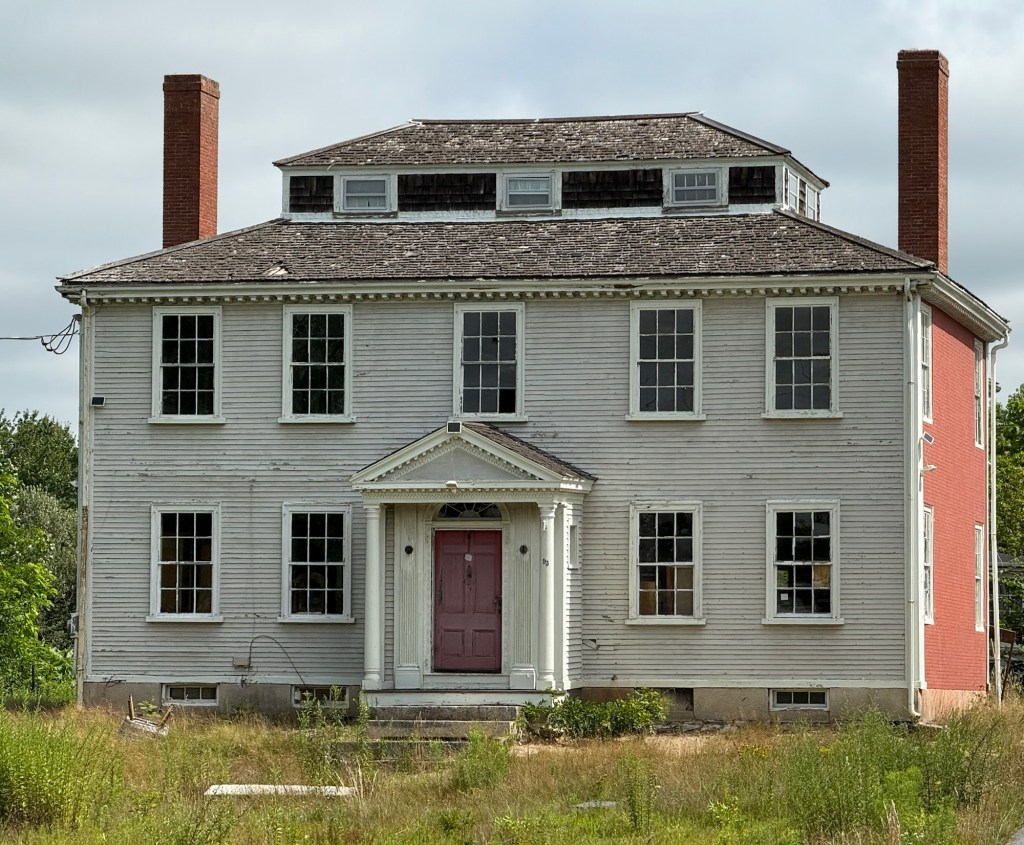
One of the finest Federal period houses in Kingston, Massachusetts, a town full of amazing Federal homes, can be found at 93 Main Street, set away from the street on a sizable lot. The residence here was likely built in the 1780s or 1790s as one of a series of Delano Family houses near Rocky Nook, a peninsula at the end of the Jones River, where many new ships were built and traversed their way to Plymouth Bay and ports in the Indies and beyond. The Delano Family had built the Delano Wharf and Warehouse and operated extensive salt works just north of the wharf on the Nook, along with owning many seafaring vessels, many of which were built by Kingston shipbuilders. This house was seemingly built for Joshua Delano and is architecturally unique with brick end walls, hip roof with a monitor which projects in the center of the hip, and a classical entry portico sheltering the projecting door surmounted by a fanlight transom. The property has recently been purchased. Hopefully the new owners treat this architecturally and historically significant residence with the care she deserves. 

Lyman School for Boys – Manual Arts Building and Powerplant // c.1900

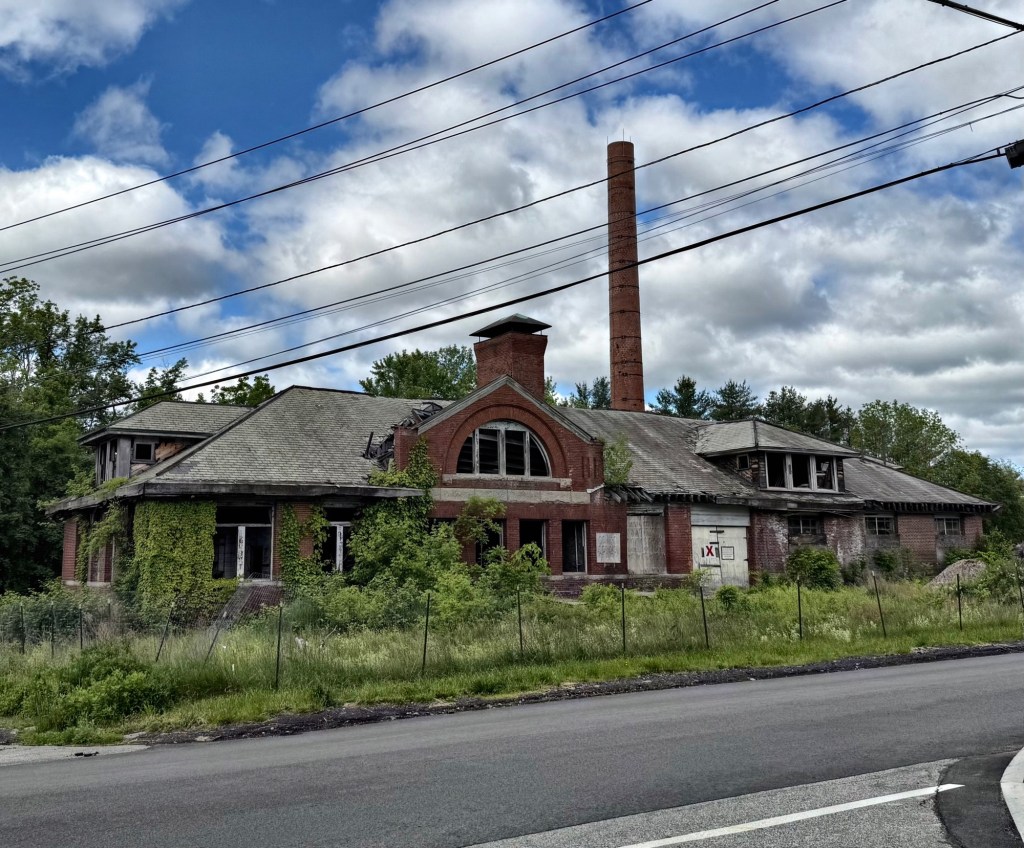
The former Lyman School for Boys was established in Westborough as the Massachusetts State Reform School in 1847, the first state-operated reform school in the country. Initially located on the eastern shore of Lake Chauncy and dominated by a single massive building, but its early history was plagued by conflict between inmates and administration. In 1885, legislative action authorized the Trustees to purchase and prepare a new site, the first in the state system to be developed on the dispersed cottage plan, the school thrived throughout the 19th century and into the 20th century until its eventual closure in about 1974. Much of the campus was designed by architect, William G. Preston, likely including this industrial building, which was used as a Manual Arts training building. Here, young men would learn trades, where upon graduation, they would be able to enter the workforce. The building appears to have been extended decades later with the addition of a powerplant wing, in a more Arts and Crafts style. The handsome building has been vacant for over 50 years and is literally a shell of its former self. With much of the old Lyman School campus razed for uninspiring replacement buildings, it would be a shame to see this building not restored and adaptively reused.

Old Essex County Superior Courthouse // 1861

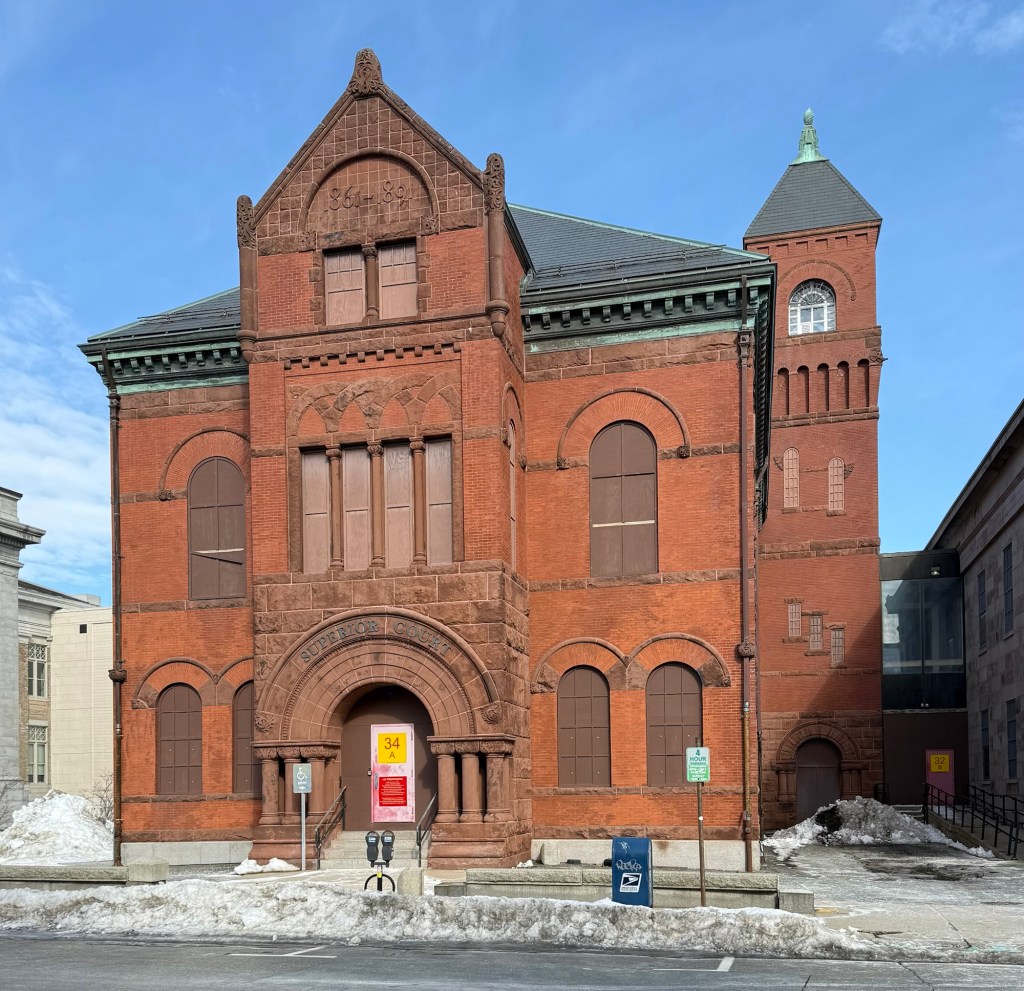
Located to the west of the Old Granite Courthouse on Federal Street in Salem, the Old Essex County Superior Courthouse is a visual depiction of the emergence of the Victorian styles from the more Classical Greek mode. Originally built in 1861 from plans by Salem architect, Enoch Fuller, the building was distinctly Italianate in style and built of brick until a major renovation in 1889 gave the building its present Richardsonian Romanesque appearance. The building was enlarged and renovated by architects Holman K. Wheeler and W. Wheelwright Northend which includes: changes to the roof line, creation of dormers, alterations to the window surrounds to create Romanesque arches and more. A three-story projecting pavilion, whose first floor is finished with rusticated brownstone, contains a recessed entry with a large semicircular arch supported on three columns with carved capitals at each end. The central pavilion resolves into a gable with corner pilasters with carved finials centering a blind arch containing the full date span of the complex, “1861-1891” in a field of square rusticated brownstone blocks. The courthouse remained in use until the J Michael Ruane Judicial Center at the end of the block was completed in 2012. The Old Granite Courthouse and adjacent Old Superior Courthouse were both vacated and have been essentially mothballed ever-since under the ownership of the Division of Capital Asset Management and Maintenance as surplus. The fate of the two buildings remains undetermined.

Lord’s Tavern // c.1792

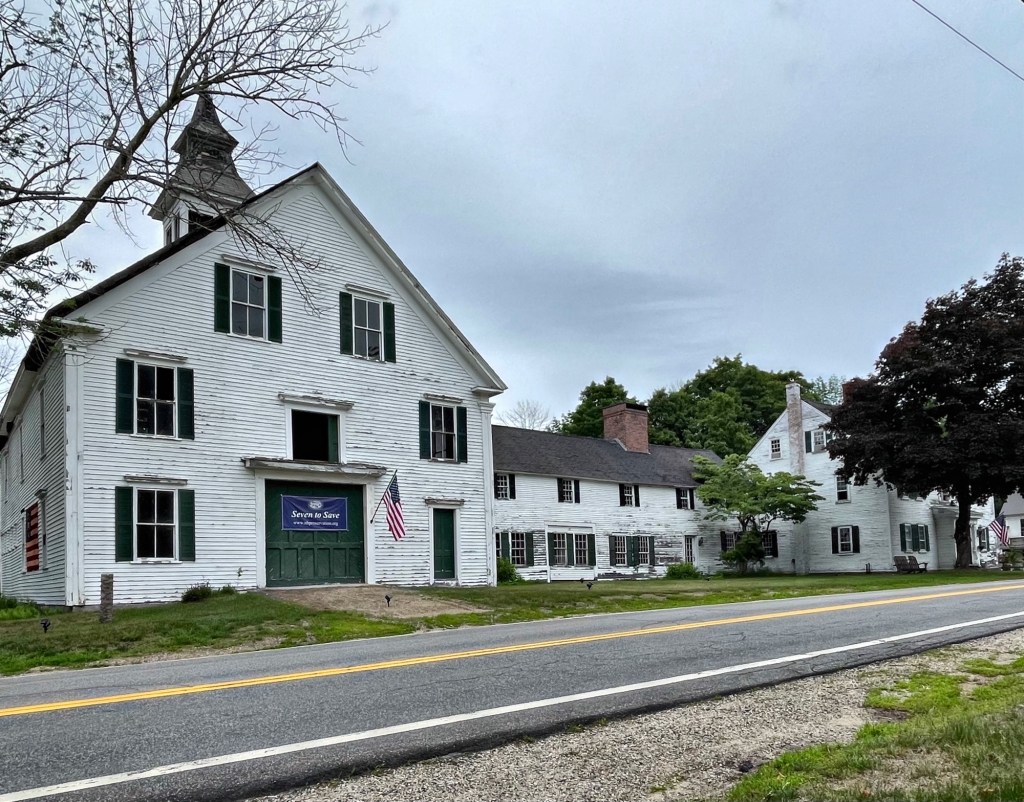
Isaac Lord (1772-1838), the namesake of Lord’s Hill, came to Effingham, New Hampshire by 1791. An enterprising man, he was the most important figure in the village’s early history and in its architectural development. By 1792, Lord opened Effingham’s first store on the Hill, and soon thereafter began building a house that also served as the local tavern, this Federal style structure. As Lord prospered as a merchant and innkeeper, he enlarged the Tavern with a large ell connecting the main block to the 3-story barn. The fine Federal tavern was embellished with a vestibule and a triple window. The high quality of the Tavern foretold the character and scale of Isaac Lord’s later buildings nearby. The Tavern stayed in the extended family until 1903. Throughout the 20th century, the property was used as an inn and restaurant, including a stint as a dance hall. By the 21st century, though, deferred maintenance and successive attempts to fix the building ended in mortgage sales, foreclosure, and most recently, a tax deed, the the Town of Effingham recently acquired the property with the aim to restore the significant building. It was sold to a private owner in May 2024 and awaits its future. The Lord’s Tavern was listed in the New Hampshire Preservation Alliance’s ‘Seven to Save’, to advocate for its preservation and funding.

Former Allerton Point Post Office // c.1890

By the end of the 19th century, various coastal developments on the elongated coastal town of Hull, Massachusetts, developed into established neighborhoods of cottages. As a result, new stores, schools, and post offices were built to accommodate the increase in population. William Henry Sylvester (1840-1923) a local resident, built this structure to serve as a store, professional offices, and post office. Like other buildings in the area constructed in the 1890s, the structure blends Queen Anne and Craftsman elements in a great composition. Sadly, the building has not been maintained and the windows are now boarded up, with the entire waterfront parcel selling in 2018. Plans to demolish the buildings on the site, including this charming structure were proposed to erect new townhomes, but they have not materialized. I’d love to see the site redeveloped with much-needed housing, but this structure should be incorporated in the development.

Newburgh Center Union Church // 1878

Image courtesy of Amy Higgins

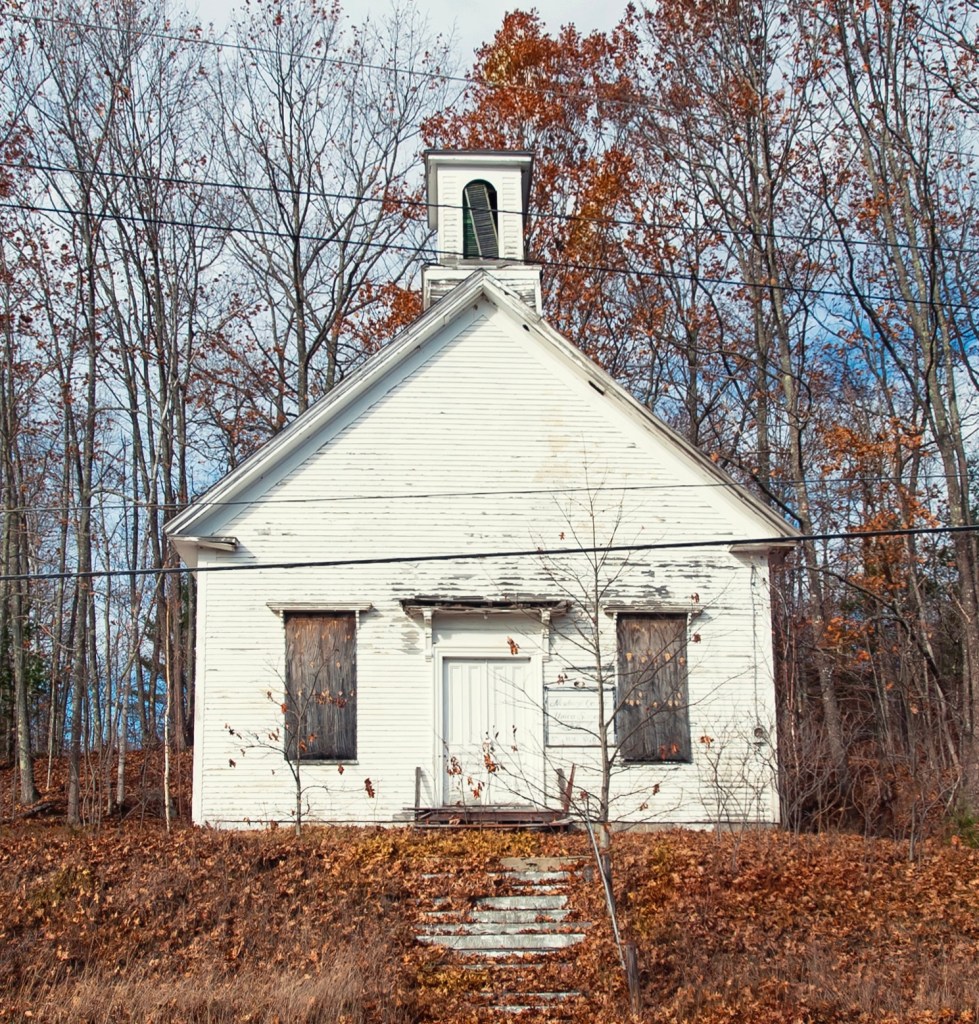
The Newburgh Center Union Church was built in 1878 as a non-denominational religious building for the small, rural town of Newburgh, Maine. At this time, the small town had just over 1,000 residents and it was not economically feasible for each congregation to build its own meeting house. The vernacular Greek Revival/Italianate style church building was eventually the house of worship of a local Pentecostal congregation, but that too appears to have disbanded. The building has been falling into disrepair, so hopefully it will be preserved.

South Britain Methodist Episcopal Church // 1839

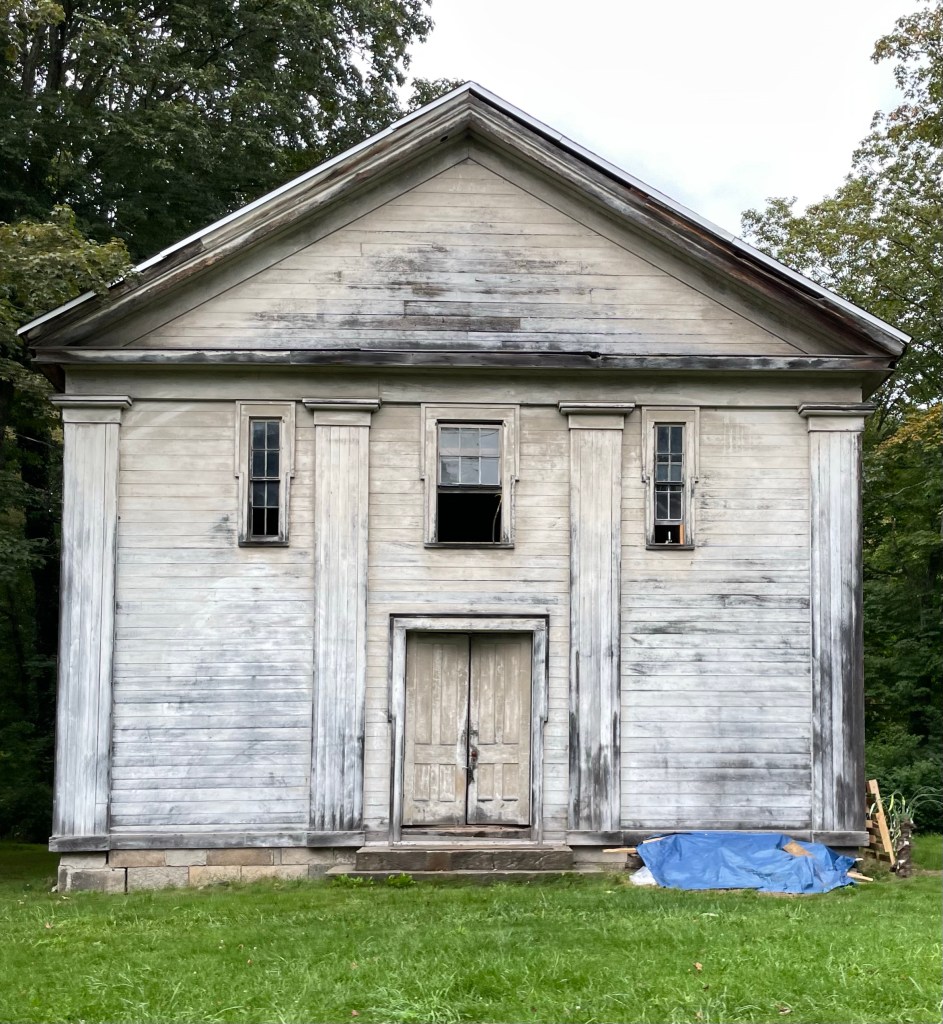
Constructed in 1839 by the Methodist Society of South Britain, Connecticut, this dilapidated old church has classic Greek Revival features including a flush sided facade divided into bays by Doric pilasters, a central double-leaf four-panel door, and high narrow windows. The church sits in the South Britain National Register District, which sadly does not provide any tangible protections for the building, which has been decaying for years. The square belfry was removed (or collapsed) a couple years ago and I would imagine there is some water damage from openings in the roof. What would you like to see this old church converted into?

Oatman Hotel // 1806

It always amazes me that even getting lost driving the winding roads in obscure places, can reveal some of the most magical old buildings and history to uncover. This stunning Federal style mansion was built in 1806 and is located on the busy Southford Road in Southbury, Connecticut. The road was a span along a turnpike was the great thoroughfare between New Haven and Litchfield, Connecticut. Present-day Southbury was about halfway between the two, so lodging was always busy here. Knowing this, brother’s in-law, John Thompson and Benjamin Hurd had this turnpike hotel built to capitalize on the flow of weary travelers. Charles R. Oatman (1827-1904), who married Orinda T. Hurd, the daughter of Benjamin Hurd, acquired the property in 1870 and operated the hotel under his name as the Oatman Hotel. After successive owners, the name remained. It was sold in the 20th century and was converted back to single-family use, and maintains much of its original fabric, including a barn at the rear of the property. It could definitely use a new coat of paint!

Ashe House // 1898

North Adams, like many formerly industrial towns and cities in New England has some amazing old Victorian and Colonial Revival houses built before the factories closed. Luckily for us, this town still has many unaltered residences, with some needing more love than others. This is the Ashe House, built in 1897-8 for Patrick J. Ashe and wife Katherine O’Brien. Classical details from many different styles make this house unique. An oval window dominates the traditional Greek facade which includes a pediment and side pilasters. A palladian window sits over the elliptical porch which is supported by columns. This one has so much potential!!