Buck-L’Hommedieu House // c.1755

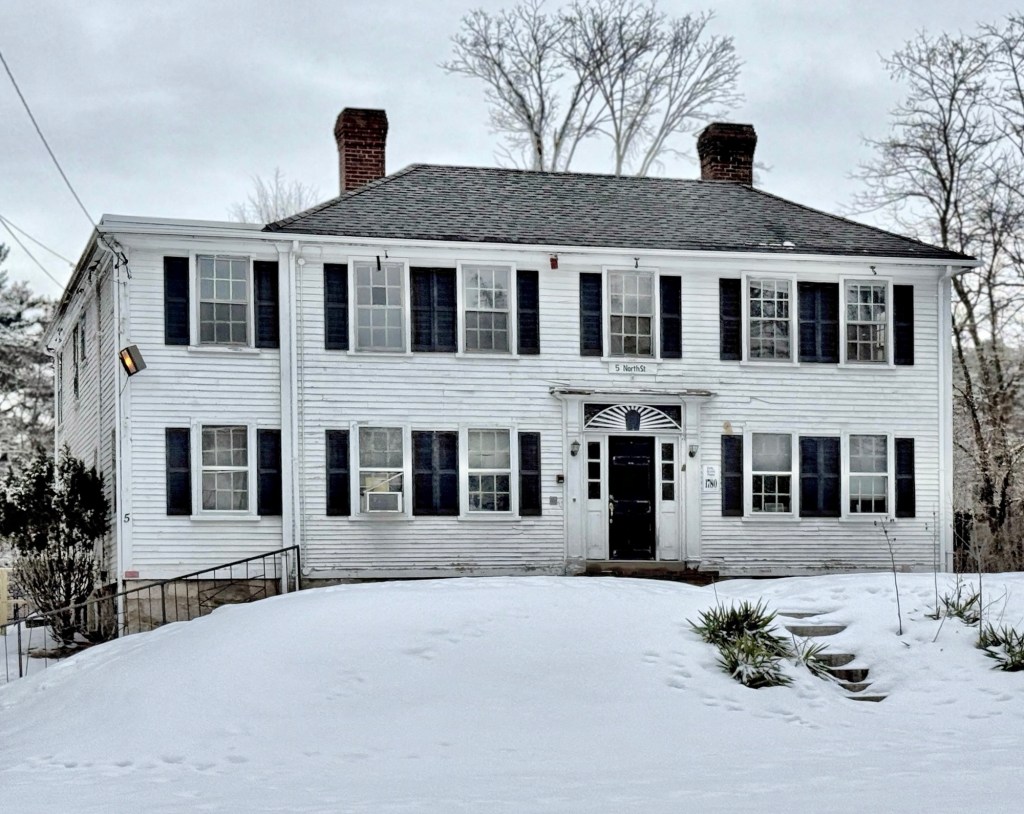
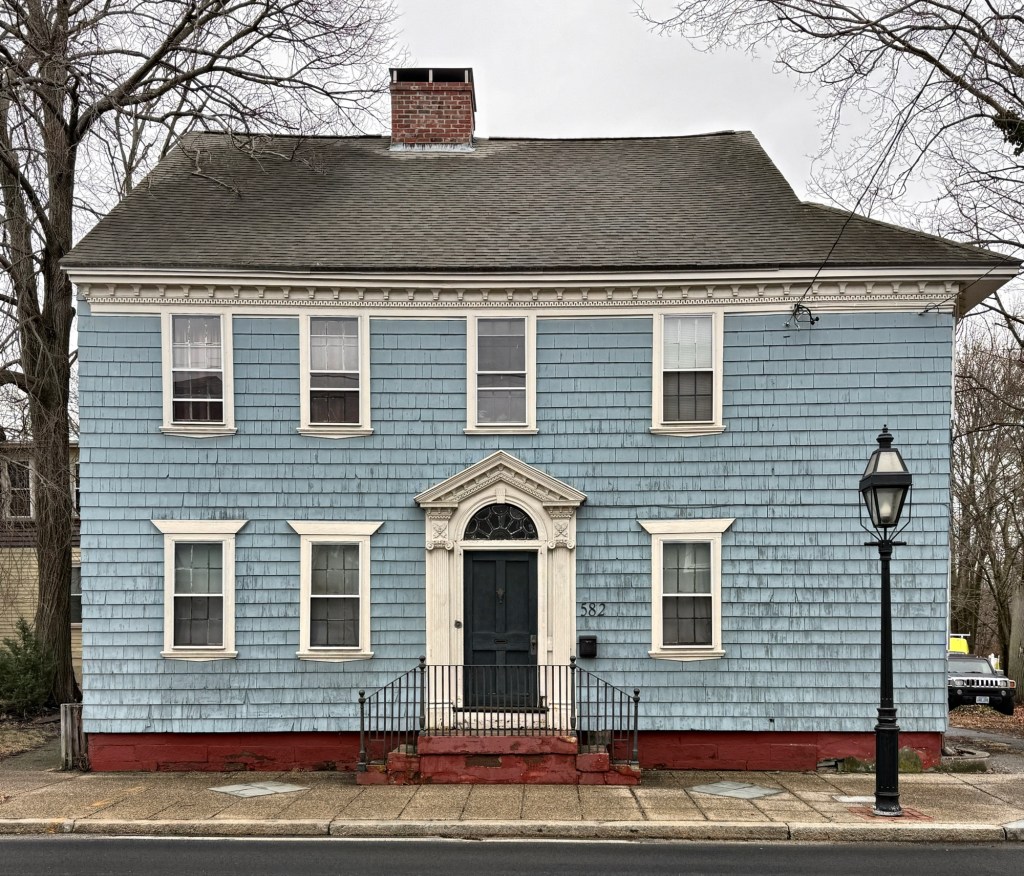
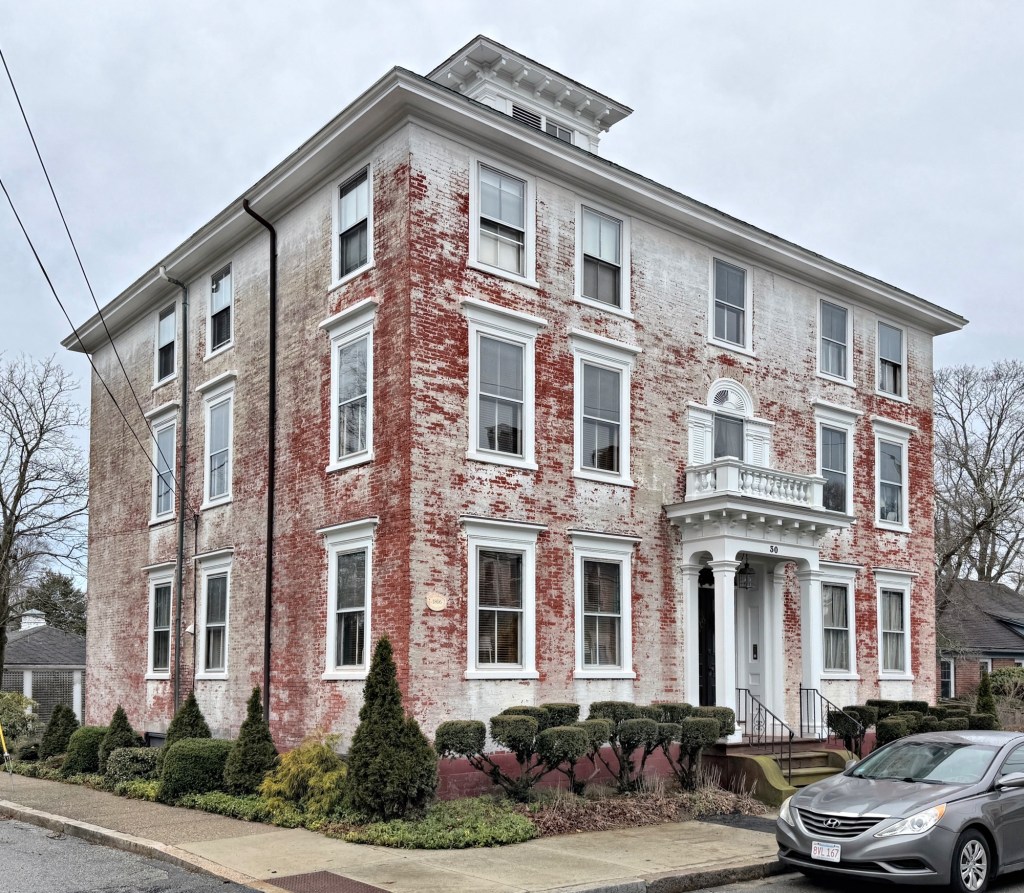
This beautiful Federal style side-hall house is located on Maple Street in Chester, Connecticut, and (at least a part of it) was built by 1755 by Isaac Buck, who deeded half of the property to his son, Justus, during his lifetime. In the early 1800s, the property was purchased by Joshua L’Hommedieu (1787-1880), a manufacturer, who had the property redeveloped or redesigned in the Federal style giving it the appearance we see today. The house has its gable end oriented to the street with an elliptical fan and dentil block detailing.

Leet-Ely House // c.1787

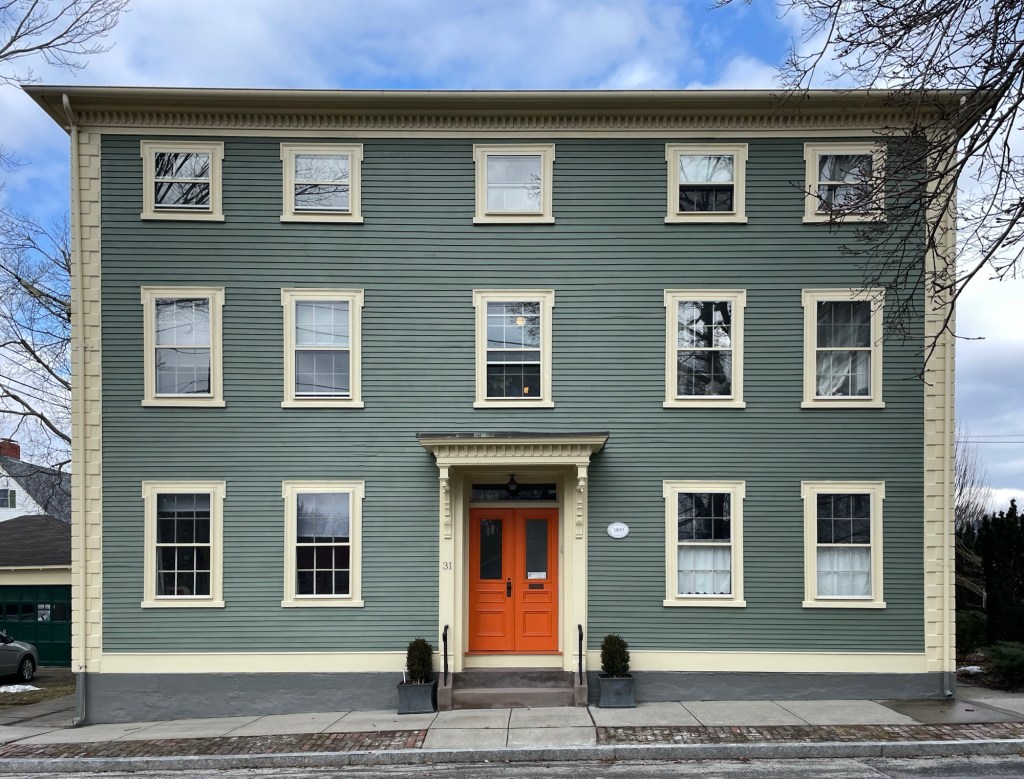
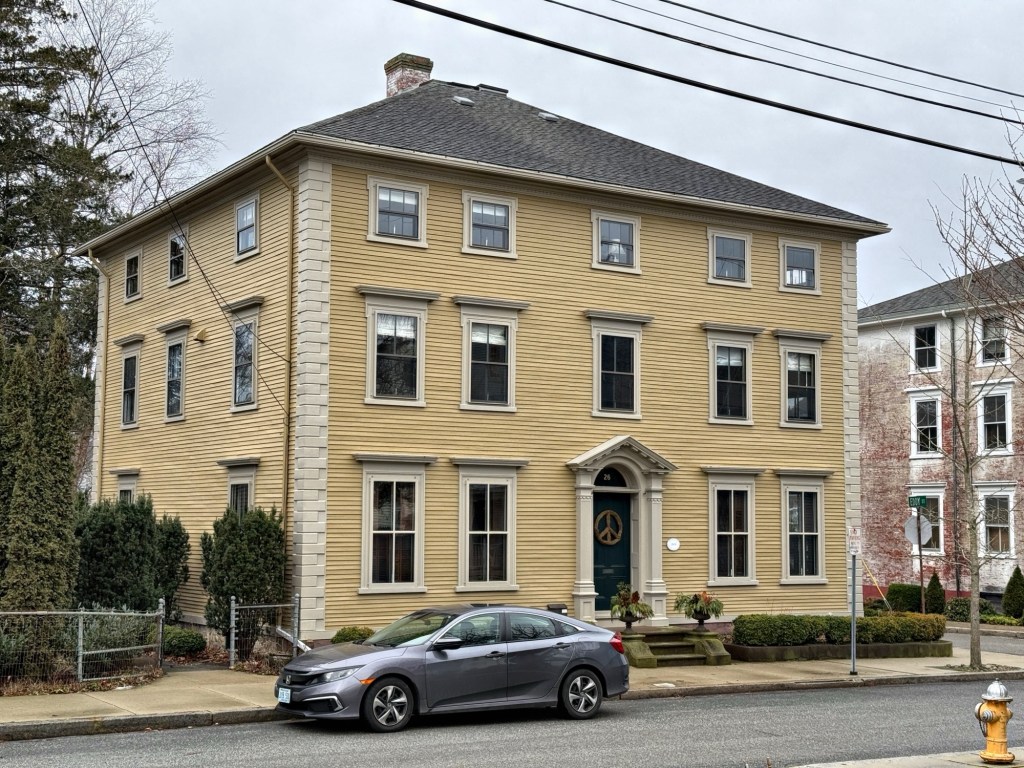
One of the finest homes in Chester, Connecticut, can be found on Liberty Street, a short distance to the village green. The Federal style house dates to about 1787 and was built by Gideon Leet, a Revolutionary War veteran and joiner as his own residence. After Gideon’s death, the property was purchased by Dr. Richard Ely (1765-1816), who may have expanded the residence, and worked locally as a town doctor. The property remained in the Ely familyfor generations and minimal changes have occured to the exterior as a result of this. The modillon cornice, corner quoins, and fanlight transom sheltered under a columned portico add to the charm of this great house. 

James Baldwin House // c.1785

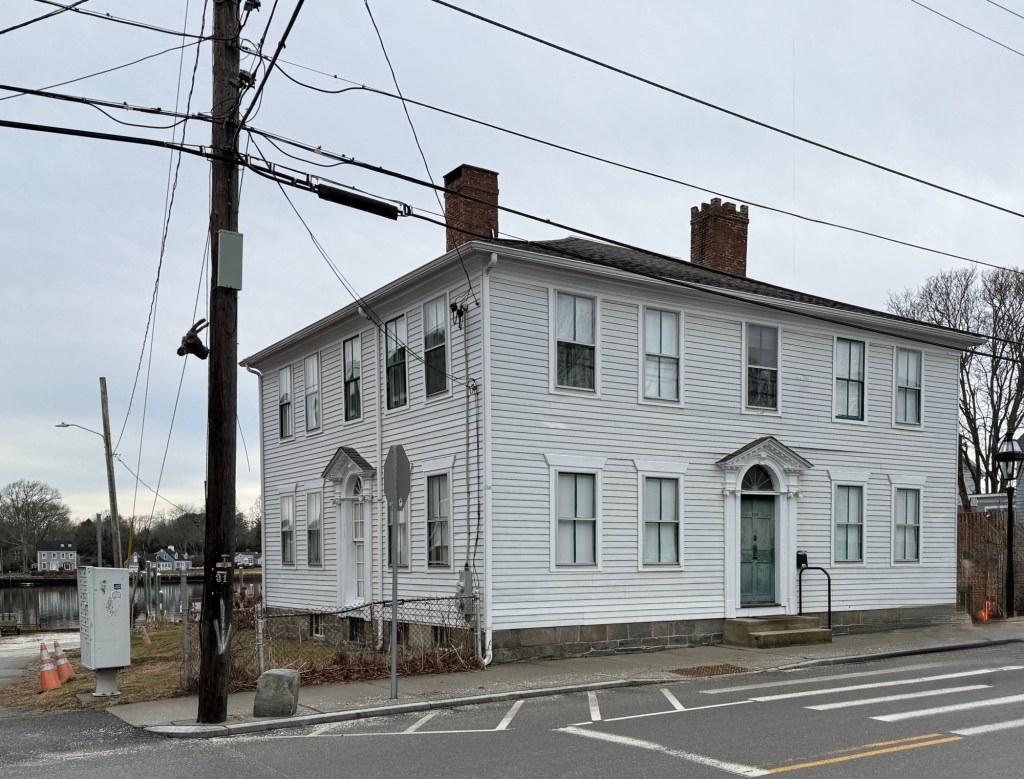
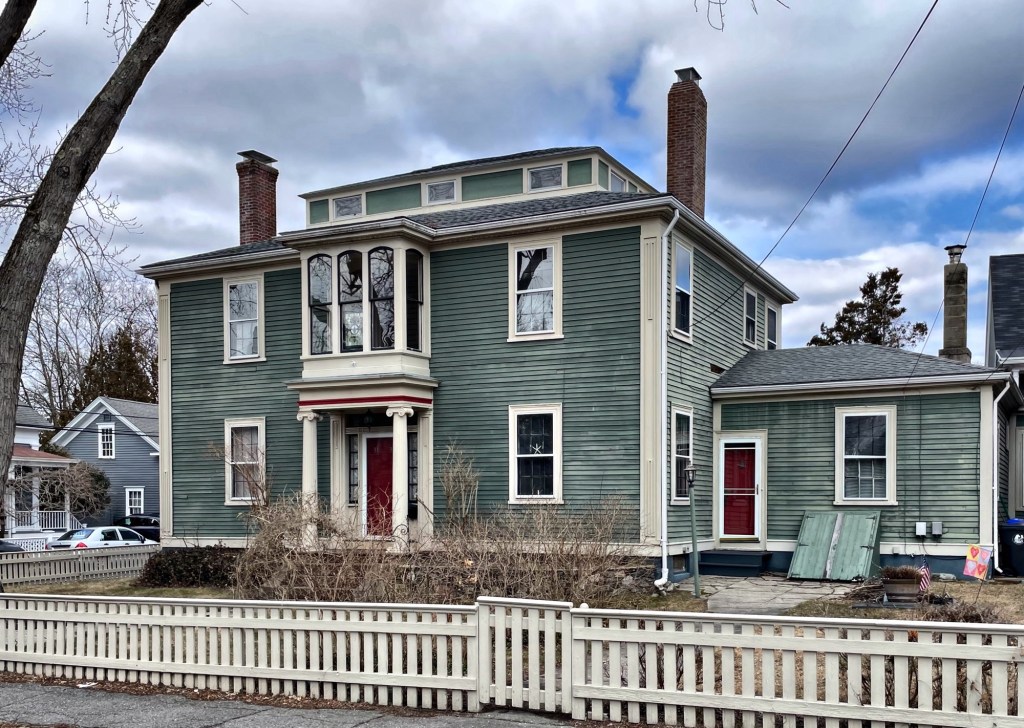
James Baldwin (1742-1818) lived in present-day Chester, Connecticut, and upon the outbreak of the Revolution, joined the forces of Capt. Richard Douglass’ company as a private and fought for liberty. Upon the conclusion of the war, Baldwin returned to Chester and had this house built facing the village green. The transitional late-Georgian and Federal style house has a center chimney and very simple trim with an elliptical fanlight transom over the central door. The house has a wood shingle roof, typical of the early houses of the time. Pvt. Baldwin died in 1818 and his property was inherited by his daughter, Lydia Baldwin Sawyer and her husband, David Sawyer, and later in the 19th century by their eldest daughter, Lucina Morgan, and her husband, Jonathan. The home has been meticulously preserved by the later owners, important as one of the early surviving homes near the village green.

Gleason-Patterson House // 1803

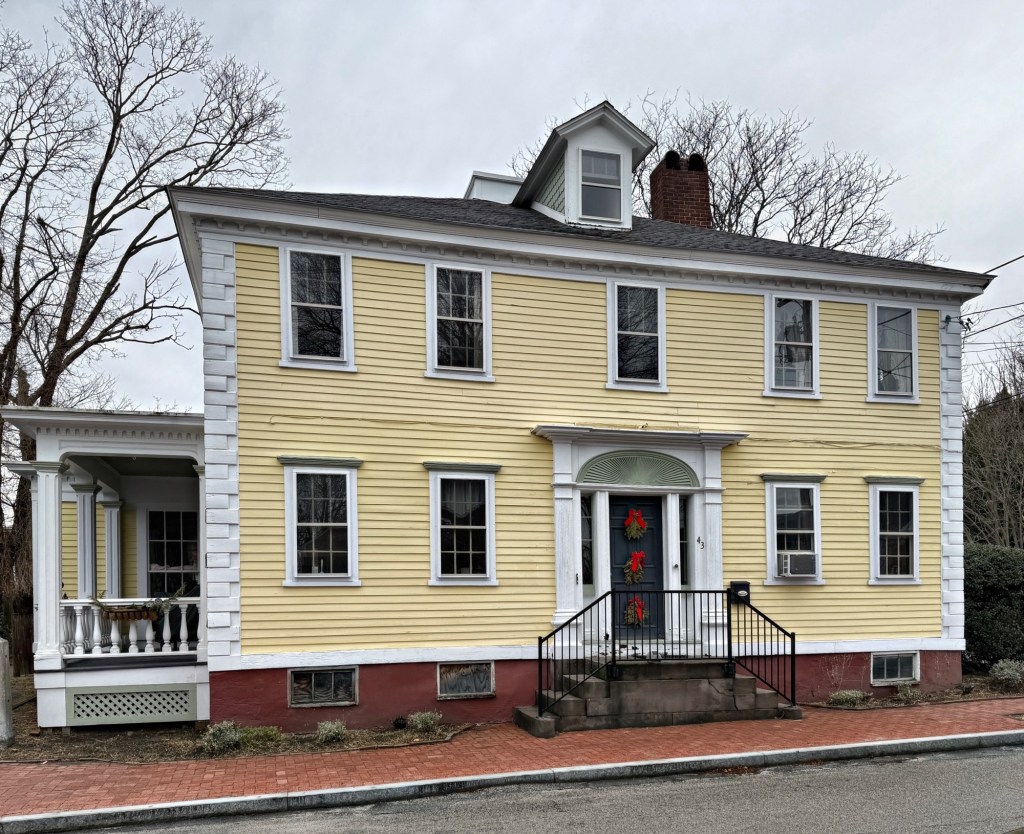
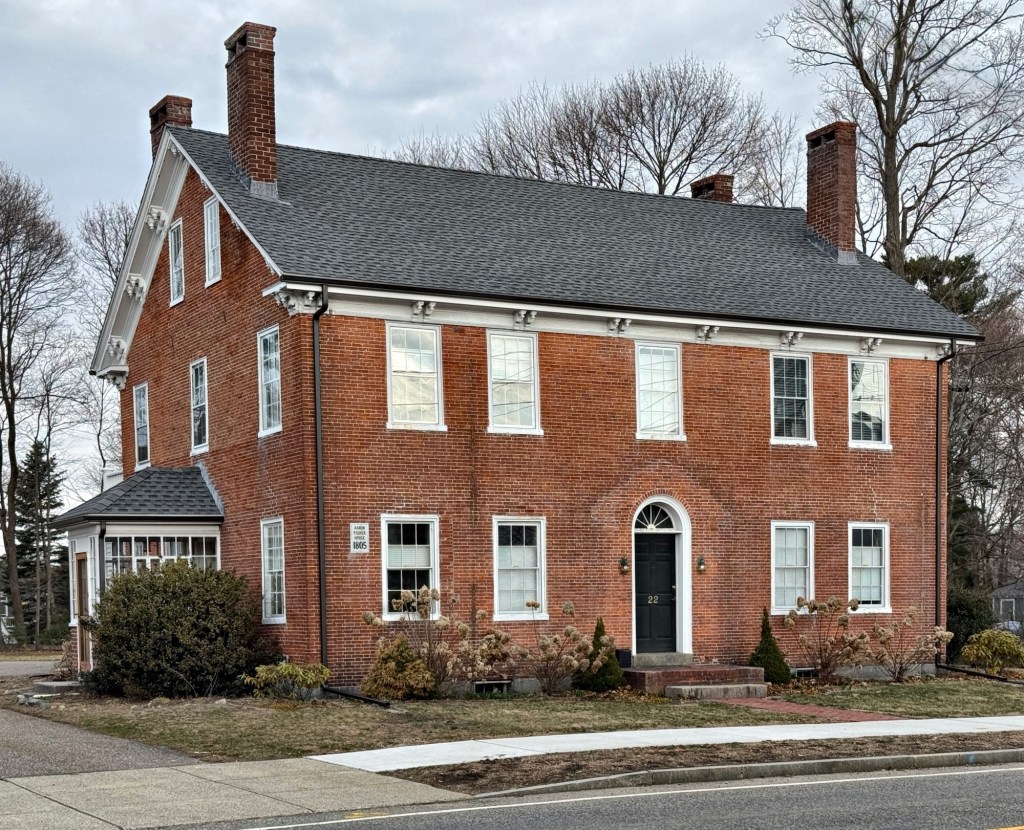
Another stately old home on Glezen Lane in Wayland is this brick, Federal style country mansion located across from the town Training Field. This residence is said to have been built by a Nathaniel Gleason (Glezen) and later inherited by a family member, Abel Glezen (1803-1890) who farmed the 55 acres of land and was a local politician. In 1900, as Wayland shifted from rural community to a desirable Boston suburb for summer residences, the Gleason House was purchased by Henry W. Patterson, who was in his late 20s when he bought this country house. Henry inherited his father’s estate and married Jane Harrington Adams from Massachusetts. The couple spent only a couple years here until Henry died in 1907 at just 35 years old. Jane, his widow, remained here until her death in 1950. The estate was subsequently subdivided and remains one of the finest homes in the community.

Mellen Law Office // c.1829

Samuel H. Mann (1801-1838), a lawyer, acquired the Dr. Ebenezer Ames House on Cochituate Road in 1829, only a month before his marriage to Isabella Ross. At about that time, Mann built this small law office across the road from his home, where he would practice law. It is not clear why, but within a year, Mann sold the house and this law office to Judge Edward Mellen (1802-1875), who was appointed Chief Justice of the Massachusetts Court of Common Pleas in 1855 and practiced law in Wayland until his death in 1875. After his death, the law office sat largely vacant until during World War II, when a newsletter to soldiers, The Village Bugle, was published here. After this, a couple of businesses used the former law office in the 1950s and 1960s until the owner donated the lot to the Town of Wayland in 1971. The diminutive building is a charming, and well-preserved example of a vernacular, Federal period professional office building that mimics the form and materials of the Ames House to which it was long affiliated with.

Reeves-Goodell House // c.1816

Built on a hill on Concord Road in Wayland, Massachusetts, the Reeves-Goodell House is a beautiful vernacular Federal period residence owned and occupied by a local builder and architect. The house was constructed by Henry Reeves (1789-1878), a local carpenter and descendant of Jacob Reeves (1720-1794) a tavern-keeper in town. In the 1920s, this property became the home of Edwin B. Goodell, Jr. (1893-1971), a prominent local architect who designed area houses before becoming a partner in the firm Andrews, Jones, Biscoe and Goodell of Boston. It was Goodell who added on the rear, three-bay addition to the residence, which blends in with the 1810s aesthetic. Interestingly, Edwin Goodell lived in this historic, vernacular house but designed some of the earliest International style modernist homes in New England.

Sibley-Bennett House // c.1818

One of the many great old houses in Wayland, Massachusetts, is this well-proportioned Federal style residence at 30 Cochituate Road. The house was built sometime between 1818 and 1821 when owner Mark C. Sibley (1792-1876) married his first wife, Nancy Rice. Mark Sibley was the innkeeper at the Pequod Inn (no longer extant) that had served as an inn and stagecoach stop from when it was built in 1771. Mark Sibley remarried after Nancy died in 1839 and relocated to Weston. The Sibley House was acquired numerous times by real estate speculators. From 1886 until 1922, the property was owned by Anna Bennett, a widow. The five-bay, two-story Federal style house has a center entrance and six-over-six double-hung windows, all with a historically appropriate color scheme.

First Parish Church, Wayland // 1814

The First Parish Church of Wayland, Massachusetts, is an iconic church that displays the typical early 19th-century meetinghouse form with Federal-style elaboration. Built in 1814, the church is two-stories with a five-bay gabled-front structure with a projecting enclosed portico of three entrance bays, and a four-stage bell tower that rises above the façade. Today known as Wayland, the town was originally called East Sudbury, after it split away from the western parish in 1780. In 1835, members of town meeting voted to rename East Sudbury “Wayland” in honor of Dr. Francis Wayland, a temperance advocate, abolitionist, and then president of Brown University. The First Parish Church of Wayland was built by Andrews Palmer of Newburyport, who used an Asher Benjamin design. The bell was cast by Paul Revere and Sons and first lifted into the bell tower in 1814. The property also includes the historic, twelve-bay horse/carriage sheds where parishioners would “park” their horses and carriages while attending services.

First Congregational Church of Derby // 1821

Derby, Connecticut was settled by colonists in 1642 as a trading post with local Native people under the name Paugasset. The community was eventually named after Derby, England, in 1675 and incorporated 100 years later in 1775. Like all communities in New England, it was required to have a meeting house, where religious services and town business would take place. Derby had its first meeting house built in 1681, a rustic, square structure which was eventually replaced with a new meeting house on “The Common”, now the East Derby Green. The building served its purpose for over 100 years, with sermons led by Rev. Daniel Humphreys (1706-1787) for 54 years. In that church, his son, David Humphreys (1752-1818) was baptized, he later became George Washington’s aide and most trusted general, later becoming the first presidential speech-writer. That meetinghouse was eventually outgrown, and the present Congregational Church of Derby was built on its present site on the eastern banks of the Naugatuck River in 1821. The Federal style church building was built by Williams and Barnum from Brookfield, who likely utilized plan books by Asher Benjamin for the finishes. The Congregational Church of Derby has watched as the commercial “downtown” of the city shifted to the other side of the river and has stood here for over 200 years as a landmark of “old Derby”.

Cyrus Colby Farmhouse // c.1826

This historic farmhouse, tucked away on a quiet dead-end street in Bow, New Hampshire, is known as the Cyrus Colby Farmhouse. The residence dates to about 1826, and was likely built by Cyrus’ father, John Colby (1772-1836) and later inherited and occupied by his son, Cyrus. Cyrus Colby (1822-1900) lived at this house and farmed the land along the hillside and operated a successful family farm which included cornfields and grazing fields for their livestock with various barns on the property, notable for a post-and-beam dairy barn across the road that was built in 1878. The historic farm was purchased and restored, bringing the 200-year-old property a new life, suitable for modern living, while preserving the unique assemblage of farm buildings.