Daniel Smith House // c.1750

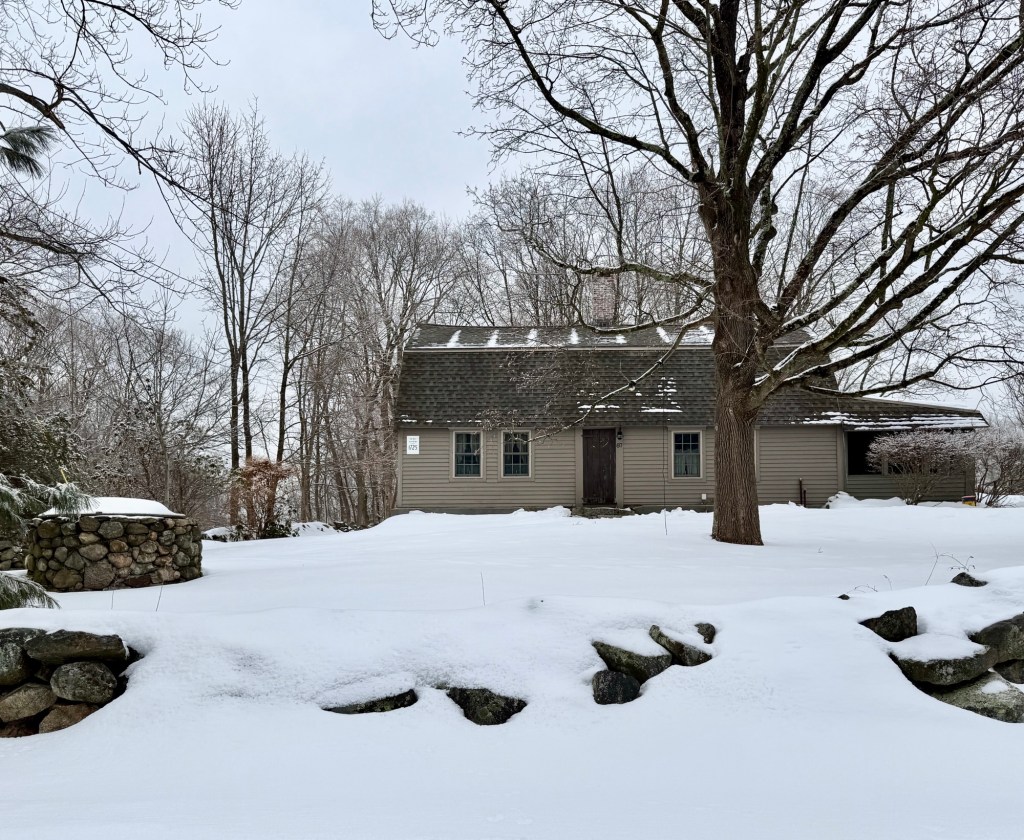
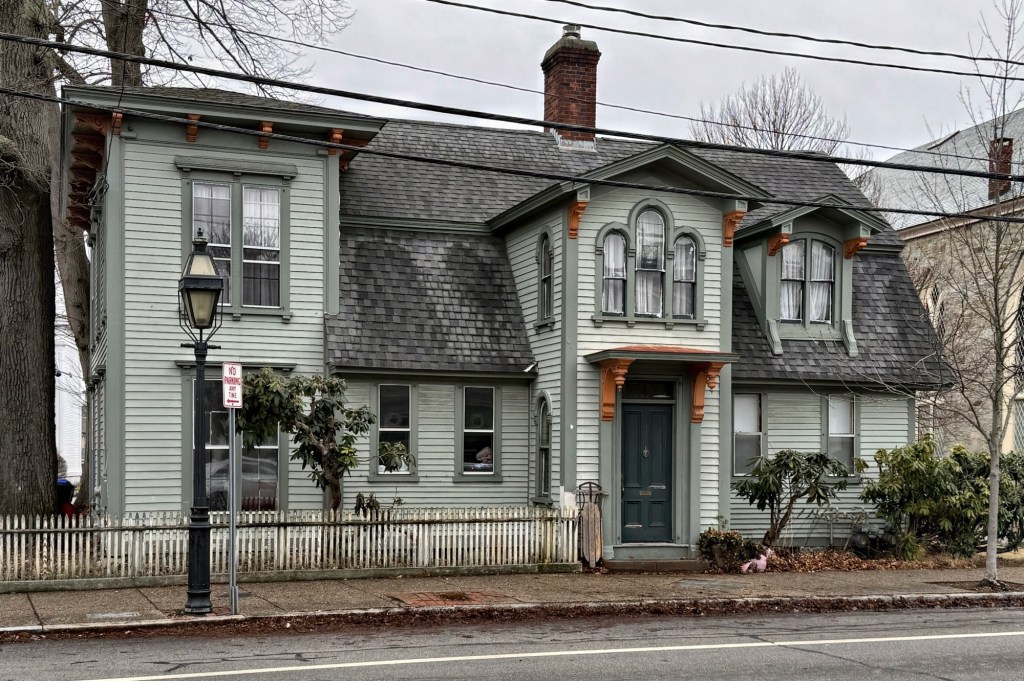
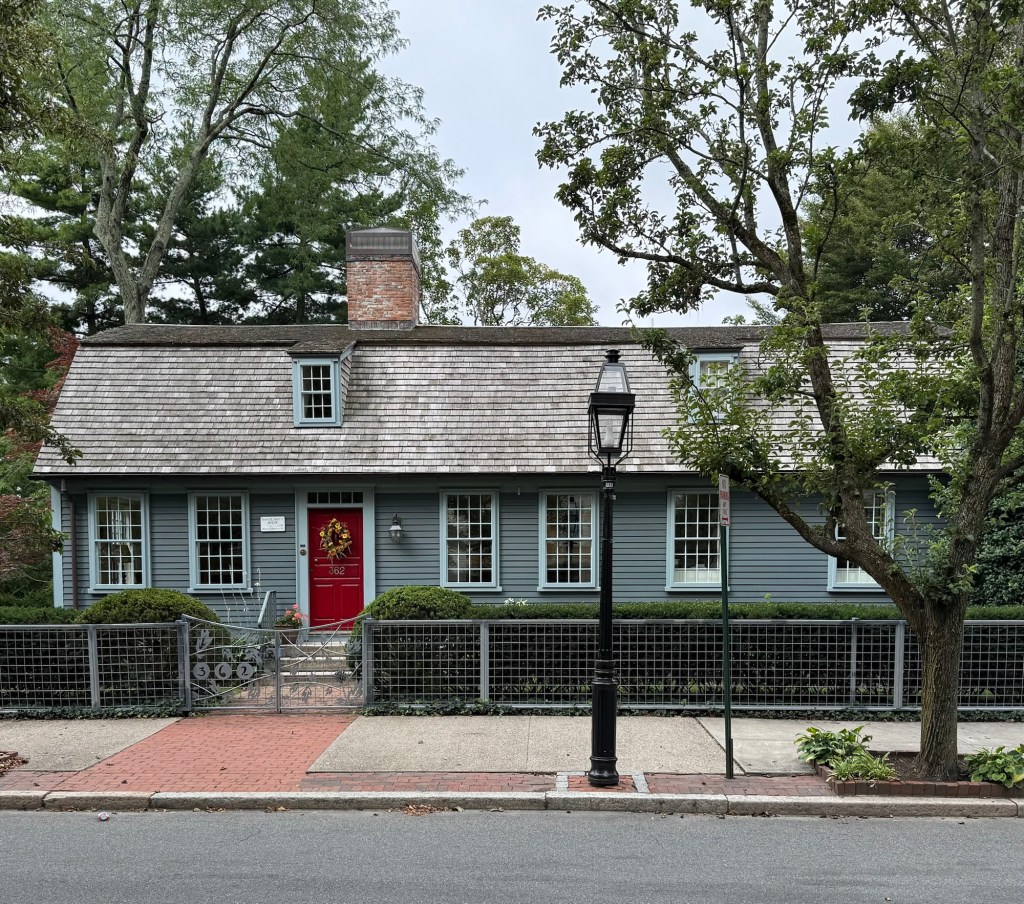
The Daniel Smith House at 362 Benefit Street in Providence, Rhode Island, stands out in the neighborhood as an uncommon gambrel-roofed Georgian-era residence, but it was not built here! The home was built by about 1750 for Daniel Smith, and may possibly date to around 1725 a year after he was deeded land from his father and the same year he married his wife, Dorcas Harris. If the home does indeed date to around 1725, it would likely be the oldest extant house in Providence! The home was originally located across town on Chalkstone Avenue, and moved to the present site on Benefit Street in 1982 to save it from institutional expansion by Roger Williams Hospital. The hospital set a date to demolish the farmhouse, then covered in asbestos siding, and offered the building for free to someone who could move it off the site. After tense weeks and a nearing deadline, Angela Brown Fischer, a real estate executive, agreed to pay the costs to move the building across town to a site on Benefit Street, where it remains today. The home was put back together and restored by Newport-based architect, Richard Long, who worked as principal architect for the Restoration Foundation of Newport before opening a private architectural practice. What a great preservation success story!

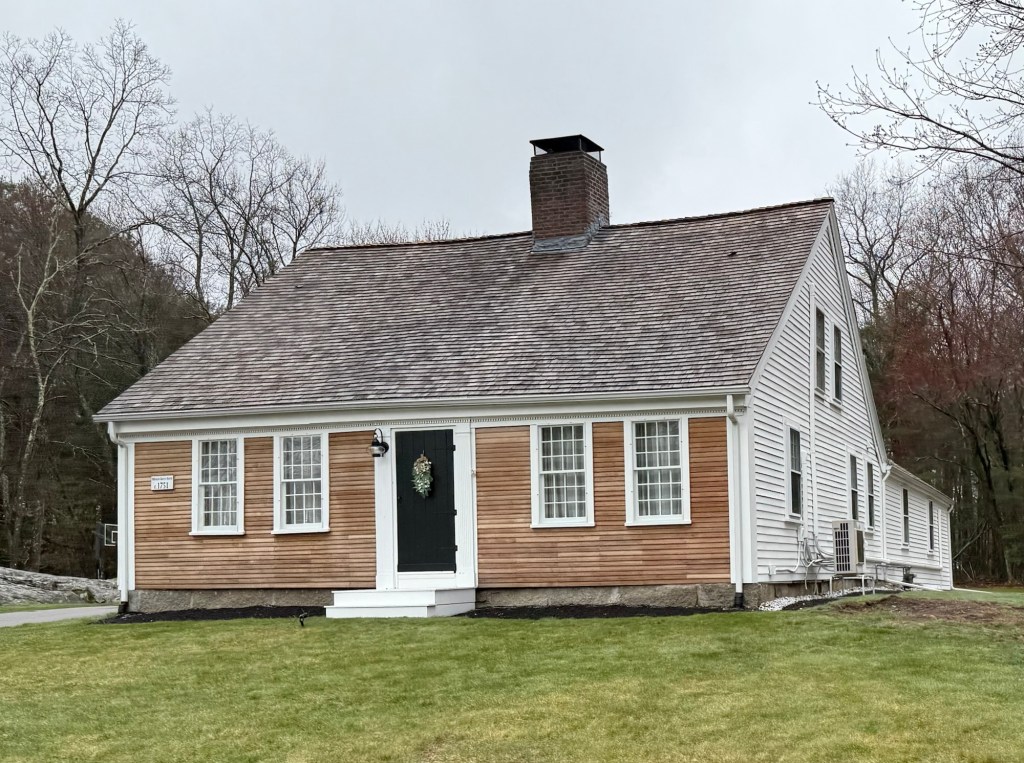
Samuel J. Nutter House // c.1750

The Samuel J. Nutter House on Indian Pond Road in Kingston, Massachusetts, is a fairly rare example of a half-cape Georgian-era home in New England. Local history states that the house dates to before the American Revolution and was constructed as an early half-cape, with an off-center door flanked by two bays of windows. The small house form would allow the owner to add on additional bays to make it a 3/4- (has a door with two windows on one side and a single window on the other) or full-cape (with a central door and two windows on each side) as the family and prosperity grew. This house was built as a half-cape and has not changed in its over 275-year existence, besides the addition of a barn and one-story connecting addition to it. The house was originally located elsewhere in town, but was relocated to the site in about 1830 by Samuel Nutter (born Nutt and changed his name in 1825), who married Mercy Washburn that year. The Nutter Family farmed here until the early 1900s.

Cobb-Bartlett House // 1754

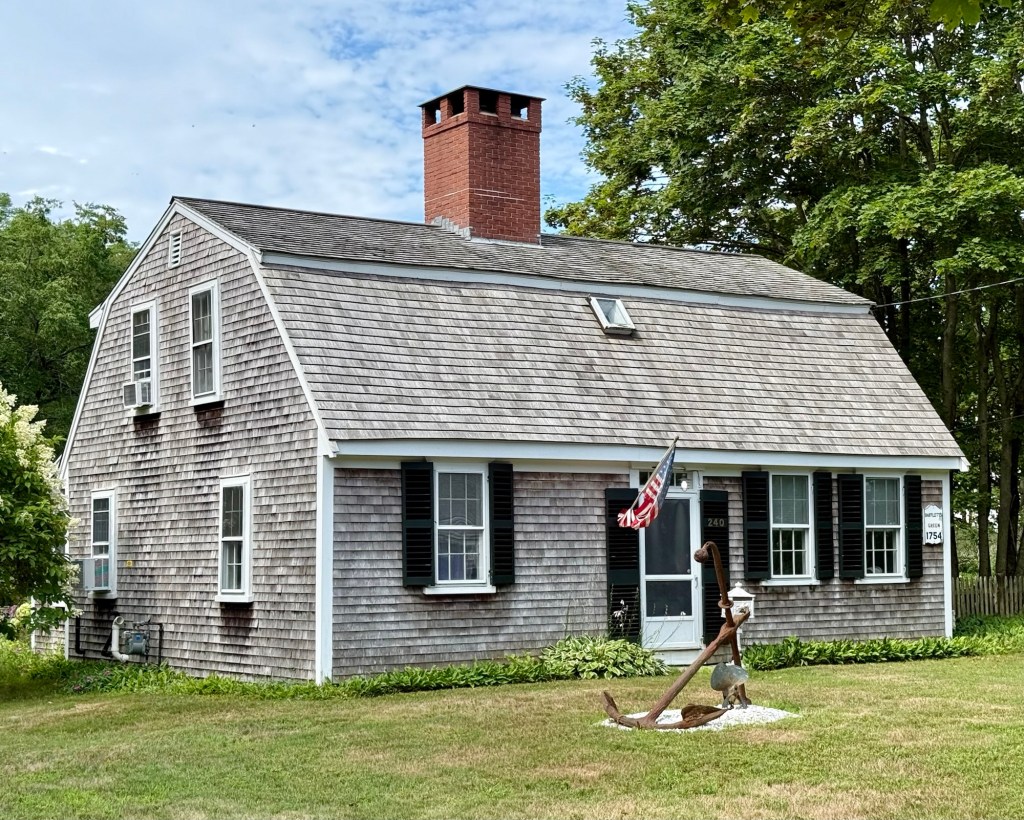
The Cobb-Bartlett House at 240 Main Street in Kingston, Massachusetts, was built around 1754 for Gershom Cobb (1717-1799) where he raised his family. The gambrel-roofed Georgian house was built before the revolution, and may have originally been a half-cape and expanded to a full-cape in the late 18th or early 19th century. The property was sold by Cobb in 1768 to Captain Joseph Bartlett, and the property remained in the family for generations after his death in 1788. The house is a well-preserved example of a Cape style house with large, central chimney and clad with cedar shingle siding and roof.

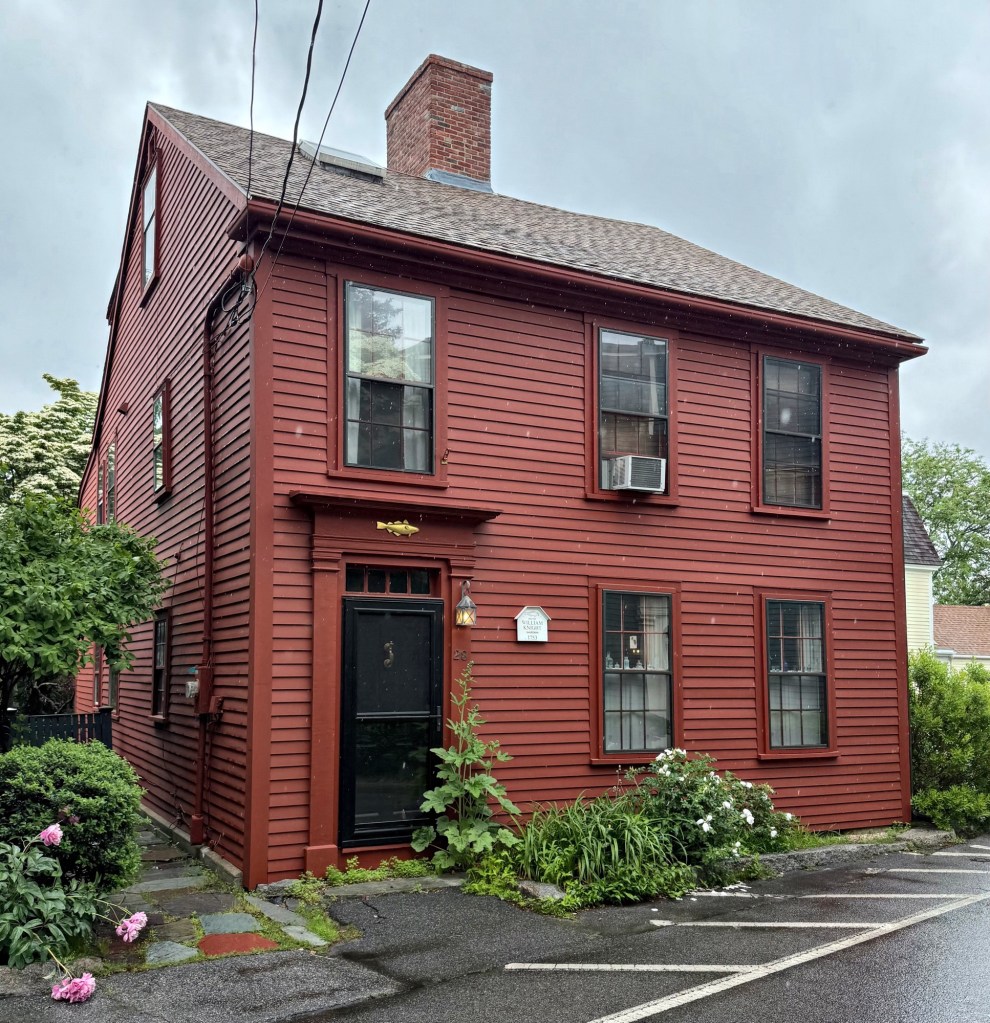
Knight-Tutt House // c.1750

The Knight-Tutt House on Franklin Street in downtown Marblehead, Massachusetts, is a great example of a pre-Revolutionary Georgian home built for the working class. The house, like its neighbor, has a three-bay, side-hall facade with a large, central chimney. The residence was built around 1750 for William Knight (1722-1799), who worked as a shoreman, loading and unloading the many ships that docked in Marblehead harbor. By 1850, the house was jointly owned by an F. Bateman and William Russell Tutt, a shoemaker. The residence remains one of a large number of well-preserved Colonial homes in the town of Marblehead, a testament to preservation planning and its effect on streetscapes and vibrant communities.

Orcutt-Ford Homestead // c.1751

In about 1751, Emerson Orcutt (1713-1777) purchased land in North Abington, Massachusetts, and built a half cape for his family. In 1762, Orcutt sold some of the land to John Ford, who was later a Lieutenant in the Continental Army, and according to local tradition, Ford added the other half of this current Georgian Cape house, giving it the current configuration. Character defining architectural details include an entry surround with fluted pilasters, and dentil cornice band on the main facade, 12-over-12 sash windows, and the central chimney, which would have heated both sides of the house. The property remained in the Ford family for over 100 years, and has since been converted back to a single family residence. Today, the charming pre-Revolutionary cottage is one of the oldest extant houses in Abington.

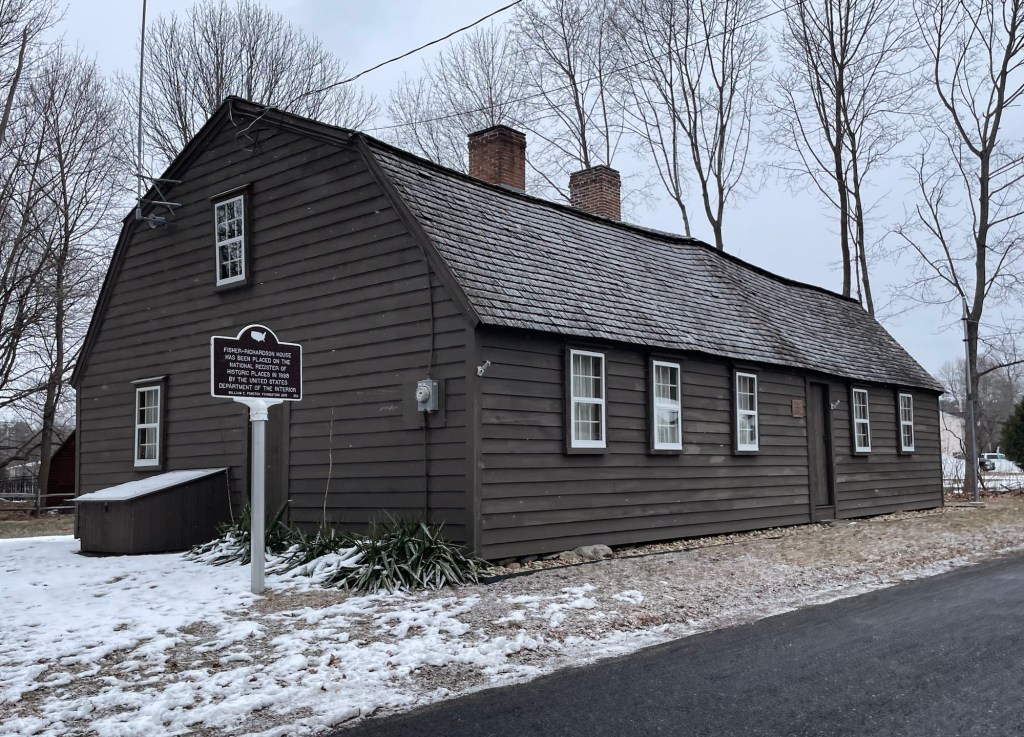
Wellman-Fisher-Richardson House // c.1745

The Fisher-Richardson House in Mansfield, Massachusetts is considered to be one of the oldest buildings in the suburban town. The home dates to sometime between 1743 and 1751 and was built for its original owner Ebenezer Wellman (1720-1776). The property was eventually owned by Lemuel Fisher, who in about 1800, doubled the size of the house adding its western half. When Lemuel died in 1820, the property was inherited by his youngest son, Daniel, a farmer and blacksmith who also built a gristmill nearby. The home was later inherited by Daniel’s daughter, Evelina and her husband, Captain Ira Richardson. By 1930, the gambrel-roofed Georgian house was in disrepair, and the owner at the time contacted SPNEA (now Historic New England) who drafted an agreement to acquire and restore the house. However, as local interest in the property increased, the owner deeded the property to the town, and the town took on the costs of restoration. The property is now managed by the Mansfield Historical Society.

Harkness House // c.1730

The award for the cutest house in Newport goes to this c.1730 beauty on Green Street! This charming Georgian cape house sits just one-and-a-half stories tall under a squat gambrel roof. The house was originally located at the corner of Thames Street and was moved at least twice until it was placed on its present site by the Newport Restoration Foundation, after they acquired it in 1983, restoring it soon after. The center-hall house has just two rooms on each floor with a central staircase and chimney. The small dormers add some light to the second floor without compromising the historic and architectural integrity of the cottage.

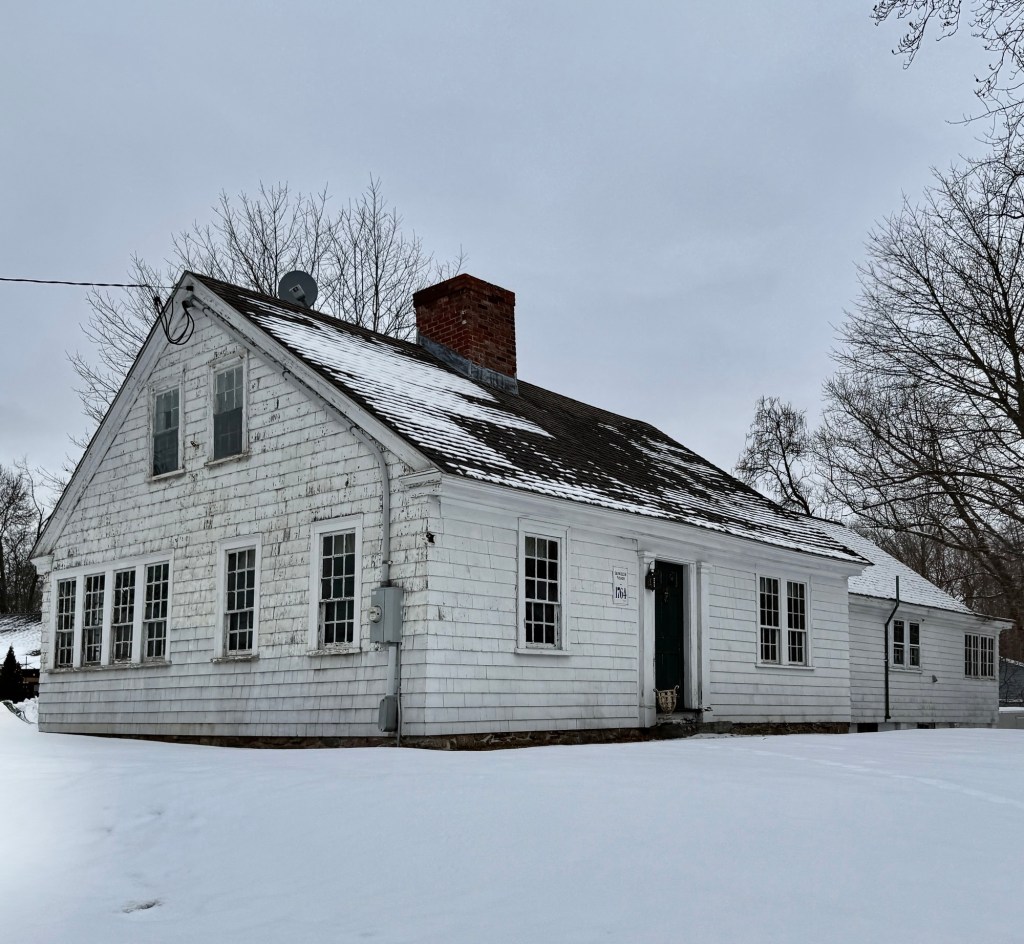
Killicut House // c.1740

Thought to be the oldest extant residential building in Nashua, New Hampshire, the Killicut House is an important piece of local history of the early settlement days of the city. The exact date of construction of the Killicut House is not known, with local legend stating that the house was built between 1680 and 1700 with other estimates dating the house slightly later, to 1740. It was known for years as the “1700 House”. Regardless, this is one of only two 18th century houses remaining in Nashua. The first known owner of the house was Thomas Killicut (1723-1784) who resided in present-day Nashua by 1746 when he was chosen to hold the position of field driver for the newly established town of Dunstable, New Hampshire (an extension from Dunstable, Massachusetts). Killicut served as one of “Rogers Rangers” in the French and Indian War. During the early to mid 19th century, the Killicut House apparently passed onto members of the Blodgett family who were apparently related to the Killicuts as up until the 1960s, the house was still reportedly owned by descendants of Thomas Killicut. Later in the 20th century, much of the land was subdivided and single-family homes were built nearby, with the Killicut House now located on the end of an unassuming cul-de-sac. It is a great example of a Georgian-era Cape style house with central chimney.

Pelatiah Fitch House // 1754

One of the oldest extant homes in the charming fishing village of Noank, CT, is the 1754 Pelatiah Fitch House which has survived nearly 300 years on the waterfront site. The home was built for a Pelatiah Fitch (1722-1803) upon the time when he relocated to Noank to work as a doctor. Dr. Pelatiah Fitch came from a long line of distinguished ancestors, and was born in Norwich, CT. After practicing medicine twenty-eight years in Noank, he removed to Vermont, later moving a to Salem, NY about 1780 where he lived out his final days. This Georgian seaside cottage was built by Dr. Fitch and his new wife Elizabeth when they were in their mid-twenties. After the Fitch Family moved out, the cottage was expanded a few times, notably with the addition of the oversized dormer at the roof.

Grindell Gardner House // 1772

In 1772, Grindell Gardner built this Georgian gambrel-roofed house on land which was part of a large tract formerly owned by his
grandfather, Abel Gardner, whose own home sits a stone’s throw away. The charming Cape house is of an unusual type, having the gambrel on the front side only which slopes to a sort of saltbox at the rear, which originally contained the summer kitchen and a water closet. The house was altered in the 1890s with the addition of dormer windows and the removal of the original large central chimney, which was removed prior to the new dormers. By the 1960s, the house had only been owned by four families.