Ochre Court // 1892

Ochre Court, one of the grandest mansions in America was built in 1892 for New York banker and real estate developer Ogden Goelet (1846-1897) and his wife, Mary Wilson (1855-1929). In 1879, Ogden and his brother, Robert, inherited a real estate empire in Manhattan of 259 houses then worth a combined $40 million which was second only to the Astors. In 1892, Goelet and his wife Mary were included in Ward McAllister‘s “Four Hundred“, purported to be an index of New York’s best families, published in The New York Times, a position only solidified after his summer “cottage” was completed that year in Newport, Rhode Island. Named Ochre Court, the 50-room chateau overlooks the Cliff Walk and Atlantic Ocean and is the second-largest mansion in Newport (after The Breakers). Ochre Court was designed by architect Richard Morris Hunt, who also designed The Breakers, and summered in town himself. Shockingly, the Goelet’s only occupied the home during an eight-week summer season, and they spent the rest of the year in their homes in New York City, France, or London. The operation of Ochre Court usually required twenty-seven house servants, eight coachmen and grooms for horses and their carriages, and twelve gardeners for the grounds. In 1947 the Goelets’ son, railroad, hotel, and real estate developer Robert Goelet IV (1880-1966), gave ‘Ochre Court’ to the Religious Sisters of Mercy to establish Salve Regina College after it became too expensive to maintain. ‘Ochre Court’, which housed the entire college during its first years, is still in use and remains the heart of the greatly expanded Salve Regina University.

Land’s End // 1864

One of the more architecturally modest and refined Gilded Age summer cottages of Newport sits on one of the most picturesque pieces of land at the southeastern point of Aquidneck Island and is aptly named Land’s End. The cottage was built in 1864, Land’s End was designed by John Hubbard Sturgis for Boston banker, Samuel Gray Ward, his father’s business associate. The home features a refined Italianate style base with a roof comprised of a variation of the Second Empire mansard style called a “turtleback roof”. Land’s End is probably most famous as the residence of Edith Wharton (1862-1937) after she acquired the property in 1889. She worked with Boston designer Ogden Codman, Jr., to experiment with a style of subdued classical interiors and a remodel of the exterior, which was later featured in their book, “The Decoration of Houses”. Wharton was inspired to show what good taste is after the influx of Vanderbilts and other newly moneyed summer residents of Newport. The book focused on how to build and decorate houses with nobility, grace, and timelessness. It would, they hoped, lead its readers out of what Wharton called (pace the Vanderbilts) a “Thermopylae of bad taste” and into an aesthetic Promised Land. Wharton only lived at Land’s End for a decade, when the “stuffiness” of high-society there led her to move to the Berkshires in Massachusetts, where she worked with architect Ogden Codman to design her new home, The Mount. It the monstrous Lippitt Mansion, Breakwater was built at the time, just next door! did not help that Sadly, many of the interiors have been altered since Wharton’s time there, but with more recent interventions, but the book did help shift some of Newports later homes to a more refined, classical taste.

Anglesea Cottage // 1880

Imagine being a neighbor to The Breakers? This 1880 home at Ochre Point along the iconic Newport Cliff Walk was built for wealthy grocery goods merchant of Philadelphia, Walter H. Lewis. The stunning home was designed by architect Detlef Lienau, who was first trained as a carpenter and cabinetmaker in Berlin before attending architecture schools in Munich and Paris. He eventually settled in New York City and was responsible for some amazing homes and commercial buildings there. His design for Anglesea, a summer cottage for Lewis, was French inspired with Stick style detailing. Stonemasons and woodworkers from Italy, along with American craftsmen, built Anglesea, which was designed to afford views of the sea from every angle. The home was purchased and modified in the Colonial Revival style in 1896 by Frederick Pearson and wife Lesley Ayer Pearson. The couple inherited much of their wealth from Lesley’s father James Cook Ayer, who was the wealthiest patent medicine businessman of his day and inventor of Ayer’s Sasparilla. The home remained in the family and was used for high-society gatherings until it was sold out of the family in 1996. Anglesea was purchased by Alfred Carpionato, a Rhode Island developer, who expanded and renovated Anglesea from 1996-2003, with the assistance of architect Friedrich St. Florian. The building is used for events by the group.

The Reefs Mansion – The Bells // 1885-1963

‘The Reef’ a fabulous Gilded Age estate in Newport was built in 1885 for Theodore M. Davis by the Boston architectural firm of Sturgis and Brigham. The elegant shingle and stone Queen Anne villa was erected as both a summer house and to house some of Davis’s vast collection of paintings and Egyptian artifacts, collected during his excavations in Egypt’s Valley of the Kings between 1902 and 1913. Besides the architecture of the home, the Reef Estate was also famous for its walled gardens, greenhouses, and outbuildings, sitting upon eighteen acres. overlooking the Atlantic Ocean. Following Mr. Davis’ death in 1915, Milton J. Budlong of Providence purchased the estate. Milton divorced from his wife Jessie in 1928, and it was MESSY. Their Newport summer estate was placed in contention. The house, never again lived in by the family. During World War II, anti-aircraft gun emplacements were set up around the grounds, with the mansion housing gunnery personnel. After the War, the estate was given back to the Budlong heirs, who did not reside there. Vandalized throughout the 1950’s, the villa was set on fire in 1961 and demolished two years later in 1963. In 1969, the waterfront property came under the control of the State of Rhode Island and in 1976, became a state park. The old carriage house/stable and a later observation tower (possibly converted from a former water tower) stand today.

The Breakers – Children’s Cottage // 1878

While the Breakers Mansion in Newport is one of the most opulent buildings in the United States, a tiny cottage on the grounds always gives me feelings of whimsy. Predating the larger mansion by two decades, this cottage was constructed on the grounds of the original Breakers House, owned by Cornelius Vanderbilt, which was destroyed by fire in 1893. The cottage was built as a children’s playhouse around the time the original Breakers mansion was built in 1878. The Boston architectural firm of Peabody and Stearns built the mansion and adjacent cottage for Pierre Lorillard IV, a New York cigar manufacturer and millionaire. The Queen Anne Revival style elements, including the half-timbering and shingles and asymmetry, were in keeping with the style of the original Breakers, and complimented it well. My favorite part of the cottage is the open porch facing the ocean, which has four wooden posts, carved in the shape of figures from Dutch folklore, a sort of caryatid, supporting the roof. The house contains a living room and kitchen separated by a huge red brick chimney, which would be maintained by servants for the children while they play.

The Breakers – Music Room // 1895

You know you’ve “made it” if you have a music room, especially if you have one in your summer mansion in Newport! The Music Room in The Breakers evokes the opulent Parisian interiors of the Second Period and when inside the room, you just feel sensory overload (in the best way possible. The room is located off the Great Room and Morning Room, at the southern end of the house. The Music Room was used for recitals and dances for the Vanderbilt Family and guests. The room displays ornate woodwork and furnishings designed by Richard Van der Boyen and built by J. Allard of Paris. The room looks like it was plucked out of a French building and dropped into the mansion, and that is because it was! The room’s interior was constructed completely in France and then sent to America where it was installed at The Breakers by French craftsmen. My favorite parts of the interior are the bay window at the end and the gilt gold coffered ceiling.

The Breakers – Morning Room // 1895

Possibly my favorite room in The Breakers mansion is the Morning Room, found on the first floor, just off the Great Hall and lower loggia. The Morning Room is executed in a late Renaissance style and faces east to catch the morning sun and provides sweeping views of the Atlantic. It served as a family sitting room at all times of the day. The interior design, including the fixtures, woodworking, and furniture, were designed by French architect Richard Bouwens van der Boijen and designer Jules Allard. The predominant grey, and gold colors of the Morning Room are echoed in its fireplace which is made of Campan marble. On the walls, you will find the most stunning shimmering silver wall panels, depicting ancient Greek goddesses. It was originally believed that these features were silver leaf, but the Newport County Preservation Society investigated further, determining it is actually platinum! The Vanderbilts clearly wanted this room to shimmer with the sunrise, so the use of platinum, which never tarnishes, was a great solution!

The Breakers – Great Hall // 1895

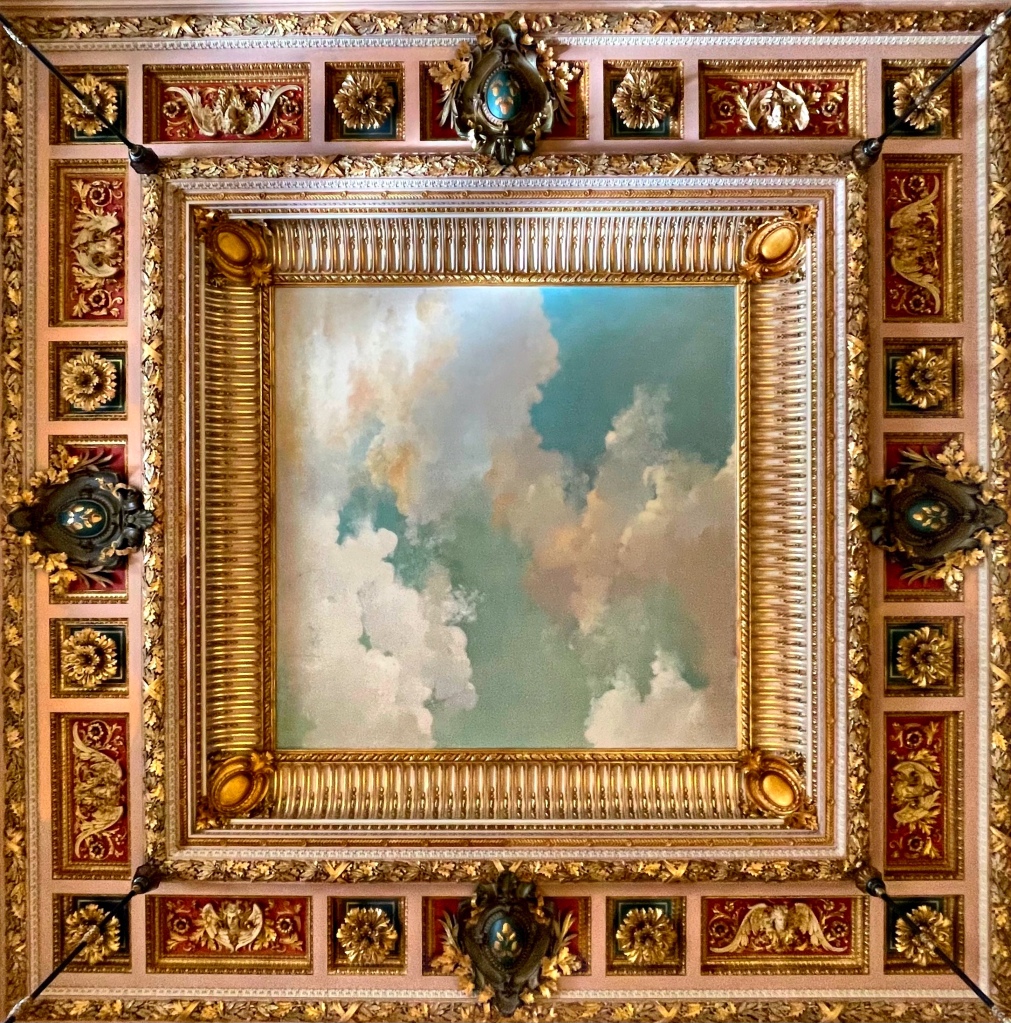
Merry Christmas from The Breakers! This 1895 Gilded Age mansion is the best to explore during December, when the halls are decked and stunning Christmas trees adorn the lavish rooms (learn more about the mansion in my last post) When you walk into The Breakers, you enter the Great Hall. Architect Richard Morris Hunt designed the Great Hall after the open-air courtyards in Italian villas, but enclosed due to the tough New England winters. The palatial space (measuring 50 foot square), even if crowded by tourists trying to get the perfect shot on their smartphones, feels spacious yet somehow welcoming given the art museum-like detailing. The walls are made of carved limestone from Caen on the coast of France and adorned with plaques of rare marbles. Elaborately carved pilasters decorated with acorns and oak leaves support a massive carved and gilt-cornice which surrounds a ceiling painted to depict a windswept sky, further expressing the open-air courtyard feeling envisioned by Hunt, the architect. Four bronze chandeliers dangle from the gilded ceiling, and flood the room with warm light, evoking warm summers in Italy.

The Breakers // 1895

The most opulent of all summer ‘cottages’ in Newport is the iconic Gilded Age mansion, The Breakers. This mansion was completed in 1895 as a summer residence for Cornelius Vanderbilt II. Cornelius’ grandfather, Commodore Cornelius Vanderbilt (1794-1877) established the family fortune in steamships and later in the New York Central Railroad. Cornelius Vanderbilt II became President of the New York Central Railroad system in 1885, and bought a wooden summer house called The Breakers in Newport during that same year. The original Breakers Mansion burned in a fire in 1892 and was rebuilt, but more substantially. Vanderbilt commissioned famed architect Richard Morris Hunt to rebuild it. Vanderbilt insisted that the building be made as fireproof as possible, so the structure of the building used steel trusses and no wooden parts. He even required that the boiler housed in an underground space below the front lawn. The Italian Renaissance-Beaux Arts style mansion was likely the most expensive home constructed in New England at the time at a cost of over $7 Million USD (equivalent to over $150 million today).

Cornelius Vanderbilt died from a cerebral hemorrhage in 1899 at age 55, leaving The Breakers to his wife Alice Gwynne Vanderbilt. She outlived him by 35 years and died at the age of 89 in 1934. She left The Breakers to her youngest daughter Countess Gladys Széchenyi (1886–1965). In 1948, Gladys leased the near-impossible to maintain property to The Preservation Society of Newport County for $1 per year. The Preservation Society bought The Breakers and approximately 90% of its furnishings in 1972 for $365,000 ($2.3 million today) from Countess Sylvia Szapary, Gladys’ daughter, although the agreement granted her life tenancy. Upon her death in 1998, The Society agreed to allow the family to continue to live on the third floor, which is not open to the public. The last-remaining family members residing there were evicted from the third floor due to safety concerns, but others state it is retaliation for the Szápárys’ opposition of the controversial Breakers Welcome Center, the plan for which other members of their family, including Gloria Vanderbilt, also opposed.

Hawthorn Hill Estate // 1903

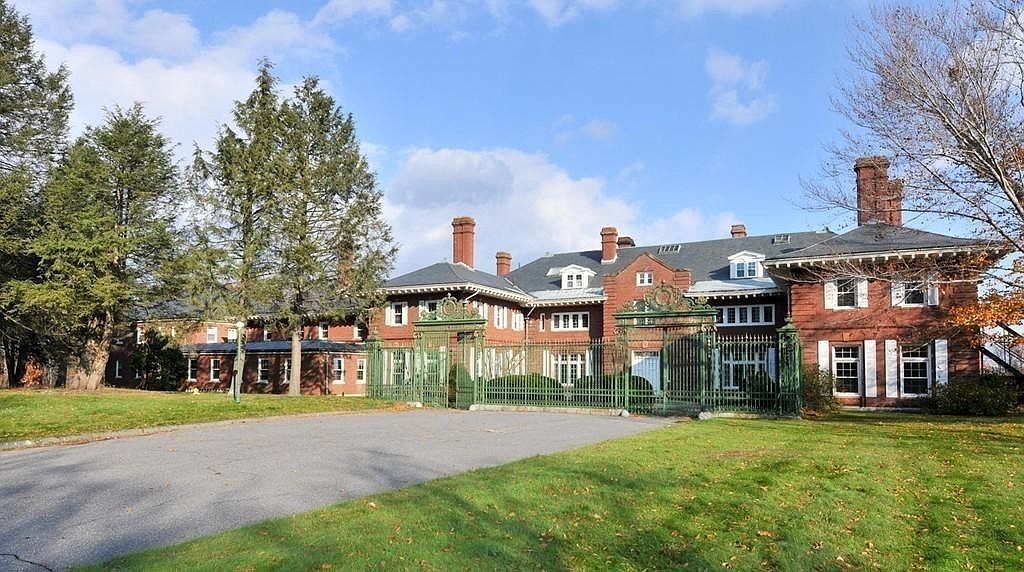
The only estate in Lancaster that can rival the Nathaniel Thayer Estate in size and grandeur is the OTHER Thayer estate, built for Bayard Thayer. Sitting on over 55 acres of forests and gentle rolling fields, Hawthorn Hill is one of the most impressive mansions in Central Massachusetts. The property is so secluded that I had to rely on real estate photos to share! The listings mention that there are over 40 bedrooms and 27 bathrooms… Bayard Thayer (1862-1916) is the grandson of Nathaniel Thayer, Unitarian minister of the First Church of Christ in Lancaster and son of Nathaniel Thayer, a banker. When his brother was willed the family estate (featured previously) after the death of their father, Bayard used the opportunity to build a modern estate high upon a hill in town. The mansion was built in 1903-1904 under the direction of Guy Lowell, a renowned Boston architect of the time. In 1907-1908, Little and Browne were commissioned for landscape alterations and in 1914-15, Ogden Codman Jr. was commissioned to renovate the interiors. Bayard died one year later, and the property remained in the family until around WWII. In 1953, the property was acquired by the Boston Cenacle Society, who added a massive dormitory addition to the building. Recent plans were unveiled to subdivide the land and build house lots on half the estate, which gives me mixed feelings.

“Red Tower” // 1780 & 1895

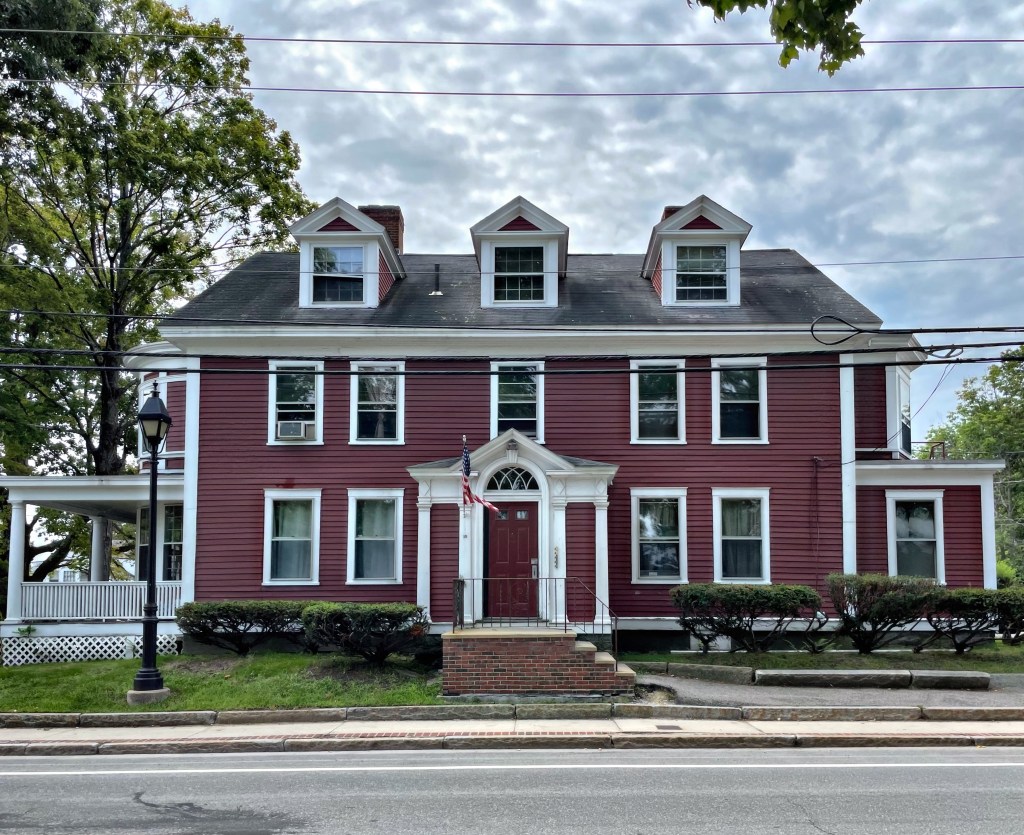
One of the most interesting homes in Durham, NH, sits right on Main Street, and while lacks much of its original grandeur, the house still has a story to tell. When mining engineer, Hamilton Smith met and married Alice Congreve while working in London, the couple envisioned and planned for a sprawling gentleman’s farm in New England to retire to. In 1895, the couple purchased the 1780 Rev. Blydenburgh home on Main Street, a large Federal style mansion. When Alice and Hamilton retired to the Red Tower in 1895, they set about renovating the estate into a jewel of the Gilded Age. They added a three-story tower to the rear of the home, large additions and Colonial Revival alterations, and they purchased large land holdings behind the house for a working farm. On the farmland, they built a carriage house, creamery, and men’s and women’s accessory buildings (a billiards building and tea house, respectively). Hamilton could only enjoy the home for a couple years until his death in 1900. His widow created the family cemetery at the farthest extent of the property and built the stunning Smith Memorial Chapel (last post). In the 1940s, much of the property was sold off and developed for a residential neighborhood for UNH faculty, and the Red Tower mansion was converted to an apartment house for students.

Mount Pleasant House // 1875-1939

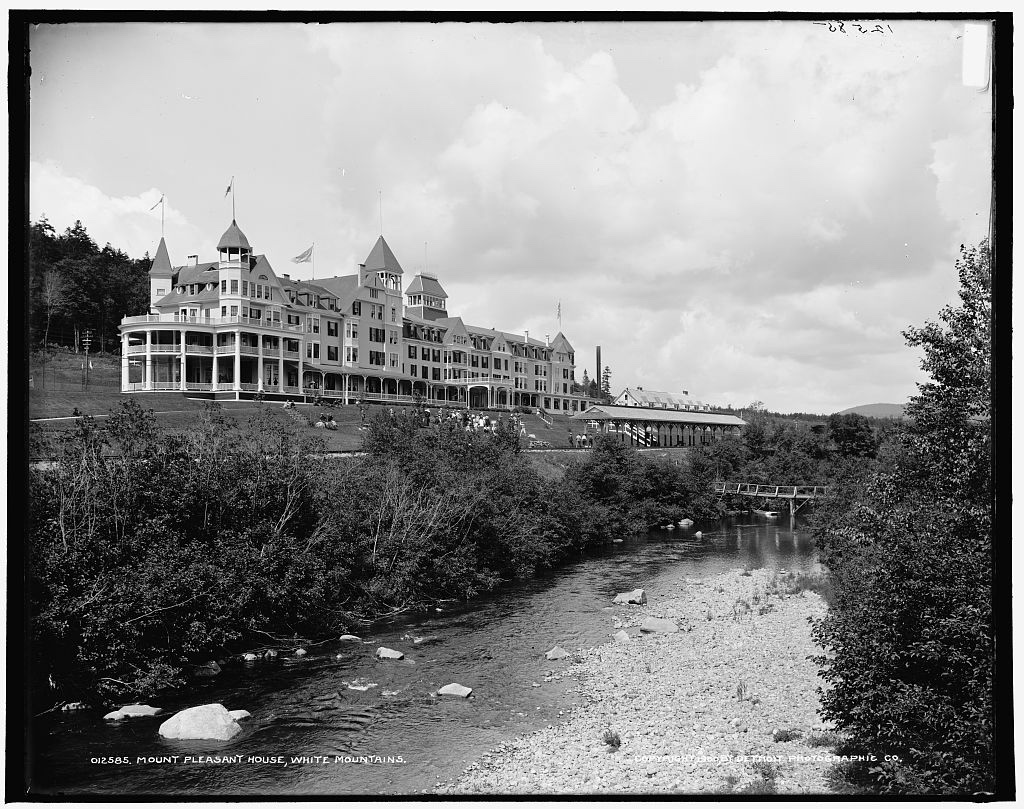
One of the earlier grand hotels in the White Mountains of New Hampshire, was Mount Pleasant House, built in 1875 after the arrival of the railroad through Crawford Notch. The hotel was located on a small hill where the Lodge at Bretton Woods is currently sited, across the street from the iconic Mount Washington Hotel. It was built by lumberman and investor John T.G. Leavitt and opened the following year. It was then a simple, almost box-like structure with only forty rooms, later expanded and “modernized” to accommodate the growing waves of affluent visitors from New York City and Boston every year. In 1881, Leavitt sold the hotel to Oscar Pitman and Joseph Stickney, the latter eventually became sole owner and acquired land across the street to build the Mount Washington Hotel in 1900. Possibly as a practice for his larger endeavor across the street, Stickney hired one of Portland’s leading architects, Francis H. Fasset, to design the additions and alterations. When Stickney died in 1903, just a year after his larger hotel was built, both properties were willed to his wife, Caroline. She ran the company through changing economic conditions and when she died, in 1936, the hotels were left to her nephew, F. Foster Reynolds. Reynolds decided that the Mt. Pleasant was not worth the expense needed to maintain it, and in 1939, ordered the building demolished, replaced decades later with the present building.

Mount Washington Hotel // 1902

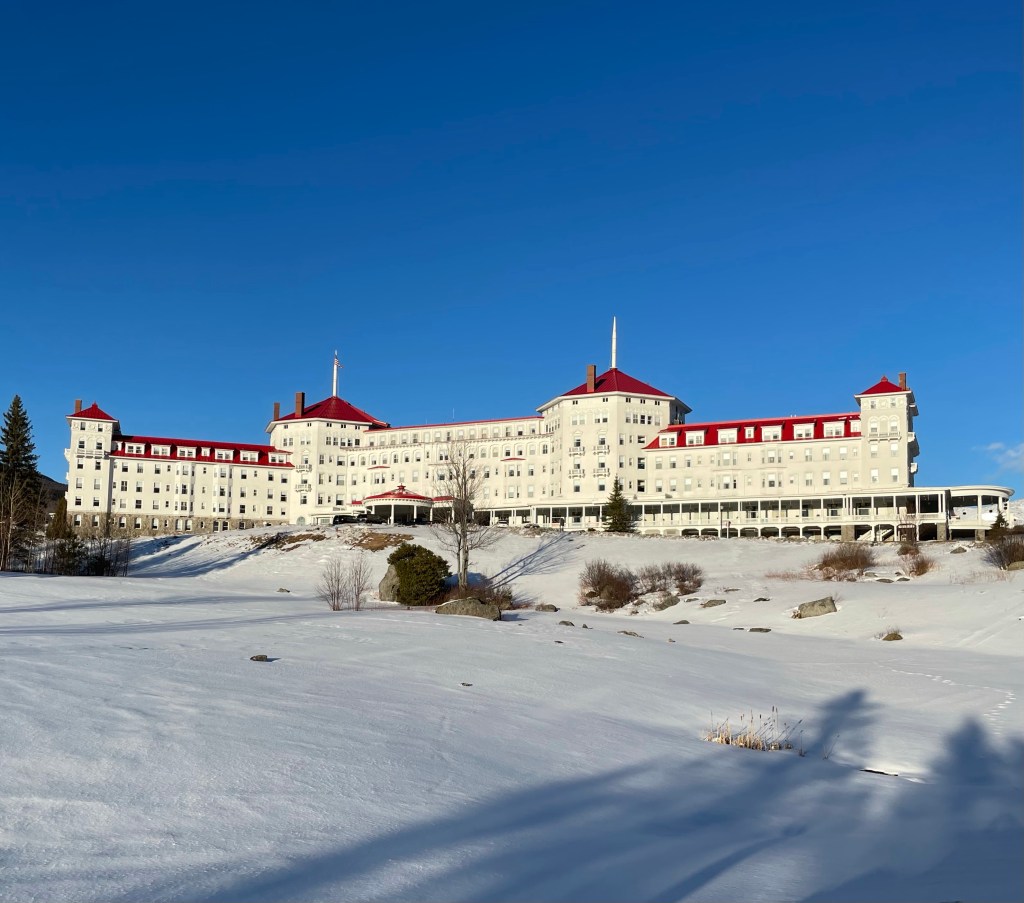
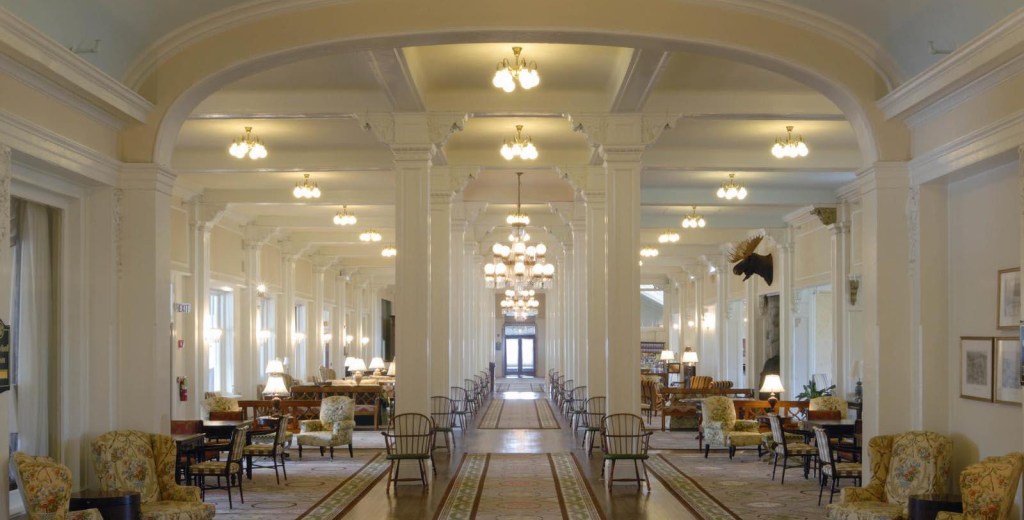
The Omni Mount Washington (originally the Mount Washington Hotel), surrounded by the great White Mountains of New Hampshire, was completed in 1902, at the end of the Gilded Age and the grand hotel era of America. The grand hotel was financed by Joseph Stickney, a native of New Hampshire, who made a fortune before the age of 30 investing in the coal business in Pennsylvania. In 1881, Stickney purchased the Mount Pleasant Hotel, a nearby summer resort and enlarged it, and acquiring a taste for hospitality development in the White Mountains (it was later demolished in the 1930s). He hired architect Charles Alling Gifford to design a new, larger resort across the street which in total, cost him over $50,000,000 in today’s dollars! Ironically, Joseph Stickney, had famously told the press on the opening day: “Look at me, for I am the poor fool who built all this,” as the economy was starting to turn right as the hotel opened. He died one year later in 1903. Nevertheless, up to fifty trains a day unloaded the families of the country’s wealthiest people, mostly from New York City, who stayed here for Summers at a time, leaving behind “the yellow fever and cholera in the cities” for fresh air and open space. The hotel’s design incorporated some of the most cutting-edge innovations of its age, including a steel-frame superstructure, an electrical power plant, and a sophisticated internal heating system. Roughly 250 Italian artisans were brought in to provide artistic touches to the structure by working on its exterior granite and stucco masonry including the two massive octagonal towers, and installing Tiffany stained glass windows.

After Joseph Stickney’s death in 1903, Carolyn his widow, became extremely rich (the couple never had children). Carolyn spent her summers at the hotel for the next decade, a nearby chapel honoring her late husband. The hotel did well in the subsequent decades until the advent of income tax, Prohibition, and the Great Depression, which harmed many large resorts’ profits. In 1936, Mrs. Stickney’s nephew, Foster Reynolds, inherited the hotel, but it closed in 1942 because of World War II. A Boston syndicate bought the extensive property for about $450,000 In 1944. The Bretton Woods monetary conference took place that year, establishing the World Bank and the International Monetary Fund. After subsequent owners, in 2015, the hotel and the Bretton Woods Mountain Resort were purchased by Omni Hotels & Resorts, who have been advocates to the history and preservation of the building and surrounding area, also overseeing the hotel’s inclusion to the illustrious Historic Hotels of America list.

There is so much more I could write about the Omni Mount Washington Resort, from the incredible interior spaces, to Carolyn’s marriage to a French prince, to the supposedly haunted sites… So much history to uncover, so little time!

Wheatleigh // 1893

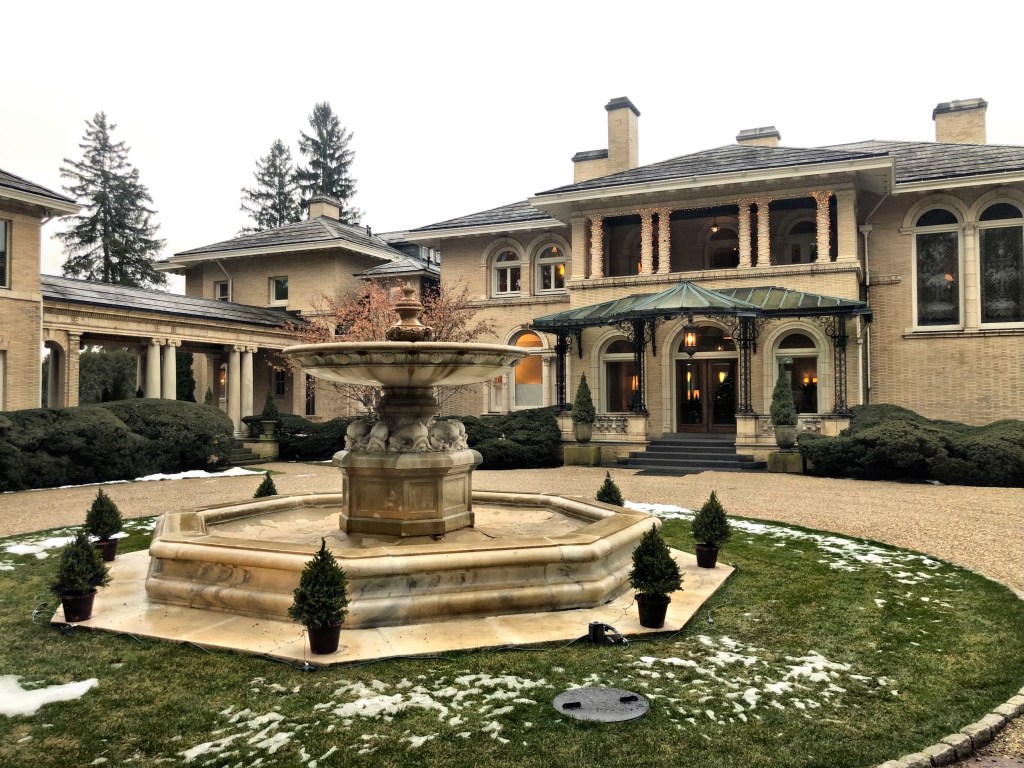
Designed in 1893 by the Boston architectural firm of Peabody and Stearns, Wheatleigh is an early example of Renaissance Revival architecture which became popular for country estates in the early 20th century. The estate was constructed for Henry Harvey Cook, who purchased over 250-acres of forest and lawns overlooking Lake Maheenac for his summer “cottage”. Cook was a New York-based businessman who made his fortune in the railroad and banking businesses, and he wanted a summer house to escape to every year. He named his home “Wheatleigh” as an homage to his family’s ancestral home, Wheatley, Oxfordshire. The mansion is approached by a circular drive that terminates in a formal entrance court partially enclosed by a buff brick wall and evergreen trees, centered on an octagonal marble fountain decorated with a shell and leaf motif. Upon Cook’s death in 1905 Wheatleigh passed to his daughter, Georgie, the Countess de Heredia. Under her ownership the formal garden was opened for evening worshipping services and musical events. Following de Heredia’s death in 1946 the property was divided and changed hands numerous times. In 1976 the mansion and 22 acres were opened as a resort hotel, known as the estates historic name. The Wheatleigh remains one of the most esteemed luxury hotels in the country.

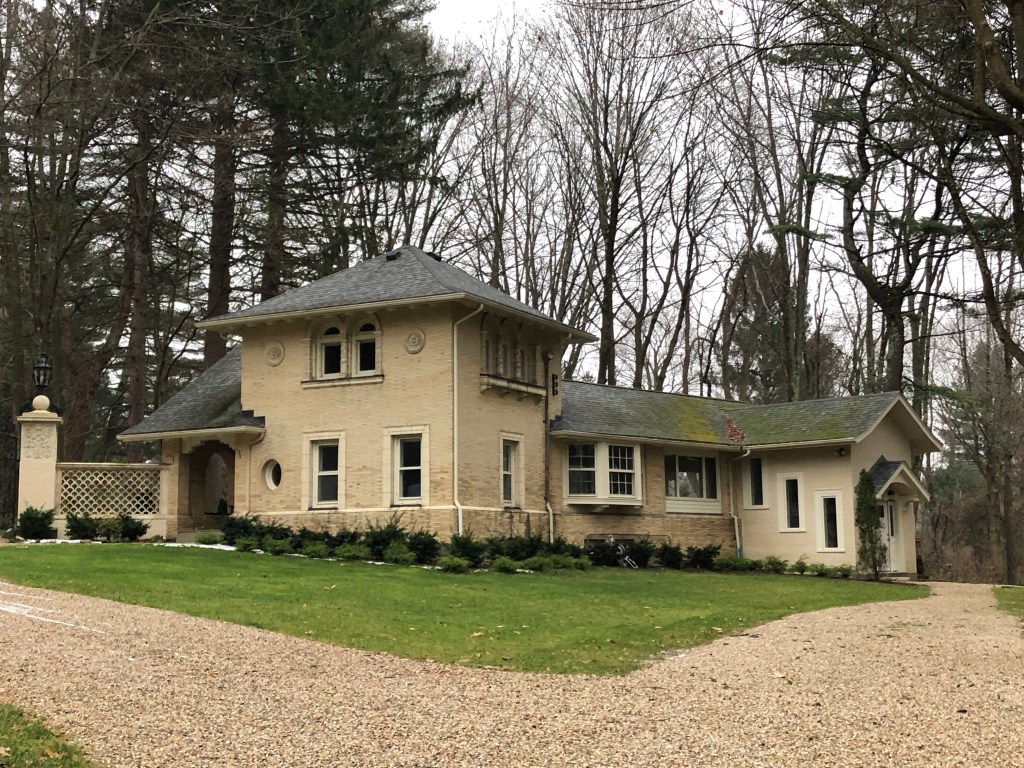
Wheatleigh Caretaker’s house (1893)

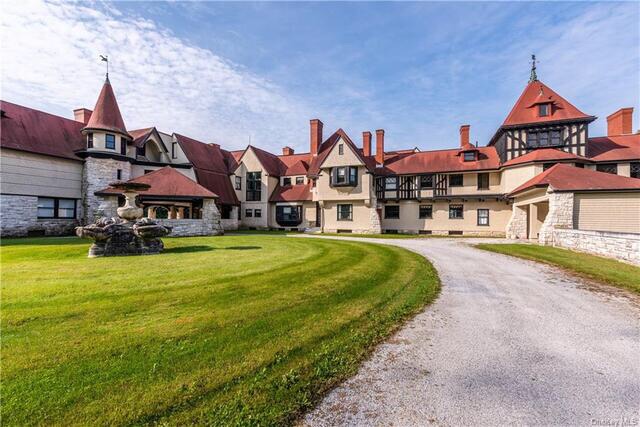
Elm Court // 1886

Real estate listing 11-2020

At 55,000 square feet and 106 rooms, the Elm Court mansion retains the title of the largest American Shingle Style home in the United States. The structure was built for William Douglas Sloane and Emily Thorn Vanderbilt (granddaughter of Cornelius Vanderbilt) as their summer “cottage” in the Berkshires. The home straddles the towns of Stockbridge and Lenox and sits on a massive parcel of land, giving the owners space to breathe the clean countryside air. Emily’s brother, George, built The Biltmore in Asheville, North Carolina and her sister, Eliza (Lila), constructed Shelburne Farms in Shelburne, Vermont. The home was constructed in 1886 from plans by the great Peabody & Stearns architects. Shortly after the turn of the century, ca. 1901, the couple commissioned Peabody and Stearns again, to vastly enlarge their original house. The additions used both Shingle Style and Tudor Revival motifs, and the result is a structure highly reminiscent of an English country house. William Sloane died in 1915, and Emily Vanderbilt continued to use the summer cottage, and in 1921, she married a summertime neighbor, Henry White, a career diplomat. While Henry White died in 1927, Emily retained the house and kept the grounds running until her death in 1946. The property’s use evolved into an inn in the late 1940s. During the 1950s, it embraced the public for dinners, overnight accommodations and events. Eventually Elm Court’s doors closed, and for approximately 50 years the mansion succumbed to significant theft and vandalism. The property has been listed for sale numerous times in the past decades, after a renovation by the last owners in the Sloane family. It is now listed for $12,500,000!