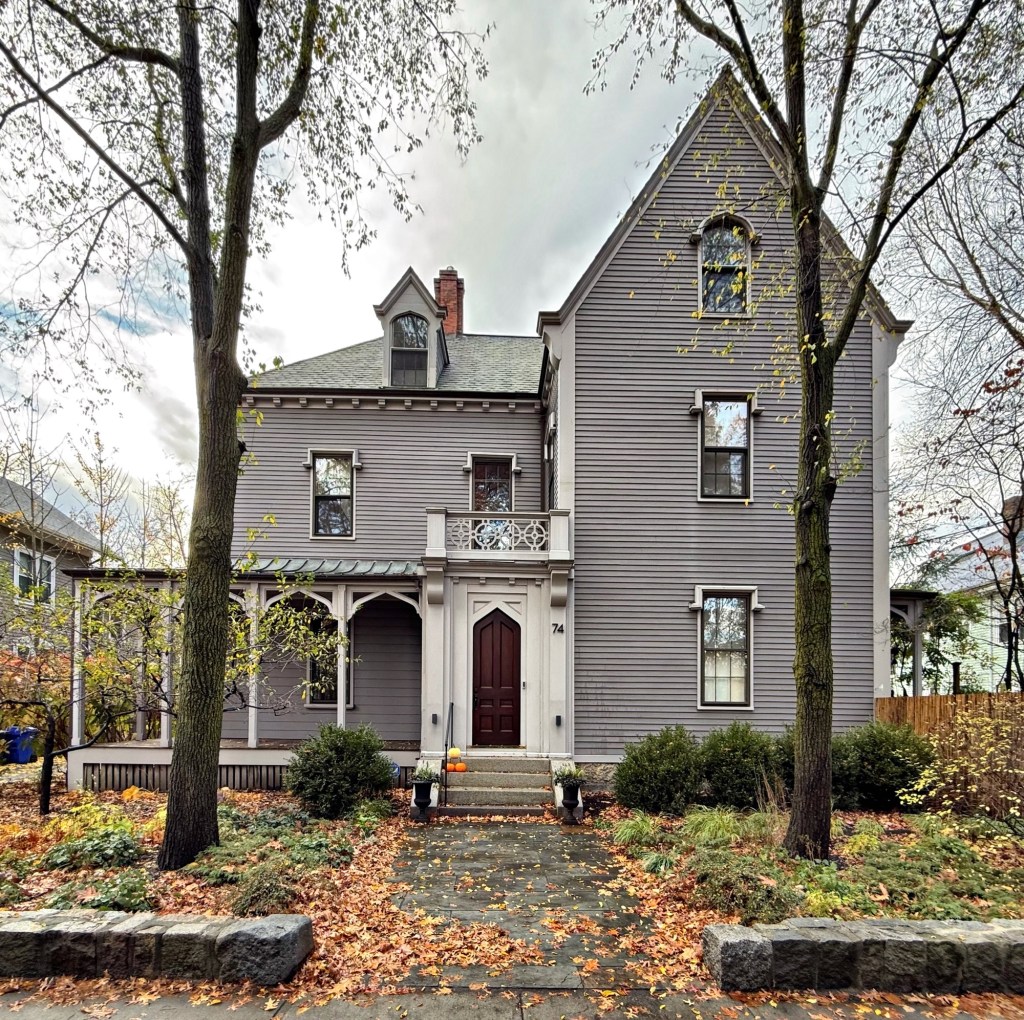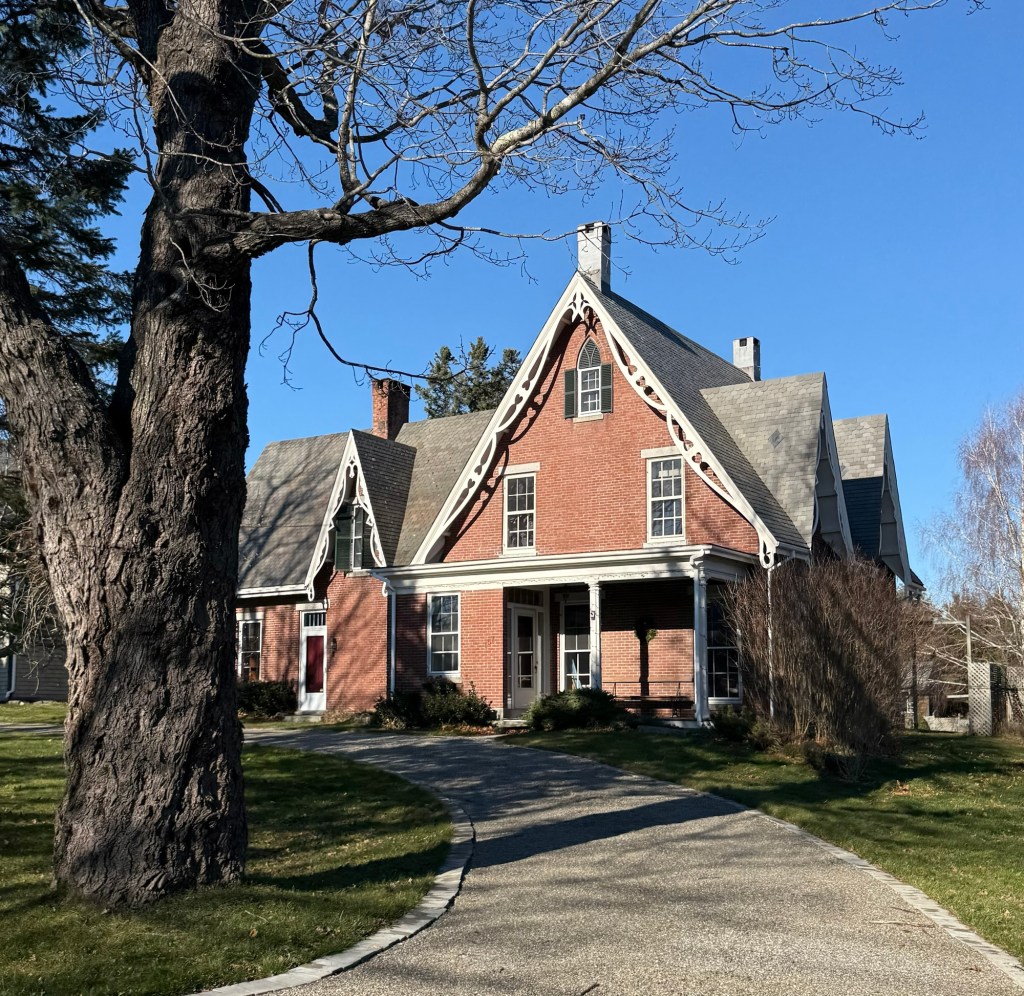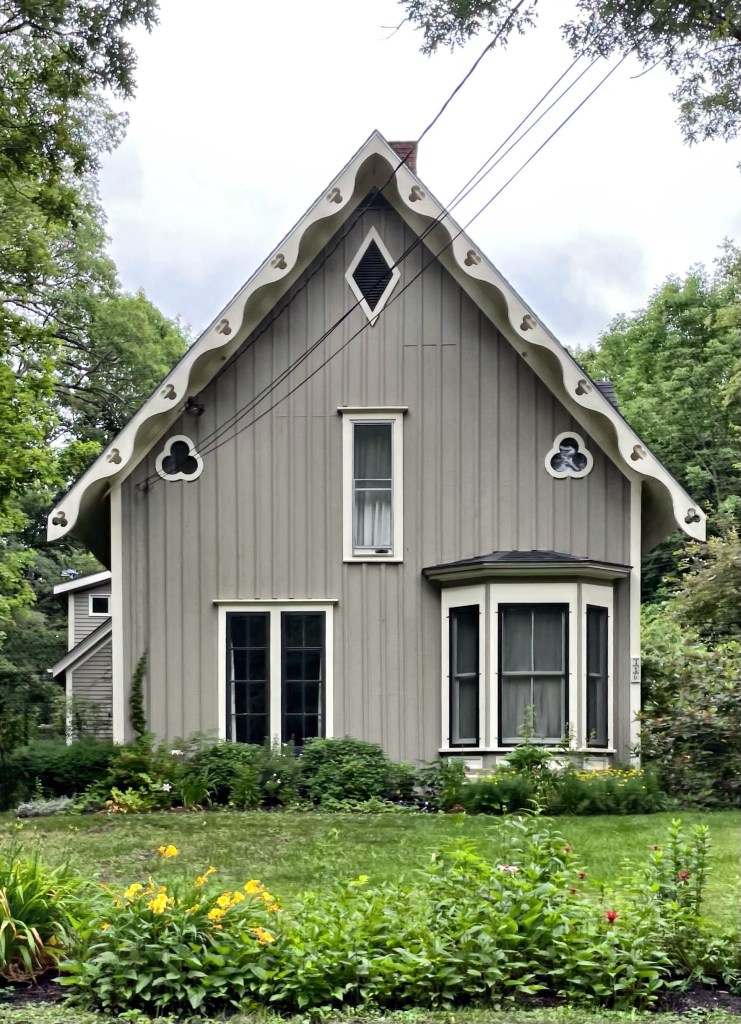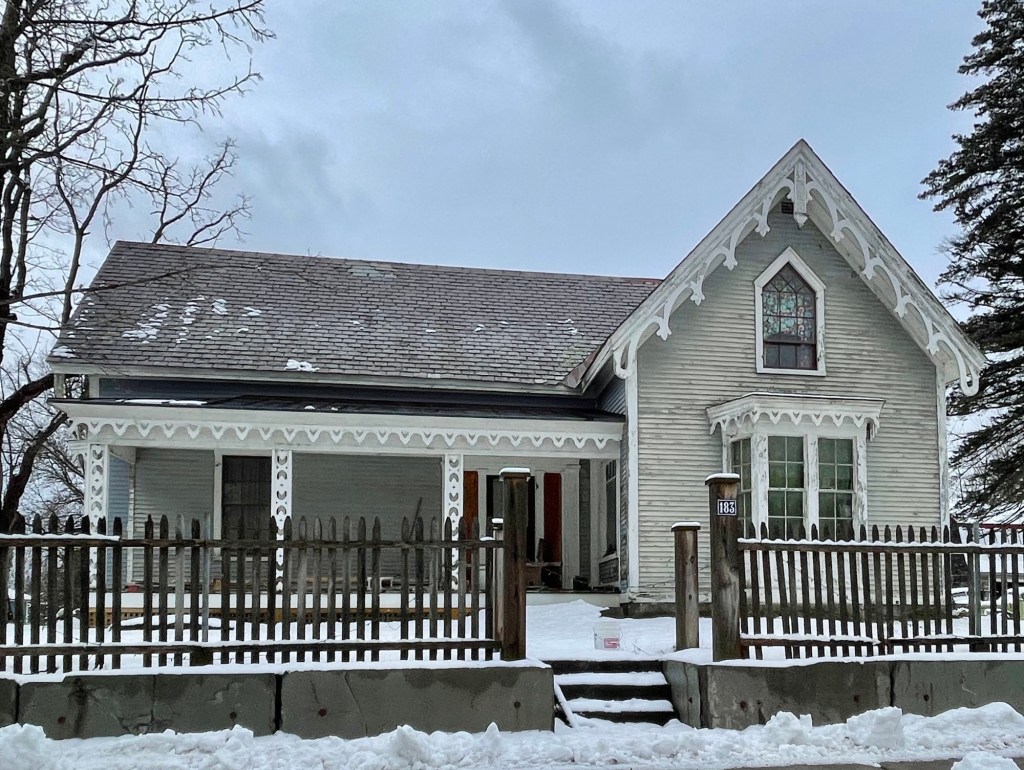
Elijah Emerson House // 1846

Elijah Carleton Emerson (1807-1888) was a wealthy Boston merchant, making his fortune as Director of the Second National Bank and President of the Middlesex Horse Railroad. In his late 30s, he purchased land in Brookline Village and established his estate on the land that is now Emerson Park in 1846. The bucolic setting of his estate included a pond, boathouse and adjacent cottage, but as the surrounding area continued to develop with easy access to Downtown Boston, Elijah Emerson began to develop his estate. Emerson began to build residences on his land for supplemental income. After his death in 1888, Emerson’s two daughters, Sarah Davis and Tirzah Snell Arnold, maintained the property but sold it to the Town of Brookline in 1907. Brookline officials originally sought to build a new library on the site, but ultimately built it on Washington Street in 1910. The Emerson house and carriage barn were moved across Davis Street from their original site and Emerson Park was established. Emerson’s granddaughter, Mrs.Katharine Snell and her husband, inventor, Cullen B. Snell moved into the relocated house. The Elijah Emerson House (and carriage house at the rear) is a great, well-preserved example of a suburban Boston residence designed in the Gothic Revival style.

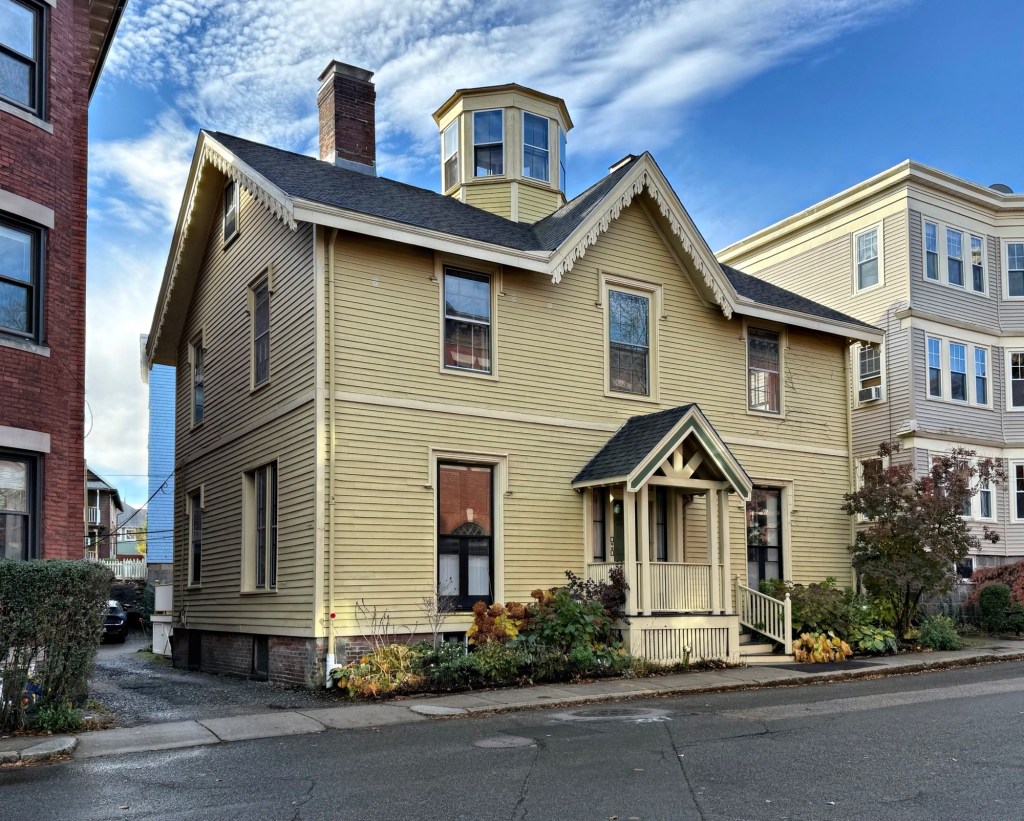
Thomas Aspinwall Davis House // 1844

The Lindens neighborhood, located just east of the civic and commercial core of Brookline Village, was long an apple and cherry orchard known as Holden Farm. Beginning in 1843, the area became the earliest planned development in the town and was laid out as a “garden suburb” for those wishing to escape the growing congestion of Boston. As originally conceived in 1843, it reflected the latest ideals of planned residential development for a semi-rural setting on land owned by Thomas Aspinwall Davis. The streets, parks, and house lots here were laid out by civil engineer, Alexander Wadsworth, who two years earlier, laid out plans for Mount Auburn Cemetery in Cambridge, the first “Rural Cemetery” in America. Early homes were built on speculation by John F. Edwards, an architect-builder, for Davis, who was strict about high-quality designs in the Greek and Gothic revival styles in his newly laid out neighborhood. This stately house was built as Thomas Aspinwall Davis’ own residence in the Gothic Revival style. The house originally had a Gothic style full-length porch, but when the house was relocated in 1903 to the present site, to make room for new houses as the neighborhood grew denser. During the move, the porch was removed, but the Davis House still maintains the belvedere at the roof, historic window trim, and decorative bargeboards at the eaves.

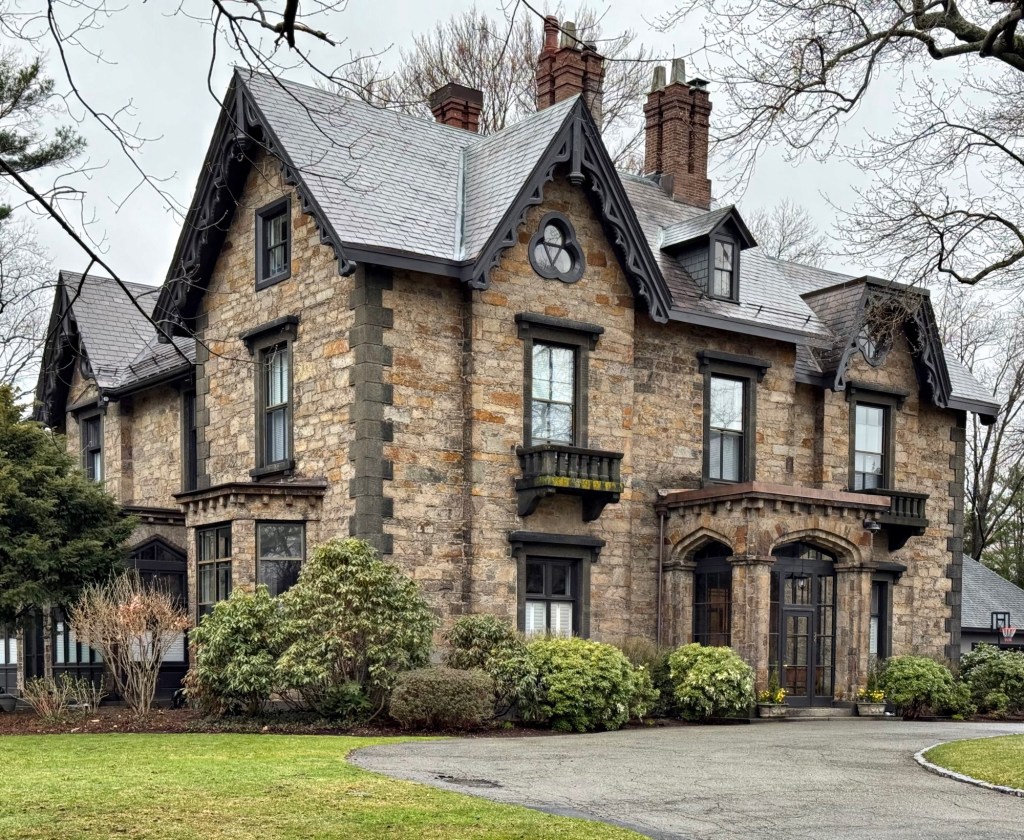
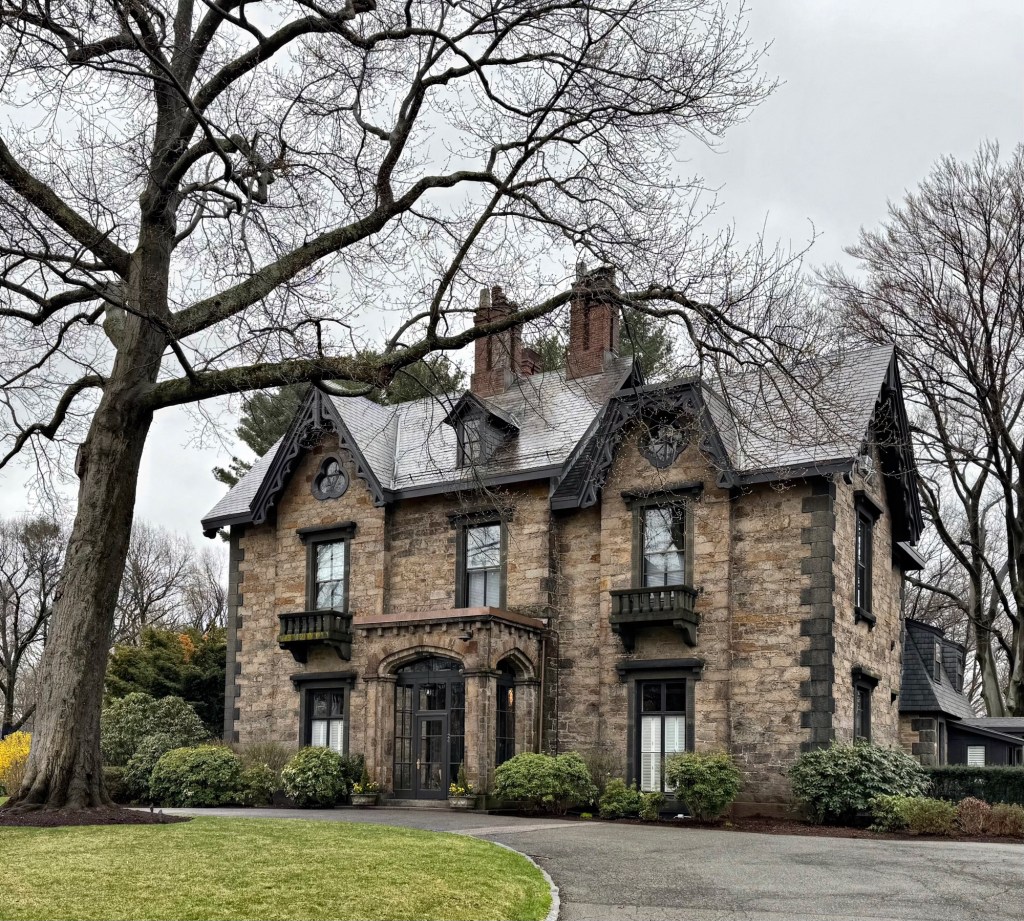
Frederick Sears Cottage // 1851

The Frederick Sears Cottage in the Cottage Farm neighborhood of Brookline, Massachusetts, is significant as one of the major surviving examples of Gothic Revival domestic architecture in the Boston area. In 1849, wealthy Bostonian, David Sears (1787-1871) laid out parks and squares in the Cottage Farm neighborhood, and built houses for himself and his children. His own house, erected in 1843, was the oldest, soon followed by houses for his four daughters, Ellen d’Hautville, Harriet Crowninshield, Anna Amory, Grace Rives, and son, Frederick. The Frederick Sears Cottage is the only surviving Sears residence in the Cottage Farm neighborhood. Frederick Sears‘ cottage was built in 1851, though he did not occupy the house long, as just three years after he and his wife married in 1852 to move into this home, Marian died. The house was inherited by Frederick Sears Jr. , and was acquired by Boston University in 1960, who began to expand into this neighborhood. They maintain the significant property very well. The Sears Cottage is an excellent example of the Gothic Revival style in stone with scalloped vergeboards, quatrefoil motifs, corner quoins, and projecting entry. The house is constructed of Roxbury Puddingstone and is said to have been designed by George Minot Dexter.

Gen. Davis Tillson House //1853

The General Davis Tillson House was built in 1853 and is one of the best examples of a high-style Gothic Revival residence in the Mid-Coast region of Maine. Located on Talbot Avenue in Rockland, Maine, the house was first owned by General Davis Tillson (1830-1895), a prominent local businessman who owned lime manufacturing facilities and the town’s main wharf before enlisting for service in the American Civil War. Tillson had attended the United States Military Academy at West Point (1845-1851) but did not graduate due to an injury which forced the amputation of one of his legs. During the Civil War, Davis Tillson fought with distinction at the Battles of Cedar Mountain and Second Bull Run. Promoted up to Lieutenant Colonel, then Brigadier General, US Volunteers on March 21, 1863, he later served as Chief of Artillery, and commanded defensive fortifications in the siege of Knoxville before the conclusion of the war. Afterwhich, General Tillson was selected to serve as Director of Freedmen’s Bureau in Georgia and Tennessee. The Bureau was established in 1865 by Congress to help millions of former Black slaves and poor whites in the South in the aftermath of the Civil War. The Freedmen’s Bureau provided food, housing and medical aid, established schools and offered legal assistance. It also attempted to settle former slaves on land confiscated or abandoned during the war. After two years in Tennessee, Tillson would return to Rockland to his home and spend the rest of his life in Maine from this home. The General Tillson House is notable for the use of brick and the steeply pitched gable roof with jigsawn bargeboards.

Rosevale // 1876

“Rosevale” was built in 1876 as a summer residence in Newport, Rhode Island, for couple, Grace Sears Rives and William Cabell Rives. Grace was the daughter of David Sears of Boston, who developed the Longwood neighborhood of Brookline; and William was the son of William C. Rives Sr., a Virginia congressman and Senator. The High Victorian Gothic mansion was designed by the Boston architectural firm of Peabody & Stearns who formed their practice just years earlier. The house was enlarged in 1881 by architect George Champlin Mason, Sr. The stonework of the lancet windows, the large octagonal tower, and the carved moldings give the relatively boxy home a more ecclesiastical feeling. The estate retains its original siting, at the middle of a large lot between Red Cross and Rhode Island avenues, which has thus far resisted infill housing on the estate. For years, Rosevale has been occupied as a funeral home, but it appears to have sold a couple years ago.

Glimmerstone // 1845

What a treat it was to stumble upon one of the most beautiful homes in Vermont, and all the best houses have names! Glimmerstone is located in the small town of Cavendish, and is possibly the finest Snecked Ashlar constructed home in the state. The house was built in 1845 for Henry Fullerton, manager of the Black River Manufacturing and Canal Company mill in Cavendish. The stone used to build the house was quarried less than a mile away, and hauled to the site. The construction style consists of stone facing on either side of rubble fill, with slabs and snecks sometimes laid across the fill to provide strength, a method brought to the region by Scottish immigrant masons. The house’s design is by a local carpenter, Lucius Paige, and is based on designs published by Andrew Jackson Downing, who depicted many Gothic style designs in pattern books which were built all over the country. The house has had a number of owners after Mr. Fullerton died. During the prohibition era, Art Hadley, who would later become extremely wealthy as the inventor of the expansion bracelet, used the home as part of a rum running operation. Glimmerstone was purchased in 2010 by the current owners, who underwent a massive restoration of the home, converting it into a bed and breakfast, allowing the public to experience the property as well.

“Granite Lodge” // 1851

I love Rockport because every time I walk the winding, narrow streets, I find something new. This time, I stumbled upon this absolutely amazing mansion, built at the height of the romantic period of architecture. The home was built in 1851 by Solomon Torrey and his wife, Susanna Norwood. Susanna was the daughter of Charles Norwood, a descendant of Joshua Norwood, who owned much of the land in this part of town and lived in the c.1680 cottage down the street (last post). Solomon Torrey was the son of a quarry owner in Quincy, who seemingly moved to Rockport to continue in the family trade (the “Rock” in Rockport). Solomon and Susanna were gifted some land from her father to build a fine home, when the couple were still in their 20s! Before this, Solomon traveled west to partake in the California Gold Rush, his newlywed wife Susanna kept a diary, while he was away, mentioning her dream “stone cottage” where she and her family would live a long life together. When Solomon returned, the couple built their dream home, and had two daughters, Aria and Susannah. Sadly, Solomon lived only 5 years after his return from the Gold Rush and died at just 33 years old. Susannah was aided by her family, raising her two daughters, never remarrying, living in her dream home without the love of her life until her death in 1908, at 81 years old.

John Bush House // c.1845

Here is another of my favorite non-Gilded Age houses in Newport, the John Bush House on Mann Street! John T. Bush (1817-1881) was listed in directories as a “wool-puller” which clearly was a lucrative job, as he could afford to build this high-style Gothic Revival home. This house is heavily influenced by the publications of Andrew Jackson Downing first published in 1842, so the house is probably built within a couple years of that date. Hallmark features of the Gothic Revival style include: lancet windows, bargeboards, windows with drip molds, and steeply pitched roofs; this house has all of the above!

Unity Church Parsonage // 1878

Architects William Robert Ware and Henry Van Brunt designed this parsonage in Easton, Massachusetts for the Unity Church in town (featured previously). The Victorian Gothic house is constructed of polychromatic stone, wood trim, slate and copper roof surfaces, and terracotta finials. The architecture is very well-developed and stands toe-to-toe with the other architectural landmarks in town, just a short walk away.

Reverend Hanson House // 1853

This Carpenter Gothic house in Gardiner, Maine, was built in 1853 by Reverend J.W. Hanson, author of the 1852 History of Gardiner, Pittston and West Gardiner and the second minister (1850-54) of the Universalist Church (last post), after its organization in 1843. Hanson was likely inspired by the design of his church when having his own home built, as he followed the Gothic mode. His house features board-and-batten siding, bargeboards, and trefoil windows and carvings in the said bargeboards. Reverend Hanson lived in the home until 1868 when he moved to Dubuque, Iowa. The home is very well preserved and one of the best examples of the Carpenter Gothic style in the state.