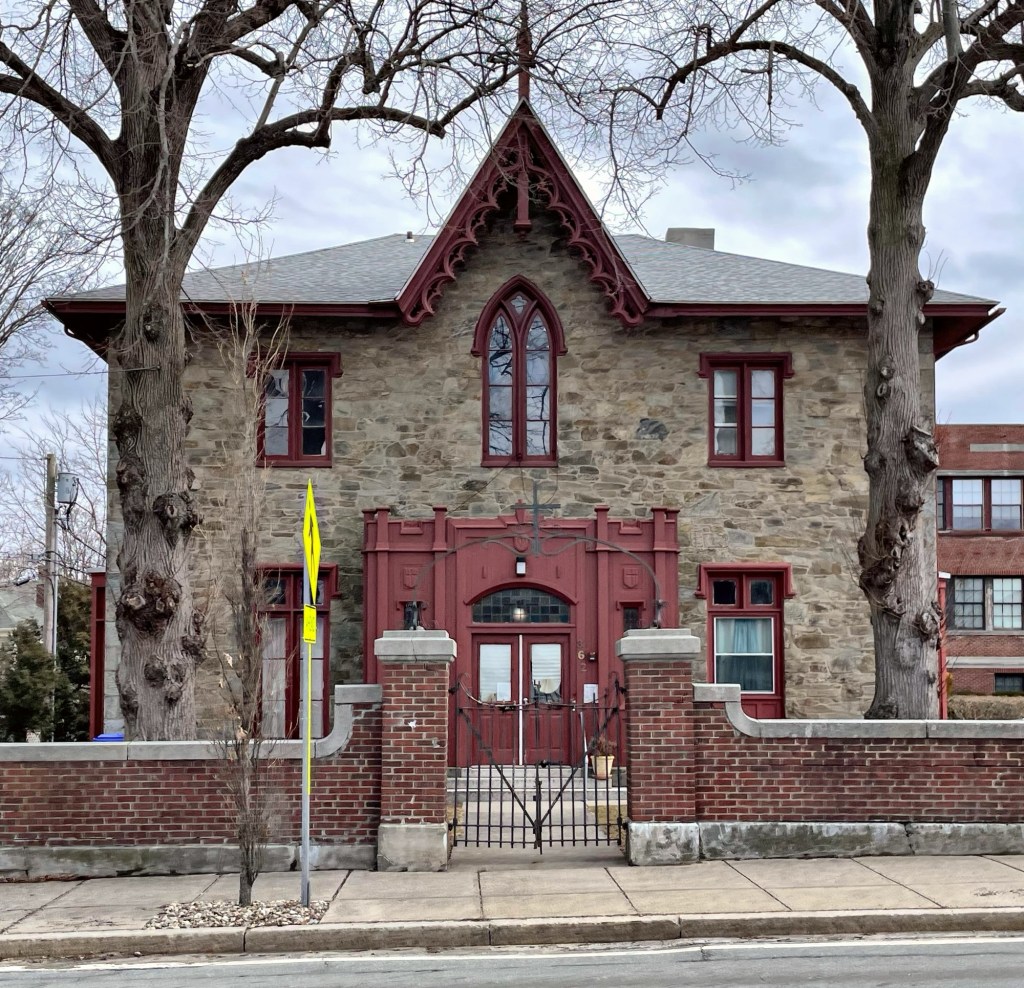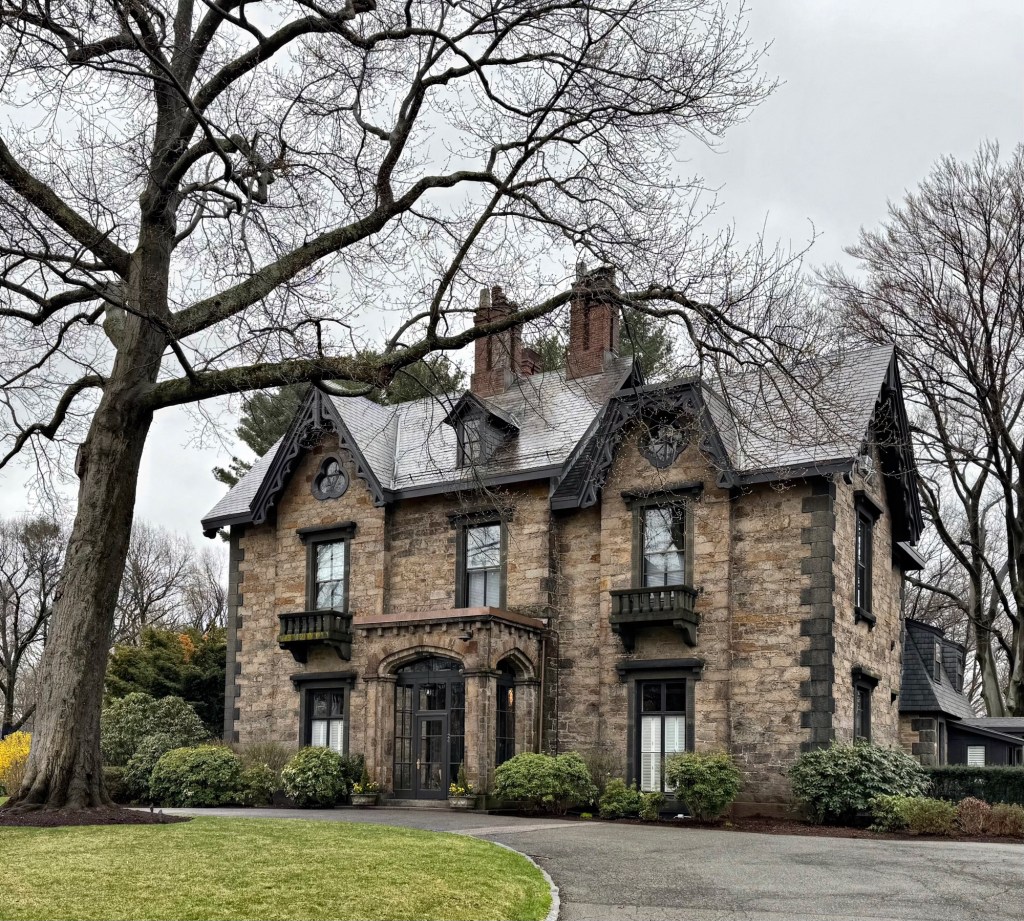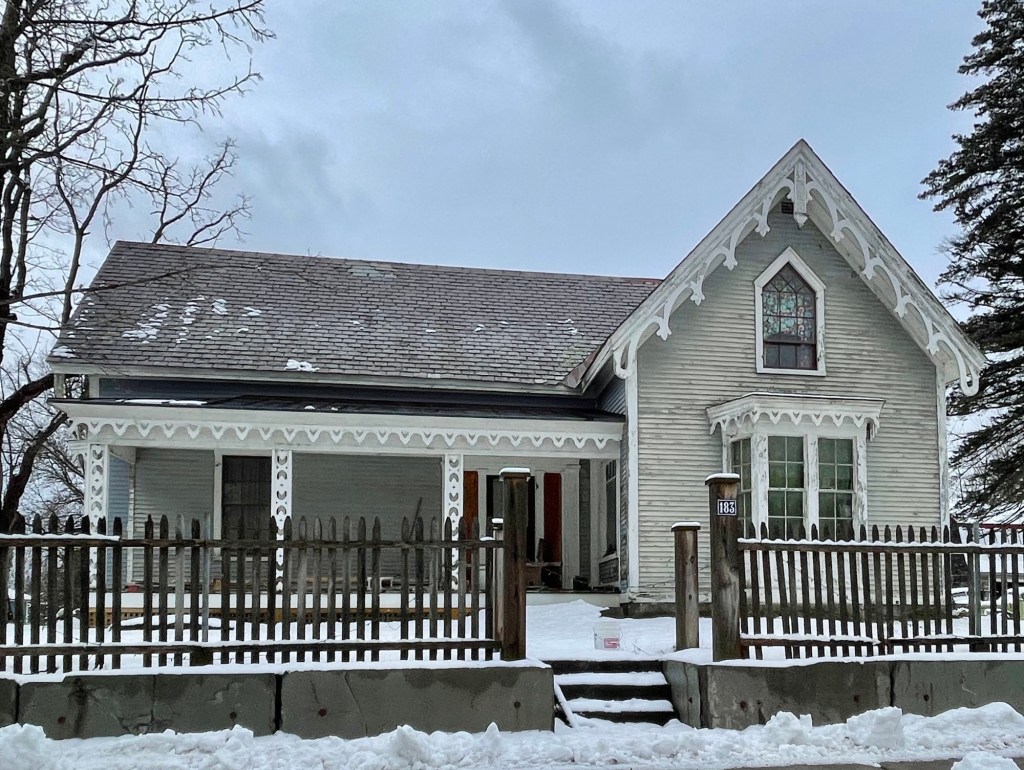
Elijah Emerson House // 1846

Elijah Carleton Emerson (1807-1888) was a wealthy Boston merchant, making his fortune as Director of the Second National Bank and President of the Middlesex Horse Railroad. In his late 30s, he purchased land in Brookline Village and established his estate on the land that is now Emerson Park in 1846. The bucolic setting of his estate included a pond, boathouse and adjacent cottage, but as the surrounding area continued to develop with easy access to Downtown Boston, Elijah Emerson began to develop his estate. Emerson began to build residences on his land for supplemental income. After his death in 1888, Emerson’s two daughters, Sarah Davis and Tirzah Snell Arnold, maintained the property but sold it to the Town of Brookline in 1907. Brookline officials originally sought to build a new library on the site, but ultimately built it on Washington Street in 1910. The Emerson house and carriage barn were moved across Davis Street from their original site and Emerson Park was established. Emerson’s granddaughter, Mrs.Katharine Snell and her husband, inventor, Cullen B. Snell moved into the relocated house. The Elijah Emerson House (and carriage house at the rear) is a great, well-preserved example of a suburban Boston residence designed in the Gothic Revival style.

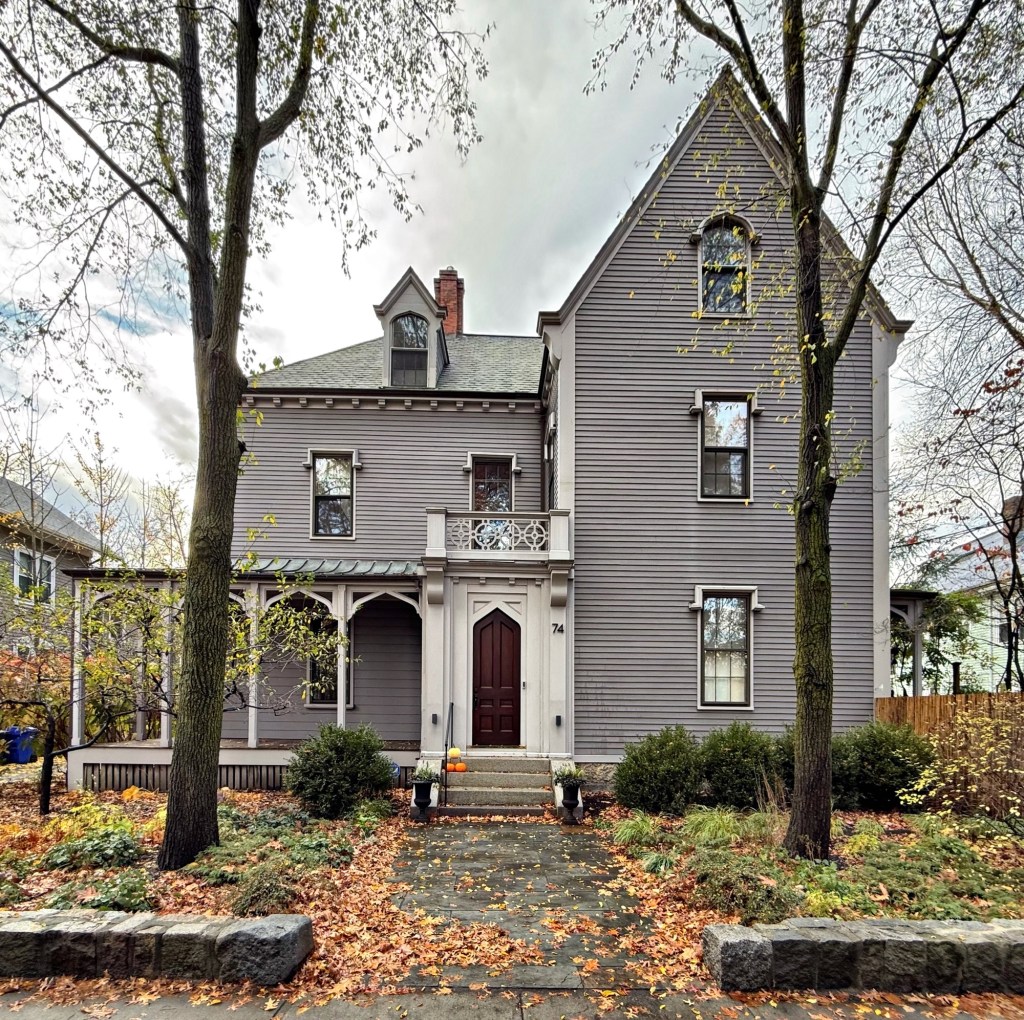
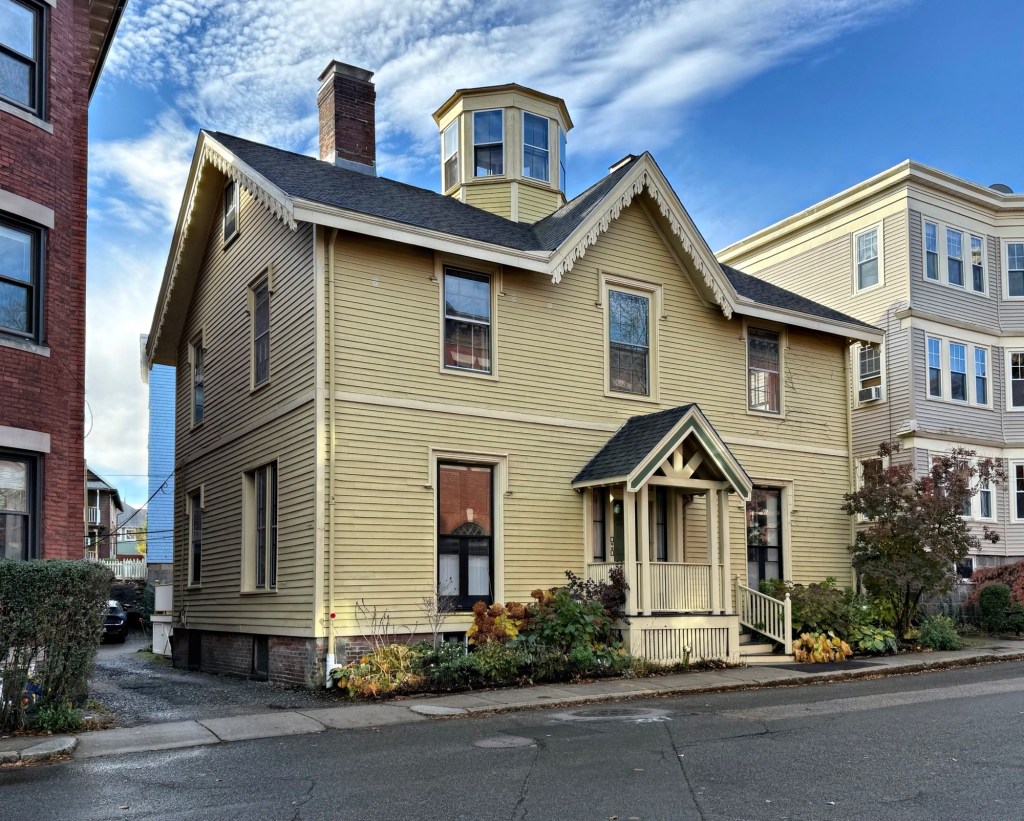
Thomas Aspinwall Davis House // 1844

The Lindens neighborhood, located just east of the civic and commercial core of Brookline Village, was long an apple and cherry orchard known as Holden Farm. Beginning in 1843, the area became the earliest planned development in the town and was laid out as a “garden suburb” for those wishing to escape the growing congestion of Boston. As originally conceived in 1843, it reflected the latest ideals of planned residential development for a semi-rural setting on land owned by Thomas Aspinwall Davis. The streets, parks, and house lots here were laid out by civil engineer, Alexander Wadsworth, who two years earlier, laid out plans for Mount Auburn Cemetery in Cambridge, the first “Rural Cemetery” in America. Early homes were built on speculation by John F. Edwards, an architect-builder, for Davis, who was strict about high-quality designs in the Greek and Gothic revival styles in his newly laid out neighborhood. This stately house was built as Thomas Aspinwall Davis’ own residence in the Gothic Revival style. The house originally had a Gothic style full-length porch, but when the house was relocated in 1903 to the present site, to make room for new houses as the neighborhood grew denser. During the move, the porch was removed, but the Davis House still maintains the belvedere at the roof, historic window trim, and decorative bargeboards at the eaves.

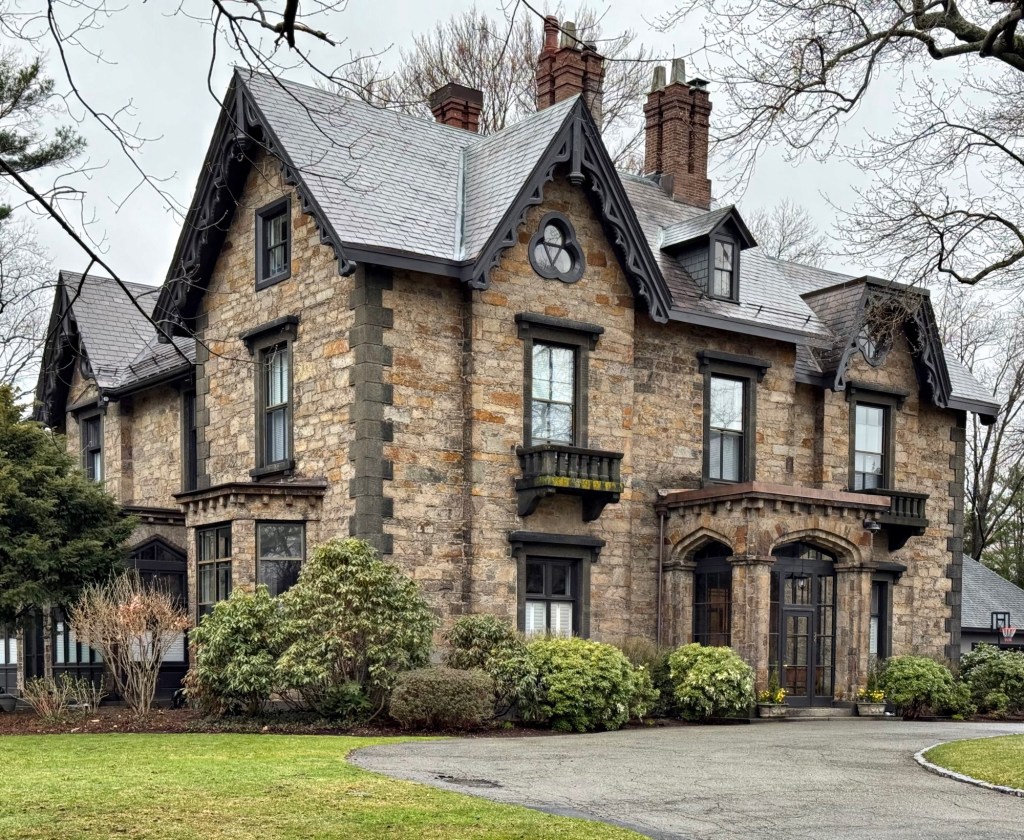
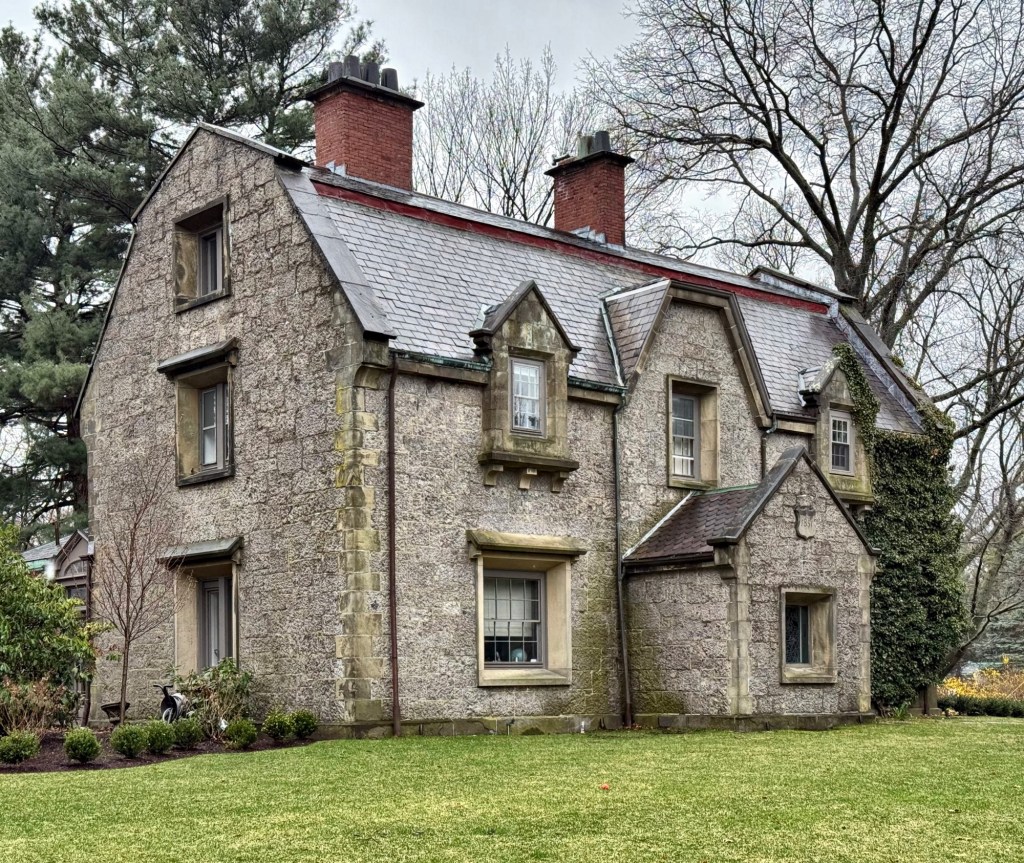
Frederick Sears Cottage // 1851

The Frederick Sears Cottage in the Cottage Farm neighborhood of Brookline, Massachusetts, is significant as one of the major surviving examples of Gothic Revival domestic architecture in the Boston area. In 1849, wealthy Bostonian, David Sears (1787-1871) laid out parks and squares in the Cottage Farm neighborhood, and built houses for himself and his children. His own house, erected in 1843, was the oldest, soon followed by houses for his four daughters, Ellen d’Hautville, Harriet Crowninshield, Anna Amory, Grace Rives, and son, Frederick. The Frederick Sears Cottage is the only surviving Sears residence in the Cottage Farm neighborhood. Frederick Sears‘ cottage was built in 1851, though he did not occupy the house long, as just three years after he and his wife married in 1852 to move into this home, Marian died. The house was inherited by Frederick Sears Jr. , and was acquired by Boston University in 1960, who began to expand into this neighborhood. They maintain the significant property very well. The Sears Cottage is an excellent example of the Gothic Revival style in stone with scalloped vergeboards, quatrefoil motifs, corner quoins, and projecting entry. The house is constructed of Roxbury Puddingstone and is said to have been designed by George Minot Dexter.

Dexter-Hall Cottage // 1851

Built across the street from the Amos A. Lawrence House in the Cottage Farm neighborhood in Brookline, the Dexter-Hall Cottage is an early Gothic Revival style residence built in the first period of the district’s history. Architect, George Minot Dexter was gifted a desirable house lot in the neighborhood from Amos Lawrence as a reward for his designing his own property, and in turn, designed this cottage in 1851 in the the same mode as the Lawrence House. The stone cottage has a three bay façade with enclosed center entry. On the second floor are wall dormers as well as a central jerkinhead dormer with a gambrel slate roof. The property was later owned by George M. Dexter’s daughter, Emily, and her husband, Thomas Bartlett Hall. The house remained in the Hall family through at least the 1920s.

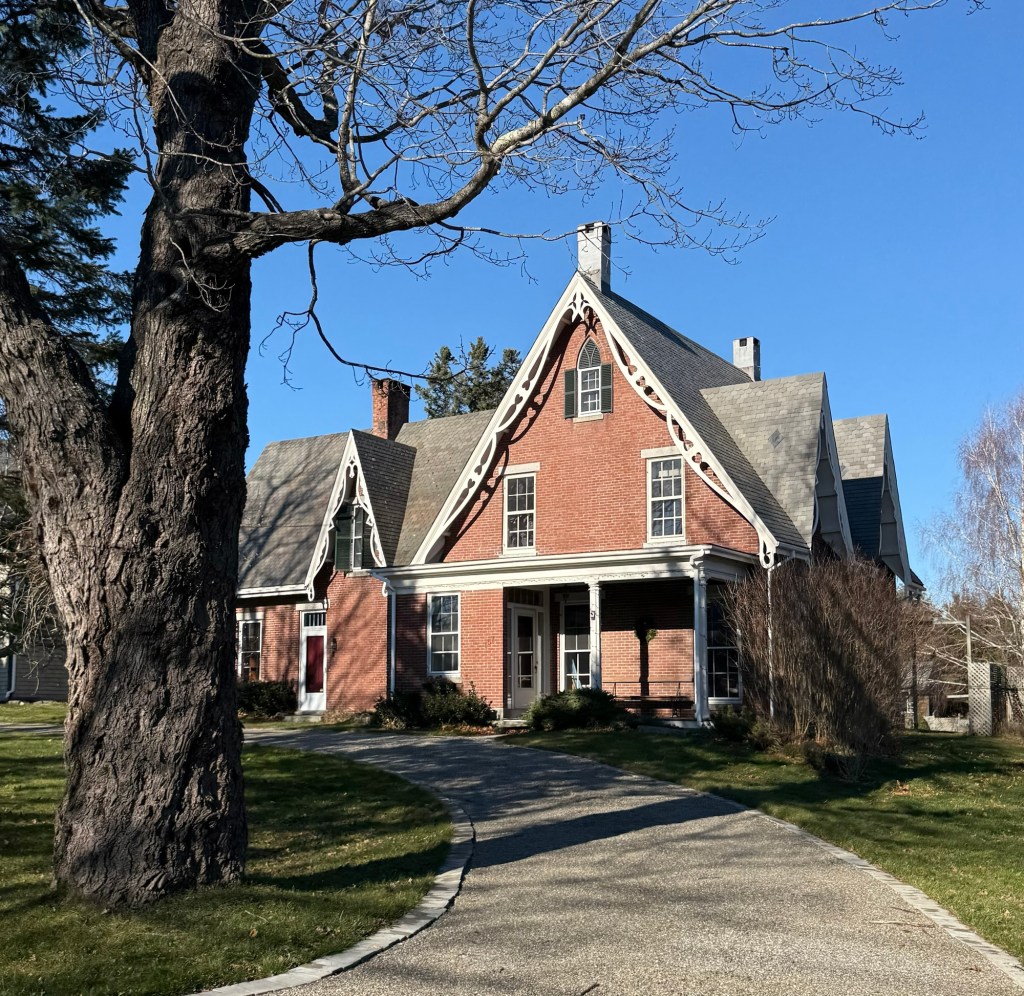
Gen. Davis Tillson House //1853

The General Davis Tillson House was built in 1853 and is one of the best examples of a high-style Gothic Revival residence in the Mid-Coast region of Maine. Located on Talbot Avenue in Rockland, Maine, the house was first owned by General Davis Tillson (1830-1895), a prominent local businessman who owned lime manufacturing facilities and the town’s main wharf before enlisting for service in the American Civil War. Tillson had attended the United States Military Academy at West Point (1845-1851) but did not graduate due to an injury which forced the amputation of one of his legs. During the Civil War, Davis Tillson fought with distinction at the Battles of Cedar Mountain and Second Bull Run. Promoted up to Lieutenant Colonel, then Brigadier General, US Volunteers on March 21, 1863, he later served as Chief of Artillery, and commanded defensive fortifications in the siege of Knoxville before the conclusion of the war. Afterwhich, General Tillson was selected to serve as Director of Freedmen’s Bureau in Georgia and Tennessee. The Bureau was established in 1865 by Congress to help millions of former Black slaves and poor whites in the South in the aftermath of the Civil War. The Freedmen’s Bureau provided food, housing and medical aid, established schools and offered legal assistance. It also attempted to settle former slaves on land confiscated or abandoned during the war. After two years in Tennessee, Tillson would return to Rockland to his home and spend the rest of his life in Maine from this home. The General Tillson House is notable for the use of brick and the steeply pitched gable roof with jigsawn bargeboards.

Dow-Starr House // c.1858

A big departure from the plain, yet classically proportioned Federal period homes in Warren, this Gothic Revival on Main Street turns heads when people pass by. A quintessential Gothic “cottage,” the facade of the Dow-Starr House in Warren has also been graced by a three-sectioned Gothic Revival porch as illustrated in Alexander Jackson Downing’s plan books from the 1840s. As completed, this house followed almost exactly Andrew Jackson Downing’s Design II as illustrated in Cottage Residences 1842 ; it differed only in its use of speckled fieldstone over coursed ashlar. The house was later acquired by and used as a convent for the St. Jean Baptiste Church in Warren, who also built a school building behind. The house has seen some alterations, but remains an important architectural landmark of the town.

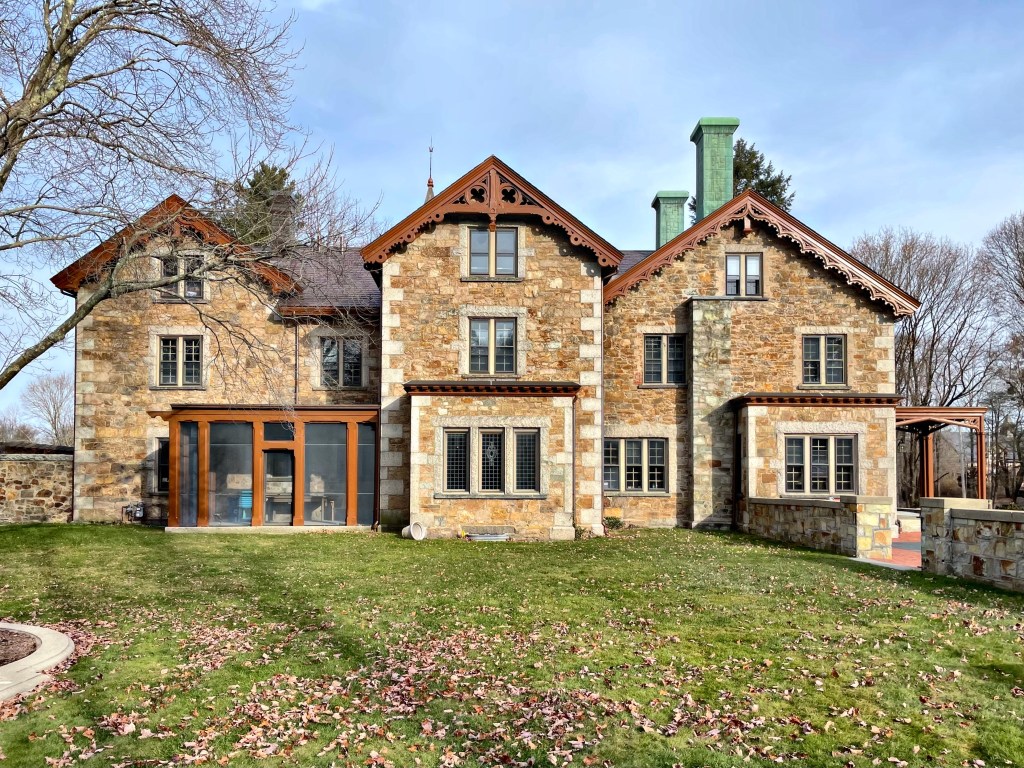
Queset House // 1854

Tucked away behind the Ames Free Library in Easton, you will find one of the most stately examples of Gothic Revival architecture in a house in New England. The house is known as Queset House. Queset was commissioned to be built in 1853 and it was completed the following year for Oakes Angier Ames, of the wealthy Ames Family, who ran a shovelworks in town, and built some of the most handsome structures in the state. The house’s front portion design was drawn from a plan by noted architect Andrew Jackson Downing (who died in 1852). Downing collaborated with Alexander Jackson Davis who provided architectural drawings. The two architects created pattern books which greatly influenced Gothic Revival and Italian Villa style architecture for the next decades, with many wealthy people hiring builders to complete homes in their designs. Queset House is different than most in that the house is constructed of local stone. Oakes would later hire Harvard-educated architect John Ames Mitchell, (a first cousin of Oakes Angier and architect of the nearby Unity Church in Easton) designed the rear addition in 1873, adding the copper-clad chimneys. In the later years of his life, Oakes wanted to help further-improve his town and worked with his family to consult with starchitect H. H. Richardson and landscape starchitect Frederick Law Olmsted on projects in town (the Library, Town Hall, Rockery). After his death in 1899, the home was occupied by his son, famous theatrical producer Winthrop Ames, and his wife. The family would eventually gift the property to the Town of Easton, who today occupy it as an extension of the Public Library, open to the public!

Side view.