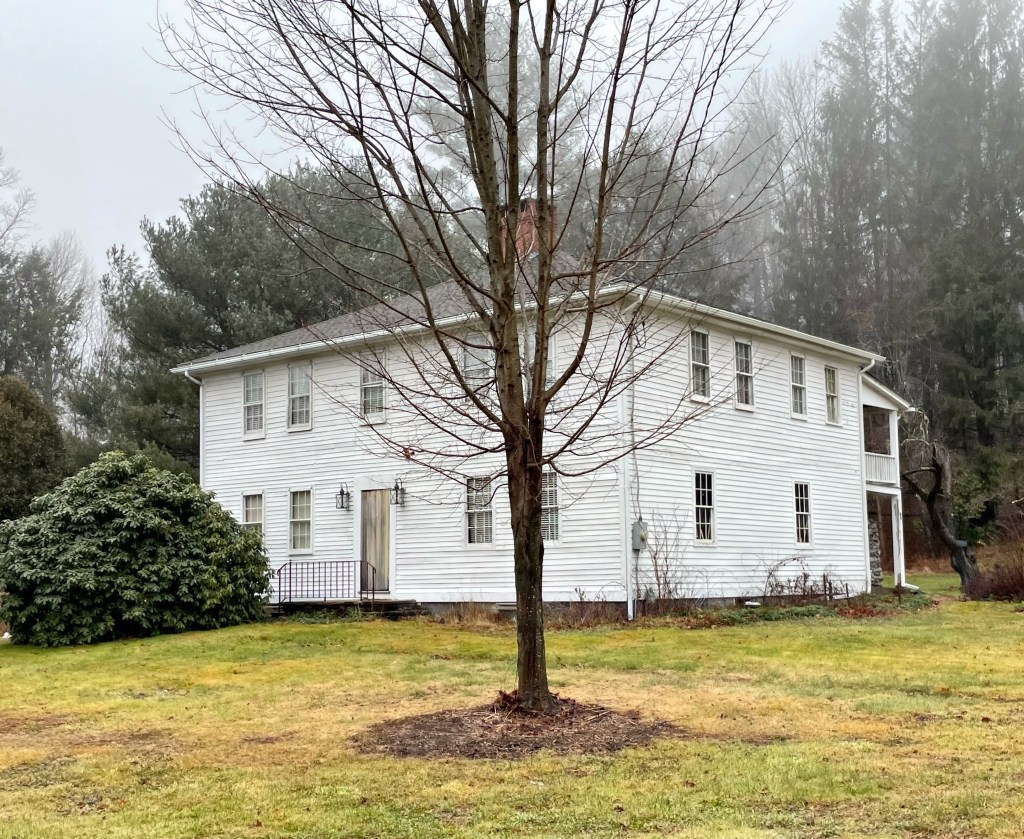
Canterbury Shaker Bee House // 1837

The original purpose served by this small clapboard building in the Canterbury Shaker Village, built in 1837 and measuring just 12 x 25 feet is subject to some debate, although it was definitely used as a drying house. Early writings indicate it was built as an apple-drying house while others state that the original purpose was to dry lumber. The present off-center gable-roofed cupola on the gable roof served as a ventilator. In 1865, the building became the headquarters of the bee keepers of the local Shakers.

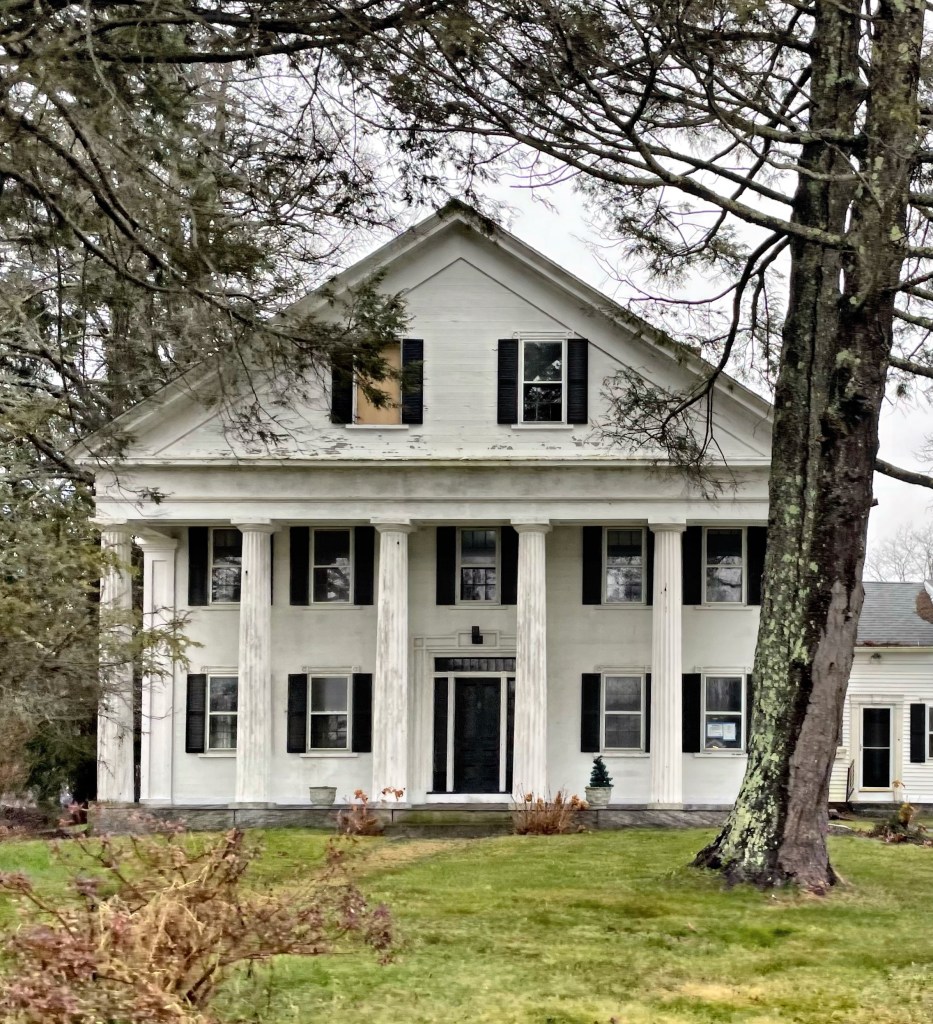
Canterbury Shaker Syrup Shop // c. 1780

When Benjamin Whitcher donated his farm for the beginnings of a utopian Shaker community, the land and buildings became the catalyst for the next 200 years of Shaker life in the community. It is known that Benjamin Whitcher constructed his farmhouse sometime between 1775 and 1782. With the arrival of the first Shakers in 1783, Whitcher allowed families to reside on the farmland, with the 1790 Census counting 35 people on the Whitcher property. This structure was one of the original structures on the old Whitcher Farm, and is possibly the oldest extant building in the Shaker village today. The building was moved to its present location in 1841 and was used for distilling sarsaparilla syrup for medicinal purposes by members of the community.

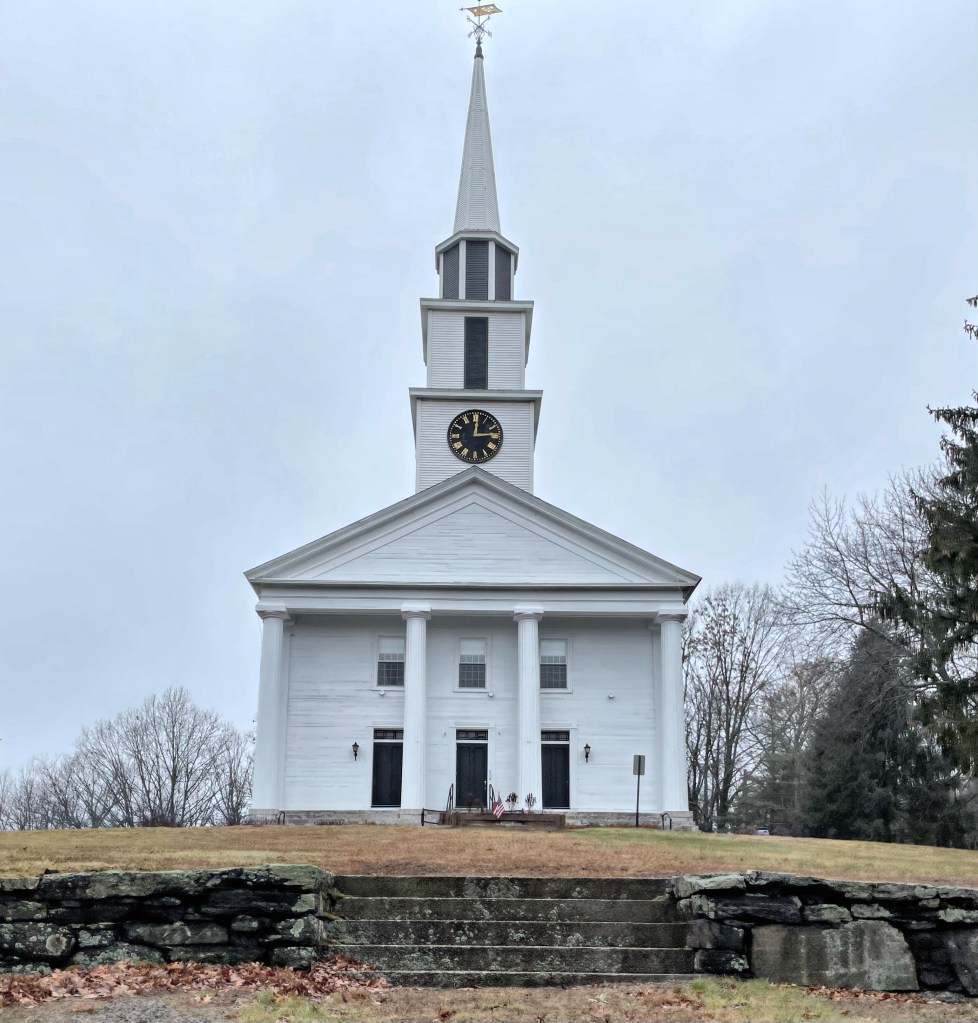
Canterbury Shaker Dwelling House // 1793

The second oldest purpose-built building in the Canterbury Shaker Village (after the 1792 Meeting House), is the dwelling house, constructed in 1793. The T-shaped structure was expanded numerous times and contains 56 rooms. The structure is the largest in the village and is notable for the large domed cupola, housing a Paul Revere bell. The first floor contained the village butcher shop, bakery, communal kitchen and dining room. For many years the second floor consisted of four bedrooms, two for elders and two for the sisters and the brethren. The third floor is also devoted to dwelling rooms. The Dwelling House was the residence of Canterbury’s last remaining Shaker sister, Ethel Hudson, who died in September 1992, the 200th anniversary year of the founding of the Canterbury Shaker community.

Canterbury Shaker Meeting House // 1792

The Canterbury Shaker Village was one of two Shaker communities existing in present-day New Hampshire (the other being Enfield Shaker Village, featured previously on here). In 1782 Israel Chauncey and Ebeneezer Cooley from the Mount Lebanon village of Shakers traveled to Canterbury and converted several prominent figures of the community by convincing some of the Christian farmers that the Shaker way was what they had been seeking. Among those converted to the Shakers, the Whitcher, Wiggin and Sanborn families, donated land to house the Canterbury Village community of Shakers and the Canterbury Village was founded in 1792, led by Father Job Bishop. The village expanded over time, and in 1803 there were 159 members in three families. Nearly fifty years later in 1850, the site contained 3,000 acres with a community of 300 housed in 100 buildings!

The first building of the Canterbury Village was the Meeting House. The Gambrel roofed building was constructed by members in reverent silence and supervised by Moses Johnson (1752-1842) who served as master builder of seven Shaker meetinghouses all over the Northeast. Inside, there were two stairways, one for men and one for women, located in the northwest and southwest corners of the building, each easily accessed by separate entrances, which led brothers and sisters from the first floor meeting room to the second story sleeping lofts.

In 1992, Canterbury Shaker Village closed, leaving only Sabbathday Lake Shaker Village open as a functioning community. There are apparently only two active Shakers left in the country, both at Sabbathday Lake in Maine. Many other villages like Canterbury, have been converted to museums, which give historians and the general public a great insight into how these places have functioned.

St. Saviour’s Rectory // 1898

Standing adjacent to the beautiful St. Saviour’s Episcopal Church in Bar Harbor (last post), the church’s Rectory building fits very well into the landscape here. Built in 1898, the rectory is a two-and-a-half-story stone and frame home with a projecting entrance porch at the facade framed by a pair of steeply pitched gables. The Rectory was designed by Westray Ladd who grew up in the area, and worked in the office of Wheelwright & Haven in Boston, Massachusetts as well as with William Emerson and Peabody & Stearns before opening up a firm in Pennsylvania.

Thornhedge // 1900

Located next door to “The Poplars” (last post), another summer cottage Thornhedge, stands out for its architectural splendor and great state of preservation. Similar to “The Poplars”, the home was built in 1900 for Lewis A. Roberts, a retired book publisher from Boston. Roberts ran the publishing house with his brothers, and they published work by authors including Emily Dickinson, Fyodor Dostoyevsky and George Sand, the first American edition of Treasure Island by Robert Louis Stevenson, and had their greatest commercial success with Little Women by Louisa May Alcott. The business was purchased by Little and Brown Publishing in 1898. Lewis Roberts died in 1901, only a year after completing Thornhedge, and the house came under the care of his son, Lewis Niles Roberts. Mr. Roberts kept the house as a summer residence until 1920, then sold it to the family of William F. Frick, a prominent judge from Baltimore. The home became an inn by the 1970s. Thornhedge is a Queen Anne style cottage which was originally organized with the first and second floor serving as the living quarters and the top and bottom floors for the servants. The laundry, servants dining hall, and kitchen were out of sight in the finished basement, with a dumb-waiter to bring hot food to the butler’s pantry. The third floor was the servants’ living quarters.

Mathes House // c.1835

Benjamin Mathes built this stone home around 1835 for his family, of the same stone he used to build a store across the street. The Federal/Greek Revival building has amazing granite quoins (stone blocks at the corners) and lintels (blocks above the windows). Even though there are later alterations, including the bracketed door hood and massive central dormer at the roof, the home remains one of the most visually stunning buildings in town.

Willey Hotel // pre-1822

Originally an old tavern/inn, this wood-frame building in Newmarket, NH, was built for a member of the Rundlett Family who settled in town from nearby Portsmouth. The old building was known as Rundlett’s Tavern for a number of years, later renamed the Washington House, and eventually Silver’s Hotel by 1870. Under owner Joseph B. Silver, the Federal style building was updated with Victorian-era flair, marketing to visitors of town who had business with the Newmarket Manufacturing Company across the street. After Silver died in 1898, the building was purchased by George H. Willey and renamed the Willey Hotel/Willey House. He oversaw renovations in the 1920s to give it the Colonial Revival appearance we see today. The building is now apartments.

Newmarket Manufacturing Company Complex // 1823+

In 1823, the Newmarket Manufacturing Company built its first mill along the Lamprey River, dominating the waterfront and the economy of Newmarket, New Hampshire. Harnessing water power at the base of the falls, the cotton textile manufacturing community grew to include seven textile mills, with factory buildings, a machine shop, office, storage buildings, and corporate boarding houses; totaling some 140 buildings in all. During its peak production, 700 employees made up to 300,000 yards of cotton products each week, and 2.7 million yards of silk cloth each year. The mills operated continuously at this site until 1929 when a dispute between mill owners and workers erupted leading to their closure. Between 2010 and 2012, eight large mill buildings within the Newmarket Manufacturing Company property underwent a conversion to mixed use, including residential, retail, and office units, thanks to Historic Preservation Tax Credits, and many professionals who worked together with the vision to see such a large project through. Today, the complex is a excellent case-study on the power of adaptive reuse and historic preservation.

Chaddock Boarding House // 1799

Calvin Chaddock (1765-1823) graduated from Dartmouth in 1791 and three years later earned a Master of Arts degree from the college. In 1792, he married Meletiah Nye and they settled in Rochester, Massachusetts, where he became pastor of a Congregational parish in the rural northern part of town. In 1798, he opened an academy for boys and girls in the village and built this beautiful Federal style home as a boarding house for students to reside in (the schoolhouse is no longer extant). By 1804, he had “a respectable number of students from different parts of the United States.” The man moved to Ohio before settling in Charlestown, West Virginia, where he lived in a homestead with his family and three enslaved people, Charles, Thomas, and an unnamed woman. Upon his death in 1823, the three people enslaved by Chaddock, were sold at auction. The former boarding house in Rochester was later occupied as a tavern and stagecoach stop, and a store, when it was given some 19th century alterations. It has been a private home for the past hundred years.

Ballard-Hoitt House // 1790

In 1790, Joshua Ballard built this house on a prominent triangular lot on the turnpike connecting New Hampshire’s largest city at the time (Portsmouth) with the future Capital (Concord). The main door is flanked by fluted pilasters and surmounted by a pediment with dentils and strong proportions. The old tavern was purchased in the late 1800s by Charles A. Hoitt, a granger and selectman in town. As with many old homes on Main Street in town, the house was converted to apartments with a small commercial space at the ground floor.

Hadley’s Chandlery // 1806

At the corner of Main and Water streets in Marion’s Wharf Village, this beautiful building has long ties to the town’s rich maritime history. The building was constructed by A.J. Hadley in 1806 as a ship chandlery, a shop selling all the goods necessary for sailors and fishermen who were docked just steps away. While Hadley’s store occupied the right half of the first story, the western (left) segment housed the first Post Office in the village, leaving Hadley and his family on the second floor. There is something so special about fishing villages in New England, while the populations of these towns are very different than they once were, the buildings and history still convey martime history and the way of life here over 200 years ago.

Briggs House // c.1850

This tiny half-cape house in Marion was built in the mid-19th century for Timothy Hiller Briggs (1822-1877), a whaler. Based on the Federal/Greek detailing on the house, it is also likely the home was built much earlier for Timothy’s father, Silas, a sea captain, and was willed to his only son upon his death in 1833. Timothy died at the young age of 54 and his widow, Josephine, maintained the cottage until her death in 1924! The home is a half-cape as it has an off-center door with two bays of windows at the facade. A full-cape would be symmetrical with a central door and two windows on either side. The central chimney would provide heat to all rooms in the cold winter months.

First Universalist Church, Marion // 1830

I do love a good adaptive reuse story! This Marion, Massachusetts church building was constructed in 1830 for the town’s growing Universalist congregation. Architect Seth Eaton was hired and furnished plans, likely relying on neighbor, Warren Blankinship, a carpenter and congregant, to construct the building. It blends together the Greek and Gothic Revival styles well, but in a less sophisticated form. By the mid 20th century, membership of the church dwindled, and it finally shuttered its doors. With the building’s future uncertain, at a time where demolition for surface parking lots was the go-to solution, Marion residents Andrew and Dorothy Patterson, purchased the building and soon after worked with local artists in town to restore the building for use as an art space. The Marion Art Center was thus founded in 1957, and to this day, serves as a non-profit community cultural organization dedicated to promoting the visual and performing arts.

Marion Town Hall // 1876

Welcome to Marion, Massachusetts! Colonized in 1679 as “Sippican”, the town was once a district of adjacent Rochester, Massachusetts. The name, which also lends itself to the river which passes through the north of town and the harbor at the heart of town, was the Wampanoag name for the local tribe that once utilized these lands. Native settlements in present-day Marion dates as far back as 3000 B.C. as the local people were members of the Wampanoag tribe who, when the Pilgrims came, lived in a number of villages in Southeastern Massachusetts under the leadership of the great chief Massasoit. By the 19th century, the town was mostly known for its many local sea captains and sailors whose homes were in town. Today, the coastal town is known for its charming village and large waterfront homes, oh and amazing architecture!

This building was constructed in 1876 by Mrs. Elizabeth Taber (1791-1888), who, at the age of 85, founded Tabor Academy in town. She named it after Mount Tabor in Palestine rather than after herself. The school was built towards the end of the “Age of the Academies”, when in 1852, Massachusetts became the first state in the country to make education compulsory. While some major private institutions already existed, many more were founded in the mid-19th century. Tabor Academy served as a private school for boys and girls over 12 years of age, and was to remain free for local students. With the rise of public schools in the state, many academies began to struggle with admitting students, especially those that had parents willing to pay additional money for enrollment. The school struggled around the Great Depression and thus, traded buildings with the Town of Marion in the 1930s and this building became the Marion Town Hall, a use it retains to this day. The building itself is a stunning Italianate design constructed from plans by Boston architect William Gibbons Preston.

Stay tuned for more buildings and history on one of my favorite Massachusetts towns!